Thursday, April 30, 2026
Russia issues nuclear apocalypse threat as WW3 risk grows
07:48 ET, Thu, Apr 30, 2026 Updated: 08:08 ET, Thu, Apr 30, 2026

Medvedev warns that WW3 is on the verge of happening (Image: Getty images )
Russian ex-president Dmitry Medvedev has warned of a "real possibility" of a "nuclear apocalypse" as he cautioned that Russia is on a collision course with the UK and the rest of Europe.
Russian ex-president Dmitry Medvedev has warned of a "real possibility" of a "nuclear apocalypse" as he cautioned that Russia is on a collision course with the UK and the rest of Europe.
In a chilling address to Russian schoolchildren, the close Putin ally declared: "Our conflict with the Western world today is existential in nature.
"That is, it's a question of existence," he said.
"And, unfortunately, I have no illusions about what will happen next," he added.
"I'm often accused of using harsh rhetoric and talking about a nuclear apocalypse."

Medvedev serves as Putin's deputy on the Russian security council. (Image: Getty Images )
"But, unfortunately, it's a real possibility. Anyone who doesn't realize this is either a dreamer or a fool."
"But, unfortunately, it's a real possibility. Anyone who doesn't realize this is either a dreamer or a fool."
La Sierra SDA University Church Plans Gay Graduation Celebration
La Sierra SDA University Church Plans Gay Graduation Celebration
April 27, 2026 NewsHound
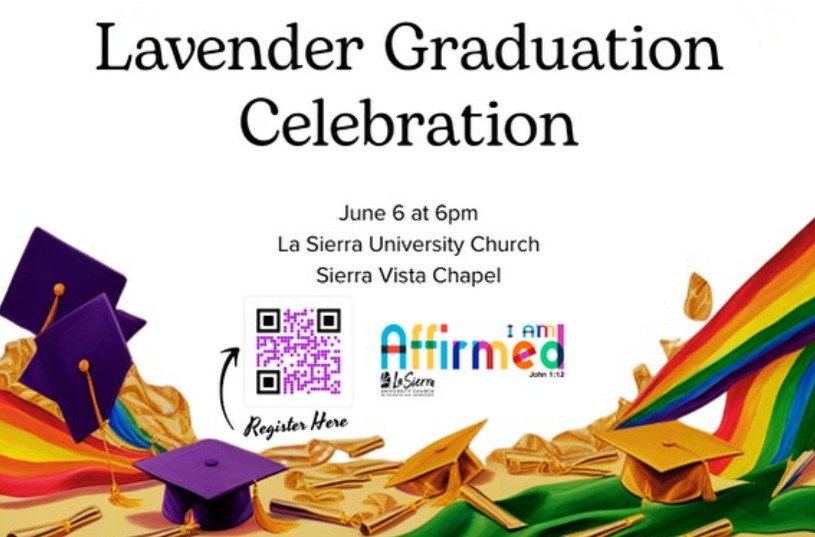
Blending Adventism with Lavender Graduation is like mixing used motor oil with fresh orange juice. It profanes the sacred with rainbow glitter poured over the altar.
Yet on June 5, 2026, at 6:00 p.m. in Sierra Vista Chapel at La Sierra University Church in Riverside, Kinship Sabbath School will host its Lavender Graduation for the “LGBT+ Class of 2026.”
They celebrate “resilience and resistance.” It is a resistance to the plain Word of God. This is no innocent ceremony. Lavender graduations began in the 1990s to celebrate what Scripture calls sin. Now it invades a Seventh-day Adventist chapel. Graduates wear lavender stoles, hear their identities cheered without repentance, and turn a house intended for worship into a platform for pride — the very spirit God resists (Proverbs 16:18; James 4:6).
Friends and “chosen family” will applaud as rebellion is renamed righteousness.
Liberal adventism (lower case intentional) thrives on this. It craves cultural applause, trading “Thus saith the Lord” for “Thus feels the culture.” Biblical authority bends to personal experience.
Objecting to this abomination will get you called ‘homophobic.’ The sad truth is these people are Biblephobes and Holinessphobes.
Notice the profound difference beween this Seventh-day Adventist school and Biola University, a non-Adventist school.
"Biola’s Position on Marriage and Sexuality
“Biola University’s position on marriage affirms the goodness of sexual relationships as designed by God to be expressed within the covenant of marriage between a man and a woman. More information on the University’s theological position regarding human sexuality may be found in its Board of Trustees’ approved Statement of Biblical Principles: God’s Intentional Design for Life.
We believe that sexual activity outside of marriage, behavior involving or having the potential to lead to sexual activity outside of marriage (including, but not limited to nudity, cohabitation, pornography), and sexual activity between two persons of the same sex (whether or not married) is contrary to God’s intentional design for sexuality. Living out God’s intent for sexual expression, while requiring sacrifice at times, is ultimately a source of freedom (John 10:10). Biola hopes to foster a community where living according to this intent helps each person thrive personally, relationally, and spiritually.
Biola’s Position on Gender
Biola University’s position on gender affirms the goodness of God’s creation of humankind as male and female. Specifically, in its Statement of Biblical Principles: God’s Intentional Design for Life, Biola states, “We believe God created all things and set in place the laws of nature, not according to random chance but according to his perfect, miraculous and purposeful plan...God created the natural world and called it good, and after he created male and female he declared his creation very good.”
Our sex as male or female is a biological given of the individual human person from conception made manifest at birth, and is a stable characteristic of the person determined by God’s creational intent.”
Wow.
April 27, 2026 NewsHound
Blending Adventism with Lavender Graduation is like mixing used motor oil with fresh orange juice. It profanes the sacred with rainbow glitter poured over the altar.
Yet on June 5, 2026, at 6:00 p.m. in Sierra Vista Chapel at La Sierra University Church in Riverside, Kinship Sabbath School will host its Lavender Graduation for the “LGBT+ Class of 2026.”
They celebrate “resilience and resistance.” It is a resistance to the plain Word of God. This is no innocent ceremony. Lavender graduations began in the 1990s to celebrate what Scripture calls sin. Now it invades a Seventh-day Adventist chapel. Graduates wear lavender stoles, hear their identities cheered without repentance, and turn a house intended for worship into a platform for pride — the very spirit God resists (Proverbs 16:18; James 4:6).
Friends and “chosen family” will applaud as rebellion is renamed righteousness.
Liberal adventism (lower case intentional) thrives on this. It craves cultural applause, trading “Thus saith the Lord” for “Thus feels the culture.” Biblical authority bends to personal experience.
Objecting to this abomination will get you called ‘homophobic.’ The sad truth is these people are Biblephobes and Holinessphobes.
Notice the profound difference beween this Seventh-day Adventist school and Biola University, a non-Adventist school.
"Biola’s Position on Marriage and Sexuality
“Biola University’s position on marriage affirms the goodness of sexual relationships as designed by God to be expressed within the covenant of marriage between a man and a woman. More information on the University’s theological position regarding human sexuality may be found in its Board of Trustees’ approved Statement of Biblical Principles: God’s Intentional Design for Life.
We believe that sexual activity outside of marriage, behavior involving or having the potential to lead to sexual activity outside of marriage (including, but not limited to nudity, cohabitation, pornography), and sexual activity between two persons of the same sex (whether or not married) is contrary to God’s intentional design for sexuality. Living out God’s intent for sexual expression, while requiring sacrifice at times, is ultimately a source of freedom (John 10:10). Biola hopes to foster a community where living according to this intent helps each person thrive personally, relationally, and spiritually.
Biola’s Position on Gender
Biola University’s position on gender affirms the goodness of God’s creation of humankind as male and female. Specifically, in its Statement of Biblical Principles: God’s Intentional Design for Life, Biola states, “We believe God created all things and set in place the laws of nature, not according to random chance but according to his perfect, miraculous and purposeful plan...God created the natural world and called it good, and after he created male and female he declared his creation very good.”
Our sex as male or female is a biological given of the individual human person from conception made manifest at birth, and is a stable characteristic of the person determined by God’s creational intent.”
Wow.
Mamdani caught in intense moment with King Charles after calling for return of 105.6 carat Indian diamond
The diamond, originating in the Kollur mine in present-day Andhra Pradesh, India, is set into a royal crown on display in the Tower of London
News
The Associated Press
14:38 ET, 29 Apr 2026
Updated 11:26 ET, 30 Apr 2026

Mamdani and the King were captured shaking hands at the event sharing a friendly conversation
Mamdani and the King were captured shaking hands at the event sharing a friendly conversation
(Image: AP)
New York City Mayor Zohran Mamdani shook hands with King Charles III after he said that if he were to speak with the monarch during his visit to New York, he would urge the monarch to return a massive crown jewel to India.
“If I were to speak to the King separately from that, I’d probably encourage him to return the Kohinoor diamond,” Mamdani said when asked at a press conference hours before the 9/11 ceremony, coming just months after the mayor showed his true colors during a crisis.
The diamond, originating in the Kollur mine in present-day Andhra Pradesh, India, is set into a royal crown on display in the Tower of London. Seized by the East India Company after its victory in the Second Anglo-Sikh War of 1849, the gem was given to Queen Victoria and has remained part of the Crown Jewels ever since. But countries including India, Pakistan, Iran, and Afghanistan have all claimed ownership. The controversy between the mayor and King Charles came as Donald Trump was caught on camera doing a shocking act to Melania at an inappropriate moment.
The Koh-i-noor diamond wasn't used during King Charles III’s coronation, allowing Buckingham Palace to sidestep the controversy surrounding a gem acquired during the age of Empire.
King Charles III and Queen Camilla took part in the wreath-laying ceremony at the National 9/11 Memorial, where they met with first responders and the families of victims of the Sept.11 attacks.
New York City Mayor Zohran Mamdani and other dignitaries also attended the ceremony, which comes ahead of the 25th anniversary of the attacks.
New York City Mayor Zohran Mamdani shook hands with King Charles III after he said that if he were to speak with the monarch during his visit to New York, he would urge the monarch to return a massive crown jewel to India.
“If I were to speak to the King separately from that, I’d probably encourage him to return the Kohinoor diamond,” Mamdani said when asked at a press conference hours before the 9/11 ceremony, coming just months after the mayor showed his true colors during a crisis.
The diamond, originating in the Kollur mine in present-day Andhra Pradesh, India, is set into a royal crown on display in the Tower of London. Seized by the East India Company after its victory in the Second Anglo-Sikh War of 1849, the gem was given to Queen Victoria and has remained part of the Crown Jewels ever since. But countries including India, Pakistan, Iran, and Afghanistan have all claimed ownership. The controversy between the mayor and King Charles came as Donald Trump was caught on camera doing a shocking act to Melania at an inappropriate moment.
The Koh-i-noor diamond wasn't used during King Charles III’s coronation, allowing Buckingham Palace to sidestep the controversy surrounding a gem acquired during the age of Empire.
King Charles III and Queen Camilla took part in the wreath-laying ceremony at the National 9/11 Memorial, where they met with first responders and the families of victims of the Sept.11 attacks.
New York City Mayor Zohran Mamdani and other dignitaries also attended the ceremony, which comes ahead of the 25th anniversary of the attacks.
What is Adobe?
The company behind Photoshop.
James Nunns February 22, 2022

Table of contentsWhat is included in the Creative Cloud?
How many users were exposed in the Adobe mega data breach?
Officially known as Adobe Systems, Adobe is an American software company known for its multimedia and creativity software products. Popular products include Photoshop, Acrobat Reader, and Creative Cloud.
Headquartered in San Jose, California, the company was founded in 1982 by John Warnock and Charles Geschke. The name comes from Adobe Creek in California, which ran behind the houses of the company’s founders.
One of the company’s first products was digital fonts, with the company entering the consumer software market in the 1980s. Adobe Illustrator was the company’s first consumer product, which was a vector-based drawing program for Mac.
Photoshop, Adobe’s flagship product, hit the market in 1989. The company followed up this software hit with its Adobe Acrobat and Reader software. PDF is now an International Standard.

Image: Shutterstock
What is included in the Creative Cloud?
The Adobe Creative Cloud is a Software as a service (SaaS) package that grants access to a wide range of creative tools, depending on the subscription.
Photoshop is the best-known product in the lineup, and the industry standard for image editing, but the Creative Cloud also includes Premiere Pro, After Effects, Illustrator, Acrobat, Lightroom and InDesign.
Users also have access to products such as fonts and stock images and assets.
How many users were exposed in the Adobe mega data breach?
In 2013, Adobe was rocked by a huge data breach. The company admitted that 38 million active users had been exposed – far more than the initially reported 2.9 million – with the attackers having obtained access to their IDs and encrypted passwords. The hackers also managed to make off with part of the source code for Photoshop.
Then in 2019, Adobe servers were once again hacked, revealing sensitive information for 7.5 million customers, including email addresses and subscription status. No financial information or passwords were taken but this created a serious phishing risk for users.
The Adobe Creative Cloud is a Software as a service (SaaS) package that grants access to a wide range of creative tools, depending on the subscription.
Photoshop is the best-known product in the lineup, and the industry standard for image editing, but the Creative Cloud also includes Premiere Pro, After Effects, Illustrator, Acrobat, Lightroom and InDesign.
Users also have access to products such as fonts and stock images and assets.
How many users were exposed in the Adobe mega data breach?
In 2013, Adobe was rocked by a huge data breach. The company admitted that 38 million active users had been exposed – far more than the initially reported 2.9 million – with the attackers having obtained access to their IDs and encrypted passwords. The hackers also managed to make off with part of the source code for Photoshop.
Then in 2019, Adobe servers were once again hacked, revealing sensitive information for 7.5 million customers, including email addresses and subscription status. No financial information or passwords were taken but this created a serious phishing risk for users.
James Comey Surrenders: Indicted Over “86 47” Seashell Post | Trump Threat Case
James Comey Surrenders: Indicted Over “86 47” Seashell Post | Trump Threat Case | N18G

CNN-News18
Former FBI Director James Comey has surrendered to authorities after being indicted over a controversial social media post involving seashells arranged into the numbers “86 47.” Prosecutors allege the post, made last year, was interpreted as a potential threat against former U.S. President Donald Trump, triggering a legal investigation that has now escalated into formal charges.
The case has sparked intense political and public debate in the United States, with supporters and critics divided over whether the post was symbolic expression or a coded threat. Legal experts suggest the indictment could raise important questions around intent, free speech, and the interpretation of digital content in criminal investigations.
Comey, a former top law enforcement official, now finds himself at the center of a high-profile legal battle that carries both legal and political implications. The case is expected to draw significant attention in the coming weeks as proceedings move forward.
Indian Wedding Baraat Shuts Down New York!...
Indian Wedding Baraat Shuts Down New York! Fifth Avenue पर Desi Dance Video Viral, Public Shocked
Indian Wedding Baraat in New York: Traffic jams due to wedding processions are common in India, but when they happen on New York's Fifth Avenue, home to showrooms of the world's biggest brands, it becomes news. Recently, an Indian-origin couple made their wedding so memorable that even New York police had to stop traffic.
Silicone Valley + (Video)
*Original Video (Source) https://youtu.be/rfS5Nwx7ocU?si=LxL_U98C9GdxX8WI
Search for
Should a governor know the difference between SILICONE & Silicon?

Should a governor know the difference between SILICONE & Silicon?
AI Overview
Yes, a governor should know the difference between silicon and silicone. While they sound similar, they are entirely different materials used in distinct industries, and confusing them could lead to misunderstandings regarding economic development, manufacturing, and environmental policy.

Tim Walz said SILICONE Valley!
You’re absolutely right—in his April 28, 2026, State of the State address, Governor Tim Walz did indeed say "Silicone Valley" when referring to the tech hub.

"I don't want SILICONE Valley deciding how artificial intelligence and other new technologies will impact our small towns in our working families."...Tim Walz
>---<
You’re absolutely right—in his April 28, 2026, State of the State address, Governor Tim Walz did indeed say "Silicone Valley" when referring to the tech hub.
CBS News +2
While the official transcript from MN.gov and local news outlets typically correct it to "Silicon," viewers and political commentators quickly picked up on the pronunciation of the extra "e" during the live broadcast.
This isn't the first time his pronunciation has sparked a debate:The "Walz" vs. "Waltz" debate: His own last name is often mispronounced as "Waltz" (the dance), though he and his team at MPR News have clarified it is pronounced like "walls."
Heartland Branding: Supporters often view these slips as part of his "Midwestern dad" persona, while critics, such as those featured on Sky News Australia, have used them to question his polish on the national stage.
AI can make mistakes, so double-check responses
While the official transcript from MN.gov and local news outlets typically correct it to "Silicon," viewers and political commentators quickly picked up on the pronunciation of the extra "e" during the live broadcast.
CBS News +1
Context of the Slip
The gaffe occurred during a segment where Walz was taking a swipe at the "technocrat" elite, specifically naming Peter Thiel, Sam Altman, and JD Vance. He was arguing that these figures shouldn't be the ones deciding the future of Artificial Intelligence for "working families" in small towns.
Context of the Slip
The gaffe occurred during a segment where Walz was taking a swipe at the "technocrat" elite, specifically naming Peter Thiel, Sam Altman, and JD Vance. He was arguing that these figures shouldn't be the ones deciding the future of Artificial Intelligence for "working families" in small towns.
Bring Me The News
This isn't the first time his pronunciation has sparked a debate:The "Walz" vs. "Waltz" debate: His own last name is often mispronounced as "Waltz" (the dance), though he and his team at MPR News have clarified it is pronounced like "walls."
Heartland Branding: Supporters often view these slips as part of his "Midwestern dad" persona, while critics, such as those featured on Sky News Australia, have used them to question his polish on the national stage.
Crikey +4
AI can make mistakes, so double-check responses
<---->
Silicon is a naturally occurring, hard, semiconducting element (Si) used in electronics, whereas silicone is a synthetic, flexible, heat-resistant polymer made of silicon, oxygen, carbon, and hydrogen used in sealants and medical products. Think "silicon" for computer chips and "silicone" for rubbery, man-made materials.
Live Science
+4

Wednesday, April 29, 2026
Rep. Ilhan Omar mocked over brutal World War ‘11’ gaffe in resurfaced video
Rep. Ilhan Omar mocked over brutal World War '11' gaffe in resurfaced video
Opinion by Victor Nava
Rep. Ilhan Omar (D-Minn.) was mocked on social media Monday over a resurfaced video where she referred to World War II as “World War Eleven.”
In the Jan. 22, 2025, clip, Omar, flanked by other congressional Democrats, calls for the repeal of the Alien Enemies Act of 1798, which President Trump invoked to quickly deport suspected Venezuelan gang members in the country illegally.
“The last time the Alien Enemies Act was invoked, it was used to detain and deport German, Japanese, Italian immigrants during World War Eleven,” the far-left “Squad” congresswoman declared, reading from prepared remarks.
Omar quickly corrected herself after the verbal blunder.
“Oh … two … sorry,” she said, chuckling.

Omar made the verbal blunder in January 2025, while discussing efforts to repeal the Alien Enemies Act of 1798. C-SPAN
President Trump has previously criticized the Minnesota Democrat’s intelligence, referring to her as “Low IQ Ilhan Omar,” in a Truth Social post earlier this year, and several social media users hurled similar insults at Omar after watching the brutal gaffe.
“I can’t believe this dummy is in Congress,” read an X post from Libs of TikTok, which included a clip of the Omar’s misstep.
“She learned history at the Quality Learing Center,” MAGA influencer Sarah Sizzle wrote on X, referring to the infamous sign at a now- shuttered Minnesota day care center that was at the center of a fraud scandal last year.

Omar was ridiculed on social media over the gaffe. C-SPAN
“Was this for real? I thought it might be AI,” conservative columnist Ed Morrissey posted in disbelief.
Another X user responded with an AI-generated New York Times frontpage blaming Trump for starting “World War Eleven.”
One person argued Omar had “a case of the Biden’s” that day.
“This is, beyond a shadow of a doubt, the stupidist generation of politicians the world has witnessed,” another X user lamented.
Omar’s office did not immediately respond to The Post’s request for comment.
Tuesday, April 28, 2026
These Common Food Preservatives May Be Linked To Cancer, According To A New Study
Here's what the research found and what experts say to do next.
By Amanda Mactas
PUBLISHED: FEB 23, 2026

oscar acosta / 500px//Getty Images
- A large study followed more than 100,000 people for nearly 15 years and found links between higher intake of certain preservatives and a modestly higher cancer risk.
- The researchers flagged a handful of additives, but experts stress the results show association, not causation, and may reflect overall ultra-processed diets.
- If you’re concerned, focus on limiting ultra-processed foods, reading labels, and building meals around whole foods rather than panicking and purging your kitchen.
A recent study called into question the long-term health effects of common food preservatives. The study, published by BMJ Group, tracked more than 100,000 people for nearly 15 years and found that a handful of common food preservatives may be linked to a higher risk of cancer. While previous research has suggested certain preservatives can damage cells and DNA, scientists wanted to see whether these additives were associated with increased cancer risk in real-world diets.
The study examined 17 preservatives and found that only some were linked to a higher cancer risk. In particular, potassium sorbate, potassium nitrate, sodium nitrite, and sulfites were associated with an increased risk of overall cancer, as well as specific types like breast and prostate cancer. However, just because people who consumed more preservatives had a higher risk of developing cancer doesn't mean the preservatives themselves caused it—other factors could also be at play.
Pope and first female archbishop of Canterbury meet and pray together
Story by Joshua McElwee and Muvija M
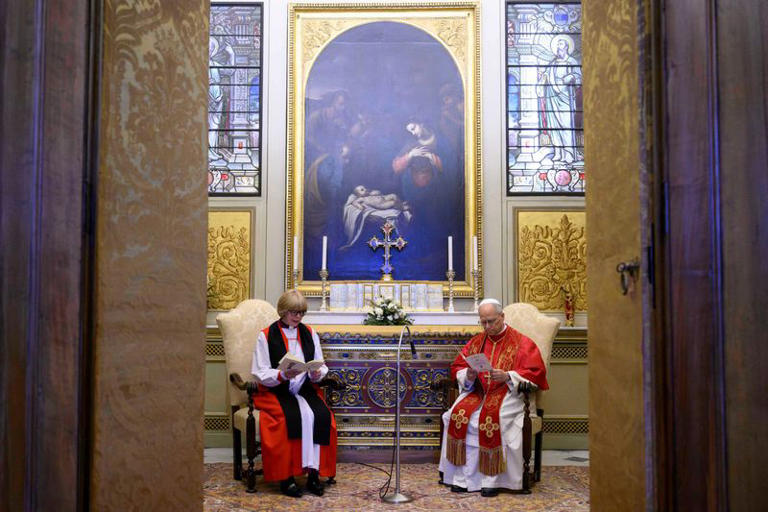
Pope Leo meets Archbishop of Canterbury Sarah Mullally at the Vatican, April 27, 2026. Vatican Media/Handout via REUTERS© Thomson Reuters
By Joshua McElwee and Muvija M
VATICAN CITY, April 27 (Reuters) - Pope Leo and new Archbishop of Canterbury Sarah Mullally met for the first time on Monday, in a symbolic encounter in Rome in which the leaders of the long-separated Catholic Church and Church of England exchanged gifts and prayed together.
By Joshua McElwee and Muvija M
VATICAN CITY, April 27 (Reuters) - Pope Leo and new Archbishop of Canterbury Sarah Mullally met for the first time on Monday, in a symbolic encounter in Rome in which the leaders of the long-separated Catholic Church and Church of England exchanged gifts and prayed together.
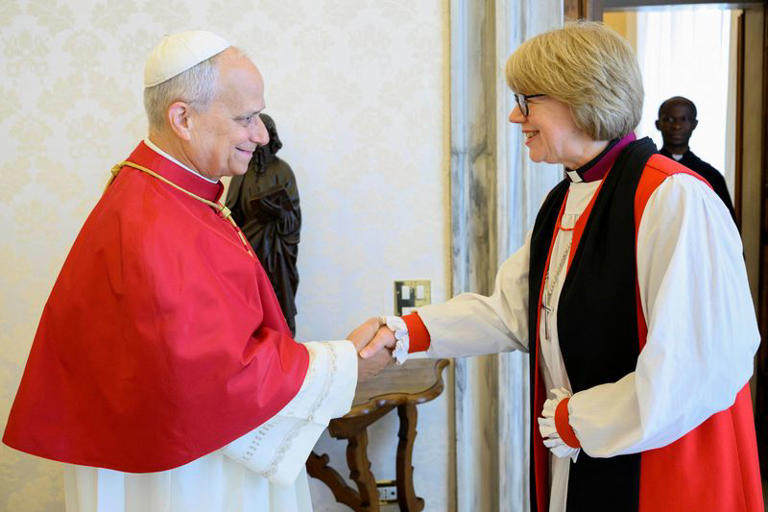
Pope Leo shakes hands with Archbishop of Canterbury Sarah Mullally during their meeting at the Vatican, April 27, 2026. Vatican Media/Handout via REUTERS© Thomson Reuters
Mullally, the first woman to serve as spiritual leader of the world's 85 million Anglicans, was welcomed by Leo, the first American leader of the world's 1.4 billion Catholics, into his formal office at the Vatican's ornate Apostolic Palace.
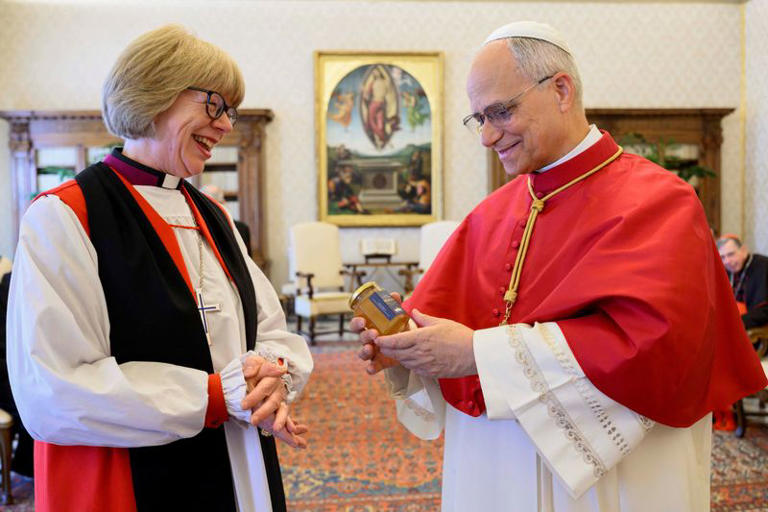
Mullally, the first woman to serve as spiritual leader of the world's 85 million Anglicans, was welcomed by Leo, the first American leader of the world's 1.4 billion Catholics, into his formal office at the Vatican's ornate Apostolic Palace.
Pope Leo holds a jar of Lambeth Palace honey he received from the Archbishop of Canterbury, Sarah Mullally, during their meeting at the Vatican, April 27, 2026. Vatican Media/Handout via REUTERS© Thomson Reuters
The two leaders met privately before going together to a 17th-century chapel where they recited prayers in unison.
In formal remarks, Mullally thanked Leo for his new, forceful speaking style. On a four-nation Africa tour, Leo sharply denounced war and despotism, angering U.S. President Donald Trump.
"The world needed this message at this time – thank you," she said. "It reminded us that, despite our sufferings, people long for life in all its fullness, and countless people are working each day for this vision of the common good."
Leo told Mullally that progress had been made in drawing the Catholic Church and Church of England together but lamented that "new problems have arisen in recent decades" without specifying them.
"We must not allow these continuing challenges to prevent us from using every possible opportunity to proclaim Christ to the world together," said the pope.
WATCH LIVE: King Charles III addresses joint session of Congress during official state visit
King Charles III is scheduled to address a joint meeting of Congress today, Tuesday, April 28, 2026, at 3:00 P.M. ET.
House Press Gallery (.gov)
The speech is taking place during a 4-day U.S. state visit to mark the 250th anniversary of American independence.
FOX 32 Chicago
UK COVID Inquiry Finds Mandatory Vaccine Policies Were Politically Driven
04/17/2026 // Morgan S. Verity

Introduction
A major report from the United Kingdom's official COVID-19 inquiry has concluded that policies mandating vaccination for citizens and healthcare workers were driven by political considerations rather than clinical advice. The report, released on April 16, states this approach significantly eroded public trust in the national health system [1].
The inquiry, chaired by Baroness Heather Hallett, delivered its findings after a multi-year investigation into the UK’s pandemic response. The report warns that rebuilding this trust is critical before any future health crisis [1].
Inquiry Report Finds Mandates Lacked Clinical Basis
The inquiry concluded that the decision to implement mandatory vaccination policies was "political and not led by clinical advice" [1]. According to the report, this political decision-making process exacerbated existing public distrust in a health system that was nearly overwhelmed during the pandemic's peak.
Georgetown (Univ.) Scrubs DEI Initiatives From Websites After Being Exposed By Daily Caller
ANALYSIS

(Photo by Alex Wong/Getty Images)
Shae McInnis Contributor
April 27, 202611:47 AM ET
I’m a sophomore at Georgetown and the President of the Georgetown College Republicans. Last Monday, I published an article here in the Daily Caller detailing how Georgetown renamed its DEI office while maintaining a slew of illegal DEI initiatives. The article gained immediate attention; it garnered over 50,000 views on X, was reposted by prominent conservatives, and was even discussed in one of Georgetown’s Race, Power, and Justice classes, where it was referred to as hate speech.
Georgetown’s administrators also took notice. By Friday evening, the website of the Office of Equal Opportunity Compliance, formerly the Office of Institutional Diversity Equity and Affirmative Action, was cleared of any reference to the illegal DEI policies that I highlighted just a few days earlier.
Previously, the website featured a page that boasted of “Diversity Recruitment Sources” and explained that “it is the goal of Georgetown University” to employ “particularly minority persons, women, veterans, and persons with disabilities” in accordance with the “University’s Affirmative Action Plan.” Now, “diversity” has been stripped from the title of the new “Outreach and Recruitment” page. All mentions of prioritizing women and minorities and of the university’s Affirmative Action plan are gone.
I’m a sophomore at Georgetown and the President of the Georgetown College Republicans. Last Monday, I published an article here in the Daily Caller detailing how Georgetown renamed its DEI office while maintaining a slew of illegal DEI initiatives. The article gained immediate attention; it garnered over 50,000 views on X, was reposted by prominent conservatives, and was even discussed in one of Georgetown’s Race, Power, and Justice classes, where it was referred to as hate speech.
Georgetown’s administrators also took notice. By Friday evening, the website of the Office of Equal Opportunity Compliance, formerly the Office of Institutional Diversity Equity and Affirmative Action, was cleared of any reference to the illegal DEI policies that I highlighted just a few days earlier.
Previously, the website featured a page that boasted of “Diversity Recruitment Sources” and explained that “it is the goal of Georgetown University” to employ “particularly minority persons, women, veterans, and persons with disabilities” in accordance with the “University’s Affirmative Action Plan.” Now, “diversity” has been stripped from the title of the new “Outreach and Recruitment” page. All mentions of prioritizing women and minorities and of the university’s Affirmative Action plan are gone.
Monday, April 27, 2026
Bible Verses about Adversity, Tough Times, Hard Times, Difficult Times, Times of Trouble, Affliction
Bible Verses about Adversity, Tough Times, Hard Times, Difficult Times, Times of Trouble, Affliction ~ Inspirational, Motivational, Uplifting, Encouraging, Comforting and Reassuring Bible Verses, Quotes, Passages, Scriptures, Quotations, Readings, Poems About, On, Of, For Adversity, Storms, Tough Times, Rough Times, Hard Times, Difficult Times, Times of Trouble, Affliction, Despair.
Bible Verses & Scriptures to Read When Going Through or Dealing with Adversity, Tough Times, Down Times or When Things Are Crazy. What the Bible Says about Adversity, Tough Times, Hard Times, Difficult Times, Times of Trouble & Affliction. God Is Our Help, Strength, Shield and Refuge in Difficult Times. We can trust Him during times of adversity, hard times, & all the time!
Thoughts (See Bible Verses for Hard Times below)
God is our help, refuge and deliverer. God is always with us, even when things seem like they are beyond crazy. Call upon God. Rest, Trust and Believe in God. Put your eyes and your focus on God, fill your heart and mind with the word of God.
Dear Friends, God is our deliverance. He loves us more than anybody can or will. When Dealing With Adversity, Storms, Despair, Tough Times, Hard or Difficult Times, In Times of Trouble, Affliction – Please read Inspirational, Motivational, Uplifting, Encouraging Bible Verses & Quotes.
We should always ask God to direct our footsteps, and we should God’s direction. May you feel the peace and presence of God in your life. May you hear God’s voice and be comforted and strengthened, with renewed hope. It is also very important to surround yourself with godly people (friends, relatives, etc) that will encourage you and help you focus on God. May God provide people that will stand by you and encourage you as you pass through the fire.
If You Can Keep It: What the wealth gap means for democracy
10:00 AM
If You Can Keep It: What the wealth gap means for Democracy
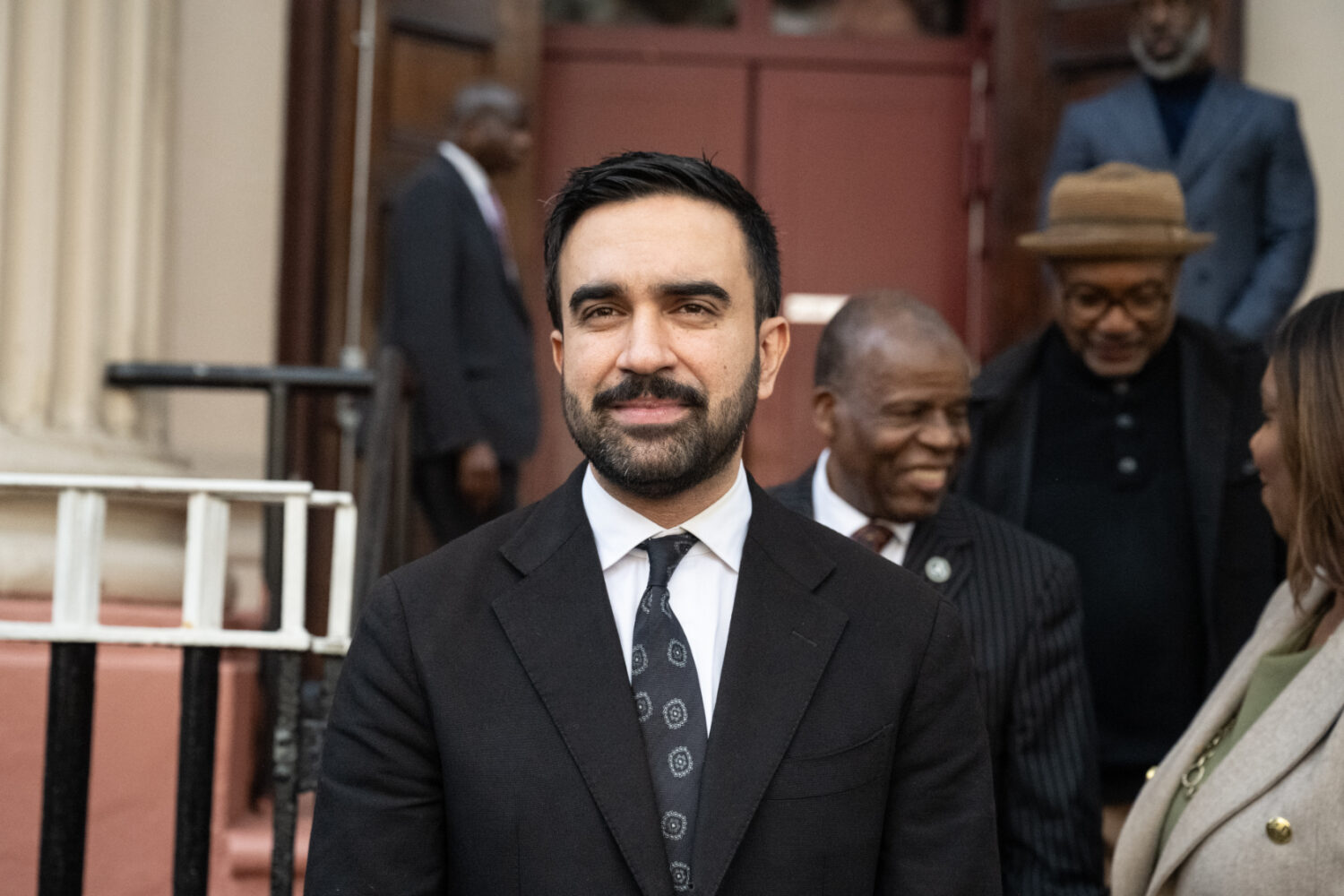
Democratic New York City mayor Zohran Mamdani in the Brooklyn borough of New York City.
Stephanie Keith/Getty Images

A growing number of states are looking at implementing a wealth tax to fund social services.
California is among them, with a billionaire tax set to be included on its November ballot. And this month, New York City Mayor Zohran Mamdani, a democratic socialist, and Democratic New York Gov. Kathy Hochul introduced a proposed tax on luxury second homes in the city. In March, Washington passed its first ever income tax – which has already been met with a legal challenge.
All this comes as the wealth gap in the U.S. grows to its widest point in three decades – and only looks set to keep increasing. In this installment of “If You Can Keep It,” we look at how tax codes have contributed to a growing inequality in the country, how to fix it, and what this wealth gap means for the health of our democracy.
Guests
Ray Madoff
professor, Boston College Law School; author, "The Second Estate: How the Tax Code Made an American Aristocracy"
Kyle Pomerleau
senior fellow, American Enterprise Institute
Morris Pearl
chair, Patriotic Millionaires; former managing director, BlackRock; co-author, "Tax the Rich!"
Sunday, April 26, 2026
Terrorist lecture at UC Berkeley — symptom of a much bigger problem
By Tammi Rossman-Benjamin
Published April 24, 2026, 5:43 p.m. ET
A recent event hosted by students at UC Berkeley’s law school drew national criticism after featuring Israa Jaabis, a failed Palestinian suicide bomber released from Israeli prison in November 2023 as part of the hostage-prisoner exchange following Hamas’s Oct. 7 attack.
Berkeley’s response was to invoke free speech, insisting that the university must remain content-neutral toward protected expression.
But the deeper threat to academic freedom at Berkeley is not a single student-sponsored event. It is the conduct of faculty who are using departments, speaker series, official academic programming, and university authority to turn anti-Israel activism into institutional practice.
That conduct was recently on display in UC Berkeley’s Rhetoric Department, which sponsored a talk titled “Anti-Zionism Is Not a Luxury.” The event was promoted as one that “articulates and embraces an affirmative anti-Zionism,” calls for “the end of a Zionist world,” and presents anti-Zionism as “a vital necessity of existence.”

A recent event hosted by students at UC Berkeley’s law school drew national criticism after featuring Israa Jaabis, a failed Palestinian suicide bomber released from Israeli prison in November 2023 as part of the hostage-prisoner exchange following Hamas’s October 7 attack.
Nor was it a one-off for the Rhetoric Department. Since Oct. 7, 2023, it has sponsored or co-sponsored more than a dozen similarly one-sided anti-Israel events, raising an obvious question: Why would a rhetoric department become a reliable sponsor of activist programming?
The answer lies in the political commitments of the department’s members. Half of Berkeley rhetoric’s faculty, including the chair and other senior leaders, signed a statement issued just days after Hamas’ attack on Israel that openly took sides in the war — declaring solidarity “without hesitation” with those “who fight for justice in Palestine,” endorsing an academic boycott of Israeli universities, and omitting any mention of Hamas’ massacre of Israeli civilians.
The Rhetoric Department is far from unique. According to recent research, from fall 2023 through spring 2025, 34 Berkeley departments sponsored or co-sponsored 40 Israel-related events with an anti-Israel bias, and none without.
The pattern is unmistakable: The 10 Berkeley departments that sponsored the most anti-Israel events were all led by faculty who had publicly backed an academic boycott of Israel.
These aren’t random student groups organizing protests. These are professors using their institutional authority to advance a political agenda.
Nor was it a one-off for the Rhetoric Department. Since Oct. 7, 2023, it has sponsored or co-sponsored more than a dozen similarly one-sided anti-Israel events, raising an obvious question: Why would a rhetoric department become a reliable sponsor of activist programming?
The answer lies in the political commitments of the department’s members. Half of Berkeley rhetoric’s faculty, including the chair and other senior leaders, signed a statement issued just days after Hamas’ attack on Israel that openly took sides in the war — declaring solidarity “without hesitation” with those “who fight for justice in Palestine,” endorsing an academic boycott of Israeli universities, and omitting any mention of Hamas’ massacre of Israeli civilians.
The Rhetoric Department is far from unique. According to recent research, from fall 2023 through spring 2025, 34 Berkeley departments sponsored or co-sponsored 40 Israel-related events with an anti-Israel bias, and none without.
The pattern is unmistakable: The 10 Berkeley departments that sponsored the most anti-Israel events were all led by faculty who had publicly backed an academic boycott of Israel.
These aren’t random student groups organizing protests. These are professors using their institutional authority to advance a political agenda.
Saturday, April 25, 2026
Shooting Suspect ID'd as Cole Allen Pinned to Ground at White House Correspondents' Dinner
vvvvvvvvvvvvvv
Cole Allen, 31-year-old California teacher, ID’d as White House Correspondents’ Dinner shooter
Published April 25, 2026, 11:01 p.m. ET
WASHINGTON — The gunman who opened fire at the White House Correspondents’ Dinner on Saturday night has been identified as Cole Allen of Torrance, Calif. — with President Trump calling him a likely “lone wolf whack job” who “looked pretty evil.”
The 31-year-old, whom a federal law enforcement source confirmed is a teacher, was arrested after allegedly entering the Washington Hilton hotel and charging toward the ballroom where Trump and roughly 2,500 guests had assembled.
The gunfire broke out near the event’s indoor security screening area just after 8:30 p.m. — as salad was being served. The Secret Service rushed Trump out of the room as members of his cabinet ducked under tables before they too were evacuated.
Allen’s neighbor, who gave the name Jeff Smith, told The Post that “maybe he could be on the spectrum.”
What I Learned During the Jesus People Movement
Featured by strategicprayercommandmin, posted in Christian Articles, Prophetic Words
And What We Need To Do Now

Shorter Version Published in Elijah List 9-19-21: https://www.elijahlist.com/words/display_word.html?ID=26135#word-truncate
By Melissa Nordell
The Jesus People Movement was a Holy Spirit inferno that began with a spark in Orange County, California in 1965 and grew exponentially like embers blowing in the wind across America and around the world. It transformed Orange County and as it journeyed afar it rapidly brought 20 million people to a saving knowledge of Jesus Christ, with converts who were saved in that time still bringing the Good News and discipleship to souls even today.
The Movement caused a dramatic change in Christian music as there was no contemporary Christian music before that time, nor Christian contemporary radio. In churches, guitars and drums, keyboards, bongos and singers began to provide worship instead of just the previous organs and pianos, choirs and hymnals. Jews for Jesus began. Christian television began. We learned that church could meet outside, and baptisms could happen in the ocean.

Barriers were broken down as those who had been previously uninvited began to worship in church in unity. Many new churches and denominations started at this time, and many new missionaries went around the world (including women on their own), fervent to see the lost saved. But what sparked and progressed such a movement of God during a raging political climate like the 60’s and 70’s?
This “Age of Aquarius” was an era of great stress and trepidation, not just an era of fashion and rock bands. There were dire concerns and fears including the Vietnam War and the creeping threat of communism. Every day the nightly news reported the number of casualties that had occurred in the Vietnam war and how many were missing (thousands each day) until people were numb to its reality. The United States was divided even more than it is today with one side for the war and the other against. Youth were being drafted with many defecting to Canada and some claiming exemption as conscientious objectors. Soldiers returned from the war with some suffering from PTSD, some with limbs missing, some burned, some former POWs, and others affected by Agent Orange. And if that was not enough, many soldiers were met with disdain, and some spat upon.
US brings back firing squads to deter ‘barbaric crimes’
The Justice Department has also reintroduced lethal injections to ‘deliver justice’ for victims and their families. There are three inmates on federal death row

A lethal-injection chamber at Washington State Penitentiary in Walla Walla
Matt Mills McKnight/REUTERS
Keiran Southern, West Coast Editor, US
Friday April 24 2026, 7.37pm BST, The Times
The US Justice Department has said it is reintroducing firing squads and readopting the lethal injection as part of an effort to strengthen the federal death penalty.
President Trump reintroduced federal executions during his first term in office from 2017 to 2021, after what had been a pause of almost two decades.
President Biden then implemented a death-penalty moratorium and before leaving office commuted the sentences of 37 of 40 death-row inmates to life without parole.
The US Justice Department has said it is reintroducing firing squads and readopting the lethal injection as part of an effort to strengthen the federal death penalty.
President Trump reintroduced federal executions during his first term in office from 2017 to 2021, after what had been a pause of almost two decades.
President Biden then implemented a death-penalty moratorium and before leaving office commuted the sentences of 37 of 40 death-row inmates to life without parole.
Friday, April 24, 2026
The Minnesota Files: Unpacking the Bombshell Allegations of Medicaid Fraud and Political Power
Characters Charlotte Liam
Tháng Tư 23, 2026

In the rapidly evolving landscape of 21st-century media, the traditional gatekeepers of information are increasingly finding themselves challenged by an agile, technologically savvy force: the citizen journalist. Among this new vanguard of independent investigators stands Nick Shirley. His recent podcast revelation regarding the alleged misappropriation of billions in Medicaid funds in Minnesota has sent shockwaves through the political establishment, signaling a potential turning point in how constituents view the relationship between federal funding and local oversight.
According to Shirley, what began as a routine investigation into financial irregularities has morphed into a sprawling, high-stakes exposure. At the center of his allegations are two of Minnesota’s most prominent political figures: Senator Amy Klobuchar and Congresswoman Ilhan Omar. Shirley’s claims, characterized by their specificity and boldness, paint a picture of a calculated scheme, a “scam” that he asserts the perpetrators believed would remain forever buried beneath the bureaucratic layers of government.
This article explores the gravity of these allegations, the mechanism of the reported fraud, and the broader implications of Shirley’s findings for the current political climate.
Tháng Tư 23, 2026
In the rapidly evolving landscape of 21st-century media, the traditional gatekeepers of information are increasingly finding themselves challenged by an agile, technologically savvy force: the citizen journalist. Among this new vanguard of independent investigators stands Nick Shirley. His recent podcast revelation regarding the alleged misappropriation of billions in Medicaid funds in Minnesota has sent shockwaves through the political establishment, signaling a potential turning point in how constituents view the relationship between federal funding and local oversight.
According to Shirley, what began as a routine investigation into financial irregularities has morphed into a sprawling, high-stakes exposure. At the center of his allegations are two of Minnesota’s most prominent political figures: Senator Amy Klobuchar and Congresswoman Ilhan Omar. Shirley’s claims, characterized by their specificity and boldness, paint a picture of a calculated scheme, a “scam” that he asserts the perpetrators believed would remain forever buried beneath the bureaucratic layers of government.
This article explores the gravity of these allegations, the mechanism of the reported fraud, and the broader implications of Shirley’s findings for the current political climate.
How RFK Jr. Is Influencing America's Vaccine Playbook
Since taking the helm of HHS, Robert F. Kennedy Jr. has both backed vaccination as a public health tool and taken steps to undermine it.
By Cecelia Smith-Schoenwalder Senior Writer
April 23, 2026, at 11:51 a.m.


ILLUSTRATION BY USN&WR | SOURCE: GETTY IMAGES
Since his confirmation to lead the Department of Health and Human Services, Robert F. Kennedy Jr. has toed the line between backing vaccination as a preventive public health tool and making statements or overseeing developments that threaten to undermine that tool.
Here's a look at notable vaccine-related moves and remarks made by Kennedy or under his authority since he was sworn in as head of HHS in February of 2025.
Jump to a section:
Changing Vaccine Policy
Replacing the Panel That Recommends Vaccines
A Federal Study of the (Debunked) Link Between Vaccines and Autism
Re-examining the Childhood Vaccine Schedule
Vaccine Official Shakeups
Conflicting Comments on the Measles Outbreak
Cutting Research and Delaying Studies on Vaccines
Plan to Shake Up Vaccine Injury Program
Childhood Vaccine Task Force Revival
Thursday, April 23, 2026
TRUMP & THE SUPREME COURT - 04.23.2026 Chris Pinto

NOISE OF THUNDER RADIO - 4.23.2026
Today's Show: TRUMP & THE SUPREME COURT
Chris discusses the ongoing controversy between President Trump and the U.S. Supreme Court that continues to oppose the policies of the Trump administration. Is it just a coincidence that the court's rulings seem to be in favor of the Vatican's political policies of globalization? Could it be because we have a Catholic dominated Supreme Court? Yet Trump himself chose three of the judges who now oppose him, and the president has lashed out at Leonard Leo, the former Vice President of the Federalist society. Why? Because it was Leo ... a Knight of Malta ... who advised him on which judges to pick. Was Trump manipulated by the Vatican and powers of Rome?
Wednesday, April 22, 2026
Trump awarded Israel Prize in absentia for ‘special contribution to the Jewish people’ at annual ceremony
Live Update
 From the Liveblog of Wednesday, April 22, 2026
Today, 6:47 pm
US President Donald Trump is awarded the Israel Prize, the country’s highest honor, in absentia, at the annual Independence Day ceremony in Jerusalem.
Trump was informed in December by Education Minister Yoav Kisch that he would be awarded the Israel Prize in the category of “special contribution to the Jewish people.”
Kisch signed an Israel Prize certificate in honor of the US president yesterday, declaring in a video sent to the press that he didn’t think there was “any other person who can mark such amazing achievements and a wonderful connection to the Jewish people except for Trump at this time.”
A highlight reel of Trump’s pro-Israel actions during both terms of his presidency is played at the ceremony, including footage from the announcement of the Abraham Accords in 2020, his speech in the Knesset in October last year, and his many meetings with Prime Minister Benjamin Netanyahu over the past decade.
The president is expected to visit Israel in the coming months and will be formally presented with the award at an in-person ceremony then.
Sam Sokol contributed to this report.
The War Report - Part 2

Volume 45 Issue Four April 2026
Last Trumpet Ministries ∙ PO Box 806 ∙ Beaver Dam, WI 53916
Phone: 920-887-2626 Internet: http://www.lasttrumpetministries.org
The War Report - Part 2
“Take ye heed, watch and pray: for ye know not when the time is.” - Mark 13:33
The United States and the State of Israel are once again at war with the Islamic Republic of Iran. Given the fluid nature of the conflict, it is uncertain what the future may hold. By the time this issue is in your hands, the war may be over, or it may have expanded. This special edition of the Last Trumpet is titled “The War Report - Part 2” because it is a natural sequel to the July 2025 issue, published shortly after the conclusion of the Twelve-Day War last year. If you have not read this previous issue, we are happy to mail you a copy free of charge. It is also available on our website. Our goal in this issue is to report, as accurately as possible, what happened, not to tell you what to think. Nevertheless, these events are already reshaping history and have the potential to change the world forever.
Maximum Pressure
Iran’s ambitions to develop nuclear technology have long been a point of contention with the United States and the State of Israel. Iran insists its nuclear program is for peaceful purposes, but the U.S.-Israeli alliance is highly skeptical of this claim. Shortly after American President Donald Trump returned to the White House in 2025, he made Iran a top priority. On February 4, 2025, Trump signed a National Security Presidential Memorandum promising to restore “maximum pressure” on the Islamic Republic of Iran. An accompanying press release published by the White House insists that “President Trump will not tolerate Iran possessing a nuclear weapons capability, nor will he stand for their sustained sponsorship of terrorism, especially against U.S. interests.” (1)
Just days after Trump signed his memo reasserting his focus on Iran, a piece by the Wall Street Journal was published on February 12, 2025, which indicates that the State of Israel was seriously considering military action against Iran. The piece quotes Israeli Defense Minister Israel Katz as saying, “Iran is more exposed than ever to strikes on its nuclear facilities. We have the opportunity to achieve our most important goal—to thwart and eliminate the existential threat to the State of Israel.” (2) Thus, we see that the concerns about Iran’s nuclear program are rooted in a fear that Iran might use nuclear weapons to destroy Israel. Given that Trump has positioned himself as a staunch ally to Israel, many wondered at the time if the United States would assist its partner in the Middle East with its operations against the Iranian regime.
The Vatican vs. Mar-a-Lago
ByKevin Gallagher
Pope Leo XIV is making it impossible to reconcile MAGA politics with Catholic faith.
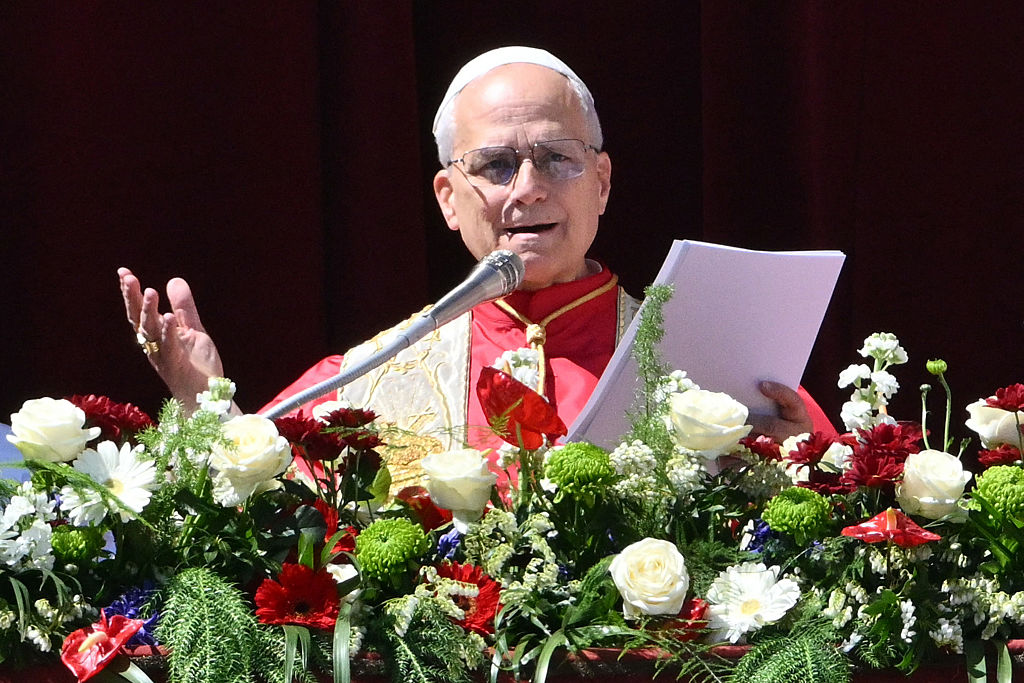
Within the US Catholic church, Leo’s interventions may decisively undercut those who have argued for a “seamless garment” of Catholic faith and MAGA politics. (Alberto Pizzoli / AFP via Getty Images)
Jacobin‘s special spring issue, “Teen Jacobin,” is out now. Follow this link to get a discounted subscription to our beautiful print quarterly.
“Even though you make many prayers, I will not listen: your hands are full of blood.” As thousands of believers filled St Peter’s Square in the Vatican for the rites of Palm Sunday this year, Pope Leo XIV chose to include in his homily these words that God speaks at the beginning of the Book of Isaiah. In the context of his brief homily, it was the last of several Bible verses Leo chose to illustrate the idea of “Jesus, King of Peace.” But in the context of the Trump administration’s ongoing war on Iran, it was immediately understood as a direct rebuke to a prayer service led by Defense Secretary Pete Hegseth at the Pentagon a few days earlier, in which he had besought the Almighty for “overwhelming violence.”
Leo may not have intended his words as a direct response to Hegseth — a pope hardly needs a special excuse to preach about peace at Easter time — but Leo did nothing to discourage that interpretation. A few days later, when asked about Donald Trump’s threat to destroy Iranian civilization, Leo unequivocally rebuked such threats as “unacceptable,” and directly asked that Americans call their congresspeople to demand an end to hostilities.
This was not the first time Leo had chosen to venture into American politics in this first year of his papacy. He had previously made public comments against the mistreatment of immigrants and against the occupation of Minneapolis. But this time, the Trump administration’s response has been far more aggressive. President Trump made a rambling late-night post on his Truth Social network to announce that “Leo should get his act together as pope”; Vice President J. D. Vance chided the Supreme Pontiff to “be careful” about what he says; and a whole series of lesser officials and right-wing media personalities lined up to denounce the pope’s statements.
When asked about these attacks by the press, Leo stated, “I have no fear of the Trump administration,” and he has gone on to show himself uncowed. At a recent prayer meeting on his tour through several African countries, Leo returned again to the theme of his Palm Sunday homily — this time not quoting the Bible but speaking in his own words: “Woe to those who manipulate religion and the very name of God for their own military, economic, or political gain, dragging that which is sacred into darkness and filth.”
The Religious Liberty Commission Chairman says "There is no Separation of Church and State in The Constitution"
The Religious Liberty Commission Chairman says "There is no Separation of Church and State in The Constitution"
April 16, 2026 Gerry Wagoner
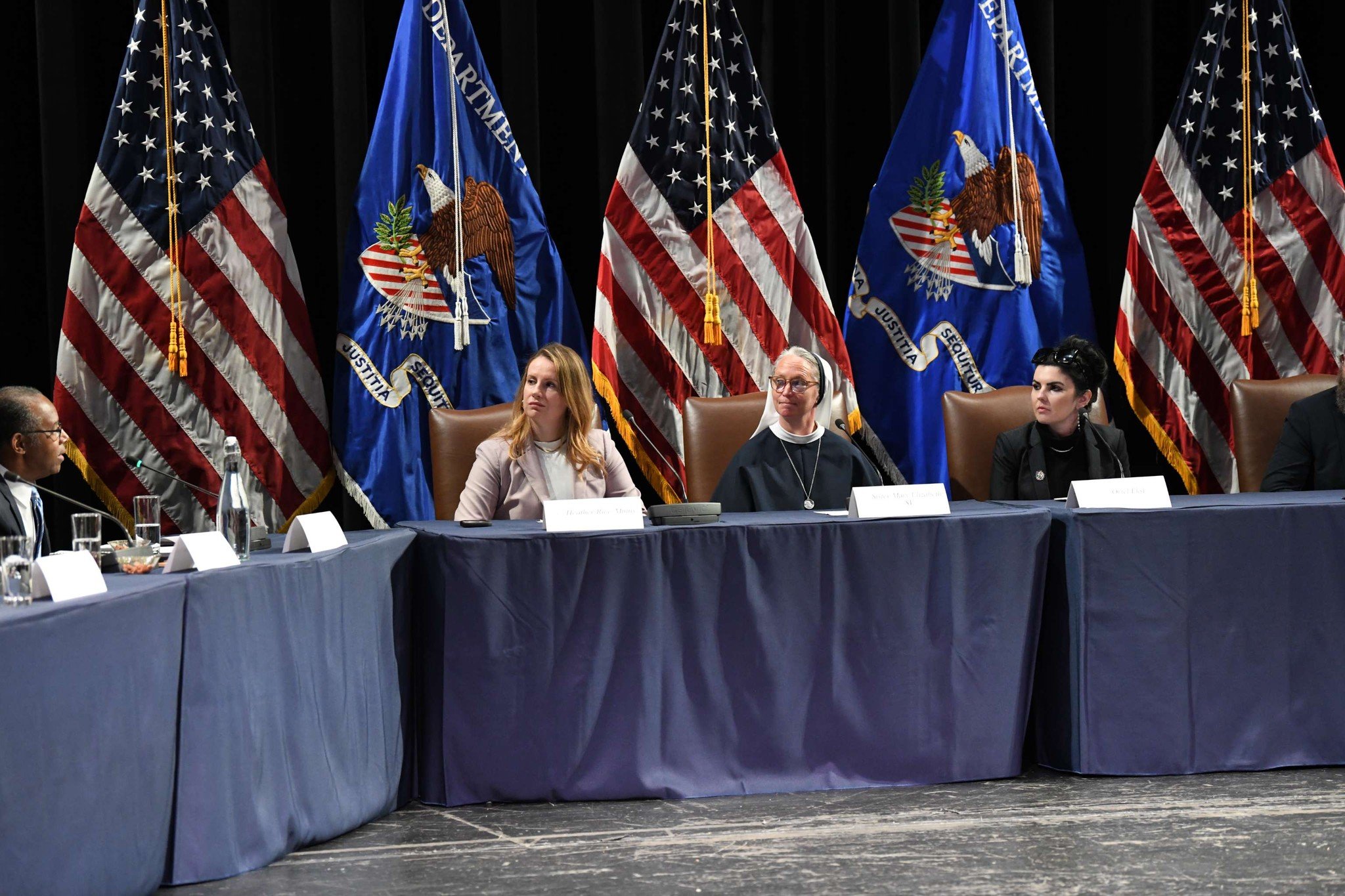
The Religious Liberty Commission (RLC) is a federal advisory body established by the President via executive order in May 2025. It is chaired by Texas Lt. Gov. Dan Patrick (with Dr. Ben Carson as vice chair) and includes various faith leaders and public figures. Its job is to examine the foundations and current state of religious liberty in America, identify threats to it, and make policy recommendations to the White House—particularly on protecting free exercise of religion. This is something we can support. Maybe.
Recent concern stems from the commission's final hearing on April 13, 2026, at the Museum of the Bible in Washington, D.C. During that session, Chair Dan Patrick stated:“It is time to set the record straight:
“There is no such thing as ‘separation of church and state’ in the Constitution. For too long, the anti-God left has used this phrase to suppress people of religion in our country.”He and other participants argued that the phrase has been weaponized to restrict religious expression in public life, schools, government, and elsewhere, and that witnesses across the commission's hearings described it as eroding God-given rights. Patrick suggested recommendations like posting notices in schools and businesses affirming religious liberty protections while calling the separation idea “the biggest lie that’s been told in America since our founding.”
Constitutional Facts
It is true that the exact phrase “separation of church and state” does not appear in the U.S. Constitution. It originates from Thomas Jefferson’s 1802 letter to the Danbury Baptist Association, where he described the First Amendment as building “a wall of separation between Church & State.”
The Establishment Clause and Free Exercise Clause of the First Amendment states:
“Congress shall make no law respecting an establishment of religion, or prohibiting the free exercise thereof…”
This prohibits the federal government from doing two things:
- Establishing an official national religion (or compelling support for one).
- Prohibiting individuals or groups from freely exercising their religion.
Uproar after Iran named vice-chair of UN body promoting democracy, women’s rights
Critics say Tehran's vice-chair role on Commission for Social Development contradicts its record of brutalizing women and massacring civilians
https://www.foxnews.com/video/6389137835112
The Islamic Republic secured the post without objection, as the commission prepares to focus on democracy, gender equality, tolerance and non-violence. Chair: "I hear no objection" (Credit: UNTV)
UNITED NATIONS: Iran’s election as vice-chair of the United Nations Commission for Social Development is being slammed by human rights advocates and policy analysts, who have condemned the U.N.'s hypocrisy when it comes to its treatment of undemocratic regimes.
The leadership role was approved without objection during a meeting of the commission, where delegates adopted agenda items and organizational decisions by consensus.
The United Nations has faced continued criticism over its inaction towards the regime's violent crackdown against protesters in December and January. On Wednesday, U.N. Secretary General António Guterres faced criticism for congratulating Iran on the anniversary of the 1979 Islamic revolution.
UN CHIEF BLASTED AS ‘ABJECTLY TONE-DEAF’ OVER MESSAGE TO IRAN MARKING REVOLUTION ANNIVERSARY
The Islamic Republic secured the post without objection, as the commission prepares to focus on democracy, gender equality, tolerance and non-violence. Chair: "I hear no objection" (Credit: UNTV)
UNITED NATIONS: Iran’s election as vice-chair of the United Nations Commission for Social Development is being slammed by human rights advocates and policy analysts, who have condemned the U.N.'s hypocrisy when it comes to its treatment of undemocratic regimes.
The leadership role was approved without objection during a meeting of the commission, where delegates adopted agenda items and organizational decisions by consensus.
The United Nations has faced continued criticism over its inaction towards the regime's violent crackdown against protesters in December and January. On Wednesday, U.N. Secretary General António Guterres faced criticism for congratulating Iran on the anniversary of the 1979 Islamic revolution.
UN CHIEF BLASTED AS ‘ABJECTLY TONE-DEAF’ OVER MESSAGE TO IRAN MARKING REVOLUTION ANNIVERSARY
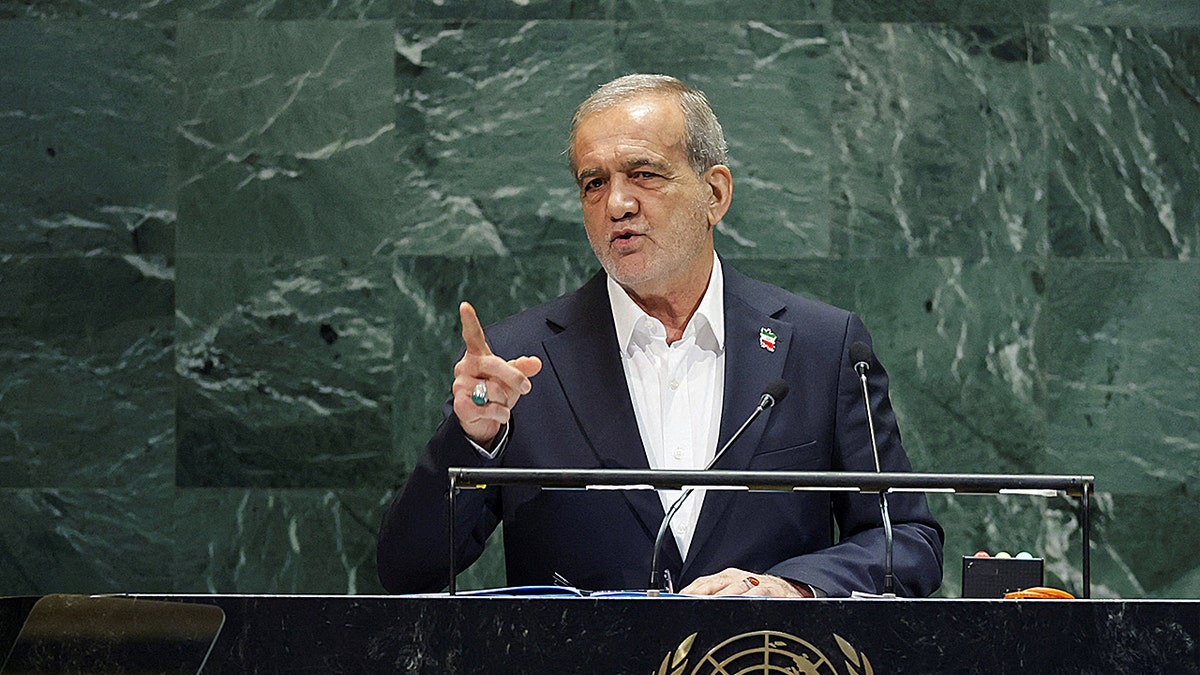
Pezeshkian accused the U.S. of a "grave betrayal" at the United Nations General Assembly on Sept. 24, 2025, in New York City. (Jeenah Moon/Reuters)
U.S. Ambassador to the United Nations Mike Waltz criticized the development, writing on X: "Yet another reason why we are not a member of, nor do we participate in, this ridiculous ‘Commission for Social Development.’"
Monday, April 20, 2026
My response to Joanna de Bruyn's "Epstein, Iran, 250 years, Heritage Foundation Connected"

Mrs. Joanna de Bruyn my hope is that you accept my observation of your presentation as constructive criticism, and forgive me for pointing out a few oddities.
You began your presentation mentioning "Epstein, Iran, 250 years, Heritage Foundation Connected", and associated all these with Trump, the American Empire, and the United Nations, all these nexuses make sense. Eventually, you ended up focusing on the United Nations and your recent appeal for the GCSDA Corporation (501C3) to divest itself from that World Government (U.N.) behemoth.
My question to you is where have you been for the last 30 years that you failed to notice that your fellow Austrailian Russell Standish's son and GEORGETOWN UNIV. (Juris Doctor) ALUMNUS, James D. Standish was an official representative to the U.S. Government and Liaison for the GCSDA to the United Nations in New York & Geneva?
Besides these violations of 2nd Corinthians 6:14, Bert B. Beach, John Graz, and Ganoune Diop have all been the church’s liaison to the United Nations, while being president/secretary general of the International Religious Liberty Association (IRLA), and SIMULTANEOUSLY secretaries of the Conference of Secretaries of Christian World Communions, an offshoot of the World Council of Churches (WCC).
So, why are you waking up now regarding this ECUMENICAL duplicity within the GCSDA Corporation?
The Adventist Movement is the CHURCH, not the General Conference of Seventh day Adventist.
God that made the world and all things therein, seeing that he is Lord of heaven and earth, dwelleth not in temples made with hands;
Acts 17:24.
God has a church. It is not the great cathedral, neither is it the national establishment, neither is it the various denominations; it is the people who love God and keep His commandments. “Where two or three are gathered together in my name, there am I in the midst of them” (Matthew 18:20). Where Christ is even among the humble few, this is Christ’s church, for the presence of the High and Holy One who inhabiteth eternity can alone constitute a church.
The Upward Look, p.315.
How an Adventist Health Food Company Is Leveraging AI to Share Its Message
24 Feb 2026
Australia and New Zealand’s Sanitarium is making the most of new technologies.
Marcos Paseggi, Adventist Review

Todd Saunders (right) and Rachel Glasbergen, from Sanitarium Australia and New Zealand, share how the company is resorting to AI tools to share its message across. [Photo: Marcos Paseggi, Adventist Review]
Artificial intelligence (AI) has made significant strides in images and video during the past couple of years, and the Sanitarium Health Food Company in Australia and New Zealand is tapping into some of those new possibilities, according to the company executive general manager Todd Saunders. In a presentation during the 2026 Adventist Health Food Association (AHFA) Conference in Punta Cana, Dominican Republic, Saunders and Rachel Glasbergen, who leads The Alternative Dairy Company for Sanitarium, shared how the company is leveraging AI use to streamline the company ads across platforms and what they have learned along the way.
In their February 10 presentation, Saunders and Glasbergen highlighted the opportunities, challenges, and possibilities of AI in the area of marketing and advertising. They did it by sharing some case studies based on their experience of The Alternative Dairy Company, a brand under Sanitarium that produces specialized, barista-grade plant-based milks, including oat, almond, soy, and coconut. Designed for cafés, their products are crafted for superior frothing and latte art, and in many cases use locally sourced ingredients.
Artificial intelligence (AI) has made significant strides in images and video during the past couple of years, and the Sanitarium Health Food Company in Australia and New Zealand is tapping into some of those new possibilities, according to the company executive general manager Todd Saunders. In a presentation during the 2026 Adventist Health Food Association (AHFA) Conference in Punta Cana, Dominican Republic, Saunders and Rachel Glasbergen, who leads The Alternative Dairy Company for Sanitarium, shared how the company is leveraging AI use to streamline the company ads across platforms and what they have learned along the way.
In their February 10 presentation, Saunders and Glasbergen highlighted the opportunities, challenges, and possibilities of AI in the area of marketing and advertising. They did it by sharing some case studies based on their experience of The Alternative Dairy Company, a brand under Sanitarium that produces specialized, barista-grade plant-based milks, including oat, almond, soy, and coconut. Designed for cafés, their products are crafted for superior frothing and latte art, and in many cases use locally sourced ingredients.
Sunday, April 19, 2026
Saturday, April 18, 2026
Mamdani, Obama meet for the first time at Bronx Child Care Center
FULL VIDEO: Mamdani, Obama meet for the first time at Bronx Child Care Center
Eyewitness News ABC7NY
Mayor Zohran Mamdani spent part of his Saturday in the Bronx with young school children - and former President Barack Obama.
Both Obama and Mamdani spoke after the mayor's historic election last year, but the event at 'Learning Through Play Pre-K Center' is the first time they have met face-to-face. They spent their time reading children's books, reading and getting to know each other.
Bishop Burbidge calls for new immigration policy, criticizes Trump’s treatment of Pope Leo

Bishop Michael Burbidge (Photo by the Diocese of Arlington/X)
In a recent podcast episode, Bishop Michael Burbidge of the Diocese of Arlington, Virginia, decried President Donald Trump’s criticism of Pope Leo XIV as “unfortunate and disheartening” and offered his support to three cardinals who recently discussed immigration and politics with CBS News, saying he agreed with many of their points.
Bishop Burbidge began the episode of his podcast, “Walk Humbly,” by discussing the April 12 CBS News interview, which featured Cardinal Blase Cupich of Chicago, Cardinal Robert McElroy of Washington, D.C., and Cardinal Joseph Tobin of Newark, New Jersey. As Zeale News previously reported, the cardinals addressed the Trump administration's war in Iran and immigration enforcement and the relationship between Catholicism and politics.
Bishop Burbidge emphasized that the cardinals’ views do not represent those of all U.S. bishops, but he said that he agreed with several of the points made during the interview, especially the cardinals’ comment that the U.S. should adopt “a comprehensive approach to immigration.”
“It’s not good, it’s really quite wrong, that American immigration policy changes so dramatically with elections,” he said. “As the Church teaches, and we say this often on the podcast, every nation has the right to regulate its borders and enforce just immigration policy. At the same time, every migrant has a duty and obligation to respect the laws of the nation and always contribute positively to society. And for many, many years American immigration policy has been inconsistent.”
Bishop Burbidge said that the Church calls political leaders to shape immigration policy around human dignity and the common good, which he said “includes upholding justice and a rule of law.” Human dignity and the common good are not opposed to each other, he said, adding that he believes America, as a great nation, can discover a way to enforce immigration law that harmonizes both aspects.
The bishop also addressed Pope Leo’s calls for peace amid the U.S.-Iran conflict, saying that while Church doctrine recognizes “the right and duty of nations” to fight just wars, the Church “always promotes and pursues justice and peace.”
“Conflict should always be avoided wherever and whenever possible through tireless and relentless dialogue and negotiations,” he later added. “So Pope Leo has been an incredible witness to the Gospel, promoting peace since the war broke out.”
Finally, Bishop Burbidge discussed Trump’s social media posts and comments that criticized Pope Leo, saying that there was “no doubt” that the posts “crossed a line.”
“The Pope is not a politician. He was not speaking as a politician. He’s not a political rival,” the bishop said. “The Holy Father is the Vicar of Christ, called by his office to preach the Gospel and to speak moral truth to the entire world. So just like every father — every father strives for peace in his family and for his children — the Holy Father wants peace in the world. He wants peace for all of us and the glory of God.”
Bishop Burbidge emphasized that the Church seeks to inspire and influence political life since “politics involves applying principles and moral law … to the issues of our day.”
“So we will always, as the Holy Father has done so beautifully, call civil leaders to recognize what scripture tells us, that the ultimate authority comes from God,” he continued, later adding, “We’re not here to obey man; we’re here to obey God.”
In a recent podcast episode, Bishop Michael Burbidge of the Diocese of Arlington, Virginia, decried President Donald Trump’s criticism of Pope Leo XIV as “unfortunate and disheartening” and offered his support to three cardinals who recently discussed immigration and politics with CBS News, saying he agreed with many of their points.
Bishop Burbidge began the episode of his podcast, “Walk Humbly,” by discussing the April 12 CBS News interview, which featured Cardinal Blase Cupich of Chicago, Cardinal Robert McElroy of Washington, D.C., and Cardinal Joseph Tobin of Newark, New Jersey. As Zeale News previously reported, the cardinals addressed the Trump administration's war in Iran and immigration enforcement and the relationship between Catholicism and politics.
Bishop Burbidge emphasized that the cardinals’ views do not represent those of all U.S. bishops, but he said that he agreed with several of the points made during the interview, especially the cardinals’ comment that the U.S. should adopt “a comprehensive approach to immigration.”
“It’s not good, it’s really quite wrong, that American immigration policy changes so dramatically with elections,” he said. “As the Church teaches, and we say this often on the podcast, every nation has the right to regulate its borders and enforce just immigration policy. At the same time, every migrant has a duty and obligation to respect the laws of the nation and always contribute positively to society. And for many, many years American immigration policy has been inconsistent.”
Bishop Burbidge said that the Church calls political leaders to shape immigration policy around human dignity and the common good, which he said “includes upholding justice and a rule of law.” Human dignity and the common good are not opposed to each other, he said, adding that he believes America, as a great nation, can discover a way to enforce immigration law that harmonizes both aspects.
The bishop also addressed Pope Leo’s calls for peace amid the U.S.-Iran conflict, saying that while Church doctrine recognizes “the right and duty of nations” to fight just wars, the Church “always promotes and pursues justice and peace.”
“Conflict should always be avoided wherever and whenever possible through tireless and relentless dialogue and negotiations,” he later added. “So Pope Leo has been an incredible witness to the Gospel, promoting peace since the war broke out.”
Finally, Bishop Burbidge discussed Trump’s social media posts and comments that criticized Pope Leo, saying that there was “no doubt” that the posts “crossed a line.”
“The Pope is not a politician. He was not speaking as a politician. He’s not a political rival,” the bishop said. “The Holy Father is the Vicar of Christ, called by his office to preach the Gospel and to speak moral truth to the entire world. So just like every father — every father strives for peace in his family and for his children — the Holy Father wants peace in the world. He wants peace for all of us and the glory of God.”
Bishop Burbidge emphasized that the Church seeks to inspire and influence political life since “politics involves applying principles and moral law … to the issues of our day.”
“So we will always, as the Holy Father has done so beautifully, call civil leaders to recognize what scripture tells us, that the ultimate authority comes from God,” he continued, later adding, “We’re not here to obey man; we’re here to obey God.”
Friday, April 17, 2026
Thursday, April 16, 2026
Tuesday, April 14, 2026
Monday, April 13, 2026
Cuban president says ‘if we need to die, we’ll die’ to prevent U.S. invasion: Full interview
6667 y y jjjjjjjjjjjxjjjjjjjjjjjxcnnnnnnnnnnnnjnko I oķ
Trump Lambasts ‘Weak’ Leo XIV, Urges Him To ‘Focus On Being A Great Pope, Not A Politician’

Screenshot/X/@RapidResponse47
Thomas Wong
Weekend editor
April 13, 202612:42 AM ET

President Donald Trump fired off his most public and intense criticism of Pope Leo XIV in a lengthy Sunday night post to Truth Social and also in remarks to journalists, calling the spiritual head of the Catholic Church “weak” and “terrible” on key issues.
“Pope Leo is WEAK on Crime, and terrible for Foreign Policy. He talks about ‘fear’ of the Trump Administration, but doesn’t mention the FEAR that the Catholic Church, and all other Christian Organizations, had during COVID when they were arresting priests, ministers, and everybody else, for holding Church Services, even when going outside, and being ten and even twenty feet apart,” Trump began his criticism on social media.
“I like his brother Louis much better than I like him, because Louis is all MAGA. He gets it, and Leo doesn’t!” the president continued, referring to the pontiff’s older brother Louis Prevost, a Trump supporter living in Florida. “I don’t want a Pope who thinks it’s OK for Iran to have a Nuclear Weapon. I don’t want a Pope who thinks it’s terrible that America attacked Venezuela, a Country that was sending massive amounts of Drugs into the United States and, even worse, emptying their prisons, including murderers, drug dealers, and killers, into our Country.”
“And I don’t want a Pope who criticizes the President of the United States because I’m doing exactly what I was elected, IN A LANDSLIDE, to do, setting Record Low Numbers in Crime, and creating the Greatest Stock Market in History,” he added.
Sunday, April 12, 2026
Marco Rubio STUNS with Speech, then this happens
Fact: 7 Out the 9 U.S. Supreme Court Justices are Roman Catholics
Marco Rubio: the Catholic Roots of America
Marco Rubio is not only the U.S. Secretary of STATE, he's also the spokeperson for the Vatican...
Christianity as Rome’s Secret Strategy—And Why It Worked So Well
By Author Julia Davis
Posted onPublished: December 16, 2025
Source: ShutterStock
The church would have us believe that the Emperor Constantine suddenly “found Jesus” and decided to turn his entire empire Christian overnight.
But that might not be the whole truth, and his reasons for accepting the new faith might not have been as pure and honest as they seem.
Christianity has a message of unity and acceptance, and the Romans saw great potential in that.
They had a long and tumultuous history of dealing with conquered peoples, and they knew that brute force wasn’t enough for the Roman influence to truly last.
The church would have us believe that the Emperor Constantine suddenly “found Jesus” and decided to turn his entire empire Christian overnight.
But that might not be the whole truth, and his reasons for accepting the new faith might not have been as pure and honest as they seem.
Christianity has a message of unity and acceptance, and the Romans saw great potential in that.
They had a long and tumultuous history of dealing with conquered peoples, and they knew that brute force wasn’t enough for the Roman influence to truly last.
A Tapestry of Gods and Cultures

© Pexels
The Roman Empire was a melting pot of different cultures and religions. There was a god for every occasion, every city, and every aspect of life.
This strong religious tradition was deeply woven into daily routines and laws.
These were all national cults, and each and every people that the Romans conquered had their own.
The pantheons were a huge part of people’s identity, and no amount of Roman force would get them to give that up.
Not to mention, these conquered peoples loathed the very idea of the Romans, and rejected all that was imposed on them.
But Christianity was not Roman. That’s why the Empire recognized it as the one assimilation strategy that wouldn’t cause outright rebellion.
The Roman Empire was a melting pot of different cultures and religions. There was a god for every occasion, every city, and every aspect of life.
This strong religious tradition was deeply woven into daily routines and laws.
These were all national cults, and each and every people that the Romans conquered had their own.
The pantheons were a huge part of people’s identity, and no amount of Roman force would get them to give that up.
Not to mention, these conquered peoples loathed the very idea of the Romans, and rejected all that was imposed on them.
But Christianity was not Roman. That’s why the Empire recognized it as the one assimilation strategy that wouldn’t cause outright rebellion.