Pages

Saturday, August 01, 2026

Who Controls the Tithe? What the Bible and Ellen White Really Say - Pastor Al Fletcher

 
Jul 31, 2026

Who decides where your tithe should go?

In this detailed Bible study, we examine the meaning of God’s storehouse, the role of self supporting ministries, the history of the Madison school, and the believer’s personal responsibility as a steward before God.

This message also addresses the responsibility of faithful watchmen, the danger of supporting open apostasy, and why no human being or institution should replace the voice of God in matters of conscience.

Study the evidence, pray for wisdom, and allow Scripture to guide your decision.


Thousands of Moroccan migrants leave after storming Spanish enclave


...

 ðŸ”™

 Spain Escorts Thousands of Migrants Back to Morocco After Deadly Ceuta Border Crisis | AC1G


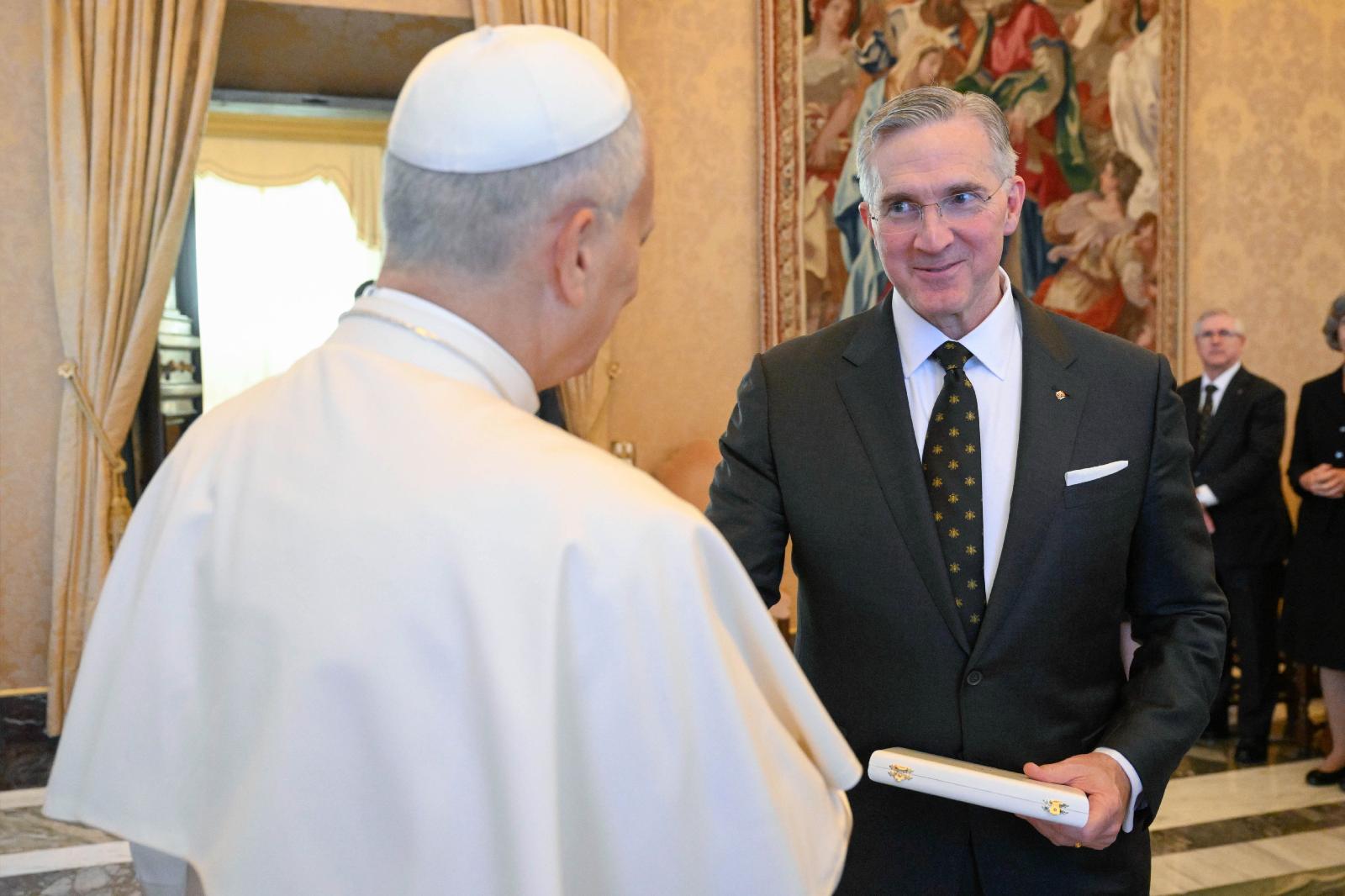
Pope Leo says his ancestors were both ‘slaves and slave owners’


Pope Leo XIV has delved into his family history, revealing his ancestry included both enslaved people and slave owners.

“I come from a family that my grandparents were immigrants,” the first American pontiff told NBC news in the Vatican Gardens of Castel Gandolfo on Wednesday. “On my mother’s side, we have people who were both slaves and slave owners.”

Leo spoke about his family’s historical links to the transatlantic slave trade on Wednesday in response to a reporter’s question about his American heritage.

Asked what he loves about his homeland, the pope also said he highly values the United States’ “sense of freedom, the sense of opportunity” and “of having invited for generations people from around the world to be part of America.”

The importance of welcoming new arrivals is a message the Chicago-born pope has repeatedly sent to the US, as he has criticized the “inhuman” treatment of immigrants during the Trump administration’s crackdown.

Fauci’s 5th Frenzy: 111 Refusals on Capitol Hill


July 30, 2026 NewsHound


Dr. Anthony Fauci’s July 29, 2026, appearance before the Senate Homeland Security and Governmental Affairs Committee, chaired by Sen. Rand Paul, was a contentious spectacle marked by his repeated invocation of the Fifth Amendment.

The 85-year-old former NIAID director, subpoenaed after declining voluntary testimony, opened by accusing Paul of an “obvious obsession” and “unhinged” campaign aimed at putting him “behind bars.” He cited Paul’s prior calls for prosecution, critical comments, and the recent public release of Fauci’s unredacted personal diary. On advice of counsel, he then declined nearly every question—invoking the Fifth roughly 111 times (reports range from over 100 to about 115)—with the fixed reply that he declined based on his constitutional rights against self-incrimination.

Compounding the optics was the preemptive “full and unconditional” pardon Biden granted Fauci on January 19, 2025—his final full day in office—covering any potential offenses from 2014 tied to his government service. That document was executed via autopen, the mechanical signature device, amid later revelations that White House staff (including then-Chief of Staff Jeff Zients) authorized its use after late-night meetings, with limited contemporaneous evidence of Biden’s direct personal review of every name. Critics have hammered the process as a last-minute shield that bypassed traditional accountability, raising unresolved questions about presidential intent and validity even as Biden insisted he made the decisions and that autopen use is longstanding and legal. The pardon did not cover potential new perjury or obstruction from this hearing itself, leaving Fauci still vulnerable and the Fifth as his remaining fortress.

Questions covered long-disputed topics: NIH funding related to gain-of-function research, the Wuhan lab and COVID-19 origins, pandemic response decisions, diary entries, and even trivial probes (tie color, carpet color) meant to test the scope of the privilege. Fauci answered no questions substantively. One of his attorneys was ejected after attempting to interject. Paul and other Republicans expressed frustration, warned of obstruction consequences, and signaled plans for a contempt-of-Congress vote, arguing the prior Biden preemptive pardon (covering actions through early 2025) limited the privilege’s applicability to new testimony risks such as perjury.


Fauci framed the hearing as a political trap rather than legitimate oversight, noting his extensive prior congressional appearances without invoking the Fifth. Supporters of the inquiry viewed the blanket silence as obstructive and damaging to accountability on pandemic policy and research. Critics of the proceedings saw it as a partisan exercise unlikely to yield new facts given the adversarial history between Paul and Fauci. The session produced no substantive answers, amplified existing divides over COVID origins and handling, and left legal questions (contempt, the interplay of pardon and privilege) for further process. It underscored how polarized the residual debates remain, 5-6 years later.

[BREAKING: Florida Attorney General James Uthmeier is sending a plane to Washington DC to obtain mountains of evidence against Dr. Fauci so a state-level case can be brought — CIRCUMVENTING the pardon]

Bellarmine – Champion of Rome


The Jesuit cardinal Robert Bellarmine (1542-1621), the 400th anniversary of whose death is noticed in 2021, was the greatest polemical theologian, controversialist and defender of the Papacy that the Church of Rome ever produced. Whereas the Council of Trent (1545-1563) dogmatically defined the doctrine of the Church of Rome in a series of decrees and anathemas, it fell to Bellarmine to provide all the theological underpinnings and, by controversy, to counter every argument of Protestantism, whether Lutheran, Calvinist or whatever. He did so principally by his lectures to young Jesuits training to be the foot soldiers of the Counter-Reformation, and by his printed Controversies. Bellarmine also produced a catechism that was adopted by the Roman Catholic Church as its official teaching until the First Vatican Council in 1870, which relied heavily on Bellarmine’s arguments in favour of Papal infallibility.[1] He was declared by Rome a Doctor of the Church in 1931, the prerequisite to which was his canonization as a saint the previous year.

The Protestant Reformers had studied the Scriptures in their original languages, and deeply familiarized themselves with church history and the writings of the Church Fathers, but there was little comparable expertise within the Church of Rome: few Roman apologists until Bellarmine could argue convincingly from history, or from the Fathers, or from the original languages, leaving the Church of Rome at a significant disadvantage in controversy. A milestone in modern history was the production of the Historia Ecclesiae Christi by Lutheran scholars at Magdeburg (1559-74), thirteen volumes covering a century each, often known as the Magdeburg Centuries. Painstakingly and meticulously researched using primary sources from all over Europe, the Magdeburg Centuries demonstrated the continuity in all ages of the Church and her doctrine in each article of faith. This made it relatively easy for Protestants to expose and counter the errors in the traditional narrative of the Roman church with its mediaeval legends, inventions, hagiographies, and forgeries.[2]

Roberto Francesco Romolo Bellarmino was born on October 4, 1542 in the town of Montepulciano in Tuscany, then within the Papal States. He was the third of five sons, and had seven sisters. His maternal uncle, Cardinal Marcello Cervini, hailed from the town, and became Pope Marcellus II when Robert was 12. In 1557 Spanish Jesuits set up a school in the town, which attracted away Robert from the local grammar school. Robert quickly came under their spell to join the order, contrary to the will of his father, who wished him to qualify in medicine. In an extraordinary circumvention of the requirement for a 2-year noviciate, Robert was fast-tracked into taking vows at the age of seventeen. Within days Robert was fitted with his cassock and dispatched to the Jesuits’ Roman College in Rome. He became Il Maestro Roberto at 21, and thereafter taught at Florence, then at Mondovi in Piedmont, and at Padua, all the while honing his skills in preaching.

In 1569 Bellarmine was sent to Louvain in the Low Countries, where he distinguished himself by regular preaching and public lectures in Latin, his auditors exceeding 2000 persons at a time.[3] Louvain was a Roman Catholic stronghold in a region much influenced by Protestantism, and his Jesuit superiors knew that there he could in relative safety cut his teeth in controversy. The main dispute when he arrived was an intramural affair at the University, where Michael de Bay (Latin ‘Baius’), who had attended the Council of Trent as a theologian delegate, taught that Roman theology had become too reliant on mediaeval scholasticism and the writings of Thomas Aquinas. Baius records that he ‘endeavoured to bring theology back to Holy Scripture and the writings of the Fathers’, which sounded suspiciously like the trail that the Reformers had blazed. Unsurprisingly, Baius’ views were condemned by a Papal Bull and yet rumbled on.[4] The Jesuits, disliking any sympathy at the University for what they considered crypto-Protestantism, set up their own college in Louvain in 1570 and installed the recently ordained Bellarmine as its first professor, where he dutifully lectured and wrote against the views of Baius, while avoiding mention of his name. His star in controversy being in the ascendant, but now ailing in health and troubled by regional wars, Bellarmine was recalled to Rome in 1576 to take up the chair of Controversial Theology at the Roman College, where he had once trained. He served successively as lecturer, then as Spiritual Father of the college (1588), and at length its Rector (1592).