Tuesday, April 14, 2020

North Korea fires barrage of missiles from ground and air


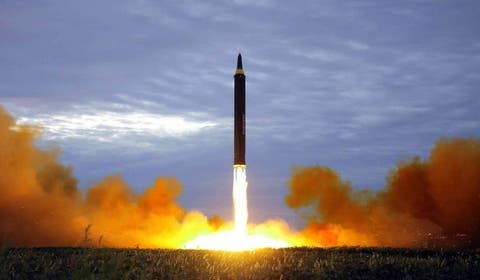
This Aug. 29, 2017, file photo distributed on Aug. 30, 2017, by the North Korean government shows what was said to be the test launch of a Hwasong-12 intermediate-range missile in Pyongyang, North Korea. South Korea says North Korea has ... more >


By Hyung-jin Kim - Associated Press - Updated: 4:37 a.m. on Tuesday, April 14, 2020


SEOUL, South Korea (AP) — A barrage of North Korean missiles fired from both the ground and fighter jets splashed down on the waters off the country’s east coast on Tuesday, South Korea’s military said, a major show of force on the eve of a key state anniversary in the North and parliamentary elections in the rival South.

The back-to-back launches were the most high-profile among a series of weapons tests that North Korea has conducted recently amid stalled nuclear talks and outside worries about a possible coronavirus outbreak in the country.

North Korean troops based in the eastern coastal city of Munchon first launched several projectiles — presumed to be cruise missiles — on Tuesday morning, South Korea’s Joint Chiefs of Staff said in a statement.

The weapons flew more than 150 kilometers (93 miles) off the North’s east coast, a South Korean defense official said. If confirmed, it would be the North’s first cruise missile launch since June 2017, said the official, who spoke on condition of anonymity, citing department rules.

Later Tuesday, North Korea launched several Sukhoi-class fighter jets that fired an unspecified number of air-to-surface missiles toward the North’s eastern waters, the defense official said.

The official said North Korea has recently appeared to be resuming its military drills that it had scaled back due to concerns about the cornovirus pandemic. He said other North Korean fighter jets also flew on patrol near the border with China on Tuesday.

In recent weeks, North Korea has test-launched a variety of missiles and other weapons amid deadlocked nuclear negotiations with the United States.


Was There Foreknowledge of the Plandemic? - Questions For Corbett

The next outbreak? We’re not ready | Bill Gates

Monday, April 13, 2020

News Wrap: At least 30 people killed as severe storms sweep the Deep South

Pope Francis pushes for universal basic income


by Jordyn Pair · Apr 13th, 2020 9:29 am


Last Updated Apr 13th, 2020 at 10:04 am

Pope Francis said in an Easter letter to members of various social movements that the crisis caused by the coronavirus could be a time to consider a universal basic income.

"I know that you have been excluded from the benefits of globalization," he wrote on April 12. "You do not enjoy the superficial pleasures that anesthetize so many consciences, yet you always suffer from the harm they produce. The ills that afflict everyone hit you twice as hard."

Pointing to "street vendors, recyclers, carnies, small farmers, construction workers, dressmakers, the different kinds of caregivers" who have "no steady income," Francis said that a universal basic income should be considered.

"This may be the time to consider a universal basic wage which would acknowledge and dignify the noble, essential tasks you carry out. It would ensure and concretely achieve the ideal, at once so human and so Christian, of no worker without rights," he said.

He also said that he hopes that governments begin to understand that "technocratic paradigms" are not set up to address "this crisis or other great problems affecting humankind."

"I hope that this time of danger will free us from operating on automatic pilot, shake our sleepy consciences and allow a humanist and ecological conversion that puts an end to the idolatry of money and places human life and dignity at the center," Francis said. "Our civilization — so competitive, so individualistic, with its frenetic rhythms of production and consumption, its extravagant luxuries, its disproportionate profits for just a few — needs to downshift, take stock, and renew itself."


Sunday, April 12, 2020

��Unemployment Numbers Skyrocketing - America in Deep Economic Freeze An...

Krakatoa Volcano Erupts in Indonesia _ Actual Video

Connection Between Pandemic & Sunday Law | is the end of religious liberty?

Government Predicted Coronavirus

Finding Community Among The Ashes: How Faith Reaches Across Distance


April 12, 2020
7:00 AM ET


CLAIRE WALLACE


The thumb of the Rev. Patrick Conroy, chaplain of the U.S. House of Representatives, is stained from ashes he made this year for Ash Wednesday.Greg Miller for NPR


Every Ash Wednesday for over 20 years, photographer Greg Miller has lugged a large format camera around New York City, taking photos on old-school film, and capturing how Catholics across the world perform this devotional together.

This year, instead of New York, he brought his camera to Capitol Hill to photograph members of Congress, their staff, lobbyists and religious leaders and discuss what Ash Wednesday means to them.


Photographer Greg Miller sets up his camera in the Rayburn Reception Room on Capitol Hill.Kisha Ravi/NPR


Miller arrived in Washington in late February, just as Lent was beginning, but weeks before the coronavirus would come to fully grip the nation. It was a time when people could still attend church and celebrate their faith together.

Some 40 days and 40 nights later, the world feels like a very different place. While Lent has always been a time for self-reflection and sacrifice, this year, with millions sheltering in place and a global pandemic swirling around them, the season has taken on new meaning for many Christians.

Still, in their February conversations with Miller, Christians from all types of different backgrounds paused to reflect on their faith and discuss the importance of religion in their lives. The themes that emerged — community, togetherness, renewal — are perhaps more resonant than they could have known, and help highlight how the bonds faith can connect people across time and distance.


“The Coronavirus Pandemic Will Forever Alter the World Order” by Henry Kissinger


“The Coronavirus Pandemic Will Forever Alter the World Order”

by Henry Kissinger

VOLTAIRE NETWORK | NEW YORK (USA) | 4 APRIL 2020 

ESPAÑOL FRANÇAIS


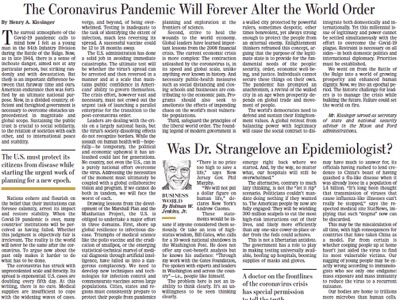
The surreal atmosphere of the Covid-19 pandemic calls to mind how I felt as a young man in the 84th Infantry Division during the Battle of the Bulge. Now, as in late 1944, there is a sense of inchoate danger, aimed not at any particular person, but striking randomly and with devastation. But there is an important difference between that faraway time and ours. American endurance then was fortified by an ultimate national purpose. Now, in a divided country, efficient and farsighted government is necessary to overcome obstacles unprecedented in magnitude and global scope. Sustaining the public trust is crucial to social solidarity, to the relation of societies with each other, and to international peace and stability.

Nations cohere and flourish on the belief that their institutions can foresee calamity, arrest its impact and restore stability. When the Covid-19 pandemic is over, many countries’ institutions will be perceived as having failed. Whether this judgment is objectively fair is irrelevant. The reality is the world will never be the same after the coronavirus. To argue now about the past only makes it harder to do what has to be done.

The coronavirus has struck with unprecedented scale and ferocity. Its spread is exponential: U.S. cases are doubling every fifth day. At this writing, there is no cure. Medical supplies are insufficient to cope with the widening waves of cases. Intensive-care units are on the verge, and beyond, of being overwhelmed. Testing is inadequate to the task of identifying the extent of infection, much less reversing its spread. A successful vaccine could be 12 to 18 months away.

The U.S. administration has done a solid job in avoiding immediate catastrophe. The ultimate test will be whether the virus’s spread can be arrested and then reversed in a manner and at a scale that maintains public confidence in Americans’ ability to govern themselves. The crisis effort, however vast and necessary, must not crowd out the urgent task of launching a parallel enterprise for the transition to the post-coronavirus order.

Leaders are dealing with the crisis on a largely national basis, but the virus’s society-dissolving effects do not recognize borders. While the assault on human health will—hopefully— be temporary, the political and economic upheaval it has unleashed could last for generations. No country, not even the U.S., can in a purely national effort overcome the virus. Addressing the necessities of the moment must ultimately be coupled with a global collaborative vision and program. If we cannot do both in tandem, we will face the worst of each.

Saturday, April 11, 2020

Flame in the Wind

This Week Democrats Say: Snitch on Your Neighbors | Steve Deace Show

[CCP Virus] How the World Is Being Manipulated By Covid 19 Propaganda Fr...

#Lock_Step_Scenario / novel #coronavirus epidemic are familiar with Even...

We can’t shelter in place forever: How the coronavirus lockdown might end


We can’t shelter in place forever: How the coronavirus lockdown might end


A closed program at Ryan Bonaminio Park in Riverside.
(Gina Ferazzi/Los Angeles Times) 


Staff Writer
April 10, 2020
4 AM


The coronavirus cannot keep us stuck in our homes forever.

Someday our kids will go back to school, we will return to work, and families and friends will gather once again for birthdays, holidays, weddings and funerals.

We will see movies in theaters, get drunk in crowded bars, and scream recklessly in packed sports stadiums — droplets be damned.

But how will we get from here to there? What will reentry to normal life look like? How will we ever trust the coronavirus, our unseen enemy, not to infect us at every opportunity?

As with most things related to the coronavirus, there are still many unknowns.

This virus has only been circulating in the human population for about four months. Every day scientists learn more about how it spreads, how it makes us sick, and how we might protect ourselves from getting infected in the first place.

Nobody can say for sure exactly what our return to normalcy will look like, or how long it will take to get there, but experts can offer some educated guesses.

In California, public health officials said social distancing policies will probably remain in place for months, and they warn that lifting the strict rules too early could worsen the health crisis.

They also caution that coronavirus cases are likely to rise when stay-at-home orders are relaxed.

Julie Swann, head of the Fitts Department of Industrial and Systems Engineering at North Carolina State University in Raleigh, said she expects the strict stay-at-home orders will be lifted before a vaccine is found — an endeavor that could take another year at least.

“If we ramp up our hospitals’ capability to deal with people who are sick, ramp up testing so we know who is sick and who has recovered, and if there is treatment that shortens hospitalization time, then we may not need to be as drastic as we are now,” she said.


CoronaCrisis: Easter Sunday and Sunday Laws

UN Chief Special {ecumenical} Appeal to Religious Leaders (11 April 2020)

Event 201 Pandemic Exercise: Segment 5, Hotwash and Conclusion

Friday, April 10, 2020

Dr. Anthony Fauci: Americans could eventually carry certificates of immunity to coronavirus


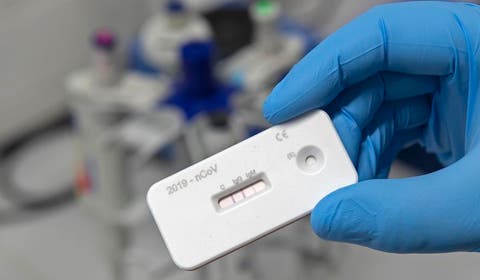
A scientist presents an antibody test for coronavirus in a laboratory of the Leibniz Institute of Photonic Technology (Leibniz IPHT) at the InfectoGnostics research campus in Jena, Germany, Friday, April 3, 2020. An international team of researchers with the participation ... more >


By David Sherfinski - The Washington Times - Friday, April 10, 2020


Dr. Anthony Fauci on Friday said it’s possible that Americans could eventually carry around certificates of immunity to the coronavirus once proper testing is widespread enough.

“That’s possible,” Dr. Fauci, director of the National Institute of Allergy and Infectious Diseases, said on CNN’s “New Day.”

“It’s one of those things that we talk about when we want to make sure that we know who the vulnerable people are and not,” he said. “This is something that’s being discussed. I think it might actually have some merit.”

Sen. Bill Cassidy, Louisiana Republican, has pitched the idea of an immunity registry to document people no longer believed to be at risk of infection.

Federal and state officials have said that antibody testing to try to determine whether someone had the coronavirus is one of the next major fronts in the battle against COVID-19, the disease caused by the new coronavirus.

Dr. Fauci said that within about a week, there will be a “rather large number” of tests that are available but that validating them is key.

“Other countries have gotten burned by this,” he said. “They need to be validated. You need to make sure that they’re consistent and that they’re accurate.”

“It’s very likely that there are a large number of people out there that have been infected, have been asymptomatic, and did not know they were infected,” Dr. Fauci said. “If their antibody test is positive, one can formulate kind of strategies about whether or not they would be at risk or vulnerable to getting reinfected.”


Pope says coronavirus pandemic could be nature's response to climate crisis


By Delia Gallagher

Updated 3:31 AM ET, Thu April 9, 2020


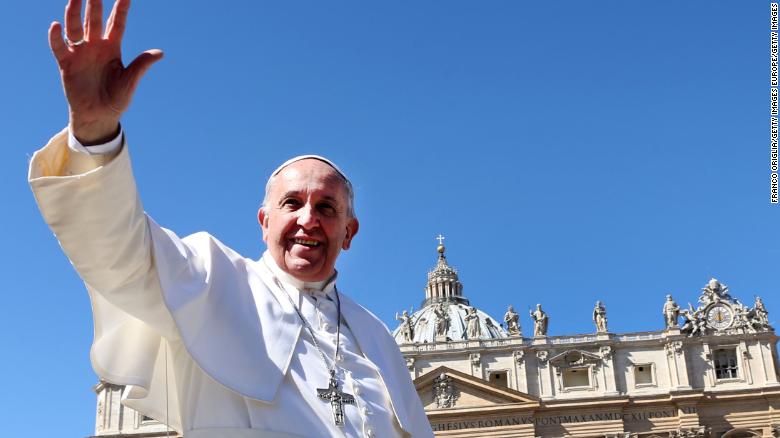
Rome (CNN)Pope Francis has said the coronavirus pandemic is one of "nature's responses" to humans ignoring the current ecological crisis.

In an email interview published Wednesday in The Tablet and Commonwealth magazines, the pontiff said the outbreak offered an opportunity to slow down the rate of production and consumption and to learn to understand and contemplate the natural world.
"We did not respond to the partial catastrophes. Who now speaks of the fires in Australia, or remembers that 18 months ago a boat could cross the North Pole because the glaciers had all melted? Who speaks now of the floods?" the Pope said.

"I don't know if these are the revenge of nature, but they are certainly nature's responses," he added.

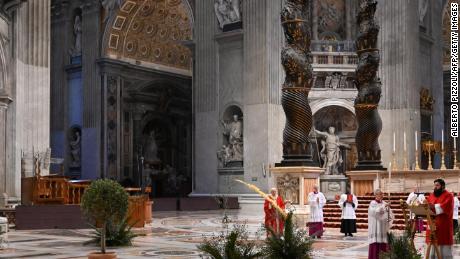
The pandemic has radically changed the way the Vatican operates, with the Pope celebrating Palm Sunday mass in an empty church and the sites normally packed with tourists empty.

The 83-year-old Pope, who has a damaged lung from an infection in his 20s, has twice tested negative for the novel coronavirus. He is being distanced from anyone who might be carrying the virus, takes his meals in his private quarters, and uses hand sanitizer before and after meeting any guests, the Vatican press office said.

Pope Francis also said in the interview he was recovering from his bronchitis and praying even more from his residence in the Vatican during this "time of great uncertainty."

WHO Director After Trump’s Comments: ‘Stop Pointing Fingers’ Unless You ...

Ben Carson on coronavirus pandemic: We can't operate out of hysteria

Strong majority of pastors see current events as 'birth pains' of Christ's return: survey


By Samuel Smith, CP Reporter| Thursday, April 09, 2020


Unsplash/Oskar Kadaksoo

Most pastors serving at evangelical and historically black churches see some current events lining up with what Jesus said would happen shortly before His second coming, according to a new poll on Christian eschatology from LifeWay Research. Over half believe Christ will return during their lifetimes.

On Tuesday, the Southern Baptist polling research firm released results from a phone survey, conducted between Jan. 24 and Feb. 11, of 1,000 senior pastors, ministers or priests who were randomly called from a list of evangelical and historically black churches in the United States.

“While Christians prepare to celebrate Jesus’ resurrection, many pastors believe they see signs His return may be close,” LifeWay Executive Director Scott McConnell said in a statement. “These sentiments were expressed in January before the prospect of a global pandemic became known.”

According to LifeWay, nearly nine out of 10 pastors see at least some current events “matching those Jesus said would occur shortly before He returns to Earth.”

According to the data, 56 percent of pastors either strongly or somewhat agreed with the statement: “I expect Jesus to return in my lifetime.” Twenty-four percent said they were “not sure,” while 20 percent either strongly or somewhat disagreed.

In total, 97 percent of pastors said they believe Christ will return to Earth again.

The respondent pastors were asked to identify from a list whether they see certain “types of current events” as the “birth pains” that Jesus referred to when He was asked by His disciples when he would return.