Showing posts with label geopolitics. Show all posts

Thursday, October 22, 2026

“This is the single greatest threat to America” - Prof Robert Pape

 “This is the single greatest threat to America” - Prof Robert Pape

Americano with Freddy Gray and The Spectator

Oct 15, 2026  Americano

Freddy Gray speaks with University of Chicago international security scholar Professor Robert Pape about his book, Our Own Worst Enemies: America in the Face of Violent Populism, exploring how demographic transformations, widening wealth inequality, and the normalisation of political violence across the political spectrum are intersecting to pose a profound internal threat to American democracy and global stability.

Tuesday, October 13, 2026

Major economies approach their largest budget deficits since the COVID-19 pandemic

12:00, 13 October 2026
Source: LB.ua


The International Monetary Fund (IMF) has warned of deteriorating public finances in the world’s major economies. In 2026, budget deficits in China and the United States are expected to reach or exceed 8% of GDP, while net borrowing across advanced economies is projected to total 5.2% of GDP. This would be the highest level since 2021.

According to the IMF, net borrowing by the US general government sector will reach 8.5% of GDP in 2026, up from 7.1% in 2025 and 5.8% before the COVID-19 pandemic. The fiscal outlook has deteriorated compared with the IMF’s April projections amid turmoil in global debt markets.

At the same time, government borrowing costs are rising. Investors are concerned about growing public debt, inflation and large-scale investment in artificial intelligence. In September, a bond sell-off put additional pressure on government budgets as debt-servicing costs increased.

According to the IMF, global public debt is expected to approach 100% of world GDP by the end of the decade. The fund identified prolonged wars, cyberattacks and extreme weather events as factors increasing fiscal risks and exacerbating the global energy shock.

Meanwhile, the IMF slightly upgraded its forecast for global economic growth in 2026 by 0.1 percentage points to 3.1%. The global economy is projected to grow by 3.4% in 2027. The US economy is expected to expand by 2.3% in both years, while China’s growth is forecast at 4.5% in 2026 and 4% in 2027. India’s economy is projected to grow by 7% annually.


Saturday, October 03, 2026

A Campaign to Address Global Economic Inequality

This content is not subject to review by Daily Kos staff prior to publication.

Friday, October 2, 2026 at 4:21 PM EDT


by Lawrence S Wittner
Community

Although the temper tantrums of Donald Trump and Benjamin Netanyahu dominated mass media coverage of the 81st session of the UN General Assembly, which opened in September 2026, the event also included the announcement of a far more significant matter: a campaign to address the problem of worldwide economic inequality.

On September 24, standing in for South African President Cyril Ramaphosa, Ronald Lamola, South Africa’s Minister of International Relations and Cooperation, told General Assembly delegates that “the promise of democracy and international cooperation wanes when we cannot demonstrate that they can address inequality and insecurity.” Thus, “together with Brazil, Norway, and Spain, South Africa calls on this Assembly to throw its weight behind the establishment” of an International Panel on Inequality (IPI). Based on the model of the Intergovernmental Panel on Climate Change, the IPI would research inequality within and between countries and develop policies to close the widening gap between the rich and the poor.

That gap is enormous. As Nobel Prize-winning economist Joseph Stiglitz and other specialists have recently reported, “the richest 10 percent of adults globally receives more than half (53 percent) of the world’s income, whereas the poorest half receives 8 percent.” When it comes to wealth, that “is even more concentrated, with the richest 10 percent owning around three-quarters of global wealth while the poorest half owns just 2 percent.” And “almost two-thirds of people live in countries where inequality is rising.” In turn, this economic inequality leads to “unequal access to education, health care, housing and finance,” factors shaping “the opportunities that direct people’s lives.”

The speech at the General Assembly, as well as the specialists’ report, originated with developments within the G20, an international forum of nations with advanced and emerging economies seeking to coordinate global economic policy. In 2025, when the South African government held the presidency of the G20, it commissioned a study of global inequality by independent experts and chaired by Stiglitz. Appearing last November, the study maintained that “inequality is one of the most urgent concerns in the world today,” and that “combating it is necessary and possible.” Indeed, according to the study, the inequality emergency was on a par with the climate emergency, and an IPI, once established, would gather information on the problem and propose solutions to it.

Recently, the campaign for a global response to global economic inequality has picked up momentum. By mid-September 2026, when the UN General Assembly session was underway, more than 1,500 economists and academics from more than 100 countries had signed an open letter backing the creation of an International Panel on Inequality. Among the high-profile signatories were former U.S. Treasury Secretary Janet Yellen, Nobel Prize-winning economist Daron Acemoglu, and numerous other prominent economists, including Thomas Piketty, Mariana Mazzucao, and Jayati Ghosh. In the letter, they maintained that “extreme concentrations of income and wealth translate into undemocratic concentrations of power, unravelling trust in our societies and polarizing our politics.”

Thursday, September 24, 2026

Tensions rise at the United Nations General Assembly


Firing Line Interviews Malachi Martin: The Mission of the Pope


Hoover Institution Library & Archives

Jan 31, 2017  Firing Line 1978
Episode S0339, Recorded on September 6, 1978

Guest: Malachi Martin

For more information about this program, see:  http://digitalcollections.hoover.org/...

For more information about the Firing Line broadcast records at the Hoover Institution Archives, see:  
http://www.oac.cdlib.org/findaid/ark:...

© The Board of Trustees of the Leland Stanford Junior University. All rights reserved. Reproduction in whole or in part in any form or medium without express written permission of the Board of Trustees of the Leland Stanford Junior University is prohibited and strictly enforced.


---

P.S.


Tuesday, September 22, 2026

Secretary Rubio hosts an Arctic 7 meeting

Secetary Rubio hosts an Arctic 7 meeting

U.S. Department of State

Sep 21, 2026  #StateDepartment #DepartmentofState #Diplomacy

Secretary of State Marco Rubio hosts an Arctic 7 meeting in New York City, New York, on September 21, 2026.

----------

Under the leadership of the President and Secretary of State, the U.S. Department of State leads America’s foreign policy through diplomacy, advocacy, and assistance by advancing the interests of the American people, their safety and economic prosperity. On behalf of the American people we promote and demonstrate democratic values and advance a free, peaceful, and prosperous world.

The Secretary of State, appointed by the President with the advice and consent of the Senate, is the President's chief foreign affairs adviser. The Secretary carries out the President's foreign policies through the State Department, which includes the Foreign Service, Civil Service and U.S. Agency for International Development.

President Trump Delivers Remarks to the United Nations General Assembly

Monday, September 14, 2026

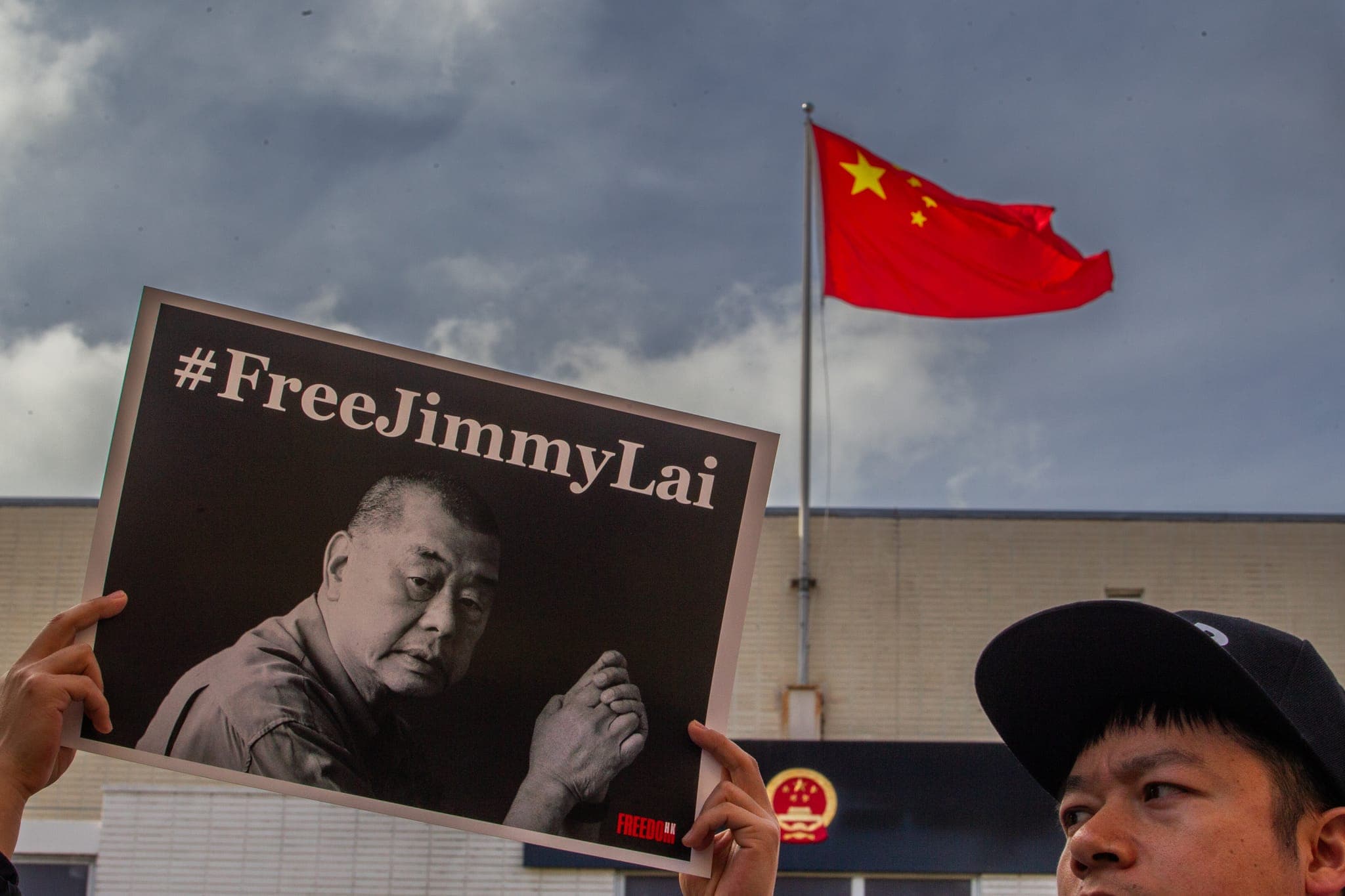
Rep. Chris Smith to chair hearing on imprisoned Catholic democracy advocate Jimmy Lai


The Sept. 16 hearing is timed just ahead of a planned Trump-Xi summit that Catholic advocates say offers another chance to press for the release of Lai, whose faith played a key role in his opposition to Beijing’s crackdown on democracy advocates.

September 12, 2026
 

People gather in front of the Chinese Consulate General to protest the unjust conviction of media entrepreneur Jimmy Lai on February 14, 2026 in Los Angeles, California. (Photo by Apu Gomes/Getty Images)


Rep. Chris Smith, R-N.J., will chair a congressional hearing Sept. 16 examining the imprisonment of Hong Kong media entrepreneur Jimmy Lai, timed to occur just ahead of a planned Sept. 24 Trump-Xi summit that Catholic advocates have been urging the administration to use as another chance to press for Lai’s release.

Smith, co-chair of the Congressional-Executive Commission on China, will lead the Sept. 16 hearing titled, “A Son and Daughter's Appeal to Xi Jinping to Release Their Dad, Jimmy Lai,” scheduled for 9:30 a.m. in the Rayburn House Office Building and livestreamed publicly. Planned witnesses include Lai's son, Sebastien Lai, who leads the #FreeJimmyLai campaign; Mark Clifford, president of the Committee for Freedom in Hong Kong Foundation and author of a Lai biography; and a senior China researcher from the Heritage Foundation.

The hearing follows a year of escalating diplomatic appeals. After a May summit with Chinese leader Xi Jinping in Beijing, President Donald Trump told reporters aboard Air Force One that he had personally raised Lai’s case, but that Xi’s response “was not positive.”

"He told me that would be a tough one," Trump said, contrasting it with China's apparent openness to releasing detained pastor Ezra Jin.

A bipartisan group of more than 100 lawmakers had urged Trump before the trip to press Xi on Lai’s behalf, warning his continued imprisonment risked becoming “an irreversible tragedy.” China ultimately released Jin in July, a move human rights advocate Nina Shea argued in the National Review showed Xi retains full power to free Lai as well, dismissing suggestions that Hong Kong's legal system ties his hands as “laughable.” Shea noted Trump and Xi were due to meet again in September in Washington, giving the President “another shot at freeing Lai.”

Saturday, August 29, 2026

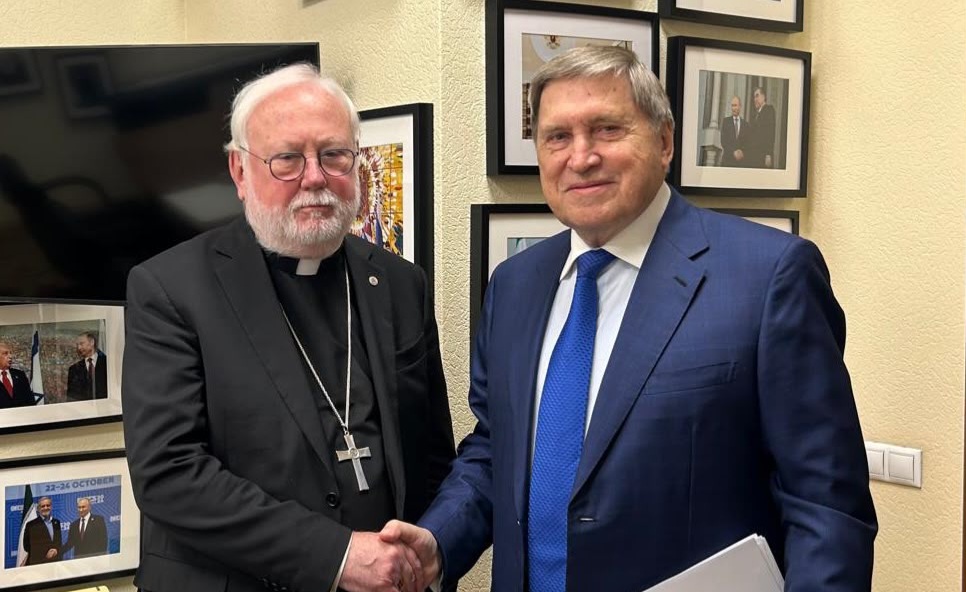
Gallagher meets with Putin's advisor and strengthens his contacts with the Moscow Patriarchate


by INFOVATICANA | August 27, 2026


The representative of the Holy See discussed with Yuri Ushakov “current issues on the international agenda” and visited the Cathedral of Christ the Savior, where he prayed before the icon of Our Lady of Vladimir. This Thursday, the visit focuses on the Catholic community in Russia.


The visit of Mons. Paul Richard Gallagher to Russia has included in recent hours a meeting with Yuri Ushakov, advisor to Vladimir Putin on foreign policy, and a visit to the Cathedral of Christ the Savior in Moscow, the main church of the Russian Orthodox Church.

The Secretariat of State confirmed this Thursday Gallagher’s meeting with Ushakov, scheduled for Wednesday the 26th, and reported that both addressed “current issues on the international agenda”. No further details on the content of the conversation have been provided so far.

The meeting with one of Putin’s top advisors represents the closest contact to the Kremlin within Gallagher’s agenda during his stay in the Russian capital.

It took place after the meeting that the head of Vatican diplomacy held on Tuesday with the Russian Minister of Foreign Affairs, Sergey Lavrov.

Read also: Gallagher to Lavrov in Moscow: “This war must end”

Gallagher visits the Cathedral of Christ the Savior

The agenda also included a new approach to the Patriarchate of Moscow, following the meeting Gallagher previously held with Metropolitan Anthony of Volokolamsk, head of external relations for the Russian Orthodox Church.

Gallagher visited the Cathedral of Christ the Savior in Moscow, seat of Patriarch Kirill, accompanied by the Apostolic Nuncio to Russia, Mons. Giovanni d’Aniello.
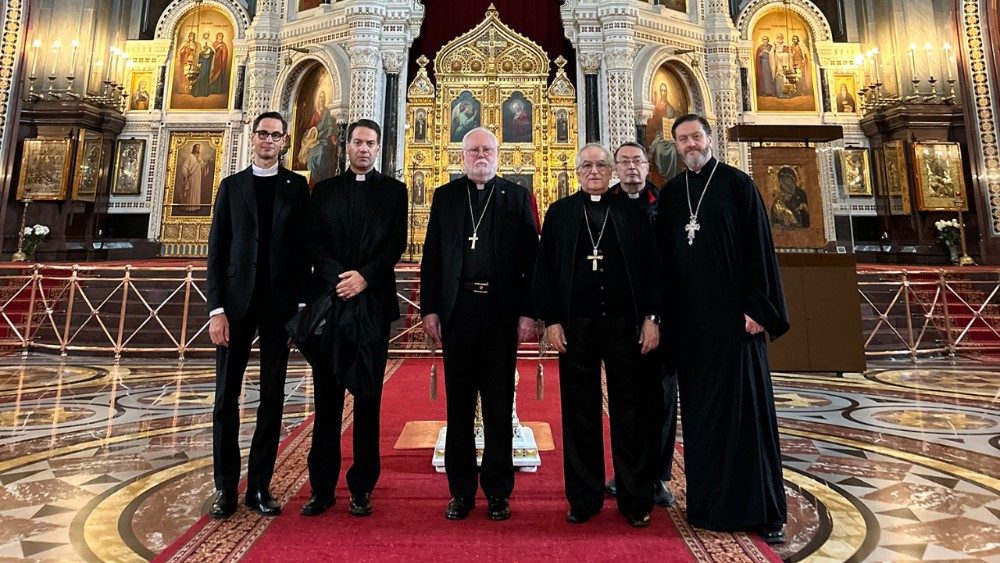


The representative of the Holy See was received by Archpriest Igor Yakimchuk, Vice-Chairman of the Department for External Church Relations of the Patriarchate of Moscow.

During a visit lasting more than an hour, Gallagher toured the church and stopped to pray before the icon of Our Lady of Vladimir, one of the Marian images most venerated by Russian Orthodox faithful.

The visit to the cathedral continued the contacts maintained in recent days between the Vatican delegation and the Patriarchate of Moscow.

This Thursday, the agenda focuses on the Catholic community

After the meetings with Russian authorities and contacts with the Patriarchate, Gallagher is dedicating this Thursday, August 27, the final part of his agenda in Moscow to the Catholic community.

The program includes a meeting with priests, religious brothers and sisters, and the celebration of Mass at the Cathedral of the Immaculate Conception of the Blessed Virgin Mary in Moscow.

Afterwards, the Secretary for Relations with States and International Organizations is scheduled to meet with the Catholic bishops of Russia.

Gallagher’s visit, the first he has made to Russia since 2021, will conclude this Friday, August 28 with his return to Rome.


Tuesday, August 25, 2026

DEMOCRACIA SIEMPRE


Building a society where people can live with dignity.

A Special Event in Honor of President José ‘Pepe’ Mujica


Democracy today faces one of its greatest tests. From Northern Europe to South Americas, from East Asia to West Africa, democratic societies are suffering the strain of rising political extremism and declining public trust.

To confront this crisis, citizens and leaders are searching for models of democratic renewal that can bridge divides, restore confidence, and redress the sources of citizen discontent.

“It is imperative to promote a common strategy to confront growing inequality, disinformation, and the challenges posed by digital technologies,” wrote the Presidents of Spain, Chile, Colombia, Brazil, and Uruguay following their July summit in Santiago.

Now, these leaders are gathering once again at a special event on the sidelines of the UN General Assembly — to grow the coalition in defense of democracy and to pay homage to the late Uruguayan President José ‘Pepe’ Mujica who was its lifelong champion.

Mujica's extraordinary journey — from political prisoner to 40th President of Uruguay — offers lessons for democratic societies everywhere. Combining authenticity, humility, and a powerful agenda of economic transformation, Mujica proved that democracy thrives not through grand rhetorical gestures but through daily acts of political inclusion, and that true service prioritizes human dignity over personal victory.

On 24 September, the Panamerican Congress, the Foro Iniciativa Mujica, and the Remarque Institute invite you to a special event in honor of President Mujica, bringing together presidents, parliamentarians, and civil society leaders to celebrate his legacy and advance the struggle to strengthen democratic societies from Montevideo to Madrid, Mexico City to Manhattan.

Friday, August 21, 2026

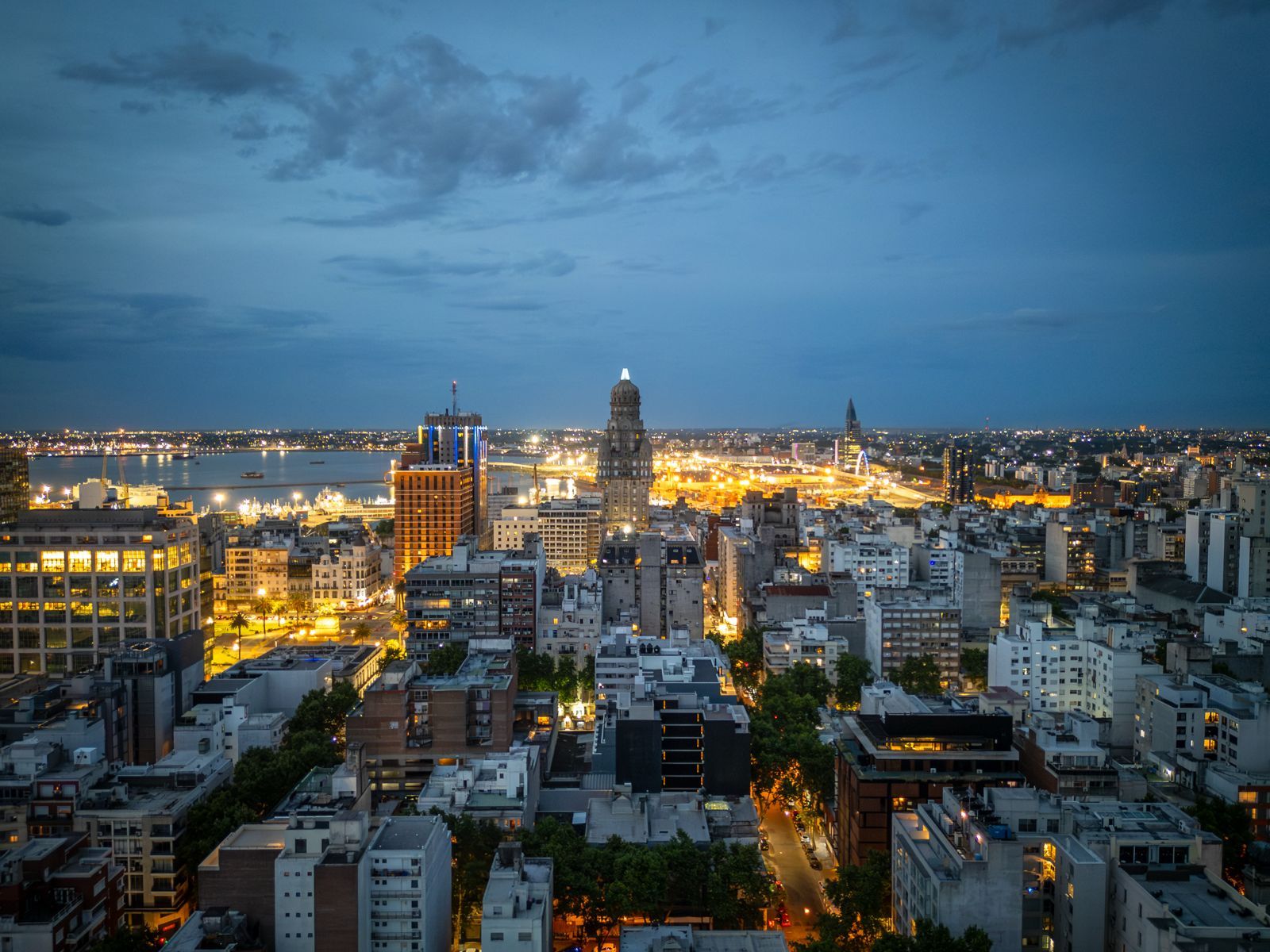
Montevideo hosts a progressive congress after three consecutive electoral defeats in the region


Friday, August 21st 2026 - 10:12 UTC


The meeting takes place at an adverse moment for those forces. The last three presidential elections in Latin America were won by conservative candidates. Photo: Sebastián Astorga


More than a hundred lawmakers, former presidents, ministers and political figures from fifteen countries across the Americas gather from Friday at Uruguay's Legislative Palace in Montevideo for the third Pan-American Congress, a parliamentary forum of progressive forces running until Sunday. Organisers put attendance at more than 150 participants.

The meeting takes place at an adverse moment for those forces. The last three presidential elections in Latin America were won by conservative candidates: José Antonio Kast in Chile, Keiko Fujimori in Peru and Abelardo de la Espriella in Colombia, all three sworn in this year. Uruguay and Brazil remain the main centre-left governments in South America.

“We are not arriving in a golden age, but in full recognition of those defeats,” said the congress's general coordinator, David Adler, an economist, co-founder of the Progressive International and a former adviser to US Senator Bernie Sanders. He explained that some sessions will be held behind closed doors “to talk frankly about good practices and also about experiments that have failed to reach the public.”

Under the slogan “Solidarity among peoples, sovereignty among nations,” the programme is organised around four themes: peace, security and multilateralism; sustainable development and regional integration; digital sovereignty and artificial intelligence; and wellbeing and care. Organisers also propose rebalancing relations between the north and south of the continent. “We have the International Monetary Fund and the Organization of American States, both headquartered in Washington, which shows an architecture in which the north speaks and expects the south to obey,” Adler said.

The congress was created in 2024 in Bogotá on the initiative of then Colombian president Gustavo Petro and held its second edition in Mexico City in 2025. It closes a week of events in the Uruguayan capital that included a gathering of women in politics, a closed forum of fourteen parties from eleven countries and the relaunch of the magazine Nueva Sociedad.

The Uruguayan delegation will be led by President Yamandú Orsi, who opens the forum, alongside Vice-President Carolina Cosse, former vice-president Lucía Topolansky and the secretary of the presidency, Alejandro Sánchez. International participants include former presidents Ernesto Samper of Colombia and Gabriel Boric of Chile; the governor of Buenos Aires province, Axel Kicillof; Brazilian senator Humberto Costa, of the Workers' Party; Mexican Morena official Carolina Rangel; and US representatives Pramila Jayapal and Jesús García.

Adler highlighted the choice of Uruguay as host. “We have a great deal to learn from Uruguayan society, which has a very living memory and knew how to deepen its democratic roots,” he said.


Friday, July 10, 2026

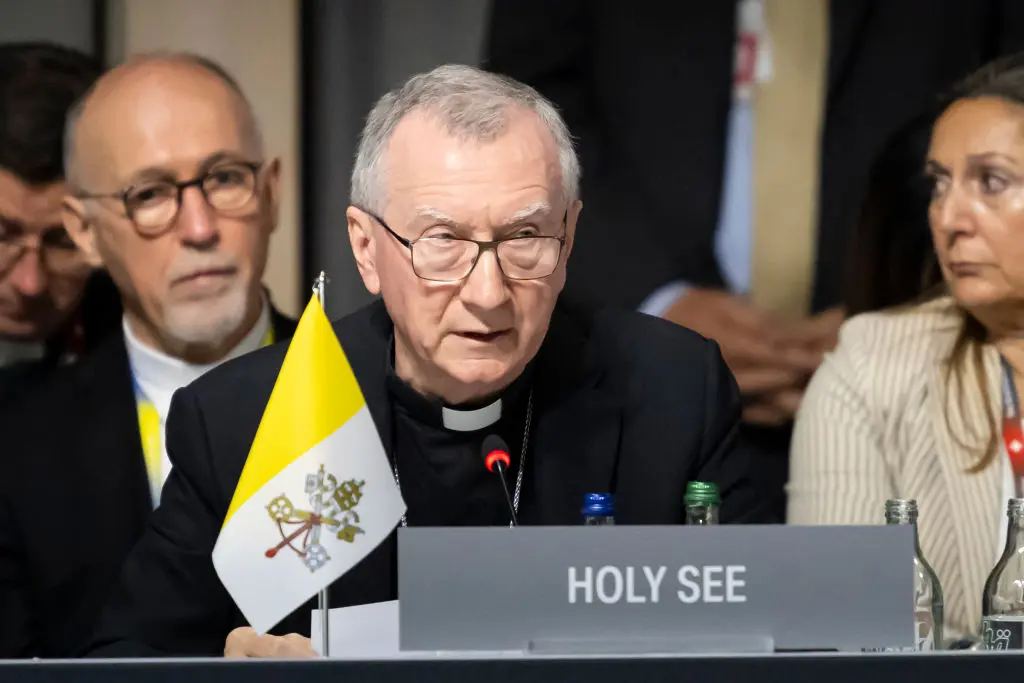
Rubio speaks with Vatican secretary of state about escalation of Russia-Ukraine war, peacemaking efforts

The conversation comes days after Russia launched one of its largest combined missile and drone attacks since the start of the war.


The Vatican's Secretary of State Cardinal Pietro Parolin attends a plenary session at the Summit on peace in Ukraine, at the luxury Burgenstock resort, near Lucerne, on June 16, 2024. The two-day gathering brings together Ukrainian President and more than 50 other heads of state and government, to try to work out a way towards a peace process for Ukraine -- albeit without Russia. (Photo by ALESSANDRO DELLA VALLE / POOL / AFP) (Photo by ALESSANDRO DELLA VALLE/POOL/AFP via Getty Images)


July 9, 2026 


U.S. Secretary of State Marco Rubio had a conversation July 9 with the Vatican Secretary of State Cardinal Pietro Parolin regarding the war between Ukraine and Russia and efforts to achieve peace.

“The two leaders discussed efforts to achieve a negotiated end to the Russia-Ukraine war,”
U.S. Secretary of State spokesperson Tommy Pigott said in a July 9 statement.

No additional details were provided.

The war in Ukraine saw a dramatic surge of violence earlier this month when Russia launched a missile and drone attack overnight, killing at least 21 people and injuring more than 80 in Kyiv, according to Ukrainian officials, as Zeale News reported. This attack marked one of Russia’s largest combined missile and drone attacks since the war began, according to the report. More than 52,000 people sheltered overnight in Kyiv’s metro system the night of July 1 following a warning from President Volodymyr Zelenskyy to seek shelter ahead of impending Russian strikes.

Reuters reported July 9 that Russian military experts have also been discussing escalation of the conflict, including potentially striking European targets “such as NATO bases in Baltic countries.”

“Such a step would risk drawing Russia into direct confrontation with the U.S.-led alliance, testing the NATO commitment that an attack on one member nation constitutes an attack on all,” Reuters added.

However, Ukraine has recently carried out strikes on oil refineries, storage depots and ports in Russia and Russian-occupied Ukraine, causing Russian civilians to bear stark fuel shortages, according to Reuters. A source that regularly meets with President Vladimir Putin told Reuters that “Ukraine's recent successes, however, have made Putin more angry and more determined to give a tough response,” the outlet reported.

Two sources close to the Kremlin told Reuters on the condition of anonymity that Putin was more likely to escalate the war in the upcoming months rather than negotiate peace. President Donald Trump has had separate phone calls with Putin and Zelenskyy within the past week. Trump also met with Zelenskyy in person July 8 in Turkey during the NATO summit.

Rubio met Cardinal Parolin at the Vatican in May 2025 and communicated with him earlier this year about international situations. In January, the two had a conversation about promoting peace and religious freedom around the globe and efforts to improve humanitarian situations particularly in Venezuela. Pigott said at the time that during that conversation, the two leaders also “reaffirmed their commitment to deepening cooperation between the United States and the Holy See in addressing shared priorities around the world.”


Monday, July 06, 2026

The Keys of This Blood


Píncaros da Glória Dec 31, 2025

Malachi Martin’s work explores the geopolitical competition between three primary forces—Western capitalism, Soviet communism, and the Roman Catholic Church—as they vie to establish a new world order. Central to this narrative is Pope John Paul II, whose unique background in Poland prepared him to engage as a sophisticated global competitor in this "millennium endgame." The text details how the Pontiff utilizes his moral authority and diplomatic reach to challenge both the materialism of the West and the totalitarianism of the East. Martin highlights the internal struggles within the Church, including the rise of Liberation Theology and a "superforce" of dissenters, which complicate the Pope’s mission. Ultimately, the source frames modern history as a transition from a world of sovereign nation-states to a unified, interdependent global structure. Through this lens, the author argues that the Pope’s actions are driven by a divine vision intended to steer humanity toward a spiritual rather than purely secular future.