Showing posts with label EU. Show all posts

Thursday, October 15, 2026

"Close Borders, Save Europe": Afroditi Latinopoulou’s Vision for Europe

 "Close Borders, Save Europe": Afroditi Latinopoulou’s Vision for Europe

The Financial Express

Oct 13, 2026 

At a political gathering in Italy, Greek politician Afroditi Latinopoulou delivers a forceful critique of the European Union, accusing Brussels’ institutions of undermining national sovereignty, traditional values and democratic accountability. Aligning herself with right-wing European figures including Matteo Salvini and Viktor Orbán, she calls for tighter borders, mass deportations and a rejection of policies she associates with the EU establishment. Her speech also attacks what she describes as excessive bureaucracy, state intervention and the political left, while emphasising the themes of nation, religion and family. Latinopoulou presents the debate as a struggle over who should shape Europe’s future: national governments and their citizens, or institutions based in Brussels. This report examines the arguments and political rhetoric behind her challenge to the European project.


Friday, May 22, 2026

‘Colossal profits’: Christian leaders lambast fossil fuel giants as they demand EU windfall tax


Copyright European Union, 2025, licensed under CC BY 4.0


By Ruth Wright
Published on 21/05/2026 - 6:30 GMT+2

“Europe holds a historic duty and opportunity to lead the transition to a new era away from fossil fuels”, say faith groups from across the EU.

A coalition of Christian organisations has issued an urgent appeal to EU institutions: phase out fossil fuels and tax those who profit from them.

120 organisations from 20 EU countries have signed the first ever appeal of its kind.

“Europe has a unique opportunity and the moral responsibility to accelerate the phase out of fossil fuels and shift to clean energy, including through a permanent tax on the colossal profits of fossil fuel companies”, the document says. It was recently revealed by the Guardian newspaper that the world’s top 100 oil and gas companies made more than $30 million (€25.8m) every hour in profit in the first month of the US-Israeli war in Iran.

The appeal calls on the EU to “remain steadfast in its founding values of human dignity and the common good by accelerating a just energy transition.”

Signatory organisations include European and national faith-based institutions, including episcopal bodies, religious orders, social and environmental NGOs, international development charities, and Christian movements and communities. Organisations include Laudato Si’ Movement, Caritas Europa and the Central Committee of German Catholics.

Sunday, February 08, 2026

ROME & REPLACEMENT MIGRATION


NOISE OF THUNDER RADIO - 02.04.2026

Today's Show: ROME & REPLACEMENT MIGRATION

Chris examines the controversial arguments concerning what is called "The Great Replacement" -- the idea that globalists are importing millions of foreign migrants to replace the white European, Anglo-Saxon people of the Western world. It is an accusation often denied by mainstream media, but now a Spanish politician and member of the European Parliament has openly admitted that replacement is the true agenda. We examine the exclamations of Marxist agitator, Irene Montero, who shouted to her supporters the desire to replace the whites with non-white migrants. We also hear from the Catholic bishops of America who have published a declaration against the activities of ICE during the Trump administration.

https://on.soundcloud.com/5vErr4nvjZrTHvw6EE

Tuesday, July 15, 2025

‘They Fear Us Like No Other’ — Alice Weidel’s CPAC Speech | Viktor Orban...


‘They Fear Us Like No Other’ — Alice Weidel’s CPAC Speech | Viktor Orban | APT


APT


Alice Weidel, chair of Germany’s Alternative for Germany (AfD) party, gave a bold speech at CPAC Hungary 2025, claiming that the media and political elites “fear us like no other party — with good reason.” Speaking before Prime Minister Viktor Orbán and other conservative leaders, Weidel warned of rising censorship, opposition surveillance, and democratic backsliding in Germany.

Saturday, March 01, 2025

Frozen funds: why Europe will struggle to fill USAID gap


Joanna Gill

Published: February 25, 2025


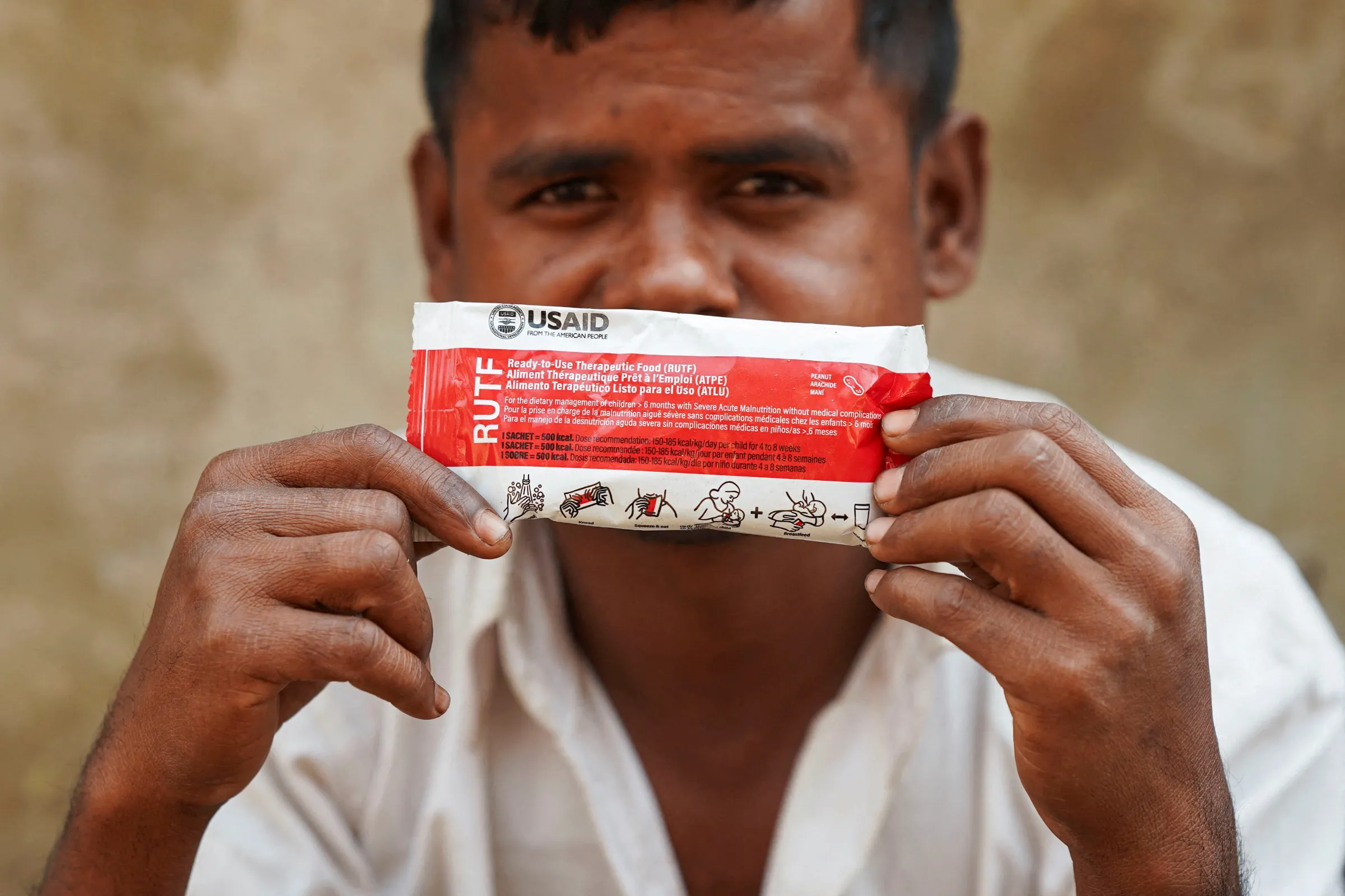
A Rohingya man poses for a picture with a nutrition supplement packet provided by USAID among Rohingya refugees, in Cox's Bazar, Bangladesh, February 5, 2025. REUTERS/Ro Yassin Abdumonab

What’s the context?

It's a multibillion-dollar question: Who will fill the aid gap left by the USAID freeze? The answer is unlikely to be Europe.

The U.S. administration's 90-day foreign aid freeze has left a huge hole in funding worldwide for everything from HIV medicines to mosquito nets, but as calls go out for alternative donors to plug the gap, Europe is ill-placed to step up.

Despite court rulings challenging the funding freeze, the fate of the U.S. Agency for International Development remains in doubt as the administration reviews all projects to see if they align with President Donald Trump's "America First" policy.

With activities from demining, to teaching, to preventing malaria suspended, the question is who can step up to secure the future of those programmes that do not fall under waivers granted by the Trump administration for life-saving projects.

The European Union has been non-committal.

"Everyone in the international community must shoulder their responsibility. The EU cannot fill this gap left by others," a commission spokesperson said.

NGOs say programmes on reproductive health, chronic diseases and psychosocial health are particularly at risk, as everything except emergency aid is paused.

"It's like going back to the 80s and 90s when we were coming with food trucks. That's the risk that we will return to the bad practices of the past," said Jean-Yves Terlinden, humanitarian director at Caritas Europa, a network of Catholic relief, development and social services organisations in Europe.
Falling short

The U.S. contributed approximately 42% of global humanitarian aid in 2024, with the EU and Germany accounting for around 8% each, according to the United Nations.

Saturday, June 04, 2022

EU Military Bishops in Brussels discuss perspectives for peace


As part of its mission of dialogue with the EU institutions, COMECE gathered EU Military Bishops and experts of the Military Ordinariates on Wednesday 1 June 2022 to exchange on the current and emerging security challenges in Europe.


COMECE General Secretary, Fr. Barrios Prieto, together with Lt. Gen. Bart Laurent, Director of Operations, EU Military Staff. (Credit: COMECE)

Following the first meeting held in 2019, Military Ordinaries from EU Member States gathered at the COMECE Secretariat to meet with EU officials and national representatives to the EU Military Committee and discuss the challenges for the Common Security and Defence Policy.

In light of the current international context, they highlighted the EU’s specific role in promoting human security and peace. Fr. Manuel Barrios Prieto, General Secretary of COMECE, stated that “the Russian invasion of Ukraine did not only bring war to the country, but it has also questioned the entire security order in Europe and the world”.

“Inspired by Pope Francis’ Encyclical Letter ‘Fratelli tutti’ – Fr. Barrios Prieto continued – COMECE promotes the vision of a new architecture of peace based on a global ethic of solidarity and cooperation in the service of a future shaped by interdependence and shared responsibility in the whole human family”.

The EU and its Member States should engage responsibly and collaboratively on security in line with the principles of international law and ethical standards. These efforts, according to COMECE, should be embedded in an integral approach, especially in the context of the implementation of the recently adopted EU Strategic Compass.

“Since peace goes beyond security – stated the General Secretary of COMECE – a comprehensive European peace strategy should equally promote integral human development, justice and care of Creation”.

The meeting also identified ways in which Military Ordinariates can contribute to the peace-building process. Thanks to their specific mission, they remain in the field during all stages of a conflict cycle, accompanying the members of the armed forces, while being close to the needs of civilians, and fostering intercultural and interreligious ties.


Tuesday, September 21, 2021

A weekly day of synchronised rest time for citizens and workers


Renato Cursi
20/09/2021 14:59 

The EU should seek a weekly day of common rest time for workers, as enshrined in Art 2(5) ESC.

Sunday as a common day of rest was part of the EU working time directive 93/104/EC with Art 118a(2) TEC as legal basis, which allows the EU to protect the health workers, but annulled by the CJEU in case C-84/94 (merely) because it “failed to explain why Sunday, as a weekly rest day, is more closely connected with the health ... of workers than any other day of the week”.
The EU should continue to pursue a common weekly day of rest, where the choice of the day is left open.

1. While working times fragmentise & reach out to weekends, much time is lost which in the past was used for civic engagement, joint social, sports or faith-related activities, domestic & care responsibilities and, more generally, to spend time together. This trend should be countered through more synchronised resting time.

2. Many workers have lower stress levels & recover better during common time off with families, friends & communities as opposed to spending time alone and are more performing at work & less often ill & absent. Beyond increased presenteeism, better work-life balance and less stress would bring further benefits to firms’ competitiveness: Healthy working conditions, which also include recreation, allow workers to be more creative, involved & performing to drive innovation.

3. A common day of rest would strengthen the cultural identity & is crucial for common European volunteering & engagement.


Saturday, March 16, 2019

Ahead of EU elections: what is next for work-free Sunday?


Brussels, 18 February 2019


In view of the EU elections, the European Sunday Alliance discussed with Members of the European Parliament (MEPs) and electoral candidates the importance of common work-free time and decent working hours. In view of the EU elections, the European Sunday Alliance discussed with Members of the European Parliament (MEPs) and electoral candidates the importance of common work-free time and decent working hours.

In a time of digitalisation and a rapidly changing world of work, participants agreed that Sunday is of unique value for the social cohesion of our society and the well-being of the citizens.

After an internal workshop session in the morning, the members and supporters of the European Sunday Alliance presented key challenges of their work, and then incurred into a debate with MEPs and EU elections candidates on possible actions for the next five-year mandate of the European Parliament and the EU Commission.

Markus Blümel, coordinator of the Austrian Sunday Alliance, reported that current changes in national legislation were undermining the network's objective of improving the work-life balance of Austrian citizens. He showed that the new law would allow for a maximum working time of 12 hours and presented how the Austrian Sunday Alliance, together with its member organisations and other like-minded actors, organised demonstrations and public actions to oppose the legal revision.

Representing the Croatian Sunday Alliance, Fr. Boze Vuleta ofm outlined how a network of different civil society organisations and social partners have joined forces in the youngest EU Member State and set up the alliance in 2018.

In the following discussion with MEPs Thomas Mann (EPP), Evelyn Regner (S&D), Marijana Petir (EPP) and the EP elections candidate Gabriele Bischoff (S&D), the participants exchanged on the outcomes of the negotiations of the recently agreed EU work-life balance directive and examined next steps towards EU policies that help citizens to find common rest time for recreation and life in society and family.


Source


EC President Juncker in dialogue with EU Bishops

latest press releases
Press Release, 14/03/2019


2019 COMECE Spring Assembly

EC President Juncker in dialogue with EU Bishops

On the occasion of the 2019 COMECE Spring Assembly, EU Bishops received today, Thursday 14 March, Jean-Claude Juncker, President of the European Commission. Together they urged all citizens to engage into the European political debate and vote with responsibility to protect and promote the common good.


The dialogue with the President of the European Commission was an opportunity for Bishops to exchange on the main achievements and remaining priorities of Juncker’s Presidency.

In his contribution, President Juncker stated: "I am a fervent advocate of the social doctrine of the Church. It is one of the most noble teachings of our Church. All of this is part of a doctrine that Europe does not apply often enough. I would like us to rediscover the values and guiding principles of the social teaching of the Church".

European Bishops reaffirmed the Church’s commitment to address the challenges that our continent and our people have to face: digitalisation and technological development, demography, global warming and migration.

They highlighted the need to combine efforts of all people of good will to better serving the common good, placing the human person at the heart of EU public policies.

Days before a possible Brexit and two months ahead of the EU 2019 parliament elections, Bishops recalled EU citizens’ responsibility to exercise their right and fulfil their duty to vote, giving new impulse to the European construction. The electoral results will condition the political decisions impacting on our day to day lives during the next 5 years.

Bishops expressed the need to promote a European context of dialogue in order to discover opportunities behind challenges, proposing effective solutions for the wellbeing of all those living in the European Union.

The meeting between the EU Bishops and President Juncker is a concrete expression of the open, transparent and regular dialogue between EU institutions and Churches in accordance with Article 17 TFEU.


Media

Photo Gallery


Photo: © EU, Etienne Ansotte


Sunday, December 02, 2018

Pope Francis’ efforts to clean up Vatican finances rewarded by the E.U.


Gerard O’Connell

November 30, 2018


Photo by Yeo Khee on Unsplash


In a decision that is seen as a recognition of the Vatican’s achievements at financial transparency under Pope Francis, the Board of the European Payments Council last week “approved the extension of the geographical scope of the Single Euro Payments Area to Vatican City State and the Holy See.”

The Vatican today announced the approval of its application to join S.E.P.A., which is a payment-integration initiative of the European Union for simplification of bank transfers in the euro currency that came into effect in 2014.

The Vatican statement explained that “S.E.P.A. harmonizes the way electronic euro payments are made across Europe. It allows European consumers, businesses and public administrations to make and receive credit transfers as well as direct debit under the same basic conditions and makes all cross-border payments in euro as easy as domestic payments.”

Participation in S.E.P.A. means that the Holy See and the Vatican City State will be able to move money using an IBAN code. This will first benefit the Institute for the Works of Religion, commonly referred to as the Vatican Bank, and the administration that manages Vatican real estate, but in due course, the Vatican’s other financial institutions will also benefit.

Ever since his election as pope on March 13, 2013, Francis has sought to reform the Roman Curia, starting with Vatican finances.

Tweet this


The Vatican said “it is foreseen that as of 1 March 2019, the S.E.P.A. schemes are open to the financial institutions of the Vatican City State/Holy See, once they have joined.” On that date, the following 36 countries will form part of S.E.P.A.: the 28 European Union Member States plus Iceland, Norway, Liechtenstein, Switzerland, Monaco, San Marino, the Principality of Andorra and the Vatican City State/Holy See.

“The successful application to S.E.P.A. is a very positive sign. It helps to facilitate payments and harmonizes such services. Furthermore, it demonstrates the Holy See’s efforts to enhance financial transparency,” according to René Bruelhart, a Swiss lawyer, whom Pope Francis appointed as the president of the board of directors of the Vatican’s Financial Information Authority, its anti-money laundering agency. He is the first layman to hold that position.


Saturday, December 01, 2018

PC GONE MAD: Criticising migration could become CRIMINAL offence under new plan


A LEADING MEP has warned EU citizens they could be “jailed” for criticising migration policies if a new United Nations agreement is acted upon.


PUBLISHED: 11:13, Sat, Dec 1, 2018 | UPDATED: 19:35, Sat, Dec 1, 2018


Marcel de Graaff: Criticism of migration will be criminal offence
Speaking about the global compact on migration, Marcel de Graaff said: 'One basic element of this new agreement is the extension of the definition of hate speech. Criticism of migration will become a criminal offence.'


The United Nations Global Compact for Safe, Orderly and Regular Migration seeks to make immigration a universal human right. MEP Marcel de Graaff said: “I would like to say some words on the global compact on migration. On the 10th and 11th of December there will be an international congress in Marrakesh Morocco. The participating countries are set to sign this agreement and although this joint agreement is not binding it is still meant to be the legal framework on which the participating countries commit themselves to build new legislation.


“The compact for migration is legalisation of mass migration.


The United Nations Global Compact for Safe, Orderly and Regular Migration could be signed next week (Image: GETTY • EU)


“It is declaring migration as a human right so it will, in effect, become impossible to criticise Mrs Merkel’s welcome migrants politics without being at risk of being jailed for hate speech.”

In 2015 Angela Merkel pushed for an open-door migration policy across the EU. Critics said the move was motivated by Germany’s need to boost its workforce by at least one million.

The document is an "intergovernmentally negotiated agreement, prepared under the auspices of the United Nations, that covers all dimensions of international migration in a holistic and comprehensive manner”.

Austria, Australia, Bulgaria, Croatia, the Czech Republic, Hungary, Italy, Israel, Poland, Slovakia and Switzerland have already stated they will not sign the agreement.


Saturday, July 14, 2018

Catholics engaging in politics


#217 - July-August 2018

Catholics engaging in politics


Italian Catholics were recently invited by Pope Francis to be more engaged in politics. Matteo Truffelli, President of the Azione Cattolica Italiana Movement, which is celebrating its 150th anniversary, shares his thoughts on the need to engage in the common good in Europe. 


«Dear Friends from Catholic Action, continue to feel a great sense of responsibility for sowing the good seed of the Gospel in the life of the world, through your charitable work, through your involvement in political life – but please, politics in the noblest sense of the world, politics with a capital P! You can also do this through your strong commitment to education and your engagement in the cultural sphere».

Pope Francis gave us this clear invitation to take care of the common good on April 30 2017, during the meeting in St. Peter’s Square with Catholic Action, on the occasion of the 150th anniversary of the Association. It was a fatherly plea, which we did not see as addressed only to the members of Catholic Action but, more generally, to lay Christians who feel the willingness to engage with the world today. I felt particularly intrigued by the reference to engage in "politics in the noblest sense of the world, politics with capital P". There is a lot of debate today on the issue: what contribution can Catholics, both as individuals and as associate organizations, make to the social and political life of the places where they live? The reflections articulated after that day were collected into a book, "The capital P – Engaging in politics at the grass roots". It contains several interviews, in which we tried to put into practice the advice of Pope Francis in the current context.

The need for politics “with a capital P” undoubtedly challenges the whole European and international scenario, in a time of tensions fed by new populisms and during a sort of "piecemeal third world war" as Pope Francis sees it. Indeed, today's world is marked by conflicts of different kinds. The violence of terrorism becomes confused with the violence of the many wars that oppress the poorest countries. Many of the wealthy nations react to tensions by choosing to isolate themselves instead of boosting the reasons for peaceful coexistence. At the same time, Western democracies seem to be going through a phase of crisis and many people believe in identity and strong leadership, with the illusion that those can solve problems.

Challenged by difficulties that seem enormous to face, it can be natural to think that the solution is closing and raising up barriers. But the world today does not need a selfish policy. It would not only be unjust, but even inconvenient. As Pope Francis himself teaches in the encyclical Laudato si', if there are shared problems, the answers must also be shared. The big issues of our time cannot, therefore, be solved by individual states. We need to cultivate the reasons for international solidarity and peace, instead of going back to a way of conceiving the world as shaped by the idea of balance among powers. This is why, for example, the Italian Catholic Action often puts forward initiatives and organizes events concerning international law and Europe.

In this era of uncertainty, many people prefer to question the project of European unity that has brought so many advantages to our continent over the years. We firmly believe that we need now to push Europe to make a leap forward and recover that same energy which allowed us to find a completely new solution. European unity would have been inconceivable a few years ago, but it helped to face the problems that affected all European nations and that seemed unsolvable, in a period which was no easier than the one we are going through today.

Wednesday, July 11, 2018

Catholic Bishop: Europe Migrant Crisis ‘Orchestrated’ by International Powers


Jeff J Mitchell/Getty Images 7 Jul 2018


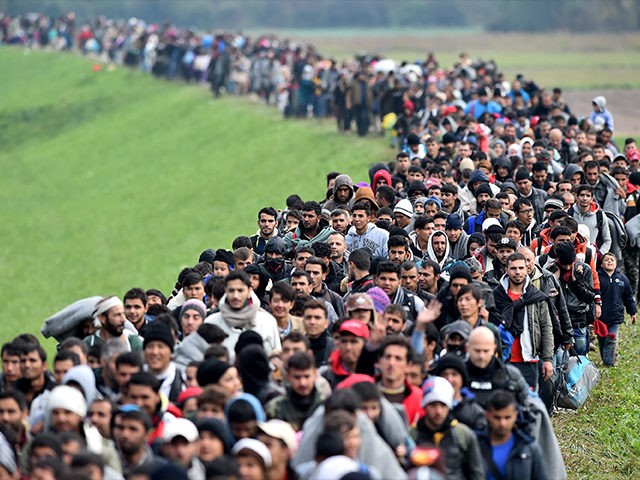
The Catholic church is being used as a pawn in a well-orchestrated plan to radically alter the Christian identity of European nations through mass migration, said Bishop Athanasius Schneider in a bombshell interview last week.

Schneider, who serves as auxiliary bishop of Astana, Kazakhstan, told the Italian daily Il Giornale that the current migrant crisis “represents a plan orchestrated and prepared for a long time by international powers to radically alter the Christian and national identity of the peoples of Europe.”

To achieve their objectives, these powers abuse “the true concept of humanism and even the Christian commandment of charity,” Schneider said, exploiting the moral authority of the church for anti-Christian purposes.

The powers in question “use the enormous moral potential of the church and their own structures to achieve their anti-Christian and anti-European goal more effectively,” he said.

The interview was released in the midst of a series of initiatives by Pope Francis to bring about a “change in mindset” regarding immigration by focusing on the positive contributions of immigrants rather than the negative fallout from mass migration.

Asked for his opinion of Italian populist politician Matteo Salvini, who now serves as interior minister, the bishop said he is unqualified to speak on Italy’s political situation but praised the general direction that Italy is now taking, especially by standing up to the European Union (EU), which he compared to the Soviet Union.

The bishop said he would applaud the government of any European nation that “tries to accentuate its own sovereignty and its historical, cultural, and Christian identity in the face of the totalitarianism of a sort of new Soviet Union, which today is called the European Union and has an unmistakably Masonic ideology.”

Schneider’s words were especially poignant given his background, having been born in the Soviet Union in 1961, the child of ethnic German Catholics whom Joseph Stalin sent to gulags after the Second World War.

The criticisms leveled by Bishop Schneider echoed similar concerns voiced by Hungarian Prime Minister Viktor Orbán, who has also fought to retain the “Christian” identity of Europe as well as his country’s national sovereignty.

Orbán has called out left-wing billionaire George Soros for his scheme to flood Europe with millions of migrants in an attempt to blur national borders, saying that the European Union is following “Soros migrant plans” with its forced immigration quotas.

The Hungarian prime minister said in 2017 that Soros and the EU seek to bring in the one million migrants annually to create an EU immigration force to undermine the national sovereignty of member states.


Source


Saturday, February 10, 2018

COMECE Conference on "Promoting the Christian Heritage of Europe"


Alessandro Di Maio

Communications Officer

E-mail Contact - Tel. +32 (0) 2 235 05 15


latest press releases

Content:

Press Release, 01/02/2018

COMECE organised a conference on 31 of January in Brussels on the theme of “Promoting the Christian Heritage of Europe” as a contribution to the European Year of Cultural Heritage 2018.


“The Church has a spiritual dimension but it is also a key actor in developing culture – said Fr. Poquillon op, COMECE General Secretary. It is the oldest structure still existing in Europe based on a faith expressing itself in different ways. It is a clear example of unity in diversity, like the EU wishes to be, and exactly like all of you arrived here from every corner of Europe in order to reflect about EU’s cultural diversities”.

He particularly referred to Pope Francis addressing the participants of the (Re)Thinking Europe Dialogue in Rome last October, when he diagnosed that “Europe has a kind of memory deficit” and that “to become once more a solidary community means rediscovering the value of our own past, in order to enrich the present and to pass on a future of hope to future generations.”

In his address, H.E. Mons Paul Tighe, Secretary of the Pontifical Council for Culture, exposed the challenges of developing culture in a context of religious illiteracy, highlighting the risk to lose keys of interpretation of our own culture. He praised the European Year as an opportunity for encounter and invited Catholic bishops in Europe to promote it as a tool for Evangelisation.