Showing posts with label OPINION. Show all posts
Showing posts with label OPINION. Show all posts
Friday, October 16, 2026


Thursday, October 15, 2026
The Overton Window: How Ideas Become Acceptable Without Anyone Noticing
blac
Oct 8, 2026
There's an idea that, right now, would end a career if you said it out loud.
Nobody proposes it. Nobody defends it. But ideas like this don't always stay
that way.
The Overton Window is the range of ideas a society considers acceptable to
say in public. It doesn't move because someone wins an argument. It moves
because the furthest edge keeps shifting outward, and everything behind it
gets pulled along, one small step at a time.
Part of an ongoing series on the psychology of belief, compliance, and
manipulation.
Tuesday, October 13, 2026
Left follows right in abandoning wall between church, state | Opinion
For a country with strong separation of church and state values, the sudden shift toward religious testimonials is one of the most surprising changes in American politics in decades.
Jonathan Turley
Opinion contributor
Oct. 12, 2026, 6:04 a.m. ET
Across the country, a curious trend is taking hold in the Democratic Party: The left has found God in politics.
As Politico noted most recently, Democrats are running for Congress by leaning on their Christian bona fides. Democrats hope they have found the key to political salvation in states like Texas. However, as Democratic candidates like Texas senatorial candidate James Talarico campaign on their religious credentials, the result has been to insert faith into the broader political debate, which now includes questions ranging from the gender of God to whether Christians have to believe that Jesus actually existed.
The rival views on Christianity by Talarico and his Republican opponent for the U.S. Senate, Texas Attorney General Ken Paxton, are now being debated by voters. Republicans have long emphasized faith-based politics, and the new Democratic shift has created arguably the most religious-themed election season in modern history.
For a country with strong separation of church and state values, the sudden shift toward religious testimonials is one of the most surprising changes in American politics in decades. The result has been a debate over the character of candidates based on their religious views and associations.Opinion: Polls are shouting in favor of Talarico in Texas. We'll seeLove crosswords? Explore the Crossword page and play the new MidGrid Crossword.
'Resistance preaching'
Morality and faith have long been part of American politics. However, the November midterm elections at times have sounded like candidates are running for the College of Cardinals rather than Congress.
For more secular voters, the debate has the unnerving sense of a plebiscite of the devout covering church dogma.
For religious voters, it can be equally unnerving as religion is reduced to political sound bites and bumper stickers.
Tuesday, October 06, 2026
Age Of Delusion
OPINION
INGERSOLL: Age Of Delusion

October 05, 2026 11:36 AM ET
Below is State of the Day, a morning newsletter by Daily Caller Editor-at-Large Geoff Ingersoll.
__________
Greetings, Dear Reader,
Welcome back to State of the Day, where I strip the euphemism and misdirection off that day’s news and give it to you straight, no ice, no mixer.
I should also welcome you to the …
AGE OF DELUSION
Richard Barrera entered a long recent history of left-wing politicians openly encouraging delusion when he sat for an Oct. 4 interview with Conan Nolan of NBCLA.
Recently, we’ve got Lindsay Clancy as innocent and Sydney Sweeney as guilty. We’ve got a girl who literally admitted to planning a fake rape accusation at the center of a new actual rape investigation in NY. We’ve got AI orgy polycules lobbying Dems to recognize their code has a soul and should be given special economic status.
And now we’ve got Barrera.
He’s the leading candidate for state superintendent in California, the chief executive of K-12 public education. In a clip posted by NBC, Nolan asks a simple question (emphasis mine):
Conan Nolan:
“Turning to higher education policy: there’s been an ongoing debate across California universities regarding admissions standards and standardized testing. Would you vote to bring back the SAT?”
Richard Barrera:
“Absolutely not. That, again, is an approach that’s about — if kids are struggling or not ready to do college-level work …
Saturday, October 03, 2026
You are talking my language
Editorial
The world has come a long way technologically. Today, one person, with one phone, can communicate with millions. That is not surprising in our new digital world, a world where an average smartphone is millions of times faster than the computer system that landed Apollo 11 on the moon. In today’s world, more than six billion people—three-quarters of the world population—now use the internet, and more than a billion of them follow Portuguese football (soccer) star Cristiano Ronaldo across social media platforms.
From months to moments
Adventist media has also come a long way. In the summer of 1849, a small group of fervent Advent believers knelt beside printed sheets of paper to ask God to bless all who would read the truth-filled pages. Those sheets were the eight-page pamphlet called Present Truth. Physically and emotionally exhausted after months of work on the pamphlet, James White, author of this new publication, trudged eight miles to the nearest town to post it.
Today, of course, any pastor can ask generative AI, such as ChatGPT, to help them write a feature. Then, with a couple of keystrokes, they can email it or post it on social media to an exponentially larger audience. All done in 30 minutes.
Monday, September 28, 2026
Resistance to Christian Nationalism Could Help Decide Midterms | Opinion
Opinion
Resistance to Christian Nationalism Could Help Decide Midterms | Opinion
PUBLISHED
SEP 24, 2026 AT 05:00 AM EDT
By Melissa Deckman and Ruth Braunstein
Since the start of the second Trump administration, Christian nationalism—a political movement asserting that the U.S. was founded as, and should remain, a nation of, by and for Christians—has gained unprecedented influence in American politics, challenging long-established lines between church and state and promoting a policy agenda aligned with its right-wing vision of “Christian” values.
Several Trump cabinet officials have deep ties to the movement. Russell Vought was a primary architect of the Heritage Foundation’s Project 2025, widely considered a “Christian nationalist blueprint” for remaking the federal government. As head of the Office of Management and Budget, he has targeted programs the movement views as contrary to Christian values.
Defense Secretary Pete Hegseth has led Pentagon prayer sessions featuring Doug Wilson, an avowed Christian nationalist who supports repealing the 19th Amendment, outlawing all abortion and homosexuality, and has downplayed the horrors of Southern slavery. Under Hegseth's leadership, the Defense Department has also led a propaganda blitz that incorporates Christian nationalist symbolism and directly links American military actions to passages from Christian Scripture.
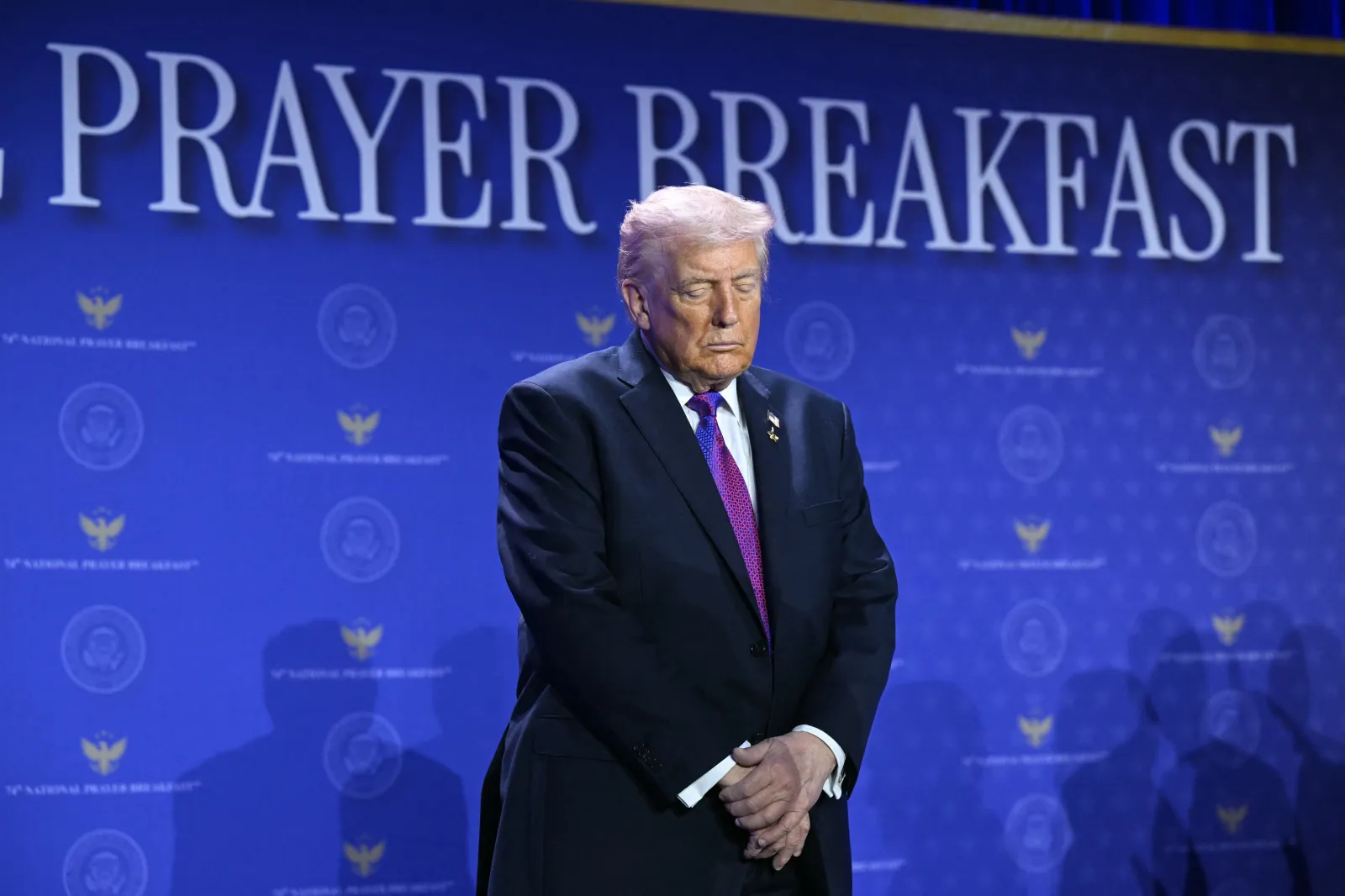
U.S. President Donald Trump bows his head in prayer during the National Prayer Breakfast on February 5, 2026, at the Washington Hilton in Washington, ...Read More | SAUL LOEB / AFP via Getty Images
Yet their worldview remains deeply unpopular. A new joint survey report from the Public Religion Research Institute (PRRI) and the Meanings of Democracy Lab of the SNF Agora Institute at Johns Hopkins University finds that nearly two-thirds of Americans reject this worldview. That could be important come November, when voters get their first chance to weigh in on Trump's second term performance, including the many overtures he's made to Christian nationalists while in office.
While 56 percent of Republicans support Christian nationalism, only 32 percent of Americans overall do. Majorities in all but four states reject Christian nationalism. In Iowa—where Trump won by 13 points in 2024—a strong majority (60 percent) oppose Christian nationalism, as do 57 percent of Texans and 56 percent of Alaskans.
Resistance to Christian Nationalism Could Help Decide Midterms | Opinion
PUBLISHED
SEP 24, 2026 AT 05:00 AM EDT
By Melissa Deckman and Ruth Braunstein
Since the start of the second Trump administration, Christian nationalism—a political movement asserting that the U.S. was founded as, and should remain, a nation of, by and for Christians—has gained unprecedented influence in American politics, challenging long-established lines between church and state and promoting a policy agenda aligned with its right-wing vision of “Christian” values.
Several Trump cabinet officials have deep ties to the movement. Russell Vought was a primary architect of the Heritage Foundation’s Project 2025, widely considered a “Christian nationalist blueprint” for remaking the federal government. As head of the Office of Management and Budget, he has targeted programs the movement views as contrary to Christian values.
Defense Secretary Pete Hegseth has led Pentagon prayer sessions featuring Doug Wilson, an avowed Christian nationalist who supports repealing the 19th Amendment, outlawing all abortion and homosexuality, and has downplayed the horrors of Southern slavery. Under Hegseth's leadership, the Defense Department has also led a propaganda blitz that incorporates Christian nationalist symbolism and directly links American military actions to passages from Christian Scripture.
U.S. President Donald Trump bows his head in prayer during the National Prayer Breakfast on February 5, 2026, at the Washington Hilton in Washington, ...Read More | SAUL LOEB / AFP via Getty Images
Yet their worldview remains deeply unpopular. A new joint survey report from the Public Religion Research Institute (PRRI) and the Meanings of Democracy Lab of the SNF Agora Institute at Johns Hopkins University finds that nearly two-thirds of Americans reject this worldview. That could be important come November, when voters get their first chance to weigh in on Trump's second term performance, including the many overtures he's made to Christian nationalists while in office.
While 56 percent of Republicans support Christian nationalism, only 32 percent of Americans overall do. Majorities in all but four states reject Christian nationalism. In Iowa—where Trump won by 13 points in 2024—a strong majority (60 percent) oppose Christian nationalism, as do 57 percent of Texans and 56 percent of Alaskans.
Friday, September 25, 2026
Democrats can't shake their DSA problem | Opinion
Ahead of the Nov. 3 midterm elections, the Democratic Party has a stark choice: Stay a mainstream liberal coalition or lean hard into democratic socialism.
To paraphrase a famous 2016 line about the "alternative right": A specter is haunting the dinner events, fundraisers and think tanks of the Democratic Party – the specter of the Democratic Socialists of America.
A quick saunter over to the DSA website (whose federal donation page is titled "Socialist Cash Takes Out Capitalist Trash") shows the left-of-Foucault organization has run or strongly endorsed nearly 200 candidates so far in 2026. As of Sept. 22, DSA's election tracker claimed 67 wins against 60 losses. Sixty-four other races, including many of the biggest, remain undecided.
While the full DSA slate includes contenders for some mundane local jobs ("Ramsey County Commissioner, Minnesota"), multiple candidates have already become familiar names.
In New York City, pro-Palestinian activist Darializa Avila Chevalier defeated U.S. Rep. Adriano Espaillat in a Democratic primary almost certain to determine who holds his House seat. Given Espaillat's status as chair of the Congressional Hispanic Caucus, it's fair to call this – as Politico put it – "a massive victory for the Democratic Socialists of America and Mayor Zohran Mamdani," one that "cements the DSA ... as one of the city's most potent political forces."

Wednesday, September 16, 2026
We Won’t Get Europe with the Democratic Socialists of America
And that's what they're counting on.
Vanessa Mares
Sep 15, 2026
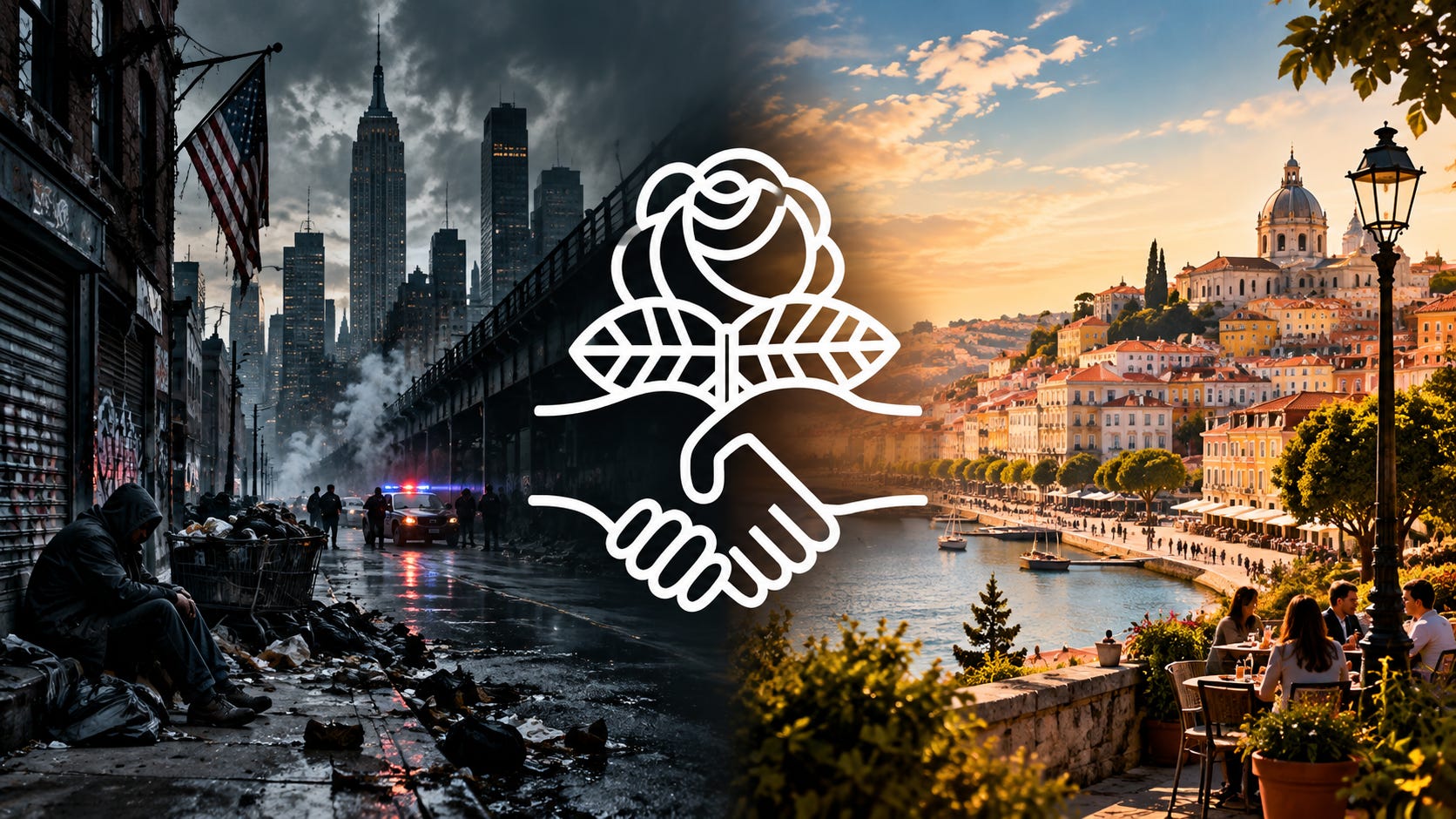
A commenter on one of my recent YouTube videos said the Democratic Socialists of America (DSA) are “doing nothing but trying to resurrect social democracy.”
For many Americans that may read as benign.
But what is social democracy? And if the DSA is only trying to resurrect it in the U.S., does that mean people against the DSA platform are just fear-mongering?
After all, social democracy is what’s popular in Europe.
Many Americans may not know that European-style of governance by the name “social democracy,” but now is the most critical time to get to know it.
Because conflating it with democratic socialism, is not only false, but playing with fire.
But First, How Did We Get Here?
For over 20 years now, social media has connected people from all over the planet.
Suddenly, what was happening in one place could be made visible in the palm of your hand, on the other side of the world.
And when that happened, millennials priorities shifted.
We saw the rise of what is known as the experience economy, where millennials began prioritizing experience and travel over physical things.
Around that time, came the rise in creator economies and cohorts of Americans and Europeans abroad turning their lives into escapism content for the American audience.
Their content would circle around praising the healthcare system, free education, the pace of life, food, etc.,— all to high engagement among Americans.
Many of these influencers rarely posted anything negative in their experiences abroad, likely because it didn’t perform as well.
As an American that lives in Europe, and has for many years now, I can state with certainty it’s not all roses like the influencers make it seem.
There’s nuance in every experience, yet this is rarely shown in escapism content.
So, it’s only natural that young Americans getting these European utopias on their screens everyday want what Europe has.
Any political strategist could tell you, this is a powerful entry point— which is exactly how the DSA are strategizing it.
In 2021, Zohran Mamdani virtually attended a 2021 Young Democratic Socialists of America (YDSA) conference and said as much himself, in his own words.
I clipped the most revealing part of this strategy as he laid it out, for you below.
Vanessa Mares
Sep 15, 2026
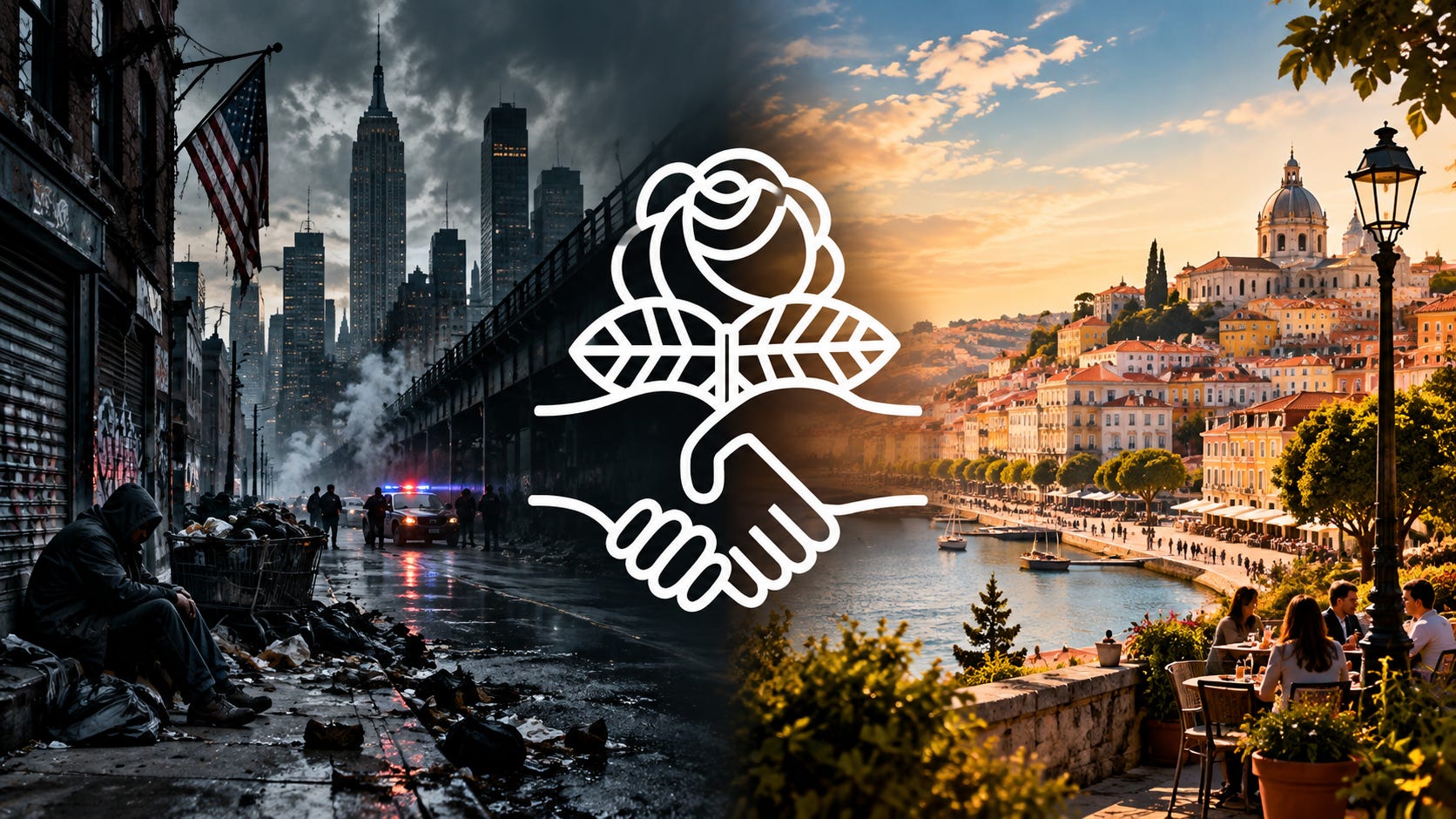
A commenter on one of my recent YouTube videos said the Democratic Socialists of America (DSA) are “doing nothing but trying to resurrect social democracy.”

For many Americans that may read as benign.
But what is social democracy? And if the DSA is only trying to resurrect it in the U.S., does that mean people against the DSA platform are just fear-mongering?
After all, social democracy is what’s popular in Europe.
Many Americans may not know that European-style of governance by the name “social democracy,” but now is the most critical time to get to know it.
Because conflating it with democratic socialism, is not only false, but playing with fire.
But First, How Did We Get Here?
For over 20 years now, social media has connected people from all over the planet.
Suddenly, what was happening in one place could be made visible in the palm of your hand, on the other side of the world.
And when that happened, millennials priorities shifted.
We saw the rise of what is known as the experience economy, where millennials began prioritizing experience and travel over physical things.
Around that time, came the rise in creator economies and cohorts of Americans and Europeans abroad turning their lives into escapism content for the American audience.
Their content would circle around praising the healthcare system, free education, the pace of life, food, etc.,— all to high engagement among Americans.
Many of these influencers rarely posted anything negative in their experiences abroad, likely because it didn’t perform as well.
As an American that lives in Europe, and has for many years now, I can state with certainty it’s not all roses like the influencers make it seem.
There’s nuance in every experience, yet this is rarely shown in escapism content.
So, it’s only natural that young Americans getting these European utopias on their screens everyday want what Europe has.
Any political strategist could tell you, this is a powerful entry point— which is exactly how the DSA are strategizing it.
In 2021, Zohran Mamdani virtually attended a 2021 Young Democratic Socialists of America (YDSA) conference and said as much himself, in his own words.
I clipped the most revealing part of this strategy as he laid it out, for you below.
Wednesday, September 09, 2026
Why is JD Vance talking about the Antichrist?
In a podcast episode, the vice president implied that the ‘End Times’ might be near

JD Vance kneels to pray during the inauguration of Pope Leo XIV Photo by Getty Images

By Mira FoxSeptember 4, 2026
Never miss a story! The Forward's daily newsletter gives you the most essential Jewish news you need to start your day. Sign up for Forwarding the News here.
JD Vance said he might be bringing about the End Times, adding that he would not be “shocked if the Antichrist was walking among us.”
Vance was speaking on the Christian YouTube show The Bryce Crawford Podcast about his memoir, Communion, which covers his conversion to Catholicism from Protestantism.
Numerous Catholics online reacted to his statements with confusion and frustration, saying that the ideas about the apocalypse Vance voiced are not central parts of Catholicism. While Catholicism does discuss the idea of the Second Coming, a time in which Christians believe Jesus will return to Earth, the Catholic Church Catechism — the Vatican’s official statements and teachings about the fundamentals of the religion — says that “we are already at ‘the last hour’” ever since Jesus died; the Antichrist is mentioned only briefly as a “a pseudo-messianism by which man glorifies himself in place of God,” not as a specific person who will come to the world.
The Antichrist and Armageddon, however, take center stage in many Evangelical churches, where these concepts often drive other extremist ideas, such as labeling politicians the Antichrist — at one point during the Obama administration, a poll found that one in four Americans thought the president might be the Antichrist — as well as Christian Zionism, an attempt to get all Jews to return to Jerusalem to hasten the apocalypse, when many believe Jews will be sent to Hell.
As one snarky Catholic commenter put it, Vance’s apocalypse-heavy discussion of his Catholicism sounded like “three evangelicals in a trench coat.”
It also sounded a lot like Peter Thiel, the billionaire Palantir founder and Vance’s mentor, donor and former employer. Thiel has a famed obsession with the Antichrist; earlier this year, several Catholic institutions distanced themselves from a series of lectures Thiel gave in Rome on the topic. Vance cited Thiel as an influence on his conversion in an essay about why he chose Catholicism, despite the fact that Thiel is not Catholic.
Sunday, August 23, 2026
The Toy Dividing Parents Across Australia | 10 News+
10 News
Aug 6, 2026
A children's toy designed to jiggle, stretch and make fart noises has triggered a heated debate among Australian parents, with critics questioning the message it sends about bodies and boundaries.
The "Chester Cheeks Dancing Toy" has been labelled inappropriate by some experts, while others argue it's simply harmless toilet humour.
Tuesday, August 18, 2026
What if America Went Completely Dark?

The power grid relies on thousands of aging, hand-built transformers. If enough fail, the blackout could last years.
Photo illustration by Justin Metz
By Christopher Cox
Christopher Cox traveled to California and Nevada and interviewed more than two dozen experts in grid technologies and grid reliability.
Aug. 18, 2026Updated 9:20 a.m. ET
The snipers had been shooting for nearly 10 minutes before someone called 911. A man driving down the highway told the police he thought he heard fireworks as he passed Pacific Gas and Electric’s Metcalf electrical substation, 15 miles southeast of San Jose. An engineer at a nearby power plant said he thought it was gunfire. Maybe more calls would have come in, but the communication link between the substation and PG&E, along with several phone and internet cables, had been severed. It was April 16, 2013.
The shooters — two, maybe more — took up positions 30 to 40 yards outside the substation fence, in the dry scrubland near Coyote Creek. At 1:31 a.m., after a security camera recorded what looked like a signal from a flashlight, they began firing high-powered rifles into the facility. Sparks flew into the air whenever the bullets grazed the chain-link fence, but most of the shots hit their apparent targets: a row of truck-size power transformers, which step down high-voltage electricity to lower voltages so it can be sent to local homes and businesses. Because this was Silicon Valley, those customers included some of the largest tech companies in the world.
After some 120 shots, 17 of Metcalf’s transformers had been disabled. The attackers knew to aim for the units’ cooling systems, oil-filled fins similar to those on a radiator, which draw heat away from the electrified core. That allowed the oil, 52,000 gallons of it, to drain out slowly so that the transformers wouldn’t fail right away, which would have triggered an alarm. The gunmen could take their time.
At 1:50 a.m., there was another flicker from a flashlight, and the shooting stopped. One minute later, the police arrived at the substation, but by then, the shooters were gone. The police looked around and, finding nothing suspicious, left as well. It wasn’t until a utility worker arrived at 3:15 a.m. that the extent of the damage was clear.
Friday, July 31, 2026
Religious Liberty Essential to Preserving Life
(Zimmytws/Dreamstime.com
By Frank Pavone
Monday, 27 July 2026 09:53 AM EDT
Religious liberty is more than the freedom to hold private beliefs — it is the freedom to live according to one's faith in public life. The recommendations recently presented by the Religious Liberty Commission to President Trump reinforce the principle that Americans should never have to choose between following their faith and following the law.
This has particular impact on Americans who fight every day to protect children in the womb from the violence of abortion. Concerns for such Americans came up in one way or another in every one of the hearings that the Religious Liberty Commission held.
The anti-abortion movement is rooted in the very American conviction that every human life deserves equal protection under the law, despite its age.
That conviction, coupled with the American belief in peaceful protest, motivates those who are anti-abortion to stand for hours outside abortion facilities, enduring the hostile stares and words - and occasional vicious beatings - from abortion advocates in the hope of changing the mind of one mother, of saving one baby.
These same Americans believe that mothers and fathers need day to day support, and the pregnancy help movement provides such support across the country.
So often maligned for being "fake clinics" because they do not perform abortion, these vitally important centers are almost exclusively started and staffed with people of faith who are trying not to impose their faith on others but to use it to lead mothers and fathers to a much better choice than abortion.
Yet these centers are constantly harassed in abortion-friendly states and all too often find themselves embroiled in lawsuits or fighting unjust laws.
The First Amendment wins every time, with these suits settled in favor of pregnancy centers. Religious liberty helps protect the ability to advocate for life without compromising sincerely held beliefs.
One of the commission's key recommendations is to clarify the proper understanding of the Establishment Clause and the separation of church and state.
Saturday, July 25, 2026
Nolte — Report: Trump Backs Vance over Rubio as 2028 Successor
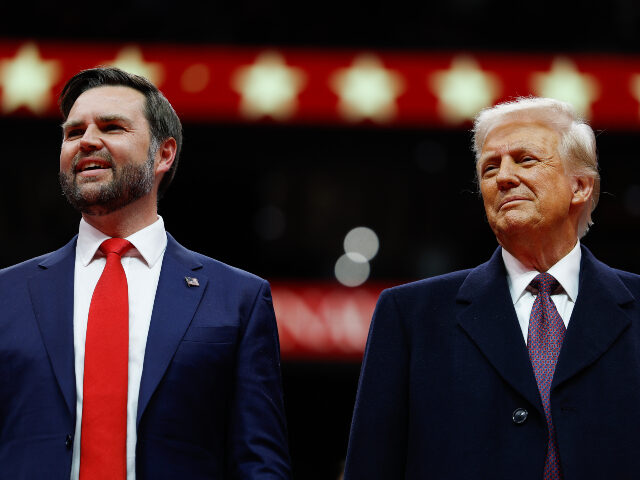
24 Jul 20264,199
President Trump has a luxury problem on his hands: Does he choose Vice President JD Vance as his successor or Secretary of State Marco Rubio? Both are remarkably gifted politicians. Both are trusted and well-liked by Trump’s MAGA base. Both are more than capable of defeating whichever loser the Democrats sacrifice in 2028.
What to do?
What to do?
Well, for now at least, according to this report from MS Now, Trump sees Vance as his chosen and likely successor.
“For months, Trump treated Vice President JD Vance and Secretary of State Marco Rubio as something like rival contestants, polling aides and donors on the two men and floating each as a possible heir without tipping his hand,” reads the report. “In recent weeks, that has stopped, according to five people familiar with the president’s running commentary on the race to succeed him in 2028.”
The apparent tipping point was Vance’s successful book tour, where he walked out of interviews smelling like a rose after parrying with the harridans on The View, with Bill Maher, Megyn Kelly, and various Fox News hosts.
Trump is also reportedly happy about Vance’s recent weight loss and his work leading the antifraud task force.
This paragraph, though, makes the most sense to me:
Whether Trump was ever really weighing Vance against Rubio is itself contested. Camps for both men have insisted that any rivalry between the two has been overblown and that Trump has historically enjoyed keeping potential successors competing for his favor rather than settling on one.
A good manager, and Trump is obviously one, knows how to create a productive (rather than toxic) climate of competition to get the best out of people.
And let’s not forget that Rubio has already stated and restated that if Vance chooses to run in 2028, he won’t challenge him.
Rubio is young enough (55) and talented enough to make an excellent vice president for Vance before running for president himself at a relatively young 65.
But let’s face it, both men are made of presidential timbre. Both are superbly gifted politicians. Both dwarf anyone currently huddled on the Democrat Party bench. Kamala? Gavin? Pete? AOC? Whatever.
The thing is that no matter whether it’s Rubio or Vance, Trump will still rule the MAGA roost. That might sound like a bad thing, but it’s not. He is the force that holds that base of support together, and that base is what has won two presidential elections — some people might say three.
Finally, Rubio and Vance seem to genuinely like one another. Granted, you never know about these things. After all, everyone said Barry Obama and Hillary Clinton liked one another when we all knew they didn’t. Still, the public has an instinct for these things, and JD and Marco both seem secure enough in who they are not to let political aspirations get in the way of a genuine and mutual respect. Besides, they can help one another reach those aspirations. Honestly, if they don’t allow pettiness and jealousy to sour their friendship, this could be remembered as one of history’s great and effective political partnerships.
Tuesday, July 21, 2026
V.P. JD Vance on Sunday Blue Laws

AI Overview
Vice President J.D. Vance supports Sunday blue laws, arguing that the government should protect the Sabbath as a sacred day. In his book, Communion: Finding My Way Back to Faith, he advocates for legislation that restricts commercial activity so workers can rest, spend time with their families, and fulfill their religious obligations.
·bishopbarron
+2
These traditional restrictions, sometimes called Sabbath laws or Sunday closing laws, were historically adopted to promote Christian worship by closing businesses or halting certain forms of retail. While most modern blue laws have been repealed, several states still maintain restrictions on Sunday commerce, such as limits on auto sales or alcohol availability. Vance's promotion of these policies centers on the idea that the state has a role in safeguarding societal morals and protecting time for church.
+3
Explore the broader history of these regulations and their modern status on the Wikipedia Blue Law Entry or read critical analyses of Vance's political and religious messaging via Yahoo News Coverage.
[1]
Source: Google Artificial Intelligence
Saturday, July 18, 2026
Jesus would not have endorsed the Democratic Socialists of America | Opinion
Peter Crabb
Wed, July 15, 2026 at 6:00 AM EDT

Peter Crabb
In the same year that Americans are celebrating the Declaration of Independence and the principles of liberty found there, members of the Democratic Socialists of America are making political gains.
At my institution and in churches around the country, Christians are revisiting an old question: Was Jesus the first socialist? The idea is appealing to many of my students and fellow followers of Jesus.
Our Lord's emphasis on helping the poor and the first disciples' sharing of resources in the book of Acts suggests a natural alignment with the tenets of socialism. However, discussions around these teachings ignore the central characteristics of socialism; that is, the use of force.
Economic studies of government laws and policies always seek to distinguish between the "seen" and the "unseen." Economists ask both the question of what the immediate effects of a government policy will be but also ask what the likely unintended consequences are of the same.
What is seen in Jesus's teaching is a call to radical generosity. What is unseen by many readers of this teaching is that the call was always directed at the individual's heart, not the Roman authority or tax collector. Socialism is defined by the concentration of power to forcibly achieve a redistribution of wealth. Socialist policies are not voluntary but rather coercive, resulting from a monopoly power the government holds over the use of force.
There is no evidence that Jesus endorsed the forcible redistribution of wealth by political authorities. When confronted with a question about the distribution of a family's wealth, Jesus replied by asking who appointed him a judge or arbiter and instead cautioned against envy (Luke 12).
Wed, July 15, 2026 at 6:00 AM EDT
Peter Crabb
In the same year that Americans are celebrating the Declaration of Independence and the principles of liberty found there, members of the Democratic Socialists of America are making political gains.
At my institution and in churches around the country, Christians are revisiting an old question: Was Jesus the first socialist? The idea is appealing to many of my students and fellow followers of Jesus.
Our Lord's emphasis on helping the poor and the first disciples' sharing of resources in the book of Acts suggests a natural alignment with the tenets of socialism. However, discussions around these teachings ignore the central characteristics of socialism; that is, the use of force.
Economic studies of government laws and policies always seek to distinguish between the "seen" and the "unseen." Economists ask both the question of what the immediate effects of a government policy will be but also ask what the likely unintended consequences are of the same.
What is seen in Jesus's teaching is a call to radical generosity. What is unseen by many readers of this teaching is that the call was always directed at the individual's heart, not the Roman authority or tax collector. Socialism is defined by the concentration of power to forcibly achieve a redistribution of wealth. Socialist policies are not voluntary but rather coercive, resulting from a monopoly power the government holds over the use of force.
There is no evidence that Jesus endorsed the forcible redistribution of wealth by political authorities. When confronted with a question about the distribution of a family's wealth, Jesus replied by asking who appointed him a judge or arbiter and instead cautioned against envy (Luke 12).
Tuesday, July 07, 2026
The Essence of Inclusive Capitalism with Lynn Forester de Rothschild
What is it? Why does it matter? And could it really be the answer to the problems we face on our planet today?

Ms. Rothschild is the founder of the Coalition for Inclusive Capitalism, which seeks to address growing wealth inequality
As part of our upcoming film, The Purpose of Capitalism: Lessons from Japan, we spoke to Ms. Rothschild about what inclusive capitalism is, why it matters, and whether it could really be the answer to the problems we face on our planet today.
This interview was condensed and edited for clarity.
TBT: What is inclusive capitalism?
Lynn Rothschild: Given what capitalism has done to workers, society, and the planet in the last 30 or 40 years, inclusive capitalism might sound like an oxymoron.
But inclusive capitalism is an aspiration; an aspiration to reform the capital markets so that our economic system becomes inclusive, sustainable, dynamic, and trusted. It’s about creating what I call the virtuous cycle, where companies that are doing the best with respect to their people, society, and planet are rewarded.
“It’s about creating what I call the virtuous cycle, where companies that are doing the best with respect to their people, society, and planet are rewarded.”
As Colin Meyer—the academic lead for the Future of the Corporation puts it—the purpose of business is to profitably solve the problems of people and the planet. We, as investors, need to stand behind the companies that are doing that work. This is the essence of inclusive capitalism.
TBT: When did you first start thinking about inclusive capitalism?
Lynn Rothschild: It was around 2007 and 2008, when the underpinnings of the financial system started collapsing. On a day that I will never forget, the market froze altogether.
There was a lot of despair and anger at the time—the feeling of not being included, that the system was rigged against the ordinary person—only good for those who have capital. The government stepped in, but their programs left many feeling desperate. People were losing their homes because they had been given a mortgage beyond their means, putting debt on people who never should have had it.
Around this time, I was asked to co-chair a task force with Dominic Barton [then Chairman of McKinsey in Asia], to look at capitalism under siege. We produced a report, ‘The Journey Toward Inclusive Capitalism’, and after holding several conferences, we set up the Coalition for Inclusive Capitalism.
TBT: What is the coalition? What does it do?
Lynn Rothschild: The coalition is a group of asset owners, asset managers, alongside leaders in philanthropy, academia, policy, and business that is dedicated to making capitalism work for everyone.
One initiative was the Embankment Project for Inclusive Capitalism. We had the CEOs of $32 trillion of assets put together metrics that companies could use on a standardised basis to tell investors, employees, and customers what they were doing to create more inclusive and sustainable capitalism.
Why is Gen Z so Anti-Capitalist?
Perspectives
May 14, 2026 | By Courtney Graves
Policy Issues
Culture
A new poll shows that support for socialism among young Americans is at an all-time high. What could be responsible for this fact?

Introduction
The future of free markets in the United States is in danger, as support for capitalism among younger generations has fallen to an all-time low. According to a poll conducted by the Cato Institute in 2025, 62% of Americans aged 18 to 29 say they hold a “favorable view” of socialism. Perhaps even more troubling, 34% of young Americans say they hold a “favorable view” of communism.
This is a stark contrast from previous generations. Baby Boomers overwhelmingly hold a positive view of capitalism at 68%. Only 32% of our elder generation holds a positive view of socialism.
Many older Americans are baffled by the fact that so many Gen Zers could favor a system that has failed so horribly in the past. Baby Boomers and Gen X grew up during the Cold War, when socialist and communist ideologies spread across Eastern Europe and Asia. They witnessed, in real time, the authoritarianism, human rights abuses, and economic stagnation stemming from socialist policies that plagued entire countries.
When the Soviet Union fell on December 26, 1991, many thought that would be the end of the support for socialism and that free-market capitalism would dominate the Western Hemisphere for eternity.
However, the rising support for socialism among young Americans, the recent election of democratic socialist Zohran Mamdani in America’s biggest city, and the Democratic Party’s gradual embrace of policies once considered fringe, proved that hopeful sentiment wrong.
So, what happened? Why are the youngest Americans so pessimistic about their economic future and demand an overhaul of our free-market system?
Sunday, July 05, 2026
The left isn’t celebrating America anymore — what will they celebrate instead?
by Douglas MacKinnon, opinion contributor - 07/04/26 12:00 PM ET
The Hill's Headlines — July 4, 2026
Happy Fourth of July!
I wonder — how many Americans will be bothered or offended by that greeting today? And how many more Independence Days will we celebrate as a country? We have made it to 250, but it’s hard to imagine another hundred. It is much easier to imagine 20 or less.
A strong argument can be made that the left — via majority control of the media, academia, entertainment, science and medicine — is slowly but surely winning the messaging war. In fact, you might say they are crushing it.
Just look at the trend of stories online citing the fact that millions of Americans have little or no interest in celebrating the 250th anniversary of our nation. Or look at the rise of so-called “democratic socialist” candidates, who look upon the country created by our Founding Fathers as something that needs to be torn down and rebuilt from the inside. Don’t forget about the alarming results of a recent poll showing that more than half of Americans under age 30 said believe “democracy isn’t essential to the country’s identity.”
It is little wonder. Many of those young Americans grew up believing, after years of being taught in school, that our Founding Fathers were White supremacists and evil slave-owners from the privileged class, whose vision, courage and sacrifice must now be reexamined, rewritten and largely swept into the dustbin of history.
But it’s not just young people. In a recent Beacon Research-Shaw and Company Research-Fox News poll, Americans were split over America 250. Fifty-one percent of registered voters said they were excited for the 250th anniversary, while 49 percent said they were not. It is a result that would have been shocking before the Trump era; now it is the accepted norm.
As this evolution in viewing the history and meaning of our nation continues, here is a logical question: What day, reason, or event will the left pick to replace the Fourth of July?
Will it be May 1, International Workers’ Day? That is the day chosen by communist leaders and countries to honor the labor movement, the working class, and the ideological triumph of socialism. Will some on the left want to switch out the names of Thomas Jefferson, John Adams and Benjamin Franklin to celebrate instead Vladimir Lenin, Joseph Stalin, Mao Zedong, Fidel Castro or Pol Pot?
Or will those who are suffering from Trump Derangement Syndrome lean toward Jan. 20, 2029, because that will be the last day of the Trump presidency?
As the Fourth of July and the history of our Founding Fathers — one I wrote about in my book, “The 56” — continues to wither under the constant smears from the left, it is natural to wonder what those who revile the the birth of our nation and the dead white men behind it will glorify in their place? If the current trend continues, we may find out much sooner than later.
Douglas MacKinnon is a former White House and Pentagon official.
Sunday, June 28, 2026
I am a centrist Democrat and I am terrified of success | Opinion
We appeal to 'the center,' which is an ambiguous blob-like thing that exists only in the minds of Democratic strategists whose brains stopped working in the 1990s.

Rex Huppke
USA TODAY
June 28, 2026, 5:08 a.m. ET
Hello, I am a centrist Democrat who is terrified that progressive liberal candidates keep winning primary elections.
I am also terrified of my own shadow, but this is somehow worse.
Suddenly, voters are being won over by liberal candidates ‒ even a few who are democratic socialists! ‒ who aren’t afraid to lean into populist messages with passion and an apparent drive to actually do things that will make people’s lives better. What is that all about? Since when did the things voters want become so important?
Following the embrace of New York City’s popular democratic socialist Mayor Zohran Mamdani, two democratic socialist candidates and one progressive candidate won their recent congressional primary races. I immediately took to my living room's fainting couch. (Like most centrist Democrats, I have a fainting couch in every room.)
Like my good friends in the Republican Party, I fear any kind of democratic socialist as well as any progressives who are actually progressive. They all seem far too fixated on helping "the people." Blech.Need a news break? Check out the all new PLAY hub with puzzles, games and more!
As a centrist Democrat, I cannot accept new ideas. Or winning.

I recently read this in The Nation, a progressive magazine I can only read while on a fainting couch: “In Michigan’s open Senate race, Chuck Schumer has made his support of moderate Representative Hayley Stevens clear. But that hasn’t stopped Abdul El-Sayed from climbing in the polls. Running on a platform of taxing billionaires, ending the corrosive effects of money in politics, and Medicare for All.”
It said El-Sayed has been endorsed not only by Sen. Bernie Sanders of Vermont and Rep. Ro Khanna of California but also the “influential United Auto Workers union.”Opinion: Democratic socialism is thriving in New York. This is good.
AUGH! What kind of radical Democrat would talk about taxing billionaires in a moment when income inequality is at the top of voters’ minds and people are struggling to afford food?
That’s edging too far away from the center, which is the safe place where I reside and insist all other Democrats must reside. It’s nice here. There are comfy pillows a corporate lobbyist once gave me, and we just sit and occasionally furrow our brows.
Thursday, June 25, 2026
Pope Leo is wrong about hunger
Opinion by David Harsanyi, Washington Examiner
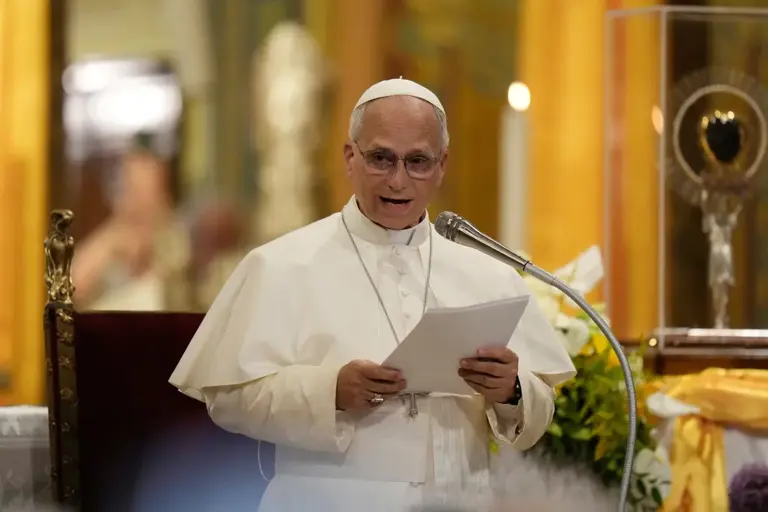
Pope Leo is wrong about hunger
For Catholics, the Pope is the vicar of Christ and the spiritual leader of the Church — which is to say, his positions are typically none of my business. Then again, any time the pope delivers a statement that speaks to the political aspirations of the secular left, the media amplifies it to lecture the rest of us.
The latest such comment has to do with world hunger.
“It is important to resist the commodification of basic human needs,” the Pope said, criticizing slow humanitarian aid from the United States to the U.N. World Food Program. “Food, water and healthcare cannot be subordinated to market considerations or geopolitical interests.”
Virtually every major modern famine in history occurred in places that “subordinated” the commodification of food for a greater good. Though, Leo has it backward. The market is the natural state of economic activity. We subordinate the market. The question is, are we better off when we do? Almost every time, the answer is no.
It’s not an accident that capitalistic nations create so much wealth that they can be generous not only to their own hungry but also to the hungry elsewhere. The proportion of the global population facing hunger today has declined dramatically over the past 30-40 years because of technological advancements and efficiencies fueled by trade and market-driven profits.
Which is why the U.S. has pledged nearly $750 million to the U.N. World Food Program, far more than any nation. China generally contributes under $20 million and Russia around $30 million.
It should also be noted that government aid is not the only assistance we give. Americans are the most charitable people in the world.
“Access to adequate food is a fundamental human right grounded in the dignity of every person,” the pope went on. “Meeting this need not only alleviates suffering but also addresses underlying causes of geopolitical instability. Indeed, food security is an essential component of global and integral security.”
Most people acknowledge that feeding and caring for the poor is a moral imperative. Being fed is not a “fundamental human right,” however, because it requires compelling another person to provide it. Americans believe — or should believe — that only the “fundamental rights” are those that call on others to abstain from interfering. That includes things like freedom of speech and religion. Your healthcare can’t be a right.
Moreover, helping the poor without any expectation that the government will change its policies that strip its people of dignity does nothing to help the underlying causes of geopolitical instability. If we choose, Americans have every right to attach expectations to their aid.
The United Nations, after all, is teeming with illiberal tyrannical nations that drive their own people into destitution. The areas most in danger of hunger, according to a recent U.N. report, are Sudan, South Sudan, Yemen, Nigeria, Somalia, and the Gaza Strip. All of them struggle in part because of Islamism, which carries a political agenda that runs counter to every Christian tenet imaginable. It would be nice if the Church spoke out about corrupt regimes and Islamists with the same passion it does the U.S., which has done more for the world’s poor than any institution that has ever existed.
Subscribe to:
Posts (Atom)