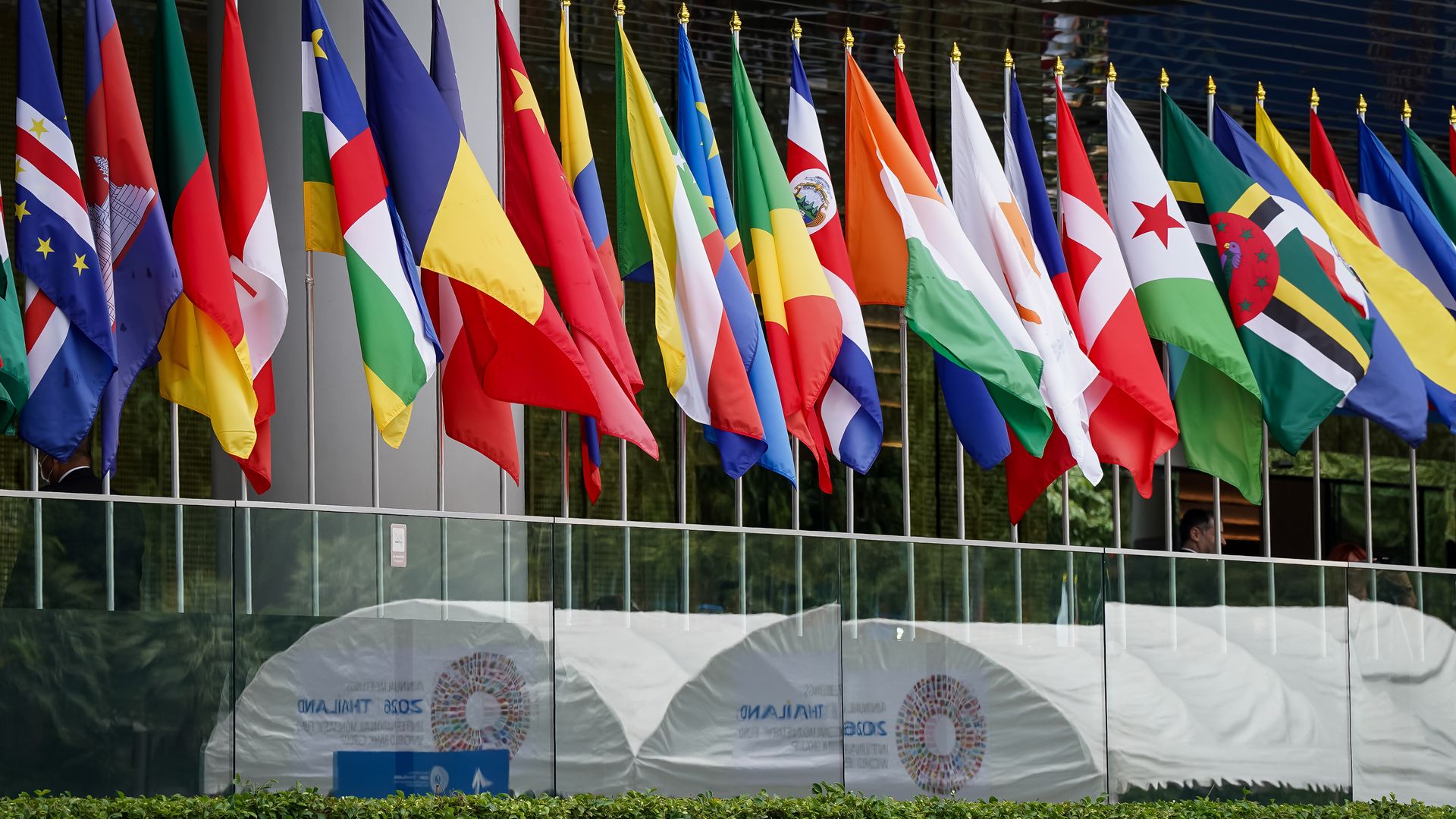
The IMF and World Bank annual meetings in Bangkok, Thailand, on Monday.
Photo: Matt Hunt/Anadolu via Getty Images
Oct 12, 2026

The global economy's ability to withstand new shocks is coming under strain, the International Monetary Fund warned Monday night in its latest economic forecast.
Why it matters: Worldwide growth has defied expectations, holding up despite the Middle East war and soaring oil prices. But some policymakers fear that dwindling energy reserves, mounting debt and growing reliance on the AI boom leave the world increasingly vulnerable.
What they're saying: "Without shoring up supply capacity and replenishing policy buffers, the global economy could soon test the limits of resilience," IMF economic counselor Silvana Tenreyro wrote in a blog post.
"Technology-related investment, while an important boon against the energy shock, is concentrating risks — making the global expansion heavily reliant on a small number of firms, sectors, and economies," she added.The intrigue: The AI boom has helped offset the war's economic toll, but a sharp reversal could leave global GDP 1.1% below the IMF's baseline forecast by 2028, with a bigger hit of 1.8% to U.S. GDP.
That scenario assumes AI's promised productivity gains fail to materialize, triggering a pullback in investment and a financial market correction.
Continued AI investment could also fuel inflation, potentially prompting further interest rate hikes.
But a stronger AI investment boom — paired with faster productivity gains — could lift global GDP 0.6% above its baseline forecast by 2029.

