Showing posts with label Airlines. Show all posts

Saturday, May 02, 2026

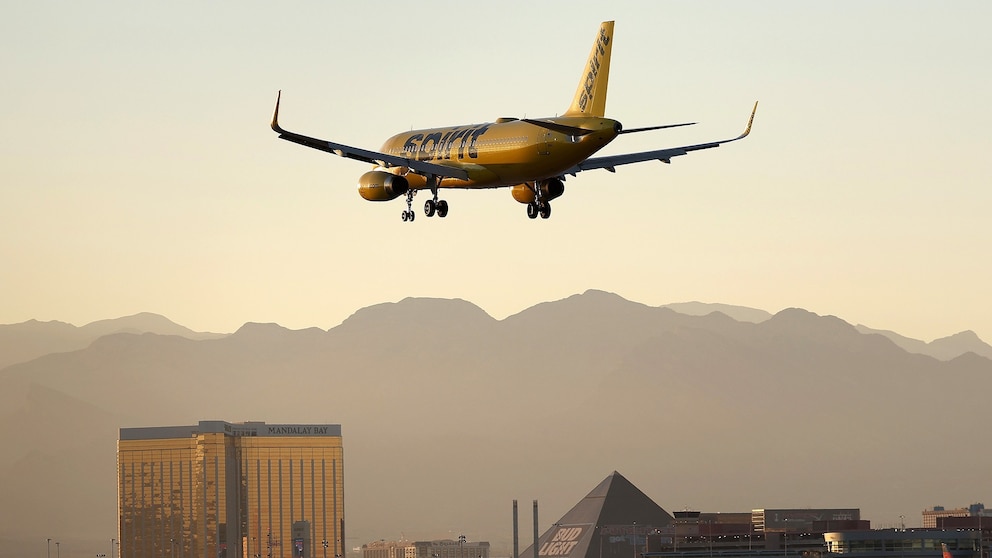
What to know about Spirit Airlines as it says it is 'winding down all operations'


Headlines from ABC News Live
Justin Sullivan/Getty Images

ByKelly McCarthy and Jon Haworth
May 2, 2026, 3:03 AM


Spirit Airlines says that it has "started an orderly wind-down of our operations, effective immediately" while the outcome of talks between the airline and the federal government over a $500 million rescue deal for the remains unclear.

Spirit Airlines final flight was flight 1833 which travelled from Detroit to Dallas and landed early Saturday morning just after midnight as the airline says it flew more than 50,000 passengers over the past day and is working to get more than 1,300 crew safely home to their bases.

A spokesperson for Spirit also said that the majority of the airline's employees found out about the airline's closure primarily through media reports that they were about to lose their jobs.

The airline was scheduled to operate 277 flights Saturday, according to data from Airline Data Inc, which have now all been cancelled.

"To our Guests: all flights have been cancelled, and customer service is no longer available," Spirit said in a statement on its website. "We are proud of the impact of our ultra-low-cost model on the industry over the last 34 years and had hoped to serve our Guests for many years to come."

The Wall Street Journal first reported that Spirit was preparing to shut down operations early Saturday.

Earlier Friday, President Donald Trump said an announcement about the airline rescue deal was possible.

Tuesday, October 07, 2025

Thousands of Passengers Grounded in Seattle, Pittsburgh, Orlando, Boston, and Minneapolis...


Thousands of Passengers Grounded in Seattle, Pittsburgh, Orlando, Boston, and Minneapolis as US Faces New Travel Disruptions with 70 Flights Canceled and 5000 Delays Affecting Delta, Cape Air, United, Breeze, American Airlines and More

Published on October 6, 2025


US faces 70 flight cancellations and 5,000 delays due to operational issues, grounding passengers in Seattle, Pittsburgh, Orlando, Boston, and Minneapolis, with disruptions impacting Delta, Cape Air, United, Breeze, and American Airlines. These widespread travel issues were primarily caused by operational challenges, weather conditions, and other unexpected factors, leading to significant inconvenience for travelers. Passengers were left stranded or forced to rearrange their travel plans as both domestic and international flights faced extensive delays. Major hubs such as Seattle, Boston, and Minneapolis saw a large number of affected travelers, highlighting the ongoing challenges in the air travel sector.

Cancellation By Airline

The United States saw a total of 5,018 flight delays and 70 cancellations, impacting both domestic and international flights. These disruptions caused significant inconvenience for travelers across various airports. Airlines and passengers faced challenges due to operational issues, weather conditions, or other factors. Travelers are advised to stay updated with their airlines for real-time information and alternative arrangements to minimize further disruption.

Thursday, January 20, 2022

FAA says some planes will be ‘too susceptible’ to 5G interference to be safe


Bad weather led some regional flights bound for San Francisco to be diverted or canceled Thursday

A cellular tower is seen in the foreground as a United Airlines Boeing 787 Dreamliner lands at Los Angeles International Airport on Jan. 19. (Patrick T. Fallon/AFP/Getty Images)


By Ian Duncan and

Lori Aratani
Today at 1:12 p.m. EST|Updated today at 6:47 p.m. EST

The Federal Aviation Administration said Thursday it had cleared more than three-quarters of the nation’s commercial fleet to land at airports where interference from 5G signals could pose a danger in bad weather, but indicated that some planes might never secure approvals.

The agency has been reviewing devices called radar altimeters to determine whether they can still provide reliable measurements of altitude — critical information for landing in bad visibility — in areas with 5G towers. The potential for disruption became clear Thursday, when San Francisco-bound flights were diverted and others were forced to circle as poor visibility collided with the rollout of the new wireless networks.

The diverted flights involved planes that had not been cleared to land where 5G could interfere with radio altimeters. The diversions are the latest challenge in a rollout that mostly spared large airports and airlines but has raised fresh questions for smaller regional carriers.

The FAA issued a bulletin Thursday warning that diversions were possible at eight airports across the country where bad weather was forecast “due to the nationwide expansion of 5G C-Band and the potential for radio altimeter interference.”

In a subsequent statement, the agency said, “We anticipate some altimeters will be too susceptible to 5G interference. To preserve safety, aircraft with those altimeters will be prohibited from performing low-visibility landings where 5G is deployed because the altimeter could provide inaccurate information.”

The C-band refers to the spectrum used for high-speed wireless Internet, which is close to the frequencies used by altimeters, creating a risk of interference. The FAA has been analyzing airplane models to determine whether they can operate safely close to 5G towers, clearing 78 percent of the nation’s commercial fleet. Some regional Embraer jets were among those to gain approval from the FAA on Thursday, but none made by competitor Bombardier had been cleared.

It was those models of planes that faced delays and diversions Thursday.

Tim Donohue, a co-founder of Aerology, a start-up that predicts air travel disruptions, said he had counted nine planes in holding patterns near San Francisco International Airport. At least five flights operated by SkyWest Airlines bound for San Francisco had to be diverted.

United Airlines shared with customers a blunt message after it canceled a regional flight Thursday from Sacramento to San Francisco.

“Your flight is canceled due to new federal rules to prevent interference between 5G technology and your aircraft,” the message read. “We’re urging the federal government to fix these rules.”


Wireless carriers to limit 5G near airports after airlines warn of major disruptions


The 5G networks went live Wednesday with buffers around airports after a prolonged battle that pitted airlines against Verizon and AT&T — which activated the new 5G networks — and the FAA against the Federal Communications Commission. Airlines reported few disruptions, but the head of the Regional Airline Association warned that was mainly because of good weather.

The regional carriers are a critical link in the aviation system, tying smaller airports to major hubs. Many of the affected flights Thursday were operated by SkyWest Airlines, a regional carrier that serves Delta Air Lines, American Americans, United Airlines and Alaska Airlines.

One of the diverted flights went to Monterey, Calif., and three to San Jose, according to data from Flightradar24. A SkyWest flight from Boise bound for San Francisco made loops near Petaluma, Calif., only to be diverted 180 miles to land in Reno, Flightradar24 data shows.

SkyWest said in a statement that the new FAA clearances Thursday applied to at least some of its jets, including models affected earlier in the day.

“The potential for ongoing operational impact remains until full mitigations can be put into place for all commercial aircraft,” the company said. “As always, we will not compromise safety.”

Faye Malarkey Black, president and chief executive of the Regional Airline Association, said the FAA’s decision to clear additional aircraft has helped, but many carriers are still unsure of what will follow.

“When the big guys are covered, the tendency is to think that we’ve averted the worst of the crisis, but this is not solved until all parts are whole,” she said.

Despite the concerns of regional carriers, the leaders of major airlines said they expected few issues and were pleased that the aviation industry and wireless companies were working together on the concerns that remain.

Scott Kirby, chief executive of United Airlines, expressed relief Thursday that the 5G rollout agreement allowed for the technology’s deployment with only a minimal effect on flight operations.

“While I wish it had happened earlier, the good news is that we now have everyone engaged: the FAA, DOT and those at the highest levels of the equipment and aircraft manufacturers, airlines and telecoms,” Kirby said. “I am confident we’ll soon have a clear set of objective criteria that will allow full rollout of 5G without significant impact to aviation.”


Monday, August 06, 2018

An Airline Scans Your Face. You Take Off. But Few Rules Govern Where Your Data Goes.


A passenger in front of a facial recognition camera at Orlando International Airport. The program also operates at airports in Los Angeles, Detroit and Atlanta.CreditJohn Raoux/Associated Press


By Catie Edmondson
Aug. 6, 2018


WASHINGTON — The program makes boarding an international flight a breeze: Passengers step up to the gate, get their photo taken and proceed onto the plane. There is no paper ticket or airline app. Thanks to facial recognition technology, their face becomes their boarding pass.

“I would find it superconvenient if I could use my face at the gate,” said Jonathan Frankle, an artificial intelligence researcher at M.I.T. studying facial recognition technology. But “the concern is, what else could that data be used for?”

The problem confronting Mr. Frankle, as well as thousands of travelers, is that few companies participating in the program, called the Traveler Verification Service, give explicit guarantees that passengers’ facial recognition data will be protected.

And even though the program is run by the Department of Homeland Security, federal officials say they have placed no limits on how participating companies — mostly airlines but also cruise lines — can use that data or store it, opening up travelers’ most personal information to potential misuse and abuse such as being sold or used to track passengers’ whereabouts.

The data the airlines collect is used to verify the identity of passengers leaving the country, an attempt by the department to better track foreigners who overstay their visas. After passengers’ faces are scanned at the gate, the scan is sent to Customs and Border Protection and linked with other personally identifying data, such as date of birth and passport and flight information.

For its part, Customs and Border Protection has said it will retain facial scans of American citizens for no longer than 14 days. But the agency has said it cannot control how the companies use the data because they “are not collecting photographs on C.B.P.’s behalf.”

Monday, December 25, 2017

United Airlines took my seat and gave it to a politician: woman


By Tamar Lapin

December 24, 2017 | 12:14pm


Jean-Marie Simon (left) and U.S. Rep Sheila Jackson LeeGetty Images


A teacher from Washington, D.C., accused United Airlines of booting her from her first class seat in order to give it to a congresswoman, she wrote in an account that the politician has since contested.

Jean-Marie Simon was at Bush International in Houston on her way home from a trip to Guatemala last week, when she witnessed U.S. Rep Sheila Jackson Lee (D-Texas) get ushered onto the plane before everyone else lined up, she wrote on Facebook.

When it came time for her to board the Dec. 18 flight, Simon said the gate attendant told her that her ticket was not in the system.

“A second United agent confirmed that I had no seat, not just the first class seat I had purchased, but no seat, period. I didn’t even have a reservation anymore,” she wrote.

When she was asked if she’d canceled her reservation, she said she hadn’t, she just wanted to get home.

“I said I wanted my seat, that I had paid a lot of miles for that seat, and that it was United’s responsibility to undo the seat assignment and return it to me, the person who had paid for it,” she wrote.

The United attendant told her that united.com had changed her reservation about an hour earlier and that another passenger had been upgraded to her seat.


Sunday, December 28, 2014

'Not Again': AirAsia Plane Disappears, Months After MH370 Went Missing


12/27/2014 @ 11:51PM


Another Asian airliner has gone missing: AirAsia flight QZ8501 lost contact with air traffic control at 7:24 a.m. local time on Sunday, AirAsia reported about four hours after the plane disappeared en route to Singapore.

(For context for American readers, flight QZ8501 disappeared at 7:24 p.m. EST on Saturday in the United States.)

AirAsia is a private airline based in Malaysia, and the country already has suffered two major aviation catastrophes this year.

In March 2014, Malaysia Airlines flight MH370 lost contact with air traffic control when it was about several hundred miles north of Singapore. Rescuers still have been unable to find any traces of flight MH370, or its 239 passengers and crew, despite an unprecedented search effort.

In April 2014, or one month after MH370 went missing, AirAsia’s CEO was forced to apologize after the company’s in-flight magazine suggested that AirAsia’s own well-trained pilots would never lose a plane.


AirAsia was forced to apologize for this article in its in-flight magazine, after MH370 went missing.

AirAsia said the magazine was printed before MH370 disappeared, and was not intended as a commentary on its rival airline.

In July 2014, Malaysia Airline flight MH17 was shot down over Ukraine, killing nearly 300 passengers and crew.

Details on AirAsia Flight QZ8501
Sunday’s missing AirAsia flight was traveling between Surabaya, in Indonesia, and Singapore. There were 155 passengers and seven crew on board the Airbus A320-200, officials have said.

The plane was operated by Indonesia AirAsia, a joint venture with Air Asia proper. (The company has several affiliates, including AirAsia India and AirAsia X.) Indonesia AirAsia has a fleet of 30 Airbus A320s.

An AirAsia official told the media on Sunday that the plane had requested “an unusual route” before air traffic control lost contact with QZ8501 over the Java Sea. However, an Indonesia Transport Ministry spokesperson later clarified that the pilot’s request was permission to change altitude due to bad weather, Steve Herman reported for the Voice of America.

“At the present time we unfortunately have no further information,” according to AirAsia’s statement. “At this time, search and rescue operations are in progress and AirAsia is cooperating fully and assisting the rescue service.”

After releasing its statement to reporters, AirAsia immediately changed the appearance of its various social media accounts. On AirAsia’s Facebook account, for instance, the company swapped out its usual bright red logo in favor of a muted gray logo, and changed the background of its Facebook from a festive holiday theme to a shrouded, all-black bar.


Malaysians were “shocked” by the news of a third potential lost airliner this year, the Malaysian Insider reported, and tens of thousand of people around the globe took to social media to express their surprise and sorrow.

“Another plane went missing,” one Malaysian tweeted. “Ya Allah not again.”

“Pray for QZ8501.”


.

Thursday, July 17, 2014

There Were Multiple Warnings About The Dangers Of Flying In Ukrainian Airspace Prior To Malaysian Plane Crash

BRIEFING


HUNTER WALKER, PAMELA ENGEL, ELENA HOLODNY

JUL 18, 2014, 7:29 AM 


The Malaysia Airlines Boeing 777 that crashed in eastern Ukraine Thursday may have been on a course for airspace that was closed to civilian aircraft by American and Ukrainian officials due to the ongoing violence in the region.

Earlier this month, Russian news agency ITAR TASS reported the Ukrainian aviation authority closed the airspace in the eastern part of the country to civilian aircraft in light of military operations in the area. The region, which sits along Ukraine’s border with Russia, has been the center of fighting between Ukranian forces and pro-Russian separtists in the wake of Yanukovych’s ouster. Several Ukranian jets have been shot down during the fighting including at least two on Wednesday.

In April, the Federal Aviation Administration banned American planes from flying over the Ukrainian region of Crimea and its surrounding waters. Russia and Ukraine have been engaged in a territorial dispute over Crimea, which is in the south of the country, in the aftermath of the ouster of pro-Kremlin Ukranian President President Viktor Yanukovych following widespread protests in February.

An FAA “special notice” on Ukraine issued in April warned of a “potentially hazardous situation” in Ukrainian airspace, “particularly over Crimea.” The FAA has not responded to requests for comment from Business Insider about what notices are currently in effect regarding flights over Ukrainian airspace.

The FAA isn’t the only government agency that has attempted to deter civilian aircraft from flying over portions of Ukraine.

Malaysia Airlines confirmed it “lost contact” with MH17, which was flying from Amsterdam to Kuala Lumpur in a Twitter post Thursday. According to FlightAware, MH17 was last tracked just over the Ukrainian border in the northwestern part of the country.


FlightAware also indicated MH17 should have been on a path that would have taken it over Western Ukraine, not the volatile eastern part of the country. That flight path would have taken the plane near Crimea. However, the air traffic site Flightradar24 showed the plane’s final signal came from the east of the country. The security intelligence firm Stratfor also noted the plane reportedly went down near Shakhtyorsk, Ukraine in the east near the Russian border.

Malaysia Airlines has not responded to multiple requests from Business Insider about the crash and whether the plane was flying over Eastern Ukraine.


.

Tuesday, February 18, 2014

Flight Attendant Critically Hurt as United Jet Hits Turbulence


 By Alastair Jamieson


Five people were taken to hospital – one of them in a critical condition – after a United Airlines jet ran into severe turbulence on a flight from Denver to Billings, Montana, on Monday.

A passenger said one woman hit the cabin ceiling so hard that she cracked a panel during the incident, which happened as the Flight 1676 was making its descent for a scheduled landing at 1:23 p.m. local time (3:23 p.m. ET).

Three flight attendants and two passengers went to hospital, the airline said in a statement. All were released except for one flight attendant.

5 injured by severe turbulence on United flight TODAY

St. Vincent Healthcare in Billings said the remaining patient was in a critical condition.

Joe Frank, 20, a passenger on board on the Boeing 737-700 told The Denver Post in an e-mail that the aircraft dropped suddenly and with such force that an infant flew from a parent's arms and landed, unharmed, in another seat nearby.

"The sudden drop pulled everyone out of their seats, and I mean hard," Frank told the newspaper.

Another passenger, Bill Dahlin, told local station KTVQ that one woman hit the ceiling so hard it cracked the panel above her head.


Courtesy Caleb Van
A United plane at the Billings Loan International Airport in Montana after it made an emergency landing.

"There was a lot of screaming, a lot of hollering," Dahlin told KTVQ.

In a statement, United Airlines said there had been 114 passengers and five crew members on board the flight.

“The flight encountered severe turbulence upon descent into Billings, Montana,” the statement said. “Three crew members and a number of passengers were injured. Our primary focus is assisting our employees and passengers who were injured, and our flight safety team will review what happened. “

Tricia Culligan of NBC News contributed to this report. First published February 18th 2014, 3:56 am


Source
.

Wednesday, March 28, 2012

Passenger on US Airways flight from North Carolina to Florida arrested after allegedly attacking crew

Published March 28, 2012
| Associated Press

CHARLOTTE, North Carolina – A passenger aboard a US Airways flight from North Carolina to Florida has been arrested after witnesses say she attacked crew members before being wrestled to the floor.

A spokeswoman for the airport authority in Fort Myers, Florida, said Wednesday police arrested a US Airways passenger. Spokeswoman Victoria Moreland would not provide details until an arrest report is released. US Airways did not return calls.

WNCN-TV in Raleigh reports a passenger from Charlotte to Fort Myers kicked, scratched and spit on crew members. The TV station said one of its reporters was in the Fort Myers terminal and spoke to crew members.

The incident came hours after passengers aboard a JetBlue flight from New York to Las Vegas had to restrain that plane's agitated pilot.

Source: http://www.foxnews.com/us/2012/03/28/passenger-on-us-airways-flight-from-north-carolina-to-florida-arrested-after/#ixzz1qQrNTc00

.

JetBlue passengers describe pilot's mid-air 'breakdown'

Pilot Clayton Osbon, 49, had to be restrained on flight from Las Vegas after claiming there was a bomb on the plane


Staff and agencies
guardian.co.uk, Wednesday 28 March 2012 11.41 EDT


JetBlue passengers claim pilot Clayton Osbon walked out of the cockpit and attempted to force his way into an occupied bathroom. Photograph: Karen Bleier/AFP/Getty


Passengers aboard a flight from New York to Las Vegas have described the moment when a pilot suffered an apparent breakdown which led to him being pinned to the floor while another pilot made an emergency landing.

Holidaymakers on the JetBlue flight on Tuesday realised something was wrong when the pilot, Clayton Osbon, 49, walked out of the cockpit and attempted to force his way into an occupied bathroom.

Osbon's colleagues tried to calm him down as he became more jittery, coaxing the pilot to the back of the plane while ensuring he did not get near the plane's controls. But he broke free and sprinted up the aisle, claiming there was a bomb. Passengers said Olson urged them to pray and shouted, "They're going to take us down."

"Nobody knew what to do because he is the captain of the plane," said Don Davis, who was aboard the plane at the time. "You're not just going to jump up and attack the captain."

Four men managed to restrain Osbon, using seatbelt extenders and zip-tie handcuffs to pin him to the floor for more than 20 minutes while the co-captain and an off-duty pilot landed the plane in Amarillo, Texas.

Tony Antolino, who sat in the 10th row and tackled Osbon when he attempted to re-enter the cockpit, said: "Clearly the pilot had an emotional or mental type of breakdown. He became almost delusional."

Fellow passenger Josh Redick said Osbon seemed "irate" and was "spouting off about Afghanistan and souls and al-Qaida".

The chief executive of JetBlue, Dave Barger, told NBC Osbon was a "consummate professional" he had known for years. There was nothing in the pilot's record to indicate he would be a risk, Barger added.

The airline described the incident as a "medical situation involving the captain of JetBlue airways flight 191 from New York's John F Kennedy airport". The pilot was later taken to a hospital, it added.

Gabriel Schonzeit, who was sitting in the third row, said the pilot had said there could be a bomb on board the flight. "He started screaming about al-Qaida and possibly a bomb on the plane and Iraq and Iran and about how we were all going down," he told Amarillo Globe-News. "A group of us … grabbed him and put him to the ground."

An off-duty airline captain who was on the plane entered the flight deck and took over the duties of the ill captain before landing in Amarillo, the airline said.

Airline authorities and police officers interviewed passengers on arrival. Grant Heppes, who was on the flight, said: "I had no idea [Olson] was an employee … I just assumed he was a passenger who flipped out."

An FBI spokeswoman, Lydia Maese, said it was co-ordinating an investigation with airport police, Amarillo police, the FAA and the Transportation Safety Administration. She declined to comment on any arrests.

John Cox, an aviation safety consultant and former airline pilot, said such incidents were rare. He recalled two or three similar examples in some 40 years.

Airlines and the FAA encouraged pilots to assert themselves if they thought flight safety was at risk, even if it meant contradicting the captain's orders, Cox said.

All pilots working for scheduled airlines must have a first-class medical certificate, which must be renewed by the FAA every six months to a year, depending on the pilot's age. To receive the certificate, pilots must be examined by an FAA-designated doctor, who asks questions about the interviewee's psychological condition. Pilots are required to disclose any ailments and list any medication they may be taking.

The incident aboard the JetBlue flight comes weeks after an American Airlines flight attendant was removed from a plane after making references to 9/11 and voicing concerns that the plane would crash.

In 2008, an Air Canada co-pilot was removed from flight from Toronto to London then later restrained and sedated after having a mental breakdown.


Source

Sunday, April 18, 2010

Air France, Lufthansa Test Flights as Ban Is Extended (Update3)


By Gregory Viscusi and Omar R. Valdimarsson


April 18 (Bloomberg) -- Air France-KLM Group and Deutsche Lufthansa AG were among carriers saying they managed to fly aircraft without suffering damage as governments across Europe extended a flight ban after Iceland’s volcanic eruption last week caused the grounding of 63,000 flights.

Air France’s KLM Dutch unit operated nine test flights after a technical inspection following one late yesterday in Dutch airspace revealed that the quality of the atmosphere is “in order.” Air France said its engineers found no visual impact on a test flight from Paris to Toulouse. Lufthansa sent 10 aircraft from Munich to Frankfurt to reposition its fleet yesterday. All arrived safely.

“We asked the Frankfurt crew to check any damage with the aircraft and the windows,” Wolfgang Weber, a spokesman at Lufthansa, Europe’s second-largest carrier, said in a telephone interview. “There wasn’t even the smallest scratch.”

About 17 percent of 24,000 flights that usually cross Europe’s airspace on a Sunday will fly today as airports from Dublin to Moscow are closed, according to Eurocontrol. While the Brussels-based group forecasts as much as half of Europe’s airspace may be “risk free” tomorrow, U.K. Transport Minister Andrew Adonis said in televised comments that flights across northern Europe won’t be safe in the next 24 hours, citing advice given by the country’s Met Office.

Air Berlin, BA

Volcanic ash can cause jet engines to fail by melting and then congealing in the turbines. Test flights so far have shown no dangerous particles in European airspace following the eruption, according to airline executives.

Flights were grounded after April 14 when an eruption at the 1,666-meter (5,466-foot) Eyjafjallajökull volcano spewed dust across Europe’s airspace. The disruptions are costing carriers $200 million a day, the International Air Transport Association said.

Air Berlin Plc ran two test flights yesterday from Munich to Dusseldorf and from Nuremberg to Hamburg without problems, flying at the permitted 3,000 meters, the carrier said in a statement.

“We’re puzzled why the results of the Lufthansa and Air Berlin test flights had no influence on safety authorities’ decision criteria,” Air Berlin CEO Joachim Hunold said.

British Airways Plc, Europe’s third-largest carrier, said it operating a test flight today from Heathrow Airport to assess the quality of U.K. airspace. The carrier has canceled all flights to and from London through tomorrow.

Assess the Impact

The European Commission said it will set up a group to assess the impact of the ash cloud on the travel industry and the economy. Spain called a video conference for European Union transport ministers tomorrow to discuss emergency plans.

U.K. airspace will remain restricted until at least 7 p.m. local time tomorrow, the country’s flight-control authority, National Air Traffic Services, said.

“Conditions around the movement of the layers of the volcanic ash cloud over the U.K remain dynamic,” NATS said in a statement. “NATS is maintaining close dialogue with the Met Office and with the U.K.’s safety regulator, the CAA, in respect of the international civil aviation policy we follow in applying restrictions to use of airspace.”

In Norway, the airspace north of Bergen airport until Berlevag was re-opened, air controller Avinor said on its Web site. The airspace over southern Norway may be cleared in the next six to 12 hours, Avinor said.

Sweden opened the air space north of Soderhamn, including Kiruna airport, according to the LFV flight controller. The rest of the air space remains shut, it said.

Italy Reopens Tomorrow

Italy will reopen all its airspace at 7 a.m. tomorrow after conditions in the north of the country improved, ENAC, the nation’s civil aviation authority, said.

Germany’s DFS flight safety authority eased a ban at some airports today. Still, all the country’s airports will shut again by 8 p.m., with Berlin-Tegel and Berlin-Schoenefeld closing at 10 p.m., a spokeswoman at the agency said. The closings will remain until at least 2 a.m. tomorrow.
France’s civil aviation authority banned flying in the previously unaffected south of the country today. French airspace and all airports in the country will remain closed until at least 8 a.m. tomorrow.

Spain, Greece, Turkey

Airspace in northern Spain was also shut. Rome, Madrid, Athens and Istanbul were the only major European airports still in operation.

The Netherlands extended the closure of its airspace until 8 p.m. local time, and Amsterdam’s Schiphol Airport is closed until at least that time.

“We hope to receive permission as soon as possible after that to start up our operation and to transport our passengers to their destinations,” KLM Chief Executive Officer Peter Hartman said in a statement.

Airlines in the Asia-Pacific region canceled most Europe- bound flights, with Qantas Airways Ltd. saying it won’t fly to European destinations before April 20 and can’t confirm when service on those routes will resume.

Carriers including Air China Ltd., Japan Airlines Corp., Thai Airways International Pcl, Korean Air Lines Co. and Cathay Pacific Airways Ltd. shut down service to Europe, while Singapore’s Changi Airport reported cancellation of 34 arrivals and departures, including Singapore Airlines Ltd. flights to nine European destinations.

Haraldur Eiriksson, a meteorologist at the Icelandic meteorological office, predicted little changes in the ash pattern in Europe until at least through April 23.

‘Ongoing Impact’

“This could have an ongoing impact on European air travel,” he said. “The forecast hasn’t changed, although the height the volcano is spewing the ash into has decreased from 5 to 6 kilometers to less than 3 kilometers, and now it can’t be seen on our radars. Due to cloudy weather conditions at the site of the volcano, we can’t say what the exact height of the ash is.”
Volcanic eruptions may continue for months and curtail European air traffic, said Sigrun Hreinsdottir, a geophysicist at the University of Iceland in Reykjavik. “It could erupt, pause for a few weeks, and then possibly erupt again.”

The last eruption of Eyjafjallajökull in December 1821 continued until January 1823. The current blast has sent ash to as high as 7 kilometers (4.5 miles), according to Gudrun Larsen, a vulcanologist at the University of Iceland. The magma had to pierce 200 meters of ice before reaching the air, she said.

“We really don’t know if this eruption is going to last as long as the previous one, but we can’t say it’s not a possibility,” Larsen said by telephone.
Funeral Plans Canceled

The volcanic ash cloud also led world leaders, including Barack Obama, German Chancellor Angela Merkel and French President Nicolas Sarkozy to cancel plans to attend the funeral of Polish President Lech Kaczynski, who died with 95 others in an April 10 plane crash.
Russian President Dmitry Medvedev arrived in a government jet which had clearance to fly at low altitudes.

Airline stocks, including British Airways, Lufthansa, and Ryanair Holdings Plc, fell April 16 as fleets were grounded. El Al Israel Airlines, which has canceled all European flights except to Madrid, Rome and Athens, fell the most in 17 months on the Tel Aviv exchange today.
Exports of Italian products such as mozzarella cheese, flowers, fruit and vegetables worth 10 million euros ($13.5 million) are blocked, the country’s Coldiretti agricultural group said in a statement.

Diverted Air Freight

Deutsche Post AG’s DHL unit has diverted air freight to southern European airports including Bergamo in Italy to maintain services. DHL has closed its Leipzig-Halle freight hub where at least 50 aircraft land each week, carrying up to 200,000 deliveries, spokesman Stefan Hess said. DHL switched to rail and road for deliveries in northern Europe April 16.

Because of the wind direction, Iceland’s Keflavik airport is open, and North American flights are running on schedule.

OAO Aeroflot, Russia’s largest air carrier, is flying to North America via the North Pole to avoid volcano ash over Europe, Transportation Minister Igor Levitin told Prime Minister Putin at a meeting today, Interfax said.

The U.S. Air Transport Association said yesterday that 282 of 337, or 84 percent, of the day’s non-stop flights between the U.S. and Europe were canceled.

Delta Air Lines Inc., the world’s largest carrier, scrapped 97 flights today to and from Europe, spokesman Anthony Black said. Another 49 flights have been grounded for tomorrow. AMR Corp.’s American Airlines has canceled 30 flights to Europe so far today, according to spokeswoman Andrea Huguely. American is able to operate flights to and from Spain and Italy, she said.

Chicago Cancellations

Chicago’s Department of Aviation, which operates O’Hare International Airport, Midway International Airport and Gary- Chicago International Airport, said 14 flights bound for Chicago from northern Europe were canceled today.

The eruption began on March 20 with a lava flow on the eastern flank of the Eyjafjallajökull volcano, according to the Institute of Earth Sciences at the University of Iceland. After a lull, it resumed early on April 14, directly under the icecap that covers most of the mountain.

To contact the reporters on this story: Gregory Viscusi in Paris at gviscusi@bloomberg.net; Omar R. Valdimarsson in Reykjavik valdimarsson@bloomberg.net


Last Updated: April 18, 2010 16:48 EDT
.
Sunday, January 24, 2010

Ethiopian jet crashes off Beirut


An Ethiopian Airlines passenger plane with 92 people on board has crashed into the Mediterranean Sea shortly after take-off from Beirut airport.

Eyewitnesses say they saw a ball of fire in the sky before the jet crashed into the sea.

Wreckage from the plane has been seen off the Lebanese coast.

Most of the those on board Flight ET409, which was was bound for the Ethiopian capital Addis Ababa, were Lebanese and Ethiopian nationals.

The plane, a Boeing 737, carried 83 passengers and nine crew.

It disappeared from radar screens some five minutes after take-off in stormy weather at about 0200 local time.

The BBC's Natalia Antelava, in Beirut, reports that the Lebanese transport minister and other officials say a rescue operation is now under way, but it is unclear if there are any survivors.

Ethiopia and Lebanon share close business ties, and thousands of Ethiopians are employed as domestic helpers in Lebanon.

Ethiopian Airlines operates a regular flight between Addis Ababa from Beirut.


Source: http://news.bbc.co.uk/2/hi/in_depth/8478060.stm
.

Friday, January 22, 2010

Indian airports on alert over hijack threat

Government increases security at airports and orders use of sky marshals amid warnings of Islamist terrorist plot to hijack plane

Matthew Weaver and agencies
guardian.co.uk, Friday 22 January 2010 09.20 GMT


An Air India jet comes into land at Mumbai airport. India's airports are on high alert after intelligence reports suggested terrorists may seize a plane. Photograph: Daniel Berehulak/Getty Images


Airports in India were put on high alert today after intelligence reports of a terrorist plot to hijack a plane.

The Indian government also directed airlines to deploy sky marshals on a number of routes between countries in south Asia.

Terrorist groups with links to al-Qaida or Lashkar-e-Taiba, the Pakistan-based group behind the Mumbai attack in 2008, were planning to seize a plane operating in the region, according to intelligence reports cited by the Press Trust of India.

The warning comes in the run up to next Tuesday's annual republic day in India, when there are often security scares.

Routes to India from countries in the South Asian Association for Regional Cooperation are thought to be especially vulnerable. They are Nepal, Bangladesh, Sri Lanka, Bhutan, Maldives, Afghanistan and Pakistan.

Sky marshals have been ordered on board planes flying on routes between India and these countries. India has also advised these seven countries to step up security at their airports.

Despite volatility in the region, India has been spared a major terrorist attack since the Mumbai incident, when 10 militants attacked the city for three days in November 2008, killing 166 people.

Aviation spokeswoman Moushumi Chakravarty said that the airports were placed on alert yesterday after the government received the warnings.

A report in The Indian Express newspaper, which Chakravarty confirmed, said intelligence officials had uncovered a plot by militants to hijack an Air India or Indian Airlines flight destined for a South Asian country.

UK Bansal, from India's home ministry, told Reuters: "We have alerted our civil aviation security people against a possible attempt to hijack an Indian airlines flight."

He added: "This would obviously be from terrorist groups who are arraigned against Indian interests." He did not specify which group.

The Indian media said the hijack threat was uncovered during the interrogation of Amjad Khwaja, a militant leader belonging to Harkat-ul-Jihad al-Islami, an extremist group involved in numerous terror attacks in India.

Khwaja was arrested in the southern Indian city of Chennai last week and was being questioned by Indian police.

The terror alert came just days after the US defence secretary, Robert Gates, warned that a syndicate of terror groups affiliated with al-Qaida was trying to foment a new war between India and Pakistan.

Gates praised India for its restraint after the Mumbai attacks, but expressed concern that the government would have a hard time reacting so cautiously if it were hit again.

In December 1999, Islamic militants hijacked an Air India flight from Nepal's capital, Kathmandu, to Kandahar in southern Afghanistan. The hijacking ended when New Delhi released four Islamic militants in exchange for 167 passengers and crew.

.
Source:http://www.guardian.co.uk/world/2010/jan/22/indian-airports-alert-hijack-threat
.

Wednesday, January 13, 2010

What’s It All About?


There are those who like to travel for business and those who can’t stand the hassle. Then there is Ryan Bingham (George Clooney) in Jason Reitman’s “Up in the Air.” Bingham travels 300 days a year as he roams the country firing people on behalf of bosses who can’t muster the courage to do it themselves. Bingham loves it so much, in fact, that he makes the security checkpoint nightmare into a ballet, of sorts, as he slips off his loafers while simultaneously extracting his laptop from his roller-board suitcase. He seems to enjoy it. Perhaps, when compared to his job, the sport of traveling is fun in the world of Ryan Bingham, professional hatchet man. He belongs to all of the rewards plans, mileage plans, and frequent guest plans of American Airlines, Hertz and Hilton. At American they “know” him by name. Bingham prefers 35,000 feet above the earth rather than terra firma. He prefers the microcosm of the multi-terminal airport to the real world.

Bingham’s world comes perilously close to crashing to a earth when his boss wants to cut back on travel to save a few bucks during the financial crisis that faces the nation. The film shows the real victims of last year’s financial crisis–the many men and women who lost their once-solid jobs as companies threw off employees by the thousands. Bingham faces the possibility of staying put in Omaha where he would fire people via video-teleconference. Here is where the film is truly brilliant in its exploration of “what it’s all about.” Bingham objects to the teleconference firing on the grounds that its not humane and doesn’t provide the same amount of comfort to the recently dismissed. On one level the audience, along with Binghan’s boss (played very well by Jason Bateman), can roll its collective eyes. But Bingham actually does have a heart hidden behind the traveller’s facade, and his heart makes this film one of the best I’ve seen in a long, long time.

Unlike some recent good films such as “Where the Wild Things Are” and “The Road,” this film makes no mistakes, has no flaws, and no loose ends. There is nothing we have to forgive Reitman of in order to enjoy the rest of the film. This film sets itself a pretty high bar in that it wants to take on the question of what life is all about. According to Reitman, life is about relationship–a certain kind of relationship. I don’t want to give too much away, so that’s all I will say at this point. Perhaps in a few weeks, once everyone has had a chance to see it, then we can discuss it in these virtual pages.


3 Votes

.
Source:http://whosoeverdesires.wordpress.com/2010/01/05/whats-it-all-about/#more-1287
.

Friday, January 08, 2010

Looking at the 14 Countries with New Travel Restrictions


Jan. 4 2010 - 10:46 am


Effective today, the Transportation Security Administration is imposing new security rules on passengers flying to the United States from 14 countries: Afghanistan, Algeria, Cuba, Iran, Iraq, Lebanon, Libya, Nigeria, Pakistan, Saudi Arabia, Somalia, Sudan, Syria and Yemen.

“TSA is maintaining that every individual flying into the US from anywhere in the world traveling from or through nations that are state sponsors of terrorism or other countries of interest will be required to go through enhanced screening,” they said in a directive. “The directive also increases the use of enhanced screening technologies and mandates threat-based and random screening for passengers on US bound international flights.”
So, why those countries?

Well, four of them — Iran, Syria, Cuba and Sudan — are considered “state sponsors of terrorism” by the United States Department of State.

The other ten are “countries of interest” where terrorism and instability are problems.

Looking at the State Department’s Country Reports on Terrorism for 2008, which came out in 2009, you can see a variety of reasons why countries may have made that list.

In Lebanon, there is Hizballah, “completely replenished” and having “moved arms back into southern Lebanon” where it was “providing training to HAMAS operatives from Gaza.”

There’s Sudan where “Al Qaida-inspired terrorist elements, and elements of both Palestine Islamic Jihad (PIJ), and HAMAS remain.”

I’ve reported on Nigeria and Yemen. Pakistan, Afghanistan and Iraq — where the United States is actively involved in fighting — are, hopefully, a little obvious.

Libya, the State Department says, appears “to have curtailed its support for international terrorism, although it may have retained residual contacts with some of its former terrorist clients.”

Meanwhile, all the screening rules in the world won’t make a difference if people are allowed to walk the wrong way through an exit lane in a supposedly secure area, causing an airport — like Newark — to be shut down for hours.


.