Tuesday, September 29, 2026


Tuesday, September 22, 2026
Vatican’s UN diplomat: Hate speech violates command to love one’s neighbor
by Gina Christian - OSV News

(OSV News) — Hate speech “contradicts the commandment to love one’s neighbor,” said the Vatican’s top diplomat to the United Nations.
Archbishop Christophe Z. el-Kassis, apostolic nuncio and the Holy See’s permanent observer to the U.N., shared his thoughts in a statement during the Sept. 17 “Global Conference on Promoting Interreligious and Intercultural Dialogue and Tolerance in Countering Hate Speech.”
The conference, which took place at the U.N.’s New York headquarters, was sponsored by the U.N.’s Alliance of Civilizations, created in 2005 to address social and cultural polarization.
In his address — which came one day after three Vatican dicasteries released a new note on the importance of interreligious and ecumenical dialogue — Archbishop el-Kassis said hate speech “poisons public discourse, inflames division, and too often prepares the ground for violence and persecution.”
Such damage is inflicted regardless of whether hate speech is “directed against individuals or communities on the basis of their religion, ethnicity, nationality, or any other characteristic,” he said.
While “freedom of expression is a fundamental right that must be protected,” said the archbishop, “this freedom carries corresponding responsibilities.”
“Speech that deliberately incites hatred or violence cannot claim the protection of liberty,” he said, since “it erodes the very conditions in which genuine freedom can flourish.”
Saturday, September 19, 2026
The German Theologian Bringing Protestants and Catholics Together
JAYSON CASPER
Evangelicals have critiqued the ecumenism of former World Evangelical Alliance head Thomas Schirrmacher.

Image courtesy of Thomas Schirrmacher
Eleven American Pentecostal pastors sat nervously with Pope Francis at the Vatican in June 2016. The meeting, arranged by Thomas Schirrmacher, then chair of the theological commission of the World Evangelical Alliance (WEA), was an opportunity for the guests to ask the pontiff anything they wanted. Two years earlier, Francis had publicly apologized for past Catholic persecution of the charismatic movement.
At the time, the Italian Evangelical Alliance had cautioned against growing ecumenical openness where “insurmountable” doctrinal obstacles exist. The American delegation was similarly opposed to Schirrmacher’s engagement but had agreed to the meeting. No one wanted to ask the first question. Amid the awkwardness, Francis took the initiative.
He asked the delegation to pray for him.
Schirrmacher said what followed was a life-changing experience for the Pentecostals. They prayed for the pope. He prayed for them. By the end, he said, their theological concerns didn’t matter much anymore as they agreed with Schirrmacher that Francis was a genuine believer and had no intention to convert them to Catholicism.
Matters of theology and doctrine have always mattered to Schirrmacher, who turns 66 today. The German theologian has four doctoral degrees and authored more than 100 books, including a six-volume treatise on ethics. Committed to Christian unity, he served as general secretary of the World Evangelical Alliance from 2021 to 2024. Yet his life has been a lightning rod of controversy—particularly when he neared the halls of power.
Even seemingly straightforward truths, he finds, have prompted critical reaction.
“If I say, ‘God is love,’” said Schirrmacher, “it could start a global discussion.”
Friday, September 18, 2026
Vatican document affirms interreligious dialogue as 'journey of hope' for humanity
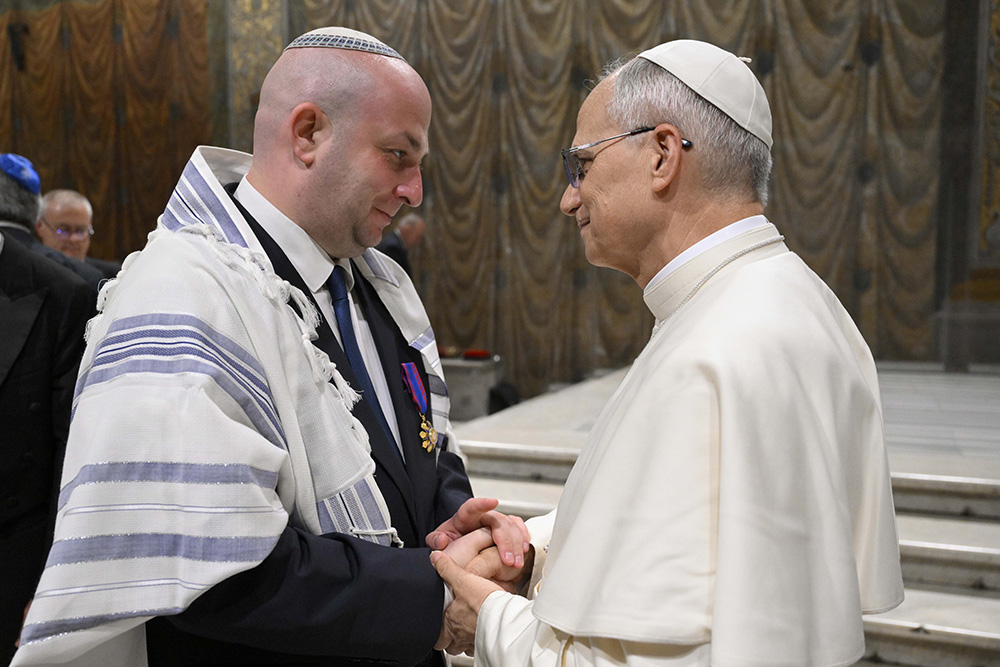
Pope Leo XIV greets Silviu Vexler, president of the Federation of Jewish Communities in Romania, during a ceremony honoring Blessed Iuliu Hossu in the Sistine Chapel at the Vatican June 2, 2025. (CNS/Vatican Media)
Gina Christian
View Author Profile

OSV News
September 17, 2026
A new Vatican document affirms the Second Vatican Council's landmark teaching on the church's relationship with the Jewish people and those of other faiths, while inviting humanity to enter upon a common "journey of hope."
That journey requires "courage" and "a genuine shift in mindset" to seek "peaceful coexistence" amid "unprecedented challenges," including conflicts, persecution, the weaponization of religion, secularization and polarization, said the document.
And rather than looking to found "one great world religion," authentic interreligious dialogue aims to build "a fraternal society capable of accepting differences," said the text.
On Sept. 16, the Vatican released "A Journey of Hope: Sixty Years of Interreligious Dialogue and Fraternity in the Light of the Conciliar Declaration Nostra Aetate."
The 8,600-word note was the result of a collaboration among the Vatican's Dicastery for the Doctrine of the Faith, the Dicastery for Promoting Christian Unity — which also oversees religious relations with Judaism — and the Dicastery for Interreligious Dialogue.
Pope Leo XIV had granted approval of the text on June 22, with official publication taking place Sept. 16.
The five-part "Journey of Hope" began by retracing the "essential stages" in the Church's interreligious dialogue since the 1965 promulgation of Nostra Aetate, including the contributions of Pope Leo XIV and his four predecessors.
The note then examined the "visible" and "silent" fruits of Nostra Aetate, as well as the "persistent resistance and misunderstandings" that surround the conciliar document.
In their note, the three dicasteries called for a renewed "pedagogy of dialogue," one that puts into practice an informed encounter between Catholic and those of other beliefs.
Reject Ecumenism
September 9, 2026
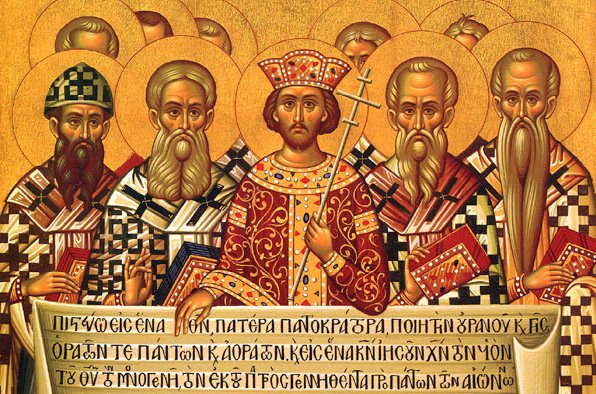
Jesus is coming soon, and the attacks on the Church are on the increase. The Christian faith stands or falls upon the authority of the Word of God. “Sanctify them through Thy truth: Thy word is truth” (John 17:17). Faithful Christians should therefore never treat the Bible as merely another ancient document to be reconstructed according to changing theories of scholars. We are dealing with the foundation of faith, doctrine, worship, and salvation.
This is why the rise of higher criticism and the modern critical-text movement deserves serious scrutiny. In particular, Christians should examine the textual theories associated with Brooke Foss Westcott and Fenton John Anthony Hort, whose 1881 Greek New Testament helped establish a radically different approach to the textual basis underlying all modern English translations.
The concern is not simply that newer translations use different English wording. The deeper issue is the Greek text upon which they are based and the assumptions used to reconstruct it. Westcott and Hort rejected the traditional dominance of the Received Text and elevated a comparatively small group of manuscripts, particularly Vaticanus and Sinaiticus, while developing theories of textual criticism that profoundly influenced subsequent generations.
This raises an important spiritual question: What influences shaped the manuscripts, textual traditions, and interpretive assumptions that have increasingly displaced the traditional Received Text?
Some conservative Christian scholars have raised concerns about similarities between certain readings in the Alexandrian textual tradition and theological tendencies associated with Gnosticism. Gnosticism radically distorts biblical teaching concerning Christ, His incarnation, His humanity, His divinity, and salvation. Christians should therefore be cautious whenever disputed readings diminish, qualify, or omit passages that have historically testified to foundational doctrines concerning the deity, incarnation, blood, and saving work of Jesus Christ.
There is another concern that deserves attention. Codex Vaticanus and Codex Sinaiticus, two manuscripts that have exercised enormous influence upon modern textual criticism, disagree with one another in more than 3,000 places in the Gospels. The extent of their differences should cause Christians to consider carefully why these manuscripts have been given such extraordinary weight in reconstructing the New Testament text.
There is also a prophetic concern. Many modern translations contain readings in Revelation that differ from the traditional wording in ways that can affect how readers understand the prophetic identification of religious powers. The Protestant Reformers and Seventh-day Adventists have historically understood the beast power of Revelation 13 and related passages as pointing to the papacy and its opposition to God's law and truth. When modern translations weaken, alter, footnote, or omit wording traditionally used in studying these prophecies, Adventists should take notice.
Saturday, September 12, 2026
UNIVERSAL FRATERNITY FOR THE SUNDAY LAW: THE MARK OF THE BEAST/ MARCOS ESCOBAR
The Final Crisis: The Sunday Law
Sep 12, 2026
Great changes are taking place in the world today; the religious powers are working hand in hand with the world powers to create the means for the establishment of the Mark of the Beast. The Sunday Law is taking shape. The powers of the earth are pressing the world for a more decisive action. There is presently an urgent call to unify the world in one fraternity, one world, one humanity, for the exaltation of the false sabbath. Humanity will not be able to buy or sell except they honor Sunday as the day of mandatory universal worship.
The signs of the imminence of the Second Coming of our Lord Jesus are being fulfilled. We must get ready; our redemption draws near.
Sunday, September 06, 2026
Friday, September 04, 2026
Monday, August 31, 2026
Sunday, August 30, 2026
Sunday, August 23, 2026
Adventists and Catholics: The Great Compromise - Nick Ionashku
Tuesday, August 11, 2026
Churches respond to earthquake in Colombia with solidarity and accompaniment
World Council of Churches (WCC) member church, the Presbyterian Church of Colombia, and ecumenical organizations in Colombia are mobilizing in solidarity with communities affected by a powerful earthquake that struck the western and central parts of the country on 10 August.

11 August 2026
According to preliminary figures, the 7.4-magnitude earthquake, with an epicentre near San José del Palmar in Chocó, has affected 16 departments. Authorities report over 110 deaths, hundreds of people injured, and over 1,000 homes damaged.
In a communiqué to ecumenical partners, the leadership of the Presbyterian Church of Colombia expressed its solidarity and called for prayers for affected families and communities, as well as for those engaged in rescue and emergency response efforts. The church is monitoring the situation in areas where it has a presence and is coordinating with its Presbyteries to develop an organized and responsible response based on the needs identified locally.
"May the God of all consolation sustain those who today face fear, pain, or uncertainty, strengthen those who are serving in the midst of this emergency, and enable us, as a church, to walk together and be instruments of hope, solidarity, and service,” reads the message signed by Rev. Leonardo Vargas Delgado, moderator of the church, and Marwin Hurtado Echavarria, executive secretary.
“Christian fellowship becomes especially visible through prayer, closeness, service and solidarity.”
Community infrastructure, including schools, health centres, and community buildings, has also been affected, while damage to roads and bridges has disrupted connectivity in several areas.
The ACT Alliance Colombia Forum is likewise in close contact with local churches, partner organizations, and community networks to assess the impact of the earthquake and identify humanitarian needs.
The forum will assess how its members and the ACT Alliance’s response mechanisms can complement the national emergency response, according to available capacities and presence in affected territories.
Churches and ecumenical partners emphasize that any response will be locally led, needs-based, and grounded in dignity and human rights. Alongside humanitarian assistance, they will continue providing pastoral presence, psychosocial support, and accompaniment through existing church and community networks.
The churches call on the ecumenical family to remain attentive to official updates and coordinated opportunities to support affected communities.
Thursday, July 23, 2026
Sunday, June 28, 2026
The German Theologian Bringing Protestants and Catholics Together
Jayson Casper
Evangelicals have critiqued the ecumenism of former World Evangelical Alliance head Thomas Schirrmacher.

Christianity Today
June 25, 2026
Image courtesy of Thomas Schirrmacher
Eleven American Pentecostal pastors sat nervously with Pope Francis at the Vatican in June 2016. The meeting, arranged by Thomas Schirrmacher, then chair of the theological commission of the World Evangelical Alliance (WEA), was an opportunity for the guests to ask the pontiff anything they wanted. Two years earlier, Francis had publicly apologized for past Catholic persecution of the charismatic movement.
At the time, the Italian Evangelical Alliance had cautioned against growing ecumenical openness where “insurmountable” doctrinal obstacles exist. The American delegation was similarly opposed to Schirrmacher’s engagement but had agreed to the meeting. No one wanted to ask the first question. Amid the awkwardness, Francis took the initiative.
He asked the delegation to pray for him.
Schirrmacher said what followed was a life-changing experience for the Pentecostals. They prayed for the pope. He prayed for them. By the end, he said, their theological concerns didn’t matter much anymore as they agreed with Schirrmacher that Francis was a genuine believer and had no intention to convert them to Catholicism.
Matters of theology and doctrine have always mattered to Schirrmacher, who turns 66 today. The German theologian has four doctoral degrees and authored more than 100 books, including a six-volume treatise on ethics. Committed to Christian unity, he served as general secretary of the World Evangelical Alliance from 2021 to 2024. Yet his life has been a lightning rod of controversy—particularly when he neared the halls of power.
Even seemingly straightforward truths, he finds, have prompted critical reaction.
“If I say, ‘God is love,’” said Schirrmacher, “it could start a global discussion.”
Born in 1960, Schirrmacher traces his family history to 18th-century Huguenots exiled from Austria to Prussia. His father served on the board of the missions agency World Evangelization for Christ, and Schirrmacher interacted with many visiting missionaries. He met Billy Graham as a child, and again in 1983. By then, Schirrmacher was a young pastor who had planted seven churches. Graham advised him to continue pursuing advanced theological studies.
Sunday, June 21, 2026
Religious liberty ‘is not a sword to harm others,’ Laser says
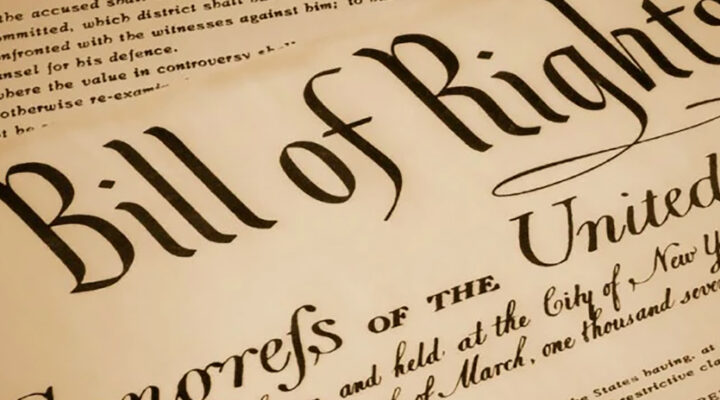
(National Constitution Center)
News Jeff Brumley | June 17, 2026
Religious freedom is a radical invention that allows all Americans to believe or not believe as they choose, but on the condition that others are not harmed, said Rachel Laser, president of Americans United for Separation of Church and State.
“That’s what religious freedom is. Here’s what it’s not — it’s not a sword to harm others. It’s not a license to discriminate. It’s not a permission slip for the government to favor one set of religious views or to impose those views on all its workers. It’s not a trump card to play when someone else’s views are politically inconvenient.”
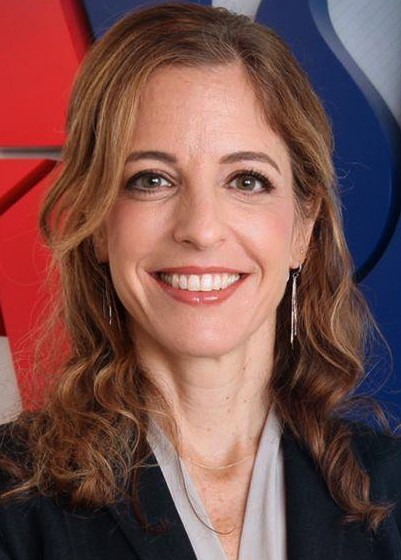
Rachel Laser
In other words, religious liberty is the opposite of what the Trump administration and other Christian nationalists claim it is, Laser said during a June 16 discussion hosted by Center for American Progress, Americans United for Separation of Church and State, Interfaith Alliance and American Humanist Association.
The Washington, D.C. event served as the launch of “Religious Liberty for All: Celebrating This Founding Freedom at America 250,” a new report by the four organizations featuring 20 prominent elected officials, faith leaders, historians, legal experts and theologians making the case for religious freedom and diversity rooted in the U.S. Constitution.
“We are correcting the record here with Christians, Muslims, Jews, Hindus, Sikhs, agnostics, humanists and many lawmakers,” Laser explained. “We are correcting the record about what the true foundational values of this country are, and we’re proudly reminding America that religious freedom means we are all free to live as ourselves and believe as we choose.”
The release of “Religious Liberty for All” was timed to pre-empt the anticipated publication of a report by the Religious Liberty Commission, which President Donald Trump formed in 2025 to promote a Christian nationalist view of religious freedom, Interfaith Alliance President Paul Raushenbush said.
“We have every reason to believe it will offer a perspective of religious freedom that privileges one narrow experience. However, the report we are launching today intentionally features a range of experiences of religious freedom from voices that include diverse religious traditions as well as non-religious traditions. Religious freedom for all recognizes how religious freedom benefits all the people when it is applied equally and fairly.”
Money and power
Tuesday, June 02, 2026
Religious Liberty Dinner Highlights Commitment to Freedom of Conscience
24 May 2026
During the event Liberty magazine is recognized for its 120 years of advocacy.
Christelle Agboka, North American Division News

The North American Division’s (NAD) nineteenth annual Religious Liberty Dinner, held on April 22 in the James Madison Memorial Building at the Library of Congress, championed freedom of conscience as a core human right. Overlooking the gathering, a statue honoring Madison, the fourth United States president and key architect of constitutional religious freedom rights, visually reinforced the evening’s theme.
Hosted by the NAD Public Affairs and Religious Liberty Department and Liberty magazine, the dinner brought together 90 religious liberty advocates, faith representatives, government officials, academics, Washington Adventist University honors students, Seventh-day Adventist Church leaders, and other guests.
In his welcome, Orlan Johnson, NAD PARL director, underscored the significance of the gathering. “For nearly two decades this event has served as a space where people of diverse beliefs, backgrounds, and perspectives can come together in unity,” he said.

Johnson reminded attendees that, globally, many people do not have the freedom to worship—or not worship—as they see fit, ending with an appeal for ongoing advocacy: “Let tonight be more than a dinner.”
Celebrating 120 Years of Liberty Magazine
A highlight of the evening was the official recognition of the 120-year anniversary of Liberty magazine by United States representative Jamie Raskin, who represents Maryland’s eighth congressional district. Notably, the magazine was founded in Takoma Park, Raskin’s hometown and part of his congressional district.
In brief remarks, Raskin praised Liberty magazine for helping keep alive what he called “the founding and most revolutionary principle of our Constitution”—the separation of church and state. He then presented Bettina Krause, Liberty editor and NAD PARL associate director, with a certificate honoring the magazine’s “120 years of zealously championing the separation of church and state, the precondition for freedom and progress in American life.”
Tuesday, May 26, 2026
David Bass: Christian J. Pinto Interview | Vatican II Spiritual Evolution & Luciferian New Age
The Real Reveal
May 25, 2026
What is the connection between Vatican II and the New Age Movement?
Tonights guest is Christian J. Pinto, director and producer of American Jesuits: A History of Jesuitism in the United States.
We draw on his expertise in research about the Jesuit order to determine why Jesuit author Teilhard de Chardin was known as the “Father of the New Age”. How did his alleged involvement with the “missing link” hoax in 1912 (known as The Piltdown Man) relate to the overarching agenda to connect science with spirituality and push the gnostic belief in Spiritual Evolution beyond the Creator.
This episode also covers:
Vatican II
Globalisation
Ecumenism
Adam Weishaupt (Enlightenment beliefs)
Jesuit Theatre and Tactics
Transhumanism (Evolutionary Materialism meets Mysticism)
And more…
You can watch Chris Pintos documentary’s on DVD or online streaming services. Here is a full list of the in-depth films he’s made:
https://www.imdb.com/name/nm2281033/Noise of Thunder Radio:
http://www.noiseofthunderradio.com/
Sunday, May 17, 2026
Tuesday, May 12, 2026
Friday, May 08, 2026
The American Papacy | A. T. Jones
The American Papacy | A. T. Jones

May 8, 2026
The American Papacy is a stirring sermon by A. T. Jones in which he traces the character and history of the papal power and warns of the looming union of church and state in America. With clarity and biblical conviction, Jones calls believers to stand firm for religious liberty and the principles of the gospel in the closing days of earth's history.