Showing posts with label catechism. Show all posts

Friday, February 14, 2025

What is ‘ordo amoris?’ Vice President JD Vance invokes this medieval Catholic concept


JD Vance is sworn in as vice president by Supreme Court Justice Brett Kavanaugh as Usha Vance holds the Bible during the 60th Presidential Inauguration in the Rotunda of the U.S. Capitol in Washington, Monday, Jan. 20, 2025. (AP Photo/Julia Demaree Nikhinson, Pool)
BY THE ASSOCIATED PRESS

Updated 8:03 AM EST, February 6, 2025Share


▶ Follow today’s live updates on the Trump administration

Vice President JD Vance recently cited medieval Catholic theology in justifying the immigration crackdown under President Donald Trump.

“Just google ‘ordo amoris,’” he posted Jan. 30 on the social media platform X.

He posted this in reply to criticism over statements he made in a Fox News interview: “You love your family, and then you love your neighbor, and then you love your community, and then you love your fellow citizens in your own country. And then after that, you can focus and prioritize the rest of the world.” He claimed that the “far left” has inverted that.

Vance posted that the concept is “basic common sense” because one’s moral duties to one’s children outweigh those “to a stranger who lives thousands of miles away.”
What is ‘ordo amoris’?

It’s been translated as “order of love” or “order of charity.” It’s a concept discussed by St. Augustine, an ancient theologian, who said everyone and everything should be loved in its own proper way.

“Now he is a man of just and holy life who ... neither loves what he ought not to love, nor fails to love what he ought to love, nor loves that more which ought to be loved less, nor loves that equally which ought to be loved either less or more, nor loves that less or more which ought to be loved equally,” Augustine wrote.

Tuesday, November 19, 2019

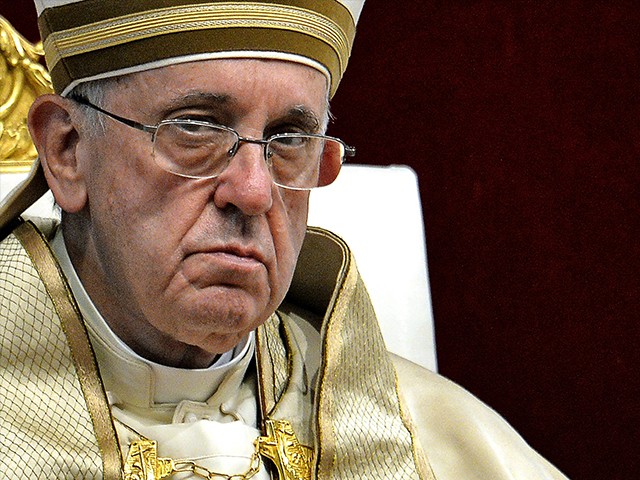
Pope Francis Wants to Add ‘Ecological Sin’ to Catechism


ANDREAS SOLARO/AFP/Getty Images
THOMAS D. WILLIAMS, PH.D. 18 Nov 2019

ROME — Pope Francis told a group of lawyers that he could like to introduce the category of “ecological sin” into official Catholic teaching.

“We must introduce – we are thinking about it – in the Catechism of the Catholic Church the sin against ecology, the ecological sin against the common home, because it is a duty,” the pope said Friday in addressing participants in an international conference on penal law.

More specifically, Francis said, are all those actions that can be considered as “ecocide,” for instance, “the massive contamination of air, land and water resources, the large-scale destruction of flora and fauna, and any action capable of producing an ecological disaster or destroying an ecosystem.”

Ecocide “is to be understood as the loss, damage or destruction of the ecosystems of a given territory, so that its utilization by inhabitants has been or can be seen as severely compromised,” he said, adding that such a sin is “a fifth category of crimes against peace, which should be recognised as such by the international community.”

The pontiff said that such actions are “usually” caused by corporations, and “an elementary sense of justice would require” that they be punished for them.

An ecological sin is “an action or omission against God, against one’s neighbour, the community and the environment,” Francis said, quoting the Fathers of the recently concluded Pan-Amazon Regional Synod. “It is a sin against future generations and is manifested in acts and habits of pollution and destruction of the harmony of the environment, in transgressions against the principles of interdependence and in the breaking of networks of solidarity between creatures.”

Above and beyond its sinfulness, failure to care for the environment is an injustice and a crime, Francis suggested and should be legally enforced. “I would like to appeal to all the leaders and actors in this area to contribute their efforts to ensuring adequate legal protection for our common home,” he said.


Wednesday, August 17, 2016

Rest on the Sabbath, at least in the spirit of the catechism


Spirituality


Father Kenneth Doyle

By Father Kenneth Doyle • Catholic News Service • Posted August 16, 2016

Q. I write to ask for guidelines on the Third Commandment — keeping holy the Lord’s day. I do not consider some of the things that I do to be work — cooking, for example, minor cleanups, mowing, trimming, weeding. Does the church look upon all chores as work? I find it very hard not to do some of the things that need to be done around the house.

I am thankful that God did give us this commandment, for I certainly do look upon Sunday as a day of rest — to spend with family when possible and to simply enjoy the day.

My husband (who is not a Catholic) is a business owner who can work from home. He is in a very challenging situation right now, without sufficient staff. On Sundays, he puts in a good six to eight hours of office work before he rests — otherwise the remainder of the week’s schedule would be overwhelming. (Chestertown, New York)

A. I credit you for your sincere desire to set Sunday aside as a special day, which honors the fact that even the God of all creation rested on the Sabbath. You have captured the spirit of the Catechism of the Catholic Church that says, “Sunday is a time for reflection, silence, cultivation of the mind and meditation which furthers the growth of the Christian interior life” (No. 2186).

Basic household maintenance is exempted from the prohibition against “servile work” on that day; doing the dishes, preparing a meal and what you describe as “minor cleanups” are certainly permitted. A modest amount of gardening or lawn cultivation can be recreational and surely not “servile.” What the Sabbath command means to avoid is unnecessary shopping or heavy housekeeping that could be deferred.

Employment needs or economic circumstances may prevent one from observing the Sabbath rest, and this the catechism envisions and exempts. Your husband’s current challenge, in my mind, fits in here.

I would hope, though, that his circumstance will only be temporary; while I don’t know his religious history or principles, wisely does the catechism note, “The faithful should see to it that legitimate excuses do not lead to habits prejudicial to religion, family life and health” (No. 2185).

I might point out that, among American males, there can be a slavish addiction to Sunday televised sports, doing damage to the Sabbath goals of family time, reflection and rest.

And finally, nowhere does your question mention Sunday Mass, which must always be the central feature of a Catholic’s Sabbath observance. For 2,000 years, followers of Jesus have come together as a family of faith to celebrate the day of Christ’s resurrection and to be nourished by his body and blood.

Q. I am grateful for the work you do with your question-and-answer column. Your responses reflect both wisdom and patience. And this prompts me to ask the following: What are some of the things in today’s parish or church that you find exciting? Or, to put it another way, what are some changes that you have been happy to see over your years in the ministry? (Virginia Beach, Virginia)

A. Normally I would not choose to answer an open-ended question like this one. Readers, I believe, are more interested in factual answers than in my musings. But since I have just celebrated my 50th anniversary of ordination, I welcome this chance to share a few thoughts about those years.

Space constraints limit me to two developments that I view as great blessings in Catholic life. First is the broader involvement of laypeople in the work of the church.

When I was ordained a half-century ago, many parishes had two lay organizations: a rosary society, which consisted of several women who offered prayers for the parish and helped out with church decorations; and a Holy Name Society, men who would make a yearly retreat and sponsor an annual parish smoker.

In the parish from which I just retired, there are now more than 400 lay parishioners who help with the work of the church — lay catechists; lectors and extraordinary ministers of holy Communion; those who visit and take Communion to shut-ins, patients in hospitals and residents of nursing homes; men and women who staff a parish food pantry and host homeless families overnight in a parish facility, etc.

The other is the 2013 election of Francis as pope. As the editor of Time magazine put it, “He has not changed the words, but he’s changed the music.” Whereas many may have associated the church in the past with rules and prohibitions, some of those same people now link the church first of all with help to the poor, mercy and forgiveness.

***

Questions may be sent to Father Kenneth Doyle at askfatherdoyle@gmail.com and 40 Hopewell St. Albany, N.Y. 12208.


Source

.

Wednesday, May 27, 2015

Rubio: Catechism May Be Branded 'Hate Speech'

Rubio: Catechism May Be Branded 'Hate Speech'


Contact: Catholic League for Religious and Civil Rights, 212-371-3191, pr@catholicleague.org

NEW YORK, May 27, 2015 /Standard Newswire/ -- Bill Donohue comments on remarks made by Sen. Marco Rubio:


Sen. Rubio told Rev. Pat Robertson that anyone who supports traditional marriage is being labeled "a homophobe and a hater." He said "the next step is to argue that the teachings of mainstream Christianity, the Catechism of the Catholic Church, is hate speech...."


Rubio does not exaggerate. As if to prove him right, he was immediately branded as "anti-gay" by People for the American Way. Mediaite also sounded the alarm.

Gay organizations and publications that routinely brand traditional marriage advocates as bigots include the Human Rights Campaign, GayStarNews, the Advocate, lgbtqnation, Towleroad, and GLAAD. Non-gay groups that do the same include Media Matters, Salon, Huffington Post, and Think Progress. The Southern Poverty Law Center is the most irresponsible: an entity that believes in marriage as a union between a man and a woman runs the risk of being called an "anti-gay hate group."

The lunacy never ends. Last year, a traditional marriage conference at Stanford University was condemned as "anti-gay." Moreover, just staging the event was enough to provoke warnings that it might occasion a "significant increase in suicide" among homosexuals. Two years ago, the CEO of Starbucks said that if anyone didn't like his company's pro-gay marriage policy, "you can sell your shares in Starbucks and buy shares in another company." He said this while saying Starbucks wants to "embrace diversity of all kinds." Save for diversity of thought.

Rubio is right to warn that we are getting to the point where the Catholic Catechism will be condemned by the high priests of tolerance for its alleged hate speech on sexuality. Our side needs to respond with vigor. The Gaystapo is on the move.

Contact Rubio's presidential website: contact@marcorubio.com


Source:  http://www.standardnewswire.com/news/9204410302.html

.

Saturday, March 07, 2015

Are Sundays Part of Lent?


By Jennifer Gregory Miller (bio - articles - email) | Mar 07, 2015


I clearly recall a Lenten sermon from my childhood during which the priest shared a statistic that chocolate stores are more profitable during Lent than the rest of year. At the beginning of Lent many people make the resolutions to give up sweets resulting in slow sales. By mid-Lent these resolutions have weakened and these same people are buying even more chocolate than before Lent. Over the years I thought his statistic was slightly misrepresented, because some people could be buying chocolate to save for Easter. But his point to be strong in our resolutions throughout Lent was quite valid and hit home.

I admit as the Third Week of Lent draws near, my resolve grows weak at times. My personal choices for Lenten penance have not grown habitual, but harder each day. I find myself looking for excuses to give into myself.

And that brings up the age-old question of whether Sundays are a part of Lent? If they are not, can I relax and celebrate every Sunday? Am I required to keep up my Lenten penances on Sunday?

Sundays in Lent

Are Sundays part of Lent? The simple answer is yes, Sundays are included as part of Lent, as explained by Universal Norms for the Liturgical Year and Calendar(which has an updated translation since the issuing of the Third Roman Missal):


28. The forty days of Lent run from Ash Wednesday up to but excluding the Mass of the Lord's Supper exclusive....

30. The Sundays of this time of year are called the First, Second, Third, Fourth, and Fifth Sundays of Lent. The Sixth Sunday, on which Holy Week begins, is called, "Palm Sunday of the Passion of the Lord"....

The liturgy of the Sundays of Lent is the base of all the Lenten liturgy building up to Holy Week. Each Sunday shapes the rest of the week's liturgical focus. For those parishes with a catechumen program, the Mass readings are particularly important, as they tie into the three scrutinies and the presentations of the Creed and Lord's Prayer.

Counting the Days


One reason for the ongoing disagreement for whether or not Sundays are part of Lent is the length of days of the season. Ideally, the Lenten season should have forty days (as quoted above, "The forty days of Lent..."), the true number of days is always over forty. Counting every day from Ash Wednesday until Thursday afternoon of Holy Week the total is forty-four days. Removing the six Sundays drops the count to less than the ideal forty.

During the post-Vatican II reorganization of the Liturgical Year and calendar, there was diligence in obeying the instructions from Sacrosanctum Concilium(Constitution on the Sacred Liturgy) which called for returning the focus of Lent to original charisms and bringing it back to its simplicity. Some of the reforms were aimed at the lengths of the Pre-Lent and Lent seasons. Adolf Adam in his The Liturgical Year: Its History and Its Meaning After the Reform of the Liturgy provides an insight into why the number of days does not equal forty:


[I]t seemed necessary to "omit things of less importance in order to emphasize those of greater importance." Yet the authorities could not bring themselves to go back once more to the original beginning of Lent, i.e., the first Sunday of Lent, which marks the beginning of the forty-day period prior to the start of the Easter triduum. By way of justification the Roman commentary on the General Norms called attention to the fact that the rite of ashes on Ash Wednesday has made this day more popular among the faithful "than many other days of greater solemnity. It seems advisable for this reason to make no change here in our effort to restore to the sacred 'forty days' their full symbolic power." Instead the authorities settled for an Easter penitential period that "lasts from Ash Wednesday to the Mass of the Lord's Supper exclusive," or forty-four days if Sundays be included, thirty-eight if they are not.

The pre-Lent period is "abolished, since it had no special character of its own and in the Divine Office made use of the parts for Ordinary Time. It was always extremely difficult to preach on it to the people (just what meaning do the words Septuagesima, Sexagesima, and Quinquagesima have?); more particularly, the existence of this season robbed the penitential season of its novelty before it even began (Adam, pp. 5-96).

With the inclusion of Ash Wednesday through Saturday after Wednesday, the season of Lent will never equal exactly forty days, including Sundays or not. The number of days is not really a deciding factor in determining if Sundays are included in Lent.

Days of Fasting

Another source of confusion is the formerly stringent fast rules throughout all of Lent. In times past, fasting was everyday except Sundays. The Church never required fasting on Sundays, hence this former idea that Sundays were not included in Lent.

The reorganization of Lent in 1969 changed the focus from calling Lent a "season of fasting." The modern fasting laws require only two days (Ash Wednesday and Good Friday) of fasting. The term "season of fasting" is no longer applicable as far as required fasting from food, and also has a more negative connotation compared to the other liturgical seasons of the year.


[T]his period of preparation for Easter has a richer meaning. Above and beyond the works of abnegation, it calls for a greater openness to the word of God, a great zeal in attending the liturgy and performing works of charity, and a conversion (cf. M 1.15) in every area of life so as to obey the message of the gospel (Adam, p. 94).

The aspect of understanding Sunday as a day set apart from other days of Lent is rooted in Christian tradition, but since there are only two days of required fasting, the idea of Sundays giving rest from fasting doesn't exactly apply to the modern laws of the Church. But this traditional view that Sunday should not be dominated by penance does play a large role in understanding the spirit of Sundays even in Lent.

Personal Penance

Lenten penance doesn't only mean following the laws of abstinence and fasting. Last week I explained how everyone is obligated to do penance, particularly during Lent. It's not just a pious practice for some to choose, but required of all Catholics. The difference between personal penance and the laws of abstinence and fasting is that practicing the former one is not bound by sin.

People often use the term “fast” generally, applying to their personal penances and extra mortifications and sacrifices during Lent. The Church encourages us to have a spirit of conversion and to rend our hearts and pray, fast and give alms. Here is where the main question expands. Does my personal "fasting" need to extend into Sunday? Am I obligated to keep up all my penances even on Sunday?

To answer this extended question requires one more factor to be considered.

Primacy of Sundays

The final reason this question is raised about Sundays in Lent is recognizing the special character the Church has always held of Sundays. From the Universal Norms of the Liturgical Year and the Calendar:


4. On the first day of each week, which is known as the Day of the Lord or the Lord's Day, the Church, by an apostolic tradition that draws its origin from the very day of the Resurrection of Christ, celebrates the Paschal Mystery. Hence, Sunday must be considered the primordial feast day.

5. Because of its special importance, the celebration of Sunday gives way only to Solemnities and Feasts of the Lord; indeed, the Sundays of Advent, Lent and Easter have precedence over all Feasts of the Lord and over all Solemnities.

The Code of Canon Law provides our obligations for Sundays:


Can. 1246 §1. Sunday, on which by apostolic tradition the paschal mystery is celebrated, must be observed in the universal Church as the primordial holy day of obligation....

Can. 1247 On Sundays and other holy days of obligation, the faithful are obliged to participate in the Mass.

Moreover, they are to abstain from those works and affairs which hinder the worship to be rendered to God, the joy proper to the Lord’s day, or the suitable relaxation of mind and body.

And finally, the passages 2168-2195 of Catechism of the Catholic Church describes in more detail about Sundays:


2042 The first precept ("You shall attend Mass on Sundays and holy days of obligation and rest from servile labor") requires the faithful to sanctify the day commemorating the Resurrection of the Lord...by participating in the Eucharistic celebration, in which the Christian community is gathered, and by resting from those works and activities which could impede such a sanctification of these days.

2194 The institution of Sunday helps all "to be allowed sufficient rest and leisure to cultivate their familial, cultural, social, and religious lives" (GS 67 § 3).

Since the beginning the Church has viewed Sundays as a day of celebration and remembrance of the Resurrection. As St. Augustine described Sundays, "Fasting, is set aside and prayers are said standing, as a sign of the Resurrection, which is also why the Alleluia is sung on every Sunday." Sundays are a little Easter. While Sundays in Lent count as days of in the Lenten season, the character of Sunday is not abrogated. Balancing the primacy of Sunday is vitally important even in Lent.

Spirit of Sundays in Lent


Returning to the original question as to whether Sundays are part of Lent and whether to continue penances even on Sunday requires a two-part answer.

First, Sundays are definitely included in the count of days in the Lenten season and are an integral part of the Lenten liturgy.

Secondly, as far as being required to continue Lenten penances there is no outright declaration from the Church either way. The different teachings and writings point to Sundays having a different character that encourages less penance. Sundays are also "the primordial feast day," recalling the resurrection of Christ and require a different focus even through Lent. The Church has never required fasting on Sundays, and the only abstaining required on Sundays is to "abstain from those works and affairs which hinder the worship to be rendered to God" (Code of Canon Law).

Personal penances are just that, personal. Depending on the type can help the decision on whether to continue them on Sundays. If I am "giving up" speaking uncharitably and reining in my temper for Lent, then discontinuing my penance on Sundays would mean I wouldn't be keeping the spirit of Sunday. If another part of my penance was to "give up" sweets for Lent, it might be more in the spirit of Sunday to indulge in dessert with family as part of celebrating the feast.

In my family, my husband and I looked at the spirit of the Church regarding Sundays and decided we would keep the spirit of Sundays even in Lent. Throughout the year we try to follow St. John Paul II's advice on keeping Sundays holy from his Apostolic Letter Dies Domini. Sundays and Solemnities are the highest feast days, and need to be treated separately and differently from the rest of the year. We insert the Lenten flavor and liturgical spotlight, but we embrace Sunday as a joyful feast day. Our Sundays continue a Lenten focus throughout the day, discussing the Mass readings, adding extra prayers and working on good habits, but we do allow a little relaxation of some physical penances on Sundays. Our time is spent together as a family perhaps enjoying a movie, dessert, or even having dinner in a restaurant. And we do it without guilt, knowing that this is the spirit of Sunday in the Church, no matter what season of the year.

The opening question has a definite positive answer: Sundays are a primary part of the Lenten season. Are Lenten penances are required through Sunday? No personal penances are required. Should they be continued through Sunday is a question that requires some prayerful consideration before answering. There is no definitive answer. Even in Lent the Church preserves the primacy of Sunday as a joyful feast commemorating the Resurrection of Christ. The spirit of Sunday must be considered in evaluating those Lenten penances on Sunday, but it will be a final decision between God and me.


.

Tuesday, September 09, 2014

Why is this Lord’s Day no different from any other day?


Thoughts on the Third Commandment


by Steven D. Greydanus

Saturday, September 06, 2014 2:15 PM


In our neighborhood, on almost any day of the week, you might walk into a supermarket and notice a conservatively dressed woman with a hat and skirt and a rather large number of children in tow, and you might make a shrewd guess that she was a conservative or orthodox Jew, and there’s a good chance that you would be right.

On almost any day, that is, except the Sabbath. From sundown Friday to sundown Saturday, those women and their children vanish. The kosher aisle is deserted, the kosher deli shuttered. Conservative and orthodox Jews take the Sabbath seriously.

The Muslim women are easier to spot. The women wear the hijab or head scarf, sometimes with Western clothes, sometimes with the abaya (cloak); a few wear the naqib or face veil. (Years ago, the first time one of our younger boys saw that, his eyes widened and he asked if she was a ninja!) You might see them at the supermarket any day of the week — but not so much on Fridays, their day of prayer. (Friday in Muslim tradition is not an official “day of rest,” but in practice it is often observed in a similar way.)

Sunday, of course, is a different story.

A few decades ago the stores were all closed on Sundays. Even if they were open, they weren’t busy. Now, of course, the stores are mobbed on Sundays. It might be the biggest shopping day of the week. Even churchgoing Catholics and Protestants often treat Sunday as no different from any other day, except for the hour or so we spend in church.

It’s true that Sunday rest in the United States has historically been colored by Puritan piety and legalism. It was a matter of avoiding certain forbidden activities. If you’ve read the Little House books, as I have to my kids any number of times, you may recall that Laura was not allowed to run or shout or engage in noisy play on Sundays, and in her grandfather’s day even laughter and smiling were not allowed. Only reading the Bible and the catechism were allowed. This is not Catholic piety.

Here is what the Catechism of the Catholic Church says about the Lord’s Day (CCC §2184ff):


The institution of the Lord’s Day helps everyone enjoy adequate rest and leisure to cultivate their familial, cultural, social, and religious lives.

On Sundays and other holy days of obligation, the faithful are to refrain from engaging in work or activities that hinder the worship owed to God, the joy proper to the Lord’s Day, the performance of the works of mercy, and the appropriate relaxation of mind and body. Family needs or important social service can legitimately excuse from the obligation of Sunday rest. The faithful should see to it that legitimate excuses do not lead to habits prejudicial to religion, family life, and health.

What does this look like in practice?

I don’t have any revelatory answers. I don’t want to judge anyone else. I’m trying to figure it out myself. (I gave the example of grocery shopping above, not because there’s anything in the Catechism or other official church teachings forbidding grocery shopping on Sundays, but because it’s a relatively visible example.) I would welcome comments and thoughts as well as your own practices in the combox.

One thing Suz and I have tried to do in our family is to try to make Sunday mornings before 10:30am Mass a time of preparation for Mass, nothing more. For me, that generally means, for example, staying away from social media, except perhaps to tweet an inspirational message or something. (At least, that’s the plan. Whether I always stick to it is another question.) The kids don’t play games, watch TV or read books for entertainment.

I know good Catholic families for whom Sunday morning is often co-opted by kids’ sports commitments. I get that sports is really important to some families, and demand for access to sports facilities is high, so sports teams need to get access whenever they can. To be involved in sports is thus a serious commitment to make yourself available early in the morning, late in the evening, on any day of the week, to potentially drive significant distances on a regular basis, etc.

That, in part, is why we’ve never done organized sports. Speaking only for myself, I could never make that commitment. Our family’s Sunday morning ritual is our priority; we will defend and maintain that to the best of our ability. Obviously if Suz goes back to nursing work someday, that may be compromised. But we’ve tried to structure our lives in such a way that church is not something we fit into our personal plans on Sunday; our personal plans have to be fitted around our plans for Mass.

Obviously there are exceptions here and there. Occasionally we’re traveling on a Sunday morning. I have yet to do a film festival, but on very rare occasions I’ve gone to a film screening on a Sunday morning while the rest of the family went to Mass.

But just as Sunday is a day set apart in the week, some Sundays and other days in the year are set aside in a sense more solemn than usual. Of these, Easter, the feast of the Resurrection, has the greatest place, along with the preceding days of Triduum (Holy Thursday, Good Friday and the Easter Vigil on Holy Saturday).

Short of a medical emergency or some other dire crisis, there is no way I’m not going to be at our parish on Easter Sunday morning. Just this year I passed on a movie screening that fell on Holy Thursday. I’ve seen Catholic families attend non-religious cultural events on Good Friday evening. I don’t understand that at all.

What about Sunday afternoons and evenings? An observation from a friend I’ve always found interesting is that what constitutes “leisure” can depend on what the rest of your week looks like. If you sit at a desk all week, and every evening coming home you give a rueful glance at the neglected garden you’d love to spend an hour or two with, digging in the dirt might constitute leisure for you, whereas it obviously wouldn’t be leisure for a landscaper.

Not doing my 9 to 5 day job on Sundays isn’t a problem for me — but my life involves a lot of reading, writing and watching movies, and I don’t think I could or would want to structure my life so that I didn’t do any of those things on Sundays.

Going forward, as it happens, it’s going to include even more of those things, since, as of this week — here’s one of the announcements I teased in last week’s post — in addition to my current work for the Register and other venues, I’ll also be writing regularly for the Boston Globe’s new Catholicism-focused website Crux. (My first piece at Crux is on the saint film Life for Life: Maximilian Kolbe, starring Christoph Waltz, new on DVD from Ignatius Press. Check it out!)

Even so, I will continue to try to avoid writing for money on Sunday. I don’t know that I can swear off writing for my diaconal classes, but that’s in the Lord’s service and I hope it will enhance rather than detract from my observance of the Lord’s Day. And if I watch a movie, I might try to pick something I can watch with the family rather than by myself.

Those are a few examples of some ways I try make Sunday different. How about you?

More from Pope John Paul II and Jimmy Akin.


Source: http://www.ncregister.com/blog/steven-greydanus/lords-day#ixzz3CmH4vXOG
.

Monday, November 18, 2013

The true battle is for life

At the General Audience Pope Francis calls the faithful to pray for victims in Damascus and the Philippines

The true battle is for life

Continuing his catechesis on the Creed he describes Baptism as the Christian's identity card


Baptism is the "identity card of the Christian, his birth certificate". The Pope said this during his catechesis at the General Audience on Wednesday, 13 November, in St Peter's Square. He also made an appeal to pray for the victims of mortar attacks in Damascus and for those suffering in the Philippines from the typhoon that devastated the country. He called people to pray for victims and join forces with those working to save lives in the aftermath: "These are the true battles to fight. For life! Never for death!". The following is a translation of the Pope's catechesis, which was delivered in Italian.

Dear Brothers and Sisters, Good morning!

In the Creed, through which we make our Profession of Faith every Sunday, we state: "I confess one Baptism for the forgiveness of sins". It is the only explicit reference to a Sacrament contained in the Creed. Indeed, Baptism is the "door" of faith and of Christian life. The Risen Jesus left the Apostles with this charge: "Go into all the world and preach the Gospel to the whole of creation. He who believes and is baptized will be saved" (Mk 16:15-16). The Church's mission is to evangelize and remit sins through the Sacrament of Baptism. But let us return to the words of the Creed. The expression can be divided into three points: "I confess"; "one Baptism"; "for the remission of sins".

1. "I profess". What does this mean? It is a solemn term that indicates the great importance of the object, that is, of Baptism. In fact, by pronouncing these words we affirm our true identity as children of God. Baptism is in a certain sense the identity card of the Christian, his birth certificate, and the act of his birth into the Church. All of you know the day on which you were born and you celebrate it as your birthday, don't you? We all celebrate our birthday. I ask you a question, that I have already asked several times, but I'll ask it again: who among you remembers the date of your Baptism? Raise your hands: they are few (and I am not asking the Bishops so as not to embarrass them...). Let's do something: today, when you go home, find out what day you were baptized, look for it, because this is your second birthday. The first birthday is the day you came into life and the second birthday is the one on which you came into the Church. Will you do this? This is your homework: find out the day on which you were born to the Church, and give thanks to the Lord, because at Baptism he has opened the door of his Church to us. At the same time, Baptism is tied to our faith in the remission of sins. The Sacrament of Penance or Confession is, in fact, like a "second baptism" that refers back always to the first to strengthen and renew it. In this sense, the day of our Baptism is the point of departure for this most beautiful journey, a journey towards God that lasts a lifetime, a journey of conversion that is continually sustained by the Sacrament of Penance. Think about this: when we go to confess our weaknesses, our sins, we go to ask the pardon of Jesus, but we also go to renew our Baptism through his forgiveness. And this is beautiful, it is like celebrating the day of Baptism in every Confession. Therefore, Confession is not a matter of sitting down in a torture chamber, rather it is a celebration. Confession is for the baptized! To keep clean the white garment of our Christian dignity!

2. The second element: "one Baptism". This expression refers that of St Paul: "one Lord, one faith, one Baptism" (Eph 4:5). The word "Baptism" literally means "immersion", and in fact this Sacrament constitutes a true spiritual immersion in the death of Christ, from which one rises with Him like a new creation (cf. Rom 6:4). It is the washing of regeneration and of illumination. Regeneration because it actuates that birth by water and the Spirit without which no one may enter the Kingdom of Heaven (cf. Jn 3:5). Illumination because through Baptism the human person becomes filled with the grace of Christ, "the true light that enlightens every man" (Jn 1:9) and dispels the shadows of sin. That is why in the ceremony of Baptism the parents are given a lit candle, to signify this illumination; Baptism illuminates us from within with the light of Jesus. In virtue of this gift the baptized are called to become themselves "light" - the light of the faith they have received - for their brothers, especially for those who are in darkness and see no glimmer of light on the horizon of their lives.
We can ask ourselves: is Baptism, for me, a fact of the past, relegated to a date, that date which you are going to go look for today, or is it a living reality, that pertains to my present, to every moment? Do you feel strong, with the strength that Christ gave you by his death and his Resurrection? Or do you feel low, without strength? Baptism gives strength and it gives light. Do you feel enlightened, with that light that comes from Christ? Are you a man or woman of light? Or are you a dark person, without the light of Jesus? We need to take the grace of Baptism, which is a gift, and become a light for all people!

3. Lastly, a brief mention of the third element: "for the remission of sins". In the Sacrament of Baptism all sins are remitted, original sin and all of our personal sins, as well as the suffering of sin. With Baptism the door to an effectively new life is opened, one which is not burdened by the weight of a negative past, but rather already feels the beauty and the goodness of the Kingdom of Heaven. It is the powerful intervention of God's mercy in our lives, to save us. This saving intervention does not take away our human nature and its weakness - we are all weak and we are all sinners - and it does not take from us our responsibility to ask for forgiveness every time we err! I cannot be baptized many times, but I can go to Confession and by doing so renew the grace of Baptism. It is as though I were being baptized for a second time. The Lord Jesus is very very good and never tires of forgiving us. Even when the door that Baptism opens to us in order to enter the Church is a little closed, due to our weaknesses and our sins. Confession reopens it, precisely because it is a second Baptism that forgives us of everything and illuminates us to go forward with the light of the Lord. Let us go forward in this way, joyfully, because life should be lived with the joy of Jesus Christ; and this is a grace of the Lord.

SPECIAL GROUPS I offer an affectionate greeting to all the English-speaking pilgrims and visitors present at today's Audience, including those from England, Scotland, Denmark, Australia, Japan, Taiwan and the United States. May Jesus Christ confirm you in faith and make you witnesses of his love and mercy to all people. God bless you all!

The Pope made the following appeal:


Dear Brothers and Sisters, I learned with great sorrow that two days ago in Damascus mortars rounds killed several children returning home from school as well as the school bus driver. Other children were left wounded. Please, these tragedies must never happen, ever! Let us pray intensely! In these days we are praying and joining forces to help our brothers and sisters in the Philippines, struck by a typhoon. These are the true battles to fight. For life! Never for death!

(©L'Osservatore Romano - 15 November 2013)


Source
.
.

Saturday, January 22, 2011

What is the Controversy?


MANY CHURCH LEADERS and politicians are unified on the hotly debated issue of legislating Sunday as a day of rest. Today, great efforts are being made to gain influence in the executive and legislative circles of the United States federal government in order to enact laws for the observance of Sunday as a national day of rest. The thrust is not overtly religious but is couched in a concern for the welfare of the American family. This activity is being duplicated in other parts of the world as well under the same pretense.

It is ironic to see this kind of legislation being promoted when you consider what has been said by the leaders of the Christian churches at different times in history. Considering this, it is also ironic to see what was the practice of Christians throughout history.

In even stronger words, Pope John Paul II has asked for more strident measures be taken to insure a day of rest is observed, and to inflict punishment on those who would transgress. Of course, the day that he wants kept is Sunday, regardless of your persuasion.

"In Europe, the Sunday Law issue is expected to be contentious as Pope John Paul II continues to press for mandatory Sunday closing laws" (Church & State, May, 1992).

As recently as July, 1998, the Pope, in his Apostolic Letter, Dies Domini, was quoted as saying that a violator should be "punished as a heretic" (Detroit News, July 7, 1998).

Currently, the Vatican is asking the “civil authorities” to cooperate with the Church in legislation of Sunday as the nation’s day of rest.

“The civil authorities should be urged to cooperate with the church in maintaining and strengthening this public worship of God, and to support with their own authority the regulations set down by the church’s pastors. For it is only in this way that the faithful will understand why it is Sunday and not the Sabbath day that we now keep holy” (Roman Catechism, 1985, emphasis supplied).

Someone Admits to Changing God's Law

In a recent Catholic church newsletter, it stated, “Perhaps the most revolutionary change the Church ever did, happened in the first century [actually in happened in the fourth century]. The holy day, the Sabbath, was changed from Saturday to Sunday. ‘The Day of the Lord’ [Dies Domini] was chosen, not from any direction noted in the Scriptures, but from the Church’s sense of its own power.…People who think that the Scriptures should be the sole authority, should logically become [Seventh-day] Adventists, and keep Saturday holy.” Saint Catherine Catholic Church Sentinel, Algonac, Michigan, May 21, 1995.

No Scriptural Support

Sunday is a Catholic institution and its claim to observance can be defended only on Catholic principles.…From beginning to end of Scripture there is not a single passage that warrants the transfer of weekly public worship from the last day of the week to the first.”—Catholic Press, Sydney, Australia, 1900.

Mark of Authority

“Sunday is our mark of authority.…The church is above the Bible, and this transference of sabbath observance is proof of that fact.” The Catholic Record, London, Ontario, September 1, 1923.

A Catechism

“Question: Which day is the Sabbath?”

“Answer: Saturday is the Sabbath.”

Question: Why do we observe Sunday instead of Saturday?”

“Answer: We observe Sunday instead of Saturday because the Catholic Church in the Council of Laodicea (A.D. 336) transferred the solemnity from Saturday to Sunday.” The Convert’s Catechism of Catholic Doctrine, by Peter Geiermann, 50.

What Do You Think?

Do you need to be forced to keep Sunday in a way contrary to what you believe? Should you be punished for your conscientious regard or disregard for that day? Is this something the Federal government should legislate?

All of this was foreseen many years ago by the men who wrote the Bible. For an exposé of the powers behind the scenes, click HERE!
.
.

Tuesday, June 29, 2010

Glenn Beck Thinks Catholics Should “Leave Their Church”


Monday, March 8, 2010, 1:42 PM

Joe Carter

On his radio program, Fox News’ Glenn Beck encouraged listeners to leave their church if it proclaims a concern for social justice:
I’m begging you, your right to religion and freedom to exercise religion and
read all of the passages of the Bible as you want to read them and as your
church wants to preach them . . . are going to come under the ropes in the next
year. If it lasts that long it will be the next year. I beg you, look for the
words ‘social justice’ or ‘economic justice’ on your church Web site. If you
find it, run as fast as you can. Social justice and economic justice, they are
code words. Now, am I advising people to leave their church? Yes!”


Listen to the audio here.

Although many Protestant denomination express concerns about social justice, the term is most closely associated with the social teachings of the Catholic Church. A Jesuit priest, Luigi Taparelli D’Azeglio, coined the term in the 1840s and based the concept on the movie downloads teachings of Thomas Aquinas.

According to the Compendium of the Social Doctrine of the Church, “a large part of the Church’s social teaching is solicited and determined by important social questions, to which social justice is the proper answer.” Social justice is even given a section in the Catechism of the Catholic Church.

Could Beck’s claim be construed as “anti-Catholic?” Yes and no. I think if anyone else had made the remark it would have been hard to dismiss the anti-Catholic undertones. But Beck is a special case: He is too prone to say any dumb thing that pops into his head and too ignorant about history and religion to truly understand the implications of his statement. This doesn’t excuse him, of course, but it certainly is reason not to be too shocked when a self-professed “rodeo clown” advises people to leave their churches over Catholic “code words” like social justice.

Still, I’m curious to see how Beck’s loyal defenders will excuse his latest outrageous remarks. If we’re not supposed to take him seriously when he says stuff like this, when exactly are we to take him seriously?


.