Showing posts with label Rights. Show all posts

Saturday, October 17, 2026

International Day for the Eradication of Poverty, 17 October 2026


International Day For The Eradication Of Poverty, 17 October 2026

Date: Fri, Oct 16 2026 | International Day
Location: United Nations Headquarters in New York


United for Peace and Human Rights: Safe Homes for All

16 October 2026 | United Nations Headquarters, New York

The International Day for the Eradication of Poverty is officially observed each year on 17 October. This year, the United Nations commemoration will take place on Friday, 16 October 2026, bringing together people with lived experience of poverty, Member States, civil society and other stakeholders.

Under the 2026–2028 theme “United for Peace and Human Rights,” this year’s observance highlights the close connections between poverty, human rights and peace. The theme recognizes that peace requires more than the absence of conflict. It also requires justice, social protection, meaningful participation and respect for human dignity and human rights.

The 2026 focus, “Safe Homes for All,” draws attention to adequate housing as a foundation for a life of dignity. More than 2.8 billion people worldwide face some form of housing inadequacy, with the greatest burden falling on people already experiencing poverty and exclusion.

The commemoration will amplify the voices and lived experiences of people affected by poverty and emphasize the importance of developing policies with people experiencing poverty, not simply for them. It will also highlight the Doha Political Declaration’s reaffirmation of the right to an adequate standard of living, including safe, accessible and affordable housing.


Monday, October 05, 2026

BREAKING: Supreme Court starts term with PIVOTAL cases

Fox News

Oct 5, 2026 

Fox News' David Spunt reports the latest on the upcoming cases involving climate change, gun rights, religion, voting and more. John Yoo, who served Justice Thomas as a law clerk, also weighs in on the docket during 'America's Newsroom.


Tuesday, September 29, 2026

Human Rights in the Post-Pandemic Era


By Michael Tomlinson September 1, 2026 

In 2020, governments around the world panicked in response to the declaration of a pandemic and imposed drastic interventions to impede the spread of Covid-19, interventions which crushed human rights on an unprecedented scale and without sufficient justification. Yet this was widely accepted, even by human rights organisations. How could this happen? And how could we amend human rights protections to ensure that it does not happen again?

In the aftermath of the Second World War, there was recognition that rights should be codified, leading to the United Nations’ Universal Declaration of Human Rights. These rights are taken to be universal and inalienable.

The Declaration includes declaration of the rights to ‘life, liberty and security of person,’ freedom from torture, equality before the law, freedom of movement, including ‘the right to leave any country including his own, and return to his country,’ freedom to own property, freedom of thought, opinion and expression, freedom of assembly, and the right to education.

These are a mix of fundamental rights and other categories. Fundamental rights are everyone’s birthrights originating in fundamental capabilities or states of being which we all have unless we are actively prevented from exercising them by others.

We do not need to apply for permission to exercise this type of right. The classic case of a fundamental right is freedom of expression. We all have this capability as soon as we can speak (or sign), and no one should take it away from us.

Freedom from torture is fundamental to health and well-being and again is the natural state of being unless torture is inflicted on us.

Freedom of education is in a different category, as education by its nature needs to be provided by someone, a government, or a private organisation, which costs money. There is no fundamental right to have education provided without contributing to the cost of it through fees or taxes, but where it is provided it should be accessible to all on an equal basis. So, this right is really about equity.

Commendably, the Declaration does not include any qualifications to fundamental rights, although it is understood elsewhere that:

They should not be taken away, except in specific situations and according to due process. For example, the right to liberty may be restricted if a person is found guilty of a crime by a court of law.

No one would dispute this exception: even the most libertarian of countries puts people in jail if they break the law (but authoritarian countries have laws that put people in jail for reasons that would never be acceptable in truly democratic counties, for example, insulting the President). Once the possibility of wider exceptions is recognised, however, abuses become possible.

The best justification for exceptions is where someone exercises their own right by contravening someone else’s right. Even in the case of free speech, one of the most fundamental of all rights, it is universally accepted that it is not permissible to advocate for or incite violence, especially against an ethnic or religious group. The most notorious examples of this over the last hundred years have been the Nazi campaign of vilification against the Jews, which led directly to their killing around six million Jewish people in the Holocaust, and the Hutu government incitement of the population against the Tutsi (‘cockroaches’), which led to at least 800,000 deaths. In these cases, a direct line can be drawn between incitement and genocide. In other cases, incitement is more coded and difficult to prove.

Monday, September 28, 2026

Parents Lose Religious Freedom Challenge to Connecticut School Vaccine Law

By Christianity Daily

September 22, 2026 01:11 EDT


Photo credit: Unsplash/ CDC

A Connecticut judge has dismissed a lawsuit brought by parents challenging the state’s elimination of religious exemptions from school vaccine mandates.

Judge Edward Krumeich of the Connecticut Superior Court granted a motion to dismiss the case last Monday. The lawsuit was filed by parents Keira Spillane and Anna Kehle against Gov. Ned Lamont, state education and health officials, the Orange Board of Education and Whitby School.

The parents argued that vaccinating their children would violate “their closely held religious beliefs” about the sanctity of human life because some vaccines were developed using cell lines derived from aborted fetuses. They also claimed vaccines containing animal-derived components would “defile their children’s blood.”

Their lawsuit alleged violations of the Connecticut Religious Freedom Restoration Act, the Connecticut Constitution and the U.S. Constitution. It cited the state constitution’s declaration that “the Free Exercise of Religion shall forever be allowed in Connecticut,” along with federal protections for free exercise and equal protection.

It cited three constitutional protections: Article I, Section III of the Connecticut Constitution, which states that “the Free Exercise of Religion shall forever be allowed in Connecticut,” the Free Exercise Clause of the First Amendment, and the Equal Protection Clause of the Fourteenth Amendment to the U.S. Constitution.

State officials sought dismissal based on legislation enacted in 2021 and a law passed this year clarifying that religious exemptions to school vaccine requirements are not protected by the state RFRA.

The ruling concludes four years of litigation over Connecticut’s removal of the exemption. The Connecticut Supreme Court rejected the plaintiffs’ state and federal constitutional claims in 2024. Still, it returned the RFRA issue to the Superior Court, which has now ruled that eliminating the exemption does not violate the law.

Connecticut is among a small number of states that do not permit religious exemptions from school vaccine mandates, according to the National Conference of State Legislatures. California, Maine, Minnesota and New York are also listed among them.


Thursday, September 17, 2026

National Reform and the Rights of Conscience (with text) | A. T. Jones


National Reform and the Rights of Conscience (with text) | A. T. Jones
EllenWhiteAudio - English

Sep 16, 2026  Pamphlets – A. T. Jones Audiobooks

National Reform and the Rights of Conscience, by A. T. Jones (1889), answers the National Reform movement, which sought to amend the United States Constitution and set up a so-called Christian government. Jones shows that such a scheme would shut every honest dissenter out of citizenship while rewarding hypocrisy, and that the "liberty" it promised is the same kind the Papacy and the Inquisition were willing to grant. A clear, timely defense of religious liberty and of every person's right to worship God according to conscience. This edition shows the full text on screen, so you can read along as you listen.

📖 Listen to more pamphlets by A. T. Jones:
   • Pamphlets – A. T. Jones Audiobooks  

💝 Help us make more materials:
https://www.aplib.org/donate/

🎧 Listen online or download this and other audiobooks to your device at:
https://www.ellenwhiteaudio.org/

📱 Follow us on our social media:
• Facebook:   / ellenwhiteaudio  
• Instagram:   / ellenwhiteaudio  

📚 To know and learn more about our pioneers, visit:
https://www.aplib.org/

Alonzo Trevier Jones (1850–1923) was a prominent Seventh-day Adventist minister, editor, and theologian who played a central role in the 1888 Minneapolis Conference. Known for his powerful preaching on righteousness by faith and religious liberty, his writings remain an important part of the Adventist theological heritage.

Thursday, September 03, 2026

Mom Seeks Supreme Court OK to Take Daughter to Church Against Dad’s Wishes


PUBLISHED  SEP 02, 2026
By Jenni Fink  Senior Editor


A Maine mother's court battle over whether she can take her daughter to church might be headed to the U.S. Supreme Court, setting up a potential clash between parental rights, religious liberty and the authority of family courts to restrict a child's religious activities during custody disputes.

Emily Bickford said a court order preventing her from bringing her daughter to church violates her constitutional rights under the First and Fourteenth Amendments. But Maine's highest court recently rejected those arguments, ruling that the restrictions were based on concerns about the child's well-being rather than hostility toward religion.

Following the ruling, Bickford's attorneys at Liberty Counsel announced plans to petition the U.S. Supreme Court to hear the case, arguing that the decision represents a serious threat to religious freedom and parental rights.

Who Is Emily Bickford?

Bickford is engaged in a years-long custody dispute with her former partner, Matthew Bradeen, over decisions involving their teenage daughter. The conflict eventually expanded beyond ordinary parenting disagreements and into questions about religion, medical decisions and parental authority.

At the center of the case is Calvary Chapel in Westbrook, Maine, where Bickford worships. A Maine district court issued a custody order in December 2024 that prohibits Bickford from bringing her daughter to that church and grants Bradeen sole authority over the child's involvement with Calvary Chapel. The parents retain shared decision-making authority regarding other religious organizations.

Bickford maintains that the order unlawfully interferes with her ability to raise her daughter according to her Christian beliefs. Through Liberty Counsel, she has argued that she is a fit parent who has never been found abusive or neglectful and that government officials should not be permitted to decide whether a child can participate in a parent's religious practices.


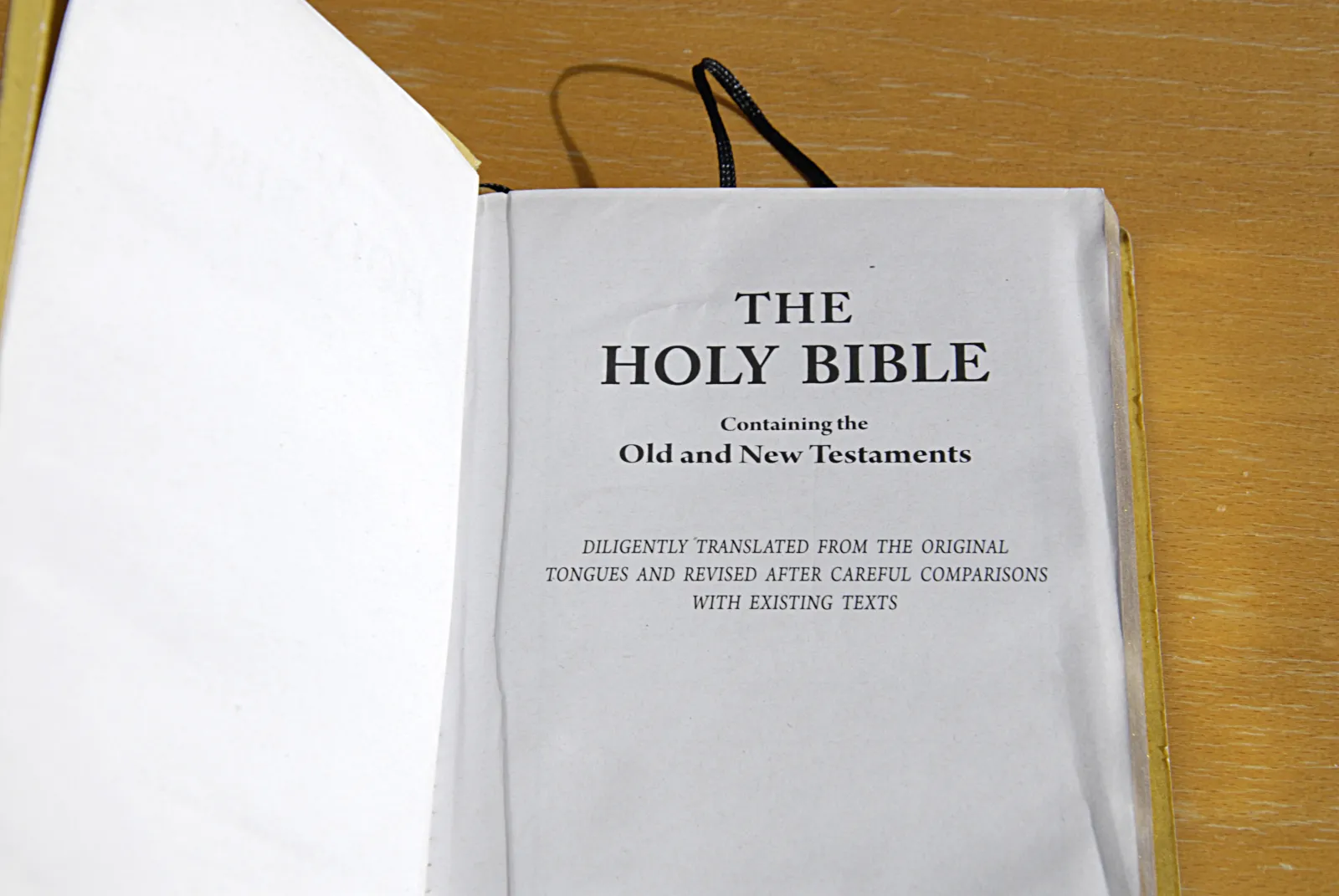
The Holy Bible, King James version. | Francis Dean/Corbis via Getty Images


Her legal team, led by Liberty Counsel founder Mat Staver, has framed the case as one involving fundamental constitutional protections. Following the Maine Supreme Judicial Court's ruling, Staver said the decision "rejects the First Amendment right of a fit parent to raise her child consistent with her Christian faith" and conflicts with existing Supreme Court precedent.

Wednesday, August 05, 2026

UN urged to take action against Iran’s latest crackdown on Protestants


By Michael Gryboski, Editor


Demonstrators gather with Iranian national flags for a rally in support of the new Supreme Leader at Enghelab Square in central Tehran on March 9, 2026. Iran marked the appointment of Ayatollah Mojtaba Khamenei to replace his father as its supreme leader with a new barrage of missiles against Israel and the Gulf states on Monday, as the Middle East war sent oil prices soaring. | Atta KENARE / AFP via Getty Images

A human rights advocacy group is calling on the United Nations to take action against the Islamic Republic of Iran’s latest crackdown on Protestants in the country.

The European Centre for Law and Justice (ECLJ) sent a letter to the United Nations Human Rights Council on Wednesday in response to recent attacks on Iran’s Christian minority.

Specifically, the ECLJ cited the Iranian government’s seizure of the property of St. Peter Evangelical Church, reportedly the oldest Protestant church in the capital, Tehran, last month.

Authorities also reportedly took control of church-owned residences in Tehran, forcing the Christian families living there to flee from Iranian security forces, according to the ECLJ.

Wednesday, April 22, 2026

Uproar after Iran named vice-chair of UN body promoting democracy, women’s rights


Critics say Tehran's vice-chair role on Commission for Social Development contradicts its record of brutalizing women and massacring civilians


https://www.foxnews.com/video/6389137835112

The Islamic Republic secured the post without objection, as the commission prepares to focus on democracy, gender equality, tolerance and non-violence. Chair: "I hear no objection" (Credit: UNTV)

UNITED NATIONS: Iran’s election as vice-chair of the United Nations Commission for Social Development is being slammed by human rights advocates and policy analysts, who have condemned the U.N.'s hypocrisy when it comes to its treatment of undemocratic regimes.

The leadership role was approved without objection during a meeting of the commission, where delegates adopted agenda items and organizational decisions by consensus.

The United Nations has faced continued criticism over its inaction towards the regime's violent crackdown against protesters in December and January. On Wednesday, U.N. Secretary General António Guterres faced criticism for congratulating Iran on the anniversary of the 1979 Islamic revolution.

UN CHIEF BLASTED AS ‘ABJECTLY TONE-DEAF’ OVER MESSAGE TO IRAN MARKING REVOLUTION ANNIVERSARY


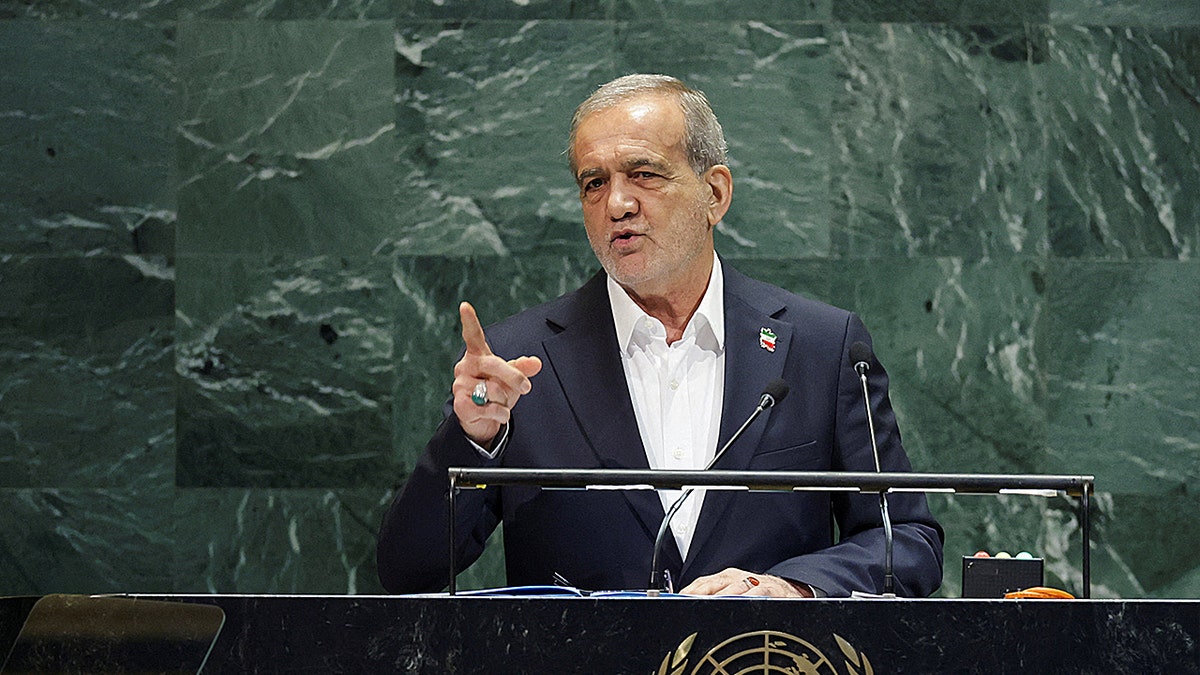
Pezeshkian accused the U.S. of a "grave betrayal" at the United Nations General Assembly on Sept. 24, 2025, in New York City. (Jeenah Moon/Reuters)

U.S. Ambassador to the United Nations Mike Waltz criticized the development, writing on X: "Yet another reason why we are not a member of, nor do we participate in, this ridiculous ‘Commission for Social Development.’"

Sunday, January 25, 2026

Minnesota Immigrant Rights Action Committee (MIRAC)


Website: www.miracmn.com/

Location: Minneapolis, MN

Type: Immigration Advocacy Organization


Contact InfluenceWatch with suggested edits or tips for additional profiles.


The Minnesota Immigrant Rights Action Committee (MIRAC) is a left-of-center immigration organization that advocates for the legalization of all illegal immigrants, calls to end all raids and deportations, and seeks to end all laws restricting immigration. MIRAC calls the United States unjust, racist, and based on white supremacy, and seeks to make Minnesota a sanctuary state. The organization has also sided against Israel and called for divestment from the country.

History

The Minnesota Immigrant Rights Action Committee is a volunteer-based immigration advocacy organization based in Minneapolis, Minnesota. 1 MIRAC organizes groups that oppose U.S. border-enforcement policy, rally for citizenship for all, and seek to stop immigrant deportations. 1

Positions

The Minnesota Immigrant Rights Action Committee advocates for the legalization of all illegal immigrants, calls to end all immigration-enforcement raids and deportations, and wants all immigrants to receive legal recognition. 1 MIRAC calls the immigration system in the United States racist, unjust and white supremacist. 1 MIRAC states that the U.S. has taken part in imperialist wars and has an unjust economic system that are the roots of migration to the country. 1

Saturday, January 17, 2026

Christian Ministry Gets Major Win as Court Supports Right to Hire Like-Minded Employees


By Michael Austin January 17, 2026 at 7:00am


A Christian ministry in Washington state won its case in the 9th Circuit Court of Appeals on Tuesday with respect to a law threatening its ability to hire like-minded people.

Yakima Union Gospel Mission, a homeless shelter in the central portion of the state, only hires employees with shared beliefs on biblical marriage and sexuality, according to the Alliance Defending Freedom, which represented the ministry in court.

The ministry serves people without respect to their beliefs, but in terms of their staff, they only hire like-minded Christians.

But that practice was challenged by a Washington state law threatening “significant penalties and liability for hiring only those who share its religious beliefs and convictions,” per the ADF.

The 9th Circuit nevertheless recognized the right of Yakima Union Gospel Mission to continue their hiring practices under the First Amendment.

Friday, May 10, 2024

UN approves resolution granting Palestine new rights, reviving its...

Westphalian Sovereignty


Westphalian Sovereignty

Westphalian sovereignty, sometimes known as state sovereignty, refers to the premise that each state possesses exclusive sovereignty over the territory that it controls.

TABLE OF CONTENT
Challenges to Westphalia
Defenders of Westphalia
The meaning of Westphalian


The principle is enshrined in the United Nations Charter, which states that it forms the basis of the modern international system of sovereign states and that it “shall not be infringed.”

“Nothing… shall give the United Nations the authority to intervene in matters that are fundamentally within the purview of the domestic jurisdiction of any particular state.

The concept maintains that every state, regardless of its size, possesses an equal claim to the freedom to exercise sovereignty. According to political scientists, the idea dates back to the Peace of Westphalia (1648), which put an end to both the Thirty Years’ War (1618–1648) and the Eighty Years’ War (1568–1648) The idea that one should stay out of other people’s business was refined during the 18th century.The Westphalian system reached its zenith in the 19th and 20th centuries, but in more recent times, it has come up against opposition from proponents of humanitarian intervention.

Challenges to Westphalia

Following the conclusion of the Cold War, there was a rise in international integration and, one could argue, a decrease in Westphalian sovereignty. A significant portion of the available literature was principally devoted to the criticism of realist models of international politics.

These are the types of models in which the concept of the state as a unitary agency is accepted as an axiomatic statement.In 1998, during a Symposium on the Continuing Political Relevance of the Peace of Westphalia,

NATO Secretary-General Javier Solana stated that “humanity and democracy [were] two principles that [were] essentially irrelevant to the original Westphalian order.” He also levelled the criticism that the original Westphalian order did not adequately account for human rights and democracy.

“The Westphalian system was not without its deficiencies.

To begin, the notion of sovereignty that it relied on likewise produced the framework for rivalry, rather than a community of states; moreover,

it produced the premise for exclusion, rather than integration.”

Tony Blair, then the Prime Minister of the United Kingdom, delivered a speech in Chicago in the year 1999 in which he “laid out a new, post-Westphalian,

‘Doctrine of the international community.'” Blair contended that globalisation had rendered the Westphalian method obsolete in this modern day.

After some time had passed,

The Daily Telegraph referred to Blair as “the man who brought in the post-Westphalian period.” Others have made the claim that the Westphalian system has been rendered obsolete as a result of globalisation.

Check out the complete UPSC Syllabus

Defenders of Westphalia

In spite of the fact that the Westphalian system was initially formed in early modern Europe, its most ardent supporters can currently be found in non-Western countries. In a declaration issued together in 2001, the leaders of China and Russia made a solemn commitment to “Concepts such as “humanitarian intervention” and “limited sovereignty”

Can be used to combat efforts that are being made to undermine the fundamental rules of international law.

Visit to know more about UPSC Preparation Books

The meaning of “Westphalian”

The European settlements of 1648 known as the Peace of Westphalia were responsible for bringing an end to both the German portion of the Thirty Years’ War and the Eighty Years’ War that had been raging between Spain and the Dutch. Beginning in the year 1644, the peace was negotiated in the cities of Münster and Osnabrück in the state of Westphalia.

The treaty between the Spanish and Dutch was signed on January 30th, 1648. The Holy Roman Emperor Ferdinand III, together with the other German princes, France, and Sweden, were all parties to the treaty that was signed on October 24, 1648.The only European powers that did not have a representative present at either of the two sessions were England, Poland, Russia, and the Ottoman Empire.

Read about UPSC Notes

The significance of the Treaty of Westphalia

Before one can begin to comprehend the importance of the Treaty of Westphalia, one needs to have a solid grounding in the background of the Protestant Reformation. A person who “protests” against the theology that is taught in Catholic churches is known as a Protestant. Martin Luther, a German theologian, was opposed to the doctrine as well as the practises of the Catholic Church.

As a result, he established his own denomination of Christianity, which is now known as Lutheranism. During the course of the following century, millions of Europeans abandoned the Catholic Church in favour of one of the numerous newly established Protestant faiths.

This movement resulted in a series of terrible conflicts across Europe between leaders of the Protestant and Catholic faiths.The most significant of these wars was the Thirty Years’ War, which took place between 1618 and 1648 and was fought mostly inside the boundaries of the Holy Roman Empire.

Conclusion

This is a term that is used in international affairs and is said to have originated from the Treaties of Westphalia in 1648, which put an end to the Thirty Years War. It is commonly understood to refer to a network of states or an international society that is made up of sovereign state entities that hold the monopoly on the use of force inside their own boundaries, which are acknowledged by each other.

The official diplomatic relationships that exist between the heads of state and governments are what are used to conduct international relations. International law is comprised of the treaties that are created (and broken) by the various sovereign entities that make up the world.


Source