Showing posts with label MORE WAR. Show all posts
Showing posts with label MORE WAR. Show all posts
Friday, September 11, 2026


Tuesday, September 01, 2026
Friday, August 28, 2026
Iran security chief threatens neighbors against economic measures,..
Image: Akbar Nemati from unsplash.com

Pastor Hal Mayer
Speaker / Director
Iran security chief threatens neighbors against economic measures, and other Mideast developments
Iran security chief threatens neighbors against economic measures, and other Mideast developments
Tuesday August 25th, 2026
AP News, by Angela Charlton: The new leader of Iran’s top security body is threatening neighbors against joining new U.S. efforts to squeeze Tehran’s economy. Egypt is trying to revive Iran-U.S. negotiations. And Iraq and Iran say Tehran has helped some ships carrying Iraqi oil to transit the Strait of Hormuz. France and Saudi Arabia are expected to discuss plans to bypass the waterway.
Meanwhile, Israel has carried out strikes in Syria and in Gaza.
Here’s a look at the latest developments in the Iran war and the wider Middle East on Saturday. Full coverage can be found here.
Iran’s new top security adviser issues threats
The hard-line new leader of Iran’s Supreme National Security Council threatened Tehran’s neighbors against joining the new U.S. effort to hurt Iran’s economy, and accused the United States of increasing global nuclear insecurity with months of war.
“If (Trump) wants to do something, we will retaliate in a seismic manner,” he said in an interview with the state broadcaster that aired Saturday.
Mohsen Rezaei was named this month as part of senior appointments widely seen as hardening Tehran’s political and military stance. His interview with IRIB is his most extensive public statement since then.
Rezaei said Iran would target oil-shipping routes out of the Persian Gulf — alternatives to the Strait of Hormuz — if neighbors join what he described as the economic war against Iran. Those neighbors would be considered enemies and “we will target their interests,” he said.
U.S. President Donald Trump in the past week has vowed to increase Iran’s pain by imposing an “unprecedented” level of economic warfare and isolation. Iran has lived under sanctions for years.
Wednesday, August 26, 2026
Tuesday, August 25, 2026
Monday, August 24, 2026
The Cynical Coverage of Conditions on the USS Abraham Lincoln
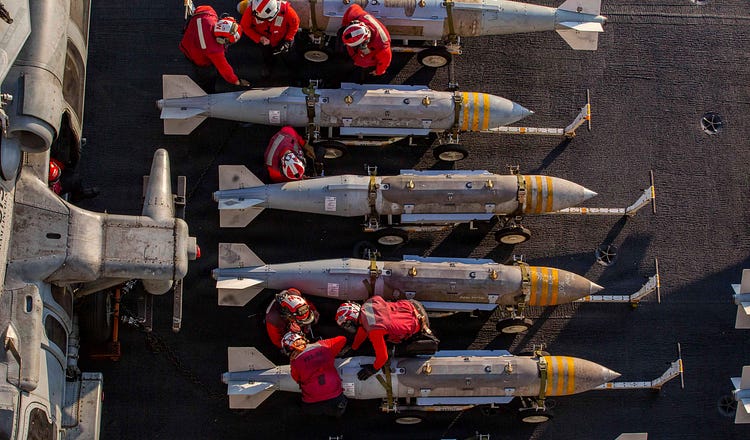
Navy sailors working with ordnance on the flight deck of the USS Abraham Lincoln in support of Operation Epic Fury, on February 28, 2026. (U.S. Navy via AP)
The media covers military suicides when it’s politically useful.
08.17.26 —International
Elliot Ackerman is a decorated veteran of the Marine Corps and CIA special operations. He is a CBS contributor, and Free Press columnist.
Produced by ElevenLabs using AI narration
In 2006, I was deployed aboard the USS Iwo Jima as a Marine. Israel invaded Lebanon that summer and we were diverted off the coast of Beirut, where we stayed underway for weeks, without port calls or a break, while we evacuated U.S. citizens. The pace of operations was relentless; it put a strain on all of us. After several months, we returned home. Days before we pulled into our home port, word spread through the ship that a member of the crew had been found dead in his rack—a suicide. Days later, when we flew off the ship to be reunited with our families, his body was loaded onto one of those flights, to be reunited with his.
I thought of this reading the extensive recent coverage of the USS Abraham Lincoln, a Nimitz-class aircraft carrier, currently deployed in the Persian Gulf. It has been at sea for more than 260 days, a record for the ship. Roughly 40 of those days underway have been during sustained combat operations, which places an additional strain on the crew. And earlier this month, a sailor leapt off the flight deck and into the water. Fortunately, the sailor was recovered and evacuated after what appears to be a suicide attempt, with several other attempts now reported.
This incident has become a cause célèbre in the media, which appear happy to leave readers with the misperception that long deployments and psychically strained sailors in the U.S. Navy represent a situation unique to Trump’s war in Iran. “Conditions on U.S. Aircraft Carrier at Sea for More Than 250 Days Raise Alarms” blared a BBC headline. “Concerns Grow Over Conditions on Navy Carrier,” reported The New York Times. Dozens of similar headlines appeared alongside, and the story led more than a day of television news coverage. The story about the conditions on the Lincoln has gotten so out of control in its virality over the past few days that U.S. Central Command took the unusual step of debunking certain specific online rumors directly on X, and CentCom commander Admiral Brad Cooper made a stop onto the Lincoln over the weekend. Democratic Senators such as Richard Blumenthal and Ruben Gallego have publicly asked the Navy, and Defense Secretary Pete Hegseth, to account for conditions aboard the Lincoln.
Thursday, May 21, 2026
HITLER & THE WAR ON NATIONAL HEALTH - 05.20.2026

LISTEN ▶️ HERE
NOTR - HITLER & THE WAR ON NATIONAL HEALTH
Wednesday, May 20, 2026 at 6:35PM
Today's Show: HITLER & THE WAR ON NATIONAL HEALTH - 05.20.2026
Chris discusses the history of the Nazi healthcare system back in the 1930's and 40's from the perspective of the book, "Racial Hygiene," by Robert N. Proctor. As the book shows, the Nazis used the healthcare system and the fear of disease and pandemics as the pretense to round up Jews and get them into ghettos and eventually, concentration camps. For example, when Auschwitz opened in August of 1943, it was originally a "quarantine" camp and later became a death camp where more than one million people were killed. Furthermore, we examine the book, "Hitler Speaks," by Hermann Rauschning, first published in 1939. In it, the former Nazi leader records Hitler's vision of future warfare, where the use of bacteria would be employed to destroy the health of a nation before they were invaded.
Tuesday, May 05, 2026
DISRUPTION

Volume 45 Issue Five May 2026
Last Trumpet Ministries ∙ PO Box 806 ∙ Beaver Dam, WI 53916
Phone: 920-887-2626 Internet: http://www.lasttrumpetministries.org
“For if the trumpet give an uncertain sound, who shall prepare himself to the battle?” I Cor. 14:8
“In thee, O LORD, do I put my trust: let me never be put to confusion.” - Psalm 71:1
As we enter May 2026, the United States is still at war with Iran. The events surrounding this conflict have taken many twists and turns in recent weeks. Although the fighting itself has quieted, there remains great uncertainty about when, or if, it might resume. Nevertheless, the consequences of this war are being felt around the world and threaten to disrupt everyday life in unprecedented ways. In this edition of the Last Trumpet, we will look back at these recent events and consider their potential implications for the future.
A Close Call
As April began, the coalition between the United States and Israel was heavily involved in combat operations against Iran. From the start of the war, coalition forces have mostly imposed their will over Iranian territory without significant resistance. However, on April 3, 2026, an American F-15E fighter jet was shot down over Iranian territory. The two crew members onboard were forced to eject from the plane, leading to the dire possibility of American soldiers falling into the hands of the Iranian regime. For the first time since the war began, American forces would set foot on Iranian soil to conduct two daring rescue missions in a high-stakes race against time. (1)
The pilot was located and found within hours, but the whereabouts of the weapons systems officer remained a mystery. (2) To pinpoint his location, the U.S. military enlisted the help of the Central Intelligence Agency (CIA). The CIA used its secret technology to locate the missing soldier who had been stuck behind enemy lines for more than 24 hours. “This was the ultimate needle in a haystack, but in this case it was a brave American soul inside a mountain crevice, invisible but for CIA’s capabilities,” an unnamed U.S. official told Axios. (3)
The search was conducted with great urgency. Not only were the Americans looking for the soldier, but so too were the Iranians. “This brave warrior was behind enemy lines in the treacherous mountains of Iran, being hunted down by our enemies, who were getting closer and closer by the hour,” wrote American President Donald Trump. (4)
In an effort to find the American soldier before he could be rescued, Iran’s Islamic Revolutionary Guard Corps offered a reward of about $66,000 to any Iranian citizen who could locate him. (5) This is a tremendous amount of money for an Iranian citizen, and many were no doubt highly motivated to find the missing airman.
With the soldier safely recovered, Trump recounted some of the details of the rescue mission to Axios. He explained that the military aircraft had been hit by a shoulder-fired missile. “They got lucky,” Trump admitted. He then explained that American officials were worried at first that the soldier had already been captured by the Iranians because of an unusual final radio message. “God is good,” the airman said as he ejected from the aircraft. “What he said on the radio sounded like something a Muslim would say,” Trump opined. However, those who knew the soldier told officials the man was religious, and so they moved forward with a rescue mission involving two hundred soldiers. (6) Had Iran been successful in its endeavors to locate the airman, it could have changed the trajectory of the war. Capturing the soldier would have given the regime leverage in negotiations and could have easily resulted in the American being imprisoned, tortured, or killed. Thankfully, he was rescued before Iran got their hands on him. God is good, indeed.
Wednesday, April 22, 2026
The War Report - Part 2
Volume 45 Issue Four April 2026
Last Trumpet Ministries ∙ PO Box 806 ∙ Beaver Dam, WI 53916
Phone: 920-887-2626 Internet: http://www.lasttrumpetministries.org
The War Report - Part 2
“Take ye heed, watch and pray: for ye know not when the time is.” - Mark 13:33
The United States and the State of Israel are once again at war with the Islamic Republic of Iran. Given the fluid nature of the conflict, it is uncertain what the future may hold. By the time this issue is in your hands, the war may be over, or it may have expanded. This special edition of the Last Trumpet is titled “The War Report - Part 2” because it is a natural sequel to the July 2025 issue, published shortly after the conclusion of the Twelve-Day War last year. If you have not read this previous issue, we are happy to mail you a copy free of charge. It is also available on our website. Our goal in this issue is to report, as accurately as possible, what happened, not to tell you what to think. Nevertheless, these events are already reshaping history and have the potential to change the world forever.
Maximum Pressure
Iran’s ambitions to develop nuclear technology have long been a point of contention with the United States and the State of Israel. Iran insists its nuclear program is for peaceful purposes, but the U.S.-Israeli alliance is highly skeptical of this claim. Shortly after American President Donald Trump returned to the White House in 2025, he made Iran a top priority. On February 4, 2025, Trump signed a National Security Presidential Memorandum promising to restore “maximum pressure” on the Islamic Republic of Iran. An accompanying press release published by the White House insists that “President Trump will not tolerate Iran possessing a nuclear weapons capability, nor will he stand for their sustained sponsorship of terrorism, especially against U.S. interests.” (1)
Just days after Trump signed his memo reasserting his focus on Iran, a piece by the Wall Street Journal was published on February 12, 2025, which indicates that the State of Israel was seriously considering military action against Iran. The piece quotes Israeli Defense Minister Israel Katz as saying, “Iran is more exposed than ever to strikes on its nuclear facilities. We have the opportunity to achieve our most important goal—to thwart and eliminate the existential threat to the State of Israel.” (2) Thus, we see that the concerns about Iran’s nuclear program are rooted in a fear that Iran might use nuclear weapons to destroy Israel. Given that Trump has positioned himself as a staunch ally to Israel, many wondered at the time if the United States would assist its partner in the Middle East with its operations against the Iranian regime.
Saturday, April 11, 2026
Trump says US forces are 'clearing' Strait of Hormuz
By Reuters
April 11, 20269:43 AM EDT

WASHINGTON, April 11 (Reuters) - U.S. President Donald Trump on Saturday posted on social media that the United States military has started to clear the Strait of Hormuz, and that all of Iran's minelaying ships have been sunk.
"We're now starting the process of clearing out the Strait of Hormuz," Trump wrote in a Truth Social post, adding that "all 28" of Iran's "mine dropper boats are also lying at the bottom of the sea".
Minutes before Trump's post, reports started to emerge about the presence of U.S. naval ships in the strait.
An Axios journalist, citing an unnamed U.S. official, posted that "several" U.S. ships had crossed the strait on Saturday, though Iranian state TV soon after reported a denial from an official with Iran's military.
Trump has repeatedly said that American forces have destroyed Iran's navy and air force while crippling its ballistic missile and nuclear programs.
But fear of Iranian attacks on shipping over the past several weeks has effectively closed the Strait of Hormuz, a critical conduit for global oil supplies. Throttling the strait has disrupted global energy markets.
U.S. gasoline prices have spiked even though most of the oil that flows through the waterway does not go to the United States.
Representatives from the U.S. and Iran began talks hosted by Pakistan in Islamabad on Saturday amid a fragile ceasefire in the conflict.
Reporting by Jason Lange; Editing by Jan Harvey and Sergio Non
President Donald Trump arrives to speak about the Iran war from the Cross Hall of the White House on Wednesday, April 1, 2026, in Washington. Alex Brandon/Pool via REUTERS/File
WASHINGTON, April 11 (Reuters) - U.S. President Donald Trump on Saturday posted on social media that the United States military has started to clear the Strait of Hormuz, and that all of Iran's minelaying ships have been sunk.
"We're now starting the process of clearing out the Strait of Hormuz," Trump wrote in a Truth Social post, adding that "all 28" of Iran's "mine dropper boats are also lying at the bottom of the sea".
Minutes before Trump's post, reports started to emerge about the presence of U.S. naval ships in the strait.
An Axios journalist, citing an unnamed U.S. official, posted that "several" U.S. ships had crossed the strait on Saturday, though Iranian state TV soon after reported a denial from an official with Iran's military.
Trump has repeatedly said that American forces have destroyed Iran's navy and air force while crippling its ballistic missile and nuclear programs.
But fear of Iranian attacks on shipping over the past several weeks has effectively closed the Strait of Hormuz, a critical conduit for global oil supplies. Throttling the strait has disrupted global energy markets.
U.S. gasoline prices have spiked even though most of the oil that flows through the waterway does not go to the United States.
Representatives from the U.S. and Iran began talks hosted by Pakistan in Islamabad on Saturday amid a fragile ceasefire in the conflict.
Reporting by Jason Lange; Editing by Jan Harvey and Sergio Non
Saturday, April 04, 2026
Wednesday, April 01, 2026
Martyrdom: The secret shield protecting Iran from collapse
Iran’s strength lies in belief—martyrdom turns suffering into power, making war strengthen resolve instead of breaking the system from within
Written By : Girish Linganna
Updated: Mar 30, 2026 12:21 IST

Highlights
Created by News24 AI • Verified by the editorial team
Understanding Iran's Resilience Amidst Conflict
Understanding Iran's Resilience Amidst Conflict
- Iran's identity is deeply rooted in Shia Islam, specifically the 1,400-year-old story of Imam Hussein's sacrifice at Karbala in 680 AD.
- Shia belief teaches that suffering and dying for what is right is not defeat but a victory, a concept the Iranian government has used since 1979.
- External attacks, such as missile strikes and leader killings, can inadvertently strengthen the Islamic Republic's narrative by validating its claims of oppression.
Impact of External Pressure
- Demands for 'unconditional surrender' from the US, like those made by Donald Trump, are perceived by Iran as attempts to humiliate and erase them, turning even doubtful Iranians into defenders.
This is the part that most news channels never explain to us.
Saturday, March 28, 2026
'Dr. Doom' Nouriel Roubini Warns Trump May Escalate Iran War: 'If HeChickens Out Right Now...'

March 28, 2026 1:43 AM
by Ananya Gairola Benzinga Staff Writer
On Friday, Nouriel Roubini, the economist who called the 2008 financial crisis, cautioned that President Donald Trump is more likely to intensify the U.S. conflict with Iran rather than seek a quick resolution.
Trump May Choose Escalation Over Ceasefire
Roubini dismissed the notion that Trump is searching for an "off-ramp" to end the war, despite market optimism around a potential peace deal, he told CNBC at the Ambrosetti Forum in Cernobbio, Italy.
"If he chickens out right now, he loses credibility. He lost the war," Roubini said, adding that such a move could hurt Trump's chances in upcoming elections.
Thursday, March 26, 2026
A reporter’s view in Lebanon finds Christianity in the US-Israel-Iran conflict
Jovel Álvarez
Mar 24, 2026

Mar 24, 2026
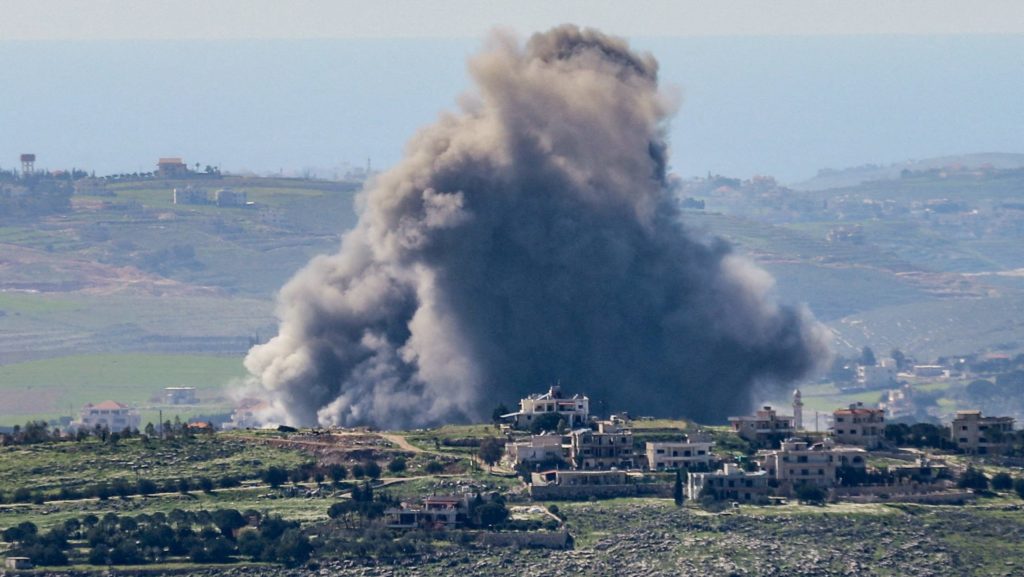
Smoke rises after Israeli strikes in Lebanon, following an escalation between Hezbollah and Israel amid the U.S.-Israeli conflict with Iran, as seen from Marjayoun, Lebanon, March 5, 2026. (OSV News/Karamallah Daher, Reuters)
Watching Abu Ali Hamiyeh use a stone to hammer the nails that will hold together the wooden planks of his new house on a corner of Beirut’s waterfront, you’d never guess that just a few months ago, Pope Leo XIV passed by that very spot.
At a special Mass nearby that day, the Holy Father called on Lebanese like Hamiyeh to be “builders of peace.”
“The path of mutual hostility and destruction in the horror of war has gone too far, with the deplorable results that are plain for all to see,” said Leo on Dec. 2, not knowing that a few weeks later, the country would be caught up in the largest war the region has seen so far this century.
“We need to change course; we need to educate our hearts for peace,” he urged.
Abu Ali Hamiyeh, a Lebanese Muslim, at his makeshift shack in the new refugee camp along Beirut’s waterfront where Pope Leo XIV visited last December. (Jovel Álvarez)
Hamiyeh is one of those displaced by this conflict. A Muslim, he comes from the Bekaa Valley, a stronghold of Hezbollah, an Islamist militant group with which he sympathizes. He, like a million of his compatriots, has had to abandon his home due to evacuation orders from the Israeli army.
No one wants to speak to the press, except Hamiyeh. The day is Friday, March 20, and he speaks with me as he patches together a wooden shack covered with a blue tarp and a thatched roof. He pulls over a plastic trash can and invites me to sit down so we can talk more comfortably.
“Here with us there are Syrians, Palestinians, Jordanians, Turks, Sri Lankans, etc. … Everyone is here. We will not leave this place unless we achieve a great victory. We fought against them for 66 days; we gave martyrs!”
“The Bekaa Valley is the bastion of the resistance; we have given martyrs and blood, and our children, and we remain steadfast on this path of resistance — and we will give even more. Hezbollah is the victorious faction, according to the Quran. Without a doubt, they are victorious,” he says with great conviction.
Hamiyeh regrets not being able to offer me coffee and show me some of that legendary Arab hospitality.
Little by little, the coastline is turning into a refugee camp. No one knows when they will be able to return to their homes, or if there are any homes left to return to.
Wednesday, March 25, 2026
Monday, March 23, 2026
Sunday, March 01, 2026
Israeli strikes rock Tehran as Iran’s counterattacks widen after the killing of the supreme leader
Israeli strikes rock Tehran as Iran’s counterattacks widen after the killing of the supreme leader

Updated 5:49 AM EST, March 1, 2026
Leer en español
DUBAI, United Arab Emirates (AP) — An enormous explosion rocked Iran’s capital Sunday as the Israeli military said it was targeting the heart of the city. Earlier, Iran fired missiles at an ever-widening list of targets in Israel and Gulf Arab states in retaliation for the killing of Supreme Leader Ayatollah Ali Khamenei by the United States and Israel.
The blast in Tehran — whose target was not immediately clear — sent a huge plume of smoke into the sky and shook the ground. It appeared centered in neighborhoods home to the country’s police headquarters and Iranian state television, as well as Tehran’s Revolutionary Court and a Defense Ministry building.
Saturday’s joint U.S.-Israel strikes on Iran opened a stunning new chapter in U.S. intervention, and carried the potential for retaliatory violence and a wider war, representing a startling flexing of military might for an American president who swept into office on an “America First” platform and vowed to keep out of “forever wars.” It was the second time in eight months that the Trump administration has used military force against the Islamic Republic.

The Israeli military said it was striking targets in central Tehran after clearing the path to the capital Saturday. Earlier, Iran fired missiles at targets in Israel and Gulf Arab states after vowing massive retaliation for the killing of Supreme Leader Ayatollah Ali Khamenei by the United States and Israel. (AP video by Saeed Sarmadi) (https://apnews.com/video/explosion-rocks-irans-capital-as-israel-says-its-targeting-tehran-after-strikes-kill-khamenei-bd474aba8d854b98b39609473f9c498f)
BY JON GAMBRELL, MELANIE LIDMAN, JOSH BOAK AND ERIC TUCKER
BY JON GAMBRELL, MELANIE LIDMAN, JOSH BOAK AND ERIC TUCKER
Updated 5:49 AM EST, March 1, 2026
Leer en español
DUBAI, United Arab Emirates (AP) — An enormous explosion rocked Iran’s capital Sunday as the Israeli military said it was targeting the heart of the city. Earlier, Iran fired missiles at an ever-widening list of targets in Israel and Gulf Arab states in retaliation for the killing of Supreme Leader Ayatollah Ali Khamenei by the United States and Israel.
The blast in Tehran — whose target was not immediately clear — sent a huge plume of smoke into the sky and shook the ground. It appeared centered in neighborhoods home to the country’s police headquarters and Iranian state television, as well as Tehran’s Revolutionary Court and a Defense Ministry building.
Saturday’s joint U.S.-Israel strikes on Iran opened a stunning new chapter in U.S. intervention, and carried the potential for retaliatory violence and a wider war, representing a startling flexing of military might for an American president who swept into office on an “America First” platform and vowed to keep out of “forever wars.” It was the second time in eight months that the Trump administration has used military force against the Islamic Republic.
Thursday, February 19, 2026
Subscribe to:
Posts (Atom)