Showing posts with label D.R.. Show all posts

Saturday, July 06, 2019

Dominican economist defended project as Odebrecht paid him


Below is a snapshot of the Web page as it appeared on 6/27/2019 (the last time our crawler visited it). This is the version of the page that was used for ranking your search results. The page may have changed since we last cached it. To see what might have changed (without the highlights), go to the current page.


Dominican economist defended project as Odebrecht paid him | Miami Herald

Influential economist defended construction giant. Secretly it paid his firm millions | Miami Herald


The Bribery Division: A look into Odebrecht’s bribery scandal

An investigation led by the International Consortium of Investigative Journalists reveals that Odebrecht’s cash-for-contracts operation was even bigger than the Brazilian company has acknowledged. Here's a look into the bribery scandal.

THE BRIBERY DIVISION

Influential economist defended construction giant. Secretly it paid his firm millions


By Ben Wieder,

Kevin G. Hall, and

Alicia Ortega Hasbún 

June 27, 2019 09:02 AM, Updated June 27, 2019 09:02 AM


As questions swirled about the ballooning price tag for a $2 billion coal plant in the Dominican Republic, one of the strongest defenders of the project was a prominent Dominican economist named Andrés Dauhajre Hijo.

Writing in the newspaper El Caribe in February 2017, Dauhajre called criticism of the Punta Catalina project’s costs “the best-selling lie in recent years.”

But Dauhajre’s accounting of the project left out one detail.

He didn’t disclose that he had been paid more than $3 million by Odebrecht S.A., the Brazilian construction firm that had won a 2013 contract to build the plant. That $3 million was on top of the money his consulting firm had previously received from the government to help review the bids of Odebrecht and others.

Those payments were among the revelations in a tranche of leaked data and documents obtained by the International Consortium of Investigative Journalists showing the inner-workings of Odebrecht’s Drousys system, an alternative accounting system the company used to keep track of $788 million worth of bribes and other off-the-books payments it doled out to politicians and government officials in 12 countries in Latin America and Africa.

Reporters from McClatchy, The Miami Herald and el Nuevo Herald are part of a team of more than 50 journalists in 10 countries who analyzed the leaked documents for more than four months.

The Drousys system showed payments connected to several projects in the Dominican Republic, including more than $3.3 million in 2014 paid to a shell company associated with Dauhjare, called Baker Street Financial Inc.

That same company — with Dauhajre listed as the sole director — purchased a $2 million midtown-Manhattan apartment in December 2015.


Deed for Manhattan apartment purchased by Baker Street Financial by Ben Wieder on Scribd


When confronted with records of the payments and property records linking him to the shell company, Dauhajre acknowledged that he had been paid by the Brazilian company for “financial consulting services,” helping the company shore up financing for the coal plant when its original financing fell through.

“Baker Street Financial Inc. successfully and effectively provided the advisory service requested by Odebrecht during the years 2014 and 2015,” Dauhajre said in the statement. “Several of the financing options proposed by Baker Street Financial Inc. to Odebrecht were presented and eventually accepted by the Dominican State, allowing the development of the Project to materialize.”

In the Dominican Republic alone, Odebrecht gave out $92 million to government officials and their intermediaries, part of a much broader pattern of corruption involving assorted countries, according to Odebrecht’s December 2016 plea agreement with the U.S. Department of Justice. Odebrecht S.A. agreed to pay a record $2.6 billion fine in the case.

So far, the Dominican Republic’s attorney general has determined that many of Odebrecht’s 17 projects in the country were associated with graft.


Andrés Dauhajre Hijo’s consulting firm helped the Dominican government evaluate proposals to build the Punta Catalina coal-fired plant. When Odebrecht won the contract, the firm was paid millions by the company for its advice.


Wednesday, February 06, 2013

Menendez: $58,500 Cost of Trips ‘Fell Through the Cracks’


February 5, 2013

By Fred Lucas


Sen. Robert Menendez (D-N.J.) (CNSNews.com/Penny Starr)


(CNSNews.com) – Sen. Robert Menendez (D-N.J.), whose net worth if valued between $317,005 and $680,000, according to his 2011 financial disclosure form, told CNN he was not initially aware of the cost of two 2010 trips to the Dominican Republic, lasting a total of six days, valued at a combined $58,500.

“It unfortunately fell through the cracks that our processes didn't catch -- moving forward, and making sure that we paid,” Menendez told CNN. “When it came to my attention that payment had not taken place, I personally paid for them in order to meet my obligation.”


He later said, “Now, if it had come to my attention before, I would have in fact, done it before. When it came to my attention, I did what was right, and I paid for it myself.”

The near $60,000 that fell through the cracks that the senator later became aware of made up between eight percent and 18 percent of his total assets. Menendez ranks 79 out of 100 in the Senate net worth, according to the Center for Responsive Politics.

Menendez is facing scrutiny for having accepted two trips to the Dominican Republic aboard the private plane of wealthy campaign contributor Dr. Salomon E. Melgen, a Florida eye surgeon. On Jan. 4, Menendez reimbursed Melgen for the two flights in 2010.The Senate Ethics Committee in investigating whether Menendez acted inappropriately in not reporting the plane trips. Last week, the FBI raided the West Palm Beach office of Dr. Melgen.

At the time of the trips, Menendez was chairman of the Senate Democratic Campaign Committee, which raises money for Democratic Senate candidates, from 2009-2011.

One of the flights in 2010 by Menendez aboard Melgen's plane was a campaign fundraising journey to the donor's residence in the Dominican Republic. That trip was reported to the Federal Election Commission.

However, Menendez categorized the other two trips as personal; one from Aug. 6-9, 2010, a round trip from South Florida to the Dominican Republic; another from Sept. 3-6, 2010, from New Jersey to the Dominican Republic and back.

Menendez press secretary Patricia Enright did not respond to CNSNews.com phone and e-mail inquiries on Monday and Tuesday.

Menendez spoke for the first time to a national audience on CNN Monday, when reporter Dana Bash asked him, “Senator, if you can explain why it took so long to pay back almost $60,000 in flights that you took with your friend?”

Menendez answered, “Well, I was in a big travel schedule in 2010 as the chair of the DSCC, plus my own campaign getting ready for a re-election cycle, and in the process of all of that, it unfortunately fell through the cracks that our processes didn't catch -- moving forward, and making sure that we paid. When it came to my attention that payment had not taken place, I personally paid for them in order to meet my obligation.”

Bash followed, “Because that's a lot of money, and as chair of the DSCC, you do so much traveling -- you know the rules. That's a pretty big chunk of money not to pay back.”

Menendez said, “Well, it's certainly the responsibility of myself, when it came to my attention to do so. Now, if it had come to my attention before, I would have in fact, done it before. When it came to my attention, I did what was right, and I paid for it myself.”

Bash followed up, “And you, of course, understand the perception that when you say it came to your attention, that you didn't pay for it until you got caught.”

Menendez responded, “Well, that's not the case. The bottom line is, when it came to my attention, I paid for it. There are a series of flights that were alleged. Several of them were shown not to be the case. But after the election, when I got to look at the allegations, and I did my own self-inspection, I ultimately came forward. As a matter of fact, one of those flights, I self-reported. It wasn't even anybody raised it.”

Menendez, the new chairman of the Senate Foreign Relations Committee, was previously chairman of the Foreign Relations Subcommittee on the Western Hemisphere, which has jurisdiction over matters involving the Dominican Republic.

In 2010, Melgen bought the Caribbean-based ICSSI that had been awarded a contract to provide screening of cargo from ports in the Dominican Republic, the New York Times reported last week. However, the Dominican government was refusing to honor the contract, complaining that it was exorbitant.

Menendez chaired a subcommittee hearing on July 31, 2012, where he brought up the matter, without naming Melgen or the company.

“You have another company that has American investors that is seeking to -- has a contract actually given to it by the Dominican -- currently ratified by the Dominican congress to do its X-Ray of all of the cargo that goes to the ports, which have been problematic, and for which in the past, narcotics have been included in those cargo,” Menendez said at the July hearing, according to a Congressional Quarterly transcript of the hearing.

“And they don't want to live by that contract either. You have, you know, some of the other countries that I have mentioned today with arbitration awards that have gone against them, and yet, they don't want to live by that. Well, what are we willing to do?” he added.

The witnesses at the hearing were Francisco Sanchez, undersecretary for international trade with the Department of Commerce, Jodi Bond, vice president of the U.S. Chamber of Commerce Americas Division and Eric Farnsworth, vice president for Council of the Americas.

“Mr. Secretary, this might be more of your alleyway, but what are we willing to do with our directors at the IDB, IMF and other entities, because it just seems to me that if you do not send a message that you cannot, with impunity, go ahead and violate those agreements, trade agreements and arbitration awards which you agreed to as a process, and then still have us voting for you to get monies for a variety of purposes, then, you know what, if those countries can get away with that, they will?” Menendez said to Sanchez. “And that puts American companies at a tremendous disadvantage.”

Bash did not ask the senator about this on the air, but she said on CNN she asked him about it after the camera was off.

“As we were walking away, I also asked him about the allegations that he was trying to help his friend, Dr. Melgen, who is now somebody who is the owner of a potentially lucrative contract with the Dominican Republic, trying to help him to get that contract enforced,” Bash said. “And his answer was that he was just trying to do -- whatever he did was not because of a friend, but trying to do what was right for the policy of the United States with regard to his influence and position as then as a subcommittee chair overseeing that region “

According to Menendez’s 2011 financial disclosure form filed on May 9, 2012, he has rental property in Union City, N.J. valued at between $250,001 and $500,000; between $50,001 and $100,000 in a Congressional Federal Credit Union account; between $15,001 and $50,000 in Senate Federal Credit Union account; between $1,001 and $15,000 in Hudson City Savings Bank and Metropolitan Life Insurance stock valued between $1,001 and $15,000.


.

Sunday, August 21, 2011

Tropical Storm Irene nearing hurricane strength and Puerto Rico


Tropical Storm Irene Sunday Update (Added: August 21, 2011)
Storm Team 2 Meteorologist Joey Sovine discusses the latest on Tropical Storm Irene (more)

By: Joey Sovine
Published: August 20, 2011
Updated: August 21, 2011 - 10:53 PM


Tropical Storm Irene continues to grow stronger as it approaches the Puerto Rico.

As of 11 PM, Irene is currently located 50 miles east of San Juan, Puerto Rico. Tropical storm conditions are beginning to spread across eastern Puerto Rico.

Irene has maximum sustained winds of 70 mph and is moving to the west-northwest at 15 mph.

Hurricane Warnings are in effect for Puerto Rico and the Dominican Republic.

A Hurricane Watch is up for the U.S. Virgin Islands and the Central Bahamas.

There is a possibility that Irene could make a landfall either in the Gulf coast, Florida or Southeast coast by Friday or Saturday.

All residents of the South Carolina coastline are urged to closely monitor the progress of Irene over the next several days.

The exact track of this storm will play a huge role in what kind of impacts are felt across the Lowcountry.

Stay with Storm Team 2 for the latest!

Source
.

Tuesday, March 08, 2011

In Inter-America, church launches 'constant prayer' spiritual renewal program

Prayer, Bible study to propel region's Adventists toward revival, regional leaders say

15 Feb 2011, Santo Domingo, Dominican Republic
Libna Stevens/IAD/ANN staff


The Seventh-day Adventist Church's Inter-American Division appealed to its more than 3.3 million members last week to seek spiritual renewal through prayer and Bible study with the regional launch of the denomination's Revival and Reformation program.


Adventist world church President Ted N.C. Wilson (right) addresses more than 13,000 church members during the launch of Inter-America's spiritual revival program in Santo Domingo, Dominican Republic February 12. Israel Leito, president of the church in Inter-America, interprets his message into Spanish. [photo: David Regus]

Urging a spirit of constant prayer among Adventists in the region, the program echoes the Adventist world church's recent emphasis on spiritual revival. It also features a 160-day prayer initiative addressing specific needs for each church territory in the region, church leaders said.

The three-hour satellite event, broadcast live on Hope Channel, Esperanza TV and 3ABN Latino, highlighted activities planned for members in the region for the initiative in the coming months.

A March 12 event will focus on prayer for children and young people. Later, Adventists in the region will pray for their pastors, charged with leading congregations toward spiritual revival. Focus will then shift to students and teachers across Inter-America's more than 1,000 Adventist-run schools and universities. In June, an emphasis on prayer in the home is expected to help members impact their neighbors.

"[God] wants to do something extraordinary in these end times," said Adventist world church President Ted N.C. Wilson, speaking at the February 12 launch at El Palacio de los Deportes in Santo Domingo. More than 13,000 Adventist leaders and church members attended the event.

Wilson urged Adventists in Inter-America to embrace a spirit of humility that he said will allow God to work through them. "We cannot initiate revival and reformation, we can only place ourselves in God's hands and then the power of [his spirit] will take control," he said.

"Let Seventh-day Adventists be known as people who practice Christianity. Let your humble lifestyle ... always point people to Jesus and His soon coming," Wilson added.

Wilson, who challenged church leaders in Inter-America to plead for an outpouring of God's spirit, was instrumental in prompting the region to launch its prayer initiative.

"The church in Inter-America has always been identified as a church that prays," said Israel Leito, president of the church in Inter-America. "We have this revival event today to thank the Lord, to tell the Lord that we want to be a people ready for His coming, and tell the world that we are a church that is 'Constant in Prayer' and will remain so."

Leaders in Inter-America report that church regions there have already embraced spiritual revival and reformation as part of their strategic plan to strengthen the church.

Shortly after Wilson's February 11 arrival in the Dominican Republic, top church officials from across the region met with the world church leader to pray for the initiative. The group heard Wilson's vision for a revived church and committed to take the call for spiritual renewal seriously.

"You look around the world and see what is happening in the natural world, political situation, fragile economic setting -- things are not going to get much better," Wilson said. "We know Jesus is coming soon."

Plans are underway for similar spiritual revival satellite event this summer, held in El Salvador, church leaders said.
.
Source: Adventist News Network
.
Source
.

Sunday, February 28, 2010

Dominican Republic: Traveling Bible makes final stop in Inter-America

Inter-American Division > Communication Department
Libna Stevens
Feb 1, 2010


image by Dominican Union/IAD
The Traveling Bible reached the Dominican Republic on Jan. 12 and journeyed through the island. In this photo, church leaders hold the Bible at the Faro a Colon monument in Santo Domingo.


February 1, 2010 - Santo Domingo, Dominican Republic...[Silvestre Gonzalez Tabar/IAD Staff]

Seventh-day Adventist leaders and church members in the Dominican Republic welcomed the Traveling Bible with open arms and a strong commitment to continue promoting the Follow the Bible initiative launched by the world church during its first journey in 2008. The unique Bible made its way into Santo Domingo on Jan. 12 where it was escorted by national police and followed by dozens of vehicles carrying banners and decorations until reaching the eastern part of the island.

The Bible arrived in San Pedro de Macoris, where a multitude of Seventh-day Adventist leaders, students and civil and military authorities were gathered. The fire department, national police, the Red Cross and the civil defense were also in attendance. The Bible journeyed through the streets of the city, stopping in the central plaza for a special program.

The Traveling Bible also made its journey to the mayor's office in Santo Domingo, the Supreme Court of Justice, National Congress and the National Palace. More than 1,000 Bibles were distributed to government officials and workers.

The Bible then traveled to the southeastern part of the island, where the governor delivered a speech defending the truth about the Sabbath to hundreds of people there. He spoke in front of the Faro a Colon.

The traveling Bible then made its way to the northern part of the island in Santiago de los Caballeros where the reading of the Bible was promoted with Senator of Santiago Francisco Dominguez Brito and Governor Nidia Bisono de Tavarez. They both spoke on the importance of reading the Bible to students and professors in the community. The Catholic Church sent its priest Miguel Marte, who read a portion of the Traveling Bible.

The special book continued its journey to San Francisco de Macoris, Bani, and Azua where special programs were held in public plazas and the Bible was paraded through the streets. An ambulance from the Vista del Jardin Medical Center accompanied the Bible throughout its journey along with pathfinders and master guides to cities on the island.

The unique Bible made a final stop in Santo Domingo's Olympic Book (Stadium?) where a special program and baptismal ceremony took place.

In all more than 50,000 Bibles were distributed on the island during the Follow the Bible initiative which began earlier this year with Bible reading and transcribing marathons throughout every city and community on the island.

The Bible's journey into the Dominican Republic was the 116th stop around the world and the final stop on Inter-American soil.

To view photos of the Follow the Bible activities in the Dominican Republic, visit http://flickr.com/photos/interamerica


image by Dominican Union/IAD
Government officials and community leaders took part in reading portions of the unique world Traveling Bible which stopped on several main cities of the island during its five-day visit.


Source: http://www.interamerica.org/users/index.php?type=news&id=1446
.

Monday, February 01, 2010

At Dominican Border, Parish Clinic Offers Help


Top Catholic News

At Dominican Border, Parish Clinic Offers Help
By David Agren
Source: Catholic News Service
Published: Monday, February 01, 2010

JIMANI, Dominican Republic (CNS)—Dave Innocent Lemuel, a 13-year-old Haitian, managed to crawl out of the rubble of his home, despite suffering two fractures of his left leg during the earthquake.

Finding adequate medical attention near the Haitian capital of Port-au-Prince was another matter.

His father, Innocent Lemuel, said at least four hospitals turned his son away due to overwhelming patient volumes. Other facilities, meanwhile, had been destroyed.

"He couldn't see a doctor in Haiti," Lemuel told Catholic News Service. "In many of these clinics, the doctors are dead."

Dominican rescue workers rushed Dave, who speaks with an easy smile, and his parents to Jimani—a border town on the main road between Port-au-Prince and Santo Domingo— where he received treatment and is now recovering at a makeshift rehabilitation clinic for children and their families run by the local Catholic parish, St. Joseph's.

Dave was among the many Haitians who crossed the border to receive medical attention after the Jan. 12 earthquake that claimed at least 150,000 lives and left 3 million injured or homeless. He was also among the thousands receiving care from Catholic groups in the Dominican Republic, who immediately sprang into action—long before foreign aid workers and assistance arrived—to help displaced and wounded Haitians by providing food and medical attention.

Father Roselio Diaz of St. Joseph's Parish said Catholics in Jimani and other parts of the border did not think twice about responding swiftly because "we've been helping the Haitian people long before this tragedy."

The response included the establishment of the makeshift medical clinic in an existing parish-operated nutrition and training center. It also has become a recovery center for children with broken bones, such as Dave, and a place for their displaced families to stay. The clinic has served at least 175 patients since the earthquake, Father Diaz said Jan. 25.

Establishing the clinic was not easy, however. "The church is poor" in the western Dominican Republic, he said, and by the second day after the earthquake, the parish had less than a dollar and was running out of supplies.

Clinic workers reported the initial patient demand from Haitians was intense.

"We had people with broken legs, mutilated hands, mutilated feet, everything," said Blanca Iris Diaz, director of the recovery center.

Gifts from generous Dominicans have allowed the clinic to continue providing rehabilitation. Catholic groups working in other parts of the border region reported similar hardships and shortages.

"The problem is still a shortage of food (for patients and their families) and medicine," said Jesuit Father Regino Martinez, director of Border Solidarity, in the northern border town of Dajabon, Dominican Republic.

Dominican immigration authorities and the military, who normally maintain a strict presence on the border to deter undocumented crossings, also have cooperated in helping injured Haitians receive medical attention, said David Paredes, spokesman for the Dominican armed forces in Dajabon.

Paredes said in late January that immigration officials relaxed restrictions on the injured entering the country after the earthquake, but the flow across the border had slowed somewhat and that the armed forces had taken the most critically injured patients to military hospitals in Santo Domingo.

Dave's fibula and tibia snapped, but among the 17 patients that were still receiving care at the parish clinic, his story is typical, said parish workers.

His family lost their home, and his father's workplace—a call center for foreign clients—was destroyed in the earthquake; the fates of other members of his extended family are unknown. However, media reports from Port-au-Prince said some of those injured in the earthquake died from a lack of medical attention.

Dave's father acknowledged his blessings as he sat on the floor in a room full of children with multiple casts lying on mattresses.

"Without God, the country would be dead by now," he said.

But Lemuel, a member of the Seventh-day Adventist Church, also seemed to recognize the odds his family faced.

"I'd like to go back to Haiti, but the path will be very difficult," Lemuel said. "My pockets are empty. The only thing I have is my belief in God."
..

.

Friday, January 15, 2010

Exemplary International Mobilization Aids Haitians


With the USGS confirming that the earthquake that struck Haiti on Tuesday was 7.0 in magnitude, the scale of the devastation in the Caribbean nation begins to make sense. While details were scarce on Wednesday, in the last 48 hours, numerous reports and images have begun to emerge from the re... [ read more >> ]

With the USGS confirming that the earthquake that struck Haiti on Tuesday was 7.0 in magnitude, the scale of the devastation in the Caribbean nation begins to make sense. While details were scarce on Wednesday, in the last 48 hours, numerous reports and images have begun to emerge from the region. In addition to on-scene reporting, satellite images were also made available to search&rescue teams in Haiti and abroad. Already, emergency response teams are at the location in the poor nation, and others as far as Taiwan are getting ready to move there too, or are already en route.

Venezuela, Great Britain, Taiwan, the United States, Panama, the Dominican Republic and Cuba have already sent teams in Haiti, and some of the groups have already reached the theater of operations and are conducting relief efforts. The United States have sent an aircraft carrier and a bunch of other support vessels in the region, as well as a contingent of more than 2,000 soldiers. It is still unclear if they are to secure peace, or to help with the relief efforts, but Obama said shortly after the tremor that Haiti would benefit from the fullest cooperation and support on the part of the US.

The Brazilian Army, which also intervened, set up camps of tents and started providing emergency medical assistance to the victims. The field hospitals that Cuba had in the country were overrun with injured people since the first hours after the earthquake struck.

In spite of being under international embargo, Cuba has hospitals in many countries around the world, in which it provides medical assistance for the poor. Regardless of the efforts set forth by these countries and Haitian authorities, the situation is growing desperate, on account of the tens of thousands of people that were injured or killed in the shallow tremor.


UNICEF has also begun relief efforts aimed at the children of Haiti. Of the 9.6 million inhabitants that the Caribbean nation has, more than half are below the age of 21. The UN agency has dispatched teams from its New York, Panama and Dominican Republic centers, to aid with the relief efforts, and to deliver medication to the affected people.

Some of the most basic supplies include oral rehydration salts (that prevent diarrhea), water-purification tablets, and tarpaulins / tents, for temporal housing. The Venezuelan response team has also brought in numerous medical equipments, and the Los Angeles team, which is due to arrive shortly, also carries with it impressive amounts of supplies.

Satellites have done their part as well. The GeoEye 1 Earth-observing spacecraft has captured, on Wednesday, its first images of the affected areas. The large scale of the devastation could be seen for the first time from low-Earth orbit. The new datasets help experts devise rescue plans, and also map the areas that are most likely to have many victims. This, in turn, helps them prioritize their efforts, and makes their work a lot more efficient. In addition, the new maps are compared with old ones of the same locations, and then experts identify the hardest hit areas. More supplies can then be redirected to those locations, where people need them more.

.

Wednesday, January 13, 2010

Dominican Republic aid to Haiti eases historic tensions


January 13, 2010 10:01 p.m. EST


(CNN) -- The Dominican Republic was the first country to give aid to Haiti in the aftermath of Tuesday's devastating earthquake. Some of the first video images of the Haitian capital of Port-au-Prince came from a Dominican television crew.

On the face of it, the quick reaction from Haiti's neighbor may not seem surprising given their proximity. But historically, a much wider gap in relations has existed between Haiti and the Dominican Republic since colonial times. The Dominican Republic's outpouring of support to Haiti is a reminder of how the less-than-friendly legacy between the two nations has been buried even deeper.

Some tensions still exist between citizens of both countries. Dominicans recall how they were under Haitian rule for a period in the mid-1800s, and how they repeatedly fought Haitian aggressions. Today, Haitians provide cheap labor in the Dominican Republic, a trend that has caused resentment on both sides, not unlike the illegal immigration debate in the United States.

But as far as the countries themselves are officially concerned, "relations are at a high point compared to 20 or 30 years ago," Ernesto Sagas, associate professor of ethnic studies at Colorado State University, told CNN. "Relations between the countries at the presidential level are at high levels."

Dominican Public Works Minister Victor Diaz Rua surveyed the damage in Port-au-Prince Wednesday as his country planned the necessary logistics to provide international aid.


"The center of the city, where the presidential palace collapsed, is practically completely destroyed," Diaz Rua told CNN en Español, noting he saw hotels, schools and hospitals that were damaged.

Diaz Rua also saw few emergency teams working.

"We're going to send teams from the Dominican Republic to help with the rescue. We're going to send food, water and mobile clinics," he said.

Such cooperation was not historically the case.

Haiti, a former French colony, and the Dominican Republic, with roots as a Spanish colony, have tensions that go back to those days, Sagas said.

The Dominican Republic gained its independence from Haiti in 1844, after Haiti had occupied it. The Dominicans spent the next 20 years fighting off Haitian invasion attempts.

By the early 20th century, Haitians had become a source of cheap labor in the neighboring country. Racism and security concerns resulted in a massacre in 1937. Dominican leader Rafael Trujillo ordered the execution of Haitians living near the border between the countries, resulting in the killings of 20,000 to 30,000 Haitians, historians say.

The current tragedy appears to push those tensions further into the past.

"This is the worst disaster in Haiti's recorded history," Sagas said. "The best role the DR can play is to open its border for other nations to funnel all the aid to Haiti."

The Dominican Republic appears to be following that path.

The government on Wednesday started sending food, medicine and rescue crews to Haiti, the El Nacional newspaper reported. Top Dominican leaders amassed at the border as a staging ground to begin transporting aid into the country. Are you looking for loved ones?

Among the aid are 10 mobile cafeterias that can produce 100,000 meals a day, and heavy equipment to remove debris, Diaz Rua said.


Related:

Officials fear more than 100,000 dead
January 14, 2010 -- Updated 0337 GMT (1137 HKT)','updated 10:37 p.m. EST, Wed January updated 2 minutes ago
Officials fear more than 100,000 people have died as a result of Tuesday's 7.0-magnitude earthquake in Haiti.

.

Saturday, September 19, 2009

Oh Columbus


Oh Columbus


BY: Lincoln E. Steed & Barry Bussey


Nothing so defines the modern capital of the Dominican Republic as the Columbus monument, which dominates a hill just above Santo Domingo. Its soaring concrete facade—which evokes a massive ship bearing down on the land—contains more than the supposed bones of Christopher Columbus. It could just as easily be bearing the memories of religious zeal that destroyed a people in the New World.

Columbus made landfall in the Bahamas, moved on to Cuba, and then established the first outpost for European power in the New World here in what is modern-day Dominica.1 While thoughts of gold inspired the whole expedition, they were almost equally motivated to Christianize the inhabitants. Unfortunately, their methods knew no restraint. Within 50 years of the first voyage a Carib population2 estimated to be as high as 10 million had declined to about 400. Disease, forced slave labor, and unimaginable cruelties—known only because the perpetrators themselves wrote of them—led to almost total extermination.

A famous chief named Hatuey led an opposition till his capture. The conquistadores put him on a stake to burn him alive. But before lighting the fire they offered him the chance to convert—and then the offer of a cleaner death by beheading. Only by accepting the Christian faith, he was told, could he hope for heaven and an eternal life of bliss. “No,” he said, declining the offer, “I don’t want to meet any more Christians.”3

Now, so many centuries later, religion and religious dialogue have taken on a very different character in the Dominican Republic. At the International Religious Liberty Association Congress I attended we shared the value of religious freedom with leaders of many faiths and interacted with various political leaders. A Jesuit priest spoke eloquently about the freedom for all to determine their own faith direction.4 A congressman gave a very encouraging report of the in-process development of a new constitution and how it would enshrine the rights of religious faith for all. Best, it seems, to keep the bones of the past well and truly buried in the concrete of the past.

The present for the Dominican Republic was on dynamic display two days after the conference. Over 13,000 mostly young people assembled in a downtown stadium to celebrate and praise religious freedom for more than four hours. It was a highly charged program that moved along with an energy seemingly derived from the frequently cheering thousands. I will never forget the moment when, to the accompaniment of a costumed chorus and musical soloist on the stage, a “cast of hundreds” in costume enacted the freedom story of the biblical exodus.

Also on stage was Moses and Pharaoh’s court. Down on the floor a multitude of Hebrew slaves surged through the parting waters of the Red Sea (a billowing vision of cloth held by more actors). On the stage a brazier next to Pharaoh flamed up as he spoke of never letting them go. But at that moment down on the floor someone lit a huge paper-wrapped column that literally became the pillar of fire leading them to freedom. Thank God for religious liberty. And the crowd cheered!

Lincoln Steed, editor, Liberty magazine.


Source: http://www.libertymagazine.org/index.php?id=1569


P.S. A few detailed observations:


  1. The first European settlement in the New World was at La Navidad on the north coast of the island; Which was named Hispaniola by Christopher Columbus (Quisqueya), currently in modern Haiti. La Navidad was later abandoned due to the natives' attacks that killed all the Spaniards, and a permanent settlement was established on the south coast, on the western bank of the Ozama River in the present site of the Capital of the Dominican Republic: Santo Domingo de Guzman Republica Dominicana; not Dominica, that's a totally different island and history! Still this new settlement predates any other permanent European settlement in the Western Hemisphere; Even, the settlements of Jamestown and Plymouth. From Santo Domingo, the Conquitadores would set off to explore and conquer the Caribbean islands, Florida, Central and South America.
  2. Most of the inhabitants of Quisqueya (Hispaniola) were Taino of the Arawak family of tribes. The Caribs were a small minority on the Island when Columbus arrived. The Caribs were mainly a seafaring people that thrived on conquest and fishing. Most Caribs lived in the Lesser Antilles: From The Virgin Islands to Trinidad.
  3. Hatuey was a Taino native of Quisqueya; But, he abandoned the island for good when the Spanish settlers began to mistreat and enslave the Tainos. Hatuey fled to the island of Siboney (Cuba); where he plays a more dramatic part of that island's history.
  4. When Columbus arrived, he brought Dominican Priests (note the name Dominican Republic) on his voyage; These same Dominican Priests (note Santo Domingo) headed the Inquisition in Europe, and the christianization of the Taino people on Quisqueya. Within 50 years (after they had decimated the native Taino populace) a new order was established that replaced the Dominicans' dominant role of the Inquisition: Loyola's Jesuits. It's ironic that a Jesuit should be a featured speaker at a Religious Liberty Festival. What an oxymoron? Religious Liberty and Jesuits don't jibe too well. Have any of the organizers of that Festival ever read the history of the Reformation? Or, have they read the description of the Jesuits in the book The Great Controversy? It surely was a Festival; One to come and leave your thinking caps at home, and just wear your festive frijian cap! It's a good thing that it wasn't a Carnival. Then, maybe the fireworks would have been live!

This article could have been more appropriately titled "Oh the Facts";

Or, even "Oh Ellen G. White, The Reformers, and the poor remnant without a clue".

Arsenio.


Santo Domingo's First Festival of Religious Freedom


http://www.festivalofreligiousfreedom.org/images/stories/dominicanrepublicfestivalreligiousfreedom2.jpg

04 May 2009, Santo Domingo, Dominican Republic... [Barry W. Bussey]

Over 13,000 people filled Santo Domingo’s arena on Saturday May 2, to celebrate religious freedom. It was the first Festival of Religious Freedom held in the Inter-America region. The Festival capped of the region’s meeting of the International Religious Liberty Association. Delegates from 13 countries met in the Dominican Republic’s capital April 28-30 where they heard from religious liberty scholars and activists on the historical and current trends of religious freedom in Latin America.
Exquisitely choreographed
- the Festival was peppered with Biblical drama and music highlighting the divine call to free people from religious oppression.Stories of Moses, Jesus with His disciples, and the leaders of the Reformation overcoming persecution were convincingly presented by Club de Conquistadores de Higüey with appropriate audio and visual effects – including a spontaneous “pillar” of real fire that electrified everyone’s attention. (No word on whether the local fire officials were standing at bay). Hundreds of young people were employed to stage the event.
Club Conquistadores La Romana performed a march on the arena floor that morphed into various shapes symbolic of the Christian faith including the cross. Their precision march was appreciated by those with a bird’s eye view of the stadium floor. The ease with which they fell in line spoke to the incredible investment in preparation.
Pastor Josias de Trinidad moved the audience with his powerful expression on the piano playing historical songs of faith. Obviously satisfying his listeners as they gave him a thunderous applause. He demurred - instead raising his hand high to signify that such recognition belonged only to His Lord. Music also came from a number of choirs, bands, and other soloists including Wander Bello, Maribel Soto, Fanny Arcena, and José Gómez.
The event organizers, Pastors Roberto Herrera, L. M. Acevedo, Lic. Javier, and lawyer Miguel Núñez are credited with putting together the team who put produced a no-holds barred presentation. Dr. Eugene Hsu, Dr. John Graz, Barry Bussey of the General Conference and Lincoln Steed, Editor of Liberty Magazine, were also in attendance. Dr. Graz congratulated the Dominican Republic on its high standing amongst those countries in the world that provide its citizens with religious freedom.
Earlier in the week the delegates to the IRLA Inter-America meeting heard from religious liberty scholars, and representatives from a number of faith communities on the historical and current trends of religious freedom in Latin America. A consistent theme throughout the presentations was the recognition that religious freedom not only includes the right to practice ones faith but to be treated equally with the majority religion in the respective country. Examples were given of some Latin America countries that authorized only the majority religion’s clergy to perform marriages.
Professor Rosa Maria Martínez de Codes opened the meeting with a recognition that government must reflect the changing reality in society. Latin America is very different from 50 years ago when not every religion was accepted. Today there is a greater plurality that requires a change in views. The fact that the Roman Catholic Church enjoys privileges she noted, “doesn’t mean the other religions should not be so recognized.” She gave the example of Spain that took over 10 years of negotiation to arrive at a comprehensive agreement of recognition for other religious communities.
“Catholic preachers said I belonged to the devil because I was evangelical,” said Pastor Braulio Portes, President of the Christianization Church in the country. He then noted that when he was a teenager he was told, “… the Catholics were of the devil. I was confused.” As the mainly Adventist audience chuckled he went on, “Adventists don’t laugh – you were included with the devil too.”
Portes was part of a panel discussion with Rabi Oisiki Ghiti of the Jewish Community, Rev. Francisco Javier Colino, professor of the Major Jesuit Seminar, and Obispo Cesar Holguin Kourry a clergy of the Episcopal Church. All noted the changes in understanding toward religious freedom in Latin America in the current context.
“The human being is the foundation of our society with rights that nobody can destroy,” Rev. Colino, of the Roman Catholic Church, said to the delegates, “We need to allow the churches to work with liberty and freedom to share the true liberty God offers to men -to seek truth without pressure and violence. Religious Institutions need to help society. Religious liberty is our human right government cannot change its position on human rights. And if privileges are given to one religion we must have rights to everyone.”
Colino called upon everyone to work together in protecting religious liberty. However everyone is guilty he noted in not doing more. “As religious leaders we need to respect the rights of everyone…. We need to be united and raise voices together to every creature in every land to seek whatever religion they like. We can gather together with Jesus. Peace is the greatest thing we have. Jesus is with us and in us – He also faced difficulty when he was with us. We are here because we need to express love – first to God – a great privilege to love the lord – and second to love the other people. Finally we have to love ourselves because if we love ourselves we lover other people and we love the Lord.”
Dr. Scot E. Isaacson and Dr. Patrick Thurston provided the delegates with a historical review of the experience of the Church of Jesus Christ of Latter Day Saints in Latin America. A humble missionary beginning in the 1850s to being a major religious movement in the region today has a history of trial and perseverance against religious discrimination and persecution.
Dr. Israel Leito, President of the Inter-American Division of Seventh-day Adventists, reminded the delegates that there is still a ways to go in the region to protect religious freedom. He suggested that there is “intolerance without boundaries.” “In most of our countries they recognize just one church.” He bemoaned the fact that in some situations the government says where a church may be built – “In other countries the church building has to be smaller than the main church.” “To receive tolerance we must be tolerant and defend the right of everyone to praise the Lord as they want. Religious liberty requires respect to government officials.” “We need to support the person suffering for his religion,” Leito concluded, “it might be happening to him today but to me tomorrow.”“It is a great accomplishment,” Dr. Graz notes, “for the Dominican Republic to have hosted this event. They have much to be proud of. The congress was very good and on Saturday the Festival fabulous. The program was so good that 4 hours were like one.”

.

---------------------------------------------------------------

P.S.


Rev. Francisco Javier Colino, professor of the Major Jesuit Seminar:
.

Reverend Francisco Javier Colino S.J.? Where is these people's discernment?
.


Way too much wine of Babylon to understand the ramifications of this person's presence!

.
No idea on what organization persecutes the remnant few in Latin America, or the rest of the world according to the facts, and as stated in the Bible? Go back to Christian basics, study the Word! Read the books of Daniel and Revelation, perhaps, maybe then you will choose your friends more wisely!


Ephesians 5:6-18 -

6Let no man deceive you with vain words: for because of these things cometh the wrath of God upon the children of disobedience.

7
Be not ye therefore partakers with them.
8For ye were sometimes darkness, but now are ye light in the Lord: walk as children of light:

9(For the fruit of the Spirit is in all goodness and righteousness and truth;)

10Proving what is acceptable unto the Lord.

11And have no fellowship with the unfruitful works of darkness, but rather reprove them.

12For it is a shame even to speak of those things which are done of them in secret.

13But all things that are reproved are made manifest by the light: for whatsoever doth make manifest is light.

14Wherefore he saith, Awake thou that sleepest, and arise from the dead, and Christ shall give thee light.

15See then that ye walk circumspectly, not as fools, but as wise,

16Redeeming the time, because the days are evil.

17Wherefore be ye not unwise, but understanding what the will of the Lord is.

18And be not drunk with wine, wherein is excess; but be filled with the Spirit;


Update 12/31/2011

Curiosity brought me back to this article today.  I discovered all the pictures were blank, and when I attempted to go to the original article: (http://www.festivalofreligiousfreedom.org/Festival%20Reports/SantoDomingo.html), it was no longer there.  Apparently, someone who read my comments about the (presence of a Jesuit at this spectacle) above article decided to clear his or their tracks.  Here is the article from where I acquired the current picture (not as direct as  the original ones).  I wonder how long that article and the picture I posted today will last?


http://www.festivalofreligiousfreedom.org/images/stories/dominicanrepublicfestivalreligiousfreedom2.jpg
http://www.festivalofreligiousfreedom.org/index.php?option=com_content&view=article&id=84:santo-domingo-dominican-republic&catid=34:festival-reports&Itemid=71


Arsenio.


Thursday, September 17, 2009

Jimmy Carter And Human Rights: Behind The Media Myth


Jimmy Carter And Human Rights: Behind The Media Myth


Media Beat (9/21/94)

By Jeff Cohen and Norman Solomon


Jimmy Carter's reputation has soared lately.

Typical of the media spin was a Sept. 20 report on CBS Evening News, lauding Carter's "remarkable resurgence" as a freelance diplomat. The network reported that "nobody doubts his credibility, or his contacts."

For Jimmy Carter, the pact he negotiated in Haiti is the latest achievement of his long career on the global stage.

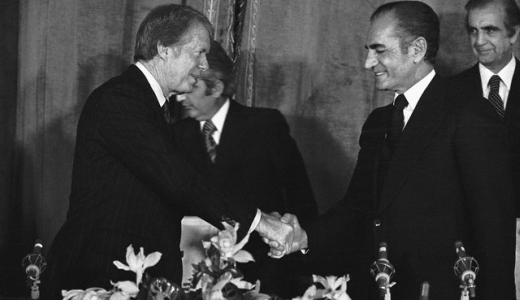
During his presidency, Carter proclaimed human rights to be "the soul of our foreign policy." Although many journalists promoted that image, the reality was quite different.

Inaugurated 13 months after Indonesia's December 1975 invasion of East Timor, Carter stepped up U.S. military aid to the Jakarta regime as it continued to murder Timorese civilians. By the time Carter left office, about 200,000 people had been slaughtered.

Elsewhere, despotic allies — from Ferdinand Marcos of the Philippines to the Shah of Iran — received support from President Carter.

In El Salvador, the Carter administration provided key military aid to a brutal regime. In Nicaragua, contrary to myth, Carter backed dictator Anastasio Somoza almost until the end of his reign. In Guatemala — again contrary to enduring myth — major U.S. military shipments to bloody tyrants never ended.

After moving out of the White House in early 1981, Carter developed a reputation as an ex-president with a conscience. He set about building homes for the poor. And when he traveled to hot spots abroad, news media often depicted Carter as a skillful negotiator on behalf of human rights.

But a decade after Carter left the Oval Office, scholar James Petras assessed the ex-president's actions overseas — and found that Carter's image as "a peace mediator, impartial electoral observer and promoter of democratic values...clashes with the experiences of several democratic Third World leaders struggling against dictatorships and pro-U.S. clients."

From Latin America to East Africa, Petras wrote, Carter functioned as "a hard-nosed defender of repressive state apparatuses, a willing consort to electoral frauds, an accomplice to U.S. Embassy efforts to abort popular democratic outcomes and a one-sided mediator."

Observing the 1990 election in the Dominican Republic, Carter ignored fraud that resulted in the paper-thin victory margin of incumbent president Joaquin Balaguer. Announcing that Balaguer's bogus win was valid, Carter used his prestige to give international legitimacy to the stolen election — and set the stage for a rerun this past spring, when Balaguer again used fraud to win re-election.

In December 1990, Carter traveled to Haiti, where he labored to undercut Jean-Bertrand Aristide during the final days of the presidential race. According to a top Aristide aide, Carter predicted that Aristide would lose, and urged him to concede defeat. (He ended up winning 67 percent of the vote.)

Since then, Carter has developed a warm regard for Haiti's bloodthirsty armed forces. Returning from his recent mission to Port-au-Prince, Carter actually expressed doubt that the Haitian military was guilty of human rights violations.

Significantly, Carter's involvement in the mid-September negotiations came at the urging of Lt. Gen. Raoul Cedras — who phoned Carter only days before the expected U.S. invasion and asked him to play a mediator role. (Cedras had floated the idea in an Aug. 6 appearance on CNN.)

Carter needed no encouragement. All summer he had been urging the White House to let him be a mediator in dealings with Haiti.

Carter's regard for Cedras matches his evident affection for Cedras' wife. On Sept. 20, Carter told a New York Times interviewer: "Mrs. Cedras was impressive, powerful and forceful. And attractive. She was slim and very attractive."

By then, Carter was back home in Georgia. And U.S. troops in Haiti were standing by — under the terms of the Carter-negotiated agreement — as Haiti's police viciously attacked Haitians in the streets.

The day after American forces arrived in Haiti, President Clinton was upbeat, saying that "our troops are working with full cooperation with the Haitian military" — the same military he had described five days earlier as "armed thugs" who have "conducted a reign of terror, executing children, raping women, killing priests."

The latest developments in Haiti haven't surprised Petras, an author and sociology professor at Binghamton University in New York. "Every time Carter intervenes, the outcomes are always heavily skewed against political forces that want change," Petras said when we reached him on Sept. 20. "In each case, he had a political agenda — to support very conservative solutions that were compatible with elite interests."

Petras described Carter as routinely engaging in "a double discourse. One discourse is for the public, which is his moral politics, and the other is the second track that he operates on, which is a very cynical realpolitik that plays ball with very right-wing politicians and economic forces."

And now, Petras concludes, "In Haiti, Carter has used that moral image again to impose one of the worst settlements imaginable."

With much of Haiti's murderous power structure remaining in place, the results are likely to be grim.


.

Monday, August 17, 2009

Hurricane Bill Getting Stronger in Atlantic

By JONATHAN M. KATZ,
AP

PORT-AU-PRINCE, Haiti (Aug. 17) – The first hurricane of this year's Atlantic season gathered force far out to sea Monday, while two weaker storm systems drenched the northeastern Caribbean and the Florida Panhandle with rain.

Hurricane Bill was expected to become a major storm in the next couple of days, with winds topping 110 mph (177 kph) as it moved on a track expected to be near Bermuda by the end of the week.


Weather Underground / AP
Hurricane Bill, far right, was about 1,000 miles east of the Lesser Antilles on Monday.


The storm is very large, with tropical winds extending out 200 miles, so Bermuda faced a potential threat even if the Atlantic island avoided a direct hit, said Nick Camizzi, a forecaster with the British territory's weather service.

"We are keeping an eye on it for sure," Camizzi said.

It was too soon to tell if Bill would threaten the eastern coast of the United States, said John Cangialosi, a meteorologist at the U.S. National Hurricane Center. It was not expected to threaten Florida.

"The system is certainly large and eventually will be a powerful hurricane," Cangialosi said. But colder waters and wind shear could weaken it when it moves farther north.

What began as Tropical Storm Ana, the first named storm of the season, weakened into a tropical depression as it raced past the Leeward Islands, U.S. and British Virgin Islands and Puerto Rico, apparently moving too quickly to cause more than minor flooding.

But even as the system dissipated it posed a potential threat to Hispaniola, the island shared by Haiti and the Dominican Republic, where impoverished riverside communities are extremely vulnerable to flooding.

Dominican authorities evacuated more than 100 people from areas at risk for flooding and mudslide, but the rains turned out lighter than expected as the broke apart.

Still, officials maintained flood alerts for 12 provinces in the east, warning that the storm could drop up to 150 millimeters (6 inches) of rain in some areas.

"As of now the rivers are rising above their normal levels, but nonetheless we do not have flooding, thank God," said Carlos Paulino, a deputy director of the Center for Emergency Operations in the Dominican capital, Santo Domingo.

Officials in neighboring Haiti, devastated last year by four successive storms that killed some 800 people and caused $1 billion in damage, said they were relieved that Ana had weakened. But residents were warned to continue exercising caution around rivers and coastal areas.

In Puerto Rico, rain from Ana flooded highways in the capital, San Juan, and three schools closed as a precaution in the northern coastal city of Arecibo. The U.S. territory was expecting 2 to 4 inches of rain.

Ana was moving at a relatively fast pace, said Dave Roberts, a Navy hurricane specialist at the U.S. hurricane center. Although tropical storm watches were canceled for the storm Monday afternoon, Roberts said it could still be a big rain event for Haiti and the Dominican Republic, especially in higher elevations.

Along the Florida Panhandle, Tropical Storm Claudette quickly weakened after it made landfall at Fort Walton Beach, and was downgraded to a tropical depression with winds of about 30 miles per hour.

The storm wasn't expected to cause significant flooding or wind damage as it moved northwest into Alabama and Mississippi.

A man in his mid-20s died after being pulled from surf as Claudette approached Sunday. In Bay County, authorities searched for another man whose boat ran aground Sunday night, though they believed he made it ashore. Neither man's identity was released.

After the storm passed east of Pensacola Beach on Monday morning, joggers and tourists seeking sea shells dotted the beach.

Far out in the Pacific, Hurricane Guillermo weakened to a tropical storm with maximum sustained winds near 60 mph. Guillermo was centered about 695 miles east of Hilo, Hawaii, and moving west-northwest near 18 mph.

Associated Press writers Melissa Nelson in Pensacola and Kelli Kennedy in Miami contributed to this report.

.

Source: http://news.aol.com/article/hurricane-bill-in-atlantic/624904?icid=mainhtmlws-maindl1link4http%3A%2F%2Fnews.aol.com%2Farticle%2Fhurricane-bill-in-atlantic%2F624904

.

Sunday, July 05, 2009

Dominican Constitution amended in line with Church doctrines

On 21 April 2009 constitutional amendments were passed which enshrine key doctrines of the Catholic Church and could limit human rights, especially those of women and gays. The Dominican government has posted the amended constitution online in Spanish.


Latin America's penchant for tampering with constitutions is unmatched. [...]
The Dominican Republic leads with 29 constitutions. [1]


This constitutional turmoil has given the Vatican the opening it was looking for and allowed it to get its "pro-life" (or "anti-choice") policies cemented more firmly than they would be in national legislation alone. What failed in Poland in 2006 succeeded in the Dominican Republic three years later.


On 18 September 2008 the President of the Dominican Republic introduced constitutional amendments to the Senate which


  • guarantee the right to life and defines life from the moment of conception until death. (Art 30)

  • define the family as the fundamental unit of society (Art 44)

  • define marriage as the union of one man and one woman (Art 44 paragraph 1)


Because these constitutional amendments also let the President seek a third consecutive term in office, [2] he had every reason to try hard to get them through. He needed a two-thirds vote of both houses and his ruling party was only 19 votes short of this. [3]


The new Article 30, approved by a large majority of 167-32, states "the right to
life is inviolable from conception until death. The death penalty cannot be
established, pronounced, nor applied, in any case."

For weeks the Catholic bishops, led by Cardinal Archbishop Nicolas de Jesus Lopez of Santo Domingo, promoted the pro-life article through marches, television speeches, and protests outside of government buildings and in other places. "The Crusade for
Life" included collecting one million signatures to present to the National
Congress. [...]

Referring to abortion supporters and the constitutional reform process, the Archbishop of Santo Domingo said on his Sunday homily: "We know that there are butcher doctors, there are legislators who like to trade in life, there are people who have authority who make a living from that." [...] He said that abortion is a "crime," that it "exploits women" and that it is "terrorism."

The Cardinal Archbishop Nicolas de Jesus Lopez went further. He attacked members of Parliament, saying that Minou Tavares and Víctor Terrero, were ‘abortionists' (pro-abortion). [4]


On the day of the vote the Church stepped up the pressure on the lawmakers. At 7 AM two priests began a mass on the small boulevard in front of the Congress, and afterwards the group was bolstered by other friars, priests and deacons from several parishes and remained in the area to conduct a vigil. [5]

By contrast, when a crowd of women gathered to protest the amendments, a truck full of female police officers dressed in black riot protection gear pulled up to confront and control them. Not that this was necessary: the hundreds of women confined themselves to standing behind the barrier in front of the Senate in the afternoon sun, carrying signs such as "No Rosaries on our Ovaries" and chanting slogans against Article 30. [6] (The subtext on the poster says "The right to decide over our bodies is not a question of faith. It's a question of democracy.")


Lillian Fundera, a gynecologist, explained that the constitutional amendment will make some forms of contraception such as the IUD and the "morning-after" pill illegal and also condemn to certain death any woman who has an extopic pregnancy. [7] A report by the country's Society of Obtetricians and Gynecologists notes that, as it now stands, one in five maternal deaths there are due to botched abortions. The new constitutional amendments will increase this shocking maternal mortality rate, since therapeutic abortion will be penalized and unsafe abortions will proliferate still further. [8]

Notes

1. Marcela Sanchez, "A Penchant for Rewriting Democracy", Washington Post, 1 August 2008. http://www.washingtonpost.com/wp-dyn/content/article/2008/07/31/AR2008073101274.html
Latin America's penchant for tampering with constitutions is unmatched. According to one count by University of Illinois political science professor Zachary Elkins, nearly half of the 801 new constitutions adopted in the world since 1789 have been written in Latin America. The Dominican Republic leads with 29 constitutions. [...] The writing of constitutions for political purposes is a "perversion" of the region's democratic tradition, according to Arturo Valenzuela, director of the Center for Latin American Studies at Georgetown University [...] "A democratic constitution is not meant to give guarantees to a fleeting majority," said Valenzuela. It must withstand the whims of a leader or a majority at any given time and it has to "give assurance to everyone," particularly minorities.
2. Art. 104 of the Amendment repeats the phrase about allowing the president a “second term”, quietly dropping the qualifying “only one”. Cf. Art. 49 of the 2002 Constitution. http://pdba.georgetown.edu/Constitutions/DomRep/domrep02.html
3. “Dominican Constitutional amendment math=19”Dominican Today, 18 September 2008http://www.dominicantoday.com/dr/local/2008/9/19/29473/Dominican-Constitutional-amendment-math19
4. Angela Castellanos, "Dominican Republic: Catholic Republic? 'Right to Life' Enters Constitution", RH Reality Check, 1 May 2009. http://rhrealitycheck.org/blog/2009/04/30/dominican-republic-catholic-republic-right-life-enters-constitutio
5. "Catholics hold mass in front of Dominican Congress", Dominican Today, 21 April 2009.http://www.dominicantoday.com/dr/local/2009/4/21/31754/Catholics-hold-mass-in-front-of-Dominican-Congress
6. Elizabeth Eames Roebling, "Dominican Republic: Church Pushes Draconian Abortion Law", Inter Press Service, 23 April 2009. http://ipsnews.net/print.asp?idnews=46605
7. Ibid.

8. Castellanos, ibid.

In addition to the files below, the document can be found on the government site at www.presidencia.gob.do/app/banners/anteproyecto.doc as "Proyecto de Reforma de la Constitution" (Draft Reform of the Constitution").

.
.
.
.
P.S.Highlights added.
.
.

Tuesday, June 23, 2009

Gregorio Luperón


Gregorio Luperón (September 8, 1839 - May 21, 1897), is best known for being a Dominican military and state leader who was the main leader in the restoration of the Dominican Republic after the Spanish annexation in 1863.

Gregorio Luperón was born 8 September 1839 in Puerto Plata to Pedro Castellanos and Nicolasa Luperón. His parents owned a Ventorrillo (small business) which forced their children to sell items such as piñonate, a local delicacy made of sweetened pine-nut kernels, on the street in order to help the family livelihood.

Around the age of 14, Gregorio began working for Pedro Eduardo Dubocq, an owner of a major company specializing in wood. While working there, he displayed a strong strength of character and a knack for getting any job assigned to him completed in the best possible fashion. Because of this, Mr. Dubocq promoted Gregorio to a management position. Mr. Dubocq also allowed Gregorio to spend time in his personal library because Gregorio wanted to enrich his intellect.
In 1861, the annexation of the Dominican Republic by Spain took place. Gregorio was only 22 years old at the time but a sense of nationalism began to swell within him. During one instance, Gregorio was arrested but managed to escape and flee to the United States for protection. Shortly thereafter, Gregorio managed to return to the Dominican Republic through the town of Monte Cristi in time to take part in the uprising of Sabaneta (1863). However, this uprising was short-lived due to the quick Spanish response.
After the failure at Sabaneta, Gregorio and his compatriots hid in the mountains of La Vega in order to prepare for a full-scale revolution against the Spanish forces.

Present Day References: The Gregorio Luperón International Airport in Puerto Plata and the Gregorio Luperón High School for Math & Science in New York are named after him.
.
.
.

Thursday, April 23, 2009

Pro-life triumph in Dominican Republic: Lawmakers overwhelmingly reject abortion


Santo Domingo, Apr 23, 2009 / 03:01 pm (CNA).- An overwhelming majority of Dominican lawmakers voted to protect the country from abortion by modifying the constitution to guarantee the right to life from conception to natural death, in a vote of 167-32.

The vote was held on Tuesday after President Leonel Fernandez requested the issue be taken up.

“The right to life is inviolable from conception to death. The death penalty shall not be established, sentenced or applied in any case,” the measure read, thus outlawing abortion in the Dominican Republic.”

“Christians celebrated this transcendent decision for the value of life because abortion is a death penalty,” Father Milton Ruiz of the Department of Family Ministry told the AP.


Tuesday, March 03, 2009

Dominican President meets with Fidel Castro (Update)


Dominican President meets with Fidel Castro (Update)

Mar 3 at 6:43 PM


Santo Domingo.- President Fernandez met with the Cuban leader Fidel Castro in Havana on Monday, and spoke on various topics, including the effects of the global economic crisis on Latin America.

“I had the privilege to speak with Fidel on and diverse topics yesterday, such as on the Dominican (Republic) and the crisis in Latin America," Fernandez said today, after laying a wreath in the monument to Cuban independence leader Jose Martí, according to the official press agency, Prensa Latina.

FILE.- President Leonel Fernandez will meet with Cuban leader Fidel Castro Tuesday afternoon, according to reports in the Dominican capital, although there’s no indication as to when he would see the convalescent Cuban leader.

Upon arriving in Havana yesterday, Fernandez stated his desire to meet with Castro, but clarified he didn’t know if it would take place because it depends on the Cuban protocol.

The chief executive is slated to meet with Cuba’s president Raul Castro at 5 p.m., when he’s expected to sign several bilateral agreements.

Fernandez is in Cuba on an official five day visit to participate in an international gathering of economists, who’ll dictate the conference Problems of Globalization and Development, in the University of Havana.

Source: http://www2.dominicantoday.com/dr/local/2009/3/3/31272/Dominican-President-meets-with-Fidel-Castro-Update
.
P.S. Bolds added for emphasis.

Monday, February 02, 2009

Great: Ethics Panel Investigating Rangel 'Virtually Disbanded'

r
Great: Ethics Panel Investigating Rangel 'Virtually Disbanded'


So nice that were living in the age of openness and transparency where everyone will now be, according to Barack Obama, taking responsibility. Well, it's pretty transparent nothing will ever come of the investigation into Charles Rangel, and the Democrats are openly flaunting it.
Nobody's home at the House ethics committee that's supposed to be investigating Rep. Charles Rangel.

The panel created on Sept. 24 to probe the Harlem Democrat's alleged ethical lapses has been virtually disbanded, after meeting only twice in four months on the matter, The Post has learned.

Of the four congressmen named to look into the powerful Ways and Means Committee chairman, only one remains - Alabama Republican Jo Bonner. The three others left the Rangel probe last month when they were "rotated" off the 10-member Committee on Standards of Official Conduct.

The dormant investigation won't be jump-started until three incoming ethics committee members are assigned to the Rangel probe later this month.

Because the committee conducts its work in secret, it is not clear if any progress has been made on the Rangel investigation. In the committee's recently released 100-page report on its work in the 110th Congress, only four paragraphs mention the Rangel probe, listing five alleged ethics breaches and noting that the panel had not been able to complete the investigation.

The panel has already missed Speaker Nancy Pelosi's Jan. 3 deadline for filing a final report on Rangel.

The investigative subcommittee was convened three weeks after a Post exposé reported that the 38-year lawmaker failed to declare rental income on a beachfront villa he owns in the Dominican Republic.

Among other alleged breaches referred to Congress: Rangel's use of four rent-stabilized apartments in Harlem; his use of congressional stationery to solicit donations for an academic center named in his honor at City College; his storage of a vintage Mercedes at a House parking garage; and a $1 million pledge to the Rangel Center from an oil-drilling company that benefited from Rangel-sponsored tax legislation.

Critics say the shuffling of committee members will delay an already lackluster probe.

"It will clearly slow things significantly to bring the new members up to snuff," said Norman Ornstein, a congressional analyst at the American Enterprise Institute.

"The lack of any visible activity, such as interviews with many principals or visits to the Dominican Republic or any progress report, are all discouraging."

The probers should have been required to stay on the investigation to avoid further delays, said Ken Boehm, chairman of the National Legal and Policy Center, an ethics watchdog group.

"Four months after the investigations started, there is no investigative subcommittee, no public hearings, and no sign of any progress whatsoever," he said.
All this from the most (ahem!) ethical Congress ever.