Friday, July 24, 2026


Saturday, June 06, 2026
Romans 13 - King James Version

1 Let every soul be subject unto the higher powers. For there is no power but of God: the powers that be are ordained of God.
2 Whosoever therefore resisteth the power, resisteth the ordinance of God: and they that resist shall receive to themselves damnation.
3 For rulers are not a terror to good works, but to the evil. Wilt thou then not be afraid of the power? do that which is good, and thou shalt have praise of the same:
4 For he is the minister of God to thee for good. But if thou do that which is evil, be afraid; for he beareth not the sword in vain: for he is the minister of God, a revenger to execute wrath upon him that doeth evil.
5 Wherefore ye must needs be subject, not only for wrath, but also for conscience sake.
6 For for this cause pay ye tribute also: for they are God's ministers, attending continually upon this very thing.
7 Render therefore to all their dues: tribute to whom tribute is due; custom to whom custom; fear to whom fear; honour to whom honour.
8 Owe no man any thing, but to love one another: for he that loveth another hath fulfilled the law.

9 For this, Thou shalt not commit adultery, Thou shalt not kill, Thou shalt not steal, Thou shalt not bear false witness, Thou shalt not covet; and if there be any other commandment, it is briefly comprehended in this saying, namely, Thou shalt love thy neighbour as thyself.
10 Love worketh no ill to his neighbour: therefore love is the fulfilling of the law.
11 And that, knowing the time, that now it is high time to awake out of sleep: for now is our salvation nearer than when we believed.
12 The night is far spent, the day is at hand: let us therefore cast off the works of darkness, and let us put on the armour of light.
13 Let us walk honestly, as in the day; not in rioting and drunkenness, not in chambering and wantonness, not in strife and envying.
14 But put ye on the Lord Jesus Christ, and make not provision for the flesh, to fulfil the lusts thereof.
Wednesday, June 03, 2026
Whosoever believeth on him shall not be ashamed.

2 For I bear them record that they have a zeal of God, but not according to knowledge.
3 For they being ignorant of God's righteousness, and going about to establish their own righteousness, have not submitted themselves unto the righteousness of God.
4 For Christ is the end of the law for righteousness to every one that believeth.
5 For Moses describeth the righteousness which is of the law, That the man which doeth those things shall live by them.
6 But the righteousness which is of faith speaketh on this wise, Say not in thine heart, Who shall ascend into heaven? (that is, to bring Christ down from above:)
7 Or, Who shall descend into the deep? (that is, to bring up Christ again from the dead.)
8 But what saith it? The word is nigh thee, even in thy mouth, and in thy heart: that is, the word of faith, which we preach;
9 That if thou shalt confess with thy mouth the Lord Jesus, and shalt believe in thine heart that God hath raised him from the dead, thou shalt be saved.
10 For with the heart man believeth unto righteousness; and with the mouth confession is made unto salvation.
11 For the scripture saith, Whosoever believeth on him shall not be ashamed.
12 For there is no difference between the Jew and the Greek: for the same Lord over all is rich unto all that call upon him.
13 For whosoever shall call upon the name of the Lord shall be saved.
14 How then shall they call on him in whom they have not believed? and how shall they believe in him of whom they have not heard? and how shall they hear without a preacher?
15 And how shall they preach, except they be sent? as it is written, How beautiful are the feet of them that preach the gospel of peace, and bring glad tidings of good things!
16 But they have not all obeyed the gospel. For Esaias saith, Lord, who hath believed our report?
17 So then faith cometh by hearing, and hearing by the word of God.
18 But I say, Have they not heard? Yes verily, their sound went into all the earth, and their words unto the ends of the world.
19 But I say, Did not Israel know? First Moses saith, I will provoke you to jealousy by them that are no people, and by a foolish nation I will anger you.
20 But Esaias is very bold, and saith, I was found of them that sought me not; I was made manifest unto them that asked not after me.
21 But to Israel he saith, All day long I have stretched forth my hands unto a disobedient and gainsaying people.
Monday, May 11, 2026
Sunday, June 01, 2025
Monday, April 07, 2025
Original Source of NOVUS ORDO SECLORUM
Motto at the Foundation of the Unfinished Pyramid on the Great Seal
The motto Novus Ordo Seclorum was coined by Charles Thomson in June 1782. He adapted it from a line in Virgil's Eclogue IV, a pastoral poem written by the famed Roman writer in the first century B.C. that expresses the longing for a new era of peace and happiness.
The original Latin in Virgil's Eclogue IV (line 5) is: "Magnus ab integro seclorum nascitur ordo."
For a better sense of its meaning, below are two translations (by James Rhoades and by C. S. Calverley) of the passage at the beginning of Virgil's poem which refers to the Sibyl who prophesied the fate of the Roman empire.
Now the last age by Cumae's Sibyl sung
Has come and gone, and the majestic roll
Of circling centuries begins anew:
Justice returns, returns old Saturn's reign,
With a new breed of men sent down from heaven. Only do thou, at the boy's birth in whom The iron shall cease, the golden age arise. . .
Under thy guidance, whatso tracks remain
Of our old wickedness, once done away
Shall free the earth from never-ceasing fear.
He shall receive the life of gods, and see
Heroes with gods commingling, and himself
Be seen of them, and with his father's worth
Reign o'er a world at peace.
Come are those last days that the Sybil sang:
The ages' mighty march begins anew.
Now come the virgin, Saturn reigns again:
Now from high heaven descends a wondrous race. Thou on the newborn babe – who first shall end That age of iron, bid a golden dawn. . .
Thou, trampling out what prints our crimes have left, Shalt free the nations from perpetual fear. While he to bliss shall waken; with the Blest See the Brave mingling, and be seen of them, Ruling that world o'er which his father's arm shed peace.
That key phrase (bolded above) has also been translated as:
a "great series or mighty order of ages is born anew."
Charles Thomson was a former Latin teacher, and Virgil was one of his favorite poets. Inspired by the above passage, he coined the motto: "Novus Ordo Seclorum" and placed it beneath the unfinished pyramid, where he explained it signifies "the beginning of the new American Æra," which commences from the Declaration of Independence in 1776.
An accurate translation of Novus Ordo Seclorum is:
"A New Order of the Ages"
Note: Seclorum is a shortened form of seculorum, where the first "u" is deleted. In Latin poetry, it was very common to drop a letter in the middle of a word in order to preserve the meter of the poem – a device known as syncope.
Another proper spelling is "sæculorum." "æ" is an example of a ligature where two letters are combined into a single character.
Virgil's The Georgics inspired Annuit Coeptis, the motto above the eye of Providence. Also, his epic masterpiece, Aeneid, describes an ancient symbol of peace held by the American Bald Eagle, the olive branch.
Friday, February 17, 2023
Wednesday, May 07, 2014
And changed the glory of the uncorruptible God into an image made like to corruptible man

19 Because that which may be known of God is manifest in them; for God hath shewed it unto them.
20 For the invisible things of him from the creation of the world are clearly seen, being understood by the things that are made, even his eternal power and Godhead; so that they are without excuse:
21 Because that, when they knew God, they glorified him not as God, neither were thankful; but became vain in their imaginations, and their foolish heart was darkened.
22 Professing themselves to be wise, they became fools,
23 And changed the glory of the uncorruptible God into an image made like to corruptible man, and to birds, and fourfooted beasts, and creeping things.
24 Wherefore God also gave them up to uncleanness through the lusts of their own hearts, to dishonour their own bodies between themselves:
25 Who changed the truth of God into a lie, and worshipped and served the creature more than the Creator, who is blessed for ever. Amen.
26 For this cause God gave them up unto vile affections: for even their women did change the natural use into that which is against nature:
27 And likewise also the men, leaving the natural use of the woman, burned in their lust one toward another; men with men working that which is unseemly, and receiving in themselves that recompence of their error which was meet.
28 And even as they did not like to retain God in their knowledge, God gave them over to a reprobate mind, to do those things which are not convenient;
29 Being filled with all unrighteousness, fornication, wickedness, covetousness, maliciousness; full of envy, murder, debate, deceit, malignity; whisperers,
30 Backbiters, haters of God, despiteful, proud, boasters, inventors of evil things, disobedient to parents,
31 Without understanding, covenantbreakers, without natural affection, implacable, unmerciful:
32 Who knowing the judgment of God, that they which commit such things are worthy of death, not only do the same, but have pleasure in them that do them.
Romans 1:18-32
King James Version (KJV)
.
Thursday, May 16, 2013
How will they preach unless they are sent?

And how shall they preach, except they be sent? as it is written, How beautiful are the feet of them that preach the gospel of peace, and bring glad tidings of good things!
Romans 10:14,15.
Thursday, May 02, 2013
The Siege of Jerusalem

"But why dwell on the commonplace rubbish which the starving were driven to feed upon, given that what I have to recount is an act unparalleled in the history of either the Greeks or the barbarians, and as horrible to relate as it is incredible to hear?"

The Siege of Jerusalem, AD 70
by Josephus
Josephus was a Jew who had gone over to the Romans.
Throughout the city people were dying of hunger in large numbers, and enduring unspeakable sufferings. In every house the merest hint of food sparked violence, and close relatives fell to blows, snatching from one another the pitiful supports of life. No respect was paid even to the dying; the ruffians [anti-Roman zealots] searched them, in case they were concealing food somewhere in their clothes, or just pretending to be near death. Gaping with hunger, like mad dogs, lawless gangs went staggering and reeling through the streets, battering upon the doors like drunkards, and so bewildered that they broke into the same house two or three times in an hour. Need drove the starving to gnaw at anything. Refuse which even animals would reject was collected and turned into food. In the end they were eating belts and shoes, and the leather stripped off their shields. Tufts of withered grass were devoured, and sold in little bundles for four drachmas.
But why dwell on the commonplace rubbish which the starving were driven to feed upon, given that what I have to recount is an act unparalleled in the history of either the Greeks or the barbarians, and as horrible to relate as it is incredible to hear? For my part I should gladly have omitted this tragedy, lest I should be suspected of monstrous fabrication. But there were many witnesses of it among my contemporaries; and besides, I should do poor service to my country if I were to suppress the agonies she went through.
Among the residents of the region beyond Jordan was a woman called Mary, daughter of Eleazar, of the village of Bethezuba (the name means "House of Hyssop"). She was well off, and of good family, and had fled to Jerusalem with her relatives, where she became involved with the siege. Most of the property she had packed up and brought with her from Peraea had been plundered by the tyrants [Simon and John, leaders of the Jewish war-effort], and the rest of her treasure, together with such foods as she had been able to procure, was being carried by their henchmen in their daily raids. In her bitter resentment the poor woman cursed and abused these extortioners, and this incensed them against her. However, no one put her to death either from exasperation or pity. She grew weary of trying to find food for her kinsfolk. In any case, it was by now impossible to get any, wherever you tried. Famine gnawed at her vitals, and the fire of rage was ever fiercer than famine. So, driven by fury and want, she committed a crime against nature. Seizing her child, an infant at the breast, she cried, "My poor baby, why should I keep you alive in this world of war and famine? Even if we live till the Romans come, they will make slaves of us; and anyway, hunger will get us before slavery does; and the rebels are crueler than both. Come, be food for me, and an avenging fury to the rebels, and a tale of cold horror to the world to complete the monstrous agony of the Jews." With these words she killed her son, roasted the body, swallowed half of it, and stored the rest in a safe place. But the rebels were on her at once, smelling roasted meat, and threatening to kill her instantly if she did not produce it. She assured them she had saved them a share, and revealed the remains of her child. Seized with horror and stupefaction, they stood paralyzed at the sight. But she said, "This is my own child, and my own handiwork. Eat, for I have eaten already. Do not show yourselves weaker than a woman, or more pitiful than a mother. But if you have pious scruples, and shrink away from human sacrifice, then what I have eaten can count as your share, and I will eat what is left as well." At that they slunk away, trembling, not daring to eat, although they were reluctant to yield even this food to the mother. The whole city soon rang with the abomination. When people heard of it, they shuddered, as though they had done it themselves.
Saturday, April 06, 2013
Rome - A History of the Eternal City
Rome - A History of the Eternal City - Ep1

Published on Dec 15, 2012
Simon Sebag Montefiore looks at how every event in ancient Rome revolved around religion. From the foundation myth through to the deification of Emperors; nothing could happen without calling upon the Pantheon of Roman gods. Simon investigates how the Romans worshipped and sacrificed to the gods. He discovers that sacredness defined what was Roman and it was the responsibility of every Roman to play their part in the cult. Even the ancient Roman sewer was holy ground!
Rome - A History of the Eternal City - Ep2. Divine Gamble
.
Rome - A History of the Eternal City - Ep3. The Rebirth of Gods City
.
Friday, March 15, 2013
Beware the Ides of March! Julius Caesar and a Look at the Romans' Ides of March
From N.S. Gill's Ancient/Classical History Glossary

Ides of March assassination of Caesar, by Vincenzo Camucini .Elessar
Definition: The Ides of March was a date on the Roman calendar (Idus Martias) corresponding with our date of March 15. It was a fateful date.
Roman Events on the Ides of March
~ Anna Perenna Festival
In ancient Rome, a festival for Anna Perenna was held on the Ides of March. Ovid, a poet and contemporary of Rome's first emperor, Augustus, wrote a collection of Greek myths in Latin called the Metamorphoses. In this monumental piece of Latin literature, Ovid explains that Anna Perenna was the sister of the tragic, love-sick, suiciding Carthaginian queen Dido, familiar to Romans from the Aeneid, which was written by another Augustan Age poet,Vergil (Virgil).
"On the Ides of March the plebs celebrated the Annae festum geniale Perennae (corresponding to the chief day of the Hindu Holi) near the banks of the Tiber (Ovid, Fasti iii. 523-42, 675-96). Rome was, therefore, empty of the lower classes. Is this why the nobles chose the day for the assassination of Julius Caesar?"
"The Ides of March"
C. M. Mulvany
The Classical Review, Vol. 19, No. 6 (Jul., 1905), p. 305
~ Caesar's Assassination
A more well known occurrence on the Ides of March, in 44 B.C., Julius Caesar was assassinated, at the foot of a statue of Pompey where the Senate was meeting.* Before Caesar went to the theater of Pompey to attend the Senate meeting, he had been given advice not to go, but he didn't listen.
Source of the Expression "Beware the Ides of March"
Because of the assassination and the soothsayer's exchange with Julius Caesar about the dangers he faced in Shakespeare's Julius Caesar tragedy, the Ides of March now signifies a fateful day. Here is the relevant passage:
Caesar: Who is it in the press that calls on me? I hear a tongue shriller than all the music Cry "Caesar!" Speak, Caesar is turn'd to hear. Soothsayer: Beware the ides of March. Caesar: What man is that? Brutus: A soothsayer bids you beware the ides of March.
Julius Caesar Act 1, scene 2, 15-19
Changing Significance of the Ides of March
1. Before the historical assassination of Julius Caesar, the Ides of March was:
- A division of the calendar based on the phases of the moon.
In some months, the Ides is on the 15th, and in others, it is the 13th. It's supposed to be on the day of the full moon. [See Roman Calendar.]
- March's Ides marked the beginning of the consular year: The two annually-elected Roman consuls took office on the Ides from c. 220 B.C. to 153. From 153 B.C. the consuls began to take office on the Kalends of January (what we call New Year's Day).
2. Even immediately after the historical assassination of Julius Caesar, "the ides of March" could be understood to refer to the assassination. Cicero didn't have to say "the assassination of Caesar." He could assume he would be understood when he alluded to the assassination just by reference to "the Ides of March."
Instead of saying something like the take-down of the dictator means there is hope for the Republic, he wrote -- with complete confidence that he would be understood:
Idus Martiae consolantur.
The Ides of March are encouraging.
~ Cicero Letters to Atticus.14.4 (url = homepage.usask.ca/~jrp638/DeptTransls/CicLetters.html April 19, 44 B.C.)
*See In the Steps of Julius Caesar for why Senate met in the porticus attached to the theater of Pompey that day.
Sunday, March 10, 2013
“Woe, woe to Jerusalem!” “woe, woe to the inhabitants thereof!”

Signs and wonders appeared, foreboding disaster and doom. In the midst of the night an unnatural light shone over the temple and the altar. Upon the clouds at sunset were pictured chariots and men of war gathering for battle. The priests ministering by night in the sanctuary were terrified by mysterious sounds; the earth trembled, and a multitude of voices were heard crying: “Let us depart hence.” The great eastern gate, which was so heavy that it could hardly be shut by a score of men, and which was secured by immense bars of iron fastened deep in the pavement of solid stone, opened at midnight, without visible agency.—Milman, The History of the Jews, book 13.
For seven years a man continued to go up and down the streets of Jerusalem, declaring the woes that were to come upon the city. By day and by night he chanted the wild dirge: “A voice from the east! a voice from the west! a voice from the four winds! a voice against Jerusalem and against the temple! a voice against the bridegrooms and the brides! a voice against the whole people!”—Ibid. This strange being was imprisoned and scourged, but no complaint escaped his lips. To insult and abuse he answered only: “Woe, woe to Jerusalem!” “woe, woe to the inhabitants thereof!” His warning cry ceased not until he was slain in the siege he had foretold.
Not one Christian perished in the destruction of Jerusalem. Christ had given His disciples warning, and all who believed His words watched for the promised sign. “When ye shall see Jerusalem compassed with armies,” said Jesus, “then know that the desolation thereof is nigh. Then let them which are in Judea flee to the mountains; and let them which are in the midst of it depart out.” Luke 21:20, 21. After the Romans under Cestius had surrounded the city, they unexpectedly abandoned the siege when everything seemed favorable for an immediate attack. The besieged, despairing of successful resistance, were on the point of surrender, when the Roman general withdrew his forces without the least apparent reason. But God’s merciful providence was directing events for the good of His own people. The promised sign had been given to the waiting Christians, and now an opportunity was offered for all who would, to obey the Saviour’s warning. Events were so overruled that neither Jews nor Romans should hinder the flight of the Christians. Upon the retreat of Cestius, the Jews, sallying from Jerusalem, pursued after his retiring army; and while both forces were thus fully engaged, the Christians had an opportunity to leave the city. At this time the country also had been cleared of enemies who might have endeavored to intercept them. At the time of the siege, the Jews were assembled at Jerusalem to keep the Feast of Tabernacles, and thus the Christians throughout the land were able to make their escape unmolested. Without delay they fled to a place of safety—the city of Pella, in the land of Perea, beyond Jordan.
Tuesday, February 26, 2013
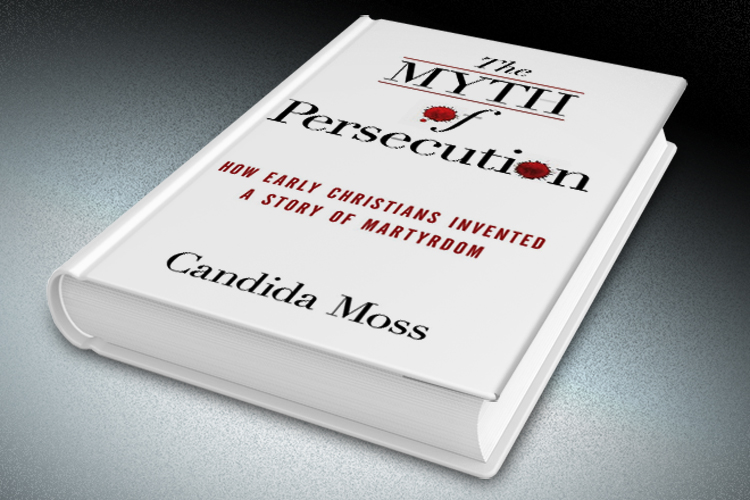
“The Myth of Persecution”: Early Christians weren’t persecuted
The Romans did not target, hunt or massacre Jesus' followers, says a historian of the early church
In the immediate aftermath of the Columbine High School massacre, a modern myth was born. A story went around that one of the two killers asked one of the victims, Cassie Bernall, if she believed in God. Bernall reportedly said “Yes” just before he shot her. Bernall’s mother wrote a memoir, titled “She Said Yes: The Unlikely Martyrdom of Cassie Bernall,” a tribute to her daughter’s courageous Christian faith. Then, just as the book was being published, a student who was hiding near Bernall told journalist Dave Cullen that the exchange never happened.
Although Candida Moss’ new book, “The Myth of Persecution: How Early Christians Invented a Story of Martyrdom,” is about the three centuries following the death of Jesus, she makes a point of citing this modern-day parallel. What Bernall truly said and did in the moments before her death absolutely matters, Moss asserts, if we are going to hold her up as a “martyr.” Yet misconceptions and misrepresentations can creep in so soon. The public can get the story wrong even in this highly mediated and thoroughly reported age — and do so despite the presence among us of living eyewitnesses. So what, then, to make of the third-hand, heavily revised, agenda-laden and anachronistic accounts of Christianity’s original martyrs?
Moss, professor of New Testament and early Christianity at the University of Notre Dame, challenges some of the most hallowed legends of the religion when she questions what she calls “the Sunday school narrative of a church of martyrs, of Christians huddled in catacombs out of fear, meeting in secret to avoid arrest and mercilessly thrown to lions merely for their religious beliefs.” None of that, she maintains, is true. In the 300 years between the death of Jesus and the conversion of the Emperor Constantine, there were maybe 10 or 12 scattered years during which Christians were singled out for supression by Rome’s imperial authorities, and even then the enforcement of such initiatives was haphazard — lackadaisical in many regions, although harsh in others. “Christians were never,” Moss writes, “the victims of sustained, targeted persecution.”
Much of the middle section of “The Myth of Persecution” is taken up with a close reading of the six “so-called authentic accounts” of the church’s first martyrs. They include Polycarp, a bishop in Smyrna during the second century who was burned at the stake, and Saint Perpetua, a well-born young mother executed in the arena at Carthage with her slave, Felicity, at the beginning of the third century. Moss carefully points out the inconsistencies between these tales and what we know about Roman society, the digs at heresies that didn’t even exist when the martyrs were killed and the references to martyrdom traditions that had yet to be established. There’s surely some kernel of truth to these stories, she explains, as well as to the first substantive history of the church written in 311 by a Palestinian named Eusebius. It’s just that it’s impossible to sort the truth from the colorful inventions, the ax-grinding and the attempts to reinforce the orthodoxies of a later age.
Moss also examines surviving Roman records. She notes that during the only concerted anti-Christian Roman campaign, under the emperor Diocletian between 303 and 306, Christians were expelled from public offices. Their churches, such as the one in Nicomedia, across the street from the imperial palace, were destroyed. Yet, as Moss points out, if the Christians were holding high offices in the first place and had built their church “in the emperor’s own front yard,” they could hardly have been in hiding away in catacombs before Diocletian issued his edicts against them.
This is not to deny that some Christians were executed in horrible ways under conditions we’d consider grotesquely unjust. But it’s important, Moss explains, to distinguish between “persecution” and “prosecution.” The Romans had no desire to support a prison population, so capital punishment was common for many seemingly minor offenses; you could be sentenced to be beaten to death for writing a slanderous song. Moss distinguishes between those cases in which Christians were prosecuted simply for being Christians and those in which they were condemned for engaging in what the Romans considered subversive or treasonous activity. Given the “everyday ideals and social structures” the Romans regarded as essential to the empire, such transgressions might include publicly denying the divine status of the emperor, rejecting military service or refusing to accept the authority of a court. In one of her most fascinating chapters, Moss tries to explain how baffling and annoying the Romans (for whom “pacifism didn’t exist as a concept”) found the Christians — when the Romans thought about them at all.
Christians wound up in Roman courts for any number of reasons, but when they got there, they were prone to announcing, as a believer named Liberian once did, “that he cannot be respectful to the emperor, that he can be respectful only to Christ.” Moss compares this to “modern defendants who say that they will not recognize the authority of the court or of the government, but recognize only the authority of God. For modern Americans, as for ancient Romans, this sounds either sinister or vaguely insane.” It didn’t help that early Christians developed a passion for martyrdom. Suffering demonstrated both the piety of the martyr and the authenticity of the religion itself, and besides, it earned you an immediate, first-class seat in heaven. (Ordinary Christians had to wait for Judgment Day.) There were reports of fanatics deliberately seeking out the opportunity to die for their faith, including a mob that turned up at the door of a Roman official in Asia Minor, demanding to be martyred, only to be turned away when he couldn’t be bothered to oblige them.
Moss cannot be called a natural or fluent writer, but she is thorough, strives for clarity and is genuinely fired up in her concern for the influence of the myth of martyrdom on Western societies. “The idea of the persecuted church is almost entirely the invention of the 4th century and later,” she writes. This was, significantly, a period during which the church had become “politically secure,” thanks to Constantine. Yet, instead of providing a truthful account of Christianity’s early years, the scholars and clerics of the fourth century cranked out tales of horrific, systemic violence. These stories were subtly (and not so subtly) used as propaganda against heretical ideas or sects. They also made appealingly gruesome entertainment for believers who were, personally, fairly safe; Moss likens this to contemporary suburbanites reveling in a horror film.
Today, polemicists continue to use the deeply ingrained belief in a persecuted — and therefore morally righteous — church as a political club to demonize their opponents. Moss sees a direct link between the valorization of martyrs and preposterous right-wing rhetoric about the “war on Christianity.” It’s a tactic that makes compromise impossible. “You cannot collaborate with someone who is persecuting you,” Moss astutely points out. “You have to defend yourself.”
Where she is less shrewd is in her belief that by exposing the “false history of persecution,” we can somehow purge this paranoid approach to political differences. One of the most enlightening aspects of “The Myth of Persecution” is Moss’ ability to find contemporary analogies that make the ancient world more intelligible to the average reader, such as the Cassie Bernall story. But that story has an additional lesson to offer, about the true believer’s imperviousness to unpalatable facts. Bernall’s family and church are unmoved by the schoolmates who were present at the shooting and who have debunked the “She said yes” legend. “You can say it didn’t happen that way,” the Bernalls’ pastor told one reporter, “but the church won’t accept it. To the church, Cassie will always say yes, period.”

Laura Miller is a senior writer for Salon. She is the author of "The Magician's Book: A Skeptic's Adventures in Narnia" and has a Web site, magiciansbook.com.
Source
.
Saturday, December 01, 2012
Live peaceably with all men

10 Be kindly affectioned one to another with brotherly love; in honour preferring one another;
11 Not slothful in business; fervent in spirit; serving the Lord;
12 Rejoicing in hope; patient in tribulation; continuing instant in prayer;
13 Distributing to the necessity of saints; given to hospitality.
14 Bless them which persecute you: bless, and curse not.
15 Rejoice with them that do rejoice, and weep with them that weep.
16 Be of the same mind one toward another. Mind not high things, but condescend to men of low estate. Be not wise in your own conceits.
17 Recompense to no man evil for evil. Provide things honest in the sight of all men.
18 If it be possible, as much as lieth in you, live peaceably with all men.
19 Dearly beloved, avenge not yourselves, but rather give place unto wrath: for it is written, Vengeance is mine; I will repay, saith the Lord.
20 Therefore if thine enemy hunger, feed him; if he thirst, give him drink: for in so doing thou shalt heap coals of fire on his head.
21 Be not overcome of evil, but overcome evil with good.
Saturday, December 03, 2011
For the kingdom of God is not meat and drink;..

Romans 14
1Him that is weak in the faith receive ye, but not to doubtful disputations.
2For one believeth that he may eat all things: another, who is weak, eateth herbs.
3Let not him that eateth despise him that eateth not; and let not him which eateth not judge him that eateth: for God hath received him.
4Who art thou that judgest another man's servant? to his own master he standeth or falleth. Yea, he shall be holden up: for God is able to make him stand.
5One man esteemeth one day above another: another esteemeth every day alike. Let every man be fully persuaded in his own mind.
6He that regardeth the day, regardeth it unto the Lord; and he that regardeth not the day, to the Lord he doth not regard it. He that eateth, eateth to the Lord, for he giveth God thanks; and he that eateth not, to the Lord he eateth not, and giveth God thanks.
7For none of us liveth to himself, and no man dieth to himself.
8For whether we live, we live unto the Lord; and whether we die, we die unto the Lord: whether we live therefore, or die, we are the Lord's.
9For to this end Christ both died, and rose, and revived, that he might be Lord both of the dead and living.
10But why dost thou judge thy brother? or why dost thou set at nought thy brother? for we shall all stand before the judgment seat of Christ.
11For it is written, As I live, saith the Lord, every knee shall bow to me, and every tongue shall confess to God.
12So then every one of us shall give account of himself to God.
13Let us not therefore judge one another any more: but judge this rather, that no man put a stumblingblock or an occasion to fall in his brother's way.
14I know, and am persuaded by the Lord Jesus, that there is nothing unclean of itself: but to him that esteemeth any thing to be unclean, to him it is unclean.
15But if thy brother be grieved with thy meat, now walkest thou not charitably. Destroy not him with thy meat, for whom Christ died.
16Let not then your good be evil spoken of:
17For the kingdom of God is not meat and drink; but righteousness, and peace, and joy in the Holy Ghost.
18For he that in these things serveth Christ is acceptable to God, and approved of men.
19Let us therefore follow after the things which make for peace, and things wherewith one may edify another.
20For meat destroy not the work of God. All things indeed are pure; but it is evil for that man who eateth with offence.
21It is good neither to eat flesh, nor to drink wine, nor any thing whereby thy brother stumbleth, or is offended, or is made weak.
22Hast thou faith? have it to thyself before God. Happy is he that condemneth not himself in that thing which he alloweth.
23And he that doubteth is damned if he eat, because he eateth not of faith: for whatsoever is not of faith is sin.
Friday, December 02, 2011
Seven thousand men, who have not bowed the knee to the image of Baal

2God hath not cast away his people which he foreknew. Wot ye not what the scripture saith of Elias? how he maketh intercession to God against Israel saying,
3Lord, they have killed thy prophets, and digged down thine altars; and I am left alone, and they seek my life.
4But what saith the answer of God unto him? I have reserved to myself seven thousand men, who have not bowed the knee to the image of Baal.
5Even so then at this present time also there is a remnant according to the election of grace.
6And if by grace, then is it no more of works: otherwise grace is no more grace. But if it be of works, then it is no more grace: otherwise work is no more work.
The Signal for Fleeing

It is no time now for God's people to be fixing their affections or laying up their treasure in the world. The time is not far distant, when, like the early disciples, we shall be forced to seek a refuge in desolate and solitary places. As the siege of Jerusalem by the Roman armies was the signal for flight to the Judean Christians, so the assumption of power on the part of our nation, in the decree enforcing the papal sabbath, will be a warning to us. It will then be time to leave the large cities, preparatory to leaving the smaller ones for retired homes in secluded places among the mountains. And now, instead of seeking expensive dwellings here, we should be preparing to move to a better country, even a heavenly. Instead of spending our means in self-gratification, we should be studying to economize.-- Testimonies, vol. 5, pp. 464, 465. (1885)
Sunday, October 30, 2011
The day is at hand

11And that, knowing the time, that now it is high time to awake out of sleep: for now is our salvation nearer than when we believed.
12The night is far spent, the day is at hand: let us therefore cast off the works of darkness, and let us put on the armour of light.
13Let us walk honestly, as in the day; not in rioting and drunkenness, not in chambering and wantonness, not in strife and envying.
14But put ye on the Lord Jesus Christ, and make not provision for the flesh, to fulfil the lusts thereof.
Romans 13
Thursday, November 04, 2010
Jesus therefore walked no more openly among the Jews

48If we let him thus alone, all men will believe on him: and the Romans shall come and take away both our place and nation.
49And one of them, named Caiaphas, being the high priest that same year, said unto them, Ye know nothing at all,
50Nor consider that it is expedient for us, that one man should die for the people, and that the whole nation perish not.
51And this spake he not of himself: but being high priest that year, he prophesied that Jesus should die for that nation;
52And not for that nation only, but that also he should gather together in one the children of God that were scattered abroad.
53Then from that day forth they took counsel together for to put him to death.
54Jesus therefore walked no more openly among the Jews; but went thence unto a country near to the wilderness, into a city called Ephraim, and there continued with his disciples.
55And the Jews' passover was nigh at hand: and many went out of the country up to Jerusalem before the passover, to purify themselves.
56Then sought they for Jesus, and spake among themselves, as they stood in the temple, What think ye, that he will not come to the feast?
57Now both the chief priests and the Pharisees had given a commandment, that, if any man knew where he were, he should shew it, that they might take him.