Showing posts with label Parliament. Show all posts

Tuesday, October 13, 2026

Event hosted in parliament hears speaker who argued 'influence of Islam' should be 'resisted'

Tim Dieppe, who delivered the talk in parliament, has said 'Islam is already threatening our democracy and changing our culture'


People look out from south of the River Thames toward the Palace of Westminster (behind) in central London on July 19, 2026. (AFP)

Published date: 17 September 2026 17:04 BST|Last update: 3 weeks 4 days ago

A talk was delivered in the British Parliament this week by a writer who argues that the "influence of Islam in our society needs to be resisted", that some Islamic practices should be banned in Britain and that "the West is quite right to be suspicious of Islam".

The talk by Tim Dieppe, entitled "The Challenge of Islam", was held on Tuesday evening in the Attlee Suite in Parliament.

According to a poster circulated on social media, the event was hosted by the MP Jim Allister, the leader of the right-wing Northern Irish party the Traditional Unionist Voice (TUV).

Christian Concern, an organisation which Dieppe is part of, advertised the event on its website, and said: "Tim is speaking for the Protestant Truth Society, and the event is primarily for Parliamentarians and church leaders – though anyone can attend."

A recording of the event has not been released, but news of the talk is likely to attract attention in Westminster because of some of Dieppe's previously expressed views.

Dieppe is the author of a 2025 book entitled The Challenge of Islam: Understanding and Responding to Islam's Increasing Influence in the UK.

He wrote in 2024: "The influence of Islam in our society needs to be resisted in law and in politics."

Dieppe explained: “The church needs to build up resources for Christians to help them confidently challenge and confront Islam in our society at every level; whether it is with friends and neighbours, or in the public square and in the media.”

'Islam is already threatening our democracy and changing our culture'

- Tim Dieppe

Friday, August 21, 2026

A nation under God: Rebuilding in Nehemiah


By Stephen Hair 
Maranatha Bible Church
 
Aug 19, 2026 Updated 

Anyone who is concerned about the proper effects of Christianity upon a nation knows the name of William Wilberforce, the power behind the abolition of slavery in the British Empire in the year 1807. Wilberforce was elected to Parliament from the county of Hull in 1780 at the age of 21. He was converted to Christ in 1785 through the witness of his old schoolmaster from Hull, Isaac Milner. Shortly after that, partly through the influence of the converted former slave trader John Newton and partly through others, Wilberforce began his long campaign against slavery.

Wilberforce’s first parliamentary bill was to “discuss” abolition. It was introduced in the House of Commons by his friend, Prime Minister William Pitt, in 1788, and it passed. But when the bill came up for discussion at the next session of Parliament in 1789, it was hotly opposed by the commercial lobby that backed slavery, and the move to limit the abuse was defeated.

In 1791 Wilberforce, now backed by a coalition of like-minded men known as the Clapham Sect, tried again, but again he was defeated. It was the same in 1792. There were times when public opinion ran in Wilberforce’s favor. At other times, as in the eyes of the French Revolution, opinion was against any change at all. After the fall of Robespierre in France in 1796, the mood of the country turned toward abolition, but when the abolition bill reached the House of Commons in that year, it was again defeated.

So also in 1798, 1799, 1800, and 1801.

It was not until February 4, 1807, that the abolition document finally passed the House of Lords, and not until February 22, 1807, that it passed the Commons. Nineteen years had gone by. Men had grown old in the cause. Some had died. Yet when news of the abolition of the slave trade reached Wilberforce late on the evening of February 22, the reformer looked into the face of his old friend and fellow abolitionist, Henry Thorton, and said, “Well, Henry, what shall we abolish next?”

Friday, August 14, 2026

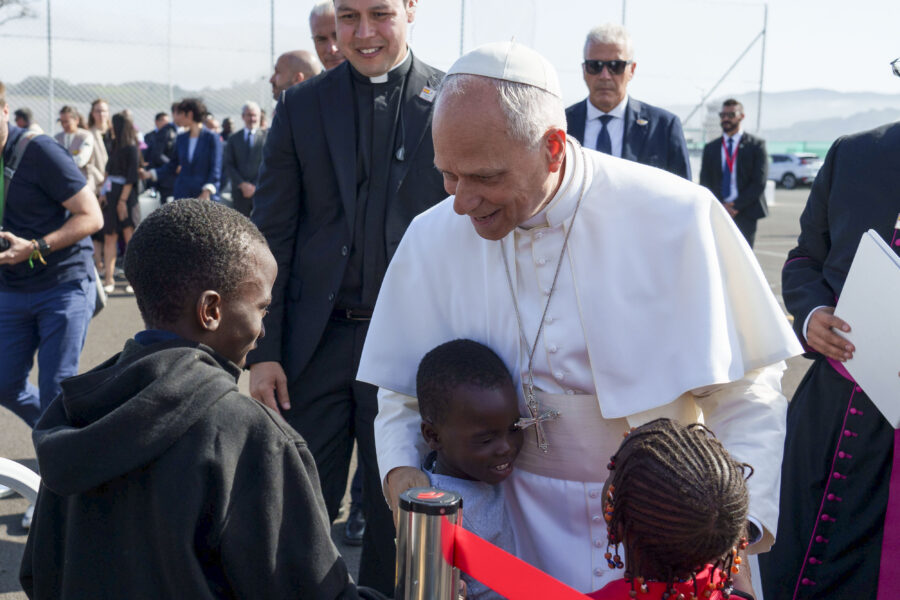
The Pope calls for protection and welcome for migrant and refugee minors: "Every child possesses infinite dignity"


The Pope calls for protection and welcome for migrant and refugee minors: "Every child possesses infinite dignity"


GRAFCAN5123. LA LAGUNA (TENERIFE), 12/06/2026.- El papa León XIV saluda a varios niños durante su visita este viernes al centro de primera acogida 'Las Raíces' de Tenerife. EFE/ Ramón De La Rocha

by INFOVATICANA | August 14, 2026


Pope Leo XIV has focused his message for the 112th World Day of Migrants and Refugees on migrant and refugee minors, which the Church will celebrate on September 27 under the theme “Even one of these little ones.” The Pontiff warns of the special vulnerability of children affected by war, poverty, violence, trafficking, exploitation, and forced displacement, and calls for action both in countries of origin, to combat the causes that force them to leave, and in transit and destination countries, where he urges the guarantee of their protection and welcome.

In the message, dated August 11 and published this Friday by the Holy See, Leo XIV insists that “every child, every human being, possesses infinite dignity” and urges Christian communities to integrate migrants and refugees “as full members of the ecclesial family.” The Pope also calls on civil institutions to promote family reunification and avoid traumatic separations, and maintains that the debate must shift from “the mere management of migratory flows” to the protection of human rights. Among the fundamental rights of minors, he explicitly mentions “life, education, and a standard of living that allows them to grow and develop fully.”

Below is the full message of Leo XIV:

Dear brothers and sisters:

Year after year, the World Day of Migrants and Refugees invites us to focus our attention on different aspects of the complex migratory phenomenon. In this 112th World Day, the theme “Even one of these little ones” calls us to pay attention to minors directly affected by the experience of migration and flight, to concern for them, and to the Lord’s promise that whoever “welcomes one such child in my name welcomes me” (Mk 9:37).

Saturday, December 22, 2018

Bulgarian Christians are taking a win with a heedful mind


On its last work day of 2018, the Bulgarian Parliament voted amendments in the nation’s Religious Denominations Act. A number of problematic provisions were pulled out of draft following local protests and international pressure. 


AUTHOR Vlady Raichinov SOFIA 21 DECEMBER 2018 22:16 h GMT+1


On their eight day of street rallies, Evangelical Christians crowded up in front of Bulgaria's Parliament praying for God's interference in the legislative process, December 21, in Sofia. / Vlady Raichinov


On its last work day of 2018, the National Assembly of Bulgaria voted amendments in the nation’s Religious Denominations Act. This became fact after five hours of deliberations on Friday, December 21. 

A number of problematic provisions were pulled out of the draft following local protests and international pressure. Local Evangelicals experience a mix of enthusiasm and premonition of new issues round the corner.


DRAFTED RESTRICTIONS THREATENED BASIC FREEDOMS 

The original form of the amendments pushed at first reading in early October, included a number of restrictions that alarmed all faith groups in the country and triggered statements of protest from various international institutions. Initially, the lawmakers planned installing provisions that allowed the government to interfere in heavy ways into church affairs.

The problematic articles included a number of disconcerting restrictions, including impeding clergy training; strict filtering of international donations to churches; limitations on sermon content; restraining liturgy to designated buildings; obstructing non-Bulgarians’ ministry; membership of 3,000 for legal registration; allowing special privileges to religious groups over one percent of the population.


Evangelical pastors spoke and prayed in front of Bulgaria's Parliament on December 21. / Vlady Raichinov 


The parliamentarian initiative triggered a massive outcry among Evangelical Christians. Every faith group in Bulgaria issued a statement of objection. The Bulgarian Evangelical Alliance (BEA) and communities like Catholics, Seventh-Day Adventists and many Evangelical denominations mobilized church members for seven public protests in November and December. The vigils were called “prayer rallies” and were held in various towns. Many faith groups also underlined that it was not appropriate to try to address national security issues by rewriting a law on religions.


See more: http://evangelicalfocus.com/europe/4098/Bulgarian_Christians_are_taking_a_win_with_a_heedful_mind_

Thursday, November 30, 2017

Poland’s Parliament Votes to Return Sunday to Day of Rest

Thursday, 30 November 2017 

Written by Dave Bohon


Poland’s Parliament has approved a bill aimed at abolishing Sunday shopping throughout the nation so that workers can spend more time with their families. The measure, passed by the Sejm (equivalent to the U.K.’s House of Commons), would initially limit Sunday shopping to the first and last Sunday of the month through 2018, restrict it to the last Sunday of each month through 2019, and totally ban Sunday shopping beginning in 2020. As written, the law will still allow shopping on Sundays before major holidays such as Christmas, and will exempt such businesses as bakeries and online shops.

The bill must now be passed by the Senate and approved by President Andzrej Duda in order to become law.

The measure was initially proposed by Poland’s trade unions, and was quickly endorsed by the ruling Law and Justice Party.

CBN News noted that Poland “is among the last European countries to hold on to its Christian heritage. Abortion and homosexual marriage are still forbidden in the country of 38 million, which is predominately Catholic.” The faith-based news site explained that Poland’s move to make Sunday a day of rest is, in part, based upon the biblical admonition that like God, who rested on the seventh day after he created the heavens and the earth (Exodus 20:8-11), people are likewise to rest at the end of the week. “Sunday, the first day of the week, became the Catholic ‘seventh day’ and a day of rest after the resurrection of Jesus Christ from the dead on Sunday,” explained CBN. 

While Poland's Catholic bishops have given a thumbs-up to the proposal, Father Paweł Rytel-Andrianik, spokesman for the Polish Bishops Conference, said the bill does not go far enough. “The bishops underscore the need to restore Sunday to society as a day of rest and time of building family ties as well as strengthening social relationships,” he said in a statement. “They point out also that Sunday rest cannot be a luxury for a chosen few, but is an integral part of equal treatment for all employees. Therefore, there is an urgent need to make all Sundays free from work, just as is already the case in many European Union countries."

By contrast, Polish economists have panned the proposal as detrimental the nation’s economy. “The government’s attempt to coerce part of the population not to sell or shop on Sundays is a disgrace and has nothing to do with Catholicism,” said one Polish economist and businessman, Piotr Zapałowicz. “Some people will lose their jobs or part of their income, especially those employed on hourly wages."

Similarly, economic strategist Michal Dybula from Poland’s Bank BGZ BNP Paribas, told Bloomberg News that “any restriction of economic activity, such as retail trade, results in weaker economic growth."

However, Poland’s legislators appear to be following the advice of Pope Benedict, who said in 2012 that "Sunday is the day of the Lord ... a day in which everyone must be able to be free, free for the family and free for God. In defending Sunday we defend human freedom.”

Photo of Polish flag: Clipart.com


Wednesday, April 05, 2017

Divisive Turkey Referendum Campaign Underway To Give President More Power


World

Divisive Turkey Referendum Campaign Underway To Give President More Power


Download


April 5, 20174:33 PM ET
Heard on All Things Considered


A referendum campaign to give the Turkish president more power is in full swing, with, "Yes" crowds on the offensive but "No" voters gaining some quiet traction - despite occasional intimidation.


Source


Saturday, June 13, 2015

Peru Honors Adventist Leader for Promoting Religious Freedom


John Graz receives the country’s congressional medal.

POSTED JUNE 4, 2015

By Bettina Krause, IRLA, and Adventist Review staff

Peru’s government has decorated John Graz, public affairs and religious liberty director for the Seventh-day Adventist Church, with a prestigious award for his international work promoting the right of all people to worship according to the dictates of their conscience.


John Graz, center, receiving Peru's congressional medal for his work promoting religious freedom.


The national parliament presented Graz with its congressional medal during a packed session in the capital, Lima, on May 28.

“Religious freedom is not the defense of one religion against others, but it is the defense of the individual right to be different, and to believe according to conscience,” Graz said in a speech to lawmakers.

The award follows a more than 15-year relationship between Peru and the International Religious Liberty Association, an Adventist-affiliated organization led by Graz.

In 2009, Peru hosted the association’s first Festival of Religious Freedom, an event that drew more than 40,000 people to the National Stadium in Lima. The purpose of the festival, Graz said, was simply to say “thank you” to the government of Peru for the religious freedom protections enjoyed in the country. Since then, some 30 festivals have been held on six continents.

Graz, who is retiring later this year, said the congressional medal belongs to all those who have worked so hard through the years to promote the principle of religious liberty in Peru.

While in Peru, Graz also gave a lecture at the Seventh-day Adventist Church’s University of Peru, where he was awarded the Fernando Stahl Medal for his two decades of work promoting religious liberty around the world. The medal is named for the Adventist Church’s first missionary to the Peruvian Andes in the early 1900s. Fernando and his wife, Ana, revolutionized the lives of the indigenous people in that area — bringing education, medical care, and spiritual hope.
.

Sunday, February 22, 2015

WORLD LEADERS GATHER FOR G20 INTERFAITH SUMMIT


Photo Source: Record staff | "James Standish (far left) with parliamentarians."


By Record Staff

Published on: 18 November, 2014


Queensland, Australia

An interfaith summit organised by Griffith University to coincide with the G20 is underway in Queensland. The summit’s focus is on the connection between economic development and religious freedom.

“This event will bring together scholars, lawyers and political leaders with faith and interfaith leaders from around the world for three days of discussion and dialogue,” says Dr Brian Adams, director of the university’s Centre for Interfaith and Cultural Dialogue.

Yesterday, James Standish, director of the communication and public affairs for the Seventh-day Adventist Church in the South Pacific, chaired a conference session consisting of parliamentarians from Turkey, New Zealand, Fiji, Samoa and the ACT.


Australian Human Rights commissioner Tim Wilson with South Pacific Division Communication and Public Affairs director James Standish.


“We live in an age where religious freedom questions are being asked with increasingly urgency,” notes Standish.

“How far should societies go to crack down on religious extremism? How do we balance competing claims to rights? How much religion is too much religion in public life? What can we do to promote social stability in religiously diverse societies? Parliamentarians struggle with these questions. It was good to have a place for them to share their diverse experience and visions.”

The G20 Interfaith Summit concludes today.


Source
.

Related:


Samoan Minister comes to Brisbane for the G20 Interfaith Summit


L to R Executive Director Law Firm Leota Theresa Potoi, Hon Lautafi Purcell, Director Interfaith Centre Griffith Uni Nathan Campus QLD,

By Helen Lauaki and Emma Soloai

The G20 Interfaith Summit organised by Dr. Brian Adams, the Director for Interfaith and Cultural Dialogue for Griffith University Nathan Campus, Queensland played host to an international group of Religious and political leaders from around the world. Dr. Adams, PHD envisioned a conference whereby leaders from different faiths could meet and discuss openly and without criticism their ideology and perspectives on life. He said, "It has been rewarding to have about 180 people from North America, Egypt, United Emirates, Europe to Asia and South America to the Pacific come to this. From Muslims, Bhuddists, Bahai, Hindu, Seik, and many different Christians Is a dream for someone like me who is at the Centre of Faith and Intercultural Dialogue. When we work together for a common goal we have a working dialogue. There is so much everyone brings to the table."

Ideas one never would have thought of if one stuck to their own religious and cultural beliefs are presented in this open forum. Dr. Adams explains, "Having this type of open dialogue helps us to find solutions better to the world's problems. And we can find solutions faster and get things done quicker." He stated that one of his aims was to help build Economic structures in the Pacific.


Hon Lautafi Fio Selafi Purcell MP with Emma Soloai

The Minister of Aborigines & Torres Strait Islanders and Multi-Cultural Affairs, Glenn Elmes supported this summit and got behind Dr. Adams and his Team. The conference was well represented by Ministers from the host nation, New Zealand, Fiji and Samoa.

The Samoan Minister of Public Enterprises, Public Service Commission & Samoa Bureau of Statistics, Hon. Lautafi Fio Selafi Purcell stated that for Samoa the topic of the summit is relevant to Samoan political affairs. He said, "What we have learned from this conference Samoa can use going forward." He agreed that there is an important correlation with the relationship between religious freedom and economic development, which is the Theme of the G20 Interfaith Summit. "Religion is an integral part of Samoa." And when asked does religion clash with Fa'a Samoa, he replied, "No. The two integrate into each other and merge together creating 'Samoanised' Christianity." He further mentioned, "The freedom of religion is stated in the Constitution and maintained by all."


L to R Emma, Glenda Stanley, John and Mangere Labour MP Su'a Williams Sio


Read more
.

Saturday, May 24, 2014

Parliament divided over Sunday voting


Friday 23 May 2014

Parliament gave a divided reaction on Friday to comments by home affairs minister Ronald Plasterk that European elections should be held on Sunday in the Netherlands.

The Netherlands has been stopped by Brussels from publishing the official results of Thursday's European parliament elections ahead of Sunday's vote in most of the rest of the EU.

Plasterk says that moving EU elections to Sunday could increase turnout, although he is careful to point out that there must be a solution for people who want to respect the Sunday rest.
Interesting

Coalition partner the right-wing Liberal VVD thinks it is 'an interesting thought' because most EU countries vote on Sunday, the Nos reports.

However, the party's MP Joost Taverne said an alternative would have to be found for people who do not want to vote on Sunday on principle. They could vote by mail or a polling station could be opened on a week day for them.

The Socialists agreed with him, but took issue with the timing of Plasterk's comments. 'We've just been criticised by Brussels for our election day which really has nothing to do with the European Commission,' one of its MPs said.

Nor do the Socialist think moving election day would increase turnout.

Both the small Christian parties - SGP and ChristenUnie - are critical of the idea. 'People who do not vote on Thursday are unlikely to do so on Sunday,' the Nos quotes SGP party leader Kees van der Staaij as saying.


. 

Saturday, February 22, 2014

Jamaica: Adventists seek 24-hour Sabbath time in work arrangement bill


February 17, 2014 – Browns Town, St. Ann…Nigel Coke/IAD

President of the Seventh-day Adventists Church in Jamaica, Pastor Everett Brown is calling on legislators not to pass the Flexible Work Arrangement Bill in Parliament until its members along with other Sabbath keeping congregations are guaranteed their full 24-hours Sabbath.


Pastor Everette Brown, president of the church in Jamaica, calls on legislation not to pass the Flexible Work Arrangmement Bill in Parliament until its church members and other Sabbath keeping congregations are guaranteed 24 hours of Sabbath rest. Image by Nigel Coke/IAD

Speaking at the installation service for newly elected leaders in the Church’s northern region– St. Ann and Trelawny–at the Brown’s Town Seventh-day Adventist Church, Pastor Brown warned them that the times ahead call for strong and courageous leadership.

“The task of providing leadership for the Church here in the North at this time is a very formidable one,” Brown submitted. “You have been placed in leadership at a point in time when, according to the apostle Paul in 1Timothy 1:3, it is going to be ‘perilous’; and it is proving to be extremely difficult to be a Christian as we are now living in a post modern material-driven, hedonistic, pluralistic, corrupt and decaying society.”

He argued that strong and courageous leaders are needed more than ever to safeguard and preserve the Christian values and standards of the Church, and that Church leaders may be called upon to oppose strongly any attempt to curtail our religious freedom which the constitution guarantees, by the passing of legislation on the new flexible work arrangements.

“Let me make the position of the Church clear: God who mandated the Seventh-day Sabbath as His holy day of worship did not make it a twelve-hour day but a twenty-four hour one–from sunset Friday evening to sunset Saturday evening.”

This position is among several concerns that not only the Seventh-day Adventists have, but the wider church population in Jamaica regarding the Flexi Work Arrangements, which have been on the table for 18 years, but is schedule to be passed by the end of March this year, as a requirement of the latest IMF agreement with the Government of Jamaica.

The umbrella group of churches, which the Seventh-day Adventist Church is a part, has drafted a letter which will be delivered Feb. 18, with the concerns of the group seeking audience with the Minister of Labour, the Hon. Derrick Kellier.

“We hope that through this letter we can sit with the Minister and his technocrats along with other stakeholders to address the concerns we have,” said Gary Harriott, secretary of the group. “One of the concerns surrounds the issue of public education and awareness, which was promised would happen before a critical agreement like this is passed. With March being a deadline set by the IMF to meet this qualitative part of the agreement, we need to know when this aspect of the whole enactment will take place.”

Harriott went on to say that what they are not seeking “is for the bill to be rushed through Parliament like many we have seen last year without any proper debate and public education and which causes an economic backlash.”

Brown added that whatever the arrangement for worker to work, the citizens of Jamaica have the right to worship.

“We must pray that whatever happens as far as the final legislation is concerned that no employer has the right to determine what the day of worship should be for the employee,” Brown concluded.


Source: http://www.interamerica.org/?p=10684#ixzz2u4OwWtKY
.
.

Tuesday, February 04, 2014

Conference on Work-free Sundays and Decent Work

Photo (Courtesy) http://www.cesi.org/news/2014/140122_sunday_alliance.html


http://www.flickr.com//photos/comece/sets/72157640003868823/show/

CONFERENCE on Work-free Sundays and Decent Work

Tuesday 21 January 2014 at the EU Parliament (Brussels)


On the occasion of a Conference at the European Parliament which gathered 120 participants, the European Sunday Alliance officially launched a Pledge for a work-free Sunday and decent work, ahead of the European elections 2014. The Pledge is aimed at committing European politicians to the promotion of a common weekly day of rest as well as a legal framework guaranteeing sustainable working time patterns based on the principle of decent work.

The pledge states that « A work-free Sunday and decent working hours are of paramount importance for citizens and workers throughout Europe and are not necessarily in conflict with economic competitiveness.  Especially in the present time of socio-economic crisis, the adoption of legislation extending working hours to late evenings, nights, bank holidays and Sundays has direct consequences for the working conditions of employees and for small and medium sized enterprises. Competitiveness needs innovation, innovation needs creativity and creativity needs recreation! ». The Pledge can be accessed here.


By signing this pledge, current members of the EU Parliament and candidates in the upcoming European elections commit themselves :


1. To ensure that all relevant EU-legislation both respects and promotes the protection of a common weekly day of rest for all EU citizens, which shall be in principle on a Sunday, in order to protect workers' health and promote a better balance between family and private life and work;

2. To promote EU-legislation guaranteeing sustainable working time patterns based on the principle of decent work benefiting society as well as the economy as a whole.


The Second European Conference on the Protection of a Work-free Sunday and Decent Work was held on the 21 January 2014 at the European Parliament (Brussels) in order to raise awareness around the Pledge and the core demands of the European Sunday Alliance. The Conference was organised by the Members of Parliament Evelyn Regner (S&D) and Thomas Mann (EPP), together with the European Sunday Alliance.


For overcoming the crisis in Europe, the creation of jobs and economic competitiveness are the main requirements.
The European Sunday alliance affirms that competitiveness and decent work can go hand in hand with a common weekly day of rest. It needs recreation to be creative, innovative, and in the end, competitive. The various pannelists and keynote speakers were of the view that today, legislation and practices in place at the EU and Member State level need to be more protective of the health, safety, dignity of everyone and should more attentively promote the balance between family and private life and work. All people in the European Union should be entitled to benefit from work-free Sundays and decent working hours. Sunday protection strengthens the social cohesion of our societies. It represents a precious feature of our heritage, which should be recognised as a fundamental pillar of the European Social and Economic Model.


Downloads:

Press release EN- Communiqué de presse FR - Presseerklärung DE - Communicato Stampa IT

Programme


Photos and videos:

Flickr Album


.
.
Source
.

Wednesday, October 02, 2013

Mother and Daughter (Governments) in fiscal trouble


Is this by design or just a fluke?

/\

Roman ruins

Italy’s government is on the brink of collapse—so what else is new?

By Jason Karaian @jkaraian October 1, 2013


Not going down without a fight. Reuters/Alessandro Bianchi


In Italy, the government is teetering. A credit ratings downgrade looms. Two of the country’s three largest banks are in turmoil, as is the main telecoms operator. Given the headlines, it’s surprising how subdued the market reaction has been; bond yields have barely budged and stocks are down by less than 1% so far this week. Has dysfunction in Italy’s parliament and boardrooms finally lost its capacity to surprise?


Uncertainty stalks the government…

Prime minister Enrico Letta faces a crucial test in the Italian parliament tomorrow (Oct. 2), when he will address both houses before facing a vote of confidence in his leadership. Silvio Berlusconi, convicted of tax fraud and facing expulsion from the Senate, called for his party’s ministers to quit Letta’s cabinet and force a new election. There are signs of dissent within the ranks of Berlusconi’s party, but even if Letta survives the confidence vote he will not be left with much of a mandate to pass meaningful reforms—including a crucial budget for 2014.

It took months to cobble together the current government after an election in February, with Letta’s center-left and Berlusconi’s center-right parties grudgingly agreeing to form a coalition (Italy’s 62nd government since the post-war republic was founded 67 years ago). The outcome of tomorrow’s showdown is difficult to predict, with think tank Open Europe walking through a few of the possible scenarios, none of them particularly encouraging for the fragile Italian economy.
…and companies are flailing…

Meanwhile, the head of Italy’s second-largest bank, Intesa Sanpaolo, quit over the weekend after a clash with the foundations that own a big chunk of the bank’s shares. The third-largest lender, Monte dei Paschi di Siena, is still struggling to convince the European Commission that its restructuring plan is tough enough to justify the billions of euros that the government has pumped into the bank. The CEO of Telecom Italia is also reportedly on the way out later this week, following his own run-in with key investors.
…but markets hope what Berlusconi breaks, Draghi can fix

In previous years, a shaky government and wobbly banks pushed Italy to the brink of an international bailout. As it happens, the relative calm that is greeting the latest ructions is thanks to another Italian: Mario Draghi. The president of the European Central Bank pledged to do “whatever it takes“ to preserve the euro zone during a particularly nasty bout of investor jitters last year. Although this pledge has never been tested, the markets seem to be taking Draghi at his word. Traders were further comforted by Draghi’s hints last week that the ECB might offer another round of emergency liquidity for banks, which would be especially welcome for hard-up Italian lenders.

If Italy soon slips back into a full-blown political crisis, it will be the sternest test yet of Draghi’s promise to ride to the rescue. Is the ECB president willing, quite literally, to put his money where his mouth is? Investors seem to think so, but this particular Italian drama is far from over.


Source
.

Related


Top lawmakers to meet Obama for US shutdown talks

(AFP) – 7 minutes ago


The White House is seen behind a stop sign in Washington on October 1, 2013 (AFP, Karen Bleier)


Washington — US President Barack Obama on Wednesday called congressional leaders to a White House meeting, providing a glimmer of hope for movement on day two of a crippling government shutdown.

The White House is squaring off with Republican rivals in Congress over how to fund federal agencies, many of which are now closed, leaving some 800,000 furloughed workers in the lurch and a fragile economy at risk.

Obama wants a straightforward temporary spending bill to end the first shutdown in 17 years, while Republicans have sought to tie the measure to a dismantling or delay of his signature health care law.

Neither side has blinked, and Americans are exasperated with the inability of their elected officials to break the impasse.

"Most of the time you can see an end game," Republican Senator Johnny Isakson told MSNBC. "Right now there's no end game in sight."

An hour after those comments aired, the White House announced an early evening meeting with Republican and Democratic congressional leaders to address the standoff.

The office of House Speaker John Boehner, Obama's primary political foe, said it represented a potential "start to serious talks between the two parties."

It was not immediately clear if the talks amounted to a possible breakthrough or were merely for appearances.

Meanwhile, furious tourists are locked out of Washington museums and monuments, as well as national parks and landmarks like the Statue of Liberty in New York. Cancer research and treatment at the world-class National Institutes of Health has ground to a halt.

Senate Majority Leader Harry Reid, in scolding Republicans whom he blamed for the shutdown, said some 200 patients -- including 30 children mostly needing cancer treatment -- were denied access to NIH on Tuesday.

"They were turned away," Reid said.

The roiling political and fiscal drama threatens to affect the global economy as well, with European Central Bank chief Mario Draghi warning Wednesday that a US shutdown "is a risk if it is protracted."

"It would be a risk not only for the US, but also the world economy," Draghi said.

The fallout has already caused Obama to shorten his long-planned Asia trip, scrapping stops in Malaysia and the Philippines that were due to begin this weekend, so he could attend to the crisis at home.

The president's attendance at summits in Indonesia and Brunei was also in doubt.

Complicating the budget gridlock, Congress has just over two weeks to strike a deal on raising the country's debt ceiling and avoid a painful default.

US Treasury Secretary Jacob Lew has warned that US borrowing authority will reach its cap by October 17, and he informed Congress that Treasury "has begun using the final extraordinary measures" available to pay US bills.

Without a raising of the debt ceiling, Treasury's money ceases to flow, triggering a default.

With stakes critically high, Republican lawmakers were scrambling to at least get parts of government up and running.

The Republican-led House of Representatives was to vote Wednesday on five measures that would fund popular operations, including services for veterans, opening national parks and museums, and keeping key health research going.

Boehner insists they are good-faith efforts to keep crucial government operations running, but Democrats swatted them away as incremental funding bids ultimately aimed at leaving the health care law known as "Obamacare" high and dry.

"These piecemeal bills, they're not a way out," Reid said, sneering that Republicans were offering "one 'cockamamie' can't-pass idea after another."

"It's time for my Republican colleagues to do a gut check," Reid said.

Obama on Tuesday accused conservatives in the House of waging an "ideological crusade" by making government funding conditional on gutting his health care law.

Boehner has chosen to side with the renegade Tea Party faction of his party rather than risk his job by attempting to pass a straight funding resolution stripped of political poison pills.

Boehner's tactic has left him on precarious political ground.

A Quinnipiac University poll Tuesday found voters, by a margin of 72 percent to 22 percent, oppose the shutdown of government as a way to derail Obamacare.


.
.
,.

Sunday, December 23, 2012

EU Parliament’s Christmas greeting cards scrap Nativity for “neutral” images and messages


12/21/2012


THE EUROPEAN PARLIAMENT


The “neutral” Christmas cards Strasbourg has sent out this Christmas have sparked controversies. The symbol and name of the Christian celebration are nowhere to be seen

GIACOMO GALEAZZI
VATICAN CITY


What’s happened to Christmas? After Haloween pumpkins replaced the crucifix, provoking strong criticisms from the Vatican Secretary of State, Cardinal Tarcisio Bertone, the European Parliament’s decision to scrap Christian symbols and references from its Christmas greeting cards has caused further uproar. A part from the angel which appears on the six printed greeting card versions and the ten electronic ones, the Nativity, which is the core symbol of the Christian celebration is nowhere to be seen. “If this is the case, then bureaucrats and MPs should be turning up at work on December 25th,” said Lorenzo Fontana, Italian Northern League party representative in the European Parliament.

The European Parliament’s greeting cards also provoked complaints last year. Fontana himself presented a request to the President of the Assembly, Jerzy Buzek, asking for Christmas cards to include recognisable Christian symbols in the future. His request was rejected and this year’s cards feature stylised Christmas trees against psychedelic backgrounds and photoshopped images of the European Parliament. Those who criticise this as a new chapter in Strasbourg’s “anti-Christian crusade complain: “The design is dry, illuminated by cold blue and white flash lights which go completely against the whole idea of Christmas warmth.” Even the traditional “Merry Christmas” message has disappeared. All that appears in the cards is a neutral “2013”.

In addition to the negative reactions to the EU parliament’s Nativity-free greeting cards, there was also a lot of huffing and puffing over the futuristic Christmas tree erected in the Grand Place in Brussels. It is apparently so anti-Christian that is has triggered a series of online petitions and forums asking for the return of the traditional pine tree.

It is really a shame that the message contained in Europe’s motto “unity in diversity” are just empty words. Even at such a time of heart-felt sharing as Christmas, EU institutions have failed to show sensitivity to the feelings of its citizens, the vast majority of which are Christians. It almost seems as though this motto aims to make those who still feel strongly about the true religious meaning of Christmas, as different.

But it is not just in Brussels and Strasbourg that Christmas is under threat, lay anti-Christmas crusades are also being witnessed in other European countries. In one French school south of Paris, Father Christmas has been banned in order to show respect for the school’s beliefs and values. A puppet show has replaced Santa Klaus, a figure inspired by faithful’s veneration of Bishop St. Nicholas. In another school in Piacenza, Italy, references to religious topics in the institution’s Christmas celebrations are forbidden. Mgr. Adriano Vincenzi, a representative of the Italian Episcopal Conference in Confcooperative said: “It is commonly believed that giving up one’s own identity facilitates dialogue, but conserving one’s identity is essential for dialogue to take place.”

Every time man had attempted to extinguish the light brought to Earth by Jesus’ birth, the result has been horrible darkness, Benedict XVI warned on the occasion of the lighting of the Christmas tree in St. Peter’s Square. Trying to remove God’s name from the history books leads to the most noble and beautiful of words losing their real meaning. “When terms such as freedom, common good and justice are no longer rooted in God and in his love, they fall victim to human interests and lose touch with the truth and civil responsibility, which are vital.” But no one has managed to suppress the bright story of love begun two thousand years ago in Bethlehem. It is the responsibility of each and every one of us “to constantly draw on this legacy of faith, fostering it, in order to face up to the new social emergencies and today’s cultural challenges.”


Source
.

Saturday, September 15, 2012

World e-Parliament Conference 2012

World e-Parliament Conference 2012

We are pleased to announce that the World e-Parliament Conference 2012 will be held at the Chamber of Deputies of Italy, in Rome, on 13, 14 and 15 September. The Conference will conclude on the International Day of Democracy, established in 2008 by the UN General Assembly.

Conférence mondiale 2012 sur l’e-Parlement
Nous avons le plaisir d'annoncer que la Conférence mondiale 2012 sur l’e-Parlement se tiendra à la Chambre des députés italienne, à Rome, les 13, 14 et 15 septembre. La Conférence se terminera lors de la Journée internationale de la démocratie établie par l'Assemblée générale des Nations Unies en 2008.

Conferencia Mundial de 2012 sobre parlamento electrónico
Nos complace anunciar que la Conferencia Mundial de 2012 sobre Parlamento electrónico tendrà lugar en la Cámara de Diputados de Italia, en Roma, los días 13, 14 y 15 de septiembre. La Conferencia concluirá en el Día Internacional de la Democracia, establecido por la Asamblea General de la ONU en 2008.


Source

.

Saturday, July 14, 2012

Press conference EU Religious leaders

12 July 2012


Intergenerational Solidarity was at the heart of this year’s annual summit meeting of European Faith leaders with the Presidents of the EU Institutions. This was the eighth such high-level meeting which took place at the invitation of President José Manuel Barroso and was co-chaired by Herman Van Rompuy, President of the European Council and László Surján, Vice-President of the European Parliament. Read more

.

Tuesday, March 27, 2012

Egypt Designates Israel Its Top Enemy — Obama Restores Military Aid


Posted by Bio ↓ on Mar 21st, 2012


Egypt’s parliament, which is dominated by two pro-Sharia Islamic supremacist groups, the Muslim Brotherhood and the Salafists,voted unanimously last Monday to expel Israel’s ambassador to Egypt, and signaled that the Camp David Accords would soon be a thing of the past: Egypt, the parliamentarians declared, would “never” be Israel’s ally. In fact, Israel was Egypt’s “number one enemy.” And how did Barack Obama respond to this egregious trampling upon the agreement that has kept an uneasy peace between Israel and Egypt for thirty years? By announcing a resumption of military aid to Egypt.


Read more

.

Friday, January 20, 2012

COMECE Bishops' Declaration on Social market Economy defends Sunday

12 january 2012

unknownIn their declaration on Social Market Economy, published on 12 January, the COMECE Bishops call for the protection of work-free sundays in the EU:

"Today, our task lies in protecting ourselves from a scenario where themarket and its inner logic manage to encroach on all areas of life and hold them captive. There are shared and qualitative needs which cannot be satisfied by the market, particularly in relation to the family. This is why it is the task of government to provide guaranteed market-free times and living spaces where people can search for ways to meet these needs.17 It is right that market activity is restricted on official public holidays and Sundays, because on those days, for national, cultural or religious reasons, peace and quiet and time to collect one’s thoughts take precedence over economic activities."


The Declaration is available in English, French and German atwww.comece.eu


Download the Declaration in PDF in English, French, German


Photos of the Conference on Flickr


Mp3 of the Conference:


Source
.

Wednesday, January 11, 2012

New JRS report launched at EU Parliament


Brussels, 20 December 2011 – At the EU Parliament, JRS Europe launched their new report From Deprivation to Liberty at an event which included MEPs and representatives from the Belgian Immigration Office and NGOs.


The report, which is based on interviews with migrants participating in alternatives-to-detention programmes in the United Kingdom, Belgium and Germany, concludes that detaining migrants is unnecessary because more humane non-custodial alternatives exist.


‘‘None of the alternatives to detention we looked into are inherently harmful. They exemplify steps – albeit small steps – towards the normalisation of engagement over enforcement’’, said Philip Amaral of JRS Europe.

‘‘The biggest problems we observed relate to the larger systems of migration and asylum. On a whole, these are systems based on assumptions about likely migrant behaviours rather than empirical evidence.


Geert Verbauwhede of the Belgian Immigration Office acknowledged that the current Belgian system is still in its infancy but was appreciative of the JRS recommendations. ‘‘Our system is still growing, we are only existing three years but we will take the JRS report on board’’, he said.


He condemned the type of lawyers mentioned in the report who charge asylum seekers large fees yet provide them with little help. ‘‘Legal assistance is not always of the same quality... some lawyers see it as a cash cow. If we see this, we will complain to the board of lawyers but we have no influence here’’.

He also admitted that there is not enough information provided to those arriving at the border. ‘’It is clear that we have to give them direct information at the time’’, he said.


Antonio Masip Hidalgo MEP, claimed that the biggest problems with adopting a new Reception Conditions Directive lie with member states in the Council. Even those that are the most engaged in the debate, and the most supportive, face difficulties with the compromise.


He said that there is a need to go straight to the member states, i.e. in Brussels, their embassies, permanent representations, in order to persuade them to accept compromises that include alternatives to detention.

The Danish Presidency of the EU (Jan-July 2012), however, will be a critical moment for the Reception Conditions Directive. This period will be a good chance to adopt a directive with higher protection standards, he stated.


Contact information:

Philip Amaral, advocacy officer

europe.advocacy@jrs.net

+32 2 250 32 23


Source