Showing posts with label EDITORIAL. Show all posts

Saturday, October 03, 2026

You are talking my language

Editorial

The world has come a long way technologically. Today, one person, with one phone, can communicate with millions. That is not surprising in our new digital world, a world where an average smartphone is millions of times faster than the computer system that landed Apollo 11 on the moon. In today’s world, more than six billion people—three-quarters of the world population—now use the internet, and more than a billion of them follow Portuguese football (soccer) star Cristiano Ronaldo across social media platforms.

From months to moments

Adventist media has also come a long way. In the summer of 1849, a small group of fervent Advent believers knelt beside printed sheets of paper to ask God to bless all who would read the truth-filled pages. Those sheets were the eight-page pamphlet called Present Truth. Physically and emotionally exhausted after months of work on the pamphlet, James White, author of this new publication, trudged eight miles to the nearest town to post it.

Today, of course, any pastor can ask generative AI, such as ChatGPT, to help them write a feature. Then, with a couple of keystrokes, they can email it or post it on social media to an exponentially larger audience. All done in 30 minutes.

Tuesday, August 18, 2026

What if America Went Completely Dark?


The power grid relies on thousands of aging, hand-built transformers. If enough fail, the blackout could last years.
Photo illustration by Justin Metz

By Christopher Cox

Christopher Cox traveled to California and Nevada and interviewed more than two dozen experts in grid technologies and grid reliability.

Aug. 18, 2026Updated 9:20 a.m. ET

The snipers had been shooting for nearly 10 minutes before someone called 911. A man driving down the highway told the police he thought he heard fireworks as he passed Pacific Gas and Electric’s Metcalf electrical substation, 15 miles southeast of San Jose. An engineer at a nearby power plant said he thought it was gunfire. Maybe more calls would have come in, but the communication link between the substation and PG&E, along with several phone and internet cables, had been severed. It was April 16, 2013.

The shooters — two, maybe more — took up positions 30 to 40 yards outside the substation fence, in the dry scrubland near Coyote Creek. At 1:31 a.m., after a security camera recorded what looked like a signal from a flashlight, they began firing high-powered rifles into the facility. Sparks flew into the air whenever the bullets grazed the chain-link fence, but most of the shots hit their apparent targets: a row of truck-size power transformers, which step down high-voltage electricity to lower voltages so it can be sent to local homes and businesses. Because this was Silicon Valley, those customers included some of the largest tech companies in the world.

After some 120 shots, 17 of Metcalf’s transformers had been disabled. The attackers knew to aim for the units’ cooling systems, oil-filled fins similar to those on a radiator, which draw heat away from the electrified core. That allowed the oil, 52,000 gallons of it, to drain out slowly so that the transformers wouldn’t fail right away, which would have triggered an alarm. The gunmen could take their time.

At 1:50 a.m., there was another flicker from a flashlight, and the shooting stopped. One minute later, the police arrived at the substation, but by then, the shooters were gone. The police looked around and, finding nothing suspicious, left as well. It wasn’t until a utility worker arrived at 3:15 a.m. that the extent of the damage was clear.

Wednesday, April 08, 2026

There are Plenty of Religious Underpinnings to Our Founding


(Terrance Emerson/Dreamstime.com)


Friday, 27 March 2026 04:56 PM EDT


Sometimes we are led to believe today that the Founding Fathers of America were men of the Enlightenment, meaning that, for the most part, they were not believers in Jesus.

But that’s not true that they were mostly skeptics.

There were a few, but they were the exception — not the rule.

And besides, Enlightenment thinkers, like Montesquieu, Sir William Blackstone, and John Locke — whose writings were important to America's Founders — were professing Christians, who often based their arguments on the Bible.

250 years ago from this month, the Continental Congress — the same men that would adopt the Declaration of Independence by voice vote on July 4 — proclaimed a Day of Prayer for the fledgling nation-to-be.

This was no namby-pamby, "To Whom It May Concern," - type prayer — that we’re so often used to today. This was a bold Christian document by professing Christians, representing a population back home that was 99.8% professing Christians.

In that proclamation of a Day of Fasting, Prayer, and Humiliation, March 16, 1776, the founders declared, "In times of impending calamity and distress; when the liberties of America are imminently endangered by the secret machinations and open assaults of an insidious and vindictive administration, it becomes the indispensable duty of these hitherto free and happy colonies, with true penitence of heart, and the most reverent devotion, publicly to acknowledge the over ruling providence of God."

Based on this opening paragraph and other writings of the times, they said: We used to be happy and enjoy life here in these British colonies in North America.

We enjoyed our rights as Englishmen. Rights that dated back to the Magna Charta in 1215, which were affirmed in the British Bill of Rights of 1689.

Tuesday, January 27, 2026

When the Religious Right is Right, They are Right


January 26, 2026 Joey Carrion


My whole life, growing up in the Adventist Church, the prophetic-political paradigm that has been stressed in religious liberty weekends, Daniel and Revelation seminars, and in almost all sermons dealing with political and social issues is that the religious right is scheming (either explicitly or unknowingly) to bring about a Sunday Law, end religious liberty, and establish a theocracy in America.

All political causes associated with the religious right have been viewed with a side eye at best, or often regarded as a cynical ploy to bring about religious persecution on the back end.

This really started in earnest with the emergence of the Moral Majority, with figures like Jerry Falwell, that became a major leg of Ronald Reagan’s political coalition. All the talk of making America more Christian, having moral laws, and opposing militant secularism raised the hairs on the necks of many Adventists. This response came from a good place of wanting to safeguard religious liberty and the separation of church and state.

But, by being in opposition merely to a set of vibes, and not specific criticisms, I believe this attitude leads many Adventists to have a warped sense of the legitimate role of government and Christian’s political involvement.

What were we opposing in this emboldened religious right? Laws restricting access to abortion? Laws defining marriage as between one man and one woman? Law & order policies against crime and drugs? These were the bulk of concerns with modern society that prompted the Moral Majority to organize themselves, and these concerns were and are legitimate and within the realm of the civil government to act on.

Wednesday, October 15, 2025

Jesuit Education Could Bring Hope for Iraq's Future

OPINION
Jesuit Education Could Bring Hope for Iraq's Future


Dohuk University. University students in Dohuk City, Kurdistan, Northern Iraq. (Sadık Güleç/Dreamstime.com)


Friday, 10 October 2025 10:09 AM EDT


Between the Tigris River and Hope: A Father's Vision for Iraq's Future

We know that all things work for good for those who love God, who are called according to his purpose.

—Romans 8:28

The nightmare of my brother's assassination (in a car) in Baghdad, Iraq has never left me.

Like an interminable shadow, it hovers over me, pressing against my chest until I can hardly breathe. At times, I feel as though I am inside that crushed car with him, unable to escape.

When the news of his death reached us, I was at my family's home (in Baghdad).

The weight of it sank into the walls, into the silence that followed. A few days later, I felt obliged to go to the scene to see where his life had ended, to try to understand what had happened.

I've learned that the combination of grief and faith asks us to believe in something we cannot yet see — to quote St. Paul, "all things work for good for those who love God, who are called according to his purpose," Romans 8:28.

Monday, September 15, 2025

Mainline Protestantism’s Fall?

Op-Ed

Published on
September 11, 2025

By\Mark Tooley


Mainline Protestant denominations have been declining for sixty years and some of these denominations will not meaningfully much longer exist. But will all their congregations recede or die with them?

Perhaps not. The collapse of denominational loyalties in America may be good news for many Mainline congregations.

In the old days, many congregants were deeply committed to the denominations, reading their publications, attending their conferences, heeding their pronouncements, financially supporting them generously and appreciating the wider identity they offered, often across generations. Many congregants across decades left their Mainline denominations with sadness as those denominations further liberalized and failed to offer a compelling spiritual message. Many did not leave, but their children and grandchildren were not interested in the Mainline denominations, leaving institutional religion altogether, or joining more evangelical churches that often were nondenominational.

The membership of Mainline Protestant denominations has declined by millions, and thousands of churches have closed. Many more thousands of churches, some barely surviving with a dwindling number of elderly members, will close soon. But thousands of Mainline congregations endure. Some are vital. A few are growing. And nearly universally they have very few members who care about their denominations. These members simply like their congregations.

I attend a United Methodist congregation. Several years ago, in the wake of the schism, I had anticipated joining the new Global Methodist Church. But the GMC is not present in my area and, so far, seems uninterested in planting in new areas. Of course, I do not like United Methodism’s newly liberalized standards and much else about the denomination. But these changes seem not to affect my church. Nobody there talks about the denomination. Last year I asked our since retired pastor if anybody in the church under the age of sixty cared about the denomination. He quickly replied no. I should have asked how many over the age of sixty cared. Likely not many.

We now have a new pastor. His opening sermon series was on the Nicene Creed. Our hymns and liturgy are traditional. As a traditionalist, there’s nothing to which I can object and much to enjoy. The next pastor could be very different. But likely many even very institutionalist clergy must adapt to the new reality of denominational indifference. No more are congregations kept through automatic loyalty. They must be retained through ongoing ministry that feeds their spiritual desires.

Saturday, May 24, 2025

Can You Hear God Now?

Can You Hear God Now?

Written by R. Herbert

God

May 1, 2024


In the iconic Verizon TV Commercial that aired in the US for nine years between 2002–2011, the actor playing the Verizon cellular phone service technician repeatedly asks “Can you hear me now?” It was an effective commercial that made its point through the continued repetition of its tagline.

The repetition of “Can you hear me now?” in this commercial always reminded me of Psalm 136 – a unique psalm of twenty-six verses, each of which ends with the same statement: “His love endures forever!” That’s a lot of repetition. The only other psalm that comes close to it is Psalm 118 which repeats the same expression four times; but with twenty-six repetitions, Psalm 136 is truly the “Can you hear God now?” psalm!

But psalm 136 is more than just the simple repetition of a phrase. Its repeated “tagline” ties into an important lesson that the psalm teaches. The psalm carefully catalogs the many different areas in which God’s love may be seen – some of which we may not often think about. The composition begins with a statement about God’s goodness (vs. 1) and continues through its first section with expressions of God’s powerful nature and creative deeds (vss. 2–9). These are things we may usually think of as being the reason for praise, but not aspects of God’s love. The Psalmist clearly saw the connections, however, and we can also if we think about them. For example, can we see that God’s refusal to misuse his great power is based entirely on his love? That is only a single instance of how God’s love continually determines every other aspect of his nature.

Thursday, May 22, 2025

We’ve All Just Made Fools of Ourselves — Again


Opinion

We’ve All Just Made Fools of Ourselves — Again

The awful corruption of scandal politics.
March 25, 2019


Representative Adam Schiff speaking in 2017 about the House Intelligence Committee's investigation into possible ties between the Trump administration and Russia.Credit...Gabriella Demczuk for The New York Times


By David Brooks

Opinion Columnist

“You have a president who, in my opinion, beyond a shadow of a doubt, sought to, however ham-handedly, collude with the Russian government, a foreign power, to undermine and influence our elections.” — Beto O’Rourke, presidential candidate

“I think there’s plenty of evidence of collusion and conspiracy in plain sight.” — Adam Schiff, chairman of House Intelligence Committee

“I called [Trump’s] behavior treasonous, which is to betray one’s trust and aid and abet the enemy, and I stand very much by that claim.” — John Brennan, former C.I.A. director

“The biggest scandal in U.S. history is coming into focus. On Friday Rachel Maddow made it clear. Donald Trump conspired with the enemy.” — Rob Reiner, film director

Maybe it’s time to declare a national sabbath. Maybe it’s time to step back from the scandalmongering and assess who we are right now.

Democrats might approach this moment with an attitude of humility and honest self-examination. It’s clear that many Democrats made grievous accusations against the president that are not supported by the evidence. It’s clear that people like Beto O’Rourke and John Brennan owe Donald Trump a public apology. If you call someone a traitor and it turns out you lacked the evidence for that charge, then the only decent thing to do is apologize.

Republicans and the Sean Hannity-style Trumpians might also approach this moment with an attitude of humility and honest self-examination. For two years they’ve been calling the Mueller investigation a witch hunt. For two years they’ve been spreading the libel that there are no honest brokers in Washington. It’s all a deep-state conspiracy, a swamp. They should apologize for peddling the sort of deep cynicism that undermines our country’s institutions.

And what about the rest of us? What about all the hours we spent speculating about the Mueller report, fantasizing about the Trump ruin or watching and reading speculation about these things? What about the superstructure of scandal politics we have built and live in today?

The sad fact is that Watergate introduced a poison into the American body politic. Richard Nixon’s downfall was just and important, but it opened up the mouthwatering possibility that you don’t need to do the hard work of persuading people to join your side. Instead, you can destroy your foes all at once through scandal.

Politics since Watergate has been defined by a long string of scandals and pseudo-scandals — Iran-contra, Whitewater, Valerie Plame, Benghazi, Solyndra, swift-boating. Politico last year compiled a list of 46 scandals that were at one time or another deemed “worse than Watergate.”

The nation’s underlying divides are still ideological, but we rarely fight them honestly as philosophical differences. We just accuse the other side of corruption. Politics is no longer a debate; it’s an attempt to destroy lives through accusation.

The political media, especially on TV, now has a template it can apply whenever a scandal looms into view, to hook viewers into the speculative story line. According to the Tyndall Report, the three main broadcast networks made the Russia collusion investigation the second-most-covered news event of 2018, trailing only the Kavanaugh hearings, another scandal.

All the players slip into their assigned roles. Straight reporters are doing good, hard work. But the flow of information is not fast enough to keep up with 24/7 programming, so you get this toxic deluge of raw speculation.

The accused’s political opponents assume maximum guilt. Imaginative pundits take a few dots of information and connect them to vast if speculative constellations of guilt. “I hear the indictments are coming down next week,” they whisper to one another.

Members of the accused’s party attack the investigators themselves. They get to enjoy their own sense of spiritual superiority when it turns out the scandal is much smaller than it appeared, which is almost always the case.

It’s all a wonderful game. You don’t have to know anything about a boring policy subject like economics, poverty or foreign affairs. You can have a long career in politics and media by simply treating public life as an arena of life-or-death gossip.

Since Watergate launched this Age of Investigation, government has become much more transparent. As a result, public trust in institutions has plummeted. The scandal culture hasn’t ultimately helped one party over the other. It’s just spread a corrosive cynicism that has disabled government altogether.

The ray of hope is that out on the campaign trail voters rarely ask about the scandals du jour, which obsess the cognoscenti. Most of the Democratic presidential candidates spent the last few months trying not to talk about Russian collusion. They have found a vein of voters who would rather focus on the substance of our historical moment: What motivated so many Americans to vote for a presidential candidate they knew was untrustworthy? How do you provide affordable health security? Is China a mortal foe?

The Democrats won the 2018 midterms by focusing on the issues, not collusion. For most voters, politics is about their lives, not a self-righteous TV show.

The Times is committed to publishing a diversity of letters to the editor. We’d like to hear what you think about this or any of our articles. Here are some tips. And here’s our email: letters@nytimes.com.

Follow The New York Times Opinion section on Facebook, Twitter (@NYTopinion) and Instagram.


David Brooks has been a columnist with The Times since 2003. He is the author of “The Road to Character” and the forthcoming book, “The Second Mountain.” @nytdavidbrooks


Friday, April 25, 2025

Why Justice Amy Coney Barrett may be Haitian immigrants’ greatest ally, or foe, in the coming years


President Donald J. Trump and First Lady Melania Trump pose for a photo with Judge Amy Coney Barrett, the President’s nominee for Associate Justice of the Supreme Court of the United States, her husband Jesse and their children Saturday, Sept. 26, 2020, in the Oval Office of the White House. Official White House Photo by Andrea Hanks.
Opinion
As legal challenges to the Trump administration’s immigration policies make their way to the courts, decisions made by Barrett, mother to two Haitian children, could shape the future of hundreds of thousands of Haitian migrants in the U.S.
by Vania AndréMar. 07, 2025
Overview:

Justice Amy Coney Barrett, known for her conservative judicial philosophy, also has personal ties to Haiti through her two adopted children. As legal challenges to Trump’s rollback of Temporary Protected Status (TPS) and other immigration policies may reach the Supreme Court, the Haitian community should watch closely to see whether Barrett’s rulings will favor or restrict their legal pathways to stay in the U.S.

Justice Amy Coney Barrett rose to the national spotlight in 2020 during her confirmation to the U.S. Supreme Court, a lifetime appointment that grants her considerable influence over American law and policies.

Beyond her conservative judicial philosophy, Barrett drew additional attention for the makeup of her family, which consisted of seven children, two of whom were adopted from Haiti.

Now, five years later, her connection to Haiti has taken on new significance as key legal battles unfold over President Donald Trump’s immigration policies, which emphasize rolling back Temporary Protected Status (TPS) and other protections for hundreds of thousands of Haitians living in the United States.

Monday, March 03, 2025

A Trump-Putin Accord?


By Paul Craig Roberts

PaulCraigRoberts.org

March 1, 2025


Why is it that American liberal Democrats and Europeans are so disturbed that Trump is moving the United States toward normal relations with Russia instead of maintaining a hostile approach to Russia based on proxy wars, sanctions, and endless propaganda? We know why the think tanks and university faculties supported by the military/security complex are upset–their incomes are at stake. But why the Democrats and Europeans? The answer will have to wait until another occasion. This column addresses readers’ questions about the many varied conflicting reports about a Trump-Putin deal.

What are my expectations, readers ask, for the Trump-Putin meeting about the conflict in Ukraine? I am pleased that readers think I have been sufficiently correct over the years for my analysis to be of interest.

The outlook for the resolution of the conflict and for a final end of the Cold War is good, but never forget the adage that “there’s many a slip between cup and lip.”

First of all, neither leader wants the war. Putin did everything he could to avoid war. He devised the Minsk Agreement which kept the breakaway Donbas republics in Ukraine. He begged for a mutual security agreement and was cold-shouldered. He was forced to intervene in Donbas by Washington, a conflict for which Russia was unprepared. Putin has fought the conflict in the least effective way possible in order to counter the Western propaganda that he had “invaded Ukraine” and Europe would be next.

Trump regards the orchestrated conflict the American Zionist neoconservatives created with Russia as a stupidity that is in the way of profitable business between the US and Russia and as a stupidity that is leading to the rise of BRICS and the denial of American business relationships with a large part of the world.

A war leader is the last thing Putin is, a job for which he has no talent. Trump favors business uber alles. So a deal is the most likely outcome.

Moreover, statements from Trump, Putin, Lavrov and other officials have created such expectations of an end to the conflict that it is now almost impossible not to deliver a mutually acceptable outcome.

Wednesday, February 12, 2025

MAGA ...Make Antichrist Great Again


Feb 09, 2025

Ancient prophecies fulfilled
Not only is the prophetic record clear and concise; but it’s fulfillment is undeniable and is being played out before our eyes.

God’s prophets always get it right. Daniel had foretold the rise of the Roman Papacy and the role it would play when it ascended the world stage. Under the inspiration of God’s Holy Spirit he penned, “And he shall speak great words against the most High, and shall wear out the saints of the most High, and think to change times and laws: and they shall be given into his hand until a time and times and the dividing of time” (Daniel 7:25).

In foretelling the rise and fall of world empires from his time in Babylonian captivity to the second coming of Jesus Christ, Daniel identified those imperial powers as Babylon, Media/Persia, Greece, and Rome; first in its Pagan form and then in its Papal form. Those powers were likened unto ferocious beasts contending for world dominion (Daniel 7:17).

John the Revelator picks up the story and expands upon the role the Papal power. He prophesied, “And I stood upon the sand of the sea, and saw a beast rise up out of the sea, having seven heads and ten horns, and upon his horns ten crowns, and upon his heads the name of blasphemy. And the beast which I saw was like unto a leopard, and his feet were as the feet of a bear, and his mouth as the mouth of a lion: and the dragon gave him his power, and his seat, and great authority. And I saw one of his heads as it were wounded to death; and his deadly wound was healed: and all the world wondered after the beast” (Revelation 13:1-3).

As John chronicled the demise and resurgence of this massive religious/political behemoth, God’s servant introduced the emergence of a new nation outside of the Papal confederacy. He prophesied, “He that leadeth into captivity shall go into captivity: he that killeth with the sword must be killed with the sword. Here is the patience and the faith of the saints. And I beheld another beast coming up out of the earth; and he had two horns like a lamb, and he spake as a dragon”
(Revelation 13:10-11).

Monday, October 14, 2024

Collectivism poses a threat to America's constitutional and unalienable rights

April 2024 

Thesis 

Collectivism poses a threat to America's constitutional and unalienable rights 

The global shift towards collectivism and political consensus will limit America's freedom of speech by restricting dissent and discouraging individualism. The rights outlined in the Declaration of Independence are inherent and not granted by the government. 

The signers and framers of the Declaration of Independence believed in natural law, but their interpretation was not based on Catholic Social Doctrine, but rather on the Protestant tradition of individual ethics. The founders of the emerging American identity established a form of government that valued the principle that "all men are created equal," which allows individuals to follow their conscience instead of a nation governed by the Common Good, which can be seen as communitarian and tyrannical. 

There is a growing trend towards limiting speech by left-leaning, politically correct progressives. The only rights progressives believe in are the ones they make up to suit their agenda of social justice. All other rights, especially natural ones, are to be trampled into the dust. Human beings are not all "atoms" or individuals with equally intrinsic rights, but unequal cogs in a hierarchy of social-justice groupings, to be managed by the state. (Holmes 2022). Modern progressive ideology aligns with cultural Marxism, deconstructionism, and race theory. The intellectual forerunners of the contemporary progressive ideology are Nietzche, Gramsci, and other Marxists. 

Wednesday, October 02, 2024

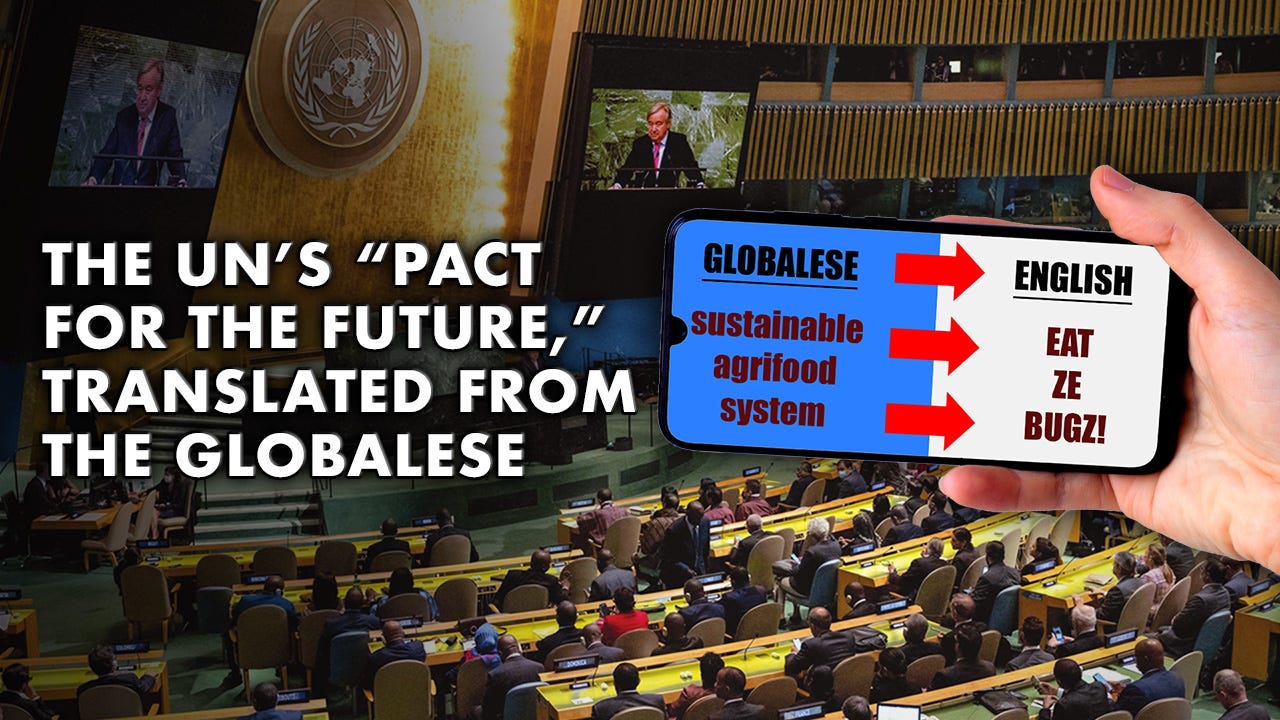
The UN's “Pact for the Future,” Translated From the Globalese


The Corbett Report
Sep 22, 2024


by James Corbett
corbettreport.com
September 22, 2024

Have you ever heard an establishment mouthpiece, a political puppet or a globalist gopher say something like: "Out of these troubled times, our fifth objective—a new world order—can emerge. A new era, freer from the threat of terror, stronger in the pursuit of justice, and more secure in the quest for peace"?

Or: "As our world becomes more complex, more uncertain, and more dangerous, we have an even greater responsibility to strengthen the multilateral system"?

Or: "The constructive contributions by INB relevant stakeholders were incredibly valuable. Together, we must sustain this progress during the coming months to realize our shared goal to forge a pandemic agreement that guides future global responses to pandemics"?

Yes, those are English words coming out of their mouths. But they're not speaking English. They're speaking Globalese.

You see, Globalese sounds like English and it employs English words, but it has its own dictionary, in which certain words have a completely different meaning. If you think you can understand terms like "sustainable development" or "international law" by looking them up in your standard English dictionary (or, even worse, Wikipedia), you're sadly mistaken.

Thankfully, after decades of listening to these globalists speak, I have a fairly good grasp of Globalese. Today I offer my services to help you translate the Globalese gobbledygook in the United Nation's new "Pact for the Future" into plain English.

Sorry, and you're welcome!

Friday, May 10, 2024

Finally, (some) US dioceses are taking the pope's climate message seriously


Editorial: Finally, (some) US dioceses are taking the pope's climate message seriously


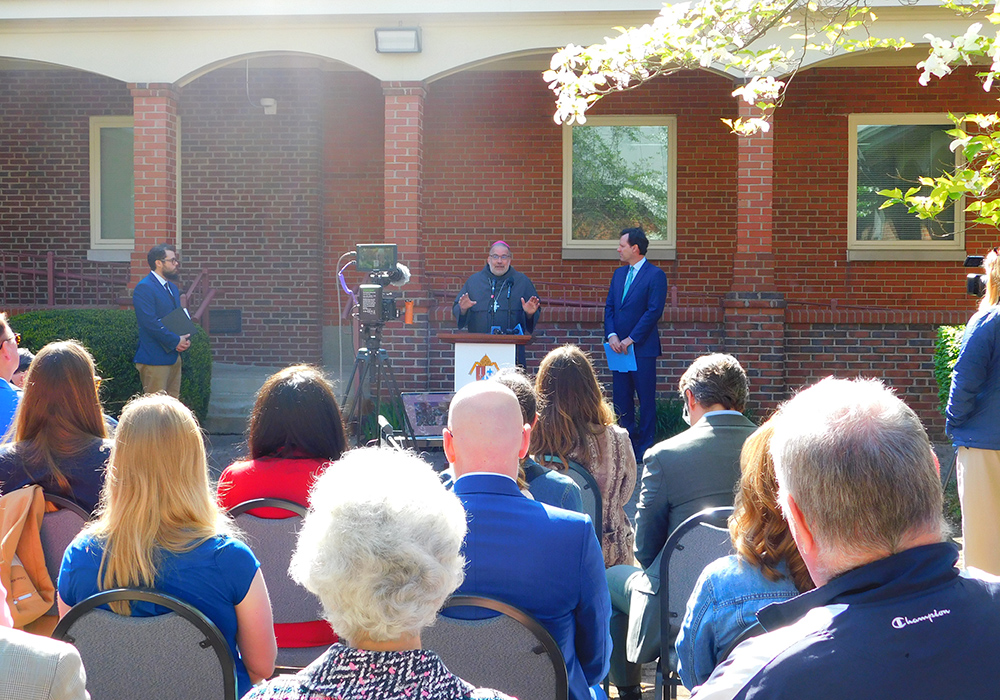
Bishop John Stowe of the Diocese of Lexington, Kentucky, at a press conference April 23 announces a net-zero initiative to make the diocese one of the first in the U.S. to adopt such a commitment. At right is Adam Edelen, founder and CEO of Edelen Renewables. At left is Joshua van Cleef, director of the diocese's peace and justice office. (Courtesy of Diocese of Lexington)


BY NCR EDITORIAL STAFF

View Author Profile

Join the Conversation

Send your thoughts to Letters to the Editor. Learn more

April 30, 2024

Nine years after the publication of Pope Francis' encyclical "Laudato Si', on Care for Our Common Home," four years following the announcement of the Vatican-led Laudato Si' Action Platform and six months since the release of Francis' apostolic exhortation "on the climate crisis," Laudate Deum, Catholics in the United States are beginning to see the type of clear, tangible and decisive climate action for which the pope has called.

Catholics in the U.S. are also starting to see glimpses of the type of leadership and community promoted by the global synod process that Francis has identified as the way forward for the church today.

The latest encouraging news came from the Diocese of Lexington, in the middle of Kentucky coal country, when on April 23 Bishop John Stowe announced his diocese has committed to achieving net-zero emissions by 2030. As reported for EarthBeat by NCR environment correspondent Brian Roewe, they've assembled an 11-member task force of diocesan officials and business leaders of major industries in the area, including Toyota and Lexmark.

It's a bold goal from an unlikely region of the country, but the apparent enthusiasm surrounding the initiative goes to show what might be possible when leadership prioritizes climate issues and engages the community in pursuing solutions together. Some might even call it an exercise in synodality, an organizational process that rests on the type of mutual listening and collaboration many people weren't sure the U.S. church hierarchy was capable of practicing. And yet, it's precisely the approach demanded by an integral ecology that recognizes the connectedness of all creation and every facet of a community with a focus on the common good.

Stowe has long been a champion of such themes of the Francis papacy and here again strives to show others how it can be done. He said during the April 23 press conference, "On this day we take this important step forward because our Holy Father, Pope Francis, has invited us to take seriously the encyclical, the teaching, that he gave us back in 2015. … Pope Francis has picked up on [the teachings of] Francis of Assisi as an example of how humanity needs to work together to cross over all kinds of lines of separation and division, culture and every other way that we find to separate ourselves, and work together to preserve, protect and allow to flourish our common home."


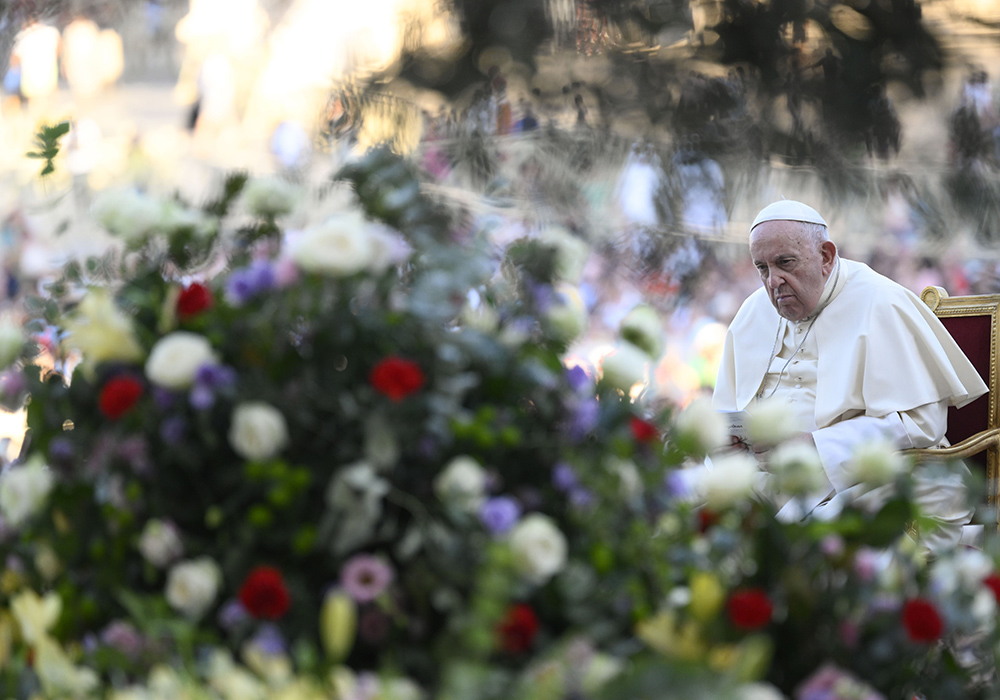
Pope Francis listens during an ecumenical prayer vigil before the assembly of the Synod of Bishops in St. Peter's Square at the Vatican Sept. 30, 2023. (CNS/Vatican Media)


Stowe also called attention to the urgency of the issue, and the thus far large lack of attention from the U.S. church, noting that the pope's tone in 2023's Laudate Deum "was almost scolding in nature because not much has happened since 2015. … He says we're losing time. We have to begin to act."

Of the Lexington Diocese's decision to pursue a net-zero future, he added, "We're grateful to say we're gonna do this, and reduce our carbon consumption, our carbon footprint, and bring ourselves to net-zero, in a pretty short amount of time, because we only have a pretty short amount of time to make an impact in a lasting way on this world."

Adam Edelen, CEO and founder of Lexington-based Edelen Renewables, who will be partnering with the diocese on the net-zero initiative, said, "I think the real soul-building stuff here is that we can provide a roadmap for others who want to do the same thing."

And despite reports earlier this year that even some U.S. bishops themselves feel the U.S. church is failing on the pope's climate goals (an opinion NCR has also often expressed within our editorial pages), it does seem that at least some diocesan leadership is ready to rise to the challenge and might be interested in that roadmap.

In January, the Archdiocese of Chicago, led by Cardinal Blase Cupich, began to power its parishes and schools with 100% renewable energy and the Diocese of San Diego, led by Cardinal Robert McElroy, was the first diocese in the U.S. to divest from fossil fuels.

These are measurable, long-term and large-scale systemic changes to how Catholic dioceses operate in the United States that reflect a holistic approach to creation care beyond the ministry office. These initiatives require cooperation with the offices of facilities, finance, maintenance, human resources and more. They require input from experts in sectors outside religion, including energy, economics, sustainability, labor and business.

"It's one thing to talk about doing something. It's another thing to put something out there that you can be held accountable to and have measured for you," said Stowe of the Diocese of Lexington's net-zero plans.

And while the first U.S. diocese to commit to net-zero emissions is incredibly important news, it's that invitation for accountability and the implementation of a structure to follow through with it that may signify an even more important shift for the church in the U.S. today.


Friday, February 02, 2024

Agenda 2030 and the Path Toward World Government


Is the UN fighting "the tyranny of poverty" or feeding the "tyranny of greed"?

February 1, 2024 by Jeffrey Ludwig 


Agenda 2030, the United Nation’s formal plan for the creation of a new world government, contains 91 sections. It begins with the following vacuous but revealing words:

“This Agenda is a plan of action for people, planet and prosperity. It also seeks to strengthen universal peace in larger freedom. We recognize that eradicating poverty in all its forms and dimensions, including extreme poverty, is the greatest global challenge and an indispensable requirement for sustainable development.”

This cliché-ridden pap begins the exposition of Agenda 2030, developed by the UN to introduce a world government devoid of the concepts of rights, liberty, life and happiness. Moreover, the Marxist ideal of meeting needs and the globalist ideal of “sustainability” combine as the two dominant themes of this “agenda” which should properly be called a “diabolical master plan.”

What about the need to obey the Ten Commandments to find favor with God? What about the need to love God with all your heart, mind, soul, and strength and to love your neighbor as yourself? What about the need to stop two-bit criminals in various corrupt nations from taking food out of the mouths of children?

In its introductory statement we see that Agenda 2030 “seeks to strengthen universal peace in larger freedom.” What does this impoverished and cliché-centered sentence even mean? A co-worker who had managed to get out of communist Romania years ago told me that it was horribly oppressive under communism because there was no freedom of choice regarding one’s job, housing, education, varieties of consumer products, etc. But, he added that one could walk through a park at night without any fear of being robbed.

If the ex-Romanian’s statement is true, and I believe it is, then it would seem that “peace” at least regarding crime was enhanced by less freedom, not more. Under Adolf Hitler, Germans experienced less of the destruction of their buying power (which is a partial measure of freedom) caused by inflation under Weimar, but at the expense of putting the country on a war footing and mobilizing to murder millions of Jews, Gypsies, Slavs, and political dissidents.

Agenda 2030 states its goal is to eradicate poverty and to also take on “extreme poverty.” The UN’s list of impoverished nations includes 45 countries, only one of which — Haiti — is not located in Africa or Asia. Their poverty is stated to be the “greatest global challenge.” But what if the greatest global challenge threatening humanity is actually the attempt by the UN, globalists, communists and Islamists to destroy Western Civilization — and the Judeo-Christian values that are the foundation of that civilization?

The tribalism and fragmentation of cultures in Asia and Africa is more extensive than in the West. That is partially why the global fanatics behind UN Agenda 2030 are trying to reproduce tribalism and disunity into the U.S. and European countries — with out-of-control immigration from Asia and Africa and, in the case of the U.S., from Central and South America.

Jesus Christ said “the poor you will always have with you.” (Mark 14: 7) This was not said to disparage the poor in any way, nor to take away from helping the poor, but to point out that following and serving God was not to be equated in a one-to-one way with helping the poor. There is more to the virtuous life than caring for the poor. Caring for the needs of the less fortunate is important but only part of a virtuous, Godly life. That is an eternal truth. The UN is, therefore, not only putting too much emphasis upon the Third World poor, but its agenda is corrupt and false and will not better the life of the poor — as it claims is its goal. Agenda 2030 stresses the “tyranny of poverty,” but what does it have to say about the corrupt leaders of those 45 countries who are practically stealing food and water out of the mouths of their own people? These tyrants are only too glad to come with delegations from their impoverished countries to enjoy the amenities of living in New York City with cocktail parties, hors d’oeuvres, modern toilets, refrigerators, and convenient public transportation and taxis. Is it possible that Agenda 2030 is actually just an expression of the greed and mendacity of less developed countries’ leaders who are seeking to feed their greed? Even more than they do already with the UN’s and the West’s largesse in providing “support” via the International Monetary Fund and the World Bank?

The world as a whole — along with the U.S. — is becoming increasingly authoritarian even as the authority of parents, teachers and criminal law is declining. In America, the reality of federalism is being superseded by the federal government monolith. If this is not corrected, then widespread violence and economic disintegration will intensify.

The United States is founded upon our Constitution. No other document or vision should be partnered with it. U.S. sovereignty must always be affirmed.

Jeffrey Ludwig is a prolific online article writer for more than 12 years. He has published four books available here, and has been a teacher at both the high school and university levels for decades. He also was editor of the International Trade Alert, a leading weekly export-import publication.


Saturday, February 11, 2023

U.N. Trying To Push Religious Communities To ‘Fully Comply’ With LGBTQ Agenda


U.N. Trying To Push Religious Communities To ‘Fully Comply’ With LGBTQ Agenda

February 7, 2023 NewsHound


The United Nations is releasing a report in June regarding the “perceived contradictions” between religious freedom and sexual orientation and gender identity, or SOGI, laws and is looking to push governments to “fully comply with their obligations under international human rights law to protect and empower LGBT+ persons,” according to a U.N. announcement.

The U.N. closed a call for LGBT+ and religious freedom organizations to submit input to the report earlier this month and is scheduled to introduce its findings at the 53rd Human Rights Council meeting in June, according to the announcement. The announcement explains that while there are “perceived contradictions” between the LGBT+ community and religious freedom, the report aims to find ways to “protect LGBT+ persons’ access to faith and spirituality” while also indicating that religious beliefs that would contradict this are not “justified” under the protection of human rights.

“Religious and spiritual narratives have also historically been used to promote, enable, and condone institutional and personal violence and discrimination against individuals based on sexual orientation or gender identity (real or presumed); repress sexual and gender diversity; and promote cis-gendered and heteronormative norms of sexual orientation and gender identity,” the announcement read. “These practices cannot be justified under the rubric of Freedom of Religious Beliefs, or indeed any other human right, to circumvent and defeat the rights of marginalized populations.”

Any organization that wished to comment for the inquiry was tasked with keeping their comments to a minimum of 2,500 words and providing answers to 11 questions on religious freedom and the rights of the LGBT+ community, according to the announcement. Respondents were asked whether or not any religious beliefs and LGBT+ rights were “mutually exclusive,” to point out policies that protect discriminatory religious practices and about the extent to which religious individuals have the right to a conscientious objection.

The U.N. didn’t disclose who commented ahead of the report’s release, but two organizations publicly published their comments for the inquiry, focusing on their concerns about the impact on the religious community. The Religious Freedom Institute and the Heritage Foundation’s comments worried that the special inquiry would “undermine” and result in the “politicization” of religious freedom as a human right.

We reached out to the Seventh-day Adventist PARL department, to see if they submitted concerns to the UN. No response yet.

Observations

The United Nations increasingly sees LGBTQ rights (agenda) and religious convictions as being in conflict. Their default position is the elevation of human rights (ie. LGBTQ) over biblical morality.

Reports like the one from the U.N. are based on a “narrative” that “religion is an oppressor and that religious freedom can be weaponized to harm others.”

This narrative is not only harmful because it could make people doubt the importance of religion in their own lives and their communities, but it’s also harmful because it will undermine important social protection.

Religion and religious freedom is a stabilizing presence, and for the cases where religion is being misused to oppress (ie Islam etc), the answer isn’t to shut down religion entirely.

The United Nations position is that religious and spiritual narratives have historically been used to promote discrimination against individuals based on sexual orientation or gender identity (real or presumed); repress sexual and gender diversity; and promote cisgendered and heteronormative norms of sexual orientation and gender identity. This has resulted in a variety of discriminatory normative constructions reinforced over time. In other words, the Bible premise of male and female uniting in marriage for life and producing children in that union is discriminatory towards sexual confusion and deviancy. Yes it is. Delightfully so.

The United Nations is three parts incompetent and one part corrupt, yet the GC PARL Department still trusts them.

Our PARL department director’s affinity for the United Nations could result in him being conflicted by such pro-LGBTQ initiatives from the UN. He is also deeply embedded in ecumenical initiatives — in our opinion, dangerously so.. He may have to choose whether to follow the Bible or the United Nations. It can’t be both.

****


Tuesday, January 10, 2023

How to avoid another world war


Magazine: 17 December 2022

From magazine issue:17 December 2022


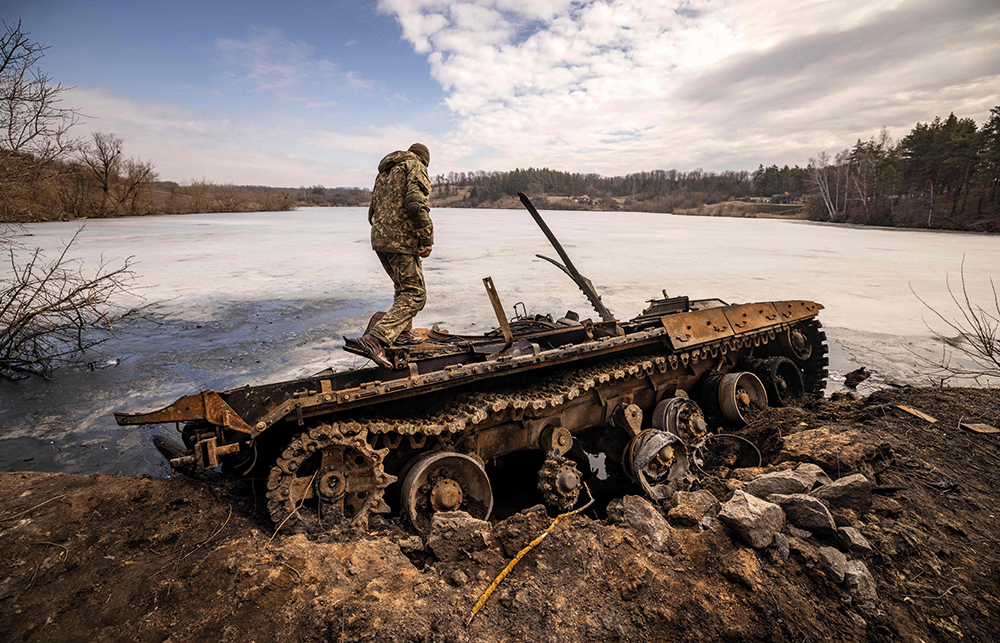
A Ukrainian soldier inspects the shell of a tank in the north-eastern city of Trostyanets [Fadel Senna, AFP via Getty Images]


The first world war was a kind of cultural suicide that destroyed Europe’s eminence. Europe’s leaders sleepwalked – in the phrase of historian Christopher Clark – into a conflict which none of them would have entered had they foreseen the world at war’s end in 1918. In the previous decades, they had expressed their rivalries by creating two sets of alliances whose strategies had become linked by their respective schedules for mobilisation. As a result, in 1914, the murder of the Austrian Crown Prince in Sarajevo, Bosnia by a Serb nationalist was allowed to escalate into a general war that began when Germany executed its all-purpose plan to defeat France by attacking neutral Belgium at the other end of Europe.

The nations of Europe, insufficiently familiar with how technology had enhanced their respective military forces, proceeded to inflict unprecedented devastation on one another. In August 1916, after two years of war and millions in casualties, the principal combatants in the West (Britain, France and Germany) began to explore prospects for ending the carnage. In the East, rivals Austria and Russia had extended comparable feelers. Because no conceivable compromise could justify the sacrifices already incurred and because no one wanted to convey an impression of weakness, the various leaders hesitated to initiate a formal peace process. Hence they sought American mediation. Explorations by Colonel Edward House, President Woodrow Wilson’s personal emissary, revealed that a peace based on the modified status quo ante was within reach. However, Wilson, while willing and eventually eager to undertake mediation, delayed until after the presidential election in November. By then the British Somme offensive and the German Verdun offensive had added another two million casualties.


Child refugees prepare to leave embattled Lviv by train [Getty Images]

Thursday, August 06, 2020

Europeans Are Waking Up to Government Covid Tyranny. Why Are We Still Asleep?


written by ron paul

monday august 3, 2020


Tens of thousands of Germans marched through Berlin on Saturday, proclaiming a “Day of Freedom” and demanding an end to government-mandated face masks and “social distancing.” The UK and Netherlands also saw large protests against their governments’ tyrannical actions in response to the coronavirus outbreak.

According to media accounts, the Berlin protesters held signs reading “We are being forced to wear a muzzle,” “Natural defense instead of vaccination,” and “We are making noise because you are stealing our freedom!”

Good for them!

The New York Times Tweeted that the masses of Berlin demonstrators were all “Nazis” and “conspiracy theorists.” Does the “paper of record” really want us to believe there were perhaps a million Nazis active in the streets of Berlin? Wouldn’t that be alarming?

The fact is, Europeans are realizing that their government-mandated lockdowns did little or nothing to protect them from the virus, while causing economic catastrophe and untold human suffering.

They likely looked around and noticed that Sweden, which never locked down its economy, rejected face masks, and kept its restaurants and other places of business open, did not fare any worse than the countries that have been turned into open air prisons for much of the year. In fact, Sweden had a lower death rate from the virus than strict lockdown states like the UK and France. No wonder people are starting to get angry.

Unfortunately, while the Europeans are waking up, Americans are still asleep as our freedoms continue to be trampled. While Europeans demand an end to government tyranny, here we see states with minuscule new deaths returning to lockdown. It is as if all the wannabe tyrants from mayors to governors are finally realizing their secret dreams of ruling by decree. Their dreams are our nightmares!

New Jersey Governor Phil Murphy put citizens “on notice” that he will lock the state back down if people dare to go outside without a face mask or even to have guests inside their own homes! What kind of politician puts his own constituents “on notice”?

It is not as if the “experts” are even looking into treatments for the viral infection. Doctors who report their own successful experience treating Covid patients with hydroxychloroquine, for example, are ridiculed, censored, and even fired from their jobs. The rush to silence “America’s Frontline Doctors” last week and to disappear their video down the memory hole should terrify anybody who still believes in free speech.

No, they say, we must keep locked down and masked until we have a vaccine. The US government is dumping billions into a vaccine that may be less than 60 percent effective to prevent a virus that has something like a 99.8 percent survival rate. What kind of math is that?

How many may be harmed more by the vaccine than helped? We’ll probably never know because the US government has just granted big pharma immunity from liability claims if the vaccine produces damaging side effects.

They keep moving the goal posts to keep us terrified and isolated. First it was body counts and then “cases.” The numbers have been so wildly off that it’s hard to trust any reporting. People are getting angry. They are confused. They are facing an economic depression of historic proportions. But worst of all, they are watching as Leviathan government snatches every last bit of freedom.

Three cheers for the Europeans! Let’s hope America wakes up soon!

-------------------------------------------

Copyright © 2020 by RonPaul Institute. Permission to reprint in whole or in part is gladly granted, provided full credit and a live link are given.


Saturday, July 27, 2019

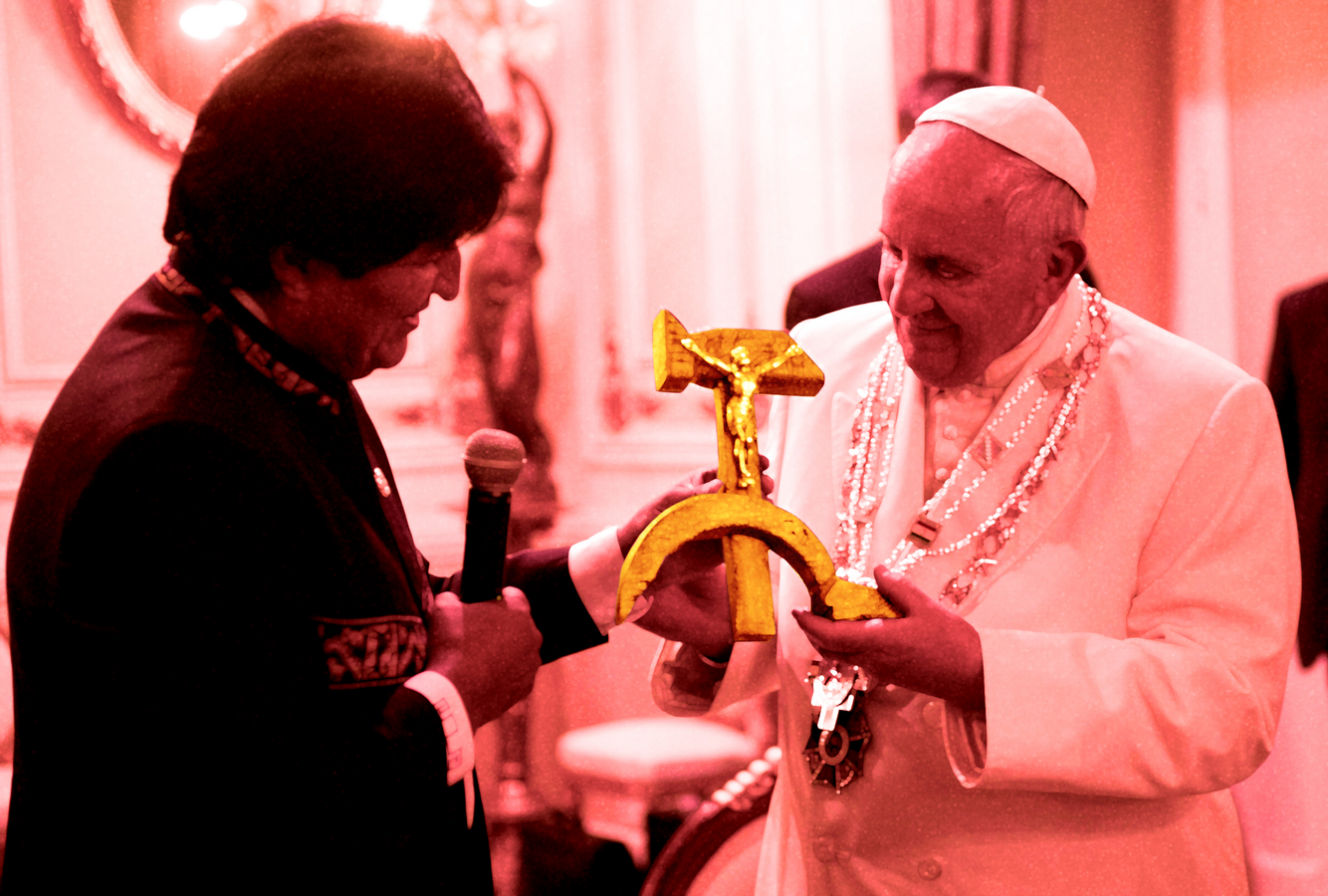
The Catholic Case for Communism


Dean Dettloff

July 23, 2019


“It is when the Communists are good that they are dangerous.”

That is how Dorothy Day begins an article in America, published just before the launch of the Catholic Worker on May Day in 1933. In contrast to the reactions of many Catholics of the time, Day painted a sympathetic, if critical view of the communists she encountered in Depression-era New York City. Her deep personalism allowed her to see the human stories through the ideological struggle; and yet she concluded that Catholicism and communism were not only incompatible, but mutual threats. A whole Cold War has passed since her reflection, and a few clarifying notes are now worthwhile.

Communists are attracted to communism by their goodness, Day argued, that unerasable quality of the good that can be found within and outside the church alike, woven into our very nature. It might have been an easier thing to say back in 1933, when American communists were well known to the general public for putting their lives on the line to support striking workers, but it was also the kind of thing that could land you in a lot of trouble, not least in the Catholic Church.

By affirming the goodness that drives so many communists then and now, Day aimed to soften the perceptions of Catholics who were more comfortable with villainous caricatures of the communists of their era than with more challenging depictions of them as laborers for peace and economic justice. Most people who join communist parties and movements, Day rightly noted, are motivated not by some deep hatred toward God or frothing anti-theism, but by an aspiration for a world liberated from a political economy that demands vast exploitation of the many for the comfort of a few.

[Matt Malone, S.J.: Why we published an essay sympathetic to communism]

But in her attempt to create sympathy for the people attracted to communism and to overcome a knee-jerk prejudice against them, Day needlessly perpetuated two other prejudices against communism. First, she said that under all the goodness that draws people to communism, the movement is, in the final analysis, a program “with the distinct view of tearing down the church.”

Then, talking about a young communist in her neighborhood who was killed after being struck by a brick thrown by a Trotskyite, she concluded that young people who follow the goodness in their hearts that may lead them to communism are not fully aware of what it is they are participating in—even at the risk of their lives. In other words, we should hate the communism but love the communist.

Though Day’s sympathetic criticism of communism is in many ways commendable, nearly a century of history shows there is much more to the story than these two judgments suggest. Communist political movements the world over have been full of unexpected characters, strange developments and more complicated motivations than a desire to undo the church; and even through the challenges of the 20th century, Catholics and communists have found natural reasons to offer one another a sign of peace.