Showing posts with label Sovereingty. Show all posts

Thursday, May 07, 2026

Trump and the Supreme Court are undermining democracy. Here's what voters can do now.


Trump and the Supreme Court are undermining democracy. Here's what voters can do now.


Opinion
Guest Voices


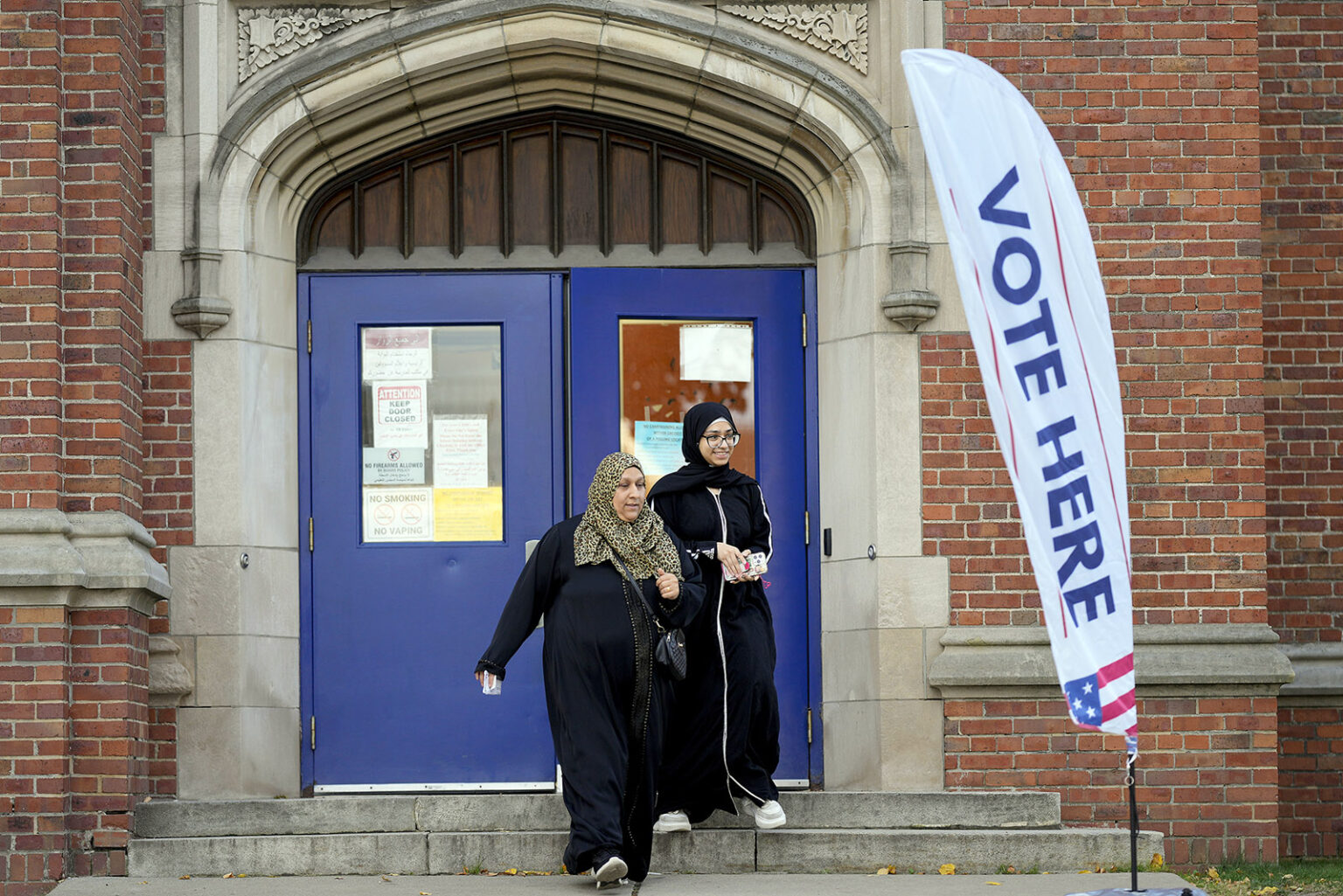
Voters depart a polling place at McDonald Elementary School, Nov. 5, 2024, in Dearborn, Mich. (AP/Charlie Neibergall)


Thomas Reese

View Author Profile

May 6, 2026

President Donald Trump and the U.S. Supreme Court have destroyed decades of progress in American democracy by gutting the Voting Rights Act last week and instituting a gerrymandering war to win more elections in red states.

The Democrats have responded by gerrymandering blue states. The result will be fewer Black candidates elected to office and fewer competitive elections where the voters have a real choice between the parties.

How did this happen?

Trump knows he and his supporters are going to be in trouble in the November midterm election. The party controlling the White House traditionally loses seats during midterm elections. These losses are greater if the president is unpopular, as is Trump currently. But the losses can only occur in districts that are competitive. It's very unlikely districts that are overwhelmingly Republican will go blue.

So now, Trump and other Republicans are trying to protect their majority in the House of Representatives by asking Republican officials in red states like Texas to redraw the House district lines to find him additional safe Republican seats.

The process of redrawing electoral district lines to favor one party is called gerrymandering, after Massachusetts Gov. Elbridge Gerry in 1812 backed a redistricting plan favoring his own party, the Democrat-Republicans. One of the districts looked like a salamander, so the press combined the governor's name with salamander to produce the name "gerrymander."

In response to Trump's request for five additional seats in Texas, Gov. Greg Abbott pushed the redistricting plan through a special session of the state legislature. But then, voters in California and Virginia adopted redistricting plans that give Democrats additional House seats.

Florida Republican Gov. Ron DeSantis is now trying to get additional House seats for Republicans even though the state constitution forbids partisan gerrymandering. Other Southern states are moving in the same direction.

The U.S. Supreme Court ruled in Rucho v. Common Cause in 2019 that partisan gerrymandering is legal under the U.S. Constitution. Whether it is legal under state law depends on a particular state's constitution and laws.

Legal or not, gerrymandering is bad for democracy. It means that in the general election, the voters have no choice in most districts because one party has an overwhelming majority so that the other party does not have a chance.

In addition, even if a state is evenly split across parties, gerrymandering can give a large majority of the seats to the party that controls redistricting. As the League of Women Voters and others have noted, gerrymandering "allows officials to choose their voters rather than voters choosing who represents them."

Tuesday, October 25, 2011

Mgr. Vegliò: “We must guarantee everyone a dignified life”


10/25/2011

Refugees


Wth this message, Benedict XVI referred to the challenge that lies ahead for the new evangelisation: warmth and meetings between people


Alessandro Speciale
vatican city

Faced with a world that is becoming less and less homogenous and increasingly complex as a result of migration, the Church is called to “review its methods, its ways of expression and its language,” taking into account this new reality.

This is a challenge which Antonio Maria Vegliò, President of the Pontifical Council of Pastoral Care for Migrants and Itinerants, is acutely aware of. The Archbishop presented the Pope’s message today, ahead of the World Day of Migrants and Refugees, which will be celebrated on 15 January 2012.

“It is obvious – Mgr. Vegliò explained – that the mix of nationalities and religions is growing exponentially. In Countries with Ancient Christian history, we can see the penetration of secularisation and increasing insensitivity to the Christian faith, whilst in other Countries with non Christian majorities, there is an emerging influx of Christianity.”

At the same time, all Countries are “teeming with new sectarian movements,” some of which aim to “eliminate Christianity’s social and symbolic visibility,” as if God and the Church did not exist.”

It is not just the developed Western Countries that are faced with the challenge of migration. According to the International Organisation for Migration’s (IOM) World Migration Report 2010, in recent years, the United States have been the Country with the greatest influx of migrants, followed by Russia, then Germany, then Saudi Arabia.

Most importantly, it is mainly developing Countries that become responsible for refugees and asylum seekers. This is according to the Secretary of the Pontifical Council, Mgr. Joseph Kalathiparambil.

The report by the UN High Commissioner for Refugees stated that “4/5 of the world’s refugees are taken in by developing Countries, in both absolute terms and in proportion to their economic systems.” Pakistan is the Country with the greatest number of refugees (1.900.000), followed by Iran (1.000.000) and Syria (1 million).

Mgr Kalathiparambil went also said “this is happening at a time characterised by growing hostility towards refugees in a number of industrialised Countries.”

Then there is another category of migrants whom the Pope focused on in his message: students studying abroad. These “exceed three million and their number is expected to rise to 7 million by 2025,” the Under Secretary to the Pontifical Council, Fr. Gabriele F. Bentoglio said.

“Over 50% of the total influx of international students registered in 2008 came from about twenty different Countries, with most coming from China, Poland, India and Mexico,” he added.

Between 30 November and 3 December, the Pontifical Council for the Pastoral Care of Migrants and Itinerants, promoted the “Third World Congress for the Pastoral Care of Foreign Students” in Rome.

There will be 123 delegates (24 Bishops, 38 priests, 9 clerics, 26 lay pastoral assistants and 26 university students), from Europe (42 delegates from 14 Countries), from Africa (28 from 9 Countries), from America (20 from 7 Countries), from Asia (14 from 5 Countries) and 3 from Australia, as well as some representatives from religious Institutes, lay associations and international and regional organisations.

This special attention to “migrant” students - Fr. Bentoglio explained – comes as a result of THE Pope’s request for young university students to meet “genuine Gospel witnesses and example figures of Christian life,” who could encourage them to “play active roles in the new evangelisation.”


Friday, October 21, 2011

Jesuit Discusses New Responsibilities of South Sudan

In August, Jesuit Father David Hollenbach, conducted a workshop for leaders of the Catholic community of South Sudan in the national capital of Juba and addressed South Sudan’s Parliament on the role of moral values in shaping the institutions of the world newest country. In his article for America Magazine about the experience, Fr. Hollenbach reflected on the sizable Catholic population in South Sudan, and as the civil war lasted for such a long time, it weakened the social life with the Church left as one of the few functioning bodies in their society.

“The Catholic community in South Sudan especially shares the responsibility to help shape the life of the new country. Because of this important role, Catholic Relief Services and an association of women’s and men’s religious orders named Solidarity with South Sudan invited me to conduct a week-long workshop in August for church leaders. I was asked to speak about how the Catholic understanding of social justice and peace could contribute to the development of the new country. It was a humbling privilege. What follows sketches some of the suggestions I made, moving from the foundational principle of Catholic social thought to several more practical recommendations…”

1. The protection of the human dignity of every person, which requires active participation in the life of society, is the core responsibility in all social interactions, and protection of the most basic requirements of human dignity is the particular responsibility of the new government of South Sudan.

2. The people of South Sudan should be helped to become active citizens through civic education that teaches them how to work together for the common good of all.

3. Citizens should hold government officials accountable for using the power bestowed on them to serve the common good of all, and the capacity of citizens to hold officials accountable should be strengthened.

4. Every person is to be treated with reverence and respect, independent of ethnicity, race, or religion; tribalism is a serious threat to attaining the justice and peace that independence promises and must be resisted.

5. National unity depends on justice in the distribution of land.

6. National unity depends on justice in the distribution of the proceeds from the extraction of natural resources such as oil.

Click below to listen to an interview with Fr. Hollenbach on Radio Bakhita, the leading FM station in Juba, South Sudan.


Source


Monday, April 25, 2011

Agenda 21 is in your community


By Henry Lamb
web posted April 25, 2011

To listen click here

Anyone who reads Chapter 7 of Agenda 21, and then reads their local comprehensive land use plan will immediately recognize that most of the provisions of the local land use plan come directly from Agenda 21. More often than not, the elected officials who adopt these plans have never read Agenda 21, and many have never even heard of the U.N. document, signed by President George H. W. Bush in 1992.

The facilitators and professional planners have heard about Agenda 21, but frequently claim that the plan they are working on has nothing to do with the U.N. or Agenda 21. Don’t believe it for one minute.

Gary Lawrence, former Director of the Center for Sustainable Communities at the University of Washington, and Chief Planner for the City of Seattle, told an audience in London that:

” In the case of the U.S., our local authorities are engaged in planning processes consistent with LA21 [Local Agenda 21] but there is little interest in using the LA21 brand…. So, we call our processes something else, such as comprehensive planning, growth management or smart growth.”

In community after community, the same scenario is repeated. The federal government, through the EPA or the Department of Commerce or the Department of Interior, offers special grants to communities for the purpose of developing a vision for a greener future, and a plan to convert the vision into reality.

Typically, the local government will find a private consultant to “facilitate” the process. The facilitator will identify a local “steering committee,” carefully chosen from people who represent various segments of the community, all of whom are known in advance to be sympathetic to the goals of Agenda 21.

Typically, the advisory group will meet in private to lay out the framework for the process and the goals for the finished product. When this is achieved, public meetings are scheduled to give the appearance of public input and ownership. Rarely are these meetings ever publicized adequately to attract the private property owners who are most directly affected. Care is taken to see that members of local environmental organizations and social justice organizations constitute the majority of attendees.

These public meetings are said to be “the visioning process.” The procedures vary slightly from community to community, depending upon the facilitator. Remarkably, however, the “vision” in every community contains essentially the same elements: restricted auto traffic; bike trails; walkable neighborhoods; integrated housing; high density urban boundary zones; conservation areas; green belts; and much more - directly from Agenda 21.

Once the vision document is complete, the next step is to convert it into a Comprehensive land use plan, adopted by local elected officials in the form of an ordinance that is enforceable with fines and other penalties. The plans are necessarily so long and complex that few people ever read them, other than the professional planners and enforcement officials. Many, if not most, of these comprehensive plans incorporate many, if not most, of the codes developed by the International Codes Council. Here are some of the codes:

International Building Code
International Residential Code
International Fire Code
International Energy Conservation Code
International Private Sewage Disposal Code
International Mechanical Code
International Fuel Gas Code
International Wildland-Urban Interface Code
ICC Performance Code
International Existing Building Code
International Property Maintenance Code
International Zoning Code
International Green Construction Code
Here’s a sample of what to expect. From Chapter 2 of the International Green Construction Code:

CONSERVATION AREA. Land designated by the jurisdiction or by state or federal government, as a result of a community planning process, as appropriate for conservation from development because of the land possessing natural values important to the community including, but not limited to wildlife habitat, forest or other significant vegetation, steep slopes, ground water recharge area, riparian corridor or wetland.

DAYLIGHT SATURATION. The percentage of daytime hours throughout the year when not less than 28 foot-candles (300 lux) of natural light is provided at a height of 30 inches (762 mm) above the floor.

DEMAND RESPONSE, AUTOMATED (AUTO-DR). Fully Automated Demand Response initiated by a signal from a utility or other appropriate entity, providing fully-automated connectivity to customer energy end-use control strategies.

This is a tiny sample of the rules and regulations buried deep within the innocent-sounding comprehensive land use plans adopted by unaware local officials to achieve the politically-correct label of “sustainable community.”

These plans should be rejected, not simply because they arise from the United Nations, but because they infringe personal freedom and private property rights. The implementation of these comprehensive land use plans effectively transfers to government the right to dictate to individuals what kind of materials must be used in constructing their privately owned homes. The Auto-DR provision defined above actually gives government the right to dictate the temperature in your home, and the ability to enforce it.

This is madness! This is sustainable development! This is Agenda 21!

Local Tea Parties, 9.12 groups, and property rights organizations must learn about Agenda21, and exactly what their local visioning statements and local comprehensive land use plans contain. Many groups are forming study committees to analyze their local plans by section, and then report back to the entire group. This way, not every individual has to read the entire plan.

If this rush to oblivion is going to be stopped, it is up to private citizens to get informed, get involved, and help get into office only those people who truly respect the Constitution and the individual freedom it is supposed to guarantee.

Henry Lamb is the author of "The Rise of Global Governance," Chairman of Sovereignty International , and founder of the Environmental Conservation Organization (ECO) and Freedom21, Inc.


.