Showing posts with label Google. Show all posts

Friday, September 25, 2026

Did Celtic Christians Keep the 7th Day Sabbath?

I Google(d) the following question:  Did Celtic Christians Keep the 7th Day Sabbath?

And Google AI (Super Intelligence) responded:

AI Overview

Yes, historical records indicate that early Celtic Christians in Ireland and Scotland observed Saturday as a day of rest.  Facebook 


Historical Evidence of Celtic Sabbath-Keeping

• The Day of Rest: Several 19th- and 20th-century historians note that early Celtic monastic communities abstained from labor on Saturday, treating it in a sabbatical manner.   Whole Gospel Ministries

• Queen Margaret's Influence: In the 11th century, Queen Margaret of Scotland worked to reform the Scottish church and opposed the local custom where people rested on Saturday ("the Sabbath") and performed their ordinary work on Sunday ("the Lord's day"). https://www.facebook.com/reel/1377568557646563

• aPrimary Sources: Historians like W. T. Skene in Celtic Scotland and A. C. Flick in The Rise of the Medieval Church recorded that the Celts kept Saturday as a day of rest, while also holding special religious services on Sunday. Facebook +1 https://www.facebook.com/AmazingFacts/posts/st-patrick-and-the-sabbathst-patrick-worshipped-god-on-the-seventh-day-sabbath-i/1357720269722405/

---

Thursday, April 30, 2026

Silicone Valley + (Video)


Search for

Should a governor know the difference between SILICONE & Silicon? 

AI Overview 

Yes, a governor should know the difference between silicon and silicone. While they sound similar, they are entirely different materials used in distinct industries, and confusing them could lead to misunderstandings regarding economic development, manufacturing, and environmental policy.

 
"I don't want SILICONE Valley deciding how artificial intelligence and other new technologies will impact our small towns in our working families."...

Tim Walz
>---<

Tim Walz said SILICONE Valley!

You’re absolutely right—in his April 28, 2026, State of the State address, Governor Tim Walz did indeed say "Silicone Valley" when referring to the tech hub.
 
CBS News +2

While the official transcript from MN.gov and local news outlets typically correct it to "Silicon," viewers and political commentators quickly picked up on the pronunciation of the extra "e" during the live broadcast.

CBS News +1

Context of the Slip
The gaffe occurred during a segment where Walz was taking a swipe at the "technocrat" elite, specifically naming Peter Thiel, Sam Altman, and JD Vance. He was arguing that these figures shouldn't be the ones deciding the future of Artificial Intelligence for "working families" in small towns.

Bring Me The News

This isn't the first time his pronunciation has sparked a debate:The "Walz" vs. "Waltz" debate: His own last name is often mispronounced as "Waltz" (the dance), though he and his team at MPR News have clarified it is pronounced like "walls."

Heartland Branding: Supporters often view these slips as part of his "Midwestern dad" persona, while critics, such as those featured on Sky News Australia, have used them to question his polish on the national stage.
 
Crikey +4


AI can make mistakes, so double-check responses

<---->

Silicon is a naturally occurring, hard, semiconducting element (Si) used in electronics, whereas silicone is a synthetic, flexible, heat-resistant polymer made of silicon, oxygen, carbon, and hydrogen used in sealants and medical products. Think "silicon" for computer chips and "silicone" for rubbery, man-made materials. 

Live Science
 +4


Wednesday, January 07, 2026

Is it a Coincidence, Serendipity, Synchronicity, or Fate?


I have followed the recent escalation of news coverage of Day-Care Fraud in Minnesota which reportedly reaches $9 Billion. Meanwhile, Governor Tim Walz of Minnesota, who was also Kamala Harris' VP running partner in the 2024 Campaign, decided to discontinue his reelection campaign on Monday 1/5/2026. Today on Capitol Hill, Congress held a Hearing regarding the purported gargantuan social services fraud in Minnesota, then as the hearing was under way in Minneapolis an ICE Officer shot a woman who tried to run him over with her vehicle when ICE Agents were conducting targeted immigration enforcement operations. 

So, I was curious on how these events could all occur almost concurrently, and I decided to GOOGLE this question: 
Is it a coincidence that Tim Walz dropped out of his governor reelection race, there was a hearing of the fraud in Minnesota, and ICE shoots a woman in Minneapolis? 
Google has its AI system answer queries before it gives you other responses to your question.

Here's what AI replied:

AI Overview

Tim Walz dropped out of the Minnesota gubernatorial race on January 5, 2026, due to intense scrutiny over a massive, multi-billion dollar social services fraud scandal, but there is no evidence in news reports to suggest a coordinated link between these events and an unrelated, separate incident where an ICE officer shot a woman.
 
Here is a breakdown of the events:
  • Tim Walz dropping out of the race: On January 5, 2026, Governor Tim Walz announced he would not seek a third term as governor of Minnesota. In his statement, he cited the intense political environment surrounding the ongoing fraud investigation as a distraction from his work as governor. His decision followed a viral video by an independent journalist and a federal government decision to freeze childcare funding to the state, which put significant pressure on his administration.
  • Hearing of the fraud in Minnesota: Federal and state investigations into the "Feeding Our Future" and other social services fraud cases, which allegedly total billions in misused federal funds, have been ongoing for some time, with dozens of people charged. A U.S. House Oversight Committee hearing regarding the fraud was scheduled for Wednesday, January 7, 2026, the same week Walz dropped out.
  • ICE shoots a woman: A separate and unrelated incident occurred on January 7, 2026, in Minneapolis, where an ICE officer shot and killed a woman who allegedly tried to run them over with her vehicle during an enforcement action. This incident sparked protests and a statement from Minneapolis Mayor Jacob Frey, but news reports do not connect it to the ongoing fraud investigations or Walz's political decisions.
The convergence of these events in the news cycle is the result of separate incidents happening around the same time in Minnesota. News coverage indicates that the fraud scandal was the direct cause of Walz's decision to exit the race, while the shooting was a distinct law enforcement incident. There are no credible reports suggesting they are connected as part of a larger, coordinated event.


Image (Courtesy) Fox News

Tuesday, December 16, 2025

What happened to Google AI Mode?

 December 16, 2025


Today, when I tried looking up something on Google search engine, I found the search field like this:

Well, for quite a while Google was inserting unwarranted AI results and its search field looked like this:


Where did the AI Mode go, and who asked for it in the first place?


Saturday, July 05, 2025

Were SDA Churches used as COVID19 Vaccination Sites?


AI Overview

Yes, Seventh-day Adventist (SDA) churches have been used as COVID-19 vaccination sites.
For example, the North American Division of Seventh-day Adventists (NAD) partnered with a local hospital to offer two COVID-19 vaccine clinics at their building. These events successfully vaccinated a significant number of community members, including adults and children, and booster shots were provided.
 
The SDA Church, in general, encourages responsible immunization and vaccination as part of its emphasis on health and well-being. They consider vaccination programs important for the safety and health of their members and the wider community, viewing it as a public health issue rather than a matter of religious liberty. While they acknowledge individual choices regarding vaccination, the church does not officially support religious exemptions to vaccine mandates.

----------------------------------------0----------------------------------------

NAD Partners with Local Hospital to Offer Two COVID-19 Vaccine Clinics


Working with Howard County General Hospital, the North American Division hosted two clinics — also giving away fresh produce to 100 families — and plans to do it again in January 2022.

December 21, 2021 | Columbia, Md. | Kimberly Luste Maran


A vaccination is prepared by during the NAD's Dec. 12, 2021, clinic held at the divison's headquarters in Columbia, Maryland. Photo/screenshot by Pieter Damsteegt

On Dec. 12, 2021, the sun beamed down on a crisp afternoon as a stream of personal vehicles pulled into the North American Division headquarters’ parking lot. Once parked, people of all ages were welcomed and directed inside to the second COVID-19 vaccine clinic held this fall at the headquarters. The clinic, hosted by the NAD Public Affairs and Religious Liberty department in partnership with Howard County General Hospital, made use of the Charles E. Bradford Conference Center on the first floor of the building. For some, this was a return for a second shot after getting their first vaccination on Nov. 21. For others, this was either a booster or first time vaccination.

“On behalf of the Public Affairs and Religious Liberty department, a heartfelt thank you to our NAD family for making the vaccination clinics and produce giveaway a tremendous success,” said organizer Melissa Reid, a PARL associate director.


An elderly patient gets ready to receive a COVID-19 vaccination at the North American Division headquarters, where the NAD hosted a clinic in partnership with Howard County General Hospital, Johns Hopkins Health System COVID-19 Mobile Vaccine Team. Photo/screenshot by Pieter Damsteegt

“Community events such as this one are key to helping us vaccinate as many people as possible, allowing us to take one more step towards ending the pandemic,” said Ben Bigelow, director of the COVID-19 Mobile Vaccine Team, Johns Hopkins Health System. “This event was a tremendous success and we are grateful to NAD for allowing us to use their building.”

During the first clinic a total of 255 community members received vaccinations (six first and second doses for adults; 131 third/booster doses; and 118 pediatric doses). In the first half-hour of the event, 75 people were served. We were also able to distribute a pallet of yams, Irish potatoes, squash, onions, and bananas to 100 families in under 90 minutes.

The number of people seen during the second clinic on Dec. 12 grew to a total of 415 (17 first and second adult doses; 228 third/booster dose; and 170 pediatric doses). Bags of produce were again distributed to 100 families.

As members of the community left the NAD, many expressed their thanks, pleased with the smooth and organized vaccination process. One patient, who declined to share his name, said he had been hospitalized in January 2021 with COVID-19 and was now getting boosted. “This is a lovely building and a really good location,” he shared. “I’m glad I found out the clinic was happening here. It means a lot that a church organization would open their doors for the community.”


Two personnel from the Johns Hopkins Health System in Howard County, Maryland, direct visitors to the NAD COVID-19 vaccination clinic on where to go. Photo by Brian Patrick Tagalog

Felicia Ward, another area resident agreed, saying, “I live here in Columbia so I came here because it was convenient for us. And it was easy for us to get an appointment.”

Ward, who came with another family member, added, “I feel it's important for us to get the vaccine to help slow this down and get back to really what life is normally about.”

Mandy Leblanc, from Highland, brought her two children, ages 7 and 9, for their vaccination. “I think the clinic was great. It was quick. It was easy. It was good. The kids were a little a little scared, but it's important to help keep them safe and healthy and doing the things that they love.”

Leblanc plans to follow up next month with the second shot. “I think it's great to be able to partner with the community and help build that relationship. Will see you guys [for] the next one,” she finished.

In addition to Howard County hospital workers and volunteers, NAD staff members also participated, including assistance with set up and greeting visitors.

“We give special thanks to our incredible NAD administration, facility services team, custodial staff, security team, volunteer greeters and local church members who facilitated the produce giveaway,” said Reid. “We even had help by some of our friendly staff kids! We are especially grateful to our ministry partners, specifically Adventist Community Services, Publishing Ministries, and Stewardship, for providing disposable bags, sharing literature, and children’s activity pages.

This is not the first time the NAD has held a health clinic at its headquarters. The division has opened its doors to host health and wellness screenings, and has offered a place for people to receive flu shots. And with the help of volunteers, they’ve also distributed food to area residents at least twice.

“Volunteers responded positively, it really turned into friendship evangelism,” Reid shared about one of the previous produce giveaway events. “God showed us that He doesn’t always work in the same way, He just wants us to be consistent when it comes to our willingness to supply the needs of others.”

“Thank you again for your partnership in ministry and for helping us reflect Christ’s message of hope and wholeness to our Howard County neighbors,” added Reid, regarding health partners and volunteers, as she looks forward to the next vaccination clinic on January 9, 2022.

“We are excited to be returning for a third clinic at the NAD,” Bigelow said. “We have also partnered with individual Adventist churches in the area and we know that the partnerships we build currently will serve us after the pandemic as we continue to promote healthy practices in the community.”


Saturday, June 14, 2025

No King, no Pope


AI Overview

The phrase "no king, no pope" expresses a desire to be free from both royal and papal authority. It's a slogan that reflects a desire for autonomy and self-governance, rejecting the hierarchical structures of monarchy and the Catholic Church. This sentiment can be found in various historical and political contexts where people have sought to break away from established powers.

Saturday, June 22, 2019

Google Chrome has become surveillance software. It’s time to switch.


Technology

Review: Google Chrome has become surveillance software. It’s time to switch. 

Our latest privacy experiment found Chrome ushered more than 11,000 tracker cookies into our browser — in a single week. Here’s why Firefox is better.


By Washington Post | wapo@dfmdev.com |
PUBLISHED: June 21, 2019 at 11:56 am | UPDATED: June 22, 2019 at 9:14 am


By Geoffrey A. Fowler | The Washington Post Columnist

You open your browser to look at the web. Do you know who is looking back at you?

Over a recent week of web surfing, I peered under the hood of Google Chrome and found it brought along a few thousand friends. Shopping, news and even government sites quietly tagged my browser to let ad and data companies ride shotgun while I clicked around the web.

This was made possible by the web’s biggest snoop of all: Google. Seen from the inside, its Chrome browser looks a lot like surveillance software.

Lately I’ve been investigating the secret life of my data, running experiments to see what technology really is up to under the cover of privacy policies that nobody reads. It turns out, having the world’s biggest advertising company make the most-popular web browser was about as smart as letting kids run a candy shop.

It made me decide to ditch Chrome for a new version of nonprofit Mozilla’s Firefox, which has default privacy protections. Switching involved less inconvenience than you might imagine.

My tests of Chrome versus Firefox unearthed a personal data caper of absurd proportions. In a week of web surfing on my desktop, I discovered 11,189 requests for tracker “cookies” that Chrome would have ushered right onto my computer, but were automatically blocked by Firefox. These little files are the hooks that data firms, including Google itself, use to follow what websites you visit so they can build profiles of your interests, income and personality.

Chrome welcomed trackers even at websites you’d think would be private. I watched Aetna and the Federal Student Aid website set cookies for Facebook and Google. They surreptitiously told the data giants every time I pulled up the insurance and loan service’s log-in pages.

And that’s not the half of it.

Look in the upper right corner of your Chrome browser. See a picture or a name in the circle? If so, you’re logged in to the browser, and Google might be tapping into your web activity to target ads. Don’t recall signing in? I didn’t, either. Chrome recently started doing that automatically when you use Gmail. 

Tuesday, October 23, 2018

'City of surveillance': privacy expert quits Toronto's smart-city project


Wired neighborhood planned by Google sister company has raised questions over data protection


Gabrielle Canon
@GabrielleCanon

Tue 23 Oct 2018 17.36 EDT First published on Tue 23 Oct 2018 16.40 EDT


Google’s sister company Sidewalk Labs has promised a ‘thriving hub for innovation’. Photograph: Roberto Machado Noa/LightRocket via Getty Images


When it was announced last year that a district in Toronto would be handed over to a company hoping to build a model for new tech-driven smart city, critics were quick to voice concerns.

Despite Justin Trudeau’s exclamation that, through a partnership with Google’s sister company Sidewalk Labs, the waterfront neighborhood could help turn the area into a “thriving hub for innovation”, questions immediately arose over how the new wired town would collect and protect data.

A year into the project, those questions have resurfaced following the resignation of a privacy expert, Dr Ann Cavoukian, who claimed she left her consulting role on the initiative to “send a strong statement” about the data privacy issues the project still faces.

“I imagined us creating a Smart City of Privacy, as opposed to a Smart City of Surveillance,” she wrote in her resignation letter.

After initially being told that the data collected would be wiped and unidentifiable, Cavoukian told reporters she learned during a meeting last week that third parties could access identifiable information gathered in the district.

“When I heard that, I said: ‘I’m sorry. I can’t support this,’” she told the Global News. “I have to resign because you committed to embedding privacy by design into every aspect of your operation.”

Tuesday, October 09, 2018

Could we see the end of Google?


October 8, 2018


According to futurist George Gilder the era of Google could be coming to an end. In his recent book “Life after Google”, Gilder explains why Silicon Valley is suffering a nervous breakdown and what to expect as the post-Google age dawns.

Is it worthwhile paying attention to what somebody like George Gilder says? Putting aside the fact that nobody can accurately predict the future on a consistent basis (as has been shown by Gilder’s track record), it is possible to make informed statements about the future based on sound logic. Here Gilder does base his assumptions on more than conjecture.

So where does Gilder come up with such an outlook regarding Google? As Peter Thiel pointed out, “Google’s algorithms assume the world’s future is nothing more than the next moment in a random process. George Gilder shows how deep this assumption goes, what motivates people to make it, and why it’s wrong: the future depends on human action.”

The argument is based on an analysis of big data. Right now, big data looks like it holds all the answers for any questions a person or company might have. William Terdoslavich wrote in InformationWeek, “At the heart of big data is the search for “insight — some correlation or finding that eludes the seeker until he or she adds another terabyte or 10 of data, just in case it is lurking there. At a certain point, the law of diminishing returns has to kick in. Adding another 100TB becomes redundant.”


Nassim Taleb pointed this out by the following analogy, “We humans do not predict when it’s safe to cross a road by adding more different data-points, like e.g. the color of the eyes of by-passing car-drivers, to our decision-making process, but by filtering the data and only assess what’s relevant to get across safely.”

In 1972, Gordon Bell formulated what is now known as Bell’s law of computer classes. It describes how types of computing systems (referred to as computer classes) form, evolve and may eventually die out. New classes of computers create new applications resulting in new markets and new industries. Gilder believes that Google can’t continue on the present path as we now need an entirely knew infrastructure.

Kurt Godel, the brilliant Austrian mathematitian exposed the limitations of mathematics (the incompleteness theorems). He proved that there can be no human construct, no human system of thought that does not rely on some reality outside of itself. It shows that human intelligence could not be recreated by a traditional computer.

Google was built on ads. All these arguments can be seen as presenting a case where Google’s system of aggregating huge amounts of data to create adverts will inevitably break down. There is also the concern that Google and Silicon Valley in general have put security on the back burner. The fear is that Google has been avoiding the challenge of security across the internet by giving away most of its products for free, and financing itself with an ingenious advertising strategy. This has become more apparent with the recent massive data breach at Google+.

But is it really possible for a company such as Google, which is so engrained in everybody’s daily life, to cease to exist? A good way to understand the present and future is to look at the past in order to gain some insight.

Comparing the 1955 Fortune 500 companies (here) to the 2017 Fortune 500 (here), there are only 60 companies that appear in both lists. In other words, fewer than 12% of the Fortune 500 companies included in 1955 were still on the list 62 years later in 2017, and 88% of the companies from 1955 have either gone bankrupt, merged with (or were acquired by) another firm, or they still exist but have fallen from the top Fortune 500 companies (ranked by total revenues). Many of the companies on the list in 1955 are unrecognizable, forgotten companies today (e.g., Armstrong Rubber, Cone Mills, Hines Lumber, Pacific Vegetable Oil, and Riegel Textile). One recent name that was driven into extinction by its own technology was Kodak. They came up with the first digital camera but did not capitalize on it.

It’s reasonable to assume that when the Fortune 500 list is released 60 years from now in 2077 (although it could happen much sooner), almost all of today’s Fortune 500 companies will no longer exist as currently configured, having been replaced by new companies in new, emerging industries.

In any case there was a time when Google didn’t exist and the world was inundated with search engines. Nobody was really crying out for somebody to build a new one. To imagine Google being replaced by another technology wave is by no means difficult. It is probably just a question of how fast it happens.


Author The Hutch Report 


Saturday, April 07, 2018

Yes Chrome is scanning your Windows PC, but it might be a bug


Technology

Richard Lawler,Engadget 8 hours ago


A few days ago Kelly Shortridge, a product manager at SecurityScorecard

A few days ago Kelly Shortridge, a product manager at SecurityScorecard detected some unexpected behavior on her PC, as a honeypot Canarytoken reported being accessed by Chrome.exe. That's not what you'd expect from a web browser normally, except for one thing -- Google did add some antivirus-y capabilities to its browser on Windows late last year as an enhancement to its Chrome Cleanup tool that can help reset hijacked settings. Google Chrome security lead Justin Schuh explained how the feature works and pointed to some documentation about it, and that was that -- until last night.


If you are hitting this issue and you want a fix right now then go to chrome://downloads in your browser, go to the menu in the top right, and select Clear All. That will clear Chrome's list of downloaded files so that it won't have any files to existence-check at startup. If you have a large list of downloaded files then this will improve startup time slightly.

It turns out the "AV scanning" wasn't that at all, and what it was doing could affect you right now. It turns out that Chrome is checking the integrity of downloaded files at startup, and a bug lead it to that particular folder. It relies on the Downloaded History list for this check, and if you have a lot of files in there, it could slow down your computer when you start Chrome. While the dev team is working to skip the check entirely in a future update, users worried about it can fix it by clearing their download history. Easy, right?


Kelly Shortridge @swagitda_

I was wondering why my Canarytoken (a file folder) was triggering & discovered the culprit was chrome.exe. Turns out @googlechrome quietly began performing AV scans on Windows devices last fall. Wtf m8? This isn’t a system dir, either, it’s in \Documents\


5:58 PM - Mar 29, 2018

1,168


1,082 people are talking about this


Followed up with @swagitda_ and it turns out the log events weren't CCT scans. Chrome existence-checks (code below) previously downloaded files, but a bug moved the checks into the startup path. Clearing download history stops the checks. Bug filed here: https://t.co/gLNHJRSGq2pic.twitter.com/r0aeVAsurr

— Justin Schuh ]]>😑


Wednesday, March 28, 2018

Worried about what Facebook knows about you? Check out Google


It's more than just Googling yourself.by Ben Popken / Mar.28.2018 / 6:45 PM ET / Updated 7:22 PM ET


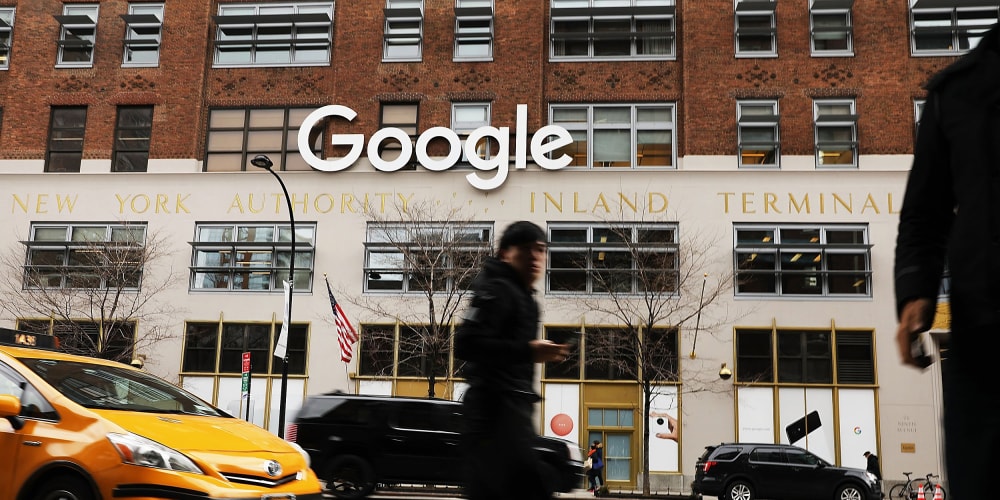
Google's New York office in lower Manhattan this month.Spencer Platt / Getty Images file

Upset about how much of your data Facebook has? Wait until you see what Google has got on you.

Dylan Curran, an information technology consultant, took a look at just what Google knew about him. Even with his experience as a web developer, he was shocked.

"I was really like: 'Oh, my God. This is preposterous,'" Curran said.


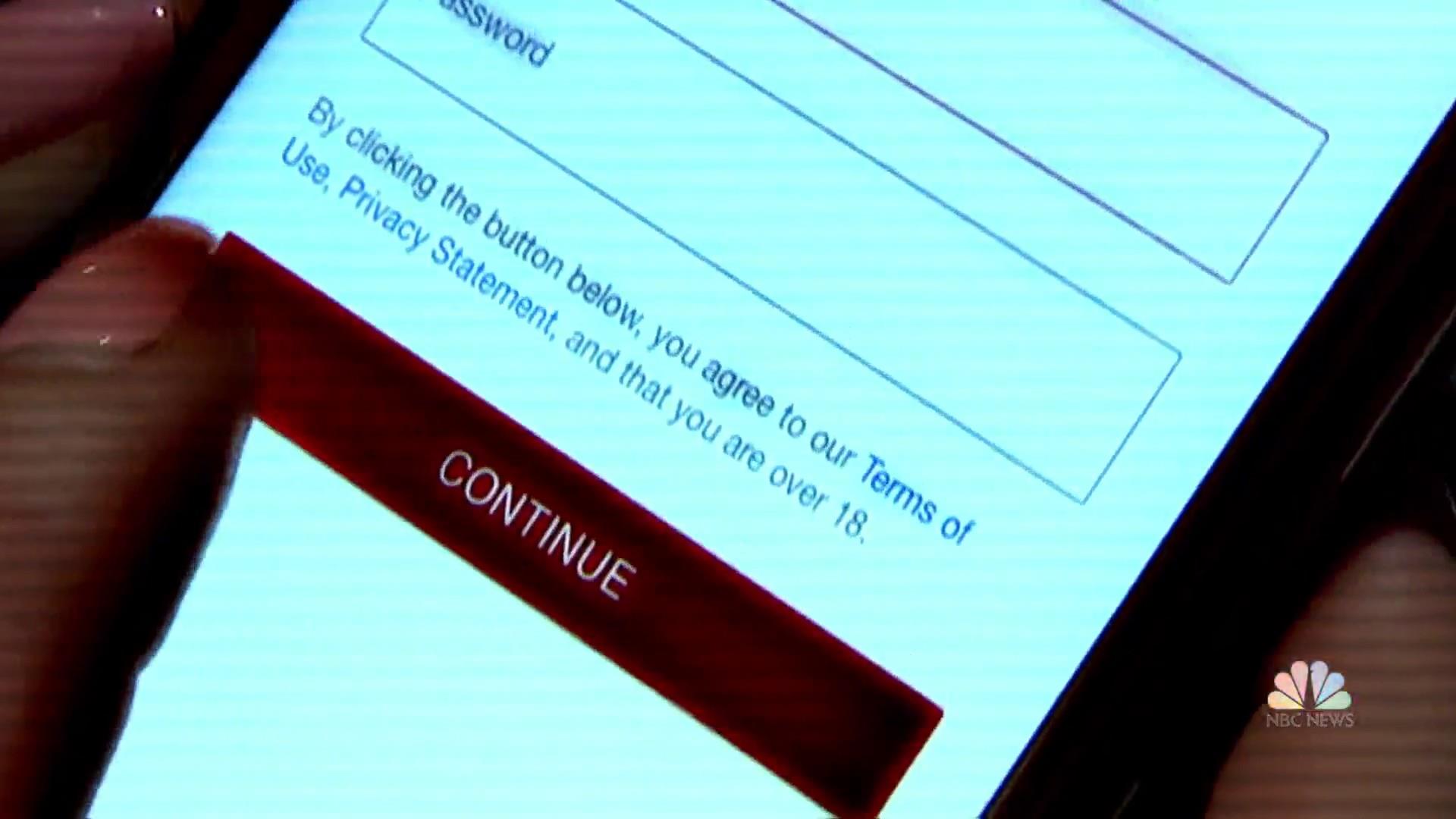
Personal data often collected when you download apps 01:58

When he requested his data from Google, he found that it was constantly tracking his location in the background, including calculating how long it took to travel between different points, along with his hobbies, interests, possible weight and income, data on his apps and records of files he had deleted. And that's just for starters.

He said he didn't think Google was doing anything malicious. He just felt newly uncomfortable with being so closely tracked.

"It's wrong to trust any entity that big with so much information," he said. "They're just trying to make money," and at some point, "someone is going to make a mistake."

His posts hit a nerve, with the thread racking up almost 150,000 retweets.

What Curran found is the reality that Google's millions of users face every day, said Scott J. Shackelford, an associate business professor at Indiana University focusing on cybersecurity law and policy.

Wednesday, February 21, 2018

Say hello to a better way to pay, by Google


SHOPPING & PAYMENTS

Gerardo Capiel
Product Management Director, Consumer Payments
-
Varouj Chitilian
Engineering Director, Consumer Payments


Published Feb 20, 2018

Fast, simple checkout. Easy access to rewards and offers. One spot for purchases, passes, and payment methods. All of these are ways we’ve been working to make paying safer and easier for everyone, everywhere. And you can make the most of these features with the new Google Pay app for Android.

The app, which begins rolling out today, is just one part of everything we’ve got planned. We’re currently working on bringing Google Pay to all Google products, so whether you’re shopping on Chrome or with your Assistant, you’ll have a consistent checkout experience using the cards saved to your Google Account. We’re also working with partners online and in stores, so you’ll see Google Pay on sites, in apps, and at your favorite places around the world.

As we continue to expand to even more devices and services, the new app offers an exciting glimpse of what’s to come. Here’s a closer look.

Helpful info while you shop

Google Pay’s new Home tab gives you the info you need, right when you need it. See your recent purchases, find nearby stores, enjoy easy access to rewards, and get helpful tips.


A new spot for your stuff

The Cards tab is an easy way to keep everything you need at checkout organized and at the ready. It’s where you’ll store your credit and debit cards, loyalty programs, offers, and even that stack of gift cards from last year’s birthday.


Friday, January 26, 2018

People Outraged as Google Home Identifies Buddha, Muhammad and Satan but Not Jesus Christ


(Photo: REUTERS/BECK DIEFENBACH)Google Home is displayed during the presentation of new Google hardware in San Francisco, California, U.S. October 4, 2016.


Smart Audio technology, such as Google Home and Amazon's Alexa, has quickly become the dominant go-to source of information for this generation but some consumers are now speaking out about the fact that Google Home devices refuse to share information on Jesus Christ.
Google Home is a new self-proclaimed "powerful" speaker and voice assistant. The device can play your music, call your friends, and answer almost any question that can be found on the web. However, when asked who is Jesus, Jesus Christ or God the smart speaker says it does not know the answer.

"Sorry, I'm not sure how to help" or "My apologies I don't understand," Google Home responds.
What has some people up in arms is that if you ask the device who other religious figures are such as Muhammad, Buddha and even Satan the device gives a full breakdown on what it has found on the web.

Television producer, author, and speaker David Sams took it upon himself to compare the answers of his Google Home and Amazon's Alexa during a Facebook Live video. He showcased that the Amazon device pulled up the online information on Jesus while Google Home still claimed it did not have anything to say about Jesus.

"I even asked Google who is David Sams? Google knew who I was, but Google did not know who Jesus was, Google did not know who Jesus Christ was, and Google did not know who God was," Sams told the local Nashville Fox 17 News. "It's kinda scary, it's almost like Google has taken Jesus and God out of smart audio."

"I don't know if there's some kind of wizard making these decisions or if it's some kind of oversight," Sams added. "But whatever it is, they need to address it immediately."

According to NPR and Edison Research, one in six adults in America (or around 39 million people) now own a voice-activated smart speaker.

Although other Google devices pull up a description of Jesus and God there has been no response from the company on why Google Home does not. The speaker does reference Jesus, though, when asked about the Last Supper or Saint Peter.

Nashville resident Martin Collins told the news outlet that he thinks this feeds into a bigger problem of political correctness.

"They took prayer out of schools, they think just taking Jesus out of everything is politically correct these days and I think that's the stem of a lot of our problems," Collins maintained.
As reported on The Christian Post last year, Amazon's Echo assistant named Alexa was also under fire for reportedly responding to the question "who is Jesus Christ" by replying that He "is a fictional character."

Conservative media personality Steven Crowder posted a video online showing Amazon's Alexa calling Jesus a "fictional character." But many others argued that their Alexa just pulled up the web description of Jesus.

"We have plenty of tweets and videos from people who asked it the question and they got the exact same answer," Crowder said on his program.

As seen in Sams' video, the Alexa issue might have been resolved but people are now demanding Google Home give Jesus fair treatment.