Showing posts with label Finance. Show all posts
Showing posts with label Finance. Show all posts
Monday, August 31, 2026


Wednesday, March 25, 2026
Thursday, November 06, 2025
The cost of Zohran

The cost of Zohran
Mayor Mamdani’s policies are guaranteed to wreck New York City
Heather Mac Donald
William F. Buckley Jr. once quipped that he would rather be governed by the first 2,000 names in the Boston phone book than by the Harvard faculty. New York City is about to be governed by the Columbia University student body. A city that used to think of itself as grown up has just elected a mayor who seems the very embodiment of the American college student: uninformed, entitled and self-important, enjoying a regal quality of life that depends parasitically upon a civilization about which he knows nothing, yet for which he has nothing but scorn.
American college students regularly act out little psychodramas of oppression before an appreciative audience of diversity deanlets and associate vice-provosts of inclusion and belonging. Zohran Mamdani, the quintessential product of the academy, is poised to take such performative grievance to one of the biggest stages in the world. The results will not be pretty.
Mamdani’s governing agenda reflects his family background, education and negligible post-college career. Now 34, he was born in 1991 to a professor of postcolonial studies and a filmmaker. The family moved to New York City from Uganda in 1999 so that Mamdani’s father, Mahmood, could teach in Columbia University’s Middle Eastern, South Asian and African Studies Department and direct the university’s Institute of African Studies. The young Mamdani imbibed academic anti-westernism at the family dinner table, which hosted such leading lights of postcolonial studies as Columbia’s Edward Said and Rashid Khalidi.
Mamdani fashions himself a champion of the working class. He chose not to attend New York’s most storied working-class college, the public City College of New York (then $6,330 a year), however, in favor of the private Bowdoin College, a bucolic, secluded retreat in Maine (then $59,900 a year). The centuries-old New England institution grew out of the finest ideals of America’s Founders; it boasts Nathaniel Hawthorne, Henry Wadsworth Longfellow, US president Franklin Pierce, Supreme Court justices, decorated Civil War generals, abolitionists and industrialists among its graduates.
Monday, October 27, 2025
The Vulture Tower (Bank of International Settlements) [OD_2021_12_28] BPI
---------------------------------------
P.S.
AI Overview

The Bank for International Settlements (BIS) is an international financial institution owned by its member central banks that fosters global monetary and financial cooperation and serves as a bank for central banks. It acts as a forum for discussion, a center for research, and a prime counterparty for central banks in financial transactions. Established in 1930, its headquarters are in Basel, Switzerland, with representative offices in Hong Kong and Mexico City.
Ownership:
The BIS is owned by member central banks, which collectively account for about 95% of world GDP.
Purpose:
Its primary goals are to promote international monetary and financial cooperation and stability, and to act as a bank for central banks. It does not provide services to private individuals or corporations.
Activities:
The BIS organizes meetings for central bankers, publishes research and statistics, and develops standards for international banking, such as capital and risk management regulations.
Structure:
Its management is directed by a General Manager who reports to the Board of Directors.
History:
It was established on May 17, 1930, in the context of the Young Plan to handle the German reparation payments from World War I, but its functions have since evolved to serve as a forum for central banks.
Sunday, October 26, 2025
Monday, September 22, 2025
Thursday, September 11, 2025
Thursday, July 24, 2025
The insights provided by the currency in circulation regarding the economy
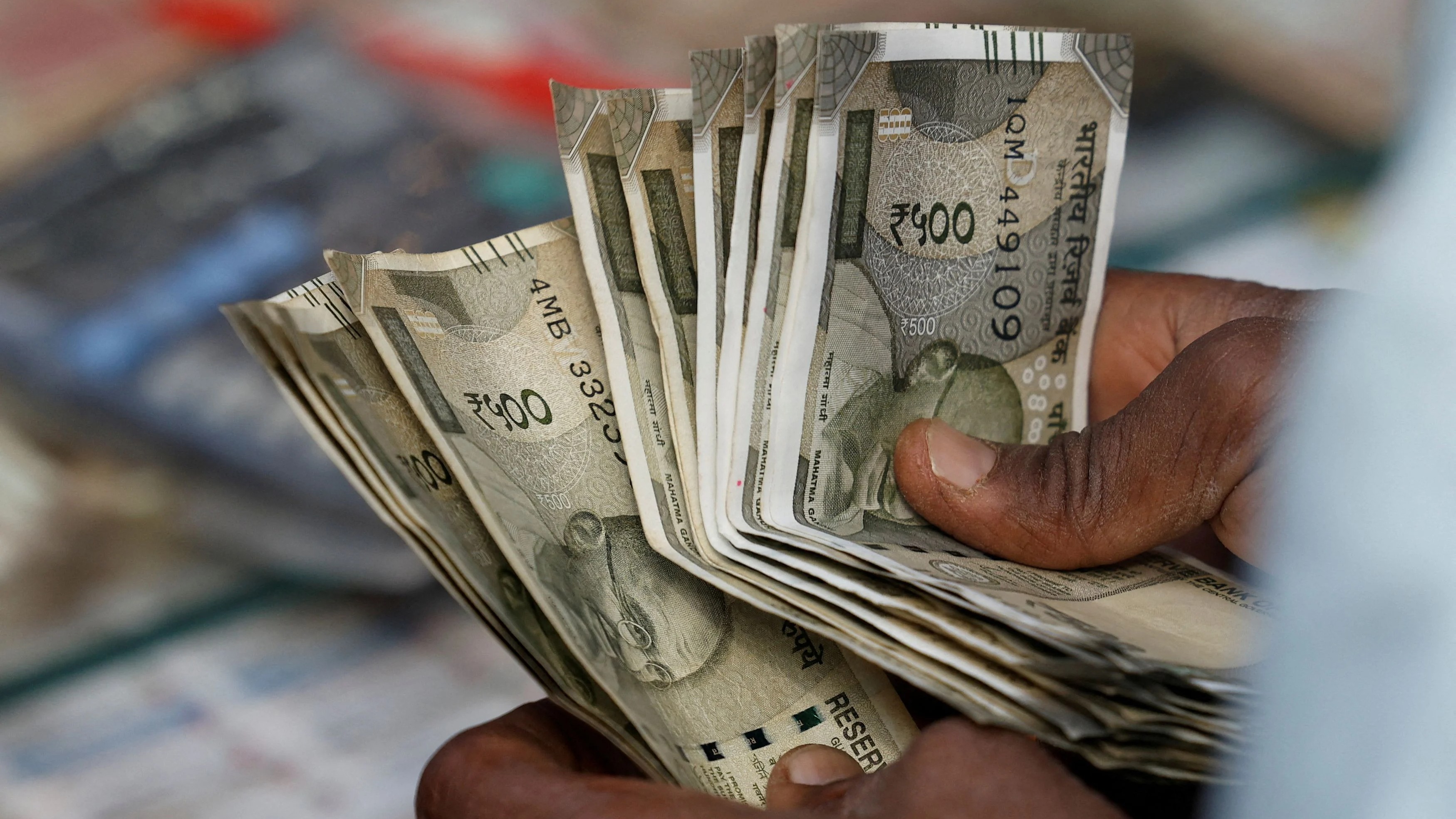
The spike in transactions done through UPI, credit and debit cards, and online and mobile banking in the last decade indicates that India has a safe, secure, and reliable digital payment infrastructure.
Vasant G Hegde Soumyadip Roy
Last Updated : July 21, 2025
Within nine years of its launch, India’s Unified Payments Interface (UPI) has emerged as the leading digital payment platform, recently clocking 650 million transactions and surpassing Visa, which is one of the oldest and largest digital payment networks. Notably, Visa recorded a daily average of 640 million transactions in FY24. This trend might suggest—or even mislead people into thinking—that India is steadily becoming a less cash-dependent economy. However, an examination of the cash in circulation (CIC) in the economy between the demonetisation period, i.e., November 2016, and today shows that CIC has more than doubled from Rs 17 lakh-crore to Rs 37 lakh-crore. What explains these two seemingly divergent trends?
CIC is a key indicator for understanding the structure of any economy. The higher the CIC, the larger the informal sector tends to be. CIC also captures public preference for cash over digital transactions. A high level of cash usage can also frustrate the central bank’s initiatives towards financial inclusion. While the absolute amount of cash increases as the economy grows, CIC as a percentage of gross domestic product (GDP) offers valuable insights into payment habits of people and the effectiveness of monetary policy. Demographics also play a role in demand for cash: young India is more inclined towards digital transactions over cash, while cash usage typically spikes during general and state assembly elections. Households often overlook the opportunity cost of holding cash, resulting in a double whammy: loss of income and the erosion in the real value of money.
Saturday, July 12, 2025
Faith-based groups note “critical moment” for global financial transformation
In a message coinciding with the 4th International Conference on Financing for Development, faith-based groups representing more than 600 million Christians worldwide noted a “critical moment” for global financial transformation.

27 June 2025
NIFEA
Sustainability and Economy of Life
“The world today is grappling with a convergence of unprecedented economic, political, social, and environmental crises,” reads the message from the World Council of Churches, World Communion of Reformed Churches, Lutheran World Federation, World Methodist Council, Council for World Mission, and United Society Partners in the Gospel.
The message notes that, while the wealth of multi-millionaires and billionaires continues to soar, the vast majority of people struggle with rising costs for basic necessities, such as food and housing, and declining living standards.
“This deepening inequality has eroded trust in public institutions, weakened democratic systems, enabled corporate influence over state policy, and hindered progress on urgent climate action, reinforcing a vicious cycle of disparity and disempowerment,” reads the message. “We are amid an escalating crisis of biodiversity loss and climate change that threatens livelihoods and poses an existential risk to all life on Earth.”
Climate change also worsens sovereign debt burdens, the message notes.
Photo: Ivars Kupcis/WCC
27 June 2025
NIFEA
Sustainability and Economy of Life
“The world today is grappling with a convergence of unprecedented economic, political, social, and environmental crises,” reads the message from the World Council of Churches, World Communion of Reformed Churches, Lutheran World Federation, World Methodist Council, Council for World Mission, and United Society Partners in the Gospel.
The message notes that, while the wealth of multi-millionaires and billionaires continues to soar, the vast majority of people struggle with rising costs for basic necessities, such as food and housing, and declining living standards.
“This deepening inequality has eroded trust in public institutions, weakened democratic systems, enabled corporate influence over state policy, and hindered progress on urgent climate action, reinforcing a vicious cycle of disparity and disempowerment,” reads the message. “We are amid an escalating crisis of biodiversity loss and climate change that threatens livelihoods and poses an existential risk to all life on Earth.”
Climate change also worsens sovereign debt burdens, the message notes.
Wednesday, April 02, 2025
BRICS Press Breifing
Russian Foreign Minister Sergey Lavrov and Vietnam’s Deputy PM & Foreign Minister Bui Thanh Son speak to the media following high-level diplomatic talks.
Sunday, June 16, 2024
Sunday, March 10, 2024
Friday, September 08, 2023
Top Indian CEOs
Chief Executive Officers
From sources across the web
India
United States

t3.gstatic.com
Satya Nadella

t2.gstatic.com
Shantanu Narayen

t1.gstatic.com
Sundar Pichai

t2.gstatic.com
Parag Agrawal
google.com
Indra Nooyi
t1.gstatic.com
Arvind Krishna
t0.gstatic.com
Dinesh Paliwal
t0.gstatic.com
George Kurian
t2.gstatic.com
Ajay Banga
t0.gstatic.com
Neal Mohan
en.wikipedia.org
Anirudh Devgan
t3.gstatic.com
Nikesh Arora
timesofindia.indiatimes.com
Francisco D'Souza
en.wikipedia.org
Jayshree Ullal
t1.gstatic.com
Niraj Shah
t1.gstatic.com
Ashok Vemuri
t1.gstatic.com
Vasant Narasimhan
t3.gstatic.com
Revathi Advaithi
en.wikipedia.org
Ivan Menezes
1959–2023
t2.gstatic.com
Jay Chaudhry
t3.gstatic.com
Anshu Jain
1963–2022
t2.gstatic.com
Vikram Pandit
www.nature.com
Jai Nagarkatti
1947–2010
Show less
Source
Monday, March 13, 2023
Monday, August 01, 2022
Tuesday, September 21, 2021
Saturday, October 17, 2020
Subscribe to:
Posts (Atom)