Showing posts with label CRS. Show all posts

Tuesday, August 20, 2013

Obama Administration Mulled Ending Holy See Ambassadorship


Monday, 19 Aug 2013 03:32 PM

By John Gizzi


During the past year, the Obama administration strongly considered ending diplomatic relations with the Vatican as it pondered whether it should appoint a new envoy to the Holy See, Newsmax has learned.

The recent Obama nomination and Senate confirmation on August 1 of Ken Hackett as the new U.S. Ambassador has ended internal Obama administration debate on the matter.

"I have heard the rumors and I believe them to be true," Jim Nicholson, former U.S Ambassador to the Vatican under President George W. Bush, told Newsmax. "It wouldn't surprise me in the least if the Obama White House seriously discussed downgrading U.S. diplomatic relations with the Holy See, given the devalued view they clearly hold this relationship in." Special Report: Obama’s Assault on Religion — Click Here Now

"This administration does not want a strong Catholic Church, nor a strong relationship with it, as it sees the Church as an obstacle to its liberal social agenda," Nicholson said.

The Obama administration has been in conflict with the Roman Catholic Church on a host of issues ranging from Obamacare's contraceptive requirements for Catholic hospitals to the administration's strong stance in favor of abortion rights. After Obama's first ambassador, Miguel Diaz, resigned last year, President Barack Obama had difficulty identifying a nominee who would represent his administration, but at the same time would be acceptable to the Holy See, according to one source familiar with the selection.

Faced with finding such a candidate, the Obama administration considered closing its Vatican offices, and opening offices in the U.S.'s Rome embassy for a smaller office to deal with Catholic matters.

In the end, the Obama administration moved to select Hackett, whose choice has won strong applause from Catholic leaders of all political stripes.

Hackett is the retired president of Catholic Relief Services (CRS), one of the Church's largest social welfare organizations supported by the U.S. Catholic bishops. Hackett, a graduate of Boston College, also served in the Peace Corps.

"I think Ken Hackett is an excellent choice," Thomas P. Melady, who was Ambassador to the Holy See under President George H.W. Bush, told Newsmax.

Melady, who is also a past president of Sacred Heart College in Connecticut, noted that prior to assuming the presidency of CRS in 1993, Hackett began his career with the group in Africa and oversaw its operations in East Africa during the Somali crisis in the late 1980s.

"The Holy See needs a good person and they've got one," Francis Rooney, George W. Bush's envoy to the Vatican, told the Catholic Standard, saying Hackett "is tremendously qualified to do the job, given his background with Catholic Relief Services."

Along with what he called "an excellent record" at CRS, Melady said that the nominee "knows the hierarchy at the Vatican well from his years [at CRS] and that is very important."

Since the U.S. extended full diplomatic recognition to the Holy See under President Ronald Reagan, U.S. ambassadors to the Vatican have always been practicing Catholics who accept the teachings of their church — even when they conflict with those of the administration in the White House.

Melady pointed out that the two ambassadors to the Vatican under Democratic President Bill Clinton — former Boston Mayor Ray Flynn and Rep. Lindy Boggs of Louisiana — were both strong abortion opponents and took stands that differed strongly with the stated policy of their party and Clinton himself.

The same was true of Diaz, President Obama's ambassador throughout his first term.

Because more than six months went from the time of Diaz's resignation and the naming of Hackett to succeed him, there were mounting rumors that the administration was having difficulty recruiting someone to represent it at the Holy See.

"As far as I know, while there was talk of many choices to be ambassador, there we
re no formal offers made before the White House went to Ken Hackett," Melady said.


Source
.

Tuesday, August 06, 2013

Senate confirms Hackett, retired CRS leader, as ambassador to Vatican


Ken Hackett, left, retired president of Catholic Relief Services, attends the 2012 consistory at the Vatican with Miguel Diaz, former U.S. ambassador to the Vatican. (CNS/Paul Haring)


Catholic News Service | Aug. 5, 2013

Ken Hackett, retired president of Catholic Relief Services, received Senate confirmation Thursday as U.S. ambassador to the Vatican.

"We are overjoyed that the country will be represented by a man who through his decades of service has demonstrated his commitment to the dignity and sanctity of life and fighting global poverty," said Carolyn Woo, current CRS president and chief executive officer, in a statement Friday. "We look forward to working with the new ambassador as he engages the Vatican and Pope Francis towards the common goal of advancing peace and justice in the world."

President Barack Obama nominated Hackett on June 14 for the position on the same day he announced nominees for ambassador posts in Brazil, Spain, Germany, Denmark and Ethiopia.

"It gives me great confidence that such dedicated and capable individuals have agreed to join this administration to serve the American people. I look forward to working with them in the months and years to come," the president said.

Hackett retired in December 2011 after 18 years as president of CRS, the U.S. bishops' overseas relief and development agency.

As U.S. ambassador to the Vatican, he succeeds Miguel Diaz, who left the post in late 2012. Diaz now is a professor of faith and culture at the University of Dayton, Ohio.

Hackett was appointed president of CRS in 1993. During his tenure, he established a division focusing on outreach to dioceses, parishes, Catholic organizations, and colleges and universities, and laypeople were first appointed to the CRS board of directors.

Catholic Relief Services now operates in more than 100 countries, with a global staff of nearly 5,000.

Born in West Roxbury, Mass., Hackett joined the Peace Corps shortly after his 1968 graduation from Boston College. Assigned to a Catholic mission in rural Ghana, he worked in an agricultural cooperative and saw "the actual impact of American food aid on the health and well-being of very poor kids in a very isolated part of a West African country," he said recently.

After completing his Peace Corps assignment, Hackett joined CRS, the U.S. Catholic relief and development agency, in 1972. He started his career in Sierra Leone, where he managed a nationwide leprosy program and a maternal and child health program.

Subsequent positions took him to various posts in Africa and Asia, as well as in CRS' Baltimore headquarters. As regional director for Africa, he managed the agency's response to the Ethiopian famine of 1984-85. He also supervised CRS operations in East Africa during the crisis in Somalia in the 1990s.

In February 2012, Hackett and Diaz represented the U.S. government at the consistory led by Pope Benedict XVI in St. Peter's Basilica at the Vatican ceremony. Pope Benedict XVI created 22 new cardinals from 13 countries -- including two from the United States and one from Canada.

In May of that year, he received the University of Notre Dame's Laetare Medal during commencement ceremonies. The medal has been given annually since 1883 to a Catholic "whose genius has ennobled the arts and sciences, illustrated the ideals of the church and enriched the heritage of humanity."

In announcing that honor, Holy Cross Father John Jenkins, Notre Dame's university president, said in a statement: "Ken Hackett has responded to a Gospel imperative with his entire career. His direction of the Catholic Church's outreach to the hungry, thirsty, naked, sick and unsheltered of the world has blended administrative acumen with genuine compassion in a unique and exemplary way."

Hackett is a former North American president of Caritas Internationalis, the confederation of humanitarian agencies of the Catholic Church and a former member of the board of the Pontifical Council Cor Unum at the Vatican. He also has been an adviser to the U.S. Conference of Catholic Bishops.

Hackett was on the board of the Millennium Challenge Corporation, the congressionally mandated independent development agency, from 2004 to 2010. He has received numerous honorary degrees.

After retiring from CRS, Hackett was named a consultant to the University of Notre Dame's Institute for Global Development.


Source
.

Monday, June 17, 2013

Ken Hackett To Be Nominated As Ambassador To Vatican


Posted: 06/14/2013 6:28 pm EDT | Updated: 06/14/2013 6:53 pm EDT

Religion and Politics, Holy See, Holy See Ambassador, Miguel Diaz, Ambassador To Vatican,Catholicism, Ken Hackett, Ken Hackett Vatican, Vatican, Religion News


The White House announced Friday that President Barack Obama will nominate Ken Hackett, the former president of Catholic Relief Services to be the United States' ambassador to the Vatican.

Hackett is currently a consultant for the University of Notre Dame’s Institute for Global Development. He was Catholic Relief Services' president from 1993 to 2012, and retired from the organization in 2012 after working there for 40 years.

The White House announcement also named Obama's nominees to be ambassadors to Brazil, Spain, Germany, Denmark and Ethiopia.

“It gives me great confidence that such dedicated and capable individuals have agreed to join this administration to serve the American people. I look forward to working with them in the months and years to come," the president said in the statement.

The nominations, including Hackett's, must be confirmed by the U.S. Senate. Hackett would be the 10th American ambassador to the Vatican since the United States established formal diplomatic relations with it in 1984.

Prior to being CRS president, Hackett served in several capacities in the humanitarian group, including being East African regional director, country representative in the Philippines, senior director of external affairs, African regional director and a staffer in Sierra Leone.

He'll fill a position that has been empty since former Holy See ambassador Miguel Diaz left the office in November. Diaz, a theologian who Obama nominated to the position in 2009, was the first Hispanic in the post. He's currently a professor at the University of Dayton.

In addition to his work at CRS, Hackett was the North American vice president of Caritas Internationalis from 1996 to 2004. From 1996 to 2011, he was part of the Pontifical Council Cor Unum for Human and Christian Development, which is the Vatican organization responsible for the church's charitable efforts.

From 2004 to 2009, Hackett was also on the board of directors of the Millennium Challenge Corporation. Earlier in Hackett's life, from 1968 to 1971, he was a Peace Corps volunteer in Ghana. He holds a Bachelor of Science degree from Boston College.


.

Thursday, February 09, 2012

Detention of U.S. Persons: What is the Existing Law?


February 6th, 2012 by Steven Aftergood

When Congress passed the 2012 National Defense Authorization Act, it included provisions that authorized U.S. armed forces to detain persons who are captured in the conflict with al-Qaeda, the Taliban, or associated forces. However, Congress also said that those provisions did not provide any new authority to detain U.S. citizens or others who may be captured in the United States.

“Nothing in this section shall be construed to affect existing law or authority relating to the detention of United States citizens…,” section 1021(e) of theAct states. “We are simply codifying existing law,” said Sen. Carl Levin, chair of the Senate Armed Services Committee, at the time.

But this was an evasion, since existing law regarding the detention of U.S. persons is indeterminate in important respects.

A new report from the Congressional Research Service fleshes out the law of detention, identifying what is known to be true as well as what is unsettled and unresolved.

It is perfectly clear, for example, that a U.S. citizen who fought alongside enemy forces against the United States on a foreign battlefield could be lawfully detained. This was affirmed by the U.S. Supreme Court in the case Hamdi v. Rumsfeld.

On the other hand, the CRS report explains, “the President’s legal authority to militarily detain terrorist suspects apprehended in the United States has not been definitively settled.”

Nor has Congress helped to settle it. “This bill does not endorse either side’s interpretation,” said Sen. Dianne Feinstein on December 1 about the defense authorization act, “but leaves it to the courts to decide.”

So if a detention of a U.S. person does occur, the CRS said, “it will be up to a court to determine Congress’s intent when it enacted the AUMF [the 2001 Authorization to Use Military Force], or alternatively, to decide whether the law as it was subsequently developed by the courts and executive branch sufficiently established that authority for such detention already exists.”

Up to now, “Lower courts that have addressed questions the Supreme Court left unanswered have not achieved a consensus on the extent to which Congress has authorized the detention without trial of U.S. persons as ‘enemy combatants,’ and Congress has not so far clarified its intent.”

The new CRS report traces the development of U.S. detention policy from the Alien and Sedition Acts of 1798 through the Civil War, the two World Wars, and the Cold War up to the present day. See Detention of U.S. Persons as Enemy Belligerents by CRS legislative attorney Jennifer K. Elsea, February 1, 2012.

Some other new (or newly updated) CRS reports obtained by Secrecy News that have not been made readily available to the public include the following.

Terrorist Watch List Screening and Brady Background Checks for Firearms
, February 1, 2012

War Powers Resolution: Presidential Compliance, February 1, 2012

The U.S. Postal Service’s Financial Condition: Overview and Issues for Congress, January 27, 2012


Source

.

Tuesday, November 08, 2011

Bishops’ agenda more devoted to internal matters than to societal ills

November 7, 2011 6:01 pm

Catholic News Service
Nancy Frazier O'Brien


During the Nov. 14-16 meeting of the U.S. Conference of Catholic Bishops in Baltimore, the bishops will decide whether to include two new optional memorials, for Blessed John Paul II and Blessed Marianne Cope, in the proper of saints calendar for the Uni ted States. CNS file photos


The U.S. bishops’ fall general assembly in Baltimore will be shorter than usual and focus primarily on the inner workings of the church than on larger societal issues.

The Nov. 14-16 meeting of the U.S. Conference of Catholic Bishops, originally scheduled to last until Nov. 17, will include a discussion on religious liberty that could touch on a wide range of topics. But the main business of the gathering will be on liturgical, financial and organizational matters.

Archbishop Timothy M. Dolan of New York, elected to head the USCCB for a three-year term last November, will open the meeting with his first presidential address. If tradition holds, the talk will present a “state of the U.S. church” message and a look at the challenges Archbishop Dolan foresees for the coming year.

It could also be the first USCCB meeting for Archbishop Carlo Maria Vigano, recently appointed as the new apostolic nuncio to the United States, who has said he hoped to arrive in the U.S. in time for the assembly.

Looking back on one of their biggest challenges of the past 18 months, the bishops will vote on whether to make their former Task Force on Health Care into a permanent Subcommittee on Health Care Issues under the Committee on Doctrine.

The subcommittee would address such issues as “guidance in implementing the bishops’ ‘Ethical and Religious Directives for Catholic Health Care Services,’ non-Catholic hospitals in Catholic health care systems, for-profit Catholic health care, canonical status of Catholic health care facilities, conscience protection and health care reform,” according to a USCCB news release.

Members of the subcommittee would represent the committees on doctrine, canon law and church governance, pro-life activities, and domestic justice and human development and could include other bishops or consultants, the release said.

Also up for a vote at the meeting is a resolution to support yearly voluntary financial reporting by each diocesan bishop in the U.S. to the archbishop who heads his ecclesiastical province.

The resolution, proposed by the Committee on Canonical Affairs and Church Governance, “acknowledges the legitimate rights of the diocesan bishop to administer the material resources of the diocese” yet “provides a vehicle for fraternal cooperation and support among all bishops of the province and assist the metropolitan archbishop in his own special solicitude” for the dioceses in his province, according to material distributed to the bishops with the resolution.

The resolution would be in effect from January 2012 through November 2016. The first such resolution was passed by the bishops in 2000 and renewed in 2004 and 2006.

Under the process outlined in the resolution, members of each diocesan finance council would certify yearly that they have met, reviewed and discussed the audited financial statements of the diocese and the management letter, if any, for the fiscal year and that they have been consulted in accord with the requirements of canon law.

Canon law requires a diocesan bishop to consult his finance council on such matters as selecting and removing the diocesan finance officer, determining appropriate investment strategies and selling diocesan properties whose appraised value is more than the minimum amount determined by the bishops’ conference.

Several liturgical matters are scheduled to come before the bishops for a vote. They will decide whether to include two new optional memorials, for Blessed Marianne Cope and Blessed John Paul II, in the proper of saints calendar for the United States and whether to approve a new translation of the Rite for Blessing the Oil of Catechumens and the Oil of the Sick, and for Consecrating the Chrism.

The Jan. 23 feast day for Mother Marianne, who was beatified in May 2005, is already observed as an optional memorial in the Diocese of Syracuse, N.Y., where she entered religious life, and the Diocese of Honolulu, where she served for many years caring for those afflicted with leprosy.

Pope John Paul’s Oct. 22 feast day would also become an optional memorial on the U.S. liturgical calendar if approved at the meeting. The late pope was beatified May 1.

Each of the liturgical items requires a two-thirds vote of the Latin Church members of the USCCB, followed by confirmation by the Vatican Congregation for Divine Worship and the Sacraments. The congregation has already approved liturgical texts in English and Spanish for each of the optional memorials.

The U.S. bishops had hoped to include the rites for blessing oils and chrism in the new translation of the Roman Missal that debuts on the first Sunday in Advent. But the Vatican said the rites should be included in a revised edition of the Roman Pontifical, the collected liturgical ceremonies celebrated by bishops, or in a separate ritual text.

If they are approved, the bishops are hoping for quick confirmation by the Vatican so that the rites can be printed and distributed for use during Holy Week, the week of April 1 in 2012.

Also on the bishops’ agenda are a variety of reports on issues of interest both within and outside the conference. They include:

– An update by Cardinal Donald W. Wuerl of Washington on the process of incorporating Anglican groups into the U.S. Catholic Church under Pope Benedict XVI’s 2009 apostolic constitution “Anglicanorum coetibus.”

– A report by Bishop Kevin J. Farrell of Dallas, chairman of the Committee on National Collections, on new guidelines for administering USCCB collections in dioceses.

– Information from Cardinal Daniel N. DiNardo of Galveston-Houston, chairman of the Committee on Pro-Life Activities, on the work of Project Rachel, a post-abortion healing initiative.

– A presentation evaluating the USCCB reorganization, as well as reports on the conference’s priority plan and three priority initiatives for 2013-2015.

– A report by the Committee on Laity, Marriage, Family Life and Youth and its Subcommittee for the Promotion and Defense of Marriage.

The bishops also will vote on the 2012 conference budget and elect a new secretary-elect, chairmen-elect of five committees, board members of Catholic Relief Services and a chairman for the Committee on International Justice and Peace.


Source


.

Thursday, September 01, 2011

USCCB, CRS urge advocacy for foreign poverty assistance


September 01, 2011

The United States Conference of Catholic Bishops and Catholic Relief Services are urging Catholics to prompt their members of Congress to continue to fund international poverty assistance programs.

“Life-saving poverty-focused international assistance that fights hunger, disease and makes drought-prone communities more resilient to hunger crises is less than 1% of the budget,” according to the USCCB and CRS. “While our nation’s leaders must address the deficit, we desperately need your help now to protect proven and effective poverty-focused programs.”


http://donate.crs.org/site/DocServer/2011-8-25-Deficit_Action_Alert.pdf?docID=7343&autologin=true
.

Tuesday, December 01, 2009

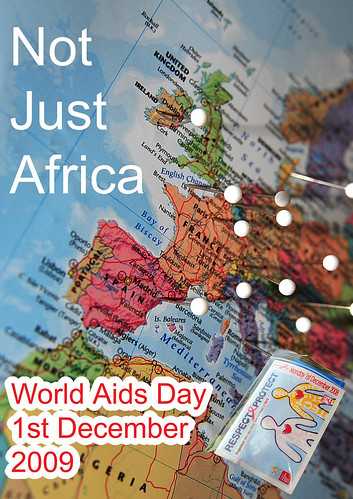
World AIDS Day marks progress, distinct challenges in Africa


Published 6:49 am on November 30, 2009

World AIDS Day marks progress, distinct challenges in Africa
By Peter Elliott
Contributing Editor


Tuesday marks World AIDS Day when a fresh look at worldwide statistics and what is being done to stem the spread of the disease are warranted.
Statistically it is decidedly a mixed bag.

United Nations figures released last week show that over the past seven years the total number of people infected with HIV/AIDS has remained relatively flat at around 33 million worldwide. The total number of infections and deaths has steadily declined, but that is offset by 2.7 million new cases in 2008. Seventy percent of those new deaths come from sub-Saharan Africa.

The U.N. report suggest that targeted local strategies need to become focused on specific problems in order to drove down the rate of new infections. It says that the largest group of Africans contracting AIDS is older heterosexual couples, illustrating a need to adjust approaches based on the demographics.

Many Christian organizations are actively involved in AIDS prevention and treatment efforts domestically and internationally.

The Episcopal Church, for example, references the U.N. Millennium Development Goals as benchmarks for addressing poverty and social justice issues. In a letter penned to mark World AIDS Day, Episcopal Church presiding bishop Katherine Jefferts Schori cautions against Americans becoming complacent about AIDS simply because it has been a public health issue for decades.

“In the United States, HIV/AIDS has lost much of its visibility in the past decade with many Americans growing complacent about the threat of the disease,” Schori wrote. “It is not always immediately obvious who in our communities is suffering from HIV/AIDS, and the stigma of diagnosis further isolates and alienates those who need our love and support. As Christians, our ministry to those living with HIV/AIDS in our communities is more essential than ever.”

As an example of such ministries, Catholic Relief Services quotes figures it supported more than 280 HIV/AIDS projects in 62 countries worth $170 million in recently completed fiscal year 2009.


Similarly, hundreds of Christian organizations are working in the hardest hit areas of the globe.
One key focus is for progress in programs for expectant mothers to help them combat the effects of passing the disease to their babies.

“We’ve seen in the United States that by testing women and providing ARV treatment during pregnancy and labor for HIV-positive mothers, it’s possible to prevent babies from being born with the virus,” said Robert Zachritz, World Vision’s director for advocacy and government relations. “Yet globally, two out of every three HIV-positive pregnant women still cannot access treatment to protect her unborn child from a life with HIV.”

HIV infections among children have fallen significantly due in part to greater investment in strategies to prevent mother-to-child transmission. However, with 2 million children under 15 currently infected with HIV, protecting children in the womb is a critical step.

Education is also a vital weapon. World Relief is using its church partnerships in sub-Saharan Africa to educate teens about the importance of abstinence as a way to present the spread of the disease. In countries such as Rwanda, Mozambique, Kenya and the Caribbean nation of Haiti, the organization is also working to encourage adults to stay in monogamous relationships. It has a goal of educating 1.8 million children in these countries to the danger of AIDS this year.

Nonetheless, worldwide the challenge for young women the challenge is great. According to UNICEF figures released earlier this year AIDS remains the largest killer of women of childbearing age.

“Although there is increasing emphasis on women and children in the global HIV/AIDS response, the disease continues to have a devastating impact on their health, livelihood and survival,” said Ann M. Veneman, UNICEF Executive Director.


Links:Wall Street Journal—The Global AIDS Epidemic: Six Key Data Points: http://blogs.wsj.com/health/2009/11/24/the-global-aids-epidemic-six-key-data-points/?utm_source=feedburner&utm_medium=feed&utm_campaign=Feed%3A+wsj%2Fhealth%2Ffeed+%28WSJ.com%3A+Health+Blog%29&utm_content=NetvibesWorld Health Organization—Towards Universal Access: Scaling up priority HIV/AIDS interventions in the health sector (September 2009): http://www.who.int/hiv/mediacentre/tuapr2009_km_en_a4.pdf


~~~~~~~

Monday, September 14, 2009

Defense Contracting in Afghanistan at Record High


September 1st, 2009 by Steven Aftergood


There are more Department of Defense contractors in Afghanistan today than there are uniformed U.S. military personnel, according to a new report from the Congressional Research Service. Not only that, the ratio of contractors to troops in Afghanistan is higher than in any prior military engagement in U.S. history.


“As of March 2009, there were 68,197 DOD contractors in Afghanistan, compared to 52,300 uniformed personnel. Contractors made up 57% of DOD’s workforce in Afghanistan. This apparently represented the highest recorded percentage of contractors used by DOD in any conflict in the history of the United States,” the CRS report (pdf) said. A copy of the report was obtained by Secrecy News.


At a time when the deployment of U.S. forces in Afghanistan may be increased (or reduced), the CRS report casts a detailed and fairly nuanced spotlight on the role of defense contractors there. The report notes, for example, that more than 75% of the DoD contractor personnel in Afghanistan are local nationals. Only about 15% are U.S. citizens.


Contractors provide essential logistical, translation and other services, while offering increased flexibility. But they also pose management challenges in monitoring performance and preventing fraud. In the worst cases, “abuses and crimes committed by armed private security contractors and interrogators against local nationals may have undermined U.S. efforts in Iraq and Afghanistan,” the CRS report noted. See “Department of Defense Contractors in Iraq and Afghanistan: Background and Analysis,” August 13, 2009.

.
.