Showing posts with label NAD. Show all posts

Sunday, September 27, 2026

Michigan Church Demands Action Against LGBTQ Acceptance in California Churches


16 September 2026 

The board of a small church in rural Michigan has prepared and submitted a detailed complaint against church entities in southern California who have shown acceptance toward LGBTQ people. The Coloma church asks the Michigan Conference Executive Committee to officially act on their complaint, and forward their request to discipline California’s leaders to the North American Division Executive Committee.

The document, which runs to 248 pages of obsessive detail, singles out Southern California Conference, particularly the Glendale City Church and its now-retired married gay pastor Leif Lind. It also complains about the Southeastern California Conference, location of La Sierra University and the La Sierra University Church, for LSU’s accommodation of LGBTQ students which includes a Kinship Sabbath School class and a private “Lavender Graduation” for LGBTQ students.

About 230 pages, many of them taken from Adventist Today and Spectrum, are appended as “evidentiary preservation… because live web links may not preserve the evidentiary record if source pages are later changed, moved, restricted, or removed.” It also includes annotations for “the purpose of helping the reader to quicker focus on relevant contents or to understand specific contexts.”

Support of LGBTQ people is condemned as a “long-term pattern,” with “current conference administration support,” and blasts the two conferences for allowing the “continuity of current conference officeholders.” Besides Leif Lind (who was paid by the Glendale City Church, not the conference) it singles out Southern California Conference president (formerly executive secretary) John Cress, current executive secretary Danny Chan, and Los Angeles regional director Brett Poynter. In Southeastern California Conference, it blames former LSU church pastor Chris Oberg.

“Taken together, this sustained, intentional, publicly documented pattern … conflicts with SDA biblical and voted standards, raises issues of institutional accountability, and affects member confidence and the Church’s public witness across the NAD, thus warranting submission to the NAD Executive Committee for formal consideration and action.”

Leif Lind writes,

“After the articles came out about my years of service at Glendale City Church, I was kind of holding my breath to see what happened next.… It’s almost uncanny the detail that this document has put together. Bulletins are included, with all relevant parts highlighted in red font, photos of me at the church that I never even knew existed, with my name highlighted in yellow boxes, page after page. It doesn’t make me feel worried, but it does leave me feeling disgusted as well as astounded that people can waste so much of their time on such trivial pursuits. Probably 60% of the document is about me, GCC and the Southern California Conference (as pertains to their interactions with me). The other 40% is about La Sierra University Church and SECC, with their Kinship Sabbath School class and “Lavender Graduation.”

Floyd Pönitz, president of Kinship, wrote this to Adventist Today:

“This document from the Coloma, Michigan church highlights a long‑standing challenge within Adventism: the difficulty some congregations have in opening their hearts to people whose lives or identities differ from their own. Many LGBTQ Adventists still long to feel at home in the church they grew up in—to belong without fear, without scrutiny, and without being treated as outsiders.

“Yet it’s important to recognize the hopeful movement happening in the church. Pastors Leif Lind and Chris Oberg and the leaders in their respective conferences have taken meaningful steps toward listening, learning, and creating space for LGBTQ Adventists. Their willingness to engage in grace stands in stark contrast to the Coloma church’s fixation on what happens thousands of miles away, rather than focusing on how the gospel of love and welcome might be lived out in their own community.”

You can read the whole document here.


Saturday, August 22, 2026

The Good—Not Great—Commission of Women Pastors


Andrew Francis|August 13, 2026

As much of the US spent the evening of Saturday, July 4 outside, celebrating the nation’s independence with barbecues and fireworks, I too was outdoors, though I was not thinking about America’s 250th birthday. Instead, I was at the hot and humid Camp Victory Lake in Hyde Park, New York, for the Northeastern Conference’s second week of camp meeting, which included its annual ordination service. What occurred during that special service helped illustrate the denominational progress Adventism has made, while also highlighting what has been described as its “hypocritical” nature.

Four ordinands stood on stage alongside top conference administrators and General Conference (GC) Vice President Pierre Omeler, who gave the program’s homily. All four ordinands had been serving as pastors and leading churches in the Northeastern Conference for at least four years. All four were vetted by a conference ordination committee to determine their “spiritual stability,” “social maturity,” and other character qualifications. All four went through the same ceremonial procedures during the July 4th ordination program. Yet, only three pastors were ordained.

What Even is the Difference?


Petrice Wideman holds her certificate after being commissioned as a pastor at the Northeastern Conference camp meeting. Photo courtesy of Petrice Wideman

The fourth pastor was Petrice Wideman, lead pastor of the Stuyvesant Heights Church, one of the few women pastors in the conference. She is also Omeler’s daughter. Despite being listed as an “ordinand” in the camp meeting bulletin, Wideman was granted the distinction of being commissioned by the conference, an alternative to ordination that is used almost exclusively for women pastors. While both require nearly identical qualifications and expectations of the candidates, ordination is superior to being commissioned, as it grants the pastor the ability to plant churches and hold administrative positions. Many maintain that different distinctions are just a tool to limit a woman’s pastoral capacities.

“It’s a semantic thing where one word is used for women, but one word is used for men,” Wideman explained. “But the thing is, words are very impactful. So on the one hand, it’s not much of a difference, but then on the other hand, the small distinction is everything, where for many people it will always justify the subordination or devaluing of women leaders.”

The Atlantic Union, which the Northeastern Conference is a part of, currently permits the hiring and commissioning of female pastors. A few other North American Division (NAD) unions permit women’s ordination, in direct opposition to the GC’s mandate based on a vote during the 2015 GC Session to not allow women’s ordination. This distinction, however, seems to be lost on many church members, as seen during Wideman’s commissioning.

Tuesday, June 02, 2026

Religious Liberty Dinner Highlights Commitment to Freedom of Conscience


24 May 2026

During the event Liberty magazine is recognized for its 120 years of advocacy.

Christelle Agboka, North American Division News


Orlan Johnson, North American Division Public Affairs and Religious Liberty director, addresses guests at the nineteenth annual Religious Liberty Dinner on April 22. [Photo: Art Brondo, NAD]


The North American Division’s (NAD) nineteenth annual Religious Liberty Dinner, held on April 22 in the James Madison Memorial Building at the Library of Congress, championed freedom of conscience as a core human right. Overlooking the gathering, a statue honoring Madison, the fourth United States president and key architect of constitutional religious freedom rights, visually reinforced the evening’s theme.

Hosted by the NAD Public Affairs and Religious Liberty Department and Liberty magazine, the dinner brought together 90 religious liberty advocates, faith representatives, government officials, academics, Washington Adventist University honors students, Seventh-day Adventist Church leaders, and other guests.

In his welcome, Orlan Johnson, NAD PARL director, underscored the significance of the gathering. “For nearly two decades this event has served as a space where people of diverse beliefs, backgrounds, and perspectives can come together in unity,” he said.


Attendees greet one another during the North American Division’s nineteenth annual Religious Liberty Dinner. [Photo: Art Brondo, NAD]

Johnson reminded attendees that, globally, many people do not have the freedom to worship—or not worship—as they see fit, ending with an appeal for ongoing advocacy: “Let tonight be more than a dinner.”


Celebrating 120 Years of Liberty Magazine

A highlight of the evening was the official recognition of the 120-year anniversary of Liberty magazine by United States representative Jamie Raskin, who represents Maryland’s eighth congressional district. Notably, the magazine was founded in Takoma Park, Raskin’s hometown and part of his congressional district.

In brief remarks, Raskin praised Liberty magazine for helping keep alive what he called “the founding and most revolutionary principle of our Constitution”—the separation of church and state. He then presented Bettina Krause, Liberty editor and NAD PARL associate director, with a certificate honoring the magazine’s “120 years of zealously championing the separation of church and state, the precondition for freedom and progress in American life.”

Thursday, February 26, 2026

Sunday Rest Proposal Raises Troubling Religious Liberty Concerns

A response by the North American Division of Seventh-day Adventists

January 18, 2026

Columbia, Maryland.


A proposal by a Washington, D.C.-based advocacy organization to legally recognize and enforce a “uniform day of rest” represents a disturbing disregard for the religious freedom of all Americans. The Heritage Foundation’s document, “Saving America by Saving the Family,” calls for states and local municipalities to restrict commercial activities on Sunday as a way to promote spiritual engagement and provide a regular day of relaxation for American workers.

Seventh-day Adventists believe all people have been created in God’s image with the freedom to worship according to the dictates of their conscience. For more than 160 years, the Church has forcefully advocated against any form of Sunday law. Adventists have always understood these laws — whether at a local, state, or federal level — as attempts to compel conscience, even when they are defended on pretextual secular grounds such as promoting the health of communities and families.

This new proposal for a “uniform day of rest” is irreconcilable with America’s rich heritage of protecting the religious freedom of all its citizens, regardless of their religious beliefs or nonbelief. It represents a dangerous desire to use state power to advance religious objectives. Restricting commercial activities on Sunday also raises serious practical concerns for members of those faiths that do not worship on Sunday, including Seventh-day Adventists and Orthodox Jews.

Sunday laws run counter to the First Amendment to the U.S. Constitution, which preserves religious freedom for all Americans by requiring the government to remain neutral between different religious faiths. Our church leaders in the North American Division and the union conferences will continue to uphold the banner of truth and religious liberty, firmly opposing this proposal and any similar measures.


Copyright © 2026 North American Division Corporation of Seventh-day Adventists


Sunday, February 15, 2026

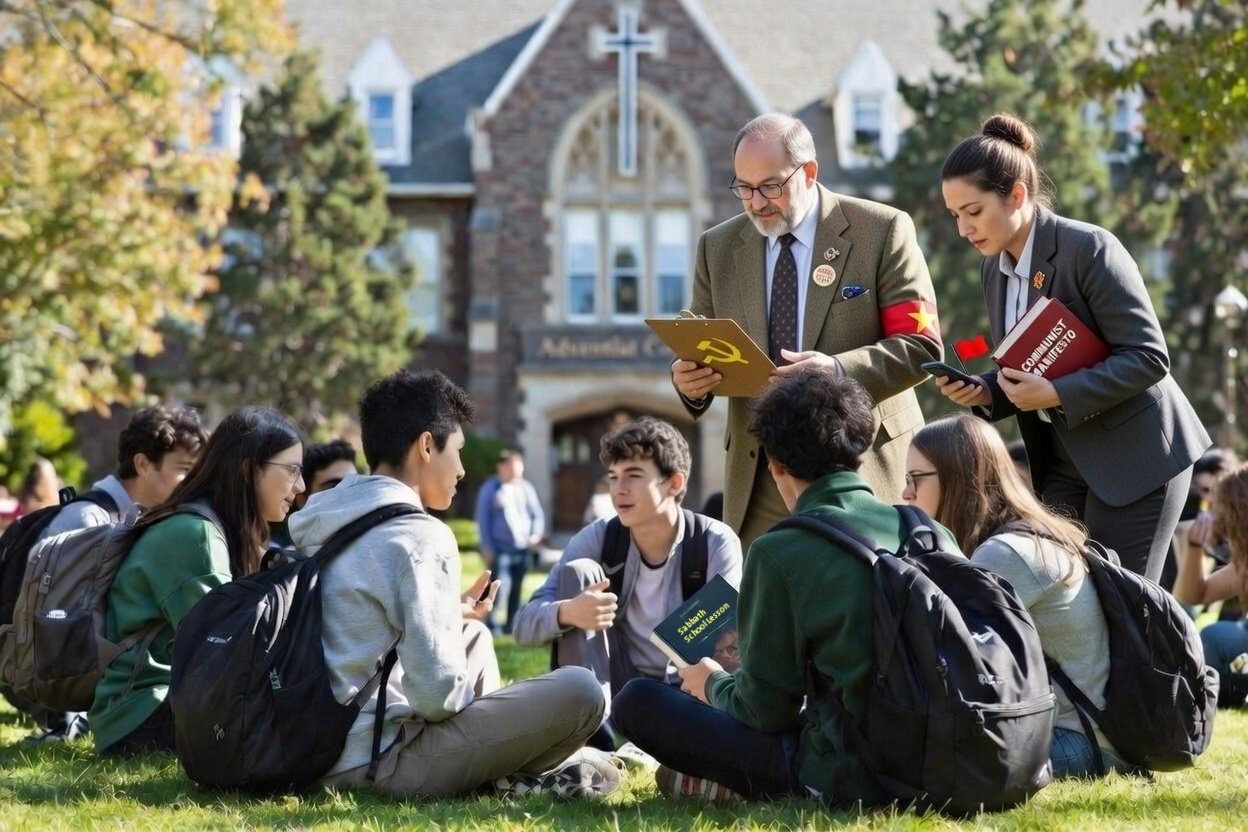
Infiltration of Marxist Thought into Adventist Institutions


February 13, 2026 Dr. Adami A. Gabriel


When the Church Speaks the Language of Babylon:

A Prophetic Warning Against the Subtle Infiltration of Marxist Thought into Adventist Institutions

By: Dr. Adami A. Gabriel, PsyD


1. Introduction – The Language of the Age and the Church of Prophecy

Every generation faces the challenge of communicating the gospel in a changing world. Language, however, is never neutral. Words carry worldviews. Whoever defines the terms defines the debate, and whoever shapes the debate shapes belief. As the American linguist Edward Sapir stated, "Human beings... are very much at the mercy of the particular language which has become the medium of expression for their society". He further elaborated that "We see and hear and otherwise experience very largely as we do because the language habits of our community predispose certain choices of interpretation" (1929). This strongly suggests that language is inherently biased by cultural assumptions and worldviews. Philosopher Ludwig Wittgenstein (1922) famously articulated the deep connection between language and our perception of reality, stating "The limits of my language mean the limits of my world". The Marxist philosopher and linguist V.N. Voloshinov (often associated with Mikhail Bakhtin) argued that "Every word is a microcosm of the world, every word is a philosophy." (1973). The French philosopher Michel Foucault (1978) extensively explored how "discourse” is inseparable from power relations. He argued that the power to define "what can be said" and "who can speak" fundamentally shapes societal knowledge and belief. Finally, in modern cognitive linguistics, authors like George Lakoff (2004) emphasize how political "framing" through language heavily influences public opinion and belief systems. He argues that political discourse relies on specific, culturally embedded frames, and controlling the frame, or defining the terms, is essential to winning a debate and shaping public understanding.

Secular scholars and academics understand these principles on how influencing, shaping and reengineering culture and worldviews through language work and operate. In recent decades, secular society has produced a new moral vocabulary—equity, systemic oppression, inclusion, diversity, allyship, and social justice. These terms, born out of Marxist and postmodern theories (Mor Barak, 2005), often embed values that differ from biblical anthropology and morality.

In official statements and institutional materials, the Seventh-day Adventist Church increasingly employs this same vocabulary in its attempts to address racism, poverty, and human suffering. While these causes may appear righteous, the uncritical adoption of the world’s terminology risks compromising the distinct prophetic mission entrusted to the remnant church. Scripture warns,

“Do not be conformed to this world, but be transformed by the renewing of your mind” (Romans 12:2, NKJV).

When the church begins to think and speak in the categories of the world, its transformation becomes reversal.

This paper offers a public apologetic and prophetic warning: that the borrowing of secular ideological language—especially language rooted in Marxist social theory—inevitably shapes thought, theology, and practice (Wittgenstein, 1922; Foucault, 1978; Lakoff, 2004). It will demonstrate, through examples from official SDA sources, how such language has become normalized, and then will analyze, through Scripture and the writings of Ellen G. White, why this blending of sacred and profane language is spiritually dangerous, even when pursued for a “good cause.”

Sunday, February 08, 2026

Immigrants Are Sustaining the Church. Why Are We Failing Them?

Natalie Bruzon

February 4, 2026


During the 2023 North American Division (NAD) year-end meetings, Kyoshin Ahn, executive secretary of the NAD, presented a secretary’s report that included demographic data on North American congregations. In one section, Ahn compared Adventist congregations in the US to the broader Christian church.

When it comes to immigration, he showed that Adventists far surpass not only the national average of immigrants in the population, but also the Christian average. NAD churches are made up of roughly twice as many immigrants—26 percent—as US churches overall. They also include a higher proportion of immigrants than the general populations of both the US—13 percent—and Canada—22 percent. These numbers are significant; they reveal something important about church growth in North America. Put simply, membership gains are driven by immigration. As Ahn stated plainly, “This is where our growth is happening.”

When I look at these statistics, what I see is the story of a dying church, its decline obscured by immigrant vitality. Immigrant churches are growing, sustained by people who often work time- and labor-intensive jobs six days a week, only to come to church and spend the entire Sabbath in fellowship. Immigrant congregations tend to be active: they regularly hold evangelistic meetings, host Saturday night socials, gather for after-church potlucks, and plant new churches in their cities.

Our immigrant sisters and brothers are not peripheral to the church; as noted by the Lake Union, they are central to its life and future. When they are met with violent, authoritarian immigration enforcement, the church is faced with a moral choice: Will we uphold our Christian values, or will we continue to support an increasingly erratic enforcement system—one that has already resulted in the deaths of US citizens and immigrants alike, and whose violence continues to escalate?

Monday, January 19, 2026

Sunday Rest Proposal Raises Troubling Religious Liberty Concerns

A response by the North American Division of Seventh-day Adventists

January 18, 2026

Columbia, Md.


A proposal by a Washington, D.C.-based advocacy organization to legally recognize and enforce a “uniform day of rest” represents a disturbing disregard for the religious freedom of all Americans. The Heritage Foundation’s document, “Saving America by Saving the Family,” calls for states and local municipalities to restrict commercial activities on Sunday as a way to promote spiritual engagement and provide a regular day of relaxation for American workers.

Seventh-day Adventists believe all people have been created in God’s image with the freedom to worship according to the dictates of their conscience. For more than 160 years, the Church has forcefully advocated against any form of Sunday law. Adventists have always understood these laws — whether at a local, state, or federal level — as attempts to compel conscience, even when they are defended on pretextual secular grounds such as promoting the health of communities and families.

This new proposal for a “uniform day of rest” is irreconcilable with America’s rich heritage of protecting the religious freedom of all its citizens, regardless of their religious beliefs or nonbelief. It represents a dangerous desire to use state power to advance religious objectives. Restricting commercial activities on Sunday also raises serious practical concerns for members of those faiths that do not worship on Sunday, including Seventh-day Adventists and Orthodox Jews.

Sunday laws run counter to the First Amendment to the U.S. Constitution, which preserves religious freedom for all Americans by requiring the government to remain neutral between different religious faiths. Our church leaders in the North American Division and the union conferences will continue to uphold the banner of truth and religious liberty, firmly opposing this proposal and any similar measures.


Saturday, July 05, 2025

Were SDA Churches used as COVID19 Vaccination Sites?


AI Overview

Yes, Seventh-day Adventist (SDA) churches have been used as COVID-19 vaccination sites.
For example, the North American Division of Seventh-day Adventists (NAD) partnered with a local hospital to offer two COVID-19 vaccine clinics at their building. These events successfully vaccinated a significant number of community members, including adults and children, and booster shots were provided.
 
The SDA Church, in general, encourages responsible immunization and vaccination as part of its emphasis on health and well-being. They consider vaccination programs important for the safety and health of their members and the wider community, viewing it as a public health issue rather than a matter of religious liberty. While they acknowledge individual choices regarding vaccination, the church does not officially support religious exemptions to vaccine mandates.

----------------------------------------0----------------------------------------

NAD Partners with Local Hospital to Offer Two COVID-19 Vaccine Clinics


Working with Howard County General Hospital, the North American Division hosted two clinics — also giving away fresh produce to 100 families — and plans to do it again in January 2022.

December 21, 2021 | Columbia, Md. | Kimberly Luste Maran


A vaccination is prepared by during the NAD's Dec. 12, 2021, clinic held at the divison's headquarters in Columbia, Maryland. Photo/screenshot by Pieter Damsteegt

On Dec. 12, 2021, the sun beamed down on a crisp afternoon as a stream of personal vehicles pulled into the North American Division headquarters’ parking lot. Once parked, people of all ages were welcomed and directed inside to the second COVID-19 vaccine clinic held this fall at the headquarters. The clinic, hosted by the NAD Public Affairs and Religious Liberty department in partnership with Howard County General Hospital, made use of the Charles E. Bradford Conference Center on the first floor of the building. For some, this was a return for a second shot after getting their first vaccination on Nov. 21. For others, this was either a booster or first time vaccination.

“On behalf of the Public Affairs and Religious Liberty department, a heartfelt thank you to our NAD family for making the vaccination clinics and produce giveaway a tremendous success,” said organizer Melissa Reid, a PARL associate director.


An elderly patient gets ready to receive a COVID-19 vaccination at the North American Division headquarters, where the NAD hosted a clinic in partnership with Howard County General Hospital, Johns Hopkins Health System COVID-19 Mobile Vaccine Team. Photo/screenshot by Pieter Damsteegt

“Community events such as this one are key to helping us vaccinate as many people as possible, allowing us to take one more step towards ending the pandemic,” said Ben Bigelow, director of the COVID-19 Mobile Vaccine Team, Johns Hopkins Health System. “This event was a tremendous success and we are grateful to NAD for allowing us to use their building.”

During the first clinic a total of 255 community members received vaccinations (six first and second doses for adults; 131 third/booster doses; and 118 pediatric doses). In the first half-hour of the event, 75 people were served. We were also able to distribute a pallet of yams, Irish potatoes, squash, onions, and bananas to 100 families in under 90 minutes.

The number of people seen during the second clinic on Dec. 12 grew to a total of 415 (17 first and second adult doses; 228 third/booster dose; and 170 pediatric doses). Bags of produce were again distributed to 100 families.

As members of the community left the NAD, many expressed their thanks, pleased with the smooth and organized vaccination process. One patient, who declined to share his name, said he had been hospitalized in January 2021 with COVID-19 and was now getting boosted. “This is a lovely building and a really good location,” he shared. “I’m glad I found out the clinic was happening here. It means a lot that a church organization would open their doors for the community.”


Two personnel from the Johns Hopkins Health System in Howard County, Maryland, direct visitors to the NAD COVID-19 vaccination clinic on where to go. Photo by Brian Patrick Tagalog

Felicia Ward, another area resident agreed, saying, “I live here in Columbia so I came here because it was convenient for us. And it was easy for us to get an appointment.”

Ward, who came with another family member, added, “I feel it's important for us to get the vaccine to help slow this down and get back to really what life is normally about.”

Mandy Leblanc, from Highland, brought her two children, ages 7 and 9, for their vaccination. “I think the clinic was great. It was quick. It was easy. It was good. The kids were a little a little scared, but it's important to help keep them safe and healthy and doing the things that they love.”

Leblanc plans to follow up next month with the second shot. “I think it's great to be able to partner with the community and help build that relationship. Will see you guys [for] the next one,” she finished.

In addition to Howard County hospital workers and volunteers, NAD staff members also participated, including assistance with set up and greeting visitors.

“We give special thanks to our incredible NAD administration, facility services team, custodial staff, security team, volunteer greeters and local church members who facilitated the produce giveaway,” said Reid. “We even had help by some of our friendly staff kids! We are especially grateful to our ministry partners, specifically Adventist Community Services, Publishing Ministries, and Stewardship, for providing disposable bags, sharing literature, and children’s activity pages.

This is not the first time the NAD has held a health clinic at its headquarters. The division has opened its doors to host health and wellness screenings, and has offered a place for people to receive flu shots. And with the help of volunteers, they’ve also distributed food to area residents at least twice.

“Volunteers responded positively, it really turned into friendship evangelism,” Reid shared about one of the previous produce giveaway events. “God showed us that He doesn’t always work in the same way, He just wants us to be consistent when it comes to our willingness to supply the needs of others.”

“Thank you again for your partnership in ministry and for helping us reflect Christ’s message of hope and wholeness to our Howard County neighbors,” added Reid, regarding health partners and volunteers, as she looks forward to the next vaccination clinic on January 9, 2022.

“We are excited to be returning for a third clinic at the NAD,” Bigelow said. “We have also partnered with individual Adventist churches in the area and we know that the partnerships we build currently will serve us after the pandemic as we continue to promote healthy practices in the community.”


Saturday, December 30, 2023

North American Division Continues to Promote Social Justice

December 27, 2023 Gerry Wagoner


In October 2018, Dan Jackson said (at the NAD Society of Communicators meeting) “Social Justice is the Gospel.” Not part of the gospel. Not an aspect of it. The whole kit and caboodle.


Five years later, in October this year, the NAD hosted a ‘Conscience and Justice convention at their office in Columbia Maryland. According to the Lake Region (regional) Conference, the meeting was a '“gathering of social justice visionaries and thought leaders.” A better name for it is the “NAD Christian Nationalism is Bad and Critical Race Theory is Good Social Justice SDA Polilib Woke Symposium” or NADCNBCRTGSJSDAPWS+, for short.

Some speakers at this event:
  • The Honorable Maxine Waters (Invited), Member of Congress
  • Nicholas Miller, Co-Director Washington Adventist University Center for Law and Public Policy
  • Leon Russell, Chairperson (Invited) NAACP
  • Claudia Allen
  • Charde’ Hollins, Mental Health & Equity Consultant
  • Kim Brace, Founder and President Election Data Services
  • Paul Graham, Assistant to the Vice President for Pastoral Ministries for Revitalization — Potomac Conference
  • G. Alexander Bryant, President, North American Division of the Seventh-day Adventist Church
  • Derrick Greene, Founder Interfaith Action Movement
  • Bishop Vashti Murphy McKenzie, President and General Secretary National Council of Churches
  • Bettina Krause, Editor Liberty Magazine
  • Marilyn Dabady Lynk, Associate Vice President Learning, Leadership & Organizational Development Diversity Inclusion Equity
 Some Themes at This Conference
  • LGBTQIA: Love and Liberty
  • Immigration Today: What’s New?
  • Addressing Health Disparities as Evangelism
  • The Redistricting Process: Drawing the Lines
  • Democracy Today: Justice or Injustice?
  • Threats to the Voting Rights Act
  • Historically and Today: Where Does the Church Stand on Systemic Racism and Application of the Three Angels Message?
  • Learning, Leadership & Organizational Development Equity, Diversity & Inclusion

Saturday, February 01, 2020

North American Division Hosts More Than 100 at Second Annual Religious Freedom Prayer Breakfast


North American Division Hosts More Than 100 at Second Annual Religious Freedom Prayer Breakfast


January 22, 2020 | Columbia, Md. | Kimberly Luste Maran


On Jan. 16, 2020, Community members and church leaders from different faith traditions gather at the North American Division headquarters for the second annual Religious Freedom Prayer Breakfast. Photo by Pieter Damsteegt


More than 100 people from diverse faith traditions attended the second annual Religious Freedom Prayer Breakfast hosted by the Seventh-day Adventist Church in North America (NAD). The event held on Jan. 16, 2020, recognized Religious Freedom Day in the U.S., and included prayer for elected officials, the community, the nation, for peace and places of worship, and for unity of spirit. Adventist, Jewish, Muslim, Church of Jesus Christ of Latter-day Saints, and non-denominational Christian representatives offered the various petitions. Several NAD leaders participated through prayer and music.

Special greetings from the governor’s office were shared by Boyd Rutherford, lieutenant governor of Maryland. Jonathan L. Weaver, senior pastor of the Greater Mt. Nebo African Methodist Episcopal Church and social justice advocate, delivered remarks during the prayer breakfast.

This commemorative day dates back to 1786, but, said Orlan Johnson, director of Public Affairs and Religious Liberty for the NAD, “religious freedom faces ongoing challenges in current public policy debates.”

During the welcome, Johnson invited those gathered to take the time to contemplate the religious freedom we enjoy while recognizing that “preserving or obtaining this freedom for future generations should be a concern of all citizens and all government at all levels.”

Rutherford, during his remarks, talked about recent assaults on places of worship across the country. “It’s disheartening and concerning to hear of attacks targeting people because of their religion, no matter if it’s a church in South Carolina or a synagogue in Pennsylvania or a mosque in California,” he said. “We should all be willing to stand up for those who are subject to attacks, even if their views on religion are a little different from yours or mine. An attack on someone’s religious beliefs is an attack on all of us.”

Saturday, May 18, 2019

Seventh-day Adventist Church Responds to Equality Act


Proposed legislation passed by U.S. House of Representatives raises troubling religious freedom issues. 

May 17, 2019 | Maryland | General Conference and North American Division Leadership


On Friday, May 17, 2019, the U.S. House of Representatives passed the Equality Act (H.R. 5). The bill, if it were to become law, would extend protection to gay, lesbian, and transgender individuals across a broad spectrum of U.S. civil rights laws. This would include employment, housing, public accommodation, and social services.

The Seventh-day Adventist Church is concerned that this legislation would further erode the religious liberty of faith communities and their members. This bill makes no allowance for communities or individuals of faith who hold traditional views of marriage and gender.

The Seventh-day Adventist Church believes that every human being, regardless of their beliefs or choices, is created in the image of God and thus deserves to be treated with dignity and respect. We recognize LGBT individuals often suffer unjust discrimination and are in need of legal protection.

Unfortunately, in attempting to provide protection for some, the Equality Act unnecessarily infringes upon the rights of others.

The way forward means addressing the concerns of both the LGBT and religious communities. We believe there is a better approach, one that builds upon the civil rights protections offered in the Equality Act by also reaffirming the First Amendment religious freedom rights of people of faith.

The Seventh-day Adventist Church reaffirms its biblical interpretation of marriage, gender, and our long-held commitment to the separation of church and state. The Seventh-day Adventist Church calls on Congress to pass legislation that guards the civil rights of all Americans, while unequivocally protecting the right of faith communities to live, worship, and witness according to their convictions.


Monday, February 04, 2019

NAD Hosts First Religious Freedom Prayer Breakfast


On Religious Freedom Day, local faith, civic leaders gather at the Seventh-day Adventist Church in North America's headquarters


January 16, 2019 | Columbia, Md. | V. Michelle Bernard


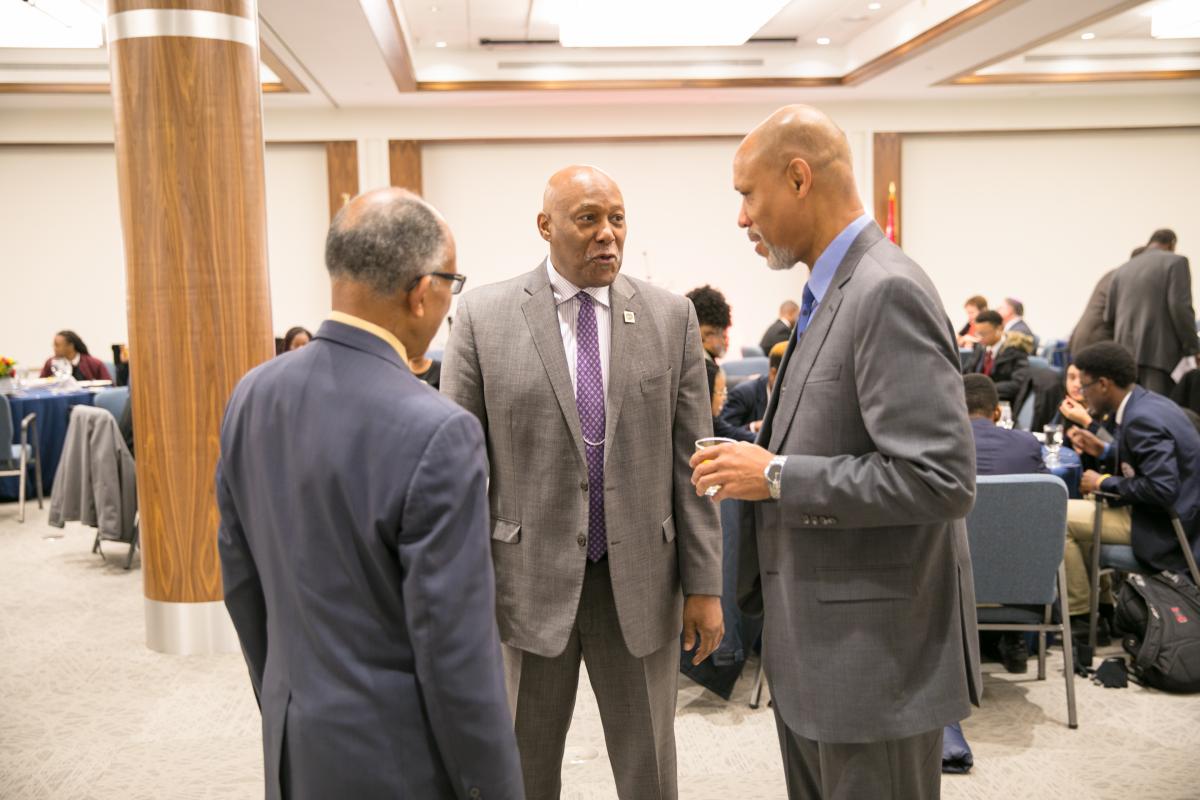
Alvin Kibble (left), NAD vice president for Big Data + Social Media, talks with local pastors Mark McCleary and Anthony Medley during the NAD's first Religious Freedom Prayer Breakfast. Photo by Andre Hastick


According to the Pew Research Center, nearly 78 percent of the world’s population is unable to worship their God in whatever way they see fit.

Today, on Religious Freedom Day (Jan. 16, 2019), local faith and civic leaders gathered at the North American Division (NAD) headquarters in Columbia, Maryland, for the NAD’s first Religious Freedom Prayer Breakfast. They celebrated the freedoms enjoyed in the United States and prayed for guidance in further fostering and sharing it with others.

“We were just really hoping to bring together a lot of religious groups to pray together as a faith-based community — not worrying about what day we worship [on]or what type of house of worship that we’re in,” said Orlan Johnson, director of Public Affairs and Religious Liberty for the North American Division of the Seventh-day Adventist Church, and one of the event organizers. “Just the idea that we should all pray together and to seek the best that we can seek for our nation, for our community, for all of our loved ones and we think we accomplished that today.”

Zainab Chaudry, Maryland outreach director for the Council on American-Islamic Relations, said, “I feel like it is very important to have these kind of events, especially on days like today — Religious Freedom Day — because it is a reminder of the work that needs to be done to continue to protect religious freedom and religious pluralism in our country, especially when so many houses of worship and so many faith communities are being targeted by hatred, bigotry and intolerance. … It is an affirmation of our shared values towards one another’s liberty and existence and security.” 


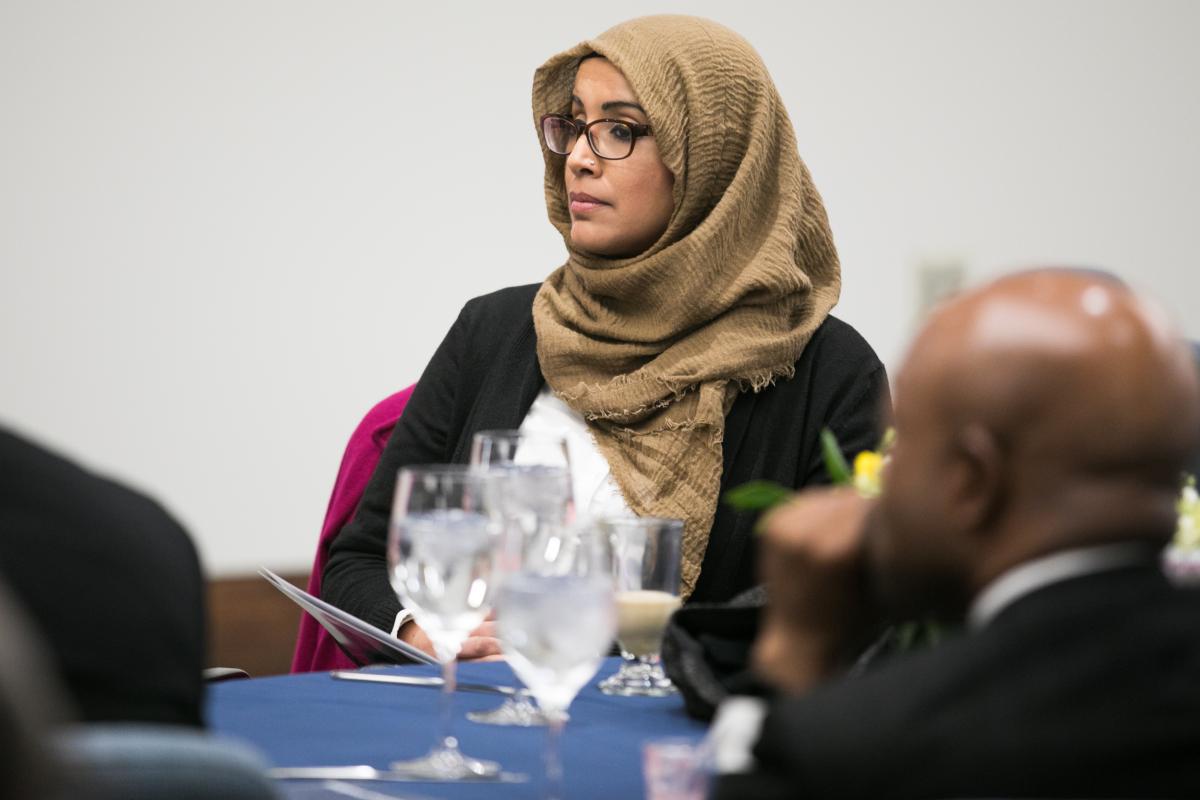
Zainab Chaudry, Maryland outreach director for the Council on American-Islamic Relations, attends the Jan. 16, 2019 Religious Freedom Prayer Breakfast. Photo by Andre Hastick


The event also provided an opportunity for local ministry leaders to network with civic leaders and strategize about ways they can better serve their communities. 

Saturday, October 27, 2018

SAC (Society of Adventist Communicators) 2018 Keynote


SAC 2018 Keynote from NAD Adventist on Vimeo.


SAC 2018 Keynote

4 days ago


NAD Adventist


The keynote presentation for the 2018 Society of Adventist Communicators Convention with Kaleb Eisele (Humans of Adventism), Erica Jones (Gorgeous2God), Justin Khoe (ThatChristianVlogger), and Emily Long (71.5 Magazine) on Friday, October 19, 2018


Saturday, October 07, 2017

With Prayers and Blessings, North American Church Moves to New Headquarters


The new headquarters of the North American Division in Columbia, Maryland. [Photo: North American Division]

Marcos Paseggi

Senior Correspondent, Adventist Review

October 2, 2017


Farewell luncheon, consecration service marked by gratitude, laughter, and tears.

By: Marcos Paseggi, Adventist Review

The Seventh-day Adventist Church in North-America (NAD) officially moved its offices from the building it shared with the General Conference (GC) of the world church in Silver Spring, Maryland, United States, to new headquarters located 12.5 miles (20 kilometers) north in Columbia, Maryland, on September 18. The move capped years of joint planning with world church leaders and months of building renovations and logistical considerations.

An August 29 farewell luncheon hosted by the GC Prayer Ministries team and a consecration worship service and reception organized by the GC leadership team on September 20 were marked by moments of gratitude, laughter, and tears. GC and NAD church leaders emphasized that the main reason for the move is to help the region focus even more intensely on mission.

“The move is to focus on mission, to advance mission in the NAD,” said world church president Ted N. C. Wilson in a special message delivered at the consecration service. “We thank [the NAD] for being part of the great world family of Seventh-day Adventists.”

One of the Youngest

For decades, as “divisions” or church regions were formed around the world to serve the local membership better, the Adventist Church in North America remained an almost indistinct part of the world church headquarters.

“The North American Division, unlike other divisions, has almost always been administered directly by the General Conference. In fact, for many years the two have been virtually indistinguishable,” explained Ministry magazine editor J. R. Spangler back in an April 1984 feature discussing the NAD’s new status at the time.

After some recommendations in the late 70’s, delegates to the 1980 General Conference Session in Dallas, Texas, United States voted to establish the North-American Division as a separate division of the world church, like the ones already in place in other parts of the world. For the first time in the late 80’s to early 90’s for instance, department directors were appointed to serve the needs and meet the specific challenges of the church membership in North-America. The NAD and the GC, however, kept sharing the same building.

“Those who have worked in the NAD realized decades ago that the time would come when the NAD would need more room to do their planning and to execute their plans,” said world church treasurer Juan Prestol Puesán in remarks to both GC and NAD employees at the consecration service. “We are glad this moment has come. [But] as you leave this place, remember this is your house too.”

Close Connections

Church leaders reminded attendees that the network of close connections between the world church and the church in North-America has been historically strong.

“Words do not adequately express the interconnections between the GC and the NAD,” said NAD president Dan Jackson in a live phone message during the farewell luncheon. Jackson, who was attending a board meeting in California and could not attend the luncheon in person, said he had words of thanks for the historical support of the world church to the NAD. “We have been greatly blessed along the years…For all the prayer support, the verbal support, the actual support the NAD has been given through the years, we praise God and we say, ‘Thank you.’”

As part of the transition, GC and NAD employees were also invited to leave farewell messages on a wall leading to the NAD offices section of the world church headquarters. Many messages poignantly emphasized how meaningful the relationship between the two organizations have been. Others had sincere words of appreciation for the time shared in the building. “We love you, and we will miss the fellowship,” wrote an employee. “Lots of good times! Lots of good memories!” wrote another.


General Conference officers present gifts to the NAD officers and their spouses at the recent consecration worship service. [Photo: Pieter Damsteegt]

Saturday, September 16, 2017

NAD CALLED Out: An Interview With The Pastor


July 7, 2015

13 min read


Pastor Andrew Henriques, in this interview shares his thoughts, insights and the implications based on Bible history and prophecy, of the North American Division of Seventh-Day Adventists inviting and allowing Sunday-keeping ecumenicist, Becky Pippert, and Sunday pastor, teacher, and author, Dr. Tony Evans to present at a convention for Seventh-Day Adventist pastors and their families named “CALLED.” The well-attended meeting in Austin, Texas was held June 28—July 1, 2015. During this Conference, Pippert spoke twice. Her presentation titles were: “Talking about Jesus without Sounding Religious” and “Reaching the Secular Mind.”1 Dr. Evans presented on how pastors can impact the communities in which they serve.2

Interviewer: Pastor Henriques, thank you for your willingness to address this topic and to give us your perspective.

Pastor Henriques: Well, my perspective of this issue is based upon the Bible and the Spirit of Prophecy. If my reasoning is not anchored in God’s Word, it has no value; it’s all about what the Word of God has to say, not my opinion.

Interviewer: Thank you for the clarification. That is one thing that I appreciate, and I think others who listen to you regularly do as well, about you and your ministry; and that is, whatever is taught or presented is based upon, not man’s opinion, culture, emotion, or otherwise, but a plain “Thus saith the Lord.” But I want to get right into this, so I will begin by asking: “Is this something that Seventh-Day Adventists need to be concerned about? Is it of any importance that non-Seventh-Day Adventists were invited to address Seventh-Day Adventist pastors? This is nothing new, it has been happening for years, and the denomination is still in existence.

Pastor Henriques: It may still be here, but it is not the movement that it was when it first came into existence. It has degenerated to such a point, that if the pioneers were still around, it would hardly be recognizable to them. But to answer the question, yes! This is absolutely something that should raise concern for Seventh-Day Adventists. Pastors of Seventh-Day Adventist churches should be educated according to the distinctive Seventh-Day Adventist doctrine. And when non-Adventists are brought in to educate Adventist pastors on anything, evangelism in this case, with the North American Division, they [the Sunday-keeping presenters] will bring their fallen theology and indoctrinate the pastors, who will then indoctrinate their members by their false teachings and the implementation of practices that lead away from the Seventh-Day Adventist message and mission and lead toward ecumenism. Interestingly, if you were to look at the backgrounds of both Becky Pippert and Tony Evans, you will find that they are both strong proponents and leaders of various ecumenical movements. Ecumenism is nothing more than a discarding of doctrinal differences across the various denominations and uniting upon points of doctrine held in common to accomplish certain missions and projects. And students of the Bible and the Spirit of Prophecy understand that ecumenical movements lead, not only to Seventh-Day Adventists giving up their distinctive messages of Revelation 14:6-12, but finally to the enforcement of the National Sunday Law. I encourage everyone to read The Great Controversy, pages 444 and 445.

Interviewer: What would you say to the person who argues that the position you are taking is nothing more than elitism, separatism and pride? You mean to tell me that there is nothing worthwhile theologically or even practically that anyone outside of the Seventh-Day Adventist denomination can offer Seventh-Day Adventists?

Pastor Henriques: Remember, this is not my personal position or interpretation. I will get to your question. But let me just say that I find it ironic that this conference in Texas was themed “CALLED.” If we look at the very words of 1 Peter 2:9, we find the mission of Seventh-Day Adventists and the calling they are to fulfill. Let me quote it from the Bible. “But ye are a chosen generation, a royal priesthood, an holy nation, a peculiar people; that ye should show forth the praises of him who hath called you out of darkness into his marvelous light.” It is clear that God’s peculiar people were called out of darkness, and are to point individuals to the marvelous light of the gospel. Of course this text can be applied on a personal level. However, we can also apply it to the mission of the Seventh-Day Adventist denomination. Therefore the context points us to 1844 when God called Seventh-Day Adventists out of the fallen churches that rejected the First Angel’s Message and the Midnight Cry and became Babylon as a result. Testimonies for the Church Volume 5, page 455 states “God has called His church in this day, as He called ancient Israel, to stand as a light in the earth. By the mighty cleaver of truth, the messages of the first, second, and third angels, He has separated them from the churches and from the world to bring them into a sacred nearness to Himself.”3 Why then would any Seventh-Day Adventist, who has come out of the gross darkness of Babylon, go back in to invite pastors and teachers, who have rejected the very messages that have separated them, and allow those Babylonians to teach and train them? What confusion! By inviting these Sunday ministers, Seventh- Day Adventists are rejecting the Three Angels’ Messages; the second of which is to call people out from Babylon. But Seventh-Day Adventists are doing the opposite, calling people from Babylon to teach them.

Interviewer: So pastor, are there ever any exceptions? Are there times or circumstances where inviting people from outside of the Seventh-Day Adventist denomination to preach, teach or train may be appropriate or acceptable?

Pastor Henriques: I am glad that you asked that question because it brings to mind a startling statement from Early Writings, which says that all the truths from God’s Word have been committed to Seventh-Day Adventists, therefore they need not go elsewhere in search for truth. Since I have the book right here, I will read from page 124 and allow that statement to answer the question; it can do a much better job than I can. It is a bit lengthy, but our readers and listeners need to be aware of just how dangerous it is to sit and listen to those in error and darkness.


Saturday, October 22, 2016

Adventists' unity document sparks church rift


Sheila Hagar
Updated Oct 19, 2016


Greg Lehman


A poster on the door of the Walla Walla University church advertising an upcoming talk on women in the clergy.


U-B file photo


A church service at Walla Walla University Church.


COLLEGE PLACE — The global Seventh-day Adventist Church asked voting members this week to be in agreement with a unity document that women cannot be ordained within any of its churches — including those in North America.


The motion was approved in a 169-122 in a vote Tuesday, but officials with the Adventist-run Walla Walla University have signaled disagreement and had asked for significantly more discussion before the vote was taken.


While a tally in recent years counted more than 80 women in pastoral roles in the North American Division of the Seventh-day Adventist Church — including three at Walla Walla University Church — many people in the worldwide organization don’t believe women should be in lead church roles, WWU leaders said this week.

A number of SDA church divisions under the umbrella of the General Conference have begun ordaining women, and are considered out of compliance with the global denomination’s policy of only ordaining men, said Jared Wright, managing editor of Spectrum Magazine.

The publication chronicles Adventist news and commentary, but is independent of the church, Wright said.

The General Conference is made up of nine global units called unions, and the SDA church is experiencing more voting members coming from countries where women don’t have the same positions and experiences as American women do. There can be resistance to women being equal leaders in such countries, said Darold Bigger, a retired SDA pastor and current administrative assistant to Walla Walla University President John McVay.


Darold Bigger
Courtesy photo


Of 19 million members worldwide, less than 7 percent are from the North American Division. With more than one million people joining the SDA world church every year for the past dozen or so years, there is a significant shift in who has major influence over wide reaching leadership decisions, Bigger said.

The unity document is a hierarchal point of view that decides what every SDA church is supposed to do. The ongoing discussion will be to what degree local SDA congregations will be obligated to follow that view, he added.

Spectrum reported that within hours of the world church vote, Dan Jackson of the North American Division said in a statement he strongly supports women in pastoral leadership, and that attitude will never change within his division.

By Wednesday, several entities of the church asked for more dialogue before the unity document could be approved, according to Spectrum.

Nothing in current church policy keeps a woman from serving as a commissioned pastor, but only ordained people can fulfill some duties, such as the division president office, said Daniel Weber, spokesman for North American Division.

Women, however, cannot be ordained in the SDA church, he added.

The WWU church is part of the Upper Columbia Conference. Unlike some other American SDA entities, the conference does not ordain women, per se, but commissions them into leadership roles.

There is a slight difference in the titles, and while commissioned leaders in Upper Columbia’s network can perform duties such as baptisms and weddings they may only do so in their own district — or outside their district with permission — said Jenniffer Ogden, a children’s and family pastor at Walla Walla University Church.


Jennifer Ogden
Courtesy photo


Ogden, who’s been pastoring for eight years, called the leadership’s approach authoritarian and top-down.

“They want us to stay in compliance,” she said.

Bigger said Walla Walla University’s School of Theology officials had joined with those at Loma Linda University in California and Andrews University in Michigan in stating while they affirm the biblical concept of unity, they had serious concerns with the document presented this year. Namely, they questioned if the world church has the right to exert ordination and other authority over local churches.

In their statement, WWU officials said that the concept of ordination held by world church leaders seems to “borrow a lot more from tradition than from biblical evidence.”

In writing for Spectrum, Sakae Kubo, former dean of WWU’s School of Theology, said the issue of female clergy should not be part of the agreement church leaders are demanding.

“In many areas of the church, women would not be allowed to wear pants, especially if they were doing some church work such as teaching,” he said. “There are regional differences, as well, governing wage differences and positions women may take in church organizations such as hospitals, colleges, seminaries.

“And I am sure the church would have great difficulty in enforcing everywhere the principle that men and women ought to receive the same pay if they are doing the same work such as teaching,” Kubo said.

A unified consensus of women in ministry positions is impossible and should not be sought, he added.

Following the General Conference vote Tuesday commentators flew to Twitter to express mostly negative opinions of the vote’s outcome. Comments included calling the SDA a “He-Man Woman Haters Club” and some wondering how America can potentially elect a woman president but the SDA leadership won’t permit a church to ordain a woman.

Some speculated the policy could create major restructuring within SDA regions and others used tweets to remind church leaders uniformity is not the same as unity.

Ultimately churches that don’t stay in line with global policies could face sanctions, such as losing their pastors, Ogden said.

She is hopeful that Walla Walla University Church can stay out of the eye of the storm with the commissioning, rather than the ordination, of women for lead roles in ministry here.

But it’s a time for Seventh-day Adventists to ponder how they stand on women-in-leadership issues, she added.

“Right now the dirty underbelly of the church is hanging out for the world to see. But ... it gives us an opportunity to say, ‘Hey, is this really how we want to treat each other when the world is watching?’”


Wednesday, October 19, 2016

An Open Letter From Dan Jackson to Female Pastors in the North American Division


12 October 2016 | NORTH AMERICAN DIVISION OF SEVENTH-DAY ADVENTISTS and DANIEL R. JACKSON


This statement from North American Division President Daniel R. Jackson was released on Wednesday, October 12, through the North American Division NewsPoints Bulletin.

My Dear Sisters-in-Christ — My Colleagues,

I am sending out this brief note to encourage you today. Be strong in the strength of Christ our Lord. Human hands and hearts will fail you, but He is strong for you.

Yesterday at General Conference headquarters, the Annual Council voted to implement a process to deal with policy non-compliance issues at all levels of the church. We do not know, at this point, what the impact of this will be on the NAD. I invite you pray that the Holy Spirit will guide the church during this period.

Having said this, I want to give you the assurance that the vote yesterday did not affect your status as a pastor. Furthermore, as stated in our press release yesterday, the North American Division remains committed to empower and establish our women in pastoral ministry. We will not give up on this ideal and goal. We are grateful to God for your committed service to Him.

I recognize that there may be, in the coming days, significant rumor mongering and conspiracy theories that predict dire outcomes, etc. My encouragement to you is to keep your eyes fixed on Jesus, the Author and Finisher of our faith. My dear sisters, God will work things out in His time. His purposes will succeed. Please keep holding on. God bless each of you.

Your brother and colleague,

Daniel R. Jackson
President, North American Division of the Seventh-day Adventist Church.


Saturday, October 17, 2015

Unmasking Crafty Policies In The LGBT Documents From The NAD, NUC, Andrews University


Unmasking Crafty Policies In The LGBT Documents From The NAD, NUC, Andrews University


Published on Oct 16, 2015


NAD, Andrews University, and others state that “Non-practicing gay persons should be welcomed into membership and church office.” How would the pastors and the evangelists know who are the non-practicing homosexuals, before baptism? Do the pastors and the evangelists want the non-practicing homosexuals to confess their inclinations to homosexuality to them? If the pastors and evangelists should say that they have no desire to have such confessions made to them, then there was no need for the 21-page document. It might be the case that some of these professed non-practicing homosexuals are baptized and voted into leadership positions in the church. It is a possibility that the non-practicing homosexuals will change their statuses and begin to practice sodomy. It is also a possibility that the pastors and elders would not be notified of the changes in statuses. By those subtle steps, there will be practicing homosexuals in the church overtly and covertly. If the majority of them remain in secret practicing sodomy, while in leadership positions in the church, what has the 21-page position paper accomplished? Nothing. Therefore, we have come full circle, in the sense that there most likely are practicing homosexuals occupying membership and leadership positions presently in the churches, according to the voted guidelines at the summit conference in Cape Town, South Africa, by the GC governing body. What happens if the non-practicing homosexuals change their statuses to practicing homosexuality, while being members in leadership positions? The following might be the result. “NUC leadership says it would strongly advise against any steps to revoke the membership of LGBTI people.” NAD states, “We strongly affirm that homosexual persons have a place in the Seventh-day Adventist Church.”


.