Showing posts with label Longevity. Show all posts

Friday, March 27, 2026

Are Plantains Healthy? Dietitian Discusses Carbs, Sugar and Other Nutrients


Story by Aryelle Siclait


anamejia18 / Getty Images

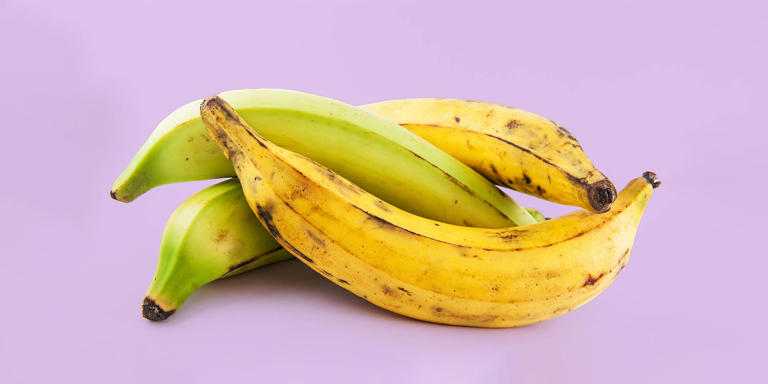
Unripe, plantains are savory and starchy, then, as they transition from green to yellow, speckled with dots, they soften into their sweetest and silkiest form. This healthy fruit is as dynamic as it is delicious.

While you might be inclined to shy away given their sugar content, you’d be missing out on a tasty nutrient boost that can enhance any dish, experts say.

“Plantains are a nutritious choice and a good way to boost intake of fiber, potassium and overall carbohydrates,” Erin Palinski-Wade, registered dietitian and author, tells TODAY.com. The natural sugars in them, which the body is designed to eat, are accompanied by loads of antioxidants and vitamins that’ll fortify you in more ways than one.

Often baked, boiled or fried, in any stage of ripeness, plantains are the starchy powerhouse capable of packing a savory, sweet, crunchy or supple punch. Discover their many benefits and why they’re always worth stocking in your pantry.

Sunday, December 24, 2017

Long-Term Health Comes Down To Two Main Habits, Says Researcher


Dec 23, 2017 @ 10:26 AM 19,760 The Little Black Book of Billionaire Secrets


Alice G. Walton , Contributor I cover health, medicine, psychology and neuroscience. Opinions expressed by Forbes Contributors are their own.


In the ongoing search for health and longevity, researchers have looked to parts of the world where people live the longest—the “blue zones,” which include Sardinia, Italy; Okinawa, Japan; Icaria, Greece; Loma Linda, California; and Nicoya Peninsula, Costa Rica. In these places people tend to live into their 90s or 100s pretty regularly. So researchers have studied their habits, and have taken away what seem to be the most effective lifestyle factors. And, as they should, they match up extremely well with what other types of scientific study have found about cellular health and longevity.


Shutterstock

Paraphrasing Dan Buettner's book The Blue Zones, Rafael Puyol, Director of the Observatory of Demography and Generational Diversity at IE Business School in Italy, points out that there are nine habits that researchers have found people of the "blue zones" habitually engage in. And you can actually whittle these down even further.

First, here are the big nine:

  • Engaging in regular exercise. These sub-populations are all extremely active
  • Eating a plant-based diet. E.g., the Mediterranean diet or traditional Asian diet
  • Drinking alcohol moderately. This matches what researchers have discovered about the effects of light-moderate alcohol intake and disease risk
  • “Hara hachi bu,” a Confucian concept, which suggests we should eat only until we hit 80% of our fullness capacity
  • Punctuating our days with a stress-reducing activity. Across the blue zones, this means different things: “taking a nap in Mediterranean societies, praying in the case of Adventists, the tea ceremony of women in Okinawa,” writes Puyol
  • Having a reason larger than oneself to get up in the morning -- the Japanese word that conveys this idea is “Ikigai”
  • Being a part of social groups that contribute to one’s healthy habits
  • Engaging in religious communities with common religious practices
  • Maintaining strong relationships with family members

You can probably see the punchline coming. These nine habits can actually be boiled down to just two: Keep a healthy body and keep a healthy mental life—in other words, a good lifestyle and “good practices,” as Puyol says. He writes that the lifestyle portion includes the first few points above, and “implies regular intensity exercise, including routines to ‘break’ from daily stress, and including mainly plant-based products in our diets, eating without filling up and not drinking excessively.”

The other, more cerebral tenet is all about devoting time to your mental, social, spiritual, and communal health. “[F]amily, religious communities, social groups, and so on – all of which must have their own 'ikigai,' that is, their own 'reason to live.' There is a personal 'ikigai,' but there is also a collective 'ikigai' that sets the goals for each community as well as the challenges to overcome in order to achieve them.”

The pursuit of health may not always be straightforward, but it’s a lot simpler than we sometimes think, given the bombardment of “new” health tips and tricks we get. It really just boils down to some simple habits, a surprising number of which are behavioral/psychological. You don’t have to be perfect, but doing what you can, whenever you can, may make a difference in the long-run.


Source

Tuesday, June 04, 2013

Vegetarian diet tied to fewer deaths over time


By Andrew M. Seaman

NEW YORK | Mon Jun 3, 2013 4:35pm EDT

(Reuters Health) - People who limit how much meat they eat and stick to mostly fruits and vegetables are less likely to die over any particular period of time, according to a new study.

"I think this adds to the evidence showing the possible beneficial effect of vegetarian diets in the prevention of chronic diseases and the improvement of longevity," said Dr. Michael Orlich, the study's lead author from Loma Linda University in California.

In 2012, a Gallup poll found about 5 percent of Americans reported to be vegetarians.

Previous research has found that people who eat mostly fruits and vegetables are less likely to die of heart disease or any other cause over certain periods of time (see Reuters Health stories of March 14, 2012 and January 31, 2013 here :reut.rs/14opIgy and reut.rs/14opJBa.)

Another study from Europe, however, found British vegetarians were just as likely to die at any point as meat eaters, so it's still an "open question," Orlich said.

For the new study, he and his colleagues used data from 73,308 people recruited at U.S. and Canadian Seventh-day Adventist churches between 2002 and 2007.

At the start of the study, the participants were asked about their eating habits and were separated into categories based on how often they ate dairy, eggs, fish and meat.

Overall, 8 percent were vegans who didn't eat any animal products while 29 percent were lacto-ovo-vegetarians who didn't eat fish or meat but did eat dairy and egg products. Another 15 percent occasionally ate meat, including fish.

The researchers then used a national database to see how many of the participants died by December 31, 2009.

Overall, they found about seven people died of any cause per 1,000 meat eaters over a year. That compared to about five or six deaths per 1,000 vegetarians every year.

Men seemed to benefit the most from a plant-based diet.

Orlich cautioned, however, that they can't say the participants' plant-based diets prevented their deaths, because there may be other unmeasured differences between the groups.

For example, Alice Lichtenstein, director of the Cardiovascular Nutrition Laboratory at Tufts University in Boston, said the participants who were vegetarians were healthier overall.

"It's important to note that the vegetarians in this study were more highly educated, less likely to smoke, exercised more and were thinner," Lichtenstein, who was not involved with the new study, told Reuters Health.

Those traits have all been tied to better overall health in the past.

SHOULD YOU GO VEG?

Dr. Robert Baron, who wrote an editorial accompanying the new study in JAMA Internal Medicine, said the new evidence doesn't mean everyone should switch to a plant-based diet.

"I don't think everybody should be a vegetarian, but if they want to be, this article suggests it's associated with good health outcomes," said Baron, professor of medicine at the University of California, San Francisco.

Instead, he writes limiting added sugars, refined grains and saturated fats trumps whether or not to include a moderate amount of dairy, eggs, fish or meat.

Previous research has found that people who were on a mostly plant-based diet still had lower cholesterol while eating a small amount of lean beef (see Reuters Health article of January 2, 2012 here :reut.rs/14oPRMr.)

"It's like everything else, you have to think about it in terms of the whole package," Lichtenstein said.


SOURCE: bit.ly/MbBLb9 JAMA Internal Medicine, online June 3, 2013.


.
.

Monday, March 04, 2013

Frailty of Man


Job 14
King James Version (KJV)


1 Man that is born of a woman is of few days and full of trouble.

2 He cometh forth like a flower, and is cut down: he fleeth also as a shadow, and continueth not.

3 And doth thou open thine eyes upon such an one, and bringest me into judgment with thee?

4 Who can bring a clean thing out of an unclean? not one.

5 Seeing his days are determined, the number of his months are with thee, thou hast appointed his bounds that he cannot pass;

6 Turn from him, that he may rest, till he shall accomplish, as an hireling, his day.

7 For there is hope of a tree, if it be cut down, that it will sprout again, and that the tender branch thereof will not cease.

8 Though the root thereof wax old in the earth, and the stock thereof die in the ground;

9 Yet through the scent of water it will bud, and bring forth boughs like a plant.

10 But man dieth, and wasteth away: yea, man giveth up the ghost, and where is he?

11 As the waters fail from the sea, and the flood decayeth and drieth up:

12 So man lieth down, and riseth not: till the heavens be no more, they shall not awake, nor be raised out of their sleep.

13 O that thou wouldest hide me in the grave, that thou wouldest keep me secret, until thy wrath be past, that thou wouldest appoint me a set time, and remember me!

14 If a man die, shall he live again? all the days of my appointed time will I wait, till my change come.

15 Thou shalt call, and I will answer thee: thou wilt have a desire to the work of thine hands.

16 For now thou numberest my steps: dost thou not watch over my sin?

17 My transgression is sealed up in a bag, and thou sewest up mine iniquity.

18 And surely the mountains falling cometh to nought, and the rock is removed out of his place.

19 The waters wear the stones: thou washest away the things which grow out of the dust of the earth; and thou destroyest the hope of man.

20 Thou prevailest for ever against him, and he passeth: thou changest his countenance, and sendest him away.

21 His sons come to honour, and he knoweth it not; and they are brought low, but he perceiveth it not of them.

22 But his flesh upon him shall have pain, and his soul within him shall mourn.


.

Friday, March 01, 2013

Kick Pasteurized Milk To The Curb And Make Your Own Healthy Nut Milk


February 28, 2013 | By admin


Karen Foster, Prevent Disease

Waking Times

Sure, we can all buy our favorite store brands, but how many of us dread those nasty complement ingredients such as emulsifiers, oils, starches, artificial or even natural flavors we know have no place in a healthy beverage? If you make your own nut milk, you’ll also save yourself from the toxic chemicals which line the cartons of more than 80 percent of brands. Instead of feeling limited to what’s available at the market, making your own nut milk is easy and you’ll get to decide exactly what goes in it.

Today’s processed milk is far from healthy and is essentially a dead liquid, devoid of any real nutritional value. What’s a better alternative? Nuts!

Brazil nuts, almonds, hazelnuts, walnuts, pecans, and hemp seeds all make nutrient dense, great tasting milks and they’re all essentially made the same way.

WHAT YOU NEED
Organic nuts or seeds. A general rule is a ratio of at least 2:1. Two parts water to 1 part nuts or seeds.
Half-gallon mason jar or glass pitcher. Use this for soaking the nuts and storing your final product.
Blender of food processor. You don’t need a high-speed blender or anything fancy to make nut milk.
Nut milk bag, cheesecloth or fine-meshed sieve (optional). Use if you like your milk smooth instead of pulpy.

SOAK nuts, seeds, or grains by placing in a bowl with filtered water and a pinch of sea salt. Different foods require different soak times.


- Place the desired nuts or seeds in a glass bowl and cover them with warm distilled, purified or filtered water with a teaspoon of Celtic Sea Salt dissolved in it.

- You will want to use a ratio of at least 2:1. Two parts water to 1 part nuts or seeds.

- Keep the bowl at room temperature and cover with a flour sac cloth or thin tea towel that breathes, and then drain and rinse every few hours to remove the nasties.

- The soaking water will contain all of the toxic enzyme inhibitors which we are trying to remove to improve digestibility and nutrient bioavailability, and helps everything blend more easily. So proper rinsing is really important. Make sure you do a final rinse until the water comes out clear. Some people recommend doing a final rinse with a diluted solution of apple cider vinegar in order to remove any remaining bacteria.

- You want to try and soak the nuts for the recommended amount of time to make them as digestible as possible.

- As a general rule with nuts: the harder the nut, the longer you need to soak. Long soak nuts such as almonds, pistachios and hazelnuts are best soaked for about 12 hours. Common medium soak nuts are walnuts, brazil nuts and pecans. They require less soaking time as they swell more quickly as they are oilier. Short soak nuts are cashews, macadamias and pine nuts. They require the least amount of soaking as they do not contain inner skins, and therefore not as many enzyme inhibitors.

Nut Soaking Time (Hrs)

Almonds 8-12
Brazil Nuts 3
Cashews 2-4
Flaxseeds 1/2
Hazelnuts 8-12
Macadamias 2
Pecans 6
Pistachios 8
Walnuts 4


BLEND with filtered water. A high-speed machine like a Vitamix is preferable to really pulverize the mixture. A 1:3 ration of nuts/seeds/grains to water generally yields good results. I start with 2 cups of water and gradually add more water until I get the taste and consistency I like. Blend for about 1 minute. This can warm the mixture. Chill in the fridge, or blend with ice to consume immediately.

SWEETEN the milk to taste with pitted dates, stevia, maple syrup, honey, coconut sugar, etc. You can also add 1 teaspoon of vanilla extract to boost flavors, and 1 tablespoon of coconut butter to emulsify ingredients. You can also jazz up your milks with raw cacao, fruit, cinnamon, nutmeg, or anything else that tickles your fancy.

STRAIN Some foods like cashews, macadamias, and pecans yield smooth milks. However, with most other foods, like almonds, you will get some texture. You can enjoy this fibrous milk, or strain it for a smoother, more commercial-style blend. Place a nut milk bag over a large container, pour the milk in, and gently squeeze the bag until all liquid has passed through. You can repurpose the pulp as a body scrub by mixing with some coconut oil, or dehydrate it for use in cookies, crusts, and crackers.

Here are five ideas for your pulp (if you don’t want it in your milk):
1. Nut Flour. The pulp can be dehydrated or placed in a 200 degree oven until dried. Grind the dried pulp in a spice grinder or high-speed blender until fine.2. Raw cookies. Blend the pulp with some dates, nut butter, shredded coconut and sweet spices. Roll into balls and roll in shredded coconut or raw cocoa powder.

3. Soft, raw cheese. Blend the pulp in a food processor with a little nutritional yeast, garlic, lemon juice, fresh herbs, and salt. Serve with crackers.

4. Cereal. Combine the pulp with your fresh nut milk, dried fruits, nuts and sweet spices for a porridge-like cereal.

ENJOY Most milks will keep in the fridge in a sealed container for two or three days. Freeze any leftovers in ice cube trays for use later. Homemade milks can separate when stored. Just shake or blend again before drinking.

Sources:
antonhealth.com
vegetariantimes.com 


About the Author

Karen Foster is a holistic nutritionist, avid blogger, with five kids and an active lifestyle that keeps her in pursuit of the healthiest path towards a life of balance.


.

Saturday, October 13, 2012

Eat Vegetarian, Live Longer?


The landmark Adventist Health Study found that vegetarians live longer lives. Here's an update on the latest research from the same group.


THURSDAY, Oct. 11, 2012 — Some vegetarians can be awfully superior about the health benefits of their plant-based diet. What they might not know is they have the Adventist Health Study to thank. 
In the '70s and '80s, a series of studies from Loma Linda University in California, which has tracked tens of thousands of Seventh-day Adventists since 1958, were the first to show that vegetarians live longer than meat eaters.
Not only that, the studies also indicated that the kinds of foods frequently consumed in vegetarian diets — fruits, vegetables, nuts, legumes — can reduce a person's risk for diseases, such as cancer, heart disease, and type 2 diabetes, control body mass index and waist size, and boost brain health.
In 2002, the National Institutes of Health gave Loma Linda a grant to continue the research on Seventh-day Adventists, branding this round of research Adventist Health Study 2.
The study, which is midway to completion and includes 96,000 people from the United States and Canada, presents findings just as dramatic, principal investigator Gary E. Fraser, MD, PhD, said at the Academy of Nutrition and Dietetics' 2012 Food & Nutrition Conference & Expo. Vegetarian Adventist men live to an average of 83.3 years and vegetarian women 85.7 years — 9.5 and 6.1 years, respectively, longer than other Californians, Fraser explained.
Here are more findings from the Adventist Health Study 2:
  • Vegans are, on average, 30 pounds lighter than meat eaters.
  • Vegans are also five units lighter on the BMI scale than meat-eaters.
  • Vegetarians and vegans are also less insulin resistant than meat-eaters.
  • Lean people are also more likely to exercise regularly, eat plants, and avoid cigarettes than overweight people, suggesting that numerous factors are boosting the overall health of these participants. 
  • Pesco-vegetarians and semi-vegetarians who limit animal products, but still eat meat once a week or so, have "intermediate protection" against lifestyle diseases.
Perhaps the most staggering finding? Obesity cuts an African-American's life span by 6.2 percent, and across races, the protective qualities of fat in seniors was not seen. (Previous studies have found past about age 85, people who are obese have a lower risk of dying than normal-weight peers.)
The study population is 25 percent African-American and half vegetarian. The reason why researchers have such an interest in the Seventh-day Adventist population, they say, is that the religion promotes vegetarianism and discourages drinking, smoking, and drug use. For example, health pioneer and breakfast cereal inventor John Harvey Kellogg is one of the church's most famous founding members. 
TELL US: Have you cut back on meat for your health? (Note: Users will not be able to comment on mobile devices.)
For more nutrition news and trends, follow @weightloss on Twitter from the editors of @everydayhealth.
Last Updated: 10/11/2012

.

Saturday, July 03, 2010

Scientists Crack Code of How to Live Past 100: Vegetarianism, Religion, Good Genes

by Brian Merchant, Brooklyn, New York on 07. 2.10
Science & Technology


Image via Dezinerfolio

A group of US scientists studying human longevity believe they've gathered some invaluable evidence in the quest to predict which people will live to be older than 100. Based on genetic 'signposts', the scientists have worked out a mathematical model that determines a person's chance of living to be a centenarian. To gather the data, they looked at the biggest study yet done on centenarians, and found that there were common lifestyle choices and habits amongst those who lived longest: Vegetarianism, avoidance of alcohol, and a strong religion, to name a few. Beyond that though, it's up to having the right genes . . .

The BBC has more on the study:
only one in 6,000 people in industrialised countries reaches such a ripe old age. And 90% them are still disability free by the age of 93. The researchers now think they have cracked the genetic secret of this longevity.

They identified genetic markers that are "most different" between centenarians and
randomly selected individuals ... "We tested our model in an independent set of centenarians and achieved an accuracy of 77%," explained Professor Sebastiani. "So out of 100 centenarians we could correctly predict the outcome of 77."

Their work builds on a previous study, which looked at a group of the longest-living Americans: Seventh Day Adventists. They were found to have the highest average life expectancy, at 88 years. One of the researchers explains the significance of that finding: "They get there by virtue of the fact that they have a religion that asks them to be vegetarian, they regularly exercise, they don't drink alcohol, they tend to manage their stress well through religion and time with family and they don't smoke."

But in order to make it 10 or more years longer, "genetics plays an increasingly important role."

The scientists are now setting to work devising a website that would allow the public to enter personal data in order to find out how long the model predicts they'll live. Which is kind of creepy. But also useful -- such a tool could eventually play a role in helping people prepare treatments or therapy plans accordingly. Perhaps if you knew how long your genes may allow you to live would act as a motivator for pursuing healthy eating and living habits. Of course, it could depress the hell out of you, pushing you into living a life of excess and indiscretion as well ... . ,
,
More on Health


.