Showing posts with label QOD. Show all posts

Tuesday, June 04, 2013

Understanding The 3 Angel's Message & The SDA's Today


cregen124

Uploaded on Jun 5, 2011


Explaining!

KEY TO ABBREVIATIONS OF NON- E.G. WHITE WRITINGS

AR................................ Adventist Review.
AS................................ Angry Saints.
2BEM........................... Churches Respond to BEM, vol 2.
CCYQ........................... Cornerstone Connections Youth Quarterly.
27 Doc......................... Seventh-day Adventist's Believe.
FTW............................. Faith That Works.
Mkd.................................Mark­ed.
MOD............................. Movement of Destiny.
OOF............................. Obedience of Faith.
PUR............................. Pacific Union Recorder.
QOD............................. Questions on Doctrines.
ROE............................. The Return of Elijah.
SBF.............................. Salvation By Faith.
SOT.............................. Signs of the Times.
TKG.............................. To Know God.
VOP News................... Voice of Prophecy News Magazine.


.

Saturday, November 05, 2011

Men Who Have Arisen


LESSONS FROM THE PAST

From time to time, men have arisen in our ranks with a message. But there were earmarks in their conduct and/or in their message that were as red flags which should have been a warning. Other men arose whose deportment and message were both beneficial.

...


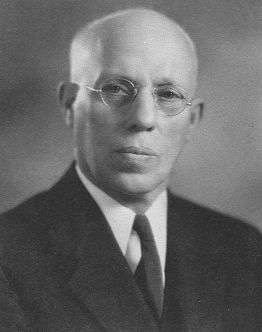
Milian Lauritz Andreasen (1876-1962) was another man who arose among us with a message. But M.L. Andreasen was neither proud nor did he try to tear down our God—given Bible—Spirit of Prophecy beliefs. Instead, he sought to defend them, even though to do so meant opposing leaders in our denomination. Andreasen was not afraid to name names and call sin by its right name.

For decades, he had been a leading evangelist, and later dean or president of one or more of our colleges. Andreasen had a clear mind and never swerved from loyalty to the God of heaven and the Bible—Spirit of Prophecy writings. He wrote 13 books, and, by the 1940s and 1950s, was our leading authority on the sanctuary service.
But while the Evangelical Conferences met in the mid-1950s, efforts were made to keep a lid on the doctrinal sellout that our leaders in Washington were carrying out with representatives of the Evangelicals. When M. L. Andreasen learned what was happening, he was aghast.

It is an intriguing fact that there were hundreds of other men in our colleges, publishing houses, administrative offices, and local churches, who also gradually learned what was taking place. Word spreads fast among the work force. But, fearing to lose their job, nearly everyone kept quiet. But not M. L. Andreasen. He would not sell out for a mess of pottage. You will find the entire story of what occurred in our Evangelical Conferences, now in section two of our Doctrinal History Tractbook. Andreasen published the facts and named the names. He called sin by its right name. The only response was to castigate him as a "troublemaker.” But he could rightly reply, as did Elijah to Ahab, "I have not troubled Israel; but thou, and thy father's house, in that ye have forsaken the commandments of the Lord, and thou hast followed Baalim" (read 1 Kings 18:17—18).

Not the burden of denouncing error, but the vicious response of rejection and abandonment hurled at the man from every direction, led to bleeding ulcers which killed Andreasen in 1962. He died a martyr for God's truth. And that is not a poetic sentiment, but an accurate statement.

Andreasen was a man who arose with a message—not of denunciation of the Spirit of Prophecy or our historic beliefs,—but rather a defense of both, combined with a strong reproof of the very men who were trying to new—model our beliefs into an image of modern Protestant error.

M. L Andreasen tried as hard as he could to stem the doctrinal apostasy that two men in Washington, D.C. (LE. Froom and RA. Anderson) were agreeing to, in order to keep peace with Walter Martin and Donald Barnhouse, so those Protestant leaders would print in their journal, Eternity; that we were a true-blue "Evangelical" church.

Most of Andreasen's efforts were made in the middle and late 1950s. Soon another voice was to be raised in our church.


Read more
.

Tuesday, August 10, 2010

Progressive Adventism


.
From Wikipedia, the free encyclopedia

"Evangelical Adventist" redirects here. For the early Millerite group, see Evangelical Adventist Church.


Progressive Adventists are members of the Seventh-day Adventist Church who disagree with certain beliefs traditionally or commonly held by mainstream today in the church. They think of themselves as theologically progressive relative to the denomination's mainstream, and place an emphasis on the gospel. They are often described as liberal Adventism by other Adventists, however the term "progressive" is generally preferred as a self-description. This is partly because most are not liberal Christians (although a small portion actually are). This article describes terms such as evangelical Adventism, cultural Adventism, charismatic Adventism, and progressive Adventism and others, which are generally related but have distinctions.

Progressives typically question one or more of the church's more peculiar, or "distinctive" beliefs such as the investigative judgment, the remnant, a future global Sunday-law, or an overuse of Ellen G. White's writings. A major factor in its rise was as a result of Adventists mixing more widely with other Christians, which was sparked by the need for government accreditation for its educational institutions. However it is an emerging movement with an emerging definition, and its proponents resist drawing up any formal belief statement. (It also has many similarities with the emerging church movement).[1] Perceptions and definitions of it may differ somewhat depending on the author, although much in common is also clearly discernible.

The movement emerged from interactions with evangelical Christians in the 1950s, which included the publication of Questions on Doctrine. This period marked a shift in the broader Christian world's perception of Adventists, from a sect to more commonly viewed as a legitimate Christian denomination. However earlier streams are also evident in Adventist history. The label "progressive Adventist" was created in the mid-1960s by Spectrum magazine, according to one author.

One scholar wrote in 2001,
"It is only within the last few decades that the Adventist Review has recognized editorially that there exists within the Seventh-day Adventist Church, at least in North America, 'liberals,' 'liberal churches,' 'liberal colleges/universities' and 'liberal conferences.' Depending on the author and his/her agenda, Adventist liberals are compared and/or contrasted with 'conservative Adventists,' 'historic Adventists,' 'Bible-believing (or EGW-believing) Adventists,' 'traditional Adventists,' 'evangelical Adventists,' 'cultural Adventists,' and/or 'ecumenical Adventists.'"[2]
.
Many scholars of the church are progressive, and progressive Adventism has strong connections with Adventist higher education. In an 1980s survey of Adventist theologians, 45% described their beliefs as "liberal" compared to other church members; 40% as "mainstream", 11% as "conservative", and 4% did not respond to the question.[3] Numerous magazines and conferences also support the movement. A higher proportion of those in younger generations are more progressive.[4] As the church varies by the demographics of location, culture, ethnicity, age group and other factors, progressive Adventism has a stronger presence in some places (such as the West Coast of the United States) than others.[5] Additionally, there are trends corresponding with the number of generations one's family has been an Adventist. As a generalization, converts and their children are often strong supporters of their new faith, however the third generation often question many beliefs and practices.[6] One book labels this trend, which is also evident in financial upward mobility, the "revolving door".[7]

...

West Coast Religion Teachers' Conference
In the United States, Adventist colleges and universities on the West Coast are considered more progressive – such as Loma Linda University, La Sierra University, Pacific Union College and Walla Walla University. Academics meet at the West Coast Religion Teachers' Conference.


.

Evangelical Adventism—Questions on Doctrine’s Legacy

Evangelical Adventism—Questions on Doctrine’s Legacy
Larry Christoffel


David VanDenburgh, senior pastor of the Seventh-day Adventists Campus Hill Church in
Loma Linda, California, and I, an associate pastor of the same church, visited Walter Martin in
1987. At the same time we met him, we were introduced to Kenneth R. Samples, on the staff of
Martin’s organization, The Christian Research Institute. We learned that they were planning to do an article on Seventh-day Adventism, and we were happy to talk with them.

Samples’ article, “From Controversy to Crisis, An Updated Assessment of Seventh-day
Adventism,” appeared in the Summer, 1988 Christian Research Journal.1 According to Samples,
the “controversy” which the Evangelical/SDA Dialogues (1955,1956) and the publication of
Seventh-day Adventists Answer Questions on Doctrine2 (hereafter, QOD) stirred up continued
through the 1960s and 70s. Samples questioned whether the church would continue in the same
direction as QOD or return to a “more traditional understanding of the faith”3

He identified two groups within Adventism aligning themselves with the polarization
mentioned above. The one, continuing in basic agreement with QOD, he labeled, “Evangelical
Adventism,” and the other, opposing QOD, he called, “Traditional Adventism”. Differences of
opinion on Righteousness by Faith (Was Righteousness Justification only or both Justification and Sanctification?), the human nature of Jesus Christ (Did Jesus inherit Adam’s sinless pre-fall or his sinful post-fall nature), the sanctuary (Was the Atonement complete at Calvary, or not?), assurance of salvation (Could a Christian have it our not?) and the authority of Ellen White (Was Scripture its own interpreter or were Mrs. White’s writings an infallible interpreter of Scripture?) characterized the two groups. 4

Samples reasoned that the conflict moved to “crisis” level when an Australian theologian
Desmond Ford, challenged the traditional understanding of the Adventist sanctuary doctrine. “He [Ford] argued that the literalistic and perfectionistic understanding of these doctrines promoted by traditional Adventism had no biblical warrant, and were accepted primarily because of Mrs. White’s vision, which confirmed them.” 5 Ford had been given the opportunity to prepare a defense he did in a 990-page book, Daniel 8:14, the Day of Atonement and the Investigative Judgment6. After the August, 1980 Glacier View Sanctuary Review Committee, called to review Ford’s views, met, Ford was fired and his ministerial credentials were removed. Hundreds who agreed with him have been affected, many losing their positions with the church.7 .

.

.
1 Kenneth R. Samples, “From Controversy to Crisis, an Updated Assessment of Seventh-day Adventism,”
Christian Research Journal, Summer 1988, 9-14.
2 Prepared by a Representative Group of Seventh-day Adventist Leaders, Bible Teachers, and Editors, Seventhday
Adventists Answer Questions on Doctrine, Review and Herald Publishing Association, Washington, D.C., 1957.
3 Kenneth R. Samples, op cit, 12.
4 Kenneth R. Samples, op cit, 12,13..
5 Ibid.
6 Desmond Ford, Daniel 8:14, the Day of Atonement and the Investigative Judgment, Evangelion Press, Casselberry, Florida, 1980.
7 Kenneth R. Samples, op cit, 14. (For further documentation see Peter H. Ballis, “A Study of the Process of Leaving the Adventist Ministry,” Praeger Publishers, Westport, Connecticut, London, 1999. This thesis deals with those leaving the Adventist ministry in Australia and New Zealand in the years after the Ford crisis.)
.
.

Read More @ http://qod.andrews.edu/docs/09_larry_christoffel.pdf
.

Saturday, January 09, 2010

NONE DARE CALL IT APOSTASY


NONE DARE CALL IT APOSTASY

Part one: Dr. John J. Grosboll
Part two: Dr. Ralph Larson

Part One
Introduction

“Who are standing in the counsel of God at this time? Is it those who virtually excuse wrongs among the professed people of God and who murmur in their hearts, if not openly, against those who would reprove sin? Is it those who take their stand against them and sympathize with those who commit wrong? No, indeed! Unless they repent, and leave the work of Satan in oppressing those who have the burden of the work and in holding up the hands of sinners in Zion, they will never receive the mark of God's sealing approval. They will fall in the general destruction of the wicked, represented by the work of the five men bearing slaughter weapons. Mark this point with care: Those who receive the pure mark of truth, wrought in them by the power of the Holy Ghost, represented by a mark by the man in linen, are those “that sigh and that cry for all the abominations that be done” in the church. Their love for purity and the honor and glory of God is such, and they have so clear a view of the exceeding sinfulness of sin, that they are represented as being in agony, even sighing and crying. Read the ninth chapter of Ezekiel” 3T 267.

Part one LAODICEA- the term signifying serious spiritual maladies which is so often applied to the Seventh- day Adventist Church. We have heard it numerous times before and will undoubtedly hear it again. But is it really true that the church is spiritually ill? Some deny it Others acknowledge that fact, but ask, “Why does it have to be discussed all the time?”

Friend, the most serious problem of the Laodicean church is not her condition of being lukewarm, spiritually blind, destitute of the righteousness of Christ and unfaithful and unloving as described in Revelation 3: 14- 22. The more serious problem of Laodicea is that she does not know this is her condition. The reason Laodicea does not know this is not because the information concerning her condition is not available. This information has been available for decades. The problem is that a large part of Adventists are living in a state of denial of plain facts. They dare not acknowledge and act on these facts because to do so would involve discomfort (maybe pain) and necessitate earthshaking changes in their lives. It is like when a person is told by his physician that he has cancer— that is a terrible fact to hear, and a common way to respond to it, initially, is to live in a state of denial, especially if one feels good at the moment. To acknowledge the facts would involve a total revision of ones life, future objectives and plans because cancer will shorten one's life if it is not eradicated or conquered.

In the same way, if Laodicea's problem is not solved she will be vomited out of the mouth of the Lord. Is it being critical for a physician to tell a patient that he or she has cancer? It could be construed that way, but telling the facts is absolutely necessary if the patient is to be motivated to take the steps necessary for recovery. In the same way, the spiritual problems of God's professed people today must be addressed plainly if they are going to be motivated to make the necessary changes so they are not weighed in the balances during the judgment and found wanting.

Friend, as long as God has a church that is in apostasy, He will send messengers to it. These messengers must warn, rebuke and plead with God's professed people to repent, confess and reform or the curse of God will be upon them. Isaiah, one of His messengers, was told to “Cry aloud, spare not; lift up your voice like a trumpet; tell My people their transgression, and the house of Jacob their sins” Isaiah 58: 1. Today we are told, “In this fearful time, just before Christ is to come the second time, God's faithful preachers will have to bear a still more pointed testimony than was borne by John the Baptist. A responsible, important work is before them; and those who speak smooth things, God will not acknowledge as His shepherds. A fearful woe is upon them” lT 321. Everything concerning our future destiny hangs on our accepting God's diagnosis of our problem. The longer we experience a problem, the more used to it we become until finally it becomes difficult to realize how serious the problem really is. This happened in Christ's day. ‘Through familiarity with evil, man had become blinded to its [sin's] enormity” DA 752,753. This is one of the main reasons Laodicea is so complacent and there is such a lack of the spirit of Protestantism — all of us today have grown up in the midst of apostasy so we are used to it.

What is apostasy?

Paul describes apostasy as being characterized by 1) sin or breaking God's law (2 Thessalonians 2: 3- 8), 2) believing a lie (2: 11), and 3) not believing the truth (2: 12). The Holy Spirit says that in the latter days some shall apostatize from the faith. “Now the Spirit expressly says that in latter times some will depart from the faith, giving heed to deceiving spirits and doctrines of demons” 1 Timothy 4: 1. For over one hundred years this condition has existed in Adventism. We have had a departure from the historic faith God delivered to us and have been breaking His law, believing lies and not believing the truth, as will now be documented from the Spirit of Prophecy and the historical facts.

One hundred and four years ago the General Conference president, the editor of the Review and Herald and many others in Adventism, rejected the truth God was trying to bring to His people at the Minneapolis General Conference. Although some later repented, the damage which this 1888 apostasy caused is felt even today. One of the principle areas of apostasy in 1888 was the unwillingness to accept the authority of the Spirit of Prophecy — one of the two identifying marks of God's people in the last days. But we were not willing to face the facts of this apostasy. We covered it up. Adventism published books showing that we had really accepted the message of 1888 and we were going on to victory. (Examples of such books are Movement of Destiny, Perfect in Christ, Hot Potatoes and Myths of Adventism.) None dared call it apostasy.

But over one hundred years have gone by and we are still here. A few years after the 1888 Conference, Ellen White said that if we had accepted the message God was trying to send us we would have been in the kingdom ere this. There has been an apostasy.

When it was brought to our attention by brethren Wieland and Short that we had not accepted the message in them and none dared call it apostasy. It was not until the 1888 E. G. W. Materials were published that the average Adventist had available overwhelming proof from many testimonies that the 1888 message had been rejected, that our leaders and many others had gone into apostasy.

But that was only the beginning. Another facet of the apostasy m 1888 was authority. Over and over again Ellen White warned against “kingly power.” There was a power that belonged to God alone and those at the head of the work were not to seek to take some of this power to themselves. In 1888 and onward, testimony after testimony was given in this regard. The words of Jesus in Matthew 20: 25- 28 were to be followed: “But Jesus called them to Himself and said, ‘You know that the rulers of the Gentiles lord it over them, and those who are great exercise authority over them. Yet it shall not be so among you; but whoever desires to become great among you, let him be your servant And whoever desires to be first among you, let him be your slave— just as the Son of Man did not come to be served, but to serve, and to give His life a ransom for many.” ' (See also Matthew 23: 8.) Ellen White continued her admonition after the 1888 conference. In 1896 she wrote the following instruction: “That which makes me feel to the very depths of my being~ and makes me know that their works are not the works of God, is that they suppose they have authority to rule their fellowmen. The Lord has given them no more right to rule others than He has given others to rule them. Those who assume the control of their fellow men take into their finite hands a work that devolves upon God alone.

“That men should keep alive the spirit which ran riot at Minneapolis is an offense to God. All heaven is indignant at the spirit that for years has been revealed in our publishing institution at Battle Creek. Unrighteousness is practiced that God will not tolerate. He will visit for these things. A voice has been heard pointing out the errors and, in the name of the Lord, pleading for a decided change. But who have followed the instruction given? Who have humbled their hearts to put from them every vestige of their wicked, oppressive spirit? I have been greatly burdened to set these matters before the people as they are. I know they will see them. I know that those who read this matter will be convicted” TM 76.

At the General Conference Session in l90l, Ellen White delivered a plea for “a reorganization” GCB 1901, page 25. A decentralization of power, a humbling of self, and a looking to the Lord instead of to man was the call of the hour.

A reorganization was made, one with the approval of Sister White: “I am thankful that there is to be a time when the mists will be cleared away. I hope that this time has begun here. We want the mists here to be cleared away. I want to say that from the light given tome by God, there should have been years ago organizations such as are now proposed. When we first met in conference, it was thought that the General Conference should extend over the whole world. But this is not in God's order” Ibid. 68. Unfortunately, the plan of reorganization worked out in the 1901 General Conference was not implemented. This caused great sorrow to the heart of the messenger of God.

‘The result of the last General Conference has been the greatest, the most terrible sorrow of my life. No change was made. The spirit that should have been brought into the whole work as the result of that meeting was not brought in because men did not receive the testimonies of the Spirit of God. As they went to their several fields of labor, they did not walk in the light that the Lord had flashed upon their pathway, but carried into their work the wrong principles that had been prevailing in the work at Battle Creek” (Letter to Judge Jesse Arthur from Ellen White, Elmshaven, January 15, 1903).

By the 1903 General Conference, the state of affairs was such (because God's plan failed to be implemented) that the centralization of power gave way in the formation of a General Conference with world- wide dominion, despite protest from a minority. Percy T. Magan who was part of this minority stated that the new plan swept away the organizational principles that had been followed in the 1897 and 1901 conferences and introduced principles that opened the way for a papal form of church government.

In 1901, the Spirit of Prophecy was officially accepted and endorsed. but not carried out in practice. This, my friend. will eventually bring about the same results as an open rejection.

The unwillingness to accept the authority of the Spirit of Prophecy affected not only our ministry, conferences and General Conference, it also affected our educational work.

In 1953, A. W. Spalding pointed out to our educators that we were in transgression of the Word of God in five areas: 1) type of motivation prevalent, 2) type of literature studied. 3) type of recreation, 4) lack of nature study and occupation, and 5) lack of proper parent education. In not a single one of these areas have our denominational schools reformed since 1953, rather we have apostatized even worse than then. In 1953 we were not, for example, engaging in competitive sports with the world as our schools are doing today.

Ellen White herself gave Elder Spalding and Dr. Magan permission to publish the selected testimonies that are now called the Spalding- Magan‘ s Collection. It is in these testimonies that explicit instruction is given in regard to tithe and other matters that is entirely contrary to what we have been taught in the professed Seventh- day Adventist Church. In the late 1950's, when after more than thirty years had gone by and these testimonies still had not been published. a man attempted to print these testimonies and the General Conference threatened a lawsuit

The unwillingness to accept the authority of the Spirit of Prophecy resulted in a large departing from the counsels of God concerning health reform. This fact has been thoroughly researched and documented by Julius Gilbert White in his books. Are our ministers following this counsel in regard to health reform: “Let not any of our ministers set an evil example in the eating of fleshmeat”? MM 281.

Unwillingness to accept the authority of the Spirit of Prophecy has resulted in theological heresies so subtle that only those led by the Spirit of God and a careful study of the inspired writings detected what was happening.

How bad would it have to get before we would recognize there Is an apostasy?

Item: If we started to hypnotize Seventh- day Adventists in churches, would we then recognize that there was an apostasy?

[The tape of Dr. Bill Loveless is available for those who need evidence that hypnotic techniques are being taught to our pastors to be used on their congregations.]

Item: If we took fellow Adventists to court and put people in jail who were keeping the commandments of God and the faith of Jesus, would anyone recognize an apostasy?

[In 1989 John Marik was put in prison for using the name Seventh- day Adventist in his church in Hawaii, which was not under conference control]

NOTE: “When troubles arise in the church we should not go for help to lawyers not of our faith. God does not desire us to open church difficulties before those who don’t fear Him. He would not have us depend for help on those who do not obey His requirements. Those who trust in such counselors show that they have not faith in God. By their lack of faith the Lord is greatly dishonored. and their course works great injury to . . . .

‘These men cast aside the counsel God has given, and do the very things He has bidden them not to do. They show that they have chosen the world as their judge, and in heaven their names are registered as one with unbelievers. Christ is crucified afresh, and put to open shame. Let these men know that God does not hear their prayers. They insult His holy name, and He will leave them to the buffetings of Satan until they shall see their folly and seek the Lord by confession of their sin” 3SM 299.

Item: If we started playing intercollegiate and inter- city sports with non- Adventist colleges, would anyone recognize an apostasy? [Intercollegiate sports are happening in more than one of our colleges and the Review and Herald has its own team in an inter- city softball league.]

Item: If fiction became required reading in our denominational colleges, which led to the dramatization of a Greek myth that contained false doctrine of the undying soul, would someone credit it to apostasy?

[‘ The Mask Man will be presented at Southern College during an assembly program October. . . . The Mask Man is a solo performance that demonstrates the power and magic of transformation. It will be presented by its producer, Robert Faust. The cast of characters includes a guru, a nerd. a hippie, a nun, a turtle, an android and many more.” From a tabloid shopper that was sent free to every resident of greater Chattanooga, Tennessee.]

Item: If our college young people were encouraged to “do good” on the Sabbath by helping non- SDA neighbors by scraping and painting houses, preparing for the foundations of low- cost homes to be poured. etc., would anyone recognize an apostasy?

[See Insight magazine, August 3, 1991, page 6, “Holy Heresy,” where author Steve Daily reports these and other activities which were performed by 800 students and 50 staff at La Sierra College.]

Item: If the music that has its origin in spiritualism and which is condemned by the Spirit of Prophecy found its place, not only in the homes but also in the churches of professed Seventh- day Adventist people, would someone begin to comprehend something of an apostasy?

[A few years ago we condemned the activities of the Pentecostals as being of the devil— another spirit. We recognized their music as being of the devil, their speaking in unknown gibberish as being of the devil and especially pointed out the fact that any spirit that does not speak according to the law and to the testimony has no light in it (Isaiah 8: 20). Now we are doing the same things, some of our pastors having gone to the Pentecostals and brought the same style of worship into Adventism! Does anyone recognize an apostasy'?] [A church youth group in California was taken to a “Christian” hard- rock concert performed by Petra.] Item: If movie going and worldly entertainment became the “norm” at our high schools and colleges and reviews of these vile movies were published in some of the college newspapers, would anyone dare credit it to an apostasy?

[At Walla Walla College, reviews of the local showing movies are published in the student papers. (For counsel on theatrical performances from the Spirit of Prophecy on this, see 4T, 652- 653 or RH 2- 20- 66.]

Item: If fornication, pre- marital pregnancies and pornography became almost common occurrence in our schools, would someone begin to question the possibility of an apostasy?

Item: If our leaders maintained fellowship with other leaders who were living in sin and persecuting the true and the faithful, if the sinners were retained in the professed church while the true and faithful were disfellowshipped, ostracized. persecuted and forcibly separated from all connection with the General Conference, would anyone recognize there was an apostasy?

[During the first World War, Seventh- day Adventists who would not serve in armed forces on Sabbath or bear arms were not supported by the Seventh- day Adventist leadership. As a result, many went to prison and some were executed. After the war, an appeal was made to the General Conference to correct this error. The appeal was rejected and to our present knowledge the guilt of this blood has not yet been purged by repentance and confession. Yet, none dare call it apostasy.]

[In 1982, theologians met in Lima, Peru, to discuss unity of doctrine regarding baptism, the eucharist and ministry. They unanimously recommended a statement on these three doctrines for the official response of the churches. On the “Faith and Order Paper #11,” they state Adventists as one of the churches who agreed to this recommendation.]

Item: If people who are living in open sin are retained in churches and true and faithful Seventh- day Adventists are stripped of their offices and sometimes disfellowshipped. would anyone recognize an apostasy?

[After approximately 1,400 Hungarians were disfellowshipped for protesting the Church's membership in the Council of Free Churches, there was an attempt to bring them under the control of the very organization that had been persecuting them— or else ruin them. They were told to stop all gatherings, not hold religious meetings, not receive offerings or early on their religious duties. When the true and faithful Seventh- day Adventists are disfellowshipped, if none dare call it apostasy the curse of God will be on us all (See Pilgrims Rest Tract WM- 140, July 1986; also Our Finn Foundalion article by Marshall Grosboll, 11/ 88)]

Item: If Seventh- day Adventist college alumni associations began sponsoring Easter sunrise services at one of our denominational college chapels, would you think someone would acknowledge an apostasy?

[In 1992, Atlantic Union College's Alumni Association invited the alumni to an Easter sunrise service.] Item: When administrators attempt to cover up sin in the ministiy or the sins of the wealthy and prominent, instead of calling for repentance, confession and reformation of life, would anyone recognize apostasy?

Item: If ministers who teach the people they can live on in sin until Jesus comes and still be saved are retained, but true and faithful ministers who preach the three angels' messages are fired or dismissed. does anyone recognize an apostasy? [List: Ken Knutson, Marshall Grosboll, David Bauer] Item: If a hierarchical church government were developed among those who professed to be the remnant church, would someone recognize an apostasy?

[The apostasy was made evident in the 1970's in the Merikay Silver case (The U. S. vs the SDA Church in EEOC vs PPPA). It was clearly proclaimed in this case that the SDA Church is hierarchical. It was also claimed in this case that the General Conference of the church is the only body having authority to alter the structure of the church, either in doctrine or organization! (No church has the authority to modify doctrine — that is a prerogative of Deity alone and to make such a claim is blasphemous.)]

Item: If leaders began to say that Jesus did not come m fallen, human nature, and therefore, was different from you and me in that we cannot hope to overcome sin as He did, would anyone admit to apostasy?

[The Questions on Doctrine apostasy was first pointed out by Elder M. L. Andreasen. He wrote, “We have reached a crisis in this denomination when leaders are attempting to enforce false doctrine and threaten those who object” (Letters to the Churches, #3, by M. L. Andreason, page 8). “A Saviour who has never been tempted, never has had to battle with passions, who has never ‘offered up prayers and supplications with strong crying and tears unto Him who was able to save Him from death, 'who though he were a son' never learned obedience by the things he suffered, but was ‘exempt' from the very things that a true Saviour must experience: such a Saviour is what this NEW THEOLOGY as given in Questions on Doctrine offers us. It is not the kind of Saviour I need, nor the World” Ibid. 7.]

Item: If a majority of Seventh- day Adventist pastors and teachers began to teach that we can be saved in sin, which is to teach a different gospel than has been historically taught in the Seventh- day Adventist Church, would anyone begin to realize an apostasy? [A main tactic for thousands of years by a church that is in apostasy is to attempt to keep the truth from being examined by the people. The leaders in Adventism have repeatedly done this: “Included in such discussions have been related theological concepts such as the nature of Christ, the nature of man, the nature of sin, perfection and the question as to whether it is possible for a Christian to live a sinless life.... We are requesting that we refrain from involving ourselves in public presentations [about these matters].

Adventist Review, May24, 1979, “Open Letter to the Church,” by Neal C. Wilson.] Item: If an SDA minister who has preached the historic Adventist message for approximately fifty years, has pastured some of our largest churches and taught theology in Adventist colleges and seminaries and never been shown to be preaching heresies denied credentials without due process and is not even allowed a hearing~ would anyone recognize an apostasy? This, friend, is a very basic transgression of God's law. But, none dare call it apostasy! Laodicea does not want to hear about this apostasy. Either it is denied or others say, “Yes we know there is apostasy in the church, but why do you want to talk about it all the time?” Friend, as long as God has a church that is in apostasy, He will send messengers to it (Isaiah 58: 1). These messengers must warn, rebuke and plead with God’s professed people to repent, confess and reform or the curse of God will be upon them. “The curse causeless shall not come” Proverbs 26: 2.

NONE DARE CALL IT APOSTASY


Part one: Dr. John J. Grosboll

Part two: Dr. Ralph Larson
.

Sunday, December 13, 2009

Pastor Bill Hughes - Ancient & Modern Adventism

Catholic infiltration of the SDA Church pt 1

http://www.youtube.com/watch?v=f5IPwibXkwshttp://

zzapamiga
May 17, 2009

Pastor Bill Hughes the author of the books 'The Secret Terrorists' and 'The Enemy Unmasked' gives a sermon on both ancient and modern Seventh Day Adventism and how the modern Adventist Church has been infiltrated by both the Catholic Church and the Jesuit Order for the purpose of leading the Seventh Day Adventist Church into the ecumenical movement. Also challenges Adventists to show compassion towards others in witnessing the gospel of Jesus Christ.


Now Watch Part 2:
Pastor Bill Hughes - Ancient & Modern Adventism...- Catholic infiltration of the SDA Church pt 2

.

Monday, September 07, 2009

M. L. Andreasen


M. L. Andreasen
From Wikipedia, the free encyclopedia


M.[ilian] L.[auritz] Andreasen (1876–1962), was a Seventh-day Adventist theologian, pastor and author.


He was one of the church's most prominent and influential theologians during the 1930s and 1940s. Andreasen promoted the teaching known popularly as Last Generation Theology, controversial for its views on atonement and salvation. Andreasen became well known for his protests against Adventist church leaders during the last years of his life.


Contents


Biography
Andreasen served as president of the Greater New York Conference (1909 - 1910), president of Hutchinson Theological Seminary (1910 - 1918), dean of Atlantic Union College (1918 - 1922), dean of Washington Missionary College (now Columbia Union College) (1922 - 1924), president of the Minnesota Conference (1924 - 1931), president of Union College, Nebraska (1931 - 1938), and field secretary of the General Conference (1941 - 1950). He taught at the Seventh-day Adventist Theological Seminary (now located at Andrews University) from 1937 - 1949, and was recognized as a leading denominational scholar on the atonement and related topics.

Theology
As far back as 1937 Andreasen presented the package that took the implications of the Adventist faith to what he perceived to be their logical conclusion. His dispute with the church was over the theology of the atonement and humanity of Christ that was expressed in the 1957 book Questions on Doctrine (QOD). Andreasen argued that the book established a sinister change in Seventh-day Adventist theology. In his book, The Sanctuary Service, Andreasen had pulled this all together in the closing chapter, The Final Generation. Andreasen urged that QOD not be published, and argued extensively with church leaders to correct the ideas they eventually placed into print. Eventually QOD was published and Andreasen went public in identifying what he saw as problematic aspects of the book.
The church revoked his ministerial credentials in 1961, but reinstated him posthumously in 1962.[1]
Many "historic Adventists" and advocates of Last Generation Theology regard Andreasen as a significant figure in their theological heritage.

Books
Isaiah, the Gospel Prophet (Review & Herald, 1928)
Man, Here and Hereafter (Pacific Press, 1937)
The Sanctuary Service (Review & Herald, 1937)
The Faith of Jesus and the Commandments of God (Review & Herald, 1939)
The Sabbath, Which Day and Why? (Review & Herald, 1942)
A Faith to Live By (Review & Herald, 1943)
Following the Master (Southern Publishing Association, 1947)
The Book of Hebrews (Review & Herald, 1948)
The Faith of Jesus (Review & Herald, 1949)
God's Holy Day (Review & Herald, 1949)
A Day from Eden (Review & Herald, 1951)
Saints and Sinners (Review & Herald, 1951)
What Can a Man Believe? (Review & Herald, 1951)
Prayer (Pacific Press, 1957)
Letters to the Churches (Hudson Printing Company, 1959)
Andreasen was also one of the contributors to the Seventh-day Adventist Bible Commentary.

External links
Without fear or favor by Virginia Steinweg, a biography of Andreasen

M. L. Andreasen Papers, an index from the Center for Adventist Research

References
^ Questions on Doctrine (Annotated by George R. Knight), Andrews University Press, 2003

Reactions to the Seventh-day Adventist Evangelical Conferences and Questions on Doctrine 1955-1971, PhD thesis by Julius Nam (chapter 4 describes the interactions between Andreasen and church leaders)

.

Tuesday, May 06, 2008

NEW EXPOSE TO SHED LIGHT ON SDA CHURCH CONTROVERSY

New Exposé to Shed Light on Seventh-day Adventist Church Controversy

Contact: Mary Champion, Remnant Publications, 517-279-1304

COLDWATER, Mich., May 5 /Christian Newswire/ -- Dwight Hall, president of Remnant Publications, a non-profit Christian publisher, announces the release of Dr. Herbert E. Douglass' A Fork in the Road, a powerful new exposé that chronicles a significant and controversial chapter in the history of the Seventh-day Adventist Church.

A key eye-witness to the drama surrounding the publication of Seventh-day Adventists Answer Questions on Doctrine in 1957, Dr. Douglass shares his personal experience, and often provocative insights, with the backlash of the book and its continuing repercussions on church theology today.
Says Dwight Hall, "Let there be no mistake: this isn't just a passive documentation of the events that followed Questions on Doctrine; it offers an important historical context from an insider's own experience in the crisis. It's a riveting read that asks and answers a lot of questions today's Adventist believers and thinkers are sure to have."

Asked why he chose to tackle the topic after 50 years, Dr. Douglass responded, "Most, if not all, of the so-called 'dissident' groups of the last 45 years are direct results of the positions espoused by Questions on Doctrine on the atonement and the incarnation. Our church needs insight now into this complex history as it seeks not only healing but also growth in the years to come."

Both informative and riveting, A Fork in the Road also shares evidence brought to light by Julius Nam and George Knight, who show the depth of criticism by those who were alarmed by the book's reformulation of Adventist theology—even as private letters and other evidences show how an important defender of Adventist theology was left to stand alone in the outcry.

During his distinguished career, Dr. Herbert Douglass has served as a pastor, ministry president, college professor, and administrator. He is also the author of more than 13 books and numerous articles focusing on Christ, the great controversy, and the church.

For more information about A Fork in the Road, and to order copies, contact Remnant Publications at 517-279-1304. You may also visit www.RemnantPublications.com. Or write to Remnant Publications • 649 E. Chicago Road • Coldwater, MI 49036.

Source: http://christiannewswire.com/news/139376497.html

Tuesday, November 27, 2007

FIFTY YEARS LATER IN ADVENTISM

Fifty Years Later in Adventism

A devastating u-turn re-examined.
Fifty years ago our beloved church took a devastating u-turn. The General Conference agreed to answer Evangelicals’ questions about the Seventh-day Adventist faith. Dr. Donald Barnhouse, then pastor of the Tenth Presbyterian Church in Philadelphia and editor of one of the most-read Evangelical magazines of that era, and Dr. Walter Martin, a leading Baptist theologian, led the inquiry. Elders LeRoy Froom, Roy Allen Anderson, and W. Reid of the General Conference provided the answers.


The following year, the book Seventh-day Adventists Answer Questions on Doctrine (widely referred to as Questions on Doctrine) was published and became an overnight sensation. While much of this book was excellent, my brother, Russell, and I were alarmed by what we read. There was a subtle effort to downplay the prophetic role of Sister White; to affirm the evangelical belief that Jesus took the unfallen human nature; and to accept that the atonement was completed at Calvary, rather than in the heavenly sanctuary. That last error especially undermined the Three Angels’ Messages and the Midnight Cry. Further, the true power of the biblical victory message was not clearly stated.

Based on answers they received, the Evangelicals concluded that Seventh-day Adventists were legitimate Christians, worthy to be accepted as part of the true Christian fellowship, rather than a cult. Somehow we were flattered. Many of our members purchased this book, thinking that it was an authentic presentation of the true beliefs of our church. Soon pastors, Bible workers, teachers, and others were graduating from our institutions with no background in the Three Angels’ Messages.

General Conference President Robert Folkenberg later declared us to be evangelical Seventh-day Adventists. We certainly should be evangelistic Seventh-day Adventists, but we are not evangelical Adventists. If we are faithful to the Word of God and the Spirit of Prophecy, we can never deny or minimize the spiritual carnage which has taken place in the past fifty years as a result of this book. Many of our members have only a partial knowledge of the Adventist message, the rich fullness of that message being limited by the errors which have been introduced.

Our church is the special end-time remnant church that God raised up to take what no other church can take to the world: the everlasting gospel, which includes the judgment hour cry. We can make no compromise. We must test every belief by a plain “Thus saith the Lord.”

I pray that each person reading this will grasp the truth of the Scriptures and live a holy life through the grace and power of Jesus. We pray that the voice of Hartland will always be strong against every false intrusion into the belief system of the Seventh-day Adventist Church.
.
.
By Colin D. Standish, President of Hartland Institue
.
.
.
P.S. Yet more information on QOD!!! Blogmaster
.

Monday, November 26, 2007

QOD CONFERENCE BULLETIN THREE

26 October 2007

QOD conference bulletin three

Sda_crazy_2 By Richard Rice, reflecting on Thursday

If the organizers of the QOD Conference wanted a variety of viewpoints, they certainly got it today, with nine different presentations, two panel discussions, and second evening keynote address, this time from Herbert Douglass.


In the first session after the morning worship by Nik Satelmajer, Julius Nam neatly divided the various reactions to QOD into four groups—pro- and anti-Adventist Evangelicals, and pro- and anti-QOD Adventists. Among the nine observations he made following this division, was the unlikely fact that the first and fourth groups agreed that QOD represented a change in SDA theology, and the second and fourth agreed that it didn’t. Nam also noted the “tactics” of the QOD authors in excluding M L Andreasen from the preparation of the material and “finessing” the EGW material to support a position that significantly shifted the traditional view of Christ’s human nature. Describing himself as “a heart-broken member” of the SDA church, Russell Standish left no doubt about his views of QOD. It represented “compromise,” “alterations” in basic Adventist beliefs, “the destruction of this body of truth,” “this intrusion of rank apostasy,” “rank error,” as well as a misguided attempt to please “those who despised our faith” on the part of those who “suffered from a strange denominational inferiority complex.”

Another Australian, Arthur Patrick took a strikingly different approach. As he sees it, the QOD controversy as it emerged in Australia reflected in part the disillusionment that followed the end of WW2, when people who thought the end of the world was upon them found out it wasn’t. In reaction, some saw in the QOD controversy a sign of prophesied apostasy. Others saw it as a call to reconsider unexamined certainties and rethink SDA identity. Patrick issued a thoughtful appeal to SDAs to open all the QOD material to thoughtful research. Ciro Sepulveda presented the interesting thesis that the QOD discussion reflected to a significant degree demographic and economic transitions. As church members become more sophisticated and affluent, they wanted a “more enlightened theology,” to match the growth of their educational institutions and their movement into respectable society. QOD provides yet another example of the way religious movements change from sect to denomination.

Alberto Timm provided a detailed account of the QOD in Latin America, where a Portuguese translation is just about to appear. Various parts of the book were published in the form of articles. For the most part the continent was spared the controversy that engulfed the book elsewhere. The membership in Latin America is generally respectful of church leadership, and even those who opposed QOD had not even read it. He also noted, to the amusement of the audience, some critics of QOD presented their views to Brazilian SDAs in Spanish, not realizing that Portuguese was their national language.
The afternoon session, “QOD and the Evangelicals,” presented contrasting views of the theological changes represented in QOD. Paul McGraw detailed the vigorous objections of many Evangelicals to the view of Martin and Barnhouse that SDAs, for all their distinctive beliefs, should be considered fellow Christians. For vocal critics like Louis Talbot, E B Jones, and Harold Lindsell, the distinctives of SDAs posed an insuperable obstacle to any such judgment. For all the supposed changes in other areas, these unique beliefs exclude them from the Evangelical fold. Larry Christoffel gave a straightforward affirmation of Evangelical Adventism, with its emphasis on the central themes of Reformation theology—the Trinity, the sinless nature of Christ, the complete substitutionary atonement of the cross, and justification by faith alone, to mention just a few. These common themes call for a closer alliance between Adventists and other members of the larger Evangelical community.


Two of the non-SDA participants were notable for the differences in their views of the transition that QOD represents in SDA theology. Kenneth Samples, an Evangelical Calvinist who worked for a time with Walter Martin, welcomes the theological changes that QOD embodies, noting that EGW helped the Church toward full-fledged Trinitarianism and an orthodox understanding of the nature of Christ. While noting the differences between traditional, evangelical and liberal SDAs, Samples indicated that Walter Martin regarded the revisionary perspective on SDAm that he encouraged as one of his most important accomplishments. If Samples sees the developments in QOD as a move in the right direction, Donald Dayton, a Wesleyan scholar, takes a different approach. He finds the familiar categories such as conservative, liberal, fundamentalism, and evangelicalism, unhelpful when one takes a close look at the origins and development of religious movements, including SDAm. For him the move away from our roots represents a loss of the distinctive insights that we have to offer the world, and the real driving force behind the SDA ethos (my expression) is eschatology. His paper concludes with this ominous caveat: “I fear that Adventism may sell its heritage for a mess of pottage.”
Herbert Douglass ended the day with a long paper based on the image of clashing tectonic plates, symbols of Calvinism and Arminianism. No summary will do justice to the care with which his presentation was constructed or convey the personal passion with which is was delivered. But he is clearly dismayed at the maneuverings of those who produced QOD in excluding Andreasen from the discussion and manipulating EGW quotations to support unprecedented doctrinal positions, a straightforward example of “fraud.” The greatest tragedy of the whole episode, his view seems to be, was the missed opportunity on the part of the Church to present to Barnhouse and Martin the great controversy perspective that is unique to SDAs and that affects the full range of SDA doctrines, particularly the view of Christ’s humanity and the importance of sanctification.

I’ll have to wrap this up, since I have an early presentation of my own tomorrow morning, but I would like to see more reflection on the nature of theological change at this conference. Religious movements always change over time in lots of ways, beliefs included. But what do these changes represent? Gains or losses? Growth or decay? Refinement or apostasy? When it comes to QOD, opinions obviously vary, widely. But addressing theological change in general might help us to understand just what has been going on for the past fifty years.