Showing posts with label Castro. Show all posts

Monday, October 19, 2026

Florida attorney general announces arrest warrant for Raúl Castro.

'You must be held accountable': Florida attorney general announces arrest warrant for Raúl Castro...

WPBF 25 News

Oct 19, 2026

Florida Attorney General James Uthmeier announced Monday that the Office of Statewide Prosecution and the Florida Department of Law Enforcement have secured a state arrest warrant for Raúl Modesto Castro Ruz, charging him with conspiracy to commit first-degree murder in connection with the Feb. 24, 1996, shootdown of two unarmed Brothers to the Rescue civilian aircraft over international waters

Friday, May 15, 2026

CIA Chief Spotted In Cuba As Specter Of Regime Change Looms Large


(Screenshot/CIA/X)

John Loftus Editor at Large
May 15, 20269:23 AM ET


As the specter of the U.S.-led regime change grows, the Central Intelligence Agency (CIA) released photos of agency chief John Ratcliffe meeting with Cuban officials in Havana on Thursday.

Ratcliffe and several U.S. officials—some of whose faces were blurred by the CIA in images posted to X—held talks Thursday with Cuba’s Interior Minister, the head of Cuban intelligence and Raúl Castro’s grandson, Raulito Rodríguez Castro. A CIA official told The Associated Press that the director was there “to personally deliver President Donald Trump’s message that the United States is prepared to seriously engage on economic and security issues, but only if Cuba makes fundamental changes.” 

The threat of regime change in Cuba has grown in recent weeks. President Donald Trump has repeatedly mused about taking over Cuba and suggested May 8 that a U.S. aircraft might leave the Iran War theater and position itself off the country’s coast. The administration has also intensified its economic war, blocking oil shipments since January. Amid energy blackouts, a collapsing economy and protests in the capital, Cuba’s oil and gas supplies have now run dry, according to Cuban Energy Minister Vicente de la O Levy.

CIA head visits Cuba, Raul Castro faces indictment


Monday, May 22, 2017

Jesuit Superior General ‘signed letter praising Fidel Castro in 1989’


by Staff Reporter
posted Friday, 19 May 2017


Fr Arturo Sosa Abascal, superior general of the Jesuits (CNS)

The signatories expressed their 'respect for what you, as the main leader of the Cuban Revolution, have achieved for the dignity of your people'

Jesuit superior general Fr Arturo Sosa allegedly signed a letter praising Cuban dictator Fidel Castro in 1989.

Infovaticana says that ahead of the communist leader’s visit to Venezuela that year, nearly 1,000 “intellectuals and artists” sent him a “manifesto” welcoming him to their country.

The 810th name on the list of signatories is “Arturo Sosa, S.J.,” of the Centro Gumilla, of which he was director at the time.

The letter begins: “We… wish to publicly express our respect for what you, as the main leader of the Cuban Revolution, have achieved for the dignity of your people and therefore for all Latin America.”

It goes on to say that “only ideological blindness can deny the place the process you represent occupies in the history of the liberation of our peoples.”

The letter also describes Castro’s overthrow of the Batista government as an “exemplary victory over tyranny, corruption and servitude”, with the signatories pledging to use him as an example in their hope of creating a “just, independent” Latin America.

Castro’s regime brutally suppressed the Catholic Church after seizing power in 1959, nationalising Church schools, censoring publications and expelling priests.

It was only in the 1990s, some years after the letter was signed, that the Cuban government began relaxing restrictions on the Church.

Fr Sosa was elected 31st superior general of the Jesuits in October last year, succeeding Fr Adolfo Nicolas.

Observers have regarded him as being very left wing in the past, with the Centro Gumilla adopting a stance close to Liberation Theology. However, he later became disillusioned with the regime of late Venezuelan president Hugo Chavez.


Source


Sunday, November 27, 2016

The Cuban Dichotomy: Solemn Mourning in Cuba, and Exuberant Celebration in Miami


..


^^^^^^^^^^^^^^^^^^^^^^^^^^^^^^^^^^^^^^^^^^^
 
Observation:

These same Cubans if they leave Cuba, they will then condemn the Castro Regime;
But, the Cuban Refugees are not so critical of the Dictatorship when they return for a vacation in their homeland. 

Perplexing!
 

Saturday, November 26, 2016

CASTRO'S CONNECTIONS WITH JESUITISM


Jorge Mario Bergoglio, Bishop of Rome, and Fidel Castro in Habana, Cuba, November 22, 2015.
Photo (Courtesy) http://m.belfasttelegraph.co.uk/news/northern-ireland/pope-francis-and-fidel-castro-join-hands-at-first-meeting-31546997.html


(The following information was supplied by a friend of the webmaster of www.puritans.net .)

This is from Cuba's official website on itself. http://www.cubaheritage.com. The specific web page below is the official Cuba biography of Fidel Castro.
Its specific URL is http://cubaheritage.com/subs.asp?sID=16cID=3 

Notice carefully from the article below: 

1) Fidel Castro attended three Jesuit institutions. College Lasalle and Colegio Dolores. "Colegio" in Spanish is a high school or junior college.

2) He then attended a Jesuit university for "preparatory" studies--obviously, what we would call a "general studies" program--at Colegio Belen. I say, "general studies," because, after he matriculated from there, he went to law school.

3) Upon graduating from law school he joined the Orthodox or Christian Democrat party. My European readers will instantly recognize that this is the Roman Catholic Party. The first Christian Democrat party was begun in Italy under Pius XI in the 1920's. Pius XI later disbanded that party, to put his full support behind Benito Mussolini and his Fascists. The leader of the Christian Democrat party was then forced into exile, though he and Pope XI remained on good speaking terms. It was in London that this leader met a fellow exile--Avro Manhattan.

Returning to Fidel Castro: Castro was obviously fully working for the Jesuits when he joined the Christian Democrat party as a young lawyer. Not only that: by the time of the Cuban revolution in 1958-59, the Jesuits in Latin America were going fully Marxist-Leninist in ideology, as both Avro Manhattan and a former Jesuit priest, Malachi Martin, well document. Malachi Martin documents how that, in 1963, the Jesuits became fanatic, left-wing Communists, under Pedro Arrupe, himself a Marxist, and a great advocate of Fidel Castro. Martin documents in his book: "The Jesuits and the Betrayal of the Roman Catholic Church" how the Jesuits proceeded to foment Communist revolutions throughout Latin America and Africa, with Castro's aid.

Malachi Martin was himself a Jesuit, but left the Jesuits in 1964, after, while working in the Vatican, he became aware of the fact that the Jesuits, and many high-ranking cardinals, had held a Black Mass in the Vatican. (St Paul's Cathedral.) During this Black Mass, these cardinals and other Jesuits "installed" Lucifer as head of the Church of Rome. It was Malachi Martin's belief that many of the Roman clergy at that time began practicing child molestation as part of their Satanic rites of worship.

That may sound a little "cranky"--but keep in mind that Malachi Martin went on to work as an advisor for two more Popes, though, no longer as a Jesuit. He did textual work on the Dead Sea scrolls--was an authority on the Semitic languages. (I have a picture of Malachi Martin sitting between Pope John Paul I, the murdered Pope, and the Pope's assistant, Diego Lorenzi. That picture was taken in 1978, long after Martin had left the Jesuits. The picture is in David Yallop's excellent expose of the murder of John Paul I and the Vatican Bank scandal, called "In God's Name." I highly recommend that book.)

Back to Castro and Communist Cuba: the "Calvary Contender," an independent online Baptist periodical, reports that Henry Morris, the writer of the Genesis Flood, says that the Pope recently visited Cuba. He and Castro shared the same podium. Pope John Paul II sounded as Communist as Castro.

Here is a blurb from the Calvary Contender:

"POPE & CASTRO SOUND ALIKE ON SOCIALISM--

Fidel Castro and Pope John Paul II met last Nov.

Cuba is overwhelmingly Catholic.

Catholics are allowed to join its officially atheist Communist Party.

The Pope sounds very Castro-esque in his frequent condemnations of capitalism, consumerism and the suffering of the poor (11/19 HT). He told the Nov. UN World Food Summit that the imbalance between the rich and poor ("the haves and have-nots"?) cannot be tolerated. "

That link is at http://home.hiwaay.net/~contendr/1-1-97.html. 

Notice above very carefully:

1) Cuba is overwhelmingly Roman Catholic.

2) Roman Catholics are allowed to join the atheist Communist Party.

3) Fidel Castro himself is a graduate of several Jesuit institutions, and is in good standing with the Pope.

4) He was a member of the Roman Catholic Christian Democrat party before starting his Marxist/Leninist revolution.

AlbertO Rivera, the former Jesuit priest who became a Protestant preacher, said that Castro is a fourth-degree, professed Jesuit. The circumstantial evidence strongly corroborates that statement.

Here is Castro's official biography from CubaHeritage.com.

---------------------------------------------------------------------------------------------------------------------------------------------------------------

Fidel Castro was born on August 13, 1926.

Fidel Castro Ruz was born on August 13, 1926, on his family's sugar plantation near Biran, Oriente province, Cuba. His father, originally an immigrant laborer from Galicia, Spain, became owner of a 23,000-acre plantation.

As a boy, Castro worked in the family's sugar cane fields and, at 6 years old, convinced his parents to send him to school. He attended two Jesuit institutions, the Colegio Lasalle and the Colegio Dolores, both in Santiago. In 1942 he entered the Colegio Belen, a Jesuit preparatory school in Havana. He was voted the school's best athlete in 1944.

In 1945 Castro attended the University of Havana's Faculty of Law, and having earned a law degree, went into practice in 1950 in Havana with two partners. As a lawyer he devoted himself to helping the poor.

Castro was a member of the Ortodoxo Party, a social-democrat party, and strongly criticized the government of Fulgencio Batista.

Castro intended to campaign for a parliamentary seat in the election of 1952 but General Fulgencio Batista overthrew the government of President Carlos Prio Socarras in a coup d'etat and canceled the election. Castro went to court and charged the dictator with violating the constitution. The court rejected Castro's petition. With no legal recourse left, Castro organized an armed attack by 165 men on the Moncada Barracks in Oriente province on July 26, 1953. That attack and the one on Bayamo garrison failed completely. Half the attackers were killed; Castro and his brother Raul were taken prisoner and given a trial. He made his famous speech, "History Will Absolve Me". Sentenced to 15 years, he was pardoned after just two in a general amnesty on May 15, 1955.

Castro tried unsuccessfully to oppose the military dictatorship by peaceful. He then went into exile in Mexico, where he trained and assembled the 26th of July Movement. He gained support from Che Guevara and others before leaving aboard the Granma to invade Cuba in 1956.

Returning to Cuba, the revolutionaries hid in the Sierra Maestra mountains, gaining support among the peasants. Eventually, Batista was forced to flee in 1959 and Castro took over. Castro became a committed Marxist-Leninist who nationalized industry, confiscated property owned by non-Cubans, collectivized agriculture, and enacted policies to benefit laborers and peasants. Many of the middle class fled the country, some establishing a large, active anti-Castro community in Miami, Florida. The United States Government tried various schemes to assassinate Fidel Castro. CIA made an unsuccessful attempt to destabilize the Castro government. On April 17, 1961, a force of 1,300 Cuban exiles, supported by the CIA, made an unsuccessful attempt to invade Cuba at a southern coastal area called the Bay of Pigs. The assumption was that the invasion would inspire the Cuban population to rise up and overthrow Castro. It was a U.S. miscalculation; the Cuban population supported him. In October, 1962 the so-called Cuban Missile Crisis occurred when the U.S. government discovered the Soviet Union was setting up long-range ballistic missiles in Cuba. These were perceived by the United States as a threat. President Kennedy instituted a naval blockade of Cuba that lasted until Khrushchev agreed to remove the missiles. Thereafter, U.S.-Cuban relations remained mutually hostile. As a result, Castro became closely aligned with the Soviet Union. The Soviets bought large amounts of sugar and supplied Cuba with economic and military assistance. This money fueled many of Castro's social programs, such as his war on illiteracy and free universal health care. But aligning Cuba with the USSR led to more friction between Cuba and the United States. Castro has also successfully assisted foreign revolutions in Angola and Ethiopia. He was elected the head of Nonaligned Nations Movement and has been a strong critic of US imperialism. The Soviet Union's collapse in 1990 has left Cuba in a difficult position and Castro less of an international figure, though he remains President of Cuba.


Source


Pope Francis grieves, prays for atheist revolutionary Castro


November 26, 2016


VATICAN CITY (Reuters) - Pope Francis said the death of Cuba's revolutionary leader Fidel Castro was "sad news" and that he was grieving and praying for his repose.

Francis expressed his condolences in a Spanish-language message to Fidel's brother, President Raul Castro on Saturday.

The pope, who met Fidel Castro when he visited Cuba last year, said he had received the "sad news" and added: "I express to you my sentiments of grief."

Fidel Castro, who was a professed atheist, was baptized as a Catholic and educated in schools run by the Jesuits, the religious order of which the pope is a member.

(Reporting by Philip Pullella; Editing by Alexander Smith)


Raw: Pope Francis' Last Mass Of Cuba Trip


Speaking at Mass in Cuba's holiest shrine, with President Raul Castro attending, Pope Francis calls on Catholics to "build bridges, sow reconciliation." (Sept. 22)


Source

CASTRO: THE CIA'S MAN IN HAVANA (PARTNERS IN TREASON)

BREAKING: Fidel Castro Dies, Cuba Fidel Castro is Dead at age 90

Tuesday, November 15, 2016

Cuba pardons 787 inmates after Pope's call for mercy


40 minutes ago


GETTY IMAGES
Pope Francis was warmly welcomed in Cuba in March


Cuba has pardoned 787 prisoners in response to a call by Pope Francis to consider granting inmates amnesty.

Those pardoned include female, young and sick prisoners but not those who have committed "extremely dangerous" crimes such as murder or rape, a statement read.

Cuba made the announcement in the state-run newspaper, Granma.

It comes just days before the end of the Jubilee Holy Year of Mercy, declared by Pope Francis last year.
What is the Catholic Year of Mercy?

The statement on the front page of Granma said that the Council of State, which is led by President Raul Castro, had issued the pardons "in response to the call by Pope Francis to heads of state in the Holy Year of Mercy".

It said that when it came to choosing which prisoners to free, the Council of State had taken the crimes they had committed, their conduct and years served so far.

Excluded were those convicted of "murder, corrupting minors, rape, drug trafficking and other extremely dangerous crimes".

It is not clear if there are any political dissidents among those who will be released.

Human rights groups accuse the government of holding dozens of "political prisoners", but President Castro has denied holding any.

Asked about it at a news conference during US President Obama's visit in March, he angrily told the US reporter to provide a list of names.

Raul Castro on political prisoners: "Give me a list and I will release them immediately"

Relations between Cuba's Communist government and the Catholic Church have improved markedly over the past years.

Pope Francis played a key role in the rapprochement between the US and Cuba, and the Pope received a warm welcome last year on the island.

Cuba released more than 3,500 prisoners ahead of the Pope's visit in what the authorities called "a goodwill gesture".


Source

Wednesday, April 20, 2016

Ailing Fidel Castro Gives Rare Speech


Wall Street Journal


Published on Apr 20, 2016


Cuba's revolutionary leader Fidel Castro delivered a valedictory speech on Tuesday to the Communist Party, telling party members he would soon die and exhorting them to help his ideas survive. Photo: AP

Subscribe to the WSJ channel here:
http://bit.ly/14Q81Xy

More from the Wall Street Journal:
Visit WSJ.com: http://www.wsj.com

Follow WSJ on Facebook: http://www.facebook.com/wsjvideo
Follow WSJ on Google+: https://plus.google.com/+wsj/posts
Follow WSJ on Twitter: https://twitter.com/WSJvideo
Follow WSJ on Instagram: http://instagram.com/wsj
Follow WSJ on Pinterest: http://www.pinterest.com/wsj/

.

Monday, September 21, 2015

Dissidents arrested as Pope Francis celebrates his first Mass in Cuba


Pope Francis meets with Fidel Castro in Havana, after an outdoor mass attended by tens of thousands of people in the capital's Revolution Square


By Nick Squires, Havana

8:06PM BST 20 Sep 2015


Cuban authorities prevented leading dissidents from meeting Pope Francis in Havana on Sunday, in a sign of the Communist regime’s rigid intolerance of political opposition.

Two well-known dissidents, Marta Beatriz Roque and Miriam Leiva, had been invited by the Vatican to attend a vespers service led by the Pope’s in Havana’s historic baroque cathedral.

But they said they were detained by security agents and barred from attending the event.

"They told me that I didn't have a credential and that I couldn't go to the Pope’s event that was taking place there in the plaza of the Cathedral," Ms Roque said.

She said that she and Ms Leiva had also been invited by the Vatican to meet Pope Francis at the residence of the Holy See’s ambassador to Cubashortly after the pontiff's arrival on Saturday, but that they were detained on that occasion as well.

The head of an opposition group called the Ladies in White said that 22 of the 24 members of the group who had hoped to attend a Mass celebrated by the Pope were prevented from doing so by Cuban security officials.

There had been intense speculation about whether the Pope would risk incurring the displeasure of his host, President Raul Castro, by meeting political opponents of the Communist regime.


The fact that the Vatican invited the women to Sunday’s cathedral service showed Francis’ determination to try to engage with the dissident movement, which has endured years of persecution by the Castro regime.

Earlier in the day, the Pope celebrated Mass in Havana’s Revolution Square in front of tens of thousands of people.

He was driven through the crowds in a white pope-mobile, pausing to kiss children who were held up to him.

As the ceremony got underway, Cuban security officers detained at least three people who appeared to be trying to distribute leaflets in the capital’s Revolution Square, a large open area dominated by a massive likeness of revolutionary hero Che Guevara.

The three people were tackled and dragged away by the officers.

Political opponents of President Raul Castro’s Communist regime are regularly subjected to harassment and intimidation.

In its latest report on Cuba, Human Rights Watch said that the Castro government “continues to repress dissent and discourage public criticism.”

The human rights group said “repressive tactics employed by the government include beatings, public acts of shaming, and the termination of employment.”

There are high hopes among many Cubans that the Pope’s visit will spur the Castro regime towards enacting more reforms and granting greater freedoms to its long-suffering people, who survive on an average monthly wage of $25.

But the message delivered by the Pope in two addresses to the large crowd was more pastoral than political and he refrained from issuing even coded criticism of the Communist government.

After the morning Mass, Pope Francis met Fidel Castro at the ex-president's residence in Havana, in an encounter that had been widely expected.

The pair held a "friendly and informal conversation" for around 40 minutes, said the Rev Federico Lombardi, the Vatican spokesman.

A photo provided by Alex Castro, Fidel's son and official photographer, showed the 89-year-old former president and Francis looking into each other's eyes as they shook hands, the pope in his white vestments and Castro in a white shirt and Adidas sweat top.

They also exchanged gifts. Fidel Castro gave the Pope a book titled "Fidel and Religion", based on conversations between the Cuban leader and a Brazilian priest, in which he discussed his views on Catholicism and his education in a Jesuit school.

The Pope gave Fidel a book written by a Jesuit who taught the former guerrilla leader at the Catholic school he attended as a child.

The Pope will fly from Havana to the eastern city of Holguin on Monday, where he will celebrate Mass, and from there will travel to the city of Santiago.

On Tuesday he will fly from Cuba to Washington, where he will meet President Obama and address Congress, on his first visit to the United States.


.

Saturday, September 19, 2015

Pope Francis Faces a Challenge in Opening Cuba to the Church


AMERICAS


By JIM YARDLEY, AZAM AHMED and VICTORIA BURNETT

SEPT. 18, 2015

Cubans attended a service at the Iglesia de la Caridad del Cobre in Havana this week.CreditDaniel Berehulak for The New York Times


VATICAN CITY — In brokering the historic thaw between Cuba and the United States, Pope Francis stepped squarely into the thorny realm of geopolitics, sending letters to the presidents of both nations, playing host to secret meetings in the halls of the Vatican and nudging the Cold War enemies to put a half-century of vitriol and mistrust behind them.

But as he arrives in Havana on Saturday, the first stop of a nine-day papal trip to Cuba and the United States, Francis faces a new challenge altogether: Having helped open up Cuba to the world, the first Latin American pope must now try to fully open up Cuba to the Roman Catholic Church.

“It is an occasion to ask for more openness,” said the Rev. Jorge Cela, who oversaw the Jesuit religious order in Cuba from 2010 to 2012. “The relationship is not easy.”


RELATED COVERAGE


From his own experiences in the 1970s, when Argentina was ruled by a military dictatorship, Francis knows the complexity, dangers and difficult compromises of coexisting with repressive authorities. For decades, the Cuban church has been wary of inciting the wrath of a Communist government that all but marginalized it after the 1959 revolution, when priests were cast out, religious schools were closed and the state was declared atheist.


Some call this caution wise pragmatism, noting that the Cuban government has gradually loosened its grip. But critics contend that the Cuban church has been too timid — eager to maintain close ties with the government, at the expense of speaking out for greater political and religious freedom in Cuban society.

“We could do more,” said the Rev. José Conrado, an outspoken Cuban priest based in the central city of Trinidad, speaking by telephone. “The church should not back off, even if doing so is difficult and problematic for the church itself.”

Francis has a global reputation for blunt talk and big symbolic gestures, so his trip to Cuba will be closely watched. Few analysts think he will press too hard in public, but diplomats in Rome do expect him to talk about religious freedom, as Pope John Paul II and Pope Benedict XVI did during past Cuba visits. Francis is expected to push for more space for the church to operate in Cuban life — currently there are fewer than 350 priests on an island of just over 11 million people, and the church is forbidden from running schools or hospitals.

“Oh, I think he will talk about human rights, religious freedom, allowing the church to play its role not only in worship, but in social services — the church as a partner in the development of the country,” said Ken Hackett, the United States ambassador to the Holy See.

Dinner was served on Wednesday at the Iglesia de Nuestra Senora de la Medalla Milagrosa Church in Havana as part of a program for retirees and children with special needs.CreditDaniel Berehulak for The New York Times

But the pope has already come under criticism for not making the issues more of a central focus of his trip. At a briefing this week, the Rev. Federico Lombardi, a Vatican spokesman, said that the pope would not hold any public meetings in Cuba with dissidents. Antonio Rodiles, a prominent political activist, said that he was disappointed by the decision, but not surprised.


AdvertisementContinue reading the main story


“It forms part of an established agenda,” he said, noting that dissidents were not invited to celebrations at the new United States Embassy in August and that they were often avoided by visiting delegations. Meanwhile, he said, the state had started cracking down ahead of the pope’s visit, detaining some dissidents and stationing police officers outside dissidents’ houses.

“For Cuba to change, we need to start to speak the truth,” Mr. Rodiles added.

One way the Cuban church has made headway in Cuba — winning public good will and political capital in the process — is by providing food and services to the needy, which the government itself is struggling to afford. In turn, the government is permitting construction of some new churches for the first time in decades, while allowing the church to organize youth activities and concerts.


FRANCIS IN AMERICA


Latest news and features on Pope Francis’ visit to Washington, New York and Philadelphia in September, his first visit ever.


SCHEDULE | FULL COVERAGE


Churches and Catholic community centers offer free lunches, clothing, after-school classes, music groups and libraries. It even runs an M.B.A. course from a colonial-era cultural center in Havana and publishes magazines, including New Word, which touch on political and economic issues as well as spiritual ones. Still, the church has no access to Cuba’s radio waves.

There is also a question of how much spiritual sway the church has over the Cuban population itself. The Vatican says that 60 percent of Cubans are Catholic, but according to the State Department, very few of them regularly attend Mass, only about 4 or 5 percent.

“What the church recognizes today and they are addressing is that the first thing you have to address with the Cuban people is trying to meet their basic needs,”
said Andy Gomez, a former senior fellow at the Institute for Cuban and Cuban-American Studies at the University of Miami. “Once you start helping them address their basic needs, food and shelter, then you can start talking about religion, social change and some of these other things.”

The most powerful figure in the Cuban church is Cardinal Jaime Lucas Ortega y Alamino, the archbishop of Havana, who is set to retire. Detractors attack him as being too conciliatory to the government of President Raúl Castro. Defenders say he is astute and politically savvy in preserving the relevance of the church.


Cardinal Jaime Lucas Ortega y Alamino, the archbishop of Havana, at the Vatican in February.


According to Catholic clergy and lay members, Cardinal Ortega favors a slower, smoother transition to a more democratic and market-based Cuba, a view shared by some on and off the island who fear that a more dramatic change could bring social and economic turmoil. But some Cuban bishops have wanted a more confrontational approach, while other critics have been upset by the cardinal’s public dismissals of Cuba’s political opposition.

In June, Cardinal Ortega incensed members of the opposition when he suggested in a radio interview that he had no knowledge of political prisoners in Cuba.

A month later, he became the focus of an awkward standoff after he refused to accept a list of political prisoners presented to him by two dissidents during a reception at the United States Interests Section (the building soon reopened this summer as the American embassy when diplomatic relations with Cuba were restored). The dissidents loudly began to berate the cardinal, who threatened to call security.

“The line that you have to walk to have a voice in calling out injustices that the government commits, and on the other side mediating and looking for space for dialogue, that line is a tightrope, very difficult to walk,” said Carlos Saladrigas, a Cuban businessman who grew up in Miami and has close ties to the church.

Cubans took part in services at the Iglesia de la Caridad del Cobre in Havana this week.CreditDaniel Berehulak for The New York Times

“Sooner or later you fall on one side or the other,” he added. “Ortega has shown us that he has a tendency to do that.”

There have certainly been times when the church has challenged the government. In the early 1990s, after the fall of the Soviet Union, Fidel Castro, knowing that he needed new allies and new sources of money, began to soften his stance on the church.

The move seemed to energize the church, which issued a statement in 1993 that sent waves through the Catholic community — and the government — in its calls for more openness to ideas outside of the state.

Ultimately, the door slammed on the church once more as Fidel Castro grew increasingly worried about its public activities and those of other Christian activists seeking to reform one-party rule.


“He felt a red line needed to be drawn against church political involvement,” said Paul Hare, a former British ambassador to Cuba and a professor at Boston University, describing the late 1990s. “So Cardinal Ortega distanced himself from these activities and we see the rifts still visible today.”

Replacing the cardinal will be one of Francis’ most complicated and important tasks. He will travel throughout the island, meeting different bishops and church figures. It should allow him to make a personal evaluation of the next potential leader of the Cuban church, though analysts do not expect a decision soon.

“There are not a lot of bishops in Cuba,” said Gianni La Bella, an expert in Latin American Catholicism and a member of the Community of Sant’Egidio, a liberal Catholic group active in international affairs. “It is not easy to choose the right man for the place.”

That choice will help define the position of a church that some Cuban Catholics say is already divided between the leadership and a small but passionate cadre of priests, many of them missionaries, who are focused on the poor.

“There are two visions on the role of the church,” said Dagoberto Valdés Hernández, editor of a Catholic magazine, Convivencia, speaking by phone from Cuba. “One that looks inside, and one — which is Pope Francis’ — which looks outside itself, into the peripheries.”

He added, “I think that our church in Cuba is still looking too much into itself.”

But Francis has unique advantages in Cuba, given that he is a native Spanish speaker bearing a popular message of social justice and the pitfalls of capitalism. Cuban officials have already signaled their approval. During his last trip to the Vatican, Raúl Castro joked that Francis might even convince him to return to church.

Few expect that a Cuban government still so firmly in power is going to roll over, no matter how popular the pope may be. And those government critics, especially in Miami, who want Francis to publicly rebuke Mr. Castro are likely to be disappointed. The toughest negotiations will likely happen in private.

“Cuba is his hardest task,” Mr. Hare said. “He will know that he has to engineer a new path in Cuba and he has the best opportunity yet with his rhetoric, background of social activism and lack of stuffiness to open the key to the Cuban door.”


Jim Yardley reported from Vatican City, and Azam Ahmed and Victoria Burnett from Mexico City.


.
Related

Coincidentally:


.

Thursday, August 13, 2015

Fidel Castro celebrates 89th birthday by calling on US to pay embargo damages


Brief newspaper column says US owes Cuba ‘numerous millions of dollars’ and comes a day before John Kerry will raise flag over American embassy in Havana


Former Cuban president Fidel Castro attends the opening of the art studio Kcho estudio Romerillo, Laboratory for arts in Havana in 2014. Photograph: Cuba Debate/EPA


Associated Press in Havana

Thursday 13 August 2015 12.22 EDTLast modified on Thursday 13 August 201515.53 EDT


Fidel Castro has marked his 89th birthday with a newspaper column repeating assertions that the US owes socialist Cuba “numerous millions of dollars” for damages caused by its decades-long embargo.

The brief essay came a day before an historic moment in US-Cuba relations: US secretary of state John Kerry is to raise the Stars and Stripes over a restored American embassy in Havana, though the economic embargo legally remains in effect.


Spies, artificial insemination and the pope: how Cuba came in from the cold


The rapprochement after 54 years of formal diplomatic estrangement was engineered by Fidel’s brother Raúl, who took over Cuba’s presidency after the elder Castro suffered a health crisis in 2006.

Fidel Castro did not directly mention the restored relations, though he made several critical references to the US.

He said Washington owes Cuba indemnifications “that rise to numerous millions of dollars” for damage caused by the embargo.

He also repeated his criticism of the US decision to stop swapping dollars for gold in 1971, a stand shared with some conservative economists. Castro has said in the past that such a move left the dollar alone as the world’s measure of value for currencies.

Castro came to power in 1959 following a revolution. Relations with the United States were broken in 1961 as Castro led Cuba rapidly into a socialist model allied with the Soviet Union


.
.

Wednesday, May 20, 2015

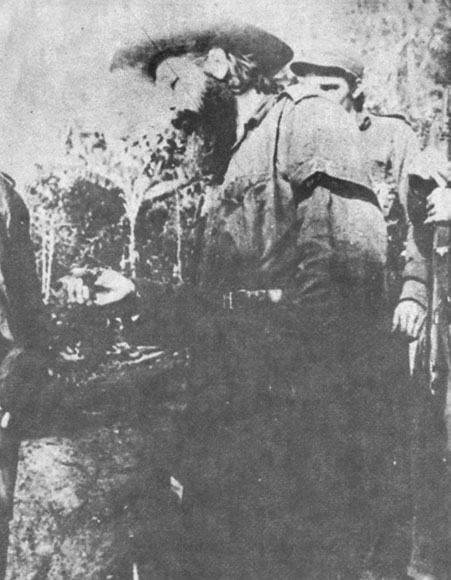
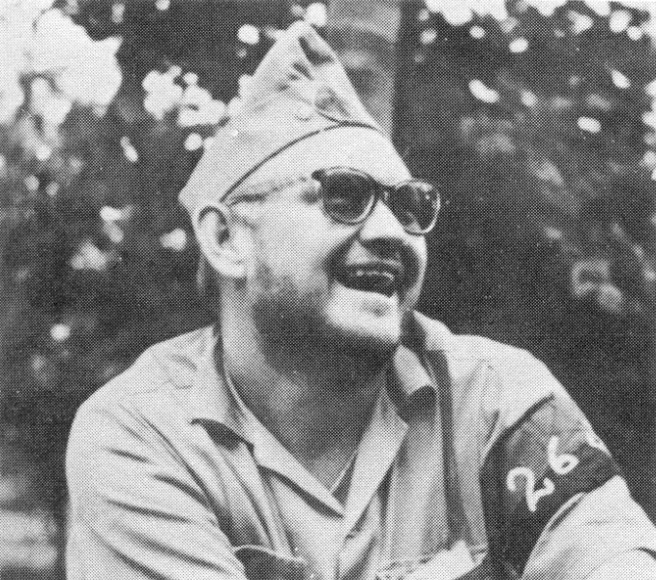
Cuban Revolution Rebel Priests in the Sierra Maestra


Father Guillermo Sardiñas in the summer of 1957 became chaplain to the rebel army with
permission of the coadjutor bishop of Havana.


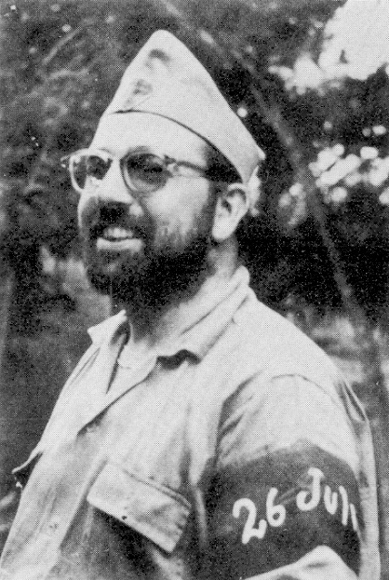
Father Angel Rivas, guerrilla chaplain, wearing 26 of July Movement armband and uniform. 


Father Rivas attends the revolutionary trials.


Lucas Iruretagoyena, Franciscan priest
and guerrilla chaplain. 


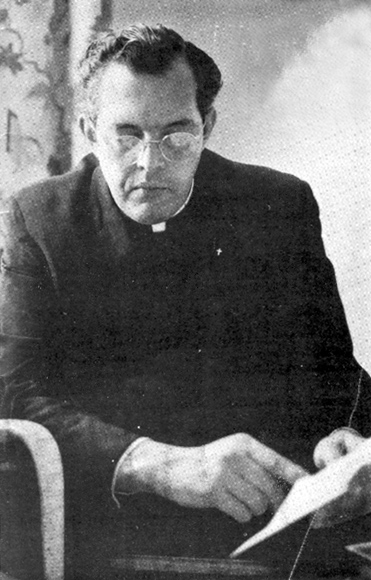
Father Francisco Guzmán, helped draft the unconditional surrender proclamation of January 1, 1959.


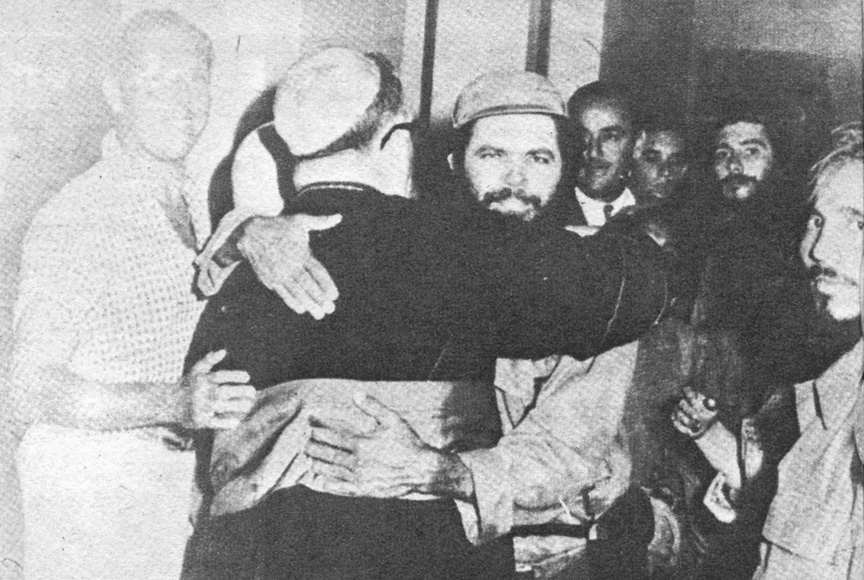
Santiago de Cuba Archbishop Enrique Pérez Serantes embraces Commandant Huber Matos.


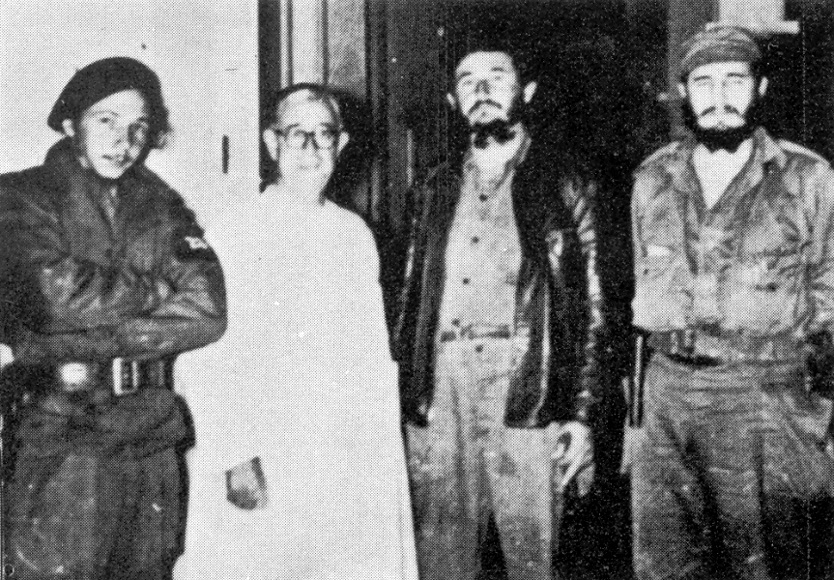
Raul, Ramon and Fidel Castro with Father Garcia, their former Dolores School teacher, Dec. 29, 1958. 

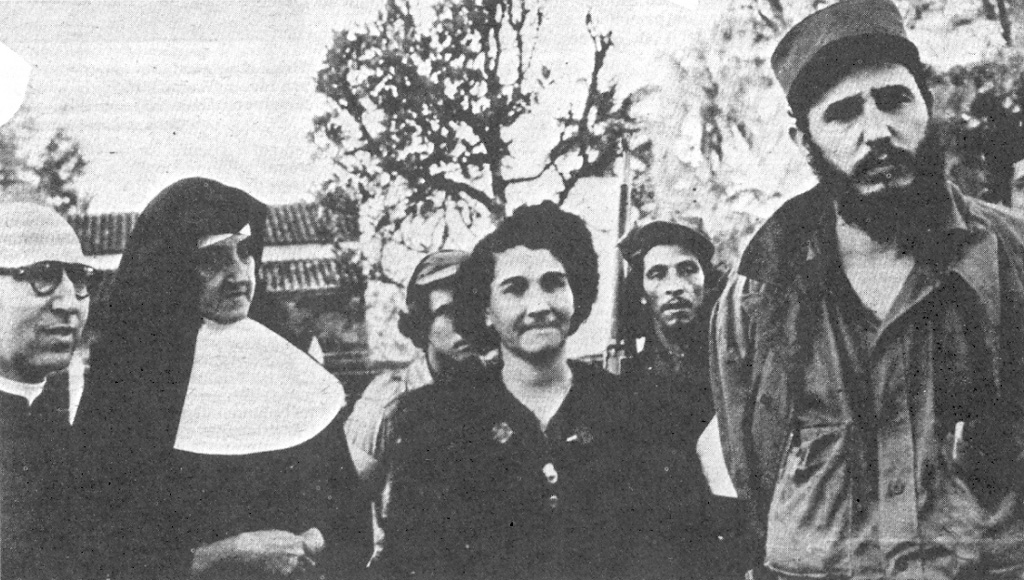
A priest and a Sister of Charity were among the welcoming committee that received Fidel Castro in
Camaguey during his advance on Havana.


Other Roman Catholic priests who aided the rebels were:
Cipriano Cabero, chaplain of Commandant Juan Almeida's forces, Juan Ramón O'Farrill and Jorge Bez Chabebe.


U.S. Senate Hearings: Communist Threat to the United States Through the Caribbean
Testimony of Rev. Father Eduardo Aguirre (May 3, 1960)
Testimony of Rev. Father Rosario Maxilliano Pérez (May 3, 1960)
Testimony of Rev. Father Juan Ramón O'Farril (May 4, 1960)


Source
.
.

Monday, May 11, 2015

Raul Castro Says Pope Inspiring Him To Return To Church


international

MAY 10, 2015 1:24 PM ET

SCOTT NEUMAN


Pope Francis talks with Cuban President Raul Castro during a private audience at the Vatican on Sunday.Reuters/Landov

Cuban leader Raul Castro, on a visit to the Vatican, where he thanked the pope for helping broker a thaw in relations between Havana and Washington, said he was so impressed with the pontiff that he might return to Catholicism, the faith he grew up in.

"I will resume praying and turn to the Church again if the Pope continues in this vein," Castro, the 83-year-old younger brother of Fidel, told reporters, adding, "I mean what I say."

"The pontiff is a Jesuit, and I, in some way, am too. I studied at Jesuit schools," he said.

Reuters says Castro and Francis met privately for nearly an hour – "unusually long for a papal meeting." It also said that papal audiences on Sundays "are extremely rare."

Reuters reports: "Francis made an exception when Castro asked if he could stop in Rome on his way back from Moscow to thank Francis for the Vatican mediation between the United States and Cuba, Cuban officials said."

The BBC notes: "Both Mr Castro and his brother, revolutionary leader Fidel Castro, were baptised as Roman Catholics, but most Church activities were suppressed after the revolution."
Francis will travel to Cuba in September on his way to the United States. He will be the third pope to go to the Caribbean island nation, following John Paul II's visit in 1998 and Benedict XVI's in 2012.


,

Saturday, May 09, 2015

Pope Francis meets with Castro tomorrow


Saturday, May 09, 2015


Pope Francis (PHOTO: AFP)


HAVANA, Cuba (CMC) — Pope Francis is scheduled to meet tomorrow with Cuban President Raul Castro at the Vatican.

The meeting comes four months before a scheduled visit to the Spanish-speaking Caribbean country by Pope Francis.

"Raul Castro will be received in the morning for strictly private talks," Holy See spokesman Federico Lombardi announced.

Last month, the Vatican announced that Pope Francis will visit Cuba in September, becoming the third pontiff to do so.

September's visit will precede a papal trip to the United States.

Pope Francis played a key role in negotiations between Washington and Havana that led to last December's announcement of plans to restore diplomatic ties.

The Pope's predecessor, Pope Benedict XVI visited Cuba in 2012, the previous pope, John Paul II, was the first to visit the island in 1998.


.