Showing posts with label HONDURAS. Show all posts
Showing posts with label HONDURAS. Show all posts
Sunday, October 11, 2026
Tuesday, March 17, 2026
From Witchcraft to Worship

From Witchcraft to Worship
Elena hopes the Adventist message will increase her skill in the secret arts—but it changes her life!
In the picturesque village of Santa Ana, Honduras, surrounded by lush vegetation and majestic mountains, lived a woman known for her deep knowledge of witchcraft. From a young age, Elena Morales had shown a special ability to connect with the supernatural, learning the ancient rituals and spells from her grandmother, a renowned traditional healer. Now, at 62 years old, Elena herself had become the regional witch doctor. People from all around Santa Ana came to her not only for their health problems, but for help with their love lives and financial prosperity.
One January afternoon, a group of Seventh-day Adventists arrived in Elena’s neighborhood and organized a series of talks and community activities. Although she felt skeptical, Elena’s curiosity drove her to attend one of the meetings. Perhaps these presentations could increase her knowledge in the secret arts of magic and sorcery! Then she could bring in more money through her witchcraft business.
Elena listened attentively to the Bible teachings about health and spiritual well-being. What surprised and impacted her the most was the hope of redemption that the Bible offered. For the first time in her life, she longed for change and inner renewal. The warmth of the church members and the care they expressed stirred her heart in a way that rituals and spells never had. She had never been loved like this—not by anyone. The people’s genuine interest in her showed her a picture of divine love, convincing her that their God loved and cared for her deeply.
Elena’s life did not change immediately. For weeks, she attended meetings and Bible studies, struggling internally between her old way of life and the new way presented to her. The pastor plainly stated that the way to God would be filled with trials and temptations. She learned that Satan, man’s adversary, like a lion hunting his prey, would not easily let go his hold. Elena had many doubts and questions, but she also experienced new revelations and spiritual comfort. Gradually, she began to feel an inner peace she had never known before. Friends and neighbors noticed her softening spirit, and some were moved to join her at the Adventist meetings.
Saturday, October 13, 2018
Hundreds of Hondurans head for US border in mass migration 'march': report


Hondurans, fleeing poverty and violence, are seen here in San Pedro Sula. They're headed toward the U.S. (Reuters)
Hundreds of Honduran migrants are headed for the United States border, just days after Vice President Pence sat down with the Central American country’s leader, urging him to take a tougher stance on mass migrations.
At least 1,300 people, including young children, left San Pedro Sula in northern Honduras on Saturday, in what some are calling the “March of the Migrant,” Reuters reported.
Bartolo Fuentes, the organizer, told the news agency that the group plans to march through Guatemala and into Mexico. From there, participants will request refugee status, which would allow them to stay in the country, or they will apply for a visa to pass through into the U.S.

A young man carries a child in the Hondurans' caravan. (Reuters)
The development came just days after Pence met with Honduran President Juan Orlando Hernandez, President Jimmy Morales of Guatemala and Vice President Oscar Ortiz of El Salvador, asking them to step up and help combat illegal immigration in return for help from the U.S.
Pence addressed the three leaders on Thursday in Washington, at the Conference for Prosperity and Security in Central America.
"If you do more, I'm here to say on behalf of the president of the United States and the American people, we'll do more," he said.
Pence said that flows of illegal immigrants from Honduras and Guatemala are up 61 percent and 75 percent, respectively.
Wednesday, April 04, 2018
Wednesday, January 03, 2018
Jesuits denounce threats against outspoken Honduran priest, activists
By David Agren Catholic News Service
1.2.2018 3:22 PM ET

CNS photo/Tyler Orsburn
Jesuit Father Ismael Moreno Coto, better known as "Padre Melo," poses for a 2014 photo in Washington. The Society of Jesus has denounced threats made against the outspoken Honduran priest, who has highlighted accusations of widespread irregularities in the Central American country's recent presidential election. (CNS photo/Tyler Orsburn)
See JESUITS-HONDURAS-THREATS
Jan. 2, 2017.
MEXICO CITY (CNS) -- The Society of Jesus has denounced threats made against an outspoken Honduran Jesuit who has highlighted accusations of widespread irregularities in the Central American country's recent presidential election.
The Conference of Provincials in Latin America and the Caribbean said in Dec. 30 statement that the social media hostilities against Father Ismael Moreno Coto -- better known as "Padre Melo" -- were "reminiscent of the death threats which circulated in El Salvador before the murder of Jesuit Father Rutilio Grande," a Salvadoran Jesuit murdered in 1977. The Jesuits also defended eight other regional activists being threatened.
"All of the accusations are lies aimed at counteracting the grass-roots organizing and the peaceful and democratic resistance which the accused, along with the people of Honduras, are carrying out at a moment when the popular vote has been disrespected by John Orlando Hernandez and his allies," said the statement, referring to the incumbent president and official electoral victor.
"This is an attempt to create terror in the people as a strategy to demobilize them," said the statement, signed by Father Roberto Jaramillo, conference president. "We hold Juan Orlando Hernandez and his allies responsible for the safety and physical and moral well-being of the nine people falsely accused."
Thursday, October 06, 2016


Jesuit mission in Honduras set Kaine’s path to public service
OCTOBER 6, 2016 5:11 PM

Father Jack Warner admires a painting created by an actor who performs in the Teatro la Fragua in El Progreso, Honduras. Veronica Rocha TNS
BY VERONICA ROCHA
Los Angeles Times
EL PROGRESO, HONDURAS
Not long after Jesuit priest Jack Warner met a bearded, 22-year-old Midwesterner in 1980, the two Americans bonded, drawn together by the goals and questions that led them both to El Progreso, a small city not far from vast banana fields – the campos bananeros.
Warner was 35 and had arrived a year earlier to form the Teatro La Fragua, a theater company for Hondurans. As the young priest looked to forge a relationship with the campesinos, his friendship blossomed with Tim Kaine, who had taken a year off from Harvard Law School to join the Jesuit mission.
“He was 22 years old,” Warner said, “and it was the typical thing that a 22-year-old would do: What do I do with my life?”
Kaine, now a 58-year-old U.S. senator from Virginia and the Democratic vice presidential nominee, has often said that his time in Honduras helped him answer that question, giving him “a North Star” to guide his life toward public service.
When Kaine traveled to Honduras, the nation was in the throes of turmoil, flanked by countries torn by civil war and ruled by the heavy hand of a U.S-backed military bent on stamping out what it perceived to be communism spreading in the region.
“I got a firsthand look at a system – a dictatorship – where a few people at the top had all the power and everyone else got left out,” Kaine said in July at the Democratic National Convention.
He also witnessed extreme poverty. His experiences, coupled with the Jesuit goal of being “men for others,” led him to become a civil-rights lawyer for 17 years, specializing in housing-discrimination cases. Honduras convinced him, he said, “that we’ve got to advance opportunity for everyone.”
Kaine now serves on the Senate Committee on Foreign Relations and this year co-sponsored a bill that would increase aid to Central America’s “Northern Triangle” – Guatemala, El Salvador and Honduras.
Key to his experiences in Honduras was the friendship and example of Warner and a handful of other Jesuits. And a Christmastime visit to a poor man’s house taught him a lesson that resonates decades later.
Drawn to the Jesuit mission
During his time in El Progreso, Kaine lived in a barracks, along with Warner and other Jesuits. After their work days wrapped up about 5 p.m., he and Warner frequently commiserated over office duties, students, the teatro and the poetry Kaine was writing. Warner, a former English teacher, worked with Kaine on his verse. Over time, they became confidants.
Both men grew up in the Midwest – Kaine in the Kansas City, Kan., suburb of Overland Park; Warner in St. Louis – and had been drawn to the Jesuit mission of social justice from an early age.
Kaine attended Rockhurst High School for boys, run by Jesuit priests who ran a demanding schedule of daily Masses, theology classes and community service activities with retreats.
Kaine, who earned a bachelor’s degree in economics at the University of Missouri, was at Harvard Law when he began to question his faith and the path he should take in life, he says. Because he had made a brief trip to Honduras in 1974 to deliver donations to the Jesuits, he decided to write them and see whether they could use some help. They said yes.
“He took a rather strong decision to seek out an answer – not everyone comes to Progreso,” Warner said.
Kaine had to tell his law school dean, and his parents, of this new direction. “The dean, not to mention my parents and friends, were confused about what I was doing and even questioned whether I would come back,” Kaine once recalled in a Virginia Tech speech.
By September 1980, Kaine was rumbling along in a bus into northern Nicaragua, where he visited another American Jesuit, Father James Carney. In Honduras months earlier, Carney had encouraged peasants to fight for their land, and he was expelled by the Honduran military, which saw him as one of the leftist priests who embraced liberation theology and the Sandinista revolution in Nicaragua.
Activists, some of them priests or the peasants they worked with, would be banished or killed by authorities. Carney would later disappear in what was believed to be a clandestine Honduran military operation backed by the CIA.
“It was a time when anytime the police stopped you, you got really nervous. You never knew what was going to happen,” Warner recalled. “We were under a military dictatorship at the time and very heavy military control. It was scary, and one had to live very carefully.”
In El Progreso that September, Kaine soon met another Jesuit, Brother James O’Leary, a missionary also from Missouri.
O’Leary, who died in 2002, was often described as an outspoken, occasionally cranky but also skilled carpenter, painter and electrician who built houses and chapels for the poor. Kaine worked with him at his Loyola Technical Vocational Center, helping to boost the school’s enrollment and teaching carpentry and welding. As a youngster, Kaine had picked up skills working in his father’s ironworking shop in the Kansas City area.
Kaine declined to be interviewed for this story, but in a speech at the 2008 Democratic National Convention, he recalled what O’Leary taught him.
“I learned from a great mentor there, Brother Jim O’Leary, that faith is about more than words or doctrine – it’s about action,” he said. “And that led me to spend my life in public service.”
Low profile
About 35,000 people lived in El Progreso in 1980, when it was dominated by the presence of the United Fruit Co., the world’s largest – and often exploitative – banana company. Today it has a population of about 200,000, and the winding roads leading to the city are lined by brightly colored, one-story concrete homes.
During Kaine’s time there, however, it was a collection of dusty, rural villages and banana camps, with mountaintop towns accessible only by foot or mule. As a center for union activity, it became a target of the communism-fearing Reagan administration.
While war raged in neighboring El Salvador and Nicaragua, Honduras remained calm – but was gripped in fear. It was the staging ground for many of the United States’ clandestine operations aimed at toppling other governments.
People dared not speak about activism or union organizing lest they risk being among those who “disappeared.” More than a dozen priests were killed in the 1970s and 1980s after being associated with liberation theology, considered a Marxist-tinged doctrine that preached to the poor.
While Catholic priests in Central America were attacked for advocating on behalf of the poor, Kaine maintained a low profile and didn’t attract notice from the military.
Warner, a slender man with gray, shoulder-length hair, recalled Kaine’s time in Honduras during a recent interview at the theater in El Progreso.
“His interest was in the students and what he was doing in his work, which is what we were all doing,” Warner said. “Trying to figure how we can do the work without being kicked out of the country for exploring it.”
Faith, family and work
Kaine spent nine months in El Progreso before returning to Harvard. He has kept in occasional touch with Warner and has returned to Honduras several times, most recently last year. This year, he and 25 senators called for an end to immigration raids in the U.S. targeting women and children who were fleeing violence in Honduras, Guatemala and El Salvador.
When he accepted the nomination for vice president, Kaine said that the three basic values he absorbed in Honduras hold true today: “Fe, familia y trabajo.” Faith, family and work.
“I came to understand the power of faith and communal worship,” Kaine said at Virginia Tech in 2006. “I learned how to speak Spanish and began to understand how the things which can seem to divide us – like language and skin color – were so much smaller than the dreams and fears that unite us.”
Kaine also has repeatedly recalled what became one of his most indelible memories of Honduras.
He and Father Jarrell Wade, a Jesuit known as Father Patricio, had traveled by mule to visit a dirt-poor family around Christmas. As they prepared to leave, the husband handed Wade a bag. “Merry Christmas, padre,” he said.
Inside the worn bag were fruits and vegetables he had saved for the priest. Wade took the bag and thanked him.
Kaine was appalled and angered that the priest would take food from such a poor family – “I was fuming” – until Wade imparted the lesson: “You must be really humble to accept a gift of food from a poor person, and the most important thing in life is the ability to give.”
STAFF WRITER TRACY WILKINSON OF THE TRIBUNE WASHINGTON BUREAU CONTRIBUTED TO THIS REPORT FROM WASHINGTON.
Source
Thursday, September 08, 2016
The Honduras Tim Kaine knew

Tim Kaine at the Jesuit Technical School Loyala in El Progreso, Honduras. Credit: Diario La Prensa www.laprensa.hn.
He was only 22 years-old, and he was only there for nine months. But U.S. Senator and Democratic vice-presidential hopeful Tim Kaine credits the time he spent with a Jesuit community in Honduras as so formative and influential that it would spark the beginning of his thirty-plus-year political career.
Yet far from an idyllic situtation of youthful self-searching, Kaine encountered a deeply complex and violent political scenario - one that he would later describe as "the turning point" in his life.
Kaine, the former Governor of Virginia and first term Senator, was chosen by Hillary Clinton in July as her running mate for the Democratic Presidential ticket. In Kaine’s acceptance speech at the Democratic National Convention, he addressed the convention saying, “I taught kids how to be welders and carpenters.”
Wednesday, July 27, 2016
Eat, Pray, Starve: What Tim Kaine Didn’t Learn During His Time in Honduras
RELIGION
HONDURAS
TIM KAINE
The vice-presidential nominee supports policies that hurt the country that was the “turning point” in his life.
By Greg GrandinTwitter
TODAY 11:18 AM
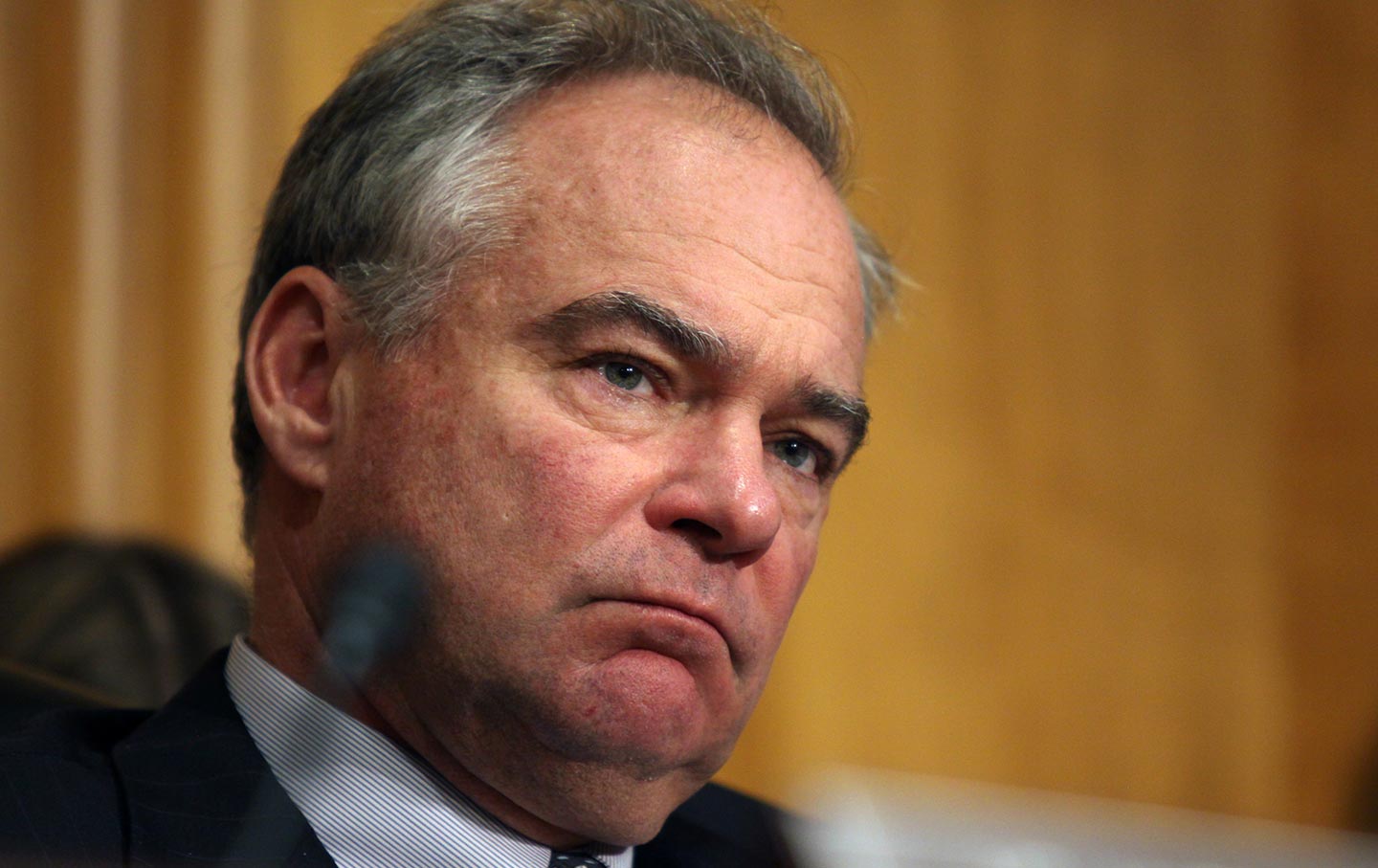
Democratic vice presidential candidate Tim Kaine (AP Photo / Lauren Victoria Burke)
Early in Hillary Clinton’s primary contest against Bernie Sanders, Berta Cáceres, an indigenous environmental leader in Honduras, was murdered by a coup regime that Clinton, as Secretary of State, helped consolidate in power. Apart for one quick statement denying any wrongdoing—“simply nonsense,” a spokesman said of the charges that Clinton was in anyway responsible for Cáceres’s killing—the Clinton campaign largely ignored the issue. As far as I know, the only journalist who asked Clinton directly about Honduras was Juan González, during Clinton’s interview with the editorial board of the New York Daily News. Clinton provided a wordy and vague answer. She admitted that the situation was bad, that activists were being slaughtered, but insisted that at the time she “managed a very difficult situation, without bloodshed, without a civil war, that led to a new election. And I think that was better for the Honduran people.” For the most part, criticism of Clinton on Honduras largely stayed on the margins of the primary process, even as the killing in Honduras continued and evidenced mounted that Washington was once again was funding old-school death squads (see the invaluable investigation by Annie Bird).
Now, having beat back that part of the Democratic rank-and-file that cares about dead feminist activists in small third-world countries, the Clinton campaign has gone full Sun Tzi, turning its Honduran weak point into a strength, or, à la Karl Rove, its vulnerability into a virtue.
In picking Virginia Senator Tim Kaine as her running mate, the campaign has front-and-centered Honduras— as a victim of Clinton’s realpolitik neoliberalism but as a sacred space of healing poverty.
Kaine, a Catholic, spent nine months in Honduras, from 1980 to 1981, in the Jesuit mission in El Progreso, very close to the company towns and plantations of the storied multinational banana company, United Fruit.
The sojourn, Kaine says, changed his life. Honduras “was really the turning point in my life. I was at Harvard Law School and didn’t know what I wanted to do with my life. And I took a year off and worked with Jesuit missionaries in Honduras,” Kaine told CNN’s Candy Crowley. “Every day I think of the lessons I learned from my friends there,” Kaine said elsewhere. The experience, he says, set him on his life’s journey to fight for social justice. Honduras “made him who he is,”said Kaine’s mother, Kathleen.
Thursday, November 20, 2014
Human Rights Activist Jesuit Moreno Coto Brings Honduran Advocacy to U.S.

Fr. Ismael Moreno Coto, SJ (known as “Padre Melo”), at right, with Senator Tim Kaine of Virginia.
By Doris Yu
November 14, 2014 — The 25th anniversary of the El Salvador martyrs — the six Jesuits, their housekeeper and her daughter murdered at the Universidad Centroamericana (UCA) in November 1989 —has touched many.
But the martyrs were especially close to Jesuit Father Ismael Moreno Coto, a human rights activist from Honduras, who is visiting Washington, D.C., this weekend for the Ignatian Family Teach-In for Justice. Padre Melo, as he is popularly known, was a student of Jesuit Father Ignacio Ellacuría and a friend of housekeeper Elba and her daughter Celina, who were killed by the Salvadoran military along with five other Jesuits on Nov. 16, 1989.
Padre Melo is now the director of both the research and advocacy center Equipo de Reflexión, Investigación y Comunicación (ERIC) and Radio Progreso, which provides grassroots radio programming in Honduras. Since arriving in Washington this week, Padre Melo has brought his advocacy to the U.S. by speaking at a number of events, meeting with lawmakers and sharing his personal experience with a new generation of young adults.
On November 13, Padre Melo and Senator Tim Kaine of Virginia discussed the violence and economic conditions driving migration from Honduras, where Kaine served with the Jesuit Volunteer Corps from 1980 to 1981. During Padre Melo’s visit, Kaine described his time in Honduras as the most important year of his life.
After meeting with lawmakers, Padre Melo participated in “Violence & Inequality: El Salvador Then & Now,” a panel at Georgetown University exploring the problem of violence and inequality during the time of the martyrs and in the present day. Jesuit Father Matthew Carnes organized and moderated the panel, which included Shaina Aber, policy director for the National Advocacy Office of the Jesuit Conference, and Mark Lagon, former executive director and CEO of the Polaris Project, a nonprofit combating human trafficking.

Left to right: Mark Lagon, Shaina Aber, Fr. Ismael Moreno Coto, SJ, and Fr. Matthew Carnes, SJ
Twenty-five years after the witness of the martyrs and their deaths, Padre Melo described how they convinced him of the need for Jesuits to occupy two roles: accompanying the poor in their suffering as well as taking seats in the halls of power, asking questions and challenging the roots and causes of poverty.
Following the panel, Padre Melo accepted the “Legacy of the Martyrs” award from the Ignatian Solidarity Network on behalf of his Jesuit ministries, ERIC and Radio Progreso. Congressman Jim McGovern of Massachusetts received a second Legacy of the Martyrs award, in recognition of his advocacy for human-rights policy in El Salvador. McGovern assisted the late Congressman Joseph Moakley in the U.S. Congressional investigation of the murders of the UCA martyrs, and McGovern will visit El Salvador this weekend as part of the delegation of U.S. Jesuits commemorating the martyrs on the anniversary.

Fr. Ismael Moreno Coto, SJ, right, accepts the “Legacy of the Martyrs” award from Chris Kerr, executive director of the Ignatian Solidarity Network.
Padre Melo broadcast his acceptance speech live on Radio Progreso, which was temporarily shut down by the military around the time of the June 2009 Honduran coup. The staff has received death threats since the coup, and a Radio Progreso team member was brutally murdered in April 2014.
“I accept this award on behalf of the ERIC and Radio Progreso teams because we must continue to be engaged. We want to accompany our people through communication, through advocacy and analysis,” said Padre Melo. “I am committing myself and the people I work with to the cause of embracing each other, working for peace and looking for a better tomorrow.
“Nothing is more beautiful than envisioning a society in Honduras that is a society for all, including our brothers and sisters in the United States,” he said.
This weekend, Padre Melo will give a keynote speech at the Ignatian Family Teach-In for Justice in Arlington, Virginia, in hopes of sharing that vision with the younger generation and honoring the martyrs’ legacy.
Learn more about the Teach-In at the Ignatian Solidarity Network website.
Source: http://jesuits.org/news-detail?TN=NEWS-20141114025543
.
.
Sunday, July 13, 2014
U.S. Tries To Slow Migrant Flow From Honduras

Photo (Courtesy) http://www.latimes.com/world/mexico-americas/la-1918924-fg-0704-honduras-border-05-dpb-jpg-20140708-photo.html
July 13, 2014 9:51 AM ET
4 min 43 sec
Playlist
In an effort to stem the flow of children to the U.S., the State Department is funding media campaigns in Honduras. Cindy Carcamo of the Los Angeles Times talks with NPR's Arun Rath about the tactic.
.
.
Sunday, June 15, 2014
The Priest and his Cathedral of Football

Duration: 29 minutes
First broadcast: Saturday 14 June 2014
Padre (Father) Alberto Gauci is a passionate and unconventional priest who has spent over 40 years in rural Honduras. Football is a passion in the country and Honduras have qualified for this summer’s World Cup in Brazil.
Driven by his faith and his devotion to St Francis, Padre Gauci has gone to extraordinary lengths to improve the lives of the people he lives amongst in one of the poorest and most violent countries in Latin America. He has come up with an astonishingly ambitious project - a 20,000 seater football stadium - built from nothing in the heart of the jungle.
On his wall is a poster of the Bishop Oscar Romero, the figurehead of the Liberation Theology movement of the 1970s and for Heart and Soul, Will Grant explores with Padre Gauci how his work has been inspired and is consciously carrying on the tradition of Liberation Theology movement.
As the Honduran national team prepare to begin their World Cup campaign in Brazil, Will tells the story of his stadium, the Estadio Juan Ramon Breve Vargas and hears the tale of one man’s belief, sheer stubbornness and unwavering faith in God, St Francis and in the ability of the people around him to shape their own futures.
Will visits the stadium, as well as the prison that Padre Alberto has inspired in the town, and hears about his other projects such as the nutritional centre and the Aids facility. It is a vivid successful, vibrant example of the church filling the areas where government fails to help. At the centre of this is the dynamic Padre Alberto, driven by his love of God, and his love of football.
Source
.
Tuesday, June 26, 2012
Elections in Venezuela and Mexico, crime in Honduras, Brazil's public-sector wages and the Falklands
Jun 14th 2012, 18:52 by The Economist online
 MOST presidents running for re-election are mainly concerned with beating their opponent. Hugo Chávez must vanquish two adversaries: the challenger, Henrique Capriles, and cancer. This week's issue of The Economist explores how this most unusual campaign is shaping up. It also includes stories on Mexico's presidential election, crime in Honduras, public-sector wages in Brazil and a self-determination referendum in the Falkland Islands.
Sunday, December 20, 2009
Lesbians cruise the seas with a cause
NEWS
Published 12/10/2009
by Heather Cassell
heather@whimsymedia.com

Published 12/10/2009
by Heather Cassell
heather@whimsymedia.com

Sweet co-founders Jennifer Rainin, left, and Shannon Wentworth stand by a wall at the Karl Heusner Memorial Hospital pediatric ward in Belize City, Belize. Volunteers from the ship helped paint the ward. Photo: Whimsy Media/Help Yourself Tech Services
More than a thousand lesbians braved tropical storm Ida and sailed through rough waters to have fun in the sun and to lend a helping hand in the Caribbean last month on Sweet's maiden adventure on the high seas.
"This is a dream that has come true," gushed Jen Rainin, 42, an out lesbian and co-founder of Sweet. "It's going to keep coming true for a very long time."
"I've never been so naturally high," added out lesbian Shannon Wentworth, Sweet CEO and co-founder.
Sweet evolved out of a desire to combine the two lesbians' love of travel, building community, and working on social and environmental issues that they care about, the women said. More than two years later Wentworth's vision set sail out of New Orleans on November 6 and made stops in Costa Maya, Mexico; Belize City, Belize; Roatan, Honduras; and Cozumel, Mexico before returning to New Orleans eight days later.
What sets Sweet apart is that passengers can opt to participate in volunteer activities at the various ports of call, and spend part of the trip giving back to local communities. On this maiden voyage, 310 passengers took part in volunteer projects, out of 1,200 who were on the cruise.
The voyage was also noteworthy as actress Meredith Baxter was a passenger and last week she came out as lesbian in several publications and an appearance on the Today show. Her presence on the cruise was not publicized at the time, Sweet officials said, out of respect for passengers' privacy.
The future of travel
It wasn't an easy voyage. Wentworth, 37, navigated Sweet through rough waters both at sea and onshore, earning the praise of queer travel pioneers. The company hopes to emerge as another big player in lesbian travel.
"This is not the future of lesbian travel, this is the future of all travel led by lesbians," said Charlie Rounds, president of RSVP Vacations.
He applauded Sweet's creators for making passengers ambassadors of the LGBT community and America and in the process, revolutionizing the future of the travel industry.
"No one is going to say I was a genius on choosing when to start this company," Wentworth told shewired.com in June about beginning a start-up, luxury, lesbian, eco-friendly, "voluntourism" company during a struggling economy, especially with a reigning queen of lesbian cruises, Olivia, already an established brand.
Judy Dlugacz, founder and co-owner of Olivia, recognized the challenge Sweet faced with the downturn of the economy.
"They came in a very tough time of the economy, that's tough for them," Dlugacz said earlier this year.
For their part, Sweet's founders said they are not in competition.
"I'm really glad that the comparison can die down now that people see the different product. We are not trying to do Olivia's business," said Wentworth. "There is no bad blood with Sweet and Olivia."
"My greatest hope is that other businesses take this idea. What's good for the environment is good for people and what's good for people is good for the environment. All of that is good for the world and good for business," Wentworth added.
The recession got Rainin and Wentworth's creative juices flowing. Wentworth developed programs to attract younger travelers, made the ship accessible and welcoming to a variety of guests, including those with disabilities and those in recovery. The women also tried to help ease travelers' stress over tightened wallets.
But mostly, they proved that businesses can be wise and sensitive to their customers' and their own bottom lines as well as the environment.
"I believe this is the largest carbon-free cruise ever," said Wentworth, quoting estimates from Carbonfund.org that calculated the cost at $20 per guest on the cruise and airlines and $1.50 per guest at the hotels to offset carbons released into the atmosphere. Carbonfund.org, a carbon reduction and offset organization supports high-quality verified renewable energy, energy efficiency and reforestation projects, according to the organization's Web site.

Sweet passengers party around the pool on board the ship. Photo: Whimsy Media/Help Yourself Tech Services
Sweet ambassadors
Sweet also tapped into a new market of travelers. Not attracted to "packaged travel," Wentworth reached a comfortable compromise attracting politically conscious consumers looking to have fun and do good.
"What we wanted were people who wanted to make a difference in the world and to have fun at the same time," said Wentworth.
Women representing 10 countries from around the globe conquered sea sickness from Ida, reptiles and bugs of all sorts, swamps and trash laden beaches, homophobia and sexism, and swarms of excited screaming children whose lives were brightened by cartoon painted walls and piles of books, school supplies, and toys brought to them by Sweet passengers.
"I absolutely loved it. Honestly, it took Sweet to get me on a cruise," said Denise Johnson, 46, a lesbian IT specialist from Chicago. "The beauty of this cruise was the opportunity to give back and that's exactly what got me on my first cruise."
Johnson volunteered in three of the four ports putting together computers, painting classrooms, and cleaning beaches, she said.
Darcie Takeuchi, 32, from San Francisco, who volunteered with Johnson on the shores of Mexico and in Belize at an elementary school, agreed. She wasn't exactly a "cruise girl," but she was attracted and inspired by an eco-friendly and social justice vacation, she said.
"Just because that is where my heart is," said Takeuchi, a social worker temporarily turned nanny. "My passion is to be doing outreach and volunteer with communities and families, especially children and families."
Takeuchi only wished she had been able to volunteer at each port like Johnson, but it was a vacation. Takeuchi took time out to relax with her girlfriend, Lauren Patton, 26, an emergency communications dispatcher for the California Highway Patrol. The two women had fun riding scooters around Cozumel, lying out in the sun by the pool, and meeting like-minded women.
Volunteering didn't impact Johnson's free time either.
"I had the rest of my half of the day to have fun, come back [to the ship] and relax or wash paint off," she said.
Wentworth foresees Sweet's voluntourists driving future projects, she said.
"What we really want is for our guests to tell us what they want to do, what they can do," said Wentworth. "[Sweet's guests] want us to push the envelope more." Wentworth isn't just planting seeds hoping that they grow. She plans to keep passengers in the know about the impact they make with the projects.
The ship barley left a port before local governments and communities reported the impact of the projects and invited Sweet back, Wentworth said.
"We have every intention to invest in these communities every few years so we can build on this stuff, we can really see our work grow, and we can see the dialogue grow about gay and lesbian issues in these ports," said Wentworth, who chose the port cities based on the cruise route that makes it easy to return in the future.
Killing homophobia, sexism with kindness
In the future Wentworth plans on working with LGBT, women's, and HIV/AIDS organizations as well as staying longer in the ports, she said.
"We can make the biggest impact ... in the Caribbean [on] the lives of gay people," said Wentworth, pointing out that unlike in Mexico and the United States where homosexuality is legal, the biggest impact could be in Belize and Honduras where homosexuality is illegal.
Sweet's passengers were a curiosity for Belizean press that announced the ship's pending arrival and crowded around Karl Heusner Memorial Hospital early in the morning only to be turned away by Dr. Francis G. Longsworth, the hospital's CEO. Kim Simplis Barrow, first lady of Belize, managed the Belizean press by handpicking reporters to cover the lesbian volunteers painting the pediatric ward with American cartoon characters chosen by the kids.
Simplis Barrow is also founder of Lifeline Foundation, an organization that works to improve Belizean children's lives. The foundation partnered with Sweet and another organization, Magic Brushes.
Sweet managed to avoid attracting press attention at the James Garbutt Seventh Day Adventist Primary School, where parents threatened to pull their kids out of class for the day and shut down the project if it was made public, Wentworth said. That day, most of the school's 265 elementary students screamed with excitement as they ran from newly painted classrooms to the library and admired tattoo-adorned lesbian and gay volunteers.
"We showed these kids there are different ways to be female," said Wentworth.
Culture clash
Some passengers weren't aware of the anti-gay laws in the countries where the ship docked, however, and ran into some problems.
Chawntea Palmore, 34, a bisexual African American woman from Oakland, felt that Belize was "a little dangerous" and wished that Sweet personnel had been "more forthcoming with all of the information that they have about the port cities."
Sweet did have information on its Web site about things to do in Roatan and Belize, but not the type of information that Palmore and her friends would have appreciated.
"They were very kind in Honduras," said Palmore, who enjoyed herself in Roatan and was "glad" she wasn't aware of the anti-gay laws, yet she insisted, "They took a choice away from me."
"Belize, it was a very different story," she said.
Her group ended up returning to the ship after an incident with some men who became upset when one of her friends told them she had a wife. A police officer informed the women of the anti-gay law and that they could be jailed simply for "holding hands" in public, Palmore said.
Other than that experience, Palmore said she had a great time during the rest of the cruise.
Saddened by some guests' unfavorable response to Belize, Wentworth told the B.A.R. that she doesn't plan to give up.
"Belize is a community that I really, really want to invest in. They took a really big risk because it's not a good place to be a homosexual in Belize," said Wentworth, who was happy for media coverage that caused the city to have a "dialogue about same-sex couples." She hopes residents' contact with the volunteers and passengers will change the conversation about queer people and women, she said.
Roatan, Honduras is a different story. Roatan is an island off of Honduras' mainland, which is the site of human rights violations against queer activists, as reported by the International Gay and Lesbian Human Rights Commission, Human Rights Watch, and other organizations, as well as recent political turmoil. The island, however, remains a different world. A popular port for ships, including gay cruises, residents of the resort island hold a somewhat more global perspective, especially regarding LGBT people.
Roataneans simply "don't care what you do," said Shela O. Brooks, a native and owner of Floweras Bay Roatan.
"We would never put our guests in danger," said Wentworth, aware of the political situations in Belize and Honduras. But she didn't want to get into politics.
"I want to have fun, save the world," said Wentworth.
RSVP's Rounds pointed out the impact Sweet passengers had wasn't only upon the communities in the port cities, but the estimated 1,000 crew members on the ship who largely came from developing countries.
"For one week by being polite, by being respectful, and being fabulous ... that's an impact that is immeasurable," said Rounds.
Many crew members said they were happy with the job.
"We all wanted the 'I am Sweet' T-shirts," said Didia Charles, a crewmember from St. Lucia, who said some staff received the shirts and that the guests were so low maintenance that the crew was also allowed some time off.
For more information about Sweet, visit http://discoversweet.com/.
.
.


Tuesday, August 18, 2009
Anti-American Amigos
AUGUST 16, 2009, 11:09 P.M. ET
Anti-American Amigos
Why is the Obama administration trying to help Hugo Chavez?
Hugo Chávez took a break last week from lobbying Washington on behalf of deposed Honduran President Manuel Zelaya to travel to Quito, Ecuador, for a meeting of South American heads of state.
There he launched a virulent assault on the U.S. military, reiterated his commitment to spreading revolution in the region, and threatened the continent with war. Mr. Zelaya was by his side.
The Venezuelan's tirade against the U.S. and its ally Colombia raised the question yet again of what the U.S. could possibly be thinking in pushing Honduras to reinstate Mr. Zelaya. He was removed from office by the Honduran Congress in June because he violated the country's constitution and willfully incited mob violence.
But that's not the only thing that made him unpopular at home. He also had become an important ally of Mr. Chávez and was quite obviously being coached to copy the Chávez power grab in Venezuela by undermining Honduras's institutional checks and balances.
If Honduras has been able to neutralize Mr. Chávez, it's something to celebrate. A Chávez-style takeover of institutions in Bolivia, Ecuador and Nicaragua has quashed political pluralism, free speech and minority rights in those countries. There is now a heavy presence of Cuban state intelligence throughout the Venezuelan empire. Mr. Zelaya literally has become a fellow traveler of Mr. Chávez, leaving no doubts about the course he would put Honduras on if given the chance.

As a U.S. senator, Mr. Kerry has the luxury of treating Latin America like his playground, as Democrats have done for decades, foisting on it ideas that Americans reject. Venezuelans still recall how Connecticut's Chris Dodd played the role of chief Chávez cheerleader in the Senate while the strongman was consolidating power.
But Mr. Obama is the president and commander in chief, and millions of people in this hemisphere are counting on the U.S. to stand up to Venezuelan aggression. Playing footsie under the table with Mr. Chávez on Honduras while the Venezuelan is threatening the peace isn't going to fly in a hemisphere that prefers liberty over tyranny.
Both Colombian and U.S. officials allege that the Venezuelan National Guard and high-ranking members of Mr. Chávez's government are in cahoots with criminal enterprises that run drugs in South America. The evidence suggests an alliance between the terrorist Revolutionary Armed Forces of Colombia (FARC)—the largest exporter of cocaine from that country—and members of Mr. Chávez's cabinet. There is also evidence in documents and video captured from the FARC that the rebels have influence at high levels of the Ecuadoran government.
The cocaine business is a big revenue raiser for the terrorist organization and for its business partners on the continent. This is why Colombian President Alvaro Uribe has agreed to allow U.S. drug-surveillance planes to use Colombian military bases.
In Quito, Mr. Chávez flew into a rage about that agreement. "The U.S. is the most warlike government in the world," he told his South American peers and Mr. Zelaya. "The Yankee military pays no mind to its president," he said, artfully exempting Barack Obama from blame. "In Colombia [the U.S. military] has immunity. They can rape women, they can kill and they can destroy in every direction. You can't do anything to them. It's horrible."
The military-bases agreement is far more limited than what Mr. Chávez claimed, but he wasn't about to miss an opportunity to ratchet up the tension. "The winds of war are starting to blow," he warned.
His counterparts didn't buy it. Colombia was not condemned in Quito, largely because key members of the group didn't want their own sovereign decisions subject to continental review. But Mr. Chávez is not going away. He has pledged to continue with efforts to destabilize surviving democracies.
Honduras remains a target. Argentina is also in his sights. In an interview with the Argentine daily La Nación, he spoke of his alliance with Argentina's President Cristina Kirchner. "We are going to work to reinforce the Caracas-Buenos Aires axis, which is a central axis," Mr. Chávez said. "Like the Caracas-Quito axis, the Caracas-Buenos Aires axis is fundamental for the integration."
The U.S. war on drugs has been a colossal failure because of the large cocaine market in the U.S. The tragedy—beyond the violence it creates—is that criminal enterprises, flourishing because of U.S. customers, wreak havoc on frail institutions. That's bad enough. But the Obama administration pours salt in that gaping wound by refusing to support the U.S.-Colombia Free Trade Agreement our ally has asked for, and now by backing Mr. Chávez's Honduran pawn.
Anti-American Amigos
Why is the Obama administration trying to help Hugo Chavez?
Hugo Chávez took a break last week from lobbying Washington on behalf of deposed Honduran President Manuel Zelaya to travel to Quito, Ecuador, for a meeting of South American heads of state.
There he launched a virulent assault on the U.S. military, reiterated his commitment to spreading revolution in the region, and threatened the continent with war. Mr. Zelaya was by his side.
The Venezuelan's tirade against the U.S. and its ally Colombia raised the question yet again of what the U.S. could possibly be thinking in pushing Honduras to reinstate Mr. Zelaya. He was removed from office by the Honduran Congress in June because he violated the country's constitution and willfully incited mob violence.
But that's not the only thing that made him unpopular at home. He also had become an important ally of Mr. Chávez and was quite obviously being coached to copy the Chávez power grab in Venezuela by undermining Honduras's institutional checks and balances.
If Honduras has been able to neutralize Mr. Chávez, it's something to celebrate. A Chávez-style takeover of institutions in Bolivia, Ecuador and Nicaragua has quashed political pluralism, free speech and minority rights in those countries. There is now a heavy presence of Cuban state intelligence throughout the Venezuelan empire. Mr. Zelaya literally has become a fellow traveler of Mr. Chávez, leaving no doubts about the course he would put Honduras on if given the chance.

Getty Images
Venezuelan President Hugo Chávez salutes Raul Castro while Argentine President Cristina Kirchner looks on in Caracas, Venezuela, Aug. 11.
Venezuelan President Hugo Chávez salutes Raul Castro while Argentine President Cristina Kirchner looks on in Caracas, Venezuela, Aug. 11.
Among the theories making the rounds about Mr. Obama's motivations in trying to force Honduras to take Mr. Zelaya back, there is the hypothesis that this administration is tacking hard to the left. Mr. Obama has expressed the same views on Honduras as Sen. John Kerry (D., Mass.), who holds that the interim government must be forced to reinstate Mr. Zelaya and who has, over more than two decades in office, consistently allied himself with socialist causes in Latin America.
The Americas in the News
Get the latest information in Spanish from The Wall Street Journal's Americas page.
Get the latest information in Spanish from The Wall Street Journal's Americas page.
As a U.S. senator, Mr. Kerry has the luxury of treating Latin America like his playground, as Democrats have done for decades, foisting on it ideas that Americans reject. Venezuelans still recall how Connecticut's Chris Dodd played the role of chief Chávez cheerleader in the Senate while the strongman was consolidating power.
But Mr. Obama is the president and commander in chief, and millions of people in this hemisphere are counting on the U.S. to stand up to Venezuelan aggression. Playing footsie under the table with Mr. Chávez on Honduras while the Venezuelan is threatening the peace isn't going to fly in a hemisphere that prefers liberty over tyranny.
Both Colombian and U.S. officials allege that the Venezuelan National Guard and high-ranking members of Mr. Chávez's government are in cahoots with criminal enterprises that run drugs in South America. The evidence suggests an alliance between the terrorist Revolutionary Armed Forces of Colombia (FARC)—the largest exporter of cocaine from that country—and members of Mr. Chávez's cabinet. There is also evidence in documents and video captured from the FARC that the rebels have influence at high levels of the Ecuadoran government.
The cocaine business is a big revenue raiser for the terrorist organization and for its business partners on the continent. This is why Colombian President Alvaro Uribe has agreed to allow U.S. drug-surveillance planes to use Colombian military bases.
In Quito, Mr. Chávez flew into a rage about that agreement. "The U.S. is the most warlike government in the world," he told his South American peers and Mr. Zelaya. "The Yankee military pays no mind to its president," he said, artfully exempting Barack Obama from blame. "In Colombia [the U.S. military] has immunity. They can rape women, they can kill and they can destroy in every direction. You can't do anything to them. It's horrible."
The military-bases agreement is far more limited than what Mr. Chávez claimed, but he wasn't about to miss an opportunity to ratchet up the tension. "The winds of war are starting to blow," he warned.
His counterparts didn't buy it. Colombia was not condemned in Quito, largely because key members of the group didn't want their own sovereign decisions subject to continental review. But Mr. Chávez is not going away. He has pledged to continue with efforts to destabilize surviving democracies.
Honduras remains a target. Argentina is also in his sights. In an interview with the Argentine daily La Nación, he spoke of his alliance with Argentina's President Cristina Kirchner. "We are going to work to reinforce the Caracas-Buenos Aires axis, which is a central axis," Mr. Chávez said. "Like the Caracas-Quito axis, the Caracas-Buenos Aires axis is fundamental for the integration."
The U.S. war on drugs has been a colossal failure because of the large cocaine market in the U.S. The tragedy—beyond the violence it creates—is that criminal enterprises, flourishing because of U.S. customers, wreak havoc on frail institutions. That's bad enough. But the Obama administration pours salt in that gaping wound by refusing to support the U.S.-Colombia Free Trade Agreement our ally has asked for, and now by backing Mr. Chávez's Honduran pawn.
.
.
Source: http://online.wsj.com/article/SB10001424052970204683204574354550413462742.html?mod=googlenews_wsj
.
Sunday, July 26, 2009
The Path Forward for Honduras
OPINION
JULY 26, 2009, 8:57 P.M. ET
The Path Forward for Honduras
Zelaya’s removal from office was a triumph for the rule of law.

By ROBERTO MICHELETTI
One of America’s most loyal Latin American allies—Honduras—has been in the midst of a constitutional crisis that threatens its democracy. Sadly, key undisputed facts regarding the crisis have often been ignored by America’s leaders, at least during the earliest days of the crisis.
In recent days, the rhetoric from allies of former President Manuel Zelaya has also dominated media reporting in the U.S. The worst distortion is the repetition of the false statement that Mr. Zelaya was removed from office by the military and for being a “reformer.” The truth is that he was removed by a democratically elected civilian government because the independent judicial and legislative branches of our government found that he had violated our laws and constitution.
Let’s review some fundamental facts that cannot be disputed:
• The Supreme Court, by a 15-0 vote, found that Mr. Zelaya had acted illegally by proceeding with an unconstitutional “referendum,” and it ordered the Armed Forces to arrest him. The military executed the arrest order of the Supreme Court because it was the appropriate agency to do so under Honduran law.
• Eight of the 15 votes on the Supreme Court were cast by members of Mr. Zelaya’s own Liberal Party. Strange that the pro-Zelaya propagandists who talk about the rule of law forget to mention the unanimous Supreme Court decision with a majority from Mr. Zelaya’s own party. Thus, Mr. Zelaya’s arrest was at the instigation of Honduran’s constitutional and civilian authorities—not the military.
• The Honduran Congress voted overwhelmingly in support of removing Mr. Zelaya. The vote included a majority of members of Mr. Zelaya’s Liberal Party.
• Independent government and religious leaders and institutions—including the Supreme Electoral Tribunal, the Administrative Law Tribunal, the independent Human Rights Ombudsman, four-out-of-five political parties, the two major presidential candidates of the Liberal and National Parties, and Honduras’s Catholic Cardinal—all agreed that Mr. Zelaya had acted illegally.
• The constitution expressly states in Article 239 that any president who seeks to amend the constitution and extend his term is automatically disqualified and is no longer president. There is no express provision for an impeachment process in the Honduran constitution. But the Supreme Court’s unanimous decision affirmed that Mr. Zelaya was attempting to extend his term with his illegal referendum. Thus, at the time of his arrest he was no longer—as a matter of law, as far as the Supreme Court was concerned—president of Honduras.
• Days before his arrest, Mr. Zelaya had his chief of staff illegally withdraw millions of dollars in cash from the Central Bank of Honduras.
• A day or so before his arrest, Mr. Zelaya led a violent mob to overrun an Air Force base to seize referendum ballots that had been shipped into Honduras by Hugo Chávez’s Venezuelan government.
• I succeeded Mr. Zelaya under the Honduran constitution’s order of succession (our vice president had resigned before all of this began so that he could run for president). This is and has always been an entirely civilian government. The military was ordered by an entirely civilian Supreme Court to arrest Mr. Zelaya. His removal was ordered by an entirely civilian and elected Congress. To suggest that Mr. Zelaya was ousted by means of a military coup is demonstrably false.
Regarding the decision to expel Mr. Zelaya from the country the evening of June 28 without a trial, reasonable people can believe the situation could have been handled differently. But it is also necessary to understand the decision in the context of genuine fear of Mr. Zelaya’s proven willingness to violate the law and to engage in mob-led violence.
The way forward is to work with Costa Rican President Oscar Arias. He is proposing ways to ensure that Mr. Zelaya complies with Honduras’s laws and its constitution and allows the people of Honduras to elect a new president in the regularly scheduled Nov. 29 elections (or perhaps earlier, if the date is moved up as President Arias has suggested and as Honduran law allows).
If all parties reach agreement to allow Mr. Zelaya to return to Honduras—a big “if”—we believe that he cannot be trusted to comply with the law and therefore it is our position that he must be prosecuted with full due process.
President Arias’s proposal for a moratorium on prosecution of all parties may be considered, but our Supreme Court has indicated that such a proposal presents serious legal problems under our constitution.
Like America, our constitutional democracy has three co-equal and independent branches of government—a fact that Mr. Zelaya ignored when he openly defied the positions of both the Supreme Court and Congress. But we are ready to continue discussions once the Supreme Court, the attorney general and Congress analyze President Arias’s proposal. That proposal has been turned over to them so that they can review provisions that impact their legal authority. Once we know their legal positions we will proceed accordingly.
The Honduran people must have confidence that their Congress is a co-equal branch of government. They must be assured that the rule of law in Honduras applies to everyone, even their president, and that their Supreme Court’s orders will not be dismissed and swept aside by other nations as inconvenient obstacles.
Meanwhile, the other elements of the Arias proposal, especially the establishment of a Truth Commission to make findings of fact and international enforcement mechanisms to ensure Mr. Zelaya complies with the agreement, are worthy of serious consideration.
Mr. Zelaya’s irresponsible attempt on Friday afternoon to cross the border into Honduras before President Arias has obtained agreement from all parties—an attempt that U.S. Secretary of State Hillary Clinton appropriately described as “reckless”—was just another example of why Mr. Zelaya cannot be trusted to keep his word.
Regardless of what happens, the worst thing the U.S. can do is to impose economic sanctions that would primarily hurt the poorest people in Honduras. Rather than impose sanctions, the U.S. should continue the wise policies of Mrs. Clinton. She is supporting President Arias’s efforts to mediate the issues. The goal is a peaceful solution that is consistent with Honduran law in a civil society where even the president is not above the law.
Mr. Micheletti, previously the president of the Honduran Congress, became president of Honduras upon the departure of Manuel Zelaya. He is a member of the Liberal Party, the same party as Mr. Zelaya.
.
.
Source: http://online.wsj.com/article/SB10001424052970204886304574311083177158174.html?mod=googlenews_wsj
.
Tuesday, July 14, 2009
Ousted Honduran president gives ultimatum
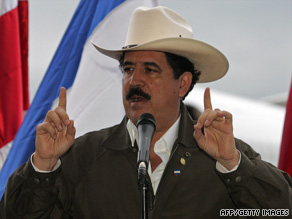
Deposed Honduran President Jose Manuel Zelaya says he must be returned to power.
Ousted Honduran president gives ultimatum
Story Highlights
Ousted Honduran leader will resort to other means if talks fail to return him to power
Jose Manuel Zelaya did not elaborate on what other means he would explore
Zelaya was deposed in a military-led coup on June 28
Both sides are currently in mediated talks to resolve situation
Ousted Honduran leader will resort to other means if talks fail to return him to power
Jose Manuel Zelaya did not elaborate on what other means he would explore
Zelaya was deposed in a military-led coup on June 28
Both sides are currently in mediated talks to resolve situation
updated 10:17 p.m. EDT, Mon July 13, 2009
Next Article in World »
Next Article in World »
(CNN) -- Deposed Honduran President Jose Manuel Zelaya on Monday gave the interim government that ousted him an ultimatum: if ongoing negotiations do not restore him to power, he will consider the talks failed and resort to other means.
Zelaya's remarks came at a news conference in Managua, Nicaragua. He did not elaborate on what other means he might explore.
The statement puts pressure on the next round of mediation between the two sides, expected to take place Saturday in Costa Rica.
Zelaya demanded that "the explicit mandates of the international organizations be carried out," referring to resolutions passed by the Organization of American States and United Nations calling for his return as president.
Since the June 28 military-led coup, Zelaya and interim Honduran President Roberto Micheletti have drawn hard stances. Both claim that the democratic process is on their side.
Both Micheletti and Zelaya accepted an offer from Costa Rican President Oscar Arias to mediate talks. Both men met individually with Arias last week, but they did not meet face-to-face.
Micheletti said Monday he expected talks between the two delegations to resume on Saturday in Costa Rica.
United Nations Secretary-General Ban Ki-moon spoke with Arias Monday and gave his support for his mediation efforts.
"The Secretary-General has offered technical assistance for the mediation and agreed to work together with President Arias to help the parties reach an agreement," a U.N. statement said. "The Secretary-General is confident that an open dialogue and international support will help resolve the current crisis."
Micheletti has adamantly denied there was a coup, insisting instead that Zelaya was ousted through a constitutional process in which the supreme court and the national assembly participated.
Zelaya, a leftist who took office in 2006 on a narrow victory, had been at odds with Honduran lawmakers, the country's supreme court and the military over a referendum he had planned to hold last month. Congress had forbidden it and the supreme court ruled it illegal.
Zelaya sought the referendum to see if voters wanted a measure on November's ballot to establish a constitutional assembly to study whether a president could run for re-election. Under the current charter, a president can serve only one four-year term.
Venezuelan President Hugo Chavez, a Zelaya ally, won a similar referendum this year and many Hondurans thought Zelaya was trying to maneuver a way to seek re-election in November -- an assertion he has denied.
Zelaya vowed to hold the vote anyway, but was toppled before the voting started.
After 18 years of nearly uninterrupted military rule, Honduras returned to civilian control in 1981. Since then, the military had not seemed interested in holding power in the nation of more than 7 million people, about 70 percent of whom live in poverty.
.
.
Sunday, June 28, 2009
US has talked with deposed Honduran leader

US has talked with deposed Honduran leader
AP foreign, Sunday June 28 2009
AP foreign, Sunday June 28 2009
WASHINGTON (AP) U.S. diplomats are working to ensure the safety of deposed Honduran President Manuel Zelaya and his family as they press for restoration of constitutional law and his presidency.
U.S. officials said Sunday evening they've spoken with Zelaya since he was taken to Costa Rica by the forces that wrested him from power.
They also say the U.S. told Honduran military leaders and other power players there that the United States and other nations in the Americas would not support a coup. They say Honduran military officials stopped taking their calls as the crisis unfolded.
Two senior administration officials briefed reporters on condition of anonymity, under ground rules set by the State Department.
THIS IS A BREAKING NEWS UPDATE. Check back soon for further information. AP's earlier story is below.
WASHINGTON (AP)President Barack Obama is calling for all sides in Honduras to respect democracy and the rule of law following the arrest of President Manuela Zelaya and his reported expulsion to Costa Rica.
Obama says any disputes must be settled peacefully through negotiations that are free from outside interference.
White House officials say Obama spoke with his national security adviser, James Jones, about the situation on Sunday morning. Aides from several agencies are monitoring the situation and providing updates to Obama, Jones and Jones' deputy.
Zelaya was detained shortly before voting was to begin on a constitutional referendum. He had insisted on holding the vote even though the Supreme Court ruled it illegal and everyone from the military to Congress and members of his own party opposed it.
.
.
Tuesday, June 02, 2009
Clinton details conditions for Cuba entry to OAS

By MATTHEW LEE – 2 hours ago
SAN PEDRO SULA, Honduras (AP) — U.S. Secretary of State Hillary Rodham Clinton said Tuesday that any move toward allowing Cuba to join the Organization of American States must be accompanied by the communist nation's release of political prisoners, respect for basic human rights and democratic reforms.
"We do look forward to the day when Cuba can join the OAS," she told a breakfast meeting with Caribbean foreign ministers. "But we believe that membership in the OAS must come with responsibilities and we owe it to each other to uphold our standards of democracy and governance that have brought so much progress to our hemisphere."
"It is not about reliving the past," Clinton said. "It is about the future of being true to the founding principles of this organization."
The United States is largely isolated within the OAS in demanding conditions. Top officials from members of the OAS have been nearly unanimous in calling for Cuba to be allowed to rejoin the 34-nation group without conditions.
Despite President Barack Obama's tentative overtures to Cuba, Clinton, who is attending the session, says any move to allow Cuba to rejoin the group must be accompanied by changes by its government.
Faced with a solid bloc of countries opposed to the conditions, U.S. officials are hoping to stall a vote on reversing Cuba's nearly 50-year-old suspension from the OAS without demands for change.
Clinton expressed hope that a "common way forward" could be found.
But the region's growing number of socialist leaders, spearheaded by Venezuelan President Hugo Chavez, Nicaraguan President Daniel Ortega, Bolivian President Evo Morales and El Salvador President Mauricio Funes are pressing for a vote, and U.S. officials are unsure how the meeting will proceed.
Even though Cuba has expressed no interest in rejoining the bloc and the organization generally makes decision by consensus, proponents can push ahead with a resolution that needs only a two-thirds majority, or 23 votes, to pass.
OAS Secretary General Jose Miguel Insulza said Tuesday that the group "has always agreed on main issues by consensus. I don't believe it would take away that tradition today because it has also been very useful."
"Only the foreign ministers can take a decision (on Cuba) now," he said.
Forcing a vote would put Clinton in a difficult position because regional and U.S. officials believe there are easily enough countries in favor. Diplomats have been scrambling to reach consensus on a compromise resolution but as of late Monday had been unable to do so.
The administration is toeing a delicate line as it reaches out to Cuban leader Raul Castro and by extension his ailing brother Fidel by lifting restrictions on money transfers and travel to the island by Americans with family there.
Cuba agreed over the weekend to a U.S. proposal to resume immigration talks with Washington that former President George W. Bush suspended in 2003 and to negotiations on restarting direct mail service between the two countries. It has also proposed exploring cooperation on counternarcotics and terrorism as well as on disaster preparedness.
But the Castros have repeatedly said they want a full lifting of the decades-old U.S. embargo on Cuba, something the administration has refused to consider without reforms. That stance has left the United States increasingly isolated.
Clinton is at Tuesday's meeting as the representative of the last country in the Western Hemisphere without full diplomatic ties with Cuba.
El Salvador had been the only other one, but in his first act as president, Funes on Monday restored his country's diplomatic relations with Cuba that had been broken in 1961.
The signing ceremony to commemorate that event was held in the same room at the presidential palace in San Salvador where Clinton and Funes later held their joint news conference.
Monday, January 12, 2009
Central American, Dominican governments eye joint currency
Central American, Dominican governments eye joint currency
Local - 12 January 2009, 2:11 PM
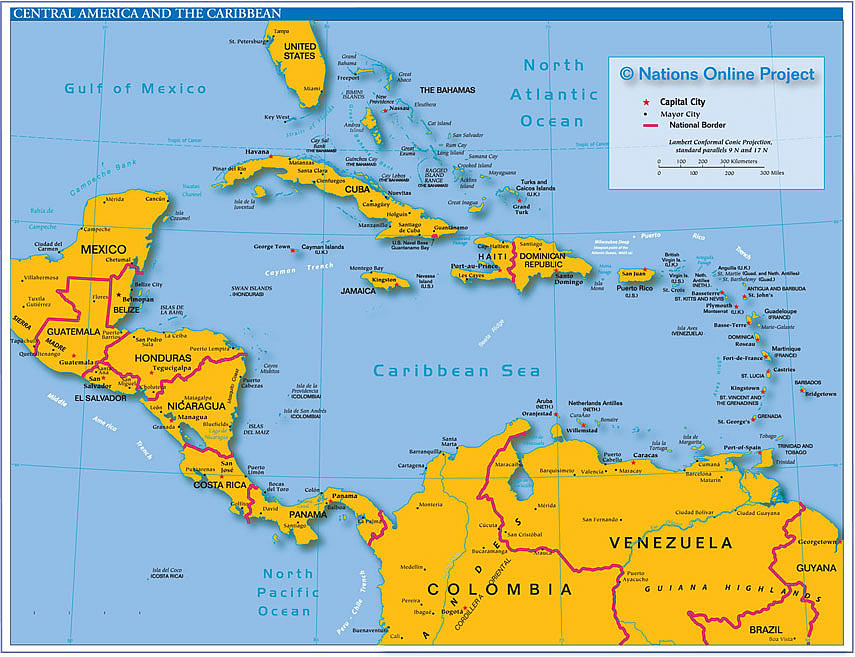
Santo Domingo.- The Dominican and the Central American governments approved further studies of monetary and financial development, including creating a joint currency and a plan of urgent measures to confront the financial crisis, and creating a credit pool to spur interregional trade.
The measure came after a meeting of the Central American Integration System (SICA), held in December in San Pedro Sula, Honduras, where the leaders gathered for their 33rd meeting.
Subscribe to:
Posts (Atom)