Showing posts with label HUNGER. Show all posts

Monday, October 19, 2026

World Food Programme Cuts Aid to 500,000 Palestinians in Gaza, Citing Funding Shortages


By Reuters
|
Oct. 19, 2026, at 3:21 a.m.


World Food Programme Cuts Aid to 500,000 Palestinians in Gaza, Citing Funding Shortages


REUTERS

Palestinian children wait to receive food from a soup kitchen funded by the World Food Programme (WFP), in Deir Al-Balah, in the central Gaza Strip October 18, 2026. REUTERS/Mahmoud Issa


CAIRO/GAZA, Oct 19 (Reuters) - The UN World Food Programme ⁠has ⁠said funding shortages are ⁠forcing major cuts to its aid programme in Gaza, leaving ​about 500,000 people without monthly food support in a territory where two-thirds of the population ‌struggle to get enough to eat.

The ‌WFP said it was reducing the number of recipients of its monthly assistance ⁠to 1.1 ⁠million people from 1.6 million.

In addition, food rations have been halved, ​cash assistance has been cut for 75,000 families, and the number of daily hot meals for those unable to cook has fallen to 150,000 from 250,000, with some families in ​hard-to-reach areas now receiving a hot meal only every other day.
c
The WFP said ⁠about ⁠1.4 million people, or two-thirds ⁠of Gaza's ​population, face crisis levels of food insecurity or worse, including roughly 200,000 people in ​emergency conditions.

Last year's US-brokered ⁠Gaza ceasefire calls for the eventual reconstruction of the territory. But little progress has been made towards implementing a deal to end the conflict that includes terms for Hamas to disarm and Israel to withdraw its troops.

"It's a year into the agreement ⁠of this ceasefire. Well, life is still brutal here. There is no ⁠proper shelter.. There is no basic services. There is no safety, no security," acting Executive Director of the World Food Program WFP Carl Skau told Reuters in Gaza.

"These cuts are happening just as we are facing the fourth winter. You know, I've been through the winters here, absolutely brutal," he added.

The WFP said it urgently needs $450 million over the next six months to maintain critical operations in Gaza and the Israeli-occupied West Bank.

"We tell ⁠the world now is this is not the time to look away. This is the time to step up to sustain this support, to protect the progress that has been made, but also to push for early ​recovery," said Skau.

(Reporting by Nidal Al-Mughrabi in Cairo and Mahmoud Issa ​in Gaza;Editing by David Goodman, William Maclean)


Copyright 2026 Thomson Reuters.


Tuesday, October 13, 2026

World Food Forum 2026: FAO Director-General opens 5th Science and Innovation Forum


Event calls for accelerating science and innovation for food security impacts


Established by the Director-General in 2022, SIF is a key pillar of the World Food Forum (WFF), whose theme this year is "Innovate Today. Nourish Tomorrow."

©FAO
13/10/2026

Rome - The 5th edition of the Science and Innovation Forum (SIF) opened Tuesday at the headquarters of the Food and Agriculture Organization of the United Nations (FAO), with Director-General QU Dongyu calling for the benefits of science and innovation to reach those most in need at a time when 645 million people continue to face hunger worldwide.

Established by the Director-General in 2022, SIF is a key pillar of the World Food Forum (WFF), whose theme this year is "Innovate Today. Nourish Tomorrow." The Forum serves as a platform to advance science-based solutions and foster collaboration among policymakers, researchers, innovators and partners working to transform agrifood systems.

Held from 13 to 16 October 2026, the Forum highlights the importance of harnessing science, technology and innovation to build agrifood systems that are more efficient, inclusive, resilient and sustainable, helping to improve food security, nutrition and livelihoods.

While science and innovation are rapidly transforming how food is produced, accessed and consumed, one in four people worldwide still face food insecurity, and one in three cannot afford a healthy diet.

Groundbreaking innovations such as biotechnology, remote sensing, robotics and artificial intelligence are increasingly available. Yet their potential can only be realized if they are accessible, affordable and adopted by those who need them most.

Thursday, June 25, 2026

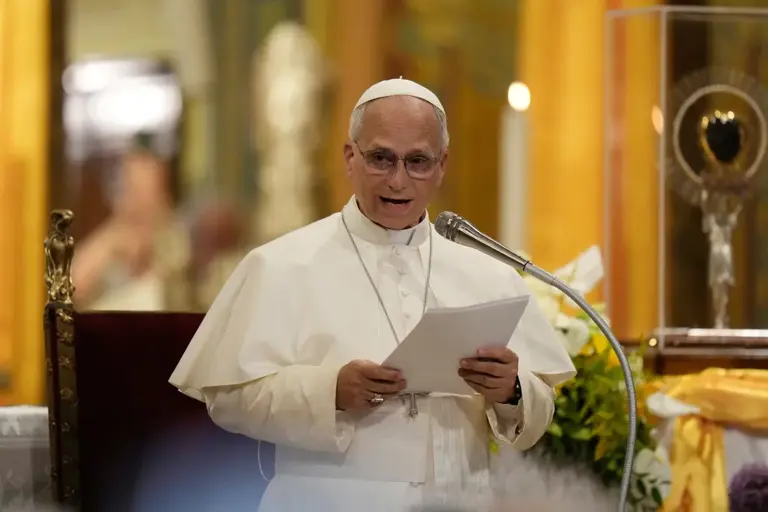
Pope Leo is wrong about hunger

Opinion by David Harsanyi, Washington Examiner


Pope Leo is wrong about hunger

For Catholics, the Pope is the vicar of Christ and the spiritual leader of the Church — which is to say, his positions are typically none of my business. Then again, any time the pope delivers a statement that speaks to the political aspirations of the secular left, the media amplifies it to lecture the rest of us.

The latest such comment has to do with world hunger.

“It is important to resist the commodification of basic human needs,” the Pope said, criticizing slow humanitarian aid from the United States to the U.N. World Food Program. “Food, water and healthcare cannot be subordinated to market considerations or geopolitical interests.”

Virtually every major modern famine in history occurred in places that “subordinated” the commodification of food for a greater good. Though, Leo has it backward. The market is the natural state of economic activity. We subordinate the market. The question is, are we better off when we do? Almost every time, the answer is no.

It’s not an accident that capitalistic nations create so much wealth that they can be generous not only to their own hungry but also to the hungry elsewhere. The proportion of the global population facing hunger today has declined dramatically over the past 30-40 years because of technological advancements and efficiencies fueled by trade and market-driven profits.

Which is why the U.S. has pledged nearly $750 million to the U.N. World Food Program, far more than any nation. China generally contributes under $20 million and Russia around $30 million.

It should also be noted that government aid is not the only assistance we give. Americans are the most charitable people in the world.

“Access to adequate food is a fundamental human right grounded in the dignity of every person,” the pope went on. “Meeting this need not only alleviates suffering but also addresses underlying causes of geopolitical instability. Indeed, food security is an essential component of global and integral security.”

Most people acknowledge that feeding and caring for the poor is a moral imperative. Being fed is not a “fundamental human right,” however, because it requires compelling another person to provide it. Americans believe — or should believe — that only the “fundamental rights” are those that call on others to abstain from interfering. That includes things like freedom of speech and religion. Your healthcare can’t be a right.

Moreover, helping the poor without any expectation that the government will change its policies that strip its people of dignity does nothing to help the underlying causes of geopolitical instability. If we choose, Americans have every right to attach expectations to their aid.

The United Nations, after all, is teeming with illiberal tyrannical nations that drive their own people into destitution. The areas most in danger of hunger, according to a recent U.N. report, are Sudan, South Sudan, Yemen, Nigeria, Somalia, and the Gaza Strip. All of them struggle in part because of Islamism, which carries a political agenda that runs counter to every Christian tenet imaginable. It would be nice if the Church spoke out about corrupt regimes and Islamists with the same passion it does the U.S., which has done more for the world’s poor than any institution that has ever existed.


Tuesday, June 02, 2026

The Earth Shall Wax Old


Volume 41 Issue Eight August 2022

Last Trumpet Ministries · PO Box 806 · Beaver Dam, WI 53916

Phone: 920-887-2626 Internet: http://www.lasttrumpetministries.org


“For if the trumpet give an uncertain sound, who shall prepare himself to the battle?” I Cor. 14:8

The Earth Shall Wax Old


“Lift up your eyes to the heavens, and look upon the earth beneath: for the heavens shall vanish away like smoke, and the earth shall wax old like a garment, and they that dwell therein shall die in like manner: but my salvation shall be for ever, and my righteousness shall not be abolished.”

Isaiah 51:6

“Of old hast thou laid the foundation of the earth: and the heavens are the work of thy hands. They shall perish, but thou shalt endure: yea, all of them shall wax old like a garment; as a vesture shalt thou change them, and they shall be changed: But thou art the same, and thy years shall have no end.”

Psalm 102:25-27

When people hear the word “apocalypse” they often think of the Book of Revelation. This is fitting because the word apocalypse is taken from the Greek word “apokálypsis;” which means “revelation.” (1) In particular, the word apocalypse is usually associated with revelations regarding end-time prophecy and events. While the book of Revelation contains many Scriptures regarding the world’s final days, there are an abundance of other apocalyptic messages found throughout God’s Word. For example, our Lord and Saviour Jesus Christ spends the entirety of Matthew, chapter 24, describing both the destruction of the Jewish temple in 70 A.D. and also the end of the world. The Apostle Paul devotes II Timothy, chapter 3, to the “perilous times” (verse 1) that would occur in “the last days” and even warns that “evil men and seducers shall wax worse and worse, deceiving and being deceived” (verse 13.) The Apostle Peter wrote of the end times in II Peter, chapter 3, warning in verse 3; “There shall come in the last days scoffers, walking after their own lusts.” He then offers a vivid description of God’s judgment upon the earth by writing in verse 10, “But the day of the Lord will come as a thief in the night; in the which the heavens shall pass away with a great noise, and the elements shall melt with fervent heat, the earth also and the works that are therein shall be burned up.”

How is it that God, who lovingly and meticulously created this world and then proclaimed His creation to be “very good” in Genesis 1:31, could ever allow this world to be burned up? Over time, this planet has been ravaged by sin, suffering the effects of greed, selfishness, unbridled lust, hatred, and a lack of regard for Almighty God. When God decides it is time for this world to be destroyed, much of the damage will have already been inflicted by mankind. Thus, as a property owner might find a dilapidated and unsound building condemned and subject to demolition, God, too, will demolish this world.

Scriptures in the Old Testament tell us that the world we now occupy will eventually wear out and “wax old like a garment.” Isaiah 51:6 declares, “Lift up your eyes to the heavens, and look upon the earth beneath: for the heavens shall vanish away like smoke, and the earth shall wax old like a garment, and they that dwell therein shall die in like manner: but my salvation shall be for ever, and my righteousness shall not be abolished.” A remarkably similar passage can be found in Psalm 102:25-27, which tells us, “Of old hast thou laid the foundation of the earth: and the heavens are the work of thy hands. They shall perish, but thou shalt endure: yea, all of them shall wax old like a garment; as a vesture shalt thou change them, and they shall be changed: But thou art the same, and thy years shall have no end.” Even as these verses reveal the ultimate demise of our world, we see the promises that not only will God Himself endure for all eternity, but His salvation, too, will endure for all eternity. It is for this reason that Jesus promises in John 5:24, “Verily, verily, I say unto you, He that heareth my word, and believeth on him that sent me, hath everlasting life, and shall not come into condemnation; but is passed from death unto life.” As the forthcoming content of this newsletter will reveal, our world is facing astonishing trouble in the days ahead. As such, the promises of God are exceedingly precious to His people, and we will need His mercy and grace to endure the coming months and years.

Thursday, May 28, 2026

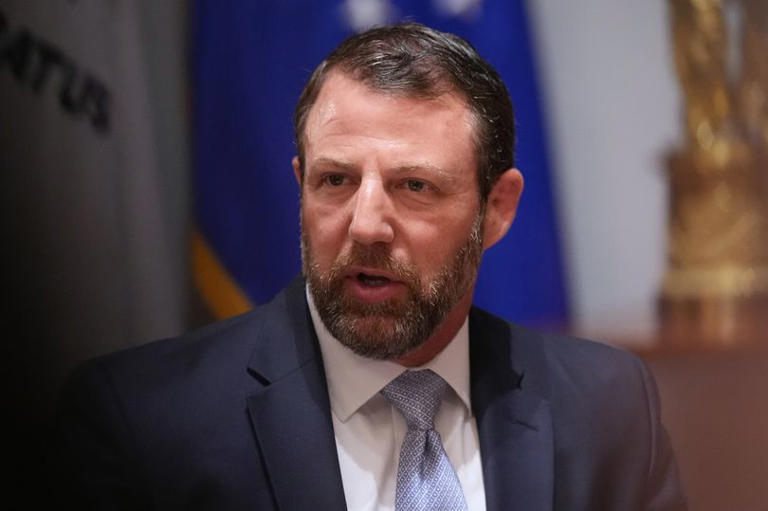
Markwayne Mullin tells ICE hunger-strikers who want 'ethnic food' to 'go back to their country'

Story by Peter Rubinstein • 11h 


U.S. Rep. Adriano Espaillat described the conditions at the Newark facility as "inhumane" and vowed to shut the center down (Image: AP Photo/Jacquelyn Martin)

© AP Photo/Jacquelyn Martin

Department of Homeland Security Secretary Markwayne Mullin channeled the same anti-immigrant rhetoric as Trump on Wednesday, claiming that the New Jersey ICE facility detainees on hunger strike are only doing so because they want "ethnic food."

"There was only a handful of individuals that was refusing to eat because they want their ethnic group, or their ethnic-right food. Well, they can go back to their country and get whatever food they want," Mullin said during a televised Cabinet meeting. “The fact is, we’re giving them the calories they want. This isn’t Holiday Inn.”

His comments came after Democratic members of Congress who visited Delaney Hall in Newark said detainees are being given small portions of food that "very often" contain maggots. U.S. Rep. Adriano Espaillat described the conditions as "inhumane" and vowed to shut the center down.

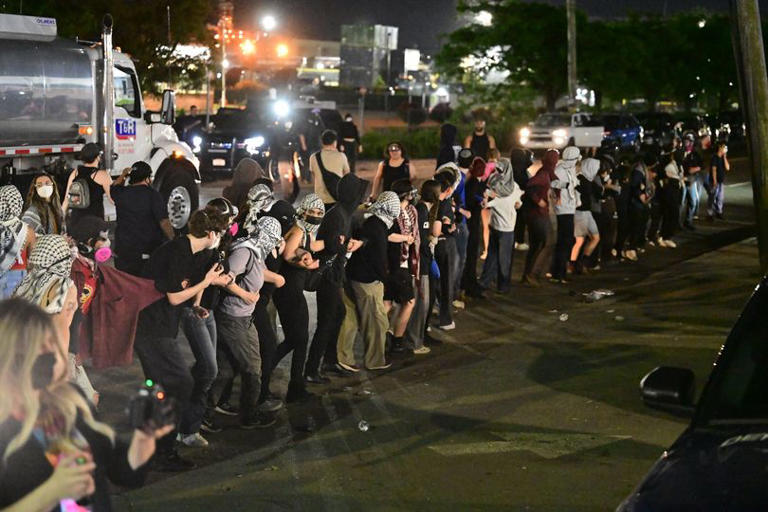
Protesters have been demonstrating for days and asserting that detainees at the New Jersey facility are on a hunger strike.

U.S. Rep. Jerry Nadler, a Manhattan Democrat, said that the only medication they receive is Tylenol.


The lawmakers addressed protesters and family members of detainees demonstrating outside the facility’s security gate after their visits© Kyle Mazza/Shutterstock

Tuesday, January 13, 2026

‘Catastrophic’ turn in prolonged food crisis imminent, Caritas Somalia director warns


By Ngala Killian Chimtom
Jan 13, 2026|Africa Correspondent


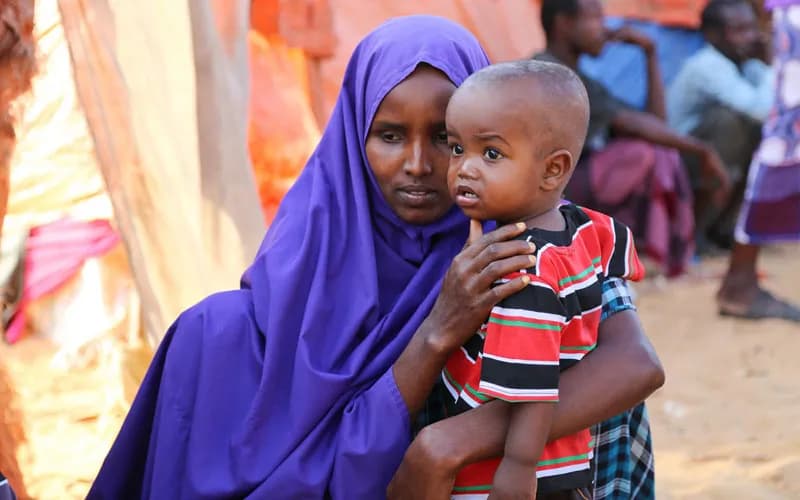
Somali woman and child, file photo, 2022. Image credit: Caritas Internationalis


As more than 4.6 million people in Somalia are reeling from one of the worst droughts in decades, the executive director of Caritas in the war-torn and ecologically ravaged Horn of Africa country says the protracted humanitarian crisis is reaching a critical tipping point.

Converging factors have created the crisis: a climate emergency intensified by recurring cycles of failed rains, decades of conflict, and ongoing political instability.

In an exclusive interview with Crux, Sara Ben Rached of Caritas Somalia described the nation’s plight as “among the most complex in the world.”

Rached told Crux the crisis is being dramatically worsened by the recent suspension of U.S. government assistance, which has crippled the humanitarian response just as needs are escalating.

The United Nations Office for the Coordination of Humanitarian Affairs has a plan for humanitarian needs and assistance, but Sached says the plan is only 26% funded, and warns that without immediate, flexible funding, the situation will deteriorate from a crisis to a “catastrophic” one, forcing more families into displacement and pushing entire regions into emergency levels of hunger.

Crux spoke with Rached recently, and here shares the Q&A, edited for length and clarity.

Crux: How would you describe the humanitarian situation in Somalia today?

Friday, October 10, 2025

Pope Leo XIV’s commitment to resilient Food Systems and Care for Creation


Pope Leo XIV’s commitment to resilient Food Systems and Care for Creation

By JESC

-July 10, 2025


Photo by Vatican News

In his address to the 44th Conference of the United Nations Food and Agriculture Organization (FAO) taking place in Rome June 28 – July 4, Pope Leo XIV has warned that the world is drifting ever further from the 2030 target of achieving zero hunger. A goal now imperiled by conflict, injustice, and environmental degradation.

The Holy Father condemned the use of hunger as a weapon of war and denounced political leaders who grow fat on the profits of the food business while civilians perish from hunger.

Beyond condemning the exploitation of the vulnerable, the Pope has emphasized the urgent need to transform global food systems so that they are both resilient and just in the face of mounting climate change. “Food systems have a major influence on climate change, and vice versa,” he stated. “Without decisive and coordinated climate action, it will be impossible to guarantee agricultural and food systems capable of feeding a growing world population. Producing food is not enough: it is also important to ensure that food systems are sustainable and provide healthy and affordable diets for all.” This call to action carries forward the legacy of Pope Francis and his landmark encyclical Laudato Si’.

In a sign of this deepening commitment, Pope Leo XIV celebrated his first Mass for the Care of Creation on July 9, 2025. The private liturgy with the staff of the Borgo Laudato Sì, the educational center at Castel Gandolfo, highlighted the spiritual dimension of ecological responsibility. He called the garden where the mass was held a ´kind of natural cathedral´, with its peaceful, serene natural surroundings standing in contrast to the disasters inflicted by humans. We are all stewards of God’s creation and this must be reflected in our policies, prayers, and daily lives.


Photo by Vatican News

To mark this occasion, the Dicastery for Promoting Integral Human Development and the Dicastery for Divine Worship and the Discipline of the Sacraments have introduced a new formulary in the Roman Missal dedicated to the Care for Creation. This liturgical offering commemorates both the 10th anniversary of Laudato Si’ and the 35th anniversary of Pope John Paul II’s 1990 World Day of Peace message, “Peace with God the Creator, Peace with All of Creation.”

Cardinal Michael Czerny also underscored that care for creation cannot be a peripheral concern, but must be a fundamental expression of Christian living. He warned against approaches to ecological reform that ignore the cry of the poor, stressing that ecological justice cannot be decoupled from social consequences.

The Jesuit European Social Centre (JESC) welcomes this commitment and reaffirms its call to care for the creation, particularly through its work on climate justice, in collaboration with many partners such as Ecojesuit and the European Laudato Si« alliance, and the promotion of sustainable food systems within the Our Daily Bread (ODB) network.

Enikö Fehéreková
JESC Ecology Officer


Thursday, October 17, 2019

Pope Francis: Food is becoming an avenue of personal destruction


Gerard O’Connell

October 16, 2019


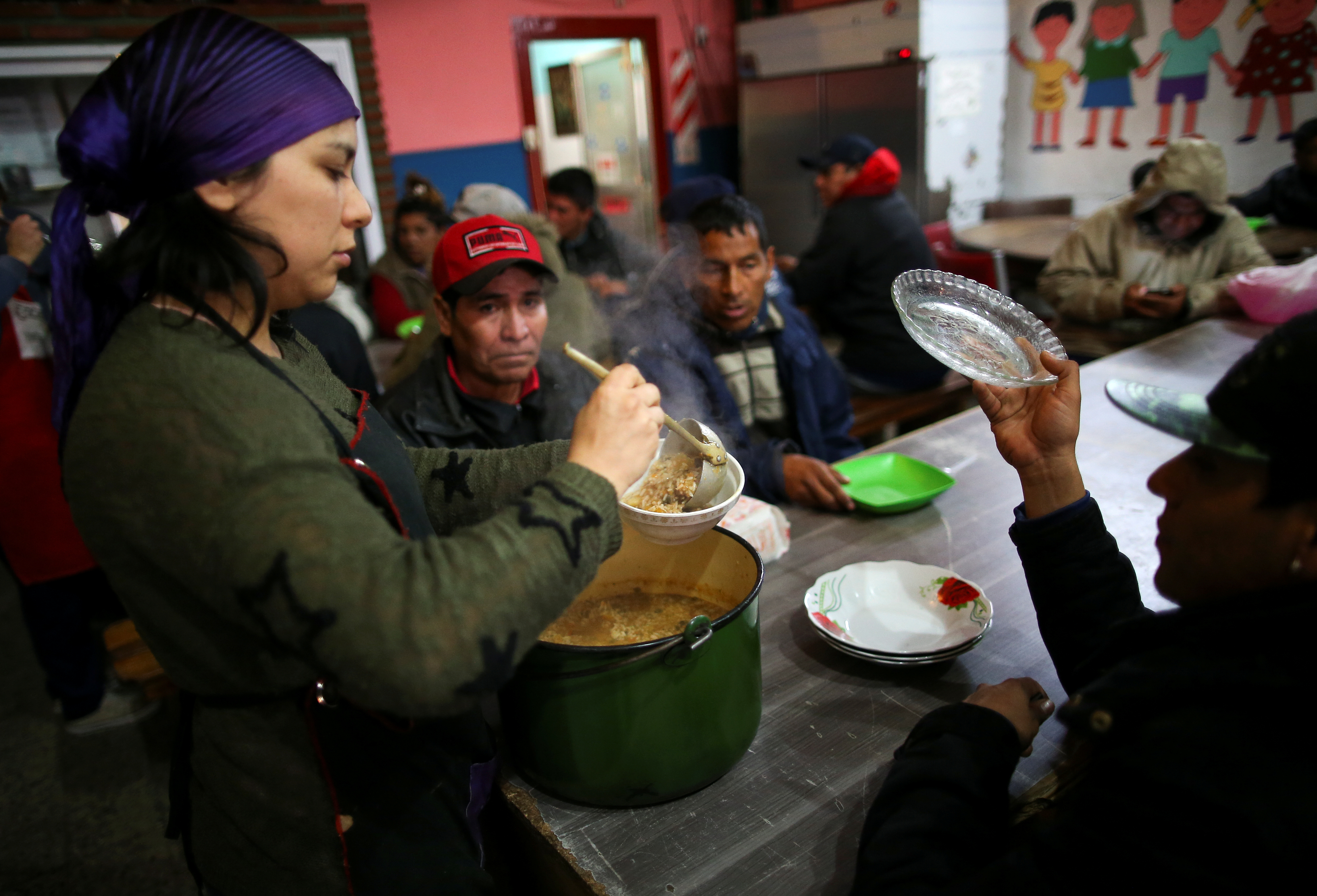
A volunteer serves a meal at a soup kitchen in Buenos Aires, Argentina, Oct. 4, 2019. Resolving the global crises of world hunger and malnutrition demands a shift away from a distorted approach to food and toward healthier lifestyles and just economic practices, Pope Francis said in an Oct. 16 message. (CNS photo/Agustin Marcarian, Reuters)


Pope Francis has again condemned the relegation of food “to a mere commercial product subject to financial speculation” that results in a global contradiction: Even as some 800 million people suffer from hunger and malnutrition worldwide, another 700 million people are obese, “victims of improper dietary habits.”

In a letter to Qu Dongyu, the first-ever Chinese director general of the Food and Agricultural Organization of the United Nations on the occasion of the annual World Food Day on Oct. 16, the pope declared that “the battle against hunger and malnutrition will not end as long as the logic of the market prevails, and profit is sought at any cost.”

Pope Francis emphasized the need for “a conversion in our way of living and acting.” He said, “we must come to realize that what we are accumulating and wasting is the bread of the poor.”

World Food Day is sponsored by the F.A.O. to draw attention to the plight of so many hungry people and to highlight the need for greater action against hunger. Each year F.A.O. chooses a theme to celebrate this day. For this year it is: “Our actions are our future. Healthy diets for a #ZeroHunger world.”


Saturday, April 13, 2019

Short on electricity, food and water, Venezuelans return to religion


Arelis R. Hernández and Mariana Zuñiga, The Washington Post

Published 10:01 am CDT, Saturday, April 13, 2019


El Guayanés prays to José Gregorio Hernández. The Venezuelan physician, who died in 1919, is a folk hero across Latin America. 
Photo: Photo For The Washington Post By Andrea Hernandez


Mary Mendoza holds the New Testament as she waits for a service at an evangelical Christian church in the Caracas slum of Petare. 
Photo: Photo For The Washington Post By Andrea Hernandez 


CARACAS, Venezuela - The lights in Petare had gone dark. Again.
The people of Venezuela's largest slum were used to the blackouts that halt the flow of water, exhaust their supplies of expensive candles and fray their already thin patience.
But this would not be like any other lightless night in the hillside barrio. Amid the darkened alleyways, a strange, joyful sound emerged between the zinc-roofed homes. Tambourines jingled, maracas rattled, drums throbbed. Voices called all who could hear to salvation.

"Cristo sana y salva . . ." 10 members of the Restoring Hearts church sang against the darkness. "Christ heals and saves. . . ."

Buffeted by political and humanitarian crises, one of Latin America's least religious countries is turning to faith. As the political stalemate between President Nicolás Maduro and opposition leader Juan Guaidó grinds into another month, and shortages of electricity, food and water reduce life to a daily struggle to survive, leaders across religious traditions are reporting a flood of worshippers, lapsed and new, searching for comfort and answers.

"All my masses are full, which has never happened before," said the Rev. Jesús Godoy, a Catholic priest at the Good Shepherd parish in the Chacao district of Caracas. He says he's seeing more than 2,000 people each weekend.

"They beg for help," Godoy said. "They want God to give them the tools to live in crisis."

In this deeply polarized country, analysts are watching for signs that this growing faithful could emerge as a political force.


Saturday, January 06, 2018

Caracas shops mobbed as Venezuela's Maduro forces price cuts


Caracas shops mobbed as Venezuela's Maduro forces price cuts: CARACAS (Reuters) - Mobs gathered outside some Caracas supermarkets on Saturday after the government ordered shops to slash prices, creating chaos as desperate Venezuelans leapt at the chance to buy cheaper food as the country's worsening economy causes severe shortages.

The leftist administration of President Nicolas Maduro ordered more than 200 supermarkets to cut prices back to last month’s levels - a tall order in a country where many prices change daily due to the world's fastest inflation rate.

News of the discounts spread like wildfire, leading hundreds to mass in front of stores before daybreak. When one major supermarket in wealthier eastern Caracas did not open for hours, people began pounding on the storefront.

"We're hungry! We want food!" screamed the crowd, which included babies, pensioners and children with disabilities.

“This scares me, but what can I do?” said Francisco Guaita, a carpenter hoping to find food for his three children, over the shouts and pushes. “This is the worst government. We want Maduro out.”


Read more


Tuesday, October 25, 2016

In crisis-hit Venezuela, price hike leaves poor starving


In Crisis-Hit Venezuela, Price Hike Leaves Poor Starving


Published on Oct 24, 2016


From: https://www.youtube.com/user/AFP

October 24, 2016 - Supermarket shelves in Venezuela used to be empty. Now they're being restocked, but most goods are unaffordable since the government of Nicolas Maduro decided to stop regulating private sector imports. Slum residents struggle to eat two meals a day.

---

PigmineNews.com: http://www.pigminenews.com
PigmineNews on mobile: http://www.pigminenews.com/mobile
PigmineNews on Facebook: http://www.facebook.com/PigMineNews
PigmineNews on Twitter: http://twitter.com/PigmineNews
PigMine2 on YouTube: http://www.youtube.com/pigmine2
PigMine5 on YouTube: http://www.youtube.com/pigmine5
PigMine6 on YouTube: http://www.youtube.com/pigmine6
PigMine7 on YouTube: http://www.youtube.com/pigmine7

FAIR USE NOTICE: This video may contain copyrighted material. Such material is made available for educational purposes only. This constitutes a 'fair use' of any such copyrighted material as provided for in Title 17 U.S.C. section 106A-117 of the U.S. Copyright Law.

Tuesday, August 23, 2016

Venezuelans are going hungry. But the country’s Olympians will get free housing and cash.

WorldViews


August 22


Yulimar Rojas of Venezuela celebrates winning the silver medal in the event. (Leonhard Foeger/Reuters)

As a young man, Venezuelan President Nicolás Maduro played electric guitar, not sports. But like the men who mentored him, Cuba’s Fidel Castro and the late Hugo Chávez, he views the country’s Olympic achievements as a validation of his economic and social policies. Also, he is fond of wearing track suits in the colors of the national flag.

It’s perhaps understandable, then, that Maduro was in a generous mood Monday when he welcomed home the 87 members of his country’s Olympic team with the announcement that they would all receive free houses and cash.

To be sure, plenty of Olympic athletes around the world reap material rewards from their governments and sponsors for their athletic feats. But in Venezuela, a country where you can spend more time waiting in a supermarket line than it takes to run a marathon, cash is perhaps the last thing the government has to give away.


Amid economic hard times, Venezuelans turn to city farming


Play Video1:53

Facing a national food crisis, Venezuela's pumpkin-growing socialist president is exhorting compatriots to grow fruit and vegetables on balconies and roofs and in barracks across the country. (Reuters)

Maduro called it an “extra incentive” for the country’s athletes, who also learned they would not have to worry about the country’s rapidly depreciating currency, the bolívar. The athletes and their coaches will receive the cash in U.S. dollars, Maduro said, without specifying how much their rewards would be.

For Maduro, the Rio Games have provided a much needed national distraction from months of unrelenting bad news about the economy.

Venezuela faces a 10 percent economic contraction this year and is considered the world’s leader in inflation. Maduro’s gesture came on the same day economists announced that the cost of basic goods last month had increased 773 percent since July 2015.

Maduro ordered a 50 percent increase in the minimum wage last month, but the latest studies show that salaries still fall far short of the amount needed to obtain basic household goods and food. The government’s slow-footed economic interventions are being outpaced by Venezuela’s Olympic-level inflation.

Despite facing the oil-exporting country’s worst crisis in history, the Venezuelan president said he has also ordered a 50 percent increase in spending on high-performance athletics in preparation for the 2020 Tokyo Summer Games, a move that would benefit more than 1,000 Venezuelan Olympic hopefuls.

Venezuela’s most decorated Olympian, triple jumper Yulimar Rojas, received a car earlier this year from Maduro. She won silver in Rio, “thanks to the Bolivarian revolution, our commander Chávez and the athletic revolution,” Maduro said.

The “Bolivarian revolution” refers broadly to the socialist-inspired system implemented by Chávez from his inauguration as president in 1999 to his death in 2013.

One of the most visible members of the country’s Olympic team, fencing competitor and former sports minister Alejandra Benítez, 36, wore symbolic tributes to Chávez on her uniform and recorded pro-government videos from Rio. She appeared at Maduro’s side during Monday’s ceremony.

The Venezuelan team also won a bronze medal in boxing, and another bronze in BMX cycling. The country finished 65th in Olympic rankings, tied with Bulgaria.


Source


Friday, August 05, 2016

The Economic Collapse in Venezuela Is So Bad That People Are Slaughtering and Eating Zoo Animals


Charisma News


The Economic Collapse in Venezuela Is So Bad That People Are Slaughtering and Eating Zoo Animals

11:30AM EDT 8/4/2016


At least 50 animals have died in the last six months at the Caricuao zoo in Caracas, Venezuela, due to widespread food shortages that are affecting both man and beast in the socialist nation. (David Goehring/Flickr/Creative Commons)

If you were hungry enough, would you kill and eat zoo animals? To most of us such a notion sounds absolutely insane, but this is actually happening in Venezuela right now. This is a country where people are standing in lines for up to 12 hours hoping that there will be food to buy that day, and where rioting and looting have become commonplace. So even though the U.S. economy is in dreadful shape at this moment, we should be thankful for what we have, because at least we are not experiencing a full-blown economic collapse yet like Venezuela currently is.

Black stallions can be some of the most beautiful horses on the entire planet, but things are so desperate down in Venezuela this summer that everything looks like food to some people at this point. What happened at the Caricuao Zoo on Sunday is so horrible that I actually debated whether or not to share it with you. Desperate people do desperate things, and when people get hungry enough they will do things such as this...


Wednesday, June 29, 2016

Venezuelans are storming supermarkets and attacking trucks as food supplies dwindle


By Joshua Partlow and Mariana Zuñiga
The Americas

une 28 
J

Joffren Polanco stands beside his almost empty fridge in Caracas, Venezuela. (Alejandro Cegarra/For The Washington Post)


CARACAS, Venezuela — In the darkness the warehouse looks like any other, a metal-roofed hangar next to a clattering overpass, with homeless people sleeping nearby in the shadows.

But inside, workers quietly unload black plastic crates filled with merchandise so valuable that mobs have looted delivery vehicles, shot up the windshields of trucks and hurled a rock into one driver’s eye. Soldiers and police milling around the loading depots give this neighborhood the feel of a military garrison.

“It’s just cheese,” said Juan Urrea, a 29-year-old driver, as workers unloaded thousands of pounds of white Venezuelan queso from his delivery truck. “I’ve never seen anything like this before.”

The fight for food has begun in Venezuela. On any day, in cities across this increasingly desperate nation, crowds form to sack supermarkets. Protesters take to the streets to decry the skyrocketing prices and dwindling supplies of basic goods. The wealthy improvise, some shopping online for food that arrives from Miami. Middle-class families make do with less: coffee without milk, sardines instead of beef, two daily meals instead of three. The poor are stripping mangoes off the trees and struggling to survive.

“This is savagery,” said Pedro Zaraza, a car-oil salesman who watched a mob mass on Friday outside a supermarket, where it was eventually dispersed by the army. “The authorities are losing their grip.”

[Venezuela declares a 2-day workweek because of energy shortages]

What has been a slow-motion crisis in Venezuela seems to be careening into a new, more dangerous phase. The long economic decline of the country with the world’s largest oil reserves now shows signs of morphing into a humanitarian emergency, with government mismanagement and low petroleum prices leading to widespread shortages and inflation that couldsurpass 700 percent this year.

The political stakes are mounting. Exhausted by government-imposed power blackouts, spiraling crime, endless food lines, shortages of medicine and waves of looting and protest, citizens are mobilizing against their leaders. In recent days, Venezuelans lined up to add their names to a recall petition that aims to bring down the country’s president, Nicolás Maduro, and put an end to the socialist-inspired “revolution” ignited 17 years ago by Hugo Chávez.

“This can’t continue,” said Angel Rondon, a mechanic who now sometimes eats just once a day. “Things have to change.”


A woman who had been standing in line outside a center in Caracas certifying signatures for a referendum to recall President Nicolás Maduro reacts after learning the center had closed, without attending to those still standing in line. (Alejandro Cegarra/For The Washington Post)


Disillusioned ‘Chavistas’

The rumor spread quickly on a recent Tuesday evening in the poor farmlands near Barlovento an hour east of Caracas: A truck carrying rice had tipped over, and food was free for the taking. Glenis Sira, a mother of seven, grabbed a plastic bag and ran from her cinder-block shack. More than 1,000 people joined her in scrambling to reach the village of La Fundacion before they realized there was no rice truck, only rumor.

“We have never had this level of need,” said Sira, one of several witnesses who described the melee.

For decades Venezuela was one of Latin America’s more stable and developed democracies, with a middle class accustomed to the benefits of oil wealth. Economic crises in the 1980s and 1990s battered many Venezuelan families. But the Chávez era was marked by rising oil prices and declining poverty, leaving few people prepared for the sickening free fall of the past few years.

[Harrowing scenes of Venezuela on the brink of collapse]

Sira has long been a proud “Chavista,” convinced that government spending can create a more equal society. Chávez’s government, flush with oil money and billions of dollars in foreign loans, gave her the Madres del Barriosubsidy for mothers in extreme poverty. Another program helped residents to finish houses under construction. Youths from her community received scholarships.

“I always lived for the revolution,” she said.

But many of the welfare programs started by Chávez have dried up, and the nearest store has little more than two-liter bottles of Pepsi and packs of Pall Mall cigarettes. Under Chávez, the government established anetwork of government-run supermarkets that sold basic foods at subsidized prices. But inflation has put even these bargains out of reach for many people. A single kilogram of yucca — about two pounds — now costs about one-third of the weekly minimum wage.

Sira’s neighbors hunt for deer and armadillos for subsistence and barter their meager catch. She lives off what she can grow — yams, tomatoes, corn — or what she can forage. Once a cacao-producing region, the area has been devastated by drought.

“I’m a Chavista and, damn it, this situation is hard,” she said. “That is why the revolution is being killed. Because we are hungry.”


Andrea Sira, 11, at her home on the outskirts of Barlovento. The only food in her fridge was mangoes. (Alejandro Cegarra/For The Washington Post)


A child in her house in Barlovento waits for lunch, which consists of only boiled yam. Food sold in the black market can be 1,000 percent higher than what it cost in government-regulated grocery stores. (Alejandro Cegarra/For The Washington Post)
Falling oil prices

Venezuela’s ability to produce food and other goods has dwindled over the years as the government has expropriated private companies, expanded price controls and otherwise discouraged private production. Corn, rice and other foods once grown domestically now have to be imported.

In the past two years, oil prices have dropped by half to below $50 per barrel, the economy has contracted severely and imports have grown more unaffordable. Private companies have shut down for lack of access to government-controlled dollars to pay for raw materials. The government has so far prioritized making debt payments to avoid default while cutting back on imported products, including food. In recent days, airlines such as Lufthansa, LATAM and Aeromexico have stopped flying to Venezuela as the strict currency controls make it difficult for them to be paid in full.


About 87 percent of people say they don’t have enough money to buy food, according to a recent study by Simon Bolivar University.

“We have not yet seen the climax of the crisis,” said Luis Vicente Leon, director of the polling firm Datanalisis. He estimated that retail food outlets in Caracas lack about 80 to 85 percent of their usual products. “Supplies have deteriorated to a very significant degree, and it’s probable that things will continue to get worse.”

This year, Maduro decreed that food distribution would be placed under the control of thousands of local citizen committees that critics say are biased toward government supporters. That meant subsidized food would be diverted from the poorly stocked government-run supermarkets.
Over the first five months of this year, Venezuelans have violently looted businesses — or tried to do so — at least 254 times, according to the Venezuelan Observatory of Social Conflict. The number of protests over food has risen each month, to 172 in May. Several people have died and hundreds more have been arrested in incidents of unrest across the country.

Maduro’s administration has blamed the incidents on an “economic war” led by foreigners and private businessmen who, it claims, are hoarding food supplies to destabilize the government.

“There is no humanitarian crisis,” foreign minister Delcy Rodriguez said at an Organization of American States meeting last week.


A man rests in front of a local store in Barlovento. The store has not received food since January, forcing people to go to bigger towns or even Caracas to shop. (Alejandro Cegarra/For The Washington Post)
An endless wait for food

Transporting the nation’s food means running a gantlet of need. On June 20, hundreds of protesters blocked a highway in an area called El Guapo, east of Caracas, paralyzing dozens of delivery trucks. During the day-long standoff, driver Jonathan Narvaes, 32, watched as residents ransacked trucks carrying flour and pasta. Soldiers used tear gas to disperse the crowds.

“My boss wants me to try again,” Narvaes said. “I told him,‘Boss, they almost killed me on Monday.’ ”

Bakery looted amid Venezuela food shortages


Surveillance camera footage shows violent looting at a bakery in the Venezuelan capital of Caracas as the country battles widespread shortages of basic goods amid a reeling economic crisis. (Reuters)

Drivers unloading cheese in Caracas, after a 15-hour journey from near the country’s western border with Colombia, said that trucks have been shot at and battered with rocks and that they must pay bribes in money or cheese at military checkpoints along the way.

“Similar situations are happening in almost the whole country,” said Alfredo Sanchez, the head driver of a delivery company called Paisa.

A driver who gave his name as Tony, with the Lacteos La Guanota company, said that when he drove through north-central Aragua state one recent day, protesters surrounded trucks and hauled away the cargo of pigs and chickens. “I was very afraid,” he said.

Some wealthier consumers have resorted to having food shipped to Venezuela. Soraya Cedillo, the owner of a courier company, said that 70 percent of her customers are Venezuelans living in the United States buying products such as corn flour, sugar, powdered milk, toilet paper and tampons for relatives back home.


WorldViews newsletter

Important stories from around the world.


Two months ago, Maria Eugenia Rodriguez, a dentist and mother of two, began shopping online forproducts such as powdered milk, sugar and bread. “I buy Splenda from Amazon,” she said, referring to the online retailer. “Every few weeks I get a box full of staples from a courier in the States that arrives to the door of my house.”

In Caracas, shopping lines have grown so long that they have created ecosystems of commerce. Outside the Plansuarez supermarket in Caracas, vendors sold cigarettes and lemonade out of rusty shopping carts one recent day to the hundreds who had lined up. To cut down on crowds, officials allow in each day only people with certain numbers on their national identification cards.

“We’re waiting without even knowing what they will bring today, or if they’ll bring anything,” Yorilei Ramos, 51, said as she stood alongside her 9-year-old daughter. “Your kids are crying, ‘I’m hungry,’ and you have to tell them, ‘I have nothing.’ ”


What the chaotic scene in Venezuela looks like


The country is undergoing critical food shortages, and the political opposition is pushing for a recall referendum to cut short President Nicolás Maduro’s term and trigger new elections.

Read more:

6 things you need to know about Venezuela’s political and economic crisis

Venezuela is on the brink of a complete economic collapse

The only number that matters in Venezuela is this one

Venezuela faces ‘worst-case scenario’ as Zika outbreak expands

Today's coverage from Post correspondents around the world