Showing posts with label bombing attempt. Show all posts

Friday, March 13, 2026

At 13, He Was Selling Sneakers. At 18, He’s Facing Terror Charges.


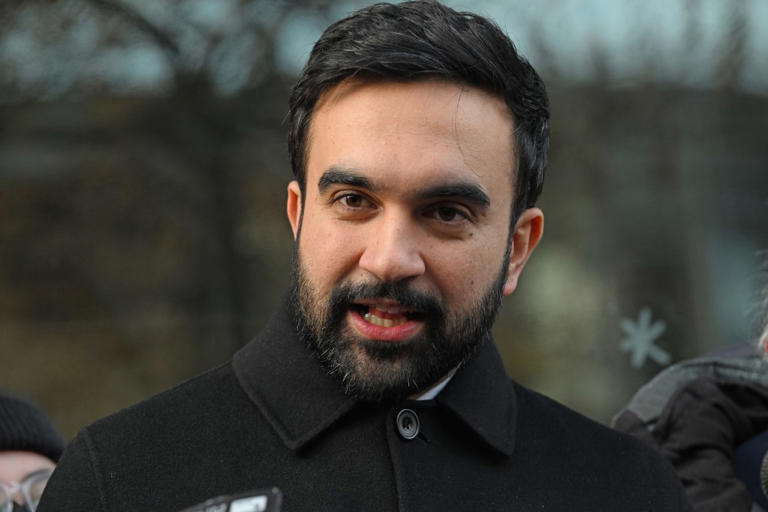
In February, Emir Balat disappeared from the online marketplace he frequented. Weeks later, he was arrested in a homemade-bomb attack near Gracie Mansion.


Emir Balat lit what the police say was a homemade bomb at a protest in Manhattan on Saturday.Credit...Vincent Alban/The New York Times


By Andy Newman
March 12, 2026


To the extent that Emir Balat was known at all in the northern suburbs of Philadelphia, it was as a budding entrepreneur.

When he was only 13, he programmed bots to buy pricey sneakers the moment they dropped. His father would drive him to the parking lot of a Wawa convenience store, where he would sell them to a sneaker dealer, sometimes making more than $200 a pair. He told people he was investing in crypto.

Last fall, Mr. Balat started attending high school remotely and began selling contractor supplies online — flooring, sinks and vanities, mini-splits and power tools. Customers gave him rave reviews.

But by mid-February, Mr. Balat suddenly stopped listing items for sale. Soon, prosecutors say, he started planning something darker. On a chilly afternoon in early March, security cameras at a fireworks store a couple of miles from his home captured him pulling into the parking lot in a black Honda with New Jersey plates. He bought 20 feet of slow-burning fuse, prosecutors said.

Five days later, the authorities say, Mr. Balat, 18, and another man who lived near him drove a black Honda over the George Washington Bridge into Manhattan. They parked a few blocks from Gracie Mansion, the official residence of New York City’s mayor, Zohran Mamdani, where an anti-Muslim protest was getting underway on March 7.

Mr. Balat, the police say, took a jar packed with metal and a powerful explosive, lit the fuse and threw the device at protesters. He and the other man, Ibrahim Nikk Kayumi, 19, were immediately arrested. The bomb never exploded, and no one was injured.

Monday, March 09, 2026

Zohran Mamdani’s 'white supremacist' protest post draws MAGA backlash

Story by Kate Plummer • 

Mamdani Says He Will ‘Not’ Ban Snowball Fights After Police Incident
Mayor, are you willing to revise your statement regarding the

New York Mayor Zohran Mamdani has triggered a backlash from people associated with the Make America Great Again (MAGA) movement after calling out a “white supremacist” following a protest outside his residence on Saturday.

The Context

Images taken at the scenes outside Gracie Mansion and posted to social media showed smoke and an apparent improvised explosive device lying in the street.

The event was organized by Jake Lang, a conservative influencer who was pardoned for charges tied to the January 6, 2021, U.S. Capitol riot.


Zohran Mamdani is seen in New York on December 1, 2025.

New York City Comptroller Mark D. Levine, citing information from NYPD Commissioner Jessica Tisch, told Newsweek that the two individuals arrested for deploying the ignitable devices were part of a counter-protest, not Lang’s group.

Two Pennsylvanians, 18-year-old Emir Balat and 19-year-old Ibrahim Kayumi, were arrested, NYPD Commissioner Jessica Tisch told reporters at a media conference on Saturday.

The men had not been charged by early morning Monday, according to CBS News. Newsweek contacted NYPD via email on for the latest on Monday morning.

Mamdani wrote on X about 1 p.m. ET on Sunday that “white supremacist Jake Lang” had organized the protest and said it was “rooted in bigotry and racism.” Mamdani then called out “the attempt to use an explosive device” as “criminal” and “reprehensible” but did not reference police reports that the devices were linked to counter protestors, nor did he name the individuals arrested in connection with the matter. The post has since been viewed more than 17 million times on X.

Newsweek reached out to Mamdani’s office outside of normal office hours on Monday.

Sunday, November 09, 2025

Former Capitol Police officer a forensic match for Jan. 6 pipe bomber, sources say

Former Capitol Police officer a forensic match for Jan. 6 pipe bomber, sources say


Former Capitol Police Officer Shauni Rae Kerkhoff is a forensic match to the long-sought Jan. 6 pipe bomber. Photos by FBI, Capitol Police, Temple University

November 08, 2025


A computer program that compared the bomb suspect’s gait to that of Shauni Kerkhoff produced a 94% match.

Aforensic analysis of a female former U.S. Capitol Police officer’s gait is a 94%-98% match to the unique stride of the long-sought Jan. 6 pipe-bomb suspect, according to a Blaze News investigation confirmed by several intelligence sources.

A source close to a congressional investigation of Jan. 6 additionally told Blaze News evidence has emerged recently that pointed toward law enforcement possibly being involved in the planting of the pipe bombs.

Wednesday, November 05, 2025

Gunpowder Plot


conspiracy, England [circa 1603–1605]

Britannica Editors

Nov. 3, 2025 •History
Top Questions

What was the Gunpowder Plot?

Why did the Gunpowder Plot take place?

What happened to the Gunpowder Plot conspirators?


The true story behind Guy Fawkes DayDescription of the Gunpowder Plot of 1605.See all videos for this article

Gunpowder Plot, the conspiracy of English Roman Catholics to blow up Parliament and King James I, his queen, and his eldest son on November 5, 1605. The leader of the plot, Robert Catesby, together with his four coconspirators—Thomas Winter, Thomas Percy, John Wright, and Guy Fawkes—were zealous Roman Catholics angered by James’s refusal to grant more religious toleration to Catholics. They apparently hoped that the confusion that would follow the murder of the king, his ministers, and the members of Parliament would provide an opportunity for the English Catholics to take over the country.

Assembling the conspirators

Catesby had conceived of the plot as early as May 1603, when he told Percy, in reply to the latter’s declaration of his intention to kill the king, that he was “thinking of a most sure way.” Subsequently, on or about November 1, 1603, Catesby sent a message to his cousin Robert Winter at Huddington, near Worcester, to come to London, but Winter refused. On the arrival of a second urgent summons shortly afterward, he obeyed, and at a house in Lambeth, probably in January 1604, he and John Wright were initiated by Catesby into the plot to blow up Parliament. Before putting this plan into motion, however, it was decided to try a “quiet way” to obtain the repeal of the Penal Laws, a body of laws that essentially criminalized Roman Catholicism. Winter was sent to Flanders to enlist the aid of Juan de Velasco, duke of Frias and constable of Castile, who was conducting the negotiations for a peace between England and Spain. Winter, having secured nothing but vain promises from the constable, returned to England about the end of April, bringing with him Fawkes, a man devoted to the Roman Catholic cause and recommended for undertaking perilous adventures.

Monday, July 07, 2025

London bombings of 2005


On 7 July 2005 four suicide bombers struck London's transport network, killing 52 people and injuring over 770 others.

Three of the blasts happened on London Underground, on or around 8.50am, in the vicinity of Aldgate, Edgware Road and Russell Square stations. The fourth device exploded at 9.47am on a bus that had been diverted via Tavistock Square, close to where BTP’s HQ was at the time. The building became a base for the walking wounded to assemble in.

BTP officers and staff from across the organisation worked tirelessly on the day of the bombings and in the days, weeks and months that followed to deal with the tragic consequences of these acts and to help ensure safety on the rail way.

Many colleagues were honoured for their extraordinary efforts during what was described as one of the biggest challenges faced by the police service in post-war Britain. The circumstances were complex, difficult and dangerous, however BTP officers carried out their vital and specialist roles - including initial rescue, body recovery, search and mortuary duties, as well as supporting the extensive coroner’s inquiry which followed. They showed exceptional courage and professionalism during this critical time.

They were supported by non-operational colleagues who also went above and beyond to support the frontline professionally and sensitively, whilst helping to get the transport network in London restored quickly, efficiently and safely following the attacks.

Chief Constable Paul Crowther said: “The heroic efforts of BTP personnel and all agencies who responded to the events of 7 July 2005 will never be forgotten and the memories of what happened on that day remain firmly in our minds.

“During the most difficult circumstances, BTP provided an absolutely outstanding level of service.

“A lot of things have changed since 7/7, both in how we monitor threats and how we respond when they are apparent.

“We now have comprehensive communications system which allows us to link in with Transport for London and other agencies much more efficiently.

“We have far greater access to CCTV, with more widespread coverage than ten years ago, and we use regular training exercises to test our response to threats.

“All of these changes are designed to help us ensure this terrible tragedy never happens again.”


Monday, August 17, 2015

Bangkok explosion: deadly blast near popular shrine kills at least 19


Deadly bomb in a popular tourist area of central Bangkok the worst carnage of any single attack in Thailand in recent memory


A distressed man talks into his mobile phone after a large explosion rocked the central Bangkok intersection Photo: AP


By David Eimer, Bangkok

8:00PM BST 17 Aug 2015


A bomb exploded in a popular tourist area of central Bangkok on Monday, killing at least 19 people, including three tourists and injuring more than 100, in the worst carnage of any single attack in Thailand in recent memory.

The device detonated soon after 7pm at the Erawan Shrine, located at the corner of one of Bangkok’s busiest intersections and adjacent to shopping malls, hotels and restaurants. Most of those killed are believed to be locals and Chinese tourists.


Rescue workers evacuate a casualty Photo: PORNCHAI KITTIWONGSAKUL/AFP


“I saw bodies and pieces of flesh in the road. A couple of Chinese people were lying in the street bleeding from their legs,” said Tussi Pajala, a Finnish man who was eating at a nearby restaurant.


Bloodied bodies lay sprawled inside the shrine, which is both a popular tourist attraction and a place where locals go to pray, while wrecked motorbikes and shattered glass littered the Ratchaprasong intersection where the Erawan Shrine is located.


Thailand’s police chief Somyot Poompanmuang said the bomb was planted inside the shrine. “It was a pipe bomb,” said Mr Somyot. Local media quoted police as saying that three kilograms of TNT had been detonated.


Bodies covered by white sheets lie next to the popular Erawan Shrine Photo: Demotix


One Thai policeman told the Telegraph that it had been planted by a woman, although there has been no confirmation. The Bangkok bomb squad is believed to have later defused another device.

CCTV footage of the blast showed rush hour traffic engulfed in a fireball and terrified pedestrians fleeing for their lives, while the shock wave from the explosion smashed and buckled windows.

“I was forty yards away in the next door mall when I heard a huge explosion. The windows bent in but didn’t give way, otherwise I wouldn’t be here now,” said Alan Parkhouse, an Australian who was heading to a restaurant to eat with friends.

Briton Lucinda-Jane Chastain told how the whole building she was in was shaken by the bomb. “It was just this massive explosive noise. The whole building shook. All you can see is a horrible mess on the road.”


A lady cries put as she searches for a missing person Photo: EPA/RITCHIE B. TONGO


There were chaotic scenes in the immediate aftermath of the explosion, as ambulances, fire trucks and police cars raced through Bangkok’s snarled rush hour traffic to reach the scene.

The area around the shrine was cordoned off, as rumours spread that more bombs had been planted in the area, while desperate locals and tourists attempted to find out if their friends and relatives had survived the attack.

One distraught Thai man was searching frantically for his parents. “They were praying at the shrine. I’ve tried calling them but I’m not getting any reply. I don’t know what to do,” he said.


A police officer collects photographic evidence Photo: Mark Baker/AP


Many of those injured were taken to the Police General Hospital, across the road from the Erawan Shrine.

“We have over sixty injured here,” said one nurse close to tears. “There are no westerners. The victims are Thais, Chinese, Singapore, Malay and Filipino.” Other people wounded in the explosion have been taken to hospitals elsewhere in Bangkok.

No one has claimed responsibility for the bomb, which may also have devastated Thailand’s image as the ‘Land of Smiles’. With almost 25 million overseas visitors arriving last year, Thailand’s economy is heavily dependent on tourism.

Defence minister Prawit Wongsuwan said that, “The perpetrators intended to destroy the economy and tourism, because the incident occurred in the heart of the tourism district”.


Tourists sit with emergency personnel as they take a break from the bomb site Photo: EPA/RUNGROJ YONGRIT

Muslim insurgents in the deep south of Thailand have been fighting for their own independent state for decades, but they have never before mounted attacks in Bangkok, or ever targeted foreigners. That has led to speculation that terrorists from outside the country may have decided to expand their campaign.

But Thailand has also been gripped by political violence in recent years, with scores of people dying in Bangkok in 2010.

The military took control of the country last year in a coup, but Thailand remains deeply divided between the rural poor and the traditional elite and urban middle classes.


telegraph.co.uk

Source
.
.

Tuesday, November 19, 2013

Double bombing kills at least 23, including diplomat, near Iranian Embassy in Beirut


View Photo Gallery — Double bombing kills at least 23, including diplomat, near Iranian Embassy in Beirut: Twin explosions are reported near facility in residential neighborhood. At least one diplomat is reported killed, 147 are wounded, in act that is escalation of sectarian violence spilling over from civil war in Syria.


By Loveday Morris and Ahmed Ramadan, Updated: Tuesday, November 19, 12:31 PM


BEIRUT —Twin explosions near the Iranian Embassy in Beirut on Tuesday killed 23 people, including Iran’s cultural attaché, Lebanese and Iranian officials said. The blasts appeared to be the latest in a string of sectarian bombings linked to the war in neighboring Syria.

The first explosion in the Bir Hasan area of the Lebanese capital detonated outside the residence of Iranian Ambassador Ghazanfar Roknabadi, Iran’s state news agency said. The news agency, citing information from Roknabadi, said cultural attaché Ibrahim Ansari was killed.

Witnesses said the initial blast brought many residents out onto the street or to their balconies, leaving them vulnerable to the much more powerful explosion which detonated about two minutes later.

Images from the scene showed bodies lying in the street, and the twisted burning wreckage of cars, while medics rushed some of the injured away on stretchers. Lebanon’s Health Ministry said a total of 147 people were wounded.

The Abdullah Azzam Brigade, an Islamist group with links to al-Qaeda, claimed responsibility in a message on the social media site Twitter.

“The attack on the Iranian Embassy in Beirut was a twin martyrdom operation by two heroes of the Sunni in Lebanon,” said Sheikh Sirajeddine Zuraiqat, a cleric affiliated with the group. He said the group would continue such attacks until prisoners being held in Lebanon are released and forces from the Lebanese Shiite group Hezbollah are withdrawn from Syria, where they have joined forces loyal to President Bashar al-Assad to try to quell a largely Sunni uprising.

The long-running Syrian civil war has inflamed sectarian tensions in Lebanon and throughout the region, with Assad also receiving support from Shiite Iran. Tit-for-tat bombings have targeted both Shiite and Sunni neighborhoods in Lebanon this year, as Syria’s fragile neighbor struggles to insulate itself from the violence.

The Azzam Brigade has repeatedly demanded that Hezbollah, which is financed and backed by Iran, remove its forces from Syria. Majid bin Muhammad al-Majid, the brigade’s leader, called in August for Sunnis in Lebanon and Syria to unite in fighting Hezbollah, which he described as the “party of Iran.”

Outside the embassy on Tuesday, a large crater was visible in the road beyond the cordons erected by security officials. Forensic teams in white overalls picked through the evidence. Smoldering cars lined the glass-strewn streets, while black-shirted armed gunmen affiliated with the Amal political party, an ally of Hezbollah, patrolled the largely Shiite neighborhood.

A security official who spoke on condition of anonymity said the first bomber was on a motorcycle and tried to ram a checkpoint outside the embassy, while the second bomber followed in a car. Ansari was killed as he was entering the building, the official said. Other reports said the first bomber, wearing a suicide vest, was on foot.

A 23-year-old student who lives less than 100 yards from the blast site said she was in the kitchen when she heard the first, smaller explosion at around 10 a.m. The student, who wanted to be identified only by her first name, Hiba, said she ran to her balcony to see what had happened but was called back in by her maid. The second blast blew in her windows, but she escaped injury.

Others were not so lucky. Five people who work at the furniture store where Rabieh Istanbuli is a manager were injured, Istanbuli said. The store’s front steps were spattered with blood.

“The glass just surrounded me,” Istanbuli said of the moment when the second blast detonated. “I saw some people falling down from their balconies. . . . There were a lot of dead people, black from the fire.”

About the size of Delaware, Lebanon has been flooded with an influx of more than 816,000 refugees from Syria, making up one-fifth of the population of the country. As the war has raged next door, violence has periodically spilled over the border as well.

More than two dozen people were killed in coordinated car bombings outside two Sunni mosques in the port city of Tripoli in August, eight days after a car bomb killed at least 21 people in a Shiite suburb of Beirut.

The violence is being closely monitored by Israel, Lebanon’s southern neighbor, which considers both Hezbollah and Iran to be significant threats. In August, Israel bombed a base run by the Popular Front for the Liberation of Palestine - General Command in Lebanon, in response to the launching of four rockets across Israel’s northern border hours earlier. It was Israel’s first airstrike inside Lebanon since its 2006 war with Hezbollah.

The Popular Front denied any connection to the rockets, and the Abdullah Azzam Brigade — the same group that said it was behind Tuesday’s bombing — eventually claimed responsibility.

Despite the brigade’s claim on Tuesday, Iran’s Foreign Ministry blamed Israel for the attack that killed its diplomat.

“The terrorist bombing in front of the Iranian Embassy in Beirut is an inhuman and vicious act perpetrated by Israel and its terror agents,” ministry spokeswoman Marzieh Afkham told the state-run Islamic Republic News Agency.

But a close adviser to Israeli Prime Minister Benjamin Netanyahu said Israel played no role.

“Israeli security gains nothing from bloodshed,” said Tzachi Hanegbi, a parliamentarian and former intelligence minister. “I think it is a result of the tension in Lebanon, following the decision by Hezbollah — or Iran forcing Hezbollah — to participate in Assad’s efforts to survive in Syria.”


Lebanese politicians condemned Tuesday’s attack. “There is division in the country and tension, which is not helping in reducing the impact of the Syrian war on us. It’s causing problems both socially and politically,” parliamentarian Alan Aoun told the television station MTV. “It’s not the first explosion; we hope it’s the last one.”

At a snack shop and supermarket near the site of the bombing, sales assistants wept as they went about serving customers.

“This is too much; it’s devastating,” said Hanadi Nahhas, a 30-year-old employee. “The second bomb was so loud we thought it was an Israeli airstrike. Our delivery boy, Mohammed, was killed — he is just 16.”


William Booth in Jerusalem contributed to this report.


Source
.

Monday, October 14, 2013

Al Qaeda kingpin Abu Anas al-Libi belongs at Guantanamo, not in New York


By J.D. Gordon

Published October 14, 2013

FoxNews.com


The interior of an unoccupied communal cellblock is seen at Camp VI, a prison used to house detainees at the U.S. Naval Base at Guantanamo Bay. (rEUTERS)


U.S. Commandos scored a tactical victory against Al Qaeda by swooping into Libya and capturing Abu Anas al-Libi earlier this month, a former Bin Laden confidant and terror kingpin. Now President Obama must follow through with a strategic win.

That means extracting valuable intelligence from al-Libi, whose name literally means “the Libyan,” about his two decades of terror insider experience as an Al Qaeda computer expert and co-conspirator of plots against U.S. interests. Al-Libi is believed to have been involved in plots across Africa and the Middle East, including against our Kenya and Tanzania Embassies in 1998 which killed 224 people.

But getting that treasure trove of information depends on our strategy to pry it from a hardened warrior.

And so far, the Obama administration is failing us.

Here’s why:

Instead of whisking al-Libi to Guantanamo where he could be interrogated by the military and CIA for as long as it takes to get actionable intelligence – and then try him by military commission as an enemy combatant, Mr. Obama first decided to hold him aboard the amphibious transport ship USS San Antonio, and later try him in a New York federal courtroom.

Mr. Obama’s resistance is entirely based on politics, which he is putting above national security. Again.

First, let's look at the move to put him on the Navy ship.

While holding key terror suspects captured overseas on a Navy ship makes sense temporarily, therein lies the long term problem -- everybody knows it’s just a temporary landing place, including the detainee. Al-Libi has likely been inclined to bide his time and wait till he arrived in the United States to speak with a civilian lawyer.

Second, about justice.

Obama’s counter-terrorism strategy often resembles a hybrid of police work and war. Ahmed Abdulkadir Warsame, a leader of Somalia’s Al Qaeda ally, Al Shabaab was captured in 2011 and held aboard a Navy ship for two months. But then Obama ordered his transfer to federal court in New York where he would be afforded a full range of Constitutional Rights.

Ironically, Obama champions a concept that gives foreign enemy combatants trying to kill Americans, with generous legal protections designed by our Founding Fathers to protect Americans.

What would George Washington would say?

Third, on the interrogations.

Let’s face it, al-Libi’s time on a ship likely didn't require much toughness. Mr. Obama banned coercive interrogation techniques within 48 hours of his January 2009 inauguration. -- Al-Libi could face rougher treatment from police departments across the country for robbing a liquor store.

Sure, he may decide to cooperate with investigators over a hamburger and fries. Some FBI agents have the knack of getting guys to reveal meaningful information via polite conversations, but that strategy can take considerable time as the interrogator-detainee form a tight bond. While that’s great to help prosecutors secure convictions in court, it could take years, and won't stop imminent attacks.

So what’s wrong with sending al-Libi to Guantanamo?

Actually, nothing.

Mr. Obama’s resistance is entirely based on politics, which he is putting above national security.

Again.

Let’s understand that although Gitmo had a rocky start in 2002, it remains in the crosshairs of history’s largest propaganda campaign.

Left-leaning defense lawyers, so-called human rights activists, key media and politicians, both in the U.S. and overseas, worked tirelessly to convince the world that Al Qaeda and Taliban terrorists at Gitmo were actually the victims.

They conveniently ignore the fact that detainees collectively killed countless thousands of civilians worldwide, including on Sept. 11, 2001, in the mass-casualty bombings at our East African Embassies, at a Bali nightclub, and the Jakarta Marriott, and during Afghanistan’s civil war.

And with the exception of isolated incidents impacting a grand total of 1% of the total detainee population, the rest have been treated with kid gloves.

Gitmo and military commissions have played a vital role in defending America as we remain at war.

Just as we held Nazis as enemy combatants in 1943, we should continue holding Al Qaeda terrorists and affiliates in the same status.

Al-Libi should join them at Gitmo -- starting today.

J.D. Gordon is a retired Navy Commander who served as a Pentagon spokesman in the Office of the Secretary of Defense from 2005-09. He serves as senior adviser to several Washingtonbased think tanks.


Source
.

Sunday, May 05, 2013

Israeli Airstrikes Prompt Threats, Anger in Syria


In this image taken from video obtained from the Ugarit News, which has been authenticated based on its contents and other AP reporting, smoke and fire fill the the skyline over Damascus, Syria, early Sunday, May 5, 2013 after an Israeli airstrike (AP Photo/Ugarit News via AP video)

By KARIN LAUB and JOSEF FEDERMAN Associated Press
BEIRUT
May 5, 2013 (AP)


Israel rushed to beef up its rocket defenses on its northern border Sunday to shield against possible retaliation after carrying out two airstrikes in Syria over 48 hours — an unprecedented escalation of Israeli involvement in the Syrian civil war.

Syria and its patron Iran hinted at possible retribution, though the rhetoric in official statements appeared relatively muted.

Despite new concerns about a regional war, Israeli officials signaled they will keep trying to block what they see as an effort by Iran to send sophisticated weapons to Lebanon's Hezbollah militia ahead of a possible collapse of Syrian President Bashar Assad's regime.

Israel has repeatedly threatened to intervene in the Syrian civil war to stop the transfer of what it calls "game-changing" weapons to Hezbollah, a Syrian-backed group that battled Israel to a stalemate during a monthlong war in 2006.

Since carrying out a lone airstrike in January that reportedly destroyed a shipment of anti-aircraft missiles headed to Hezbollah, Israel had largely stayed on the sidelines. That changed over the weekend with a pair of airstrikes, including an attack near a sprawling military complex close to the Syrian capital of Damascus early Sunday that set off a series of powerful explosions.


Israel Confirms 'Game Changing' Airstrike on Syria Watch Video


US Official Says Israeli Airstrikes Inside Syria Watch Video


The Israeli government and military refused to comment. But a senior Israeli official said both airstrikes targeted shipments of Fateh-110 missiles bound for Hezbollah. The Iranian-made guided missiles can fly deep into Israel and deliver powerful half-ton bombs with pinpoint accuracy. The official spoke on condition of anonymity because he was discussing a covert military operation.

Syria's government called the attacks a "flagrant violation of international law" that has made the Middle East "more dangerous." It also claimed the Israeli strikes proved the Jewish state's links to rebel groups trying to overthrow Assad's regime.

Syria's information minister, Omran al-Zoubi, reading a Cabinet statement after an emergency government meeting, said Syria has the right and duty "to defend its people by all available means."

Israeli defense officials believe Assad has little desire to open a new front with Israel when he is preoccupied with the survival of his regime. More than 70,000 people have been killed since the uprising against Assad erupted in March 2011, and Israeli officials believe it is only a matter of time before Assad is toppled.

Still, Israel seemed to be taking the Syrian threats seriously. Israel's military deployed two batteries of its Iron Dome rocket defense system to the north of the country Sunday. It described the move as part of "ongoing situational assessments."

Israel says the Iron Dome shot down hundreds of incoming short-range rockets during eight days of fighting against Hamas militants in the Gaza Strip last November. Hezbollah fired some 4,000 rockets into Israel during the 2006 war, and Israel believes the group now possesses tens of thousands of rockets and missiles.

The Iron Dome deployment followed a surprise Israeli drill last week in which several thousand reservists simulated conflict in the north. In another possible sign of concern, Israel closed the airspace over northern Israel to civilian flights on Sunday and tightened security at embassies overseas, Israeli media reported. Israeli officials would not confirm either measure.


Read more
.
.

Thursday, April 18, 2013

Is this the second Boston Marathon bomb? Photo shows bag where blast detonated


By Damien Fletcher


17 Apr 2013 01:08


A bag can be seen next to a mail box against a barricade as onlookers watch the marathon runners pass by

Scene: Bag left near mail box is highlighted
7News


These two pictures being studied by the FBI could hold vital clues to the Boston Marathon bombing.

In the first photo, a bag can be seen next to a mail box against a barricade as onlookers watch the marathon runners pass by.

A second picture, taken an hour later on Boylston Street outside the Forum Bar, shows victims of the blast lying where the bag had been.

The photo has been purposefully blurred by US TV channel 7News to mask out bodies of the dead and the maimed.

FBI forensic experts were last night studying also nylon fibres discovered at the scene of one of the blasts.

Horror: Maimed victims near where the bag had been
7News


The bombs were lethal devices consisting of metal, nails and ball bearings crammed into pressure cookers, it emerged yesterday.

Both bombs – packed with the deadly shards – were carefully placed in bags and hidden near the finishing line, according to US sources.

They had been deliberately designed to cause explosions that would injure, maim and kill innocent bystanders.

Law enforcement officials do not yet know what was used to detonate the six-litre pressure cooker bombs.

The devices have been used in India, Nepal, Pakistan as well as Afghanistan, according to an FBI and Homeland Security intelligence report from 2010.

One of the three devices used in the May 2010 New York Times Square attempted bombing was also a pressure cooker.

.

Wednesday, October 17, 2012

Would-Be Terrorist Tried to Bomb New York Federal Reserve Bank: Feds


Quazi Mohammad Rezwanul Ahsan Nafis, 21, a Bangladeshi national, allegedly parked a van filled with what he believed to be 1,000 pounds of explosives outside the building in Lower Manhattan near the New York Stock Exchange, and was arrested after he... (Obtained by ABC News) View Full Caption


By RICHARD ESPOSITO, JASON RYAN (@JasonRyanABC) , and PIERRE THOMAS (@PierreTABC)
Oct. 17, 2012


Authorities today arrested a "lone actor" who thought he was about to blow up the Federal Reserve Bank in New York City's crowded Financial District on behalf of al Qaeda but instead discovered he was the target of a law enforcement sting.

Quazi Mohammad Rezwanul Ahsan Nafis, 21, a Bangladeshi national, allegedly parked a van filled with what he believed to be 1,000 pounds of explosives outside the building in Lower Manhattan near the New York Stock Exchange, and was arrested after he tried to detonate the "bomb" with a cellphone. Officials say there was never any danger to the public.

Nafis faces charges of attempting to use a weapon of mass destruction and attempting to provide material support to al-Qaeda.

Nafis allegedly also threatened to kill a "high-ranking government official," according to the federal complaint. A U.S. official briefed on the case told ABC News the target was Obama.

According to the criminal complaint filed today in federal court in Brooklyn, Nafis came to the U.S. this January in hopes of conducting a terror attack on U.S. soil. He tried to recruit others to form a terror cell inside the U.S., and actively sought out al Qaeda contacts.

According to officials, this summer the would-be terror bomber met a man on the internet who he thought was a fellow aspiring terrorist but was actually an undercover FBI agent.

Nafis allegedly indicated a desire to blow up the Federal Reserve, and he and the undercover agent began planning the bombing. At Nafis's request, say officials, the undercover FBI agent supplied him with 20 50-pound bags of purported explosives known as ANFO, a common industrial explosive, that were used to construct the bomb. Nafis allegedly purchased components for the "bomb"'s detonator.

On Wednesday morning, Nafis met the undercover agent and traveled to a warehouse, where he allegedly said he had a "Plan B" that involved a suicide attack if the bombing was stopped by police. At the warehouse he assembled what he thought was a bomb, and then allegedly parked his van outside the bank on Liberty Street.

He then went to a nearby hotel, where he recorded a video statement that was to be released after the attack. On the video, Nafis allegedly stated, "We will not stop until we attain victory or martyrdom." He then called a cellphone attached to the "bomb," trying repeatedly to detonate the device. The device did not explode, and federal agents arrested him.

"Attempting to destroy a landmark building and kill or main untold numbers of innocent bystanders is about as serious as the imagination can conjure," said Mary Galligan, acting assistant FBI director. "It is important to emphasize that the public was never at risk in this case."

New York Police Commissioner Ray Kelly said the latest terror plot meant that the city was at "15 plots and counting" since 9/11. "Whether al Qaeda operatives like Iyman Faris or those inspired by them like Jose Pimentel, terrorists have tried time and again to make New York City their killing field, [with] the Federal Reserve now added to a list of iconic targets that previously included the Brooklyn Bridge, the New York Stock Exchange, and Citicorp Center."

"Vigilance is our watchword now and into the foreseeable future," said Kelly.

Nafis is expected to make his initial court appearance this afternoon in Brooklyn.


Source

.

Friday, July 22, 2011

Shots fired at Norwegian youth camp

July 22, 2011 12:42 PM

Utoya, an island in Tyrifjorden in the county of Buskerud, Norway, houses a summer youth camp that was the scene of shootings Friday, July 22, 2011.

Utoya, an island in Tyrifjorden in the county of Buskerud, Norway, houses a summer youth camp that was the scene of shootings Friday, July 22, 2011. (Utoya AS)

(CBS/AP)

Last Updated 1:00 p.m. ET

OSLO, Norway - Police say they are sending anti-terror police to a youth camp outside Oslo after reports of a shooting there following the bomb blast at the government headquarters.

The news site VG reported that a man dressed in a police uniform opened fire at the camp. It says several people were injured.

A former prime minster was due to speak at the youth camp, sponsored by the ruling Labor Party on Utoya, an island in Tyrifjorden. Approximately 560 people were attending, according to AFP.

Panic has spread as people are trapped on the island, which reports children are desperately trying to call their parents, or are trying to swim away.

Oslo police chief Anstein Gjengdal said anti-terror units were being sent to the camp at Utoya, outside the Norwegian capital.

He had no other information on that incident, which came hours after a bomb blast outside the government headquarters killed at least two people and injured 15.

Bomb damages gov't building in Oslo, 2 dead

Assistant Chief of Police Kurt Lier had little information about what had happened on the island, but said if people are leaving island swimming, it is a "long swim."


Source

Sunday, August 15, 2010

Bomb threat hits Lourdes pilgrims

15 August 2010

Last updated at 09:05 ET

Bomb threat hits Lourdes pilgrims


Roman Catholic believers flock to Lourdes from all over the world


Thousands of Roman Catholic pilgrims have been evacuated from Lourdes in south-west France after a bomb threat, officials are reported as saying.

The threat came as 30,000 worshippers were in the town to celebrate the annual Feast of the Assumption, the French news agency AFP said.

Lourdes is famous for what many Roman Catholics believe was a vision of the Virgin Mary by a local girl in 1858.

The Sanctuary at Lourdes is visited each year by six million believers.

It houses the shrine or grotto to Our Lady of Lourdes and on 15 August believers celebrate the Virgin Mary's ascent to heaven.

"A bomb warning was received at the police station, announcing that four bombs were going to go off at around 1500 (1400GMT)," a church press officer told AFP.

He said the evacuation was taking place calmly.

Bomb disposal experts were at the scene, police said.

Cure claims

The Sanctuary is the name given to the central area of the Lourdes pilgrimage site.

The site is home to 22 places of worship, including the Basilica of the Immaculate Conception, which marks the spot where pilgrims believe the Virgin Mary appeared.

It was founded after a 14-year-old French girl, Bernadette Soubirous, claimed to have witnessed a series of visions in a cave.

Since then, many people suffering illness or infirmity claim to have been miraculously cured by spring water coming from the Sanctuary.


Source: http://www.bbc.co.uk/news/world-europe-10980157
.