Showing posts with label Establishment Clause. Show all posts

Sunday, September 06, 2026

Chick-Fil-A Fires Employee for Refusing to Work on Saturday Sabbath

Chick-Fil-A Fires Employee for Refusing to Work on Saturday Sabbath

Faith and Politics

Premiered Sep 4, 2026

In the first segment, our panelists discuss President Trump’s proclamation encouraging Americans to observe Shabbat 250 as part of the nation’s 250th anniversary celebration. The discussion explores the significance of a presidential recognition of the Jewish Sabbath, its historical context, and the relationship between government acknowledgments of religious traditions and religious liberty.

In the second segment of the show, we explore the court case United States Equal Employment Opportunity Commission v. Hat Trick, Inc. Panelists examine allegations that a Chick-fil-A franchise failed to accommodate an employee’s Saturday Sabbath observance, raising questions about employers’ obligations under federal law to provide reasonable religious accommodations in the workplace.

About the Show: 

Faith & Politics is a show dedicated to discussing issues surrounding the intersection of Church, State and politics and the examination of whether you are allowing your faith to shape your politics or your politics starting to shape your faith. What do you do when God and government come face to face?

Panelists: 

Judith Hawkins, Former Judge and Attorney in Tallahassee Florida; Blayre Marley, Director Legal Corporate Counsel for a Fortune 500 Company; Dr. Andrew Polk, Professor of History at Middle Tennessee State University; and Joseph Richards, General Counsel and Director of Public Affairs and Religious Liberty for the Seventh-day Adventist Church in Canada.

About Us:

North American Division Public Affairs & Religious Liberty (PARL) is a ministry dedicated to proclaiming and defending the God-given gift of religious freedom which is integral to our identity as Seventh-day Adventist Christians. Learn more about PARL at www.religiousliberty.info

Here is what we’ll cover in this video:

00:00 Show opener 
00:34 Introduction 
01:30 Pentagon Reduces Number of Recognized Religions 
14:18 United States Conference of Catholic Bishops v. EEOC 
26:30 Tell Me Something I Don’t Know

Friday, July 31, 2026

The Separation of Church and State | Straight Talk, episode 19 (Tim Rumsey)

Pathway to Paradise Ministries

Jul 29, 2026  Straight Talk: The Religious Liberty Podcast

The separation of church and state has served this country well for nearly 250 years. If morality is declining, let the churches start preaching truth once again. If attacks against Christians continue, let the courts fulfill their appointed duty and administer justice. But don't eradicate the separation that has protected both church and state from each other, and granted religious liberty to millions of people of all faiths.


Tuesday, June 09, 2026

Southern Baptists Want to Shrink First Amendment Protections


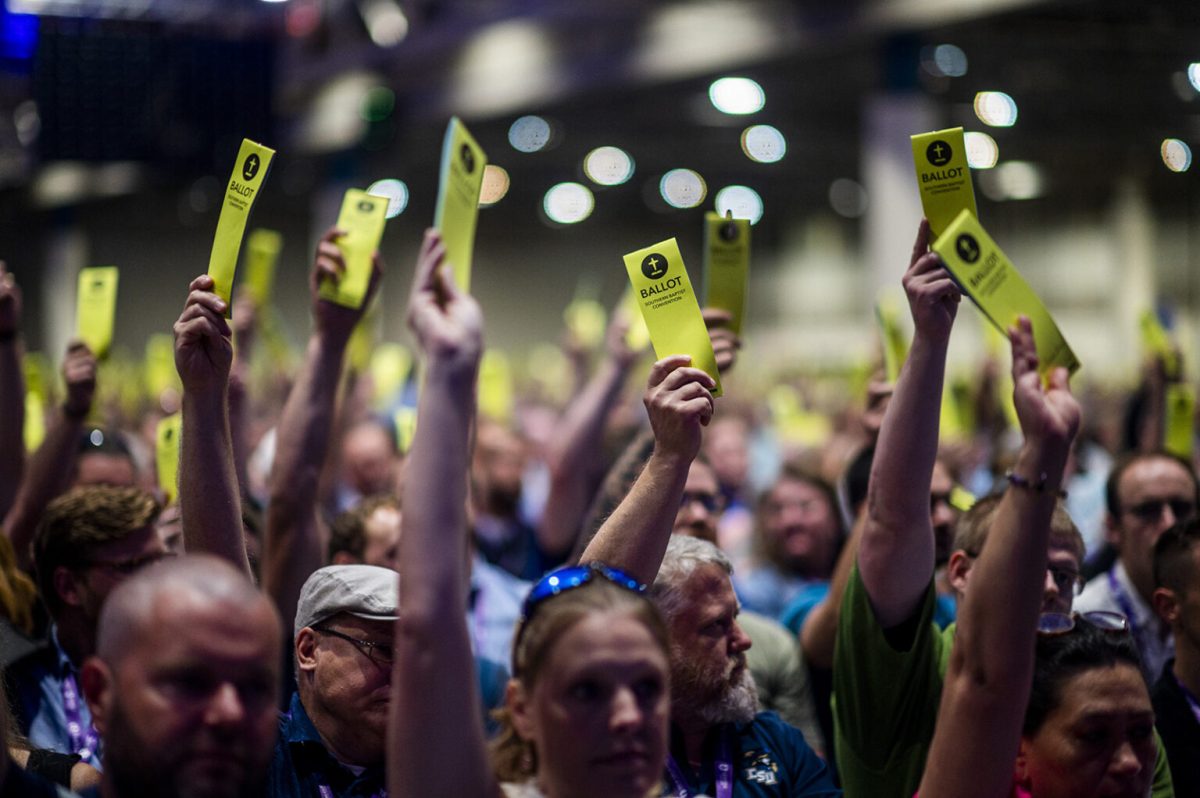
As messengers to the Southern Baptist Convention gather in Orlando, Florida, this week, they will debate several significant issues, including an effort to further restrict women from serving in ministry or even talking publicly about Scripture. And those gathered at the annual convention of the nation’s largest Protestant denomination will also consider several resolutions through which to sound off on key issues like assisted suicide, antisemitism, and immigration. But it’s the proposed resolution on “the 250th anniversary of the United States” that caught my eye for its rhetorical sleight of hand.

At first glance, the resolution seems like a good effort to particularly highlight “the Baptist contribution to religious liberty” during this year’s Semiquincentennial celebrations. It’s much milder in its “God and country” mixing than I expected, acknowledges the nation has often been wrong (including with slavery), and insists that we should protect “religious liberty for all people.”

But there’s a sneaky way the First Amendment’s religious clauses are summarized: “which guarantees the free exercise of religion and prohibits the establishment of a state church.” While it correctly uses the Constitutional language for protecting “the free exercise” of religion, it misquotes the other clause. The First Amendment prohibits “an establishment of religion,” but the resolution instead says it stops “the establishment of a state church.” That’s not the same thing.

Friday, May 08, 2026

Adventists on Secretary Marco Rubio meeting with Pope Leo during Vatican Visit (An AI Response)


Adventists on Marco Rubio / Pope Leo Vatican meeting


On May 7, 2026, U.S. Secretary of State Marco Rubio met with Pope Leo XIV at the Vatican in a high-profile visit aimed at stabilizing diplomatic relations following public friction between the Trump administration and the Holy See. [1, 2, 3, 4, 5]

While official Seventh-day Adventist (SDA) organizations have not released a formal collective statement on this specific May 2026 meeting, the event aligns with long-standing Adventist prophetic interpretations regarding the "union of church and state."

Key Details of the Rubio-Vatican Meeting

  • Purpose: The meeting was framed as an effort to "cool the rhetoric" and return to traditional diplomatic channels after President Trump publicly criticized the Pope, particularly regarding the war with Iran.
  • Discussion Topics: Rubio and Pope Leo discussed Middle East peace efforts, humanitarian aid in the Western Hemisphere (specifically Cuba), religious freedom, and the impact of AI.
  • Diplomatic Gestures: Rubio presented the Pope with a crystal football paperweight bearing the State Department seal, while the Pope gifted Rubio an olive-wood pen symbolizing peace. [1, 2, 3, 4, 5, 6, 7]

Typical Adventist Perspectives on Such Meetings

Adventists often view high-level political meetings with the Vatican through the lens of eschatology (end-time beliefs). Common themes in Adventist discourse regarding these interactions include:

  • Church and State: Adventists strongly emphasize the separation of church and state. Diplomatic "fence-mending" between the U.S. government and the Papacy is frequently interpreted as a precursor to the "healing of the deadly wound" mentioned in Revelation 13, leading toward a global religious-political alliance.
  • The "Sunday Law" Concern: A central Adventist belief involves a future "National Sunday Law" in the United States. Events that show the U.S. executive branch seeking counsel or reconciliation with the Vatican are often monitored by Adventist commentators (such as those at Liberty Magazine or Adventist Review) as potential steps toward this prophetic scenario.
  • Role of Religious Freedom: While Rubio highlighted "shared concerns" over religious freedom during his visit, Adventist religious liberty advocates often remain cautious. They watch to see if such cooperation favors traditionalist religious agendas over the individual rights of minority faiths. [1, 2, 3]


AI can make mistakes, so double-check responses


-+-------------------------------------------------+-


P.S. 

Marco Rubio spends two hours at the Vatican 


Wednesday, April 22, 2026

The Religious Liberty Commission Chairman says "There is no Separation of Church and State in The Constitution"


The Religious Liberty Commission Chairman says "There is no Separation of Church and State in The Constitution"

April 16, 2026 Gerry Wagoner


The Religious Liberty Commission (RLC) is a federal advisory body established by the President via executive order in May 2025. It is chaired by Texas Lt. Gov. Dan Patrick (with Dr. Ben Carson as vice chair) and includes various faith leaders and public figures. Its job is to examine the foundations and current state of religious liberty in America, identify threats to it, and make policy recommendations to the White House—particularly on protecting free exercise of religion. This is something we can support. Maybe.

Recent concern stems from the commission's final hearing on April 13, 2026, at the Museum of the Bible in Washington, D.C. During that session, Chair Dan Patrick stated:“It is time to set the record straight:
“There is no such thing as ‘separation of church and state’ in the Constitution. For too long, the anti-God left has used this phrase to suppress people of religion in our country.”
He and other participants argued that the phrase has been weaponized to restrict religious expression in public life, schools, government, and elsewhere, and that witnesses across the commission's hearings described it as eroding God-given rights. Patrick suggested recommendations like posting notices in schools and businesses affirming religious liberty protections while calling the separation idea “the biggest lie that’s been told in America since our founding.”

Constitutional Facts

It is true that the exact phrase “separation of church and state” does not appear in the U.S. Constitution. It originates from Thomas Jefferson’s 1802 letter to the Danbury Baptist Association, where he described the First Amendment as building “a wall of separation between Church & State.”

The Establishment Clause and Free Exercise Clause of the First Amendment states:

“Congress shall make no law respecting an establishment of religion, or prohibiting the free exercise thereof…”
This prohibits the federal government from doing two things:
  • Establishing an official national religion (or compelling support for one).
  • Prohibiting individuals or groups from freely exercising their religion.

Tuesday, November 04, 2025

"There's no such thing as a Separation of Church & State"

I remember the first time I heard it, it heard Republican Presidential candidate Rick Santorum say in 2012, "I don't believe in an America where the separation of church and state is absolute." I have recently heard House Speaker Mike Johnson, and previously Congresswoman Lauren Boebert both say that there is no such thing as a Separation Between Church and State. All these politicians ignore the Establishment Clause or are testing the people's knowledge of the U.S Constitution. The Establishment Clause is part of the First Amendment to the United States Constitution, prohibiting the government from establishing an official religion or favoring one religion over another.

Now, I believe that the Image of the Beast was formed years ago when the Remnant Church allied itself with various organizations and formed partnerships with world governments. 

-The first unholy alliance that comes to mind is 501c3 Tax Exempt Status that churches and ministries acquire from the U.S. government to avoid paying taxes on TITHES AND OFFERINGS. By accepting this Tax Status, they become part of the government. To acquire 501(c)(3) status, an organization must be structured as a corporation, trust, or unincorporated association. However, this is not necessary since Tithes and offerings are not INCOME, and I believe churches are nonprofit entities. By incorporating itself a partnership with the government is established.

-ADRA, aka Adventist Development and Relief Agency has formed a coalition with the United Nations and world governments to receive funds from them and distribute food, medications, and provide shelter all over the world. ADRA is called an NGO, or Non-Governmental Organization, which is not, since it is part of World Government. And the worst aspect of ADRA is that it can assist and heal but cannot preach the THIRD ANGEL'S MESSAGE, which is the Adventist Church' raison d'être.  

-In 1980 the GCSDA (Seventh-Day Adventist Church) obtained a trademark registration for the name “Seventh Day Adventist” with the United States Patent and Trademark Office. From this point the CORPORATE Church departed from its original mission of saving souls and became a business.

Can the Image of the Beast be anything else than the Church reaching out to the STATE and simultaneously interacting with the Whore of Babylon and her Daughters, the Fallen Churches once called Protestant? If you don't understand what that means, let me mention GANOUNE DIOP, EMANUELLE BACHIOCHI, BERT B. BEACH, JON GRAZ, JAMES D. STANDISH, ADVENT HEALTH, and IRLA. 

Speaking of Religious Freedom, I remember a few years ago that the Seventh-day Adventist Church filed an AMICUS (friend of court) BRIEF in the case of Samantha Elauf, a MUSLIM woman who applied for a job at Abercrombie & Fitch store in Tulsa, OK, and because of her HIJAB she was deemed ineligible to hire, so she sued. Yet, during the 2020 PANDEMIC there were no EXEMPTION LETTERS provided by the SDA CHURCHES to the Adventists who conscientiously refused to take the jab that their employers demanded as an employment requirement. There were no AMICUS BRIEFS for church members who rejected the shot...

Arsenio.

Saturday, June 14, 2025

Saturday, June 07, 2025

Rep. Talarico asks questions of Rep. Noble on the layout of SB 10, Ten C...


Rep. Talarico asks questions of Rep. Noble on the layout of SB 10, Ten Commandments in schools


Texas Impact
May 25, 2025

Rep. Talarico asks questions of Rep. Noble on the layout of SB 10, Ten Commandments in public schools Texas House of Representatives 
May 24, 2025

----------------------------P.S.----------------------------


Rep. Talarico asks questions of Rep. Noble on the layout of SB 10, point of order
May 21, 2025

Rep. Talarico asks questions of Rep. Noble on the layout of SB 10, placing the Ten Commandments in public school classrooms, point of order Texas House of Representatives 
May 21, 2025

Saturday, May 31, 2025

Interview with a Christian Nationalist: Sunday Laws, Church & State, and...


Interview with a Christian Nationalist: Sunday Laws, Church & State, and the End Times


Heritage & Hope Ministries


✝️ Subscribe for more Bible prophecy, Christian history, and end-time analysis. ‪@heritageandhope‬

We’re diving into one of the most controversial and urgent topics facing the Christian world today: Should governments enforce Christian morality? Is Sunday sacred by divine law? And is Christ’s kingdom now—or yet to come? 

In this uncut 2+hour discussion, we sit down with Lennox Kalifungwa, podcast host and associate at New Saint Andrews College, to confront the growing movement of Christian Nationalism and its call for the legislation of Christian values. Does their world view encroach on separation of church and state? 

This conversation explores: 
  • 🔹 The role of church and state in Bible prophecy 
  • 🔹 The truth behind Sunday laws and the seventh-day Sabbath 
  • 🔹 What the Bible says about the Kingdom of God—is it spiritual or political? 
  • 🔹 Is legislating morality Biblical—or dangerous? 

    If you’ve been watching the rise of religious legislation in America… if you care about religious liberty, biblical prophecy, and the future of faith in politics—you need to see this. 
    📚 Related Videos 
    🌐Find us online: 

Friday, May 23, 2025

SCOTUS silently preserves church-state boundary in Catholic charter school case, but won’t say how justices voted


Elura Nanos May 22nd, 2025, 12:34 pm


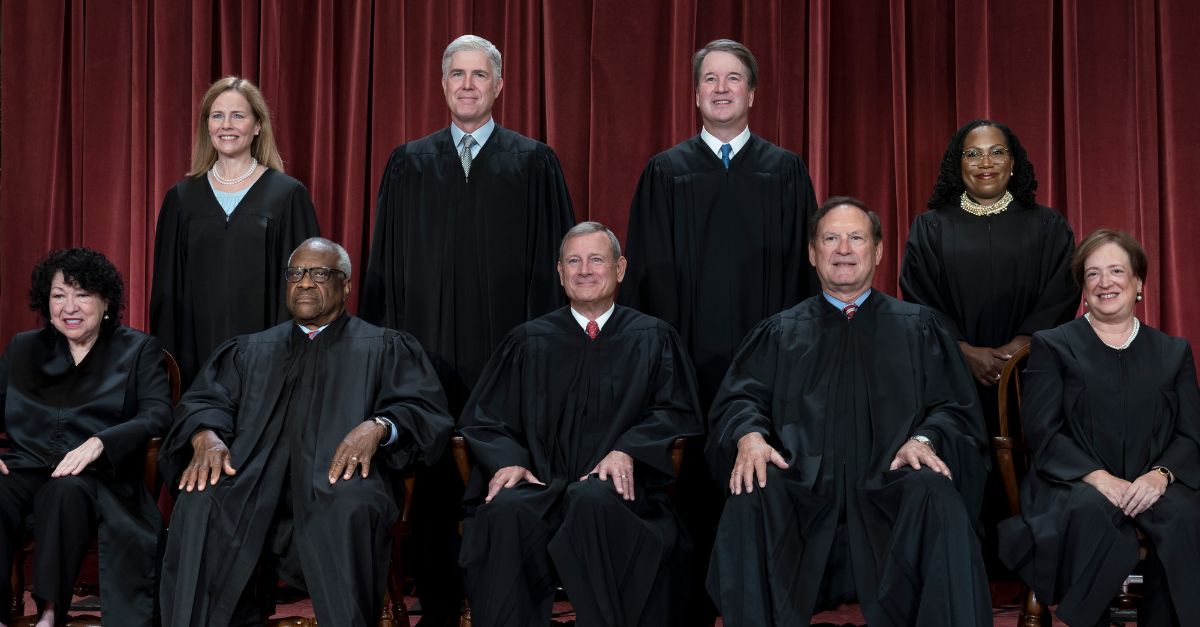
Members of the Supreme Court sit for a new group portrait following the addition of Associate Justice Ketanji Brown Jackson, at the Supreme Court building in Washington, Friday, Oct. 7, 2022. Bottom row, from left, Associate Justice Sonia Sotomayor, Associate Justice Clarence Thomas, Chief Justice of the United States John Roberts, Associate Justice Samuel Alito, and Associate Justice Elena Kagan. Top row, from left, Associate Justice Amy Coney Barrett, Associate Justice Neil Gorsuch, Associate Justice Brett Kavanaugh, and Associate Justice Ketanji Brown Jackson. (AP Photo/J. Scott Applewhite)

As some court watchers predicted, the U.S. Supreme Court issued a 4-4 ruling Thursday that preserves the distinction between church and state — for the time being. Despite the eight participating justices having been vocal during oral arguments just three weeks ago, however, the Court issued its ruling without a single word of opinion, guidance, or information as to the lineup of votes.

“A robust Catholic education”

The case, stylized as Oklahoma Charter School Board v. Drummond, was a contentious one in which the justices heard several hours of exhaustive oral arguments over whether a virtual Catholic charter school has a right to operate despite Oklahoma’s requirement that its charter schools be nonreligious. The St. Isidore of Seville school — named for an unofficial patron saint of the internet — aims to provide a “robust Catholic education,” and is open to both Catholic and non-Catholic students. The school, which would operate entirely online, projected an initial enrollment of 500 students with the expectation of reaching 1,500 students by 2028, half from lower-income families.

Although Oklahoma’s charter school board initially approved St. Isidore’s application for the 2024-25 school year, Oklahoma’s Republican attorney general and current gubernatorial candidate, Gentner Drummond, opposed the school’s participation in the charter program on the grounds that under both Oklahoma law and the establishment clause of the U.S. Constitution, all public schools in the state are required to be nonsectarian.

Thursday, September 26, 2024

What America’s history can teach us about debates on religious freedom and its importance for democracy


The decline in church attendance has not resulted in a diminished Christian presence in American public life. selimaksan/E+ via Getty images.

Published: September 25, 2024 8:27am EDT

Author
Dean and Wake Forest Professor of the Humanities, Wake Forest University
Disclosure statement

Corey D. B. Walker does not work for, consult, own shares in or receive funding from any company or organization that would benefit from this article, and has disclosed no relevant affiliations beyond their academic appointment.

Wake Forest University provides funding as a member of The Conversation US.

Supporters of both major U.S. political parties tend to claim their presidential candidate is the “real” Christian or the “better” Christian or just the “true” Christian.

For a majority of white evangelical protestants, Trump is the good Christian. Christians for Kamala, a newly created group of self-identified Christians who support the Democratic nominee, say that her campaign embodies the “compassionate heart of Jesus and his teachings.”

Yet, most American adults agree that religion should be separate from government. This widely shared belief is a cornerstone of religious freedom. As a scholar of religious freedom, I have studied the complex and ever-evolving role of religion in American politics. I argue that this election year, while the Christian character of each candidate is discussed everywhere, religious freedom, one of the core freedoms of American democracy, is not.
The case of Ezra Stiles Ely

America’s history of religious freedom is filled with stories that are instructive for our current moment. One such instructive lesson comes from the early 19th century.