Showing posts with label budget. Show all posts

Thursday, October 15, 2026

European Council, 15-16 October 2026


Agenda highlights


EU leaders are meeting in Brussels for a two-day summit.

In the face of increasing geopolitical uncertainty, the leaders will focus on issues relating to the economy and on delivering answers to challenges to European competitiveness, including energy prices.

The leaders will also discuss the EU's long-term budget 2028-2034, continued support for Ukraine, hybrid attacks in Europe linked to Russia, migration, enlargement and reforms and the situation in the Middle East.

Invitation letter by President António Costa to the members of the European Council (press release, 8 October 2026)

Competitiveness and global economic challenges

On energy prices, EU leaders will provide guidance to the Commission on targeted and temporary short-term measures to alleviate the impact of high energy prices, protecting EU citizens and businesses. They will also discuss Europe's long-term strategy to reduce its dependency on fossil fuels.

The leaders will also review progress on the 'One Europe, One Market’ agenda, including its implementation in 2026 and 2027.

We need to ensure that additional progress is made, so that the ambition at leaders' level – and the expectations that have been raised – are matched by concrete outcomes.

President Costa

They will further discuss ways to reduce global macroeconomic imbalances that are affecting European industry.


Tuesday, October 13, 2026

Major economies approach their largest budget deficits since the COVID-19 pandemic

12:00, 13 October 2026
Source: LB.ua


The International Monetary Fund (IMF) has warned of deteriorating public finances in the world’s major economies. In 2026, budget deficits in China and the United States are expected to reach or exceed 8% of GDP, while net borrowing across advanced economies is projected to total 5.2% of GDP. This would be the highest level since 2021.

According to the IMF, net borrowing by the US general government sector will reach 8.5% of GDP in 2026, up from 7.1% in 2025 and 5.8% before the COVID-19 pandemic. The fiscal outlook has deteriorated compared with the IMF’s April projections amid turmoil in global debt markets.

At the same time, government borrowing costs are rising. Investors are concerned about growing public debt, inflation and large-scale investment in artificial intelligence. In September, a bond sell-off put additional pressure on government budgets as debt-servicing costs increased.

According to the IMF, global public debt is expected to approach 100% of world GDP by the end of the decade. The fund identified prolonged wars, cyberattacks and extreme weather events as factors increasing fiscal risks and exacerbating the global energy shock.

Meanwhile, the IMF slightly upgraded its forecast for global economic growth in 2026 by 0.1 percentage points to 3.1%. The global economy is projected to grow by 3.4% in 2027. The US economy is expected to expand by 2.3% in both years, while China’s growth is forecast at 4.5% in 2026 and 4% in 2027. India’s economy is projected to grow by 7% annually.


Tuesday, May 26, 2026

How a Family of 4 Lives on $225,000 a Year in Washington Heights


Photographs by Bess Adler May 25, 2026

How can people possibly afford to live in one of the most expensive cities on the planet? It’s a question New Yorkers hear a lot, often delivered with a mix of awe, pity and confusion.

We surveyed hundreds of New Yorkers about how they spend, splurge and save. We found that many people — rich, poor or somewhere in between — live life as a series of small calculations that add up to one big question: 

Ellen Hagan grew up in a small town in Kentucky, and moved to New York City as quickly as she could after she graduated from college. She arrived a few weeks before Sept. 11, and tried to get her bearings in a city turned upside down.

She found a group of fellow young artists and writers who wanted to take advantage of everything they could in the city, on very limited budgets. They went to poetry readings and dance parties, and rented tiny apartments in the East Village.

All the while, Ms. Hagan was diligent about saving money, even when she had very little of it.

“I didn’t know what I was saving for, but I knew I wasn’t going to have a job that would give me a pension,” she said. “I wanted to make enough money to live the New York existence I was dreaming of.”

Friday, January 30, 2026

Senate Democrats and White House Reach Deal to Avoid Shutdown

Published Jan. 29, 2026
Updated Jan. 30, 2026, 9:26 p.m. ET


Senator Chuck Schumer of New York, the minority leader, and Democrats reached a spending deal Thursday evening with the White House and Republicans to keep the government funded. President Trump endorsed the deal with a message on social media.

What We’re Covering Today

  • Shutdown Talks: Senate Democrats have struck a deal with Republicans and the White House to pass five spending bills to fund a large portion of the government for the remainder of the fiscal year, as well as a stopgap measure to fund the Department of Homeland Security for two weeks while they continue negotiating guardrails to rein in immigration agents. It is unclear how quickly the House can and will process those funding bills after the Senate passes them. Read more ›
  • ‘Melania’ Premiere: Mr. Trump is attending a screening of “Melania” at the Kennedy Center Thursday evening. The film follows his wife, Melania Trump, in the days leading up to his second inauguration. Amazon paid Ms. Trump’s production company $40 million for the film rights and is backing it with a $35 million marketing campaign. Read more ›
  • Cabinet Meeting: Mr. Trump held his first cabinet meeting of the year, a more streamlined affair than past gatherings that he said had been “boring.” While a number of top advisers hailed administration policies on taxes and tariffs, some notable members of his cabinet did not speak at all, including Kristi Noem, the homeland security secretary who has faced intense scrutiny over the immigration crackdown in Minnesota. Read more ›

Shutdown Talks


Jan. 29, 2026, 6:24 p.m. ET
Jan. 29, 2026


Chris Cameron

Reporting from Washington

President Trump endorsed a spending deal between Senate Democrats and Republicans that would stave off a government shutdown while lawmakers continue negotiating guardrails to rein in immigration agents.

“Hopefully, both Republicans and Democrats will give a very much needed Bipartisan “YES” Vote,” Trump wrote on social media.


Thursday, January 01, 2026

Trump’s inner circle is filled with architects of Project 2025. Here are the policies they have implemented so far


About half of the policies in the ultra-conservative manifesto have been implemented by the Trump administration, writes Ariana Baio

Sunday 28 December 2025 12:11 GMT


From reproductive rights to climate change to Big Tech, The Independent is on the ground when the story is developing. Whether it's investigating the financials of Elon Musk's pro-Trump PAC or producing our latest documentary, 'The A Word', which shines a light on the American women fighting for reproductive rights, we know how important it is to parse out the facts from the messaging.

At such a critical moment in US history, we need reporters on the ground. Your donation allows us to keep sending journalists to speak to both sides of the story.

The Independent is trusted by Americans across the entire political spectrum. And unlike many other quality news outlets, we choose not to lock Americans out of our reporting and analysis with paywalls. We believe quality journalism should be available to everyone, paid for by those who can afford it.Your support makes all the difference.

Approximately half of the recommendations in Project 2025 have become official policies, presidential directives or overall goals of the Trump administration in the first 12 months of President Donald Trump’s second term.

The nearly 1,000-page ultra-conservative policy blueprint emerged from the Heritage Foundation think tank in 2023 and was widely seen as a possible manifesto for a second Trump turn despite denials by the candidate himself and many of those around him.

Filling the federal workforce with political appointees, phasing out the Department of Education, rolling back major Biden administration-era policies on climate change, axing diversity polices and offices, as well as ramping up immigration deportations, were some of the major policy changes that aligned with the conservative mandate.

Thursday, July 24, 2025

How the 'No Buy 2025' trend could help you get your budget on track this year

Is this the year of cutting back?


Yahoo Personal Finance · Getty Images


Ivana Pino · Senior Writer
Mon, July 21, 2025 at 11:44 AM EDT

Sometimes, getting your budget on track starts with a detox to wipe the slate clean and build new habits. Many consumers have taken on no-spend challenges to put themselves to the test and see if they can go a day, week, or month without spending money.

Others have taken it a step further and adopted a “no buy” year to cut out unnecessary spending and focus on what matters. Here’s what you need to know about No Buy 2025 and how to incorporate it into your life.

What is No Buy 2025?

No Buy 2025 is a personal finance trend in which individuals commit to avoiding non-essential (AKA discretionary) purchases for a set period this year, which could range from a few weeks to the full year.

One example of this trend in practice is “No Buy July,” where participants challenge themselves to avoid spending money for the full month.

“No Buy July is like a financial detox,” said Hanna Kaufman, CFP® at Betterment. “For one month, you hit pause on all non-essential spending — think: takeout, impulse Amazon buys, new clothes — and focus only on what you really need.” She explained that it’s a challenge that helps people reset their spending habits, get clarity on their financial priorities, and boost their savings without having to make huge sacrifices.

Friday, April 12, 2013

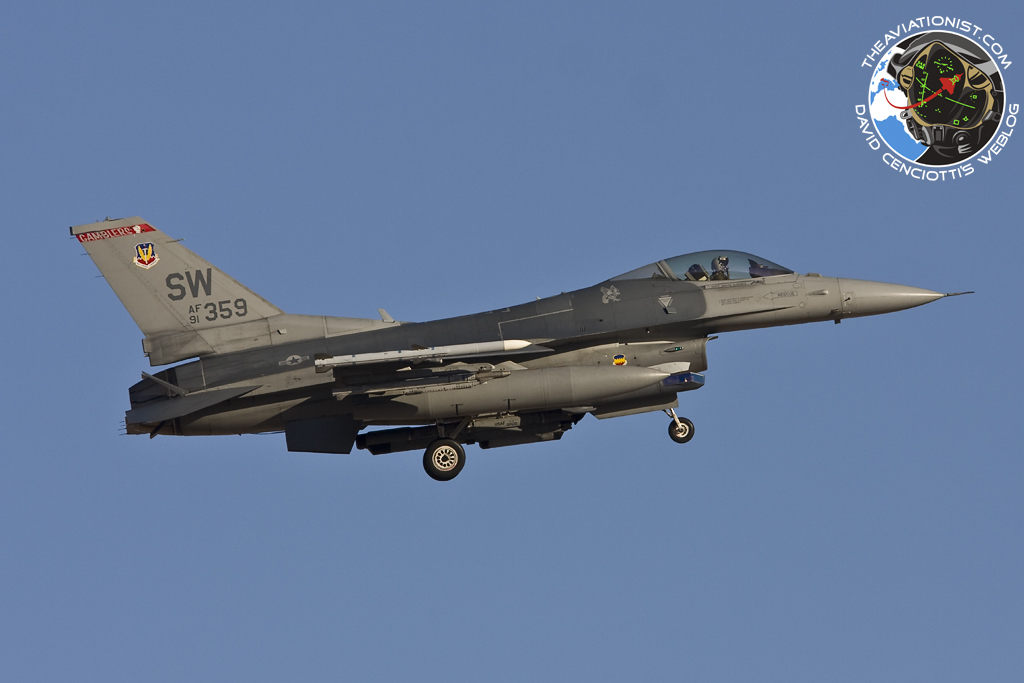
The U.S. Air Force as you know it no longer exists: beginning today, 17 combat units grounded


April 9, 2013

Posted by David Cenciotti


According to internal documents obtained by Air Force Times, beginning on Apr. 9, 2013, the U.S. Air Force will begin grounding front line combat units as a consequence of sequestration and the need to deal with budget cuts.

Seventeen squadrons belonging to the various U.S. Air Force commands are going to be affected by the stand down order.

The grounding is aimed to save the 44,000 flying hours (worth 591 million USD) through September.

The funded 241,496 flying hours will be distributed to those squadrons that will remain combat ready or are expected to keep a reduced readiness level called “basic mission capable” until the end of the Fiscal Year 2013.

Whilst some squadron will be immediately grounded, others will be forced down as soon as they come back from their overseas deployment. Among them, the 94th Fighter Squadron from Langley, whose F-22 Raptor stealth fighters currently deployed to Kadena, Okinawa and Osan airbase amid Korean Peninsula crisis, or 354th Fighter Squadron, 12 A-10C of which are currently returning to Davis Monthan after being deployed to Afghanistan.


Other grounded units include the Thunderbirds demo team, 555th Fighter Squadron from Aviano airbase, Italy; 77th Fighter Squadron from Shaw AFB, South Carolina; 492nd and 494th Fighter Squadrons from RAF Lakenheath, UK; 18th Aggressor Squadron from Eielson AFB, Alaska; B-52 squadrons belonging to the 2nd Bomb Wing from Barksdale AFB, Louisiana, and 5th Bomb Wing from Minot AFB, North Dakota; as well as B-1 squadrons from both 2nd and 7th Bomb Wing from Dyess AFB, Texas.


Anyway, here’s the detailed list of involved squadrons by airframes prepared by Air Force Times.
F-22

94th Fighter Squadron — Grounded April 9

27th Fighter Squadron — Basic mission capable through September

3rd Fighter Wing — Two squadrons combat mission ready through September

15th Wing — One squadron combat mission ready through September

49th Wing — One squadron combat mission ready through September
F-15 C/D

67th Fighter Squadron — Basic mission capable through September

44th Fighter Squadron — Basic mission capable through July, then Combat mission ready through September

48th Fighter Wing — One squadron combat mission ready through September
F-15E

336th Fighter Squadron — Grounded April 9

335th Fighter Squadron — Combat mission ready through September

48th Fighter Wing — Two squadrons stand down April 9

391st Fighter Squadron — Stands down April 9
F-16 C/D

8th Fighter Wing — Two squadrons combat mission ready through September

77th Fighter Squadron — Stands down April 9

55th Fighter Squadron — Combat mission ready through September

79th Fighter Squadron — Basic mission capable through July, then combat mission ready through September

555th Fighter Squadron — Stands down April 9

510th Fighter Squadron — Combat mission ready through September

13th Fighter Squadron — Combat mission ready through September

14th Fighter Squadron — Basic mission capable through September

51st Wing — One squadron combat mission ready through September

57th Wing — One squadron (Thunderbirds) stands down April 9

158th Fighter Wing — One squadron stands down April 9

169th Fighter Wing — One squadron stands down April 9

187th Fighter Wing — One squadron stands down April 9

354th Fighter Wing — One squadron stands down April 9

4th Fighter Squadron — Basic mission capable until redeployment

421st Fighter Squadron — Basic mission capable through September
A-10C

75th Fighter Squadron — Basic mission capable through July, then combat mission ready through September

51st Wing — One squadron combat mission ready through September

52nd Fighter Wing — Closing

442nd Fighter Wing — One squadron stands down April 9

917th Wing — One squadron stands down April 9
HH-60G

18th Wing — One squadron combat mission ready through September

48th Fighter Wing — One squadron combat mission ready through September
B-1B

7th Bomb Wing — One squadron combat mission ready through September

2nd Bomb Wing — Two squadrons stand down April 9
B-2

509th Bomb Wing — Two squadrons combat mission ready through September
B-52

2nd Bomb Wing — One squadron stand down April 9

5th Bomb Wing — Two combat squadrons combat mission ready through September
E-3B/C/G

2nd Bomb Wing — Basic mission capable through September

18th Wing — One squadron basic mission capable through September

552nd Air Control Wing — One squadron basic mission capable through September
SE-4B

55th Wing — One squadron combat mission ready through September
EC-130H

55 Electronic Combat Group — One squadron combat mission ready through September
OC-135B

55th Wing — One squadron combat mission ready through September
RC-135S

55th Wing — One squadron combat mission ready through September
RC-135U

55th Wing — One squadron combat mission ready through September
RC-135V/W

55th Wing — One squadron basic mission capable through September
TC-135W

55th Wing (training) — One squadron basic mission capable through September
WC-135C/W

55th Wing. — One squadron combat mission ready through September


Source
.

Wednesday, March 13, 2013

Sunday, April 08, 2012

Obama says we have 100's of National Parks, except we only have 58.

Read the full text of Obama's speech on the GOP budget

5:00 p.m. CDT, April 3, 2012


"If this budget becomes law and the cuts were applied evenly, starting in 2014, over 200,000 children would lose their chance to get an early education in the Head Start program. Two million mothers and young children would be cut from a program that gives them access to healthy food. There would be 4,500 fewer federal grants at the Department of Justice and the FBI to combat violent crime, financial crime, and help secure our borders. Hundreds of
national parks would be forced to close for part or all of the year.
We wouldn't have the capacity to enforce the laws that protect the air we breathe, the water we drink, or the food that we eat.

"Cuts to the FAA would likely result in more flight cancellations, delays, and the complete elimination of air traffic control services in parts of the country. Over time, our weather forecasts would become less accurate because we wouldn't be able to afford to launch new satellites. And that means governors and mayors would have to wait longer to order evacuations in the event of a hurricane.


Read more

.

Sunday, October 30, 2011

Survive the Zombie Apocalypse: The Cost of a Survival Kit

October 30, 2011

By Casey Bond

zombie survival kitWhen it comes to your emergency savings fund, have you set aside some money in preparation for a real emergency? For instance, when the zombie apocalypse hits, will you be ready?

One of the key possessions you should have on hand is azombie survival kit. Putting one together requires quite a few items, and the cash to fund it, so make sure you budget for this end-of-the-world must-have.

Emergency Essentials

While there are endless items it would be nice to have in your zombie survival kit, at least make sure you’re covered all theemergency essentials you’ll need to stay alive. Keep in mind, you want to keep you kit light, so try to scavenge for things like food and weapons along the way to the nearest COSTCO.

bic lighterBic lighter: $1

With no gas or electricity, you will need a way to keep warm. Lighters are small and lightweight, though they don’t last long. Consider stocking up on several.

can openerCan opener: $10

Canned food will likely be the most abundant and lost-lasting sustenance available, so be sure you can actually get to it.

mylar blanketMylar blanket: $2

Made from the same material as those foil-like balloons, protect yourself from the elements by wrapping up in this shiny, durable blanket.

aluminum water bottleAluminum Water Bottle: $15

After most disasters, fresh water is hard to come by–keep a refillable aluminum water bottle on hand for when you come across clean water sources.

first aid kitFirst Aid Kit: $20

If you’re bitten, game over. However, there are a number of ways you could be injured while navigating the post-apocalyptic world. Make sure you’re prepared with bandages, disinfectant and tape.

maglightMaglight: $18

This heavy duty flashlight allows you to find your way around in the dark, and doubles as a handy brain-basher for close encounters with the walking dead.

batteriesAA Batteries: $15

Keep your flashlight going and be able to juice up any useful small electronics you find. Pro tip: Rubbing a battery and steel wool together will start a fire if there aren’t any lighters or matches around.

pocketknifePocket knife: $10

Like duct tape, you can accomplish just about any task with a pocket knife.

backpackComfy Backpack: $80

Invest in a durable and comfortable backpack. You’ll likely be on foot most of the time and need to carry the above items on you.

Total Cost of Survival = $171

Don’t worry if you don’t have any of these items, you can divide up the total cost into manageable monthly increments. And luckily, even if the undead never attack, your zombie survival kit will work well as an emergency preparedness kit in the even of any disaster.


Source


Thursday, August 04, 2011

Roubini: QE3 Is Coming, But Bernanke Will Be Too Late

By Chris Barth Forbes


Nouriel Roubini, the much heralded NYU economist who has gotten much attention – and the nickname Dr. Doom – for his gloomy predictions in the past few years, isn’t exactly confident in Ben Bernanke or the US economy. Over the past few days he has taken to Twitter to voice his concerns on the recent market free fall, the potential for a double dip and the ongoing crisis in Europe. Today, on the heels of currency market intervention by Japan and Switzerland, Roubini predicted that a third round of quantitative easing here in the United States, tweeting, “QE3 started in Japan & Switzerland via fx action &/or monetary easing. Fed will eventually get to QE3 but it will be too little too late.”

Japan and Switzerland have both gotten involved in currency markets over the past two days, stepping in to prevent outsized appreciation in the yen and the Swiss franc. Switzerland cut interest rates on Wednesday in an attempt to weaken the franc, while the Japanese government and the Bank of Japan collaborated on moves today in an attempt stifle similar appreciation in the yen.
Roubini has previously said that he thinks future rounds of quantitative easing are on the way. As he pointed out in another tweet today, “I argued last year we will get QE3, then QE4 & then QE5 (the Fed, as in the 1950s, targeting the 10yr Treas at 1.5% once all else fails).”

In January, when he sat down with Steve Forbes, Roubini identified states and local municipalities as potential recipients of QE3.

“Until now, we have back-stopped the states through the federal budget – transfer payments of a variety of sorts to make sure that they don't blow up. At this point, the political willingness to do more of it is limited,” Roubini explained.

“During the crisis, [the Fed] bought even toxic assets of Bear Stearns and of AIG. They could go along the lines – if there are financing pressures like the Europeans – of trying to make stop all the state governments that are in trouble. If Congress doesn't do it, there'll be some pressure on the Fed to do that. That might be a version of QE3, after QE2. QE1 was mostly agencies -- Fannie and Freddie, QE2 was treasuries mostly. QE3 could be state and local debt.”


Source
.

Friday, July 29, 2011

Emanuel vows no tax hikes to bridge $635.7 million budget gap

Mayor Rahm Emanuel at City Hall today. (Brent Lewis/Tribune)


By Hal Dardick
Tribune reporter
12:23 p.m. CDT, July 29, 2011

Mayor Rahm Emanuel today said next year's city budget hole is nearly $636 million and he won't use one-time fixes or reserves to fix it.

"Today is to inform the public who pays the bills of the size and the scope of the problem," Emanuel said at a City Hall news conference. "The system needs reform. It is calling out for it."

Emanuel also said he won't raise taxes on Chicagoans who feel "nickeled and dimed" until the city's financial structure gets reformed.

"I can't ask people to pay more into a system that needs to be fundamentally restructured," he said.
Without significant changes in how the city operates, the city budget gap would widen in coming years to $741.4 million in 2013 and $790.7 million in 2014, the administration estimates.
Much of the budget imbalance results from long-term union contracts with locked-in raises, rising health care costs for workers and increased borrowing in recent years that brought higher interest payments.

The budget figures do not include shortfalls in city pension systems, which could add costs of $500 million or more annually in coming years. Absent changes in the pension systems or new revenue sources, that could result in a doubling of the city property tax, according to The Civic Federation, a non-partisan budget watchdog group.

Emanuel is required under state law to make them public by July 31.

Release of the preliminary figures is the first step in fashioning a budget for the coming year. Emanuel’s task will be to find ways to close that gap without tapping one-time revenue sources, as former Mayor Daley did repeatedly in recent years.

Emanuel, who personally briefed City Council committee chairmen on the budget this morning, told them he has asked his department heads to come up with ideas to close the gap. His appearance at the briefings was a break from past practice, when Daley had his financial chiefs present the news to aldermen.

In May, Daley said he anticipated a budget shortfall next year of $587 million, but incoming Emanuel administration officials have said they anticipated it would be higher.

Last year, the city plugged a budget gap of $655 million largely by dipping into dwindling reserves, refinancing debt and drawing money from once-sacrosanct special taxing district funds.

During his first couple of months in office, Emanuel has taken steps to curtail spending. He announced plans to cut $75 million from this year’s $6.15 billion spending plan, and he has pushed unions to make concessions, so far to little avail.

Critics note that even in 2007, when the economy peaked, the city faced a budget gap of $95 million, and spending has only increased since.

Source
.

Wednesday, July 06, 2011

Obama warns against US debt default


Uploaded by telegraphtv on Jun 29, 2011

----------------------------------------------------

0:09 Obama: "Deee-fault"

Biscuits and gravy, grits and hush puppies, etc.

Well, my-my-my, lookie here, lookie here, he's got a southern drawl, y'all.

When W (Dubya) left office the national debt was $10.7 trillion.

During Obama's 30 months in office it has increased to 14.3 trillion. That's almost 4 trillion in less than 3 years!

Now the president is looking for someone to blame for the unparalleled spending spree? Gimme a break, please.

Arsenio.