Showing posts with label encyclical. Show all posts

Saturday, September 19, 2026

The Pope’s Letter


Chapter 1
The Pope’s Letter

The Lord’s Day — as Sunday was called from Apostolic Times." Thus commences Pope John Paul II’s Apostolic Letter, Dies Domini, issued July 7, 1998. The Pope provides a reference in order to document his initial assertion. His reference is Revelation 1:10. This Scriptural passage states:


I [John] was in the Spirit on the Lord’s day, and heard behind me a great voice, as of a trumpet.

It will be seen that this verse of Scripture, while mentioning the Lord’s Day, does not in any particular indicate which day of the week is the Lord’s Day. One may read the context of the Biblical passage, and he will find no elucidation of the term. Since the term, "the Lord’s Day" occurs nowhere else in Scripture, it will not assist us to seek another reference containing the term "Lord’s Day" in order to enable us to discover the Biblical meaning of the term.

Yet the only safe ground for a sincere student of the Bible is to permit the Bible to interpret itself. God in His goodness has not left this matter in doubt. In clear, unequivocal terms He has revealed to us which day is the Lord’s Day. The New Testament specifies the day which is the Lord’s Day in two passages of Scripture:


For the Son of man is Lord even of the sabbath day (Matthew 12:8).

And he said unto them, That the Son of man is Lord also of the sabbath (Luke 6:5).

Plainly the Sabbath day is the Lord’s Day. The Bible itself has cited this fact. But a new question arises: Which day is the Sabbath? The context of these two texts reveals that the Jews were accusing the disciples of sabbathbreaking in that they rubbed ears of corn in their hands. Clearly the day referred to was the day the Jews identified as the Sabbath.

If we are sincere searchers for Biblical truth, then we must permit the Scripture to identify the day which the Jews hallowed as the Sabbath. Once more the Bible is specific. Jesus was crucified on the day which many Christians designate as Good Friday. The Jews named that day the preparation day. Speaking of the day of Christ’s death, Luke recorded:


And that day was the preparation, and the sabbath drew on (Luke 23:54).

Thus the Sabbath day of the Jews was the day after Friday.

Saturday, July 04, 2026

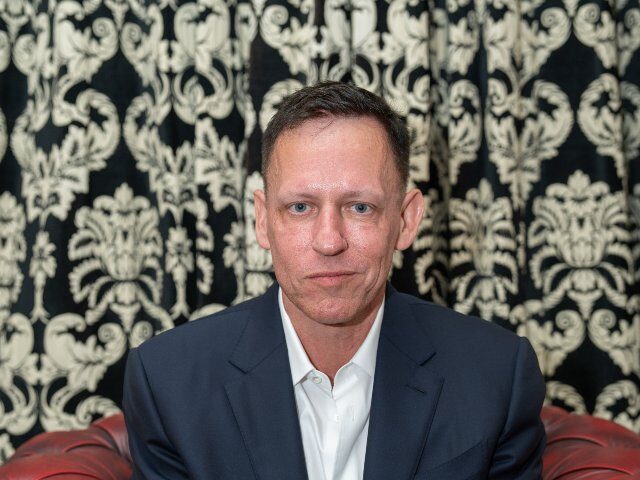
Peter Thiel Accuses Pope Leo of Serving as Chinese Communist Agent on AI


Nordin Catic/Getty Images for The Cambridge Union

3 Jul 2026

Billionaire tech investor Peter Thiel launched a series of controversial criticisms and predictions about AI and Western democracy during remarks at the Aspen Ideas Festival in Colorado on Tuesday. In his most provocative statement, Thiel accused Pope Leo XIV of serving the interests of China with his stance on AI.

CNN reports that Thiel, co-founder of Palantir and PayPal and an early Silicon Valley supporter of President Donald Trump, accused Pope Leo of inadvertently functioning as a Chinese communist agent by advocating for AI regulation. He also warned of what he described as an impending democratic-socialist takeover of the United States Democratic Party.

The tech investor delivered his remarks during a nonrecorded panel alongside political scientist Francis Fukuyama. During the event, Thiel specifically targeted the Vatican and Pope Leo, the first American pope, claiming he was unintentionally advancing Chinese interests by advocating for stronger international oversight of AI. Breitbart News previously reported that in May, Pope Leo issued his first encyclical titled “Magnifica Humanitas” or “Magnificent Humanity,” declaring that artificial intelligence “must be disarmed” and calling for greater international regulation of the technology:

Pope Leo frequently returns to the theme of uniformity versus communion, stressing that the quest for uniformity is sterile, mechanistic, and prone to tyrannical abuse, while communion is voluntary and joyous, bringing people together with each other and God. The encyclical asserts that, while AI might become smarter than any one of us, it will never be able to match the unexpected and delightful achievements of all of us — the unpredictable genius of magnificent humanity.

The pope’s Tower of Babel analogy draws parallels between the development of AI and the construction of the ancient Tower of Babel, “an impressive feat” constructed with “a single language, a single technology, a single direction.”

Sunday, May 31, 2026

Pope Leo warning on AI is just Catholic Church socialism | Fort Worth Star-Telegram

 Pope Leo warning on AI is just Catholic Church socialism | Fort Worth Star-Telegram

Pope Leo’s warning on AI is just more Catholic Church socialism | Opinion 


By our readers May 31, 2026 5:07 AM 


The dignity of labor is overrated. We can all get a hobby. Getty Images 

Catholic socialism 

Ayn Rand, an advocate for rationality and capitalism, referred to the pope as the “highest authority of the opposite side.” She saw mysticism as more dangerous than communism. In his recent encyclical, Pope Leo demonstrates this. He essentially calls for the economy to be kept inefficient so everyone can have a job to stay active and feel useful. 

Won’t people see through the ruse of unnecessary make-work whose only purpose is to reassure the workers? It’s been said we could cure unemployment by requiring that excavation be done only with teaspoons, but that’s no way to run an economy. 

I have misgivings about artificial intelligence, but the pope’s warnings about “forced inactivity” and “anthropological regression” (whatever that is) are not among them. The dignity of labor is overrated. We can all get a hobby. The Catholic Church is a socialist institution. 

- George Michael Sherry, Fort Worth

Source


Monday, May 25, 2026

Pope Leo XIV apologizes for Vatican's role in legitimizing slavery


Full Text of ‘Magnifica Humanitas’: Read Pope Leo XIV’s First Encyclical

Pope Leo XIV’s first encyclical sets out the Church’s social teaching for the age of artificial intelligence. Read the complete document below.


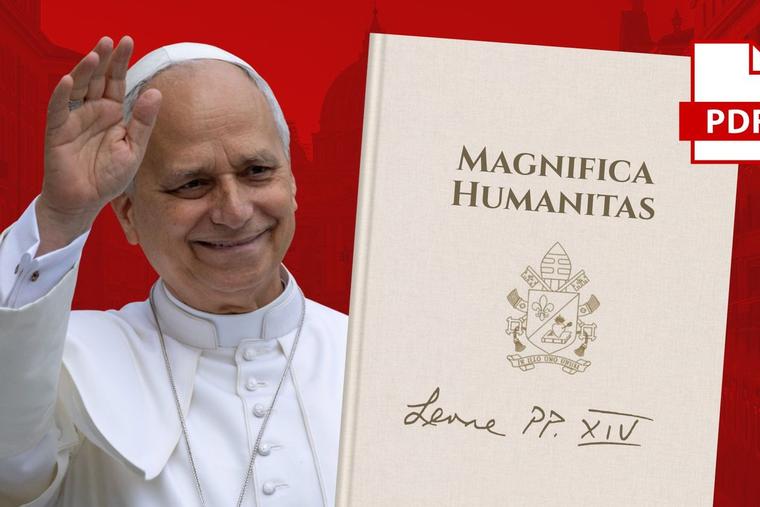
Pope Leo XIV alongside a picture of his new encyclical released May, 25, 2026. (photo: EWTN News)


EWTN News Staff Vatican May 25, 2026


Pope Leo XIV signed Magnifica Humanitas, the first encyclical of his pontificate, on May 15, 2026.

The document was formally released by the Holy See on May 25, 2026.

The encyclical develops the Churchʼs social teaching in light of artificial intelligence, situating new questions of human dignity, labor, and the common good within the tradition that runs from Rerum Novarum through Centesimus Annus and Laudato Si'.

Read the full encyclical as a PDF below.

Magnifica Humanitas Full Text English Version


Vance ‘looking forward to reading’ Pope Leo’s AI encyclical


by Kate Scanlon - OSV News May 20, 2026


U.S. Vice President JD Vance speaks during a press briefing at the White House in Washington, D.C., U.S., May 19, 2026. (OSV News photo/Kevin Lamarque, Reuters)


WASHINGTON (OSV News) — Vice President JD Vance said May 19 during a press briefing at the White House that he is “looking forward to reading” Pope Leo XIV’s upcoming first encyclical, “Magnifica Humanitas,” addressing artificial intelligence.

“I think when the pope issues an encyclical on artificial intelligence, it’s going to have some influence,” Vance said in response to a question on the topic, adding, “I, of course, don’t know how much influence. I don’t know exactly what it’s going to say, but I think when the leader of the world’s largest Christian denomination speaks on an issue like that, it’s certainly going to have some influence.”

The title of the encyclical is Latin for “Magnificent Humanity,” and it will address artificial intelligence and human dignity, the Vatican has announced. It will be published May 25.

Vance said he is sure the encyclical will “contain a lot of insights, some of which I’ll probably agree with, some of which I may not, but I think that it’s going to be a very, very important document.”

In response to a related question on whether the government should create a new mandatory review process for new AI models, Vance argued that President Donald Trump “wants us to be pro-innovation” on AI.

“He wants us to win the AI race against all other countries in the world,” Vance said. “He recognizes that AI is going to be an important tool, not just for our economy, but for our military, and so he wants to ensure that we are winning that particular race. We also want to make sure that we’re protecting people, we’re protecting people’s data, we’re protecting people’s privacy.”

But Vance also acknowledged the technology “does have some downsides.”

“We’re trying to balance that safety against innovation, and we think that we’ve got the right balance here in the Trump administration, but something we’re going to have to keep on working on, because that’s just the nature of these technologies, is they certainly change,” he said.

Pope Leo has consistently expressed interest in the issue of artificial intelligence and the dignity of work since the first days of his pontificate, telling the College of Cardinals shortly after his election in May 2025 that he took his papal name partly in honor of Pope Leo XIII, whose landmark encyclical “Rerum Novarum” has shaped the Church’s social teaching for more than a century.


Tuesday, May 19, 2026

Pope Leo XIV’s first encyclical Magnifica humanitas to be published May 25


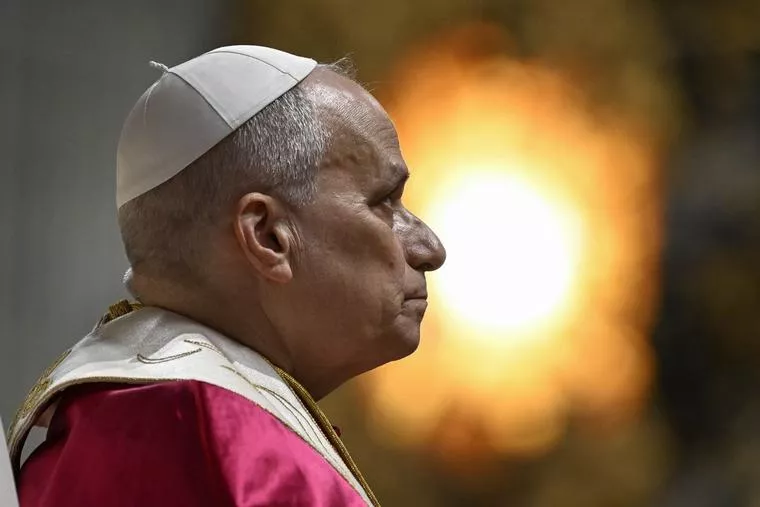
Pope Leo XIV

Pope Leo XIV’s first encyclical, Magnifica humanitas, on safeguarding the human person in the time of artificial intelligence, will be released on May 25. A presentation event with the Pope and various speakers is scheduled for the same day at the Vatican.

Vatican News

Pope Leo XIV’s first Encyclical Letter Magnifica humanitas, on safeguarding the human person in the time of artificial intelligence, will be released on May 25, 2026.

It bears the Pope’s signature dated May 15th, 135th anniversary of the publication of Pope Leo XIII’s encyclical Rerum novarum.

Magnifica humanitas will be presented on the day of its release at 11:30 a.m. at the Vatican’s Synod Hall.

The Pope will be present, along with several speakers: Cardinal Víctor Manuel Fernández, Prefect of the Dicastery for the Doctrine of the Faith; Cardinal Michael Czerny, S.J., Prefect of the Dicastery for Promoting Integral Human Development; Professor Anna Rowlands, a theologian and professor at Durham University (United Kingdom); Christopher Olah, co-founder of Anthropic (USA) and head of research on the interpretability of artificial intelligence; and Professor Leocadie Lushombo, I.T., professor of political theology and Catholic social thought at the Jesuit School of Theology / Santa Clara University in California (USA).

Cardinal Secretary of State Pietro Parolin will offer closing remarks, followed by an address and blessing by Pope Leo XIV.


Saturday, May 16, 2026

From Rerum Novarum to Today: Pope Leo XIV Prepares to Add His Voice to the Church’s Social Teaching


Hannah Brockhaus
via EWTN
15.05.26


Pope Leo XIV presides over the Prayer Vigil for Peace in St. Peter’s Basilica on April 11, 2026. (photo: Simone Risoluti / Vatican Media)

During his recent apostolic trip to Cameroon, the Pope called on Catholic university students from central Africa to be ‘pioneers of a new humanism in the context of the digital revolution.’

With the publication of his first encyclical just around the corner, Pope Leo XIV is poised to add his voice to the Church’s tradition of social teaching, reflecting on what it means to be human in the midst of a digital revolution.

According to reports, the encyclical — a papal letter to the Church — will be called Magnifica Humanitas, Latin for “Magnificent Humanity.” It is expected to present the Pope’s moral guidance on how to approach artificial intelligence.

As Leo himself indicated in the first days of his pontificate, he will follow in the steps of his predecessor and namesake, Pope Leo XIII, whose encyclical Rerum Novarum, “Of New Things,” is widely considered the first in a long line of social encyclicals produced in the modern era of the papacy.

Catholic social teaching from the late 19th century to today is the Church’s attempt “to articulate itself in constantly new and evolving conditions,” said Anna Rowlands, a theologian and professor of Catholic social thought at Durham University in the United Kingdom.

Saturday, September 20, 2025

What do we know about Pope Leo’s first encyclical and apostolic exhortation?


Various media reports indicate that Pope Leo is preparing documents to be published in the upcoming months.

Sep 19, 2025


Various media reports indicate that Pope Leo is preparing his first apostolic exhortation and his first encyclical, to be published in the upcoming months.

According to Reuters, Pope Leo is writing an apostolic exhortation by the name of Dilexit te (He loved you), while other outlets have reported that he is also preparing an encyclical focused on AI and other social issues.

But what do we actually know about Pope Leo’s first published documents? The Pillar takes a look.


Pope Leo XIV addresses the Vatican diplomatic corps, May 16, 2025. Image credit: Vatican media.

What will the subject of the pope’s first apostolic exhortation be?

According to several media reports, the pope will publish his first apostolic exhortation in early October.

Many reports indicate that Leo has picked up an apostolic exhortation on the needs of the poor, begun by Pope Francis in early 2025 by the name of Dilexit te, echoing the name of Francis’ last encyclical, Dilexit nos (He loved us).

That would mean that Leo is following in the footsteps of Francis.

Monday, May 12, 2025

Rerum Novarum and Sunday Rest


41. From this follows the obligation of the cessation from work and labor on Sundays and certain holy days. The rest from labor is not to be understood as mere giving way to idleness; much less must it be an occasion for spending money and for vicious indulgence, as many would have it to be; but it should be rest from labor, hallowed by religion. Rest (combined with religious observances) disposes man to forget for a while the business of his everyday life, to turn his thoughts to things heavenly, and to the worship which he so strictly owes to the eternal Godhead. It is this, above all, which is the reason arid motive of Sunday rest; a rest sanctioned by God's great law of the Ancient Covenant-"Remember thou keep holy the Sabbath day,"(31) and taught to the world by His own mysterious "rest" after the creation of man: "He rested on the seventh day from all His work which He had done."(32)

References:

31). Exod.20:8.
32). Gen. 2:2.

Wednesday, September 27, 2023

'Laudate Deum,' to be title of Pope's Apostolic Exhortation on climate


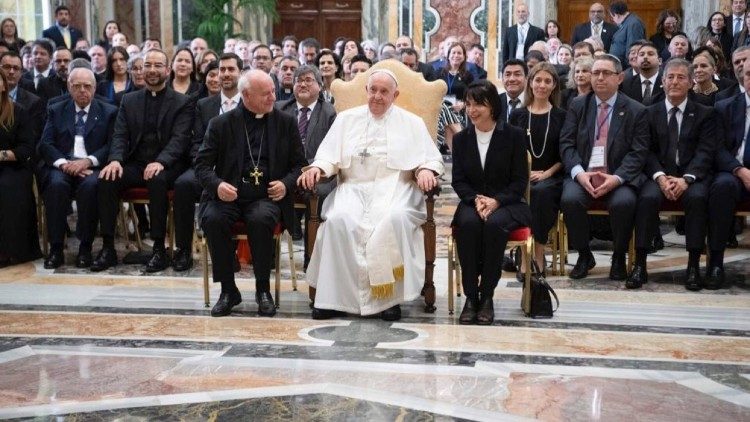
Pope Francis' audience with rectors of Latin American universities
 
POPE

The title of Pope Francis' next Apostolic Exhortation will be "Laudate Deum," the Pope himself revealed, while addressing participants in a meeting of Latin American university rectors in the Vatican, and as he vehemently warned against a throwaway culture.


By Father Johan Pacheco

The name of Pope Francis' next Apostolic Exhortation on the environment will be Laudate Deum, Pope Francis has revealed.

The Holy Father shared this on Thursday, Sept. 21 when addressing in the Vatican some 200 participants in the meeting of the Rectors of public and private universities of Latin America and the Caribbean, sponsored by the Red de Universidades para el Cuidado de la Casa Común and the Pontifical Commission for Latin America on Sept. 20 and 21 at the Augustinianum on the theme "Organizing Hope," with the participation of some Prefects and Secretaries of Dicasteries of the Holy See.

During the occasion, the Pope reflected on various issues raised by the educators, including climate change, migration, and the culture of waste.

The Holy Father urged them to be creative in the formation of young people from today's realities and challenges. The rectors asked the Pope questions on environmental and climate issues to which he responded by emphasizing the deplorable "throwaway culture or culture of abandonment." He explained that it is "a culture of misuse of natural resources, which does not accompany nature to full development and does not let it live. This culture of abandonment," he said, "harms all of us."

The proper use of nature

Pope Francis also described it from the human point of view: "There is a throwaway culture that is always going on, there is a lack of education to use the things that remain, to remake them, to replace them in the order of the common use of things. And this throwaway culture also affects nature." And he insisted on the urgency of returning to the proper use of nature: "Today humanity is tired of this misuse of nature, and must return to the path of good use of nature. And how we use nature, a word that may sound strange, I would say: dialogue with nature, dialogue."

To this end, the Pope urged universities to create networks of awareness. "And at this point, you use a very beautiful word, which is organizing hope." "Reclaiming and organizing hope," Pope Francis said, "I like this phrase that you have said to me and one cannot help but consider it in the context of integral ecology, in this dimension according to which the youth of today have the right to a balanced cosmos and they have the right to hope and we have to help them to organize this hope, to make very serious decisions from this moment."

Nature is for all

Pope Francis also alluded to a "regenerative culture," identifying it as the fruit "of an economic crisis that is not always at the service of the development of the most needy. I would say that sometimes, or many times, it is not at the service of the development of everyone and creates more people in need. It is a culture of dispossession, we all have the right to the use of nature," to dominion over nature to make it grow and use it for the common good.

The Pope expressed his concern about "some abstract scientific type universities" that "do not use reality but science, an abstract science, not real, and so they walk on economic theories, social theories, everything is theory, but they never land" on the reality of the most needy. "The discarded, the outcasts, are men and women, whole peoples that we leave on the street like garbage, are they not? We have to be aware that we use the wealth of nature only for small groups through socio-economic theories that do not integrate nature, the discarded."

"Laudate Deum," the title of the next Apostolic Exhortation

Pope Francis called for alternatives to help overcome the environmental crisis and cited as an example the use of solar panels to provide electricity to Paul VI Hall and other areas of the Vatican. "We have to be very creative in these things to protect nature" because obviously electricity is made on the basis of coal or other elements, which always create problems in nature itself and "the young people we train have to become leaders on this point, convinced."

In his reflection, the Pope announced the name of his next Apostolic Exhortation: Laudate Deum, which will be published on the feast day of St. Francis of Assisi, Oct. 4: "a look at what has happened and say what needs to be done," he said.

Human and environmental degradation go together

The Holy Father also denounced the process of degradation that humanity is undergoing.

"There is a process of environmental degradation, we can say that in general. But this leads down, to the bottom of the ravine. Degradation of living conditions, degradation of the values that justify these living conditions, because they go together." And he explained that "inequality" is also "evident in the lack of access to basic necessities, and from here come all those visions that sociologically, in fact, without naming them, make women, indigenous peoples, Africans, people with fewer capabilities."

One of the forms of degradation and inequality, Pope Francis denounced, is "extractivism," that is, the hoarding of natural resources. "When this extractivist model goes on and enters people," he pointed out, "I extract the dignity of people, and this happens, never a geological extractivist model, so to speak, goes alone, it is always accompanied by the human extractivist model, the dignity of the person is extracted, they are slaves, said in another word. And please get this into children's heads, value education, so that they can evaluate these situations and can say clearly that this is called slavery."

Politics as the noblest vocation

Faced with this situation, the Pope called on university rectors to promote education in humanistic values and fraternal dialogue, helping students "enter politics" as a "noble vocation."

"Let us not forget that the noblest vocation of the human person is politics. Let us train our young people to be politicians, in the broadest sense of the term. Let us not forget that the noblest vocation of the human person is politics. We must train our young people to be politicians, in the broadest sense of the word. Not only to act in a political party, which is a small group, but to have political openness and to know how to dialogue with political groups with maturity, politics is not a disease, in my opinion it is the noblest vocation in a society, because it is the one that carries out development processes."

A human and Christian response to the migration crisis

The Pope also spoke about the current migration crisis.

"The migration drama in Europe today is extremely serious, extremely serious. And it cannot be solved by a mutual aid society, no. Here there is a humanistic and Christian question. Here there is a humanistic issue and a political decision, there are decisions that are human and Christian."

"I ask you," the Pope told the rectors, "out of respect for suffering humanity, to address this issue in your universities, but with the human density that it has. "So in summary I say this to you: migrants must be welcomed, accompanied, promoted and integrated. If we fail to integrate the migrant, we fail," he added.

"I want to say all this about migrants because the problem of migrants is very close to my heart," the Pope said again. He went on to say that "it is criminal what is being done today, here in Europe, sending them back, it is criminal. And I don't want to use euphemisms, I tell it like it is."
The three human languages: head, heart and hands

After reviewing all these situations, the Pope reminded that the task of universities should not be only to "teach things." "You must train boys and girls in the three human languages, that of the head, that of the heart and that of the hands.

"So that they learn to think what they feel and what they do, to feel what they do and what they think, and to do what they feel and what they think." Finally, he thanked those present and summed up his words by calling on universities to be: "creative in the face of reality and challenges, educators and not just dispensers of information."


Sunday, October 04, 2020

'FRATELLI TUTTI' ENCYCLICAL LETTER - 4 October 2020


ENCYCLICAL LETTER


FRATELLI TUTTI
OF THE HOLY FATHER
FRANCIS
ON THE FRATERNITY AND SOCIAL FRIENDSHIP


1. “FRATELLI TUTTI”.[1] With these words, Saint Francis of Assisi addressed his brothers and sisters and proposed to them a way of life marked by the flavour of the Gospel. Of the counsels Francis offered, I would like to select the one in which he calls for a love that transcends the barriers of geography and distance, and declares blessed all those who love their brother “as much when he is far away from him as when he is with him”.[2] In his simple and direct way, Saint Francis expressed the essence of a fraternal openness that allows us to acknowledge, appreciate and love each person, regardless of physical proximity, regardless of where he or she was born or lives.

2. This saint of fraternal love, simplicity and joy, who inspired me to write the Encyclical Laudato Si’, prompts me once more to devote this new Encyclical to fraternity and social friendship. Francis felt himself a brother to the sun, the sea and the wind, yet he knew that he was even closer to those of his own flesh. Wherever he went, he sowed seeds of peace and walked alongside the poor, the abandoned, the infirm and the outcast, the least of his brothers and sisters.

WITHOUT BORDERS

3. There is an episode in the life of Saint Francis that shows his openness of heart, which knew no bounds and transcended differences of origin, nationality, colour or religion. It was his visit to Sultan Malik-el-Kamil, in Egypt, which entailed considerable hardship, given Francis’ poverty, his scarce resources, the great distances to be traveled and their differences of language, culture and religion. That journey, undertaken at the time of the Crusades, further demonstrated the breadth and grandeur of his love, which sought to embrace everyone. Francis’ fidelity to his Lord was commensurate with his love for his brothers and sisters. Unconcerned for the hardships and dangers involved, Francis went to meet the Sultan with the same attitude that he instilled in his disciples: if they found themselves “among the Saracens and other nonbelievers”, without renouncing their own identity they were not to “engage in arguments or disputes, but to be subject to every human creature for God’s sake”.[3] In the context of the times, this was an extraordinary recommendation. We are impressed that some eight hundred years ago Saint Francis urged that all forms of hostility or conflict be avoided and that a humble and fraternal “subjection” be shown to those who did not share his faith.

4. Francis did not wage a war of words aimed at imposing doctrines; he simply spread the love of God. He understood that “God is love and those who abide in love abide in God” (1 Jn 4:16). In this way, he became a father to all and inspired the vision of a fraternal society. Indeed, “only the man who approaches others, not to draw them into his own life, but to help them become ever more fully themselves, can truly be called a father”.[4] In the world of that time, bristling with watchtowers and defensive walls, cities were a theatre of brutal wars between powerful families, even as poverty was spreading through the countryside. Yet there Francis was able to welcome true peace into his heart and free himself of the desire to wield power over others. He became one of the poor and sought to live in harmony with all. Francis has inspired these pages.

5. Issues of human fraternity and social friendship have always been a concern of mine. In recent years, I have spoken of them repeatedly and in different settings. In this Encyclical, I have sought to bring together many of those statements and to situate them in a broader context of reflection. In the preparation of Laudato Si’, I had a source of inspiration in my brother Bartholomew, the Orthodox Patriarch, who has spoken forcefully of our need to care for creation. In this case, I have felt particularly encouraged by the Grand Imam Ahmad Al-Tayyeb, with whom I met in Abu Dhabi, where we declared that “God has created all human beings equal in rights, duties and dignity, and has called them to live together as brothers and sisters”.[5] This was no mere diplomatic gesture, but a reflection born of dialogue and common commitment. The present Encyclical takes up and develops some of the great themes raised in the Document that we both signed. I have also incorporated, along with my own thoughts, a number of letters, documents and considerations that I have received from many individuals and groups throughout the world.

6. The following pages do not claim to offer a complete teaching on fraternal love, but rather to consider its universal scope, its openness to every man and woman. I offer this social Encyclical as a modest contribution to continued reflection, in the hope that in the face of present-day attempts to eliminate or ignore others, we may prove capable of responding with a new vision of fraternity and social friendship that will not remain at the level of words. Although I have written it from the Christian convictions that inspire and sustain me, I have sought to make this reflection an invitation to dialogue among all people of good will.

7. As I was writing this letter, the Covid-19 pandemic unexpectedly erupted, exposing our false securities. Aside from the different ways that various countries responded to the crisis, their inability to work together became quite evident. For all our hyper-connectivity, we witnessed a fragmentation that made it more difficult to resolve problems that affect us all. Anyone who thinks that the only lesson to be learned was the need to improve what we were already doing, or to refine existing systems and regulations, is denying reality.

8. It is my desire that, in this our time, by acknowledging the dignity of each human person, we can contribute to the rebirth of a universal aspiration to fraternity. Fraternity between all men and women. “Here we have a splendid secret that shows us how to dream and to turn our life into a wonderful adventure. No one can face life in isolation… We need a community that supports and helps us, in which we can help one another to keep looking ahead. How important it is to dream together… By ourselves, we risk seeing mirages, things that are not there. Dreams, on the other hand, are built together”.[6] Let us dream, then, as a single human family, as fellow travelers sharing the same flesh, as children of the same earth which is our common home, each of us bringing the richness of his or her beliefs and convictions, each of us with his or her own voice, brothers and sisters all.

CHAPTER ONE

DARK CLOUDS OVER A CLOSED WORLD

9. Without claiming to carry out an exhaustive analysis or to study every aspect of our present-day experience, I intend simply to consider certain trends in our world that hinder the development of universal fraternity.

SHATTERED DREAMS

10. For decades, it seemed that the world had learned a lesson from its many wars and disasters, and was slowly moving towards various forms of integration. For example, there was the dream of a united Europe, capable of acknowledging its shared roots and rejoicing in its rich diversity. We think of “the firm conviction of the founders of the European Union, who envisioned a future based on the capacity to work together in bridging divisions and in fostering peace and fellowship between all the peoples of this continent”.[7] There was also a growing desire for integration in Latin America, and several steps were taken in this direction. In some countries and regions, attempts at reconciliation and rapprochement proved fruitful, while others showed great promise.

11. Our own days, however, seem to be showing signs of a certain regression. Ancient conflicts thought long buried are breaking out anew, while instances of a myopic, extremist, resentful and aggressive nationalism are on the rise. In some countries, a concept of popular and national unity influenced by various ideologies is creating new forms of selfishness and a loss of the social sense under the guise of defending national interests. Once more we are being reminded that “each new generation must take up the struggles and attainments of past generations, while setting its sights even higher. This is the path. Goodness, together with love, justice and solidarity, are not achieved once and for all; they have to be realized each day. It is not possible to settle for what was achieved in the past and complacently enjoy it, as if we could somehow disregard the fact that many of our brothers and sisters still endure situations that cry out for our attention”.[8]

12. “Opening up to the world” is an expression that has been co-opted by the economic and financial sector and is now used exclusively of openness to foreign interests or to the freedom of economic powers to invest without obstacles or complications in all countries. Local conflicts and disregard for the common good are exploited by the global economy in order to impose a single cultural model. This culture unifies the world, but divides persons and nations, for “as society becomes ever more globalized, it makes us neighbours, but does not make us brothers”.[9] We are more alone than ever in an increasingly massified world that promotes individual interests and weakens the communitarian dimension of life. Indeed, there are markets where individuals become mere consumers or bystanders. As a rule, the advance of this kind of globalism strengthens the identity of the more powerful, who can protect themselves, but it tends to diminish the identity of the weaker and poorer regions, making them more vulnerable and dependent. In this way, political life becomes increasingly fragile in the face of transnational economic powers that operate with the principle of “divide and conquer”.

The end of historical consciousness

13. As a result, there is a growing loss of the sense of history, which leads to even further breakup. A kind of “deconstructionism”, whereby human freedom claims to create everything starting from zero, is making headway in today’s culture. The one thing it leaves in its wake is the drive to limitless consumption and expressions of empty individualism. Concern about this led me to offer the young some advice. “If someone tells young people to ignore their history, to reject the experiences of their elders, to look down on the past and to look forward to a future that he himself holds out, doesn’t it then become easy to draw them along so that they only do what he tells them? He needs the young to be shallow, uprooted and distrustful, so that they can trust only in his promises and act according to his plans. That is how various ideologies operate: they destroy (or deconstruct) all differences so that they can reign unopposed. To do so, however, they need young people who have no use for history, who spurn the spiritual and human riches inherited from past generations, and are ignorant of everything that came before them”.[10]

14. These are the new forms of cultural colonization. Let us not forget that “peoples that abandon their tradition and, either from a craze to mimic others or to foment violence, or from unpardonable negligence or apathy, allow others to rob their very soul, end up losing not only their spiritual identity but also their moral consistency and, in the end, their intellectual, economic and political independence”.[11] One effective way to weaken historical consciousness, critical thinking, the struggle for justice and the processes of integration is to empty great words of their meaning or to manipulate them. Nowadays, what do certain words like democracy, freedom, justice or unity really mean? They have been bent and shaped to serve as tools for domination, as meaningless tags that can be used to justify any action.

LACKING A PLAN FOR EVERYONE

15. The best way to dominate and gain control over people is to spread despair and discouragement, even under the guise of defending certain values. Today, in many countries, hyperbole, extremism and polarization have become political tools. Employing a strategy of ridicule, suspicion and relentless criticism, in a variety of ways one denies the right of others to exist or to have an opinion. Their share of the truth and their values are rejected and, as a result, the life of society is impoverished and subjected to the hubris of the powerful. Political life no longer has to do with healthy debates about long-term plans to improve people’s lives and to advance the common good, but only with slick marketing techniques primarily aimed at discrediting others. In this craven exchange of charges and counter-charges, debate degenerates into a permanent state of disagreement and confrontation.

16. Amid the fray of conflicting interests, where victory consists in eliminating one’s opponents, how is it possible to raise our sights to recognize our neighbours or to help those who have fallen along the way? A plan that would set great goals for the development of our entire human family nowadays sounds like madness. We are growing ever more distant from one another, while the slow and demanding march towards an increasingly united and just world is suffering a new and dramatic setback.

17. To care for the world in which we live means to care for ourselves. Yet we need to think of ourselves more and more as a single family dwelling in a common home. Such care does not interest those economic powers that demand quick profits. Often the voices raised in defence of the environment are silenced or ridiculed, using apparently reasonable arguments that are merely a screen for special interests. In this shallow, short-sighted culture that we have created, bereft of a shared vision, “it is foreseeable that, once certain resources have been depleted, the scene will be set for new wars, albeit under the guise of noble claims”.[12]

A “throwaway” world

18. Some parts of our human family, it appears, can be readily sacrificed for the sake of others considered worthy of a carefree existence. Ultimately, “persons are no longer seen as a paramount value to be cared for and respected, especially when they are poor and disabled, ‘not yet useful’ – like the unborn, or ‘no longer needed’ – like the elderly. We have grown indifferent to all kinds of wastefulness, starting with the waste of food, which is deplorable in the extreme”.[13]

19. A decline in the birthrate, which leads to the aging of the population, together with the relegation of the elderly to a sad and lonely existence, is a subtle way of stating that it is all about us, that our individual concerns are the only thing that matters. In this way, “what is thrown away are not only food and dispensable objects, but often human beings themselves”.[14] We have seen what happened with the elderly in certain places in our world as a result of the coronavirus. They did not have to die that way. Yet something similar had long been occurring during heat waves and in other situations: older people found themselves cruelly abandoned. We fail to realize that, by isolating the elderly and leaving them in the care of others without the closeness and concern of family members, we disfigure and impoverish the family itself. We also end up depriving young people of a necessary connection to their roots and a wisdom that the young cannot achieve on their own.

20. This way of discarding others can take a variety of forms, such as an obsession with reducing labour costs with no concern for its grave consequences, since the unemployment that it directly generates leads to the expansion of poverty.[15] In addition, a readiness to discard others finds expression in vicious attitudes that we thought long past, such as racism, which retreats underground only to keep reemerging. Instances of racism continue to shame us, for they show that our supposed social progress is not as real or definitive as we think.

21. Some economic rules have proved effective for growth, but not for integral human development.[16] Wealth has increased, but together with inequality, with the result that “new forms of poverty are emerging”.[17] The claim that the modern world has reduced poverty is made by measuring poverty with criteria from the past that do not correspond to present-day realities. In other times, for example, lack of access to electric energy was not considered a sign of poverty, nor was it a source of hardship. Poverty must always be understood and gauged in the context of the actual opportunities available in each concrete historical period.

Insufficiently universal human rights

22. It frequently becomes clear that, in practice, human rights are not equal for all. Respect for those rights “is the preliminary condition for a country’s social and economic development. When the dignity of the human person is respected, and his or her rights recognized and guaranteed, creativity and interdependence thrive, and the creativity of the human personality is released through actions that further the common good”.[18] Yet, “by closely observing our contemporary societies, we see numerous contradictions that lead us to wonder whether the equal dignity of all human beings, solemnly proclaimed seventy years ago, is truly recognized, respected, protected and promoted in every situation. In today’s world, many forms of injustice persist, fed by reductive anthropological visions and by a profit-based economic model that does not hesitate to exploit, discard and even kill human beings. While one part of humanity lives in opulence, another part sees its own dignity denied, scorned or trampled upon, and its fundamental rights discarded or violated”.[19] What does this tell us about the equality of rights grounded in innate human dignity?

23. Similarly, the organization of societies worldwide is still far from reflecting clearly that women possess the same dignity and identical rights as men. We say one thing with words, but our decisions and reality tell another story. Indeed, “doubly poor are those women who endure situations of exclusion, mistreatment and violence, since they are frequently less able to defend their rights”.[20]

24. We should also recognize that “even though the international community has adopted numerous agreements aimed at ending slavery in all its forms, and has launched various strategies to combat this phenomenon, millions of people today – children, women and men of all ages – are deprived of freedom and forced to live in conditions akin to slavery… Today, as in the past, slavery is rooted in a notion of the human person that allows him or her to be treated as an object… Whether by coercion, or deception, or by physical or psychological duress, human persons created in the image and likeness of God are deprived of their freedom, sold and reduced to being the property of others. They are treated as means to an end… [Criminal networks] are skilled in using modern means of communication as a way of luring young men and women in various parts of the world”.[21] A perversion that exceeds all limits when it subjugates women and then forces them to abort. An abomination that goes to the length of kidnapping persons for the sake of selling their organs. Trafficking in persons and other contemporary forms of enslavement are a worldwide problem that needs to be taken seriously by humanity as a whole: “since criminal organizations employ global networks to achieve their goals, efforts to eliminate this phenomenon also demand a common and, indeed, a global effort on the part of various sectors of society”.[22]

Sunday, July 08, 2018

Laudato Si 237: Sunday


Laudato Si 237: Sunday


Posted on 6 February 2016 by catholicsensibility


The encyclical letter Laudato Si is available here on the Vatican website. And so we come to the notion of rest, or more accurately, Sabbath:


237. On Sunday, our participation in the Eucharist has special importance. Sunday, like the Jewish Sabbath, is meant to be a day which heals our relationships with God, with ourselves, with others and with the world. Sunday is the day of the Resurrection, the “first day” of the new creation, whose first fruits are the Lord’s risen humanity, the pledge of the final transfiguration of all created reality. It also proclaims “(humankind’s) eternal rest in God”.[CCC 2175] In this way, Christian spirituality incorporates the value of relaxation and festivity.

And like industrial masters and slavers who insisted on constant service, people today are beset by the same oppression, the need to work rather than take rest.


We tend to demean contemplative rest as something unproductive and unnecessary, but this is to do away with the very thing which is most important about work: its meaning. We are called to include in our work a dimension of receptivity and gratuity, which is quite different from mere inactivity. Rather, it is another way of working, which forms part of our very essence.

Action, not activism:

It protects human action from becoming empty activism; it also prevents that unfettered greed and sense of isolation which make us seek personal gain to the detriment of all else. The law of weekly rest forbade work on the seventh day, “so that your ox and your donkey may have rest, and the son of your maidservant, and the stranger, may be refreshed” (Ex 23:12). Rest opens our eyes to the larger picture and gives us renewed sensitivity to the rights of others. And so the day of rest, centered on the Eucharist, sheds it light on the whole week, and motivates us to greater concern for nature and the poor.

Like the sacraments, Sunday is not a narcissitic privilege of the well-to-do. It is something for everyone. It should lead us to reflect more deeply on what inspires us to give thanks and feel gratitude. From this “eucharist” may we be moved to consider others, and draw them into this great thanksgiving.


Wednesday, January 13, 2016

Care for Our Common Home


by Catherine Austin Fitts
July 5, 2015

from Solari Website


"Yet it must also be recognized that nuclear energy, biotechnology, information technology; knowledge of our DNA, and many other abilities, which we have acquired, have… given those with the knowledge, and especially the economic resources to use them, an impressive dominance over the whole of humanity and the entire world…
In whose hands does all this power lie, or will it eventually end up?
It is risky for a small part of humanity to have it."

(p.77)
Pope Francis


A Papal Encyclical is a letter concerning Catholic doctrine which is circulated by the Pope.


This week, Pope Francis published a new Encyclical: Laudato Si' of the Holy Father Francis - Care for Our Common Home. The 180+ page document sounds the alarm regarding the global degradation of living things: people, animals and our environment.

If this document had been authored by a professor of theology, there would be much room for common ground.


However, it has been written by the leader of an institution which has been the single most powerful in the Western world for the last 500 years - a period during which the central banking-warfare model has been busy harvesting our common home.

There is a profound disassociation from the nuts-and-bolts of what the Catholic Church (and its networks and investment syndicates) have been doing and the sources of their wealth.


This Encyclical is, if you will, a concept piece independent of the financial and political realities of the Vatican, the Catholic Church and its allies.

Assuming that Pope Francis first and foremost addressed the Encyclical to bishops, patriarchs, primates, archbishops as well as to the general population, I would like to propose several steps which the Pope, the Vatican and the leadership of the Catholic Church (collectively, the "Church") might take to integrate some of the best ideas in this document into the power lines controlled and influenced by the Church.


1 - Disclosure

The world is struggling with propaganda, disinformation, and significant suppression of the truth. The new Pope's efforts to provide digital access to works in the Vatican Library on a selective basis are a good start.

In the meantime, there is a great deal of knowledge which the Church, its libraries and networks can share:

The Church can accelerate access to both the Vatican Library and Archives.

The Church can publish all its information regarding global "black budgets." This would include any information related to invisible weaponry and technology driving the real governance systems operating on Planet Earth.

In the context of understanding what is happening to our environment, the Church can publish all its information on global geo-engineering and weather control programs as part of an open discussion to ensure that the global population and scientific community has accurate data on what is happening to our climate.

The Church can provide open access to its financial information and persuade its affiliates, endowments and churches to do the same, including detailed disclosure on a place-based basis.

The Church can encourage global governments to publish their budgets and credit information on a place-based basis. Place-based financial disclosure will permit the alignment of financial ecosystems with environmental ecosystems - a critical step to ensuring a healthy environment. This will create incentive systems which reward the health and well-being of all living things.

The Church can disclose all information on its direct and indirect involvement in any illegal activities, including vote rigging, narcotics trafficking, and money laundering.

The Church can use its shareholdings and ownership positions in media companies to insist on integrity in public information.

The Church can use its shareholdings in pharmaceutical and food companies to insist on integrity and independence of scientific research.

The Church can provide a safe haven for scientists, journalists and other professionals who are targeted for upholding high standards of integrity in science and information.


2 - Individual Freedom

Slavery contributes significantly to the degradation of people throughout our planet.

The Church can withdraw from supporting governments, corporations or any other organizations that support any form of slavery.

The Church can destroy the "control files" of prominent businessmen and politicians created through the use of its networks.

The Church can complete restoration efforts related to its pedophilia activities and publish complete figures on how much the Church has spent on all restoration efforts.

The Church can use its shareholdings and ownership positions in government and corporate securities to insist on a withdrawal of corporate and government support for mind control, torture and slavery and the compromise of individual privacy and sovereignty.


3 - Organized Crime & Lawlessness

The primary source of environmental damage does not result from market economics - quite the opposite.

It results from the lethal combination of organized crime operating powerful and invisible weaponry coupled with invasive digital systems and sophisticated financial tools on scale.

In short, those with the ability to kill, to destroy and to steal with impunity combine such force with fiat currencies, unsustainable debt, resource extraction, financial fraud, war and genocide in order to centralize wealth and power in a manner which shrinks total wealth.

Lawlessness on a global scale must be dealt with before it destroys our planet.

The Church can divest its holdings in governments and corporations which engage in these practices. It should encourage its affiliates and members to do the same.

The Church can also disassociate from foundations and not-for-profits that engage in these practices or that launder profits for those who do.

The Church can make clear that the ten 'commandments' apply not just to what we do, but to whom and what we finance.

The Church can stop any and all participation by itself and its networks in narcotics trafficking and disgorge the profits of the same to the people harmed.


4 - Debt & Fiat Currency

No less than The Economist has rightly pointed out that we are chocking on debt, in part because we provide enormous tax subsidies which encourage debt (see The Great Distortion).

Debt throws people out of alignment with one another and with the environment around them. Ditto fiat currency which is used in a manner to debase global populations and economies.

We must shift to an equity-based financial system which facilitates the free flow of equity unencumbered by the intervention and control of organized crime.

An equity-based system - which includes the financing of small businesses, small farms and local economies with equity - will permit us to evolve a financial system in which we can generate wealth from healing our environment and reducing consumption.

The Church can encourage these changes by shifting the significant funds it manages as well as those managed by its networks.

The Church can encourage governments to reduce laws and regulations that prevent the local circulation of equity or that prevent the creation and success of local currency systems.


5 - Sovereignty is Sacred

A global culture is one which respects the sovereignty of every individual.

We respect human rights. We respect property rights. We respect privacy. We respect the right of each human being to make up their own mind.

The Church can withdraw its investments from all governments and corporations (including media) which compromise people's privacy or which manipulate them via mind control techniques, entrainment technology, subliminal programming or electronics.

The Church can actively encourage its priests and networks to bring transparency to mind control techniques or any efforts to mislead people globally.

The Church can offer sanctuary to scientists, government personnel or journalists who bring transparency to these efforts.


6 - Capitalism - Let's Try It

Before we dismiss capitalism, we should try it.

Organized crime is not capitalism. It is the application of force to control and to get one's way.

Market economics can solve many of the problems before us - but we have to unleash markets to work rather than prevent them from operating and then blaming the subsequent "mess" on them.

The Church can call for all monies stolen by illegal means in the last two decades to be returned, including trillions which have disappeared from the US government or which have been accrued as a result of financial frauds prior to the bailouts.

The Church can refrain from blaming our current situation on the people who have been harmed by these thefts or from insisting that the subsequent economic damage is a result of the victims' poor values or "consumerism."

The Church can withdraw its investment from financial institutions, governments and corporations that:

  • Engage in market rigging and intervention.
  • Provide unlawful or unethical support to cartels and monopolies.
  • Engage in the purposeful suppression of technologies which would ease the harm we are doing to the environment.


The Church and its affiliates and members manage trillions in real estate and financial assets.

As one of the most significant capitalist organizations/investment networks on our planet, it can institute policies to ensure that it does not invest in companies or governments which behave in the manner described in the latest Encyclical and that its real estate is not used to support such activities.

During Vatican II, the Church forced the sale of significant real estate holdings which were serving communities. The proceeds from these sales were reinvested in corporate securities.

The Church can ensure that the Orders for whom these funds are managed have access to full transparency about these investments and are permitted to institute policies which ensure that these investments are managed in accordance with the goals of this Encyclical.


7 - War

Published global military expenditures were $1.7 trillion in 2013. Add secret black budget expenditures and the total was likely much more.

These funds - combined with savings from destructive behavior such as gambling, narcotics and alcohol - could be shifted into investment in healing our environment, our education systems, our health care systems and revitalizing global infrastructure.

The Church can bring transparency to all worldwide resources which are related to killing. It can invite its members to pray that these resources be shifted to investments which increase productivity rather than enable a small group of people to own and control the planet.


8 - Invite Feedback

Both the Church and our planet are dynamic living systems.

Moving to a healthy global culture and aligning our financial ecosystems with our environmental ecosystems is a journey.

The Church can encourage its entire network to adopt these goals in their lives so that achieving them is a partnership of the many for the benefit of all.

The Church can publish an annual report on its efforts to take responsibility and to achieve these goals internally in its own operations, asset managements and investments and to invite feedback from all of its constituents to help it do so.


9 - Wise as a Serpent

There is often a risk that any important policy will be misunderstood or misused by those who are centralizing control and power.

The G-7 nations have experienced a financial coup d'état. A great deal of money and assets have been shifted out of sovereign governments into private hands - either illegally or under the guise of trillions in bailouts and quantitative easing - while liabilities have been shifted back into governments.

Now that these transfers are complete, it would be convenient to blame the victims and to abrogate their pensions and other savings plans and promises.


***


It would be unfortunate if this Encyclical were used to justify the value of doing so in the name of "reducing consumerism" or to politically outmaneuver the victims by accusing them of being "selfish."

Economies function on trust and such trust must come from honoring our agreements. As Pope Francis understands, it is easy to blame the victim and to take from the powerless.

Utah Phillips once said,


"The Planet is not dying, it is being killed. And the people doing the killing have names and addresses."

We commend the Pope for calling out for a cessation of the debasement of all living things.

Let us hope that his latest Encyclical starts ringing doorbells - beginning with the opportunity to do so in the Church and in the Church's asset and investment portfolios...


.

Saturday, August 22, 2015

What will Pope Francis say to the UN in New York City?


2015-08-22

The UN is celebrating its 70 anniversary with great challenges ahead. Among them, is addressing the environment and climate change. An issue the Pope considers of utmost importance.

On the 25th of September, he will address the General Assembly of the United Nations in New York. There he will have the opportunity to speak directly to representatives from all over the world, touching on the themes he addressed in his encyclical. It will be a crucial moment in his trip to the U.S.


JEFFREY SACHS
Earth Institute, Columbia University (USA)
"Thrilling, absolutely thrilling. It's not only this unique opportunity of the Pope meeting world leaders, it's also the day that the new sustainable development goals will be adopted. So that is a fantastic opportunity for everybody to be aware of what he is saying and how we need to change direction.”


Jeffrey Sachs is an expert on the environment, an adviser to the UN and the director of Columbia University's Earth Institute. He was one of 200 people who helped Pope Francis write the encyclical. He expects that the pontiff's intervention in New York will be decisive in raising awareness, spurring them to take action in the environmental summit meeting in Paris.

JEFFREY SACHS
Earth Institute, Columbia University (USA)
"'Laudato Si' is a brilliant and inspiring encyclical. It is already reaching all over the world. It is calling for a fundamentally new mindset, and I think it's going to have a profound and transformative effect”.


The Pope said that it is not only a green encyclical, but also a social one, since environmental problems and human problems are linked. It's a theme the Pope highlighted as he addressed the UN's Food and Agriculture Organization, back in November.


POPE FRANCIS
November 25, 2014
"God always forgives, people sometimes forgive, the earth never forgives.”


Before the UN, Pope Francis will address not only climate change, but also peace, social inclusion and development. It will be
a key opportunity to urge global leaders to take action.


Source

Thursday, August 20, 2015

Here’s how one Catholic congressman is prepping for the Pope’s US visit


August 18, 2015 by CNA Daily News


Washington D.C., Aug 18, 2015 / 05:05 pm (CNA).- As the nation’s capital works to get ready for Pope Francis’ visit to the U.S. this fall, one Catholic congressman is preparing by reading papal encyclicals.

“I say as a Catholic, I’m pretty excited,” Rep. Tim Huelskamp (R-Kan.) told CNA of the upcoming papal visit. He added that it is an opportunity to “evangelize as Catholic members of Congress.”
The Pope’s visit is a “serious matter,”
he said, even though many might see it as “just another celebrity in their mind coming.”

“This is a historical opportunity,” he stressed, “this is the one time you’ll have a Pope speaking to Congress.”

The congressman has announced that, in preparation for the first-ever papal address to a joint meeting of Congress on Sept. 24, he is reading two encyclicals – Pope St. Paul VI’s “Humanae Vitae” from 1968, and Pope Francis’ “Laudato Si” from June this year – as well as Francis’ apostolic exhortation, “Evangelii Gaudium,” from 2013.

Huelskamp is a third-term GOP congressman who rode the Tea Party wave into office in 2010. His district comprises a huge chunk of North and West Kansas. He was raised Catholic and entered seminary out of high school before eventually graduating from the College of Santa Fe and later earning a Ph.D. in political science from American University. He and his wife have four adopted children.

Pope Francis will be visiting Washington, D.C., New York City, and Philadelphia from Sept. 22-27, culminating with his papal Mass at the World Meeting of Families on the 27th in Philadelphia. In New York City, he will address the United Nations General Assembly on Sept. 25.

During his visit to D.C., the Pope will meet with President Obama, pray with the U.S. bishops, address a joint meeting of Congress at the U.S. Capitol building, and celebrate the canonization Mass for Bl. Junipero Serra outside the Basilica of the National Shrine of the Immaculate Conception.

His Sept. 24 address to Congress is a highly-sought after ticket, as each member of Congress only receives one guest ticket for seating in the House Gallery.

Huelskamp said he sees a common thread in all three of the papal documents that he is reading, namely, the sanctity of human life.

“But that is the underlying thing, essentially, the incomparable worth of the human being. I see that in all three of those, and that is the message that needs to be heard,” he said.

Huelskamp is most familiar with Humanae Vitae, or “On the Regulation of Birth.” St. Paul VI’s landmark encyclical, the document solidified the Church’s teachings on marriage and sexuality and reaffirmed its teaching against the use of artificial birth control.

Most Catholics and some bishops dissented from the encyclical at the time, the legislator recalled. Many Catholics today have not even heard of it.

“In my opinion, it was not preached enough in our churches, and today if you look at the polling, I think it’s probably accurate, overwhelmingly not agreed to by the average American Catholic,” Huelskamp said. “For me, I do agree, it is an undeniable truth.”

The congressman hopes that Pope Francis will talk about Church teaching on marriage and sexuality when he preaches to American Catholics in September.

“Most folks still don’t know Humanae Vitae,” he said. “When you have 95 to 98 percent of American Catholics [who] have decided to ignore Humanae Vitae and to use artificial contraception, that’s a real concern that hopefully is addressed.”

Huelskamp does not agree with everything in the Pope’s most recent encyclical on the environment, Laudato Si. Specifically, he disagrees with the claim that there is a scientific consensus on man-made global warming.

“I’m not a theologian. I’m a farmer in real life, and a politician in my public life. But (the encyclical) doesn’t seem to rest on as much of a theological consensus. It actually rests heavily on a scientific consensus that frankly I don’t believe existed to the extent the Holy Father believes that in that encyclical,” he said.

He called out some Catholics in Washington for not obeying clear Church teaching on marriage and sexuality, but saying that they follow the Church by believing in a scientific consensus on man-made global warming.

When pressed on the connection between the two encyclicals – that both Humanae Vitae and Laudato Si warned of the human desire to control nature for selfish ends – Huelskamp agreed the connection was there.

“I think it’s critical,” he said. “That’s the arrogance of man, the original sin, the fall of man is to be his or her own God,” he said. “The prophetic vision of Humanae Vitae predicted all this.”

Another issue the congressman hopes Pope Francis will confront is the peril of religious liberty for Catholic organizations in the U.S.

“We’re in a battle right now,” he said, “we’re working with the Conference of Catholic Bishops where they aren’t allowed to participate in certain grants from the Obama administration because they refused to give up their views on contraception and abortion. And the dignity of marriage and the individual.”

Catholic members of Congress are working together to prepare for the Pope’s visit, he revealed.

“There’s a component, a small group of us that have been engaging one another, engaging our staff together, and engaging theologians in America,” he said.

He added that he’s “trying to catch up” with Kansas bishops “and discuss with them some of the implications of issues and moving our nation forward in a direction that will be more pleasing to the Lord.”

One puzzling development is that he has not received any requests for lawn seats outside the U.S. Capitol when Pope Francis addresses Congress.

“I don’t think I’ve had a single request yet from a constituent,” Huelskamp said of the 50 tickets allotted to each member of Congress to view the address on jumbotrons from the lawn outside the West Front of the U.S. Capitol. Pope Francis has expressed his wishes to appear outside after he addresses Congress inside the Capitol building.

“I’ve had family members and friends, Catholic friends that have made some requests, but not a single constituent has requested yet. So I’m not sure what that means but so far no interest in coming.”

Ultimately, he hopes that U.S. Catholics will make the papal visit a memorable one.

“As Catholics, we’ve got a long history in this country where we have been one of the most discriminated-against minorities,” he said. “It was just a few years ago when we had our first chaplain in the U.S. House that was a Catholic priest.”

“So we’ve come a long way as Catholics, and the hope I see is that folks don’t see Catholics as just another one of the many denominations, but understand that Catholics don’t see ourselves as a denomination, but see ourselves as keepers of the faith and holders of the truth.”


.

Monday, July 27, 2015

Pope likely to alter economic message in the U.S., Vatican adviser says


By Daniel Burke, CNN Religion Editor


Updated 12:24 PM ET, Sun July 26, 2015


Bishop Marcelo Sanchez Sorondo is chancellor of the Pontifical Academy of Sciences.


(CNN) Archbishop Marcelo Sanchez Sorondo has steered the Pontifical Academy of Sciences since 1998, but it's likely that his profile has never been more robustly public than now.

For the past year, Sanchez Sorondo has teamed with scientists and political leaders to help research, promote and defend Pope Francis' stern and sweeping condemnation of current environmental and economic trends.

Most recently, the archbishop, who, like Francis, hails from Buenos Aires, convened a conference of more than 60 mayors and other local politicians this week at the Vatican.

Sanchez Sorondo spoke with CNN on Friday about the controversy swirling around the Pope's economic and environmental statements, how Francis will likely recalibrate his message this September when he visits in the United States and the leak of the pontiff's environmental statement this summer.

Some of the archbishop's answers have been edited for length and clarity.

Q: Some people might be surprised to hear that the Vatican has a science academy. What is your mission?

A: Yes, that's true, people are often surprised to hear about us. You can see a lot about our mission on our website, but the basic idea is that the church believes that understanding human beings and the Earth requires not only faith but also reason, and not only philosophical reason but also scientific reason.

Q: You just hosted a major conference at the Vatican for mayors and other political leaders around the world. What was the conference's main accomplishment?

A: Part of it was, as the Pope said in his address to the group, to bring awareness that climate change and human trafficking -- a new form of slavery -- are human emergencies.

Some attendees, like California Gov. Jerry Brown, spoke very passionately about protecting the environment. Others, like many mayors in Italy, have more awareness of a new form of slavery, so it was important for them to be able to learn from each other.

Q. It seems like the Vatican is partnering with quite a few people -- the Jewish feminist Naomi Klein, for example -- that would not be seen as traditional church allies. What is the strategy behind that?

A: We understand that in this globalized world we all need to work together. As the Pope says in his encyclical, "Laudato Si," the Earth is our common home.

And as we move towards setting new (United Nations') sustainable development goals, we also understand that one of our key priorities is improving social inclusion.

Q: According to a new poll, the Pope's popularity has declined in the United States by quite a bit recently, mainly because many conservatives are upset with his messages on climate change and income inequality. Is this a cause of concern to you or to others in the Vatican?

A: The Pope said not only in his last document but also in the others, for example "Evangelii Guadium," that we need to work not only to make profits but also to respect the human person.

I would say that this was also very clear in your (the U.S.) Constitution and the great leaders of your country wrote many times about the common good and justice. But many people say, including some economists, that these values are not so present at the moment. I am not sure if that is true, but that is what I have read.

Q: Some American Catholics say they are tired of being scolded by the Pope about doing more for the poor and the disenfranchised. What would you say to them?

A: The project of the Pope is to come back to the Gospel, particularly Christ's first sermon, the Sermon on the Mount. It is very clear in that speech that Christ expects us to help those who suffer, especially the poor.

So, the best attitude to receive the Pope's teachings is to understand that he is a religious leader and the essence of his message comes from the Gospel, not from one ideology or another.

And so, if our economic systems are not oriented toward the human person but only concerned with profits, he wants to confront the system and change it. This, by the way, is common to all the popes, it comes directly from the so-called social teachings of the church.

Q: In Latin America, the Pope delivered a sharp speech against capitalism, calling the relentless pursuit of profits the "dung of the devil." A lot of people are wondering, will he bring a similar message to the United States this September?

A: I don't know if the Pope wants to repeat that kind of speech. It was very specifically for the World Meeting of Popular Movements. These are people who are very poor: They don't have a house, they don't have work, the don't have land. I think, in your country, people don't have the same needs, so maybe he will speak in another way.

Q: Some prominent Catholics say the Pope should not preach or teach about matters like the environment and economics.

A: I know, I know, and they are very important persons -- some of them are campaigning to become president. But this is a mistake because when the Pope speaks in this area, about creation or nature, he goes back to St. Francis and to the beginnings of the Bible, when God's first gift to mankind is the Earth and all of its creations.

So, this idea that it is not "Christian" to speak of the beauty of creation and about our role to be stewards of that beauty is just insane.

Q: Have you been surprised by any of the reactions to the Pope's statement on the environment, "Laudato Si?"

The majority of reactions were very positive. Patriarch Bartholomew of Constantinople and Archbishop Justin Welby of the Anglican Church wrote a very nice article in The New York Times on the same day the encyclical was published.

A small minority was against it, and of this minority we can say that the underlying reason was because these people live off of oil, and it's clear that the encyclical teaches that the use of this material is not the best thing for the question of climate change and that we need to find new ways to produce energy.

Q: So you are saying that most of the opposition to "Laudato Si" came from the oil and gas industries?

A: Yes, I think so. Because as the Pope says in the encyclical, 90% of the scientific community agrees that climate change is a problem today, and that this (use of oil and gas) is a cause of global warming.

Q: The encyclical was leaked a few days before it was to be published. Did this annoy you?

A: This is a problem typical of journalism, and journalists need to abide by the rules. (The document was embargoed.) The journalist was punished, also, by being banned for a time from the Vatican press room.

Q: The journalist was punished, but what about the person who leaked the document? Was there an investigation into that?

A: Yes.

Q: Do you know who it was?

A: It's very easy to know who it was.

Q: Can you tell me who it was, and whether they will be punished?

A: No, I am sorry. That is not my responsibility.


.

Saturday, June 27, 2015

Pope Francis Calls For A New Global Political Authority To Save Humanity


By Michael Snyder, on June 16th, 2015


Pope Francis says that global warming is a fact and that a new global political authority is necessary in order to save humanity from utter disaster. The new encyclical that was scheduled to be released on Thursday has been leaked, and it is being reported that this new global political authority that Pope Francis envisions would be in charge of “the reduction of pollution and the development of poor countries and regions”. The funny thing is that this sounds very much in line with the new sustainable development agenda that is going to be launched at the United Nations in September. This radical new agenda is already being called “Agenda 21 on steroids” because it goes so much farther than Agenda 21 ever did. The new UN agenda does not just address the environment – it also addresses issues such as poverty, agriculture, education and gender equality. It is essentially a blueprint for governing the entire planet, and that sounds very much like what Pope Francis also wants. In fact, Pope Francis is going to give the speech that kicks off the UN conference in September where this new sustainable agenda will be launched. For some reason, this Pope has decided to make the fight against climate change the central pillar of his papacy, and he is working very hard to unite as much of humanity as possible to get behind that effort.

It is not an accident that this new encyclical is coming out now. An article from the Guardian even states that the release was intended “to have maximum public impact” prior to the Pope’s major speech at the UN in September…

The rare encyclical, called “Laudato Sii”, or “Praised Be”, has been timed to have maximum public impact ahead of the pope’s meeting with Barack Obama and his address to the US Congress and the UN general assembly in September.

It is also intended to improve the prospect of a strong new UN global agreement to cut climate emissions. By adding a moral dimension to the well-rehearsed scientific arguments, Francis hopes to raise the ambition of countries above their own self-interest to secure a strong deal in a crucial climate summit in Paris in November.

Much of the encyclical is not that surprising. But what is raising eyebrows is the Pope’s call for a new global political authority. Here is more from the Guardian…

Pope Francis will this week call for changes in lifestyles and energy consumption to avert the “unprecedented destruction of the ecosystem” before the end of this century, according to a leaked draft of a papal encyclical. In a document released by an Italian magazine on Monday, the pontiff will warn that failure to act would have “grave consequences for all of us”.

Francis also called for a new global political authority tasked with “tackling … the reduction of pollution and the development of poor countries and regions”. His appeal echoed that of his predecessor, pope Benedict XVI, who in a 2009 encyclical proposed a kind of super-UN to deal with the world’s economic problems and injustices.

What is even more alarming is who will be on the stage with the Pope when this encyclical is formally released. John Schellnhuber is a German professor that has some very radical views on climate change. For instance, he believes that our planet is overpopulated by at least six billion people…

Professor John Schellnhuber has been chosen as a speaker for the Vatican’s rolling out of a Papal document on climate change. He’s the professor who previously said the planet is overpopulated by at least six billion people. Now, the Vatican is giving him a platform which many expect will result in an official Church declaration in support of radical depopulation in the name of “climate science.”

And Schellnhuber also happens to believe that we need a new global political authority. If he had his way, there would be an “Earth Constitution”, a “Global Council” directly elected by the people of the planet, and a “Planetary Court” that would be above all other courts on the globe. The following is an excerpt from a very disturbing piece that he authored…

Let me conclude this short contribution with a daydream about those key institutions that could bring about a sophisticated — and therefore more appropriate — version of the conventional “world government” notion. Global democracy might be organized around three core activities, namely (i) an Earth Constitution; (ii) a Global Council; and (iii) a Planetary Court. I cannot discuss these institutions in any detail here, but I would like to indicate at least that:

– the Earth Constitution would transcend the UN Charter and identify those first principles guiding humanity in its quest for freedom, dignity, security and sustainability;

– the Global Council would be an assembly of individuals elected directly by all people on Earth, where eligibility should be not constrained by geographical, religious, or cultural quotas; and

– the Planetary Court would be a transnational legal body open to appeals from everybody, especially with respect to violations of the Earth Constitution.

Does the Pope want something similar?

It is quite telling that Schellnhuber was invited to stand with the Pope as this major encyclical is released to the world. Did Schellnhuber play a role in drafting it? Has he been advising the Pope on these matters? Does the Pope share his vision of the future?

And does the Pope share Schellnhuber’s belief that our planet is currently overpopulated by six billion people? If so, how would the Pope solve that “problem”?

Without a doubt, most of those that make up the “global elite” would love to see the number of people on earth decline precipitously. This is something that I covered in my previous article entitled “46 Population Control Quotes That Show How Badly The Elite Want To Wipe Us All Out“. Of course the Pope is not going to publicly advocate for getting rid of six billion people, but clearly he is extremely concerned about the impact that all of us are having on this planet.

The funny thing is that the earth is not even warming. In fact, there has been no sign of global warming at all for the past ten years…

Over the years the government and the scientific community have largely stood their ground when it comes to climate change. They’ve been adamant in their assertion that the planet is gradually warming due to human activity, and that we all need to do our part to stop climate change. However, the data provided by the scientific community doesn’t always jibe with their claims.

At least, that seems to be the case with the data coming out of NOAA’s climate monitoring stations. They have a series of 114 stations across all 50 states, which is known as the US Climate Reference Network. For the past 10 years they’ve shown no sign of global warming. In fact, there’s been a very slight cooling in temperatures across the US.

But at this point, most of the world has bought into the propaganda. In most industrialized nations, a solid majority of the population actually believes that climate change is the greatest threat that humanity currently faces.

And since just about all forms of human activity produce “carbon emissions” or affect the environment in some way, it gives control freaks that dream of global government a good excuse to grab more power. They will always say that it is about “saving humanity” or “saving the planet”, but ultimately everything that they are trying to accomplish would mean more power in their hands.

So what do you think that the Pope is up to? And do you think that it is a good thing or a bad thing?


.
.
.
.