Showing posts with label STRIKE. Show all posts

Monday, October 05, 2026

French students close hundreds of schools in protest

Reuters

Oct 5, 2026  

French high school students have blockaded hundreds of schools across the country in protest against poor conditions in education. According to officials, between 400 and 500 schools remain closed amid the unrest.

Thursday, September 10, 2026

Eiffel Tower closed due to strike after female staff allegedly removed for religious group


A sign declaring the Eiffel Tower opening delayed in Paris, France, on September 7, 2026. Sarah Meyssonnier/Reuters

By
Rhea Mogul
Updated Sep 8, 2026

The Eiffel Tower in Paris was closed on Monday as employees went on strike to protest claims female colleagues were told to stay out of sight during a visit by a Hindu religious group, drawing criticism from French politicians.

Around 100 members of the Bochasanwasi Akshar Purushottam Swaminarayan Sanstha (BAPS), a global Hindu organization headquartered in Ahmedabad, India, visited the landmark on Saturday.

BAPS describes itself as a “spiritual, volunteer-driven fellowship” dedicated to improving society through individual growth and promoting the Hindu values of faith, service and global harmony. The group inaugurated a new Hindu temple in Paris on Sunday.

Diane Davoine, a union representative for the Eiffel Tower staff, told reporters that during the visit, “women were asked to leave their places of work in order to place men there.”

“So that absolutely does not go down well with the employees, with women obviously, who are all humiliated by what happened, by the way some were treated,” she said.

Paris Mayor Emmanuel Grégoire said an investigation has been launched into the claims.

“It is not acceptable that such conditions can be tolerated,” he wrote on X. “These are neither my values, nor those that the Eiffel Tower should uphold, where everyone should be able to move about and act freely, without distinction between women and men.”

The Eiffel Tower Operating Company (SETE) acknowledged that the delegation had requested a visit that limited “interactions with women,” according to CNN affiliate BFMTV.

SETE said that “these conditions should not have been accepted,” BFMTV reported.

CNN has contacted SETE for a response.

In a statement on X, BAPS did not directly mention the female staff but said it took the concerns “very seriously” and that the visit was organized “in coordination with the Eiffel Tower team at the start of normal opening hours” to limit disruption to other visitors.

“To the best of our knowledge, at no point was anyone prevented access to the Eiffel Tower,” the statement said. “Nevertheless, we sincerely apologise for any pain or inconvenience caused.”

When reached by CNN for comment, BAPS Paris said in a statement, “It was never, at any point, intended as a request rooted in gender, and any suggestion to the contrary does not reflect the spirit or values of our fellowship or the delegation.”

“BAPS remains firmly committed to the principles of equality, mutual respect, and service to all, regardless of gender, background, or belief – values that lie at the very heart of our tradition’s teachings and community work worldwide,” the statement continued.

News of the closure made headlines in India on Tuesday. Some commentators on social media asked why the monument’s management complied with the purported request to sideline female staff. Several others said the incident has stained India’s credibility and the Hindu religion.

Thursday, May 28, 2026

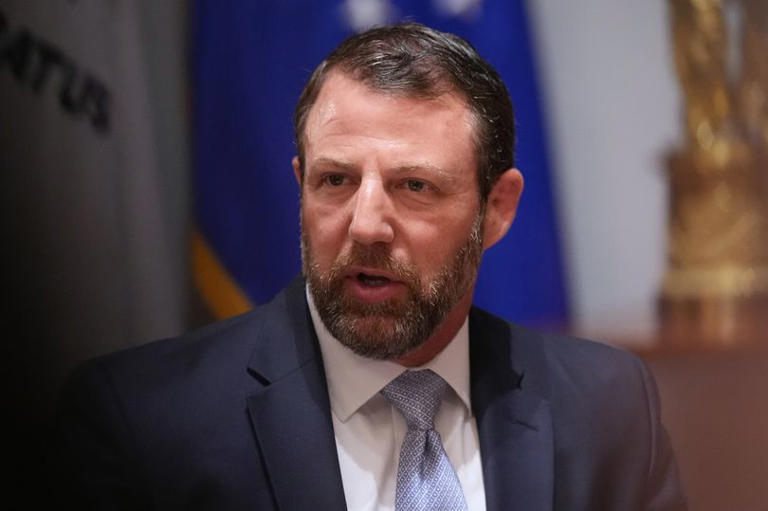
Markwayne Mullin tells ICE hunger-strikers who want 'ethnic food' to 'go back to their country'

Story by Peter Rubinstein • 11h 


U.S. Rep. Adriano Espaillat described the conditions at the Newark facility as "inhumane" and vowed to shut the center down (Image: AP Photo/Jacquelyn Martin)

© AP Photo/Jacquelyn Martin

Department of Homeland Security Secretary Markwayne Mullin channeled the same anti-immigrant rhetoric as Trump on Wednesday, claiming that the New Jersey ICE facility detainees on hunger strike are only doing so because they want "ethnic food."

"There was only a handful of individuals that was refusing to eat because they want their ethnic group, or their ethnic-right food. Well, they can go back to their country and get whatever food they want," Mullin said during a televised Cabinet meeting. “The fact is, we’re giving them the calories they want. This isn’t Holiday Inn.”

His comments came after Democratic members of Congress who visited Delaney Hall in Newark said detainees are being given small portions of food that "very often" contain maggots. U.S. Rep. Adriano Espaillat described the conditions as "inhumane" and vowed to shut the center down.

Protesters have been demonstrating for days and asserting that detainees at the New Jersey facility are on a hunger strike.

U.S. Rep. Jerry Nadler, a Manhattan Democrat, said that the only medication they receive is Tylenol.


The lawmakers addressed protesters and family members of detainees demonstrating outside the facility’s security gate after their visits© Kyle Mazza/Shutterstock

Thursday, January 29, 2026

As Trump pressures Iran with "armada," Mideast allies urge him not to strike


By Margaret Brennan,Olivia Gazis,


CBS News

Trump warns Iran that "time is running out" to reach a nuclear deal 02:30

As the Trump administration continues to prepare military options for strikes in Iran, U.S. allies in the Mideast, including Turkey, Oman and Qatar, are attempting to head off that possibility by brokering diplomatic talks, multiple regional officials told CBS News.

But at this point, the opportunity for direct diplomacy between the U.S. and Iran to discuss the regime's nuclear program and ballistic missile capacity has not gained traction, according to three regional officials who spoke with CBS News on condition of anonymity so they could speak freely.

Israeli military intelligence chief General Shlomi Binder was in Washington earlier this week for meetings at the Pentagon, CIA and White House, a source familiar with his plans told CBS News. Axios was first to confirm the Israeli visit — which had not been announced by the Trump administration. Separately, the Saudi Defense Minister is scheduled to be in Washington, D.C., this week for meetings, according to a source familiar with his schedule.

Wednesday, April 30, 2025

Knights of Labor


Hulton Archive/Getty Images


Published: October 29, 2009

Last Updated: February 27, 2025


Table of contents

1

Uriah Stevens, Knights of Labor Founder


2

Knights of Labor Expands Under Terrence Powderly


3

Joseph Buchanan Leads Strikes Against Railroad Companies


4

Ending Child Labor and Lobbying for a Graduated Income Tax


5

Attacks on Chinese Workers


6

Haymarket Square Riot


The Knights of Labor was founded as a secret society of tailors in Philadelphia in 1869. It grew in size and prominence in the early days of the American labor movement from the mid-to-late-1800s and played a key role in the Great Railroad Strike of 1877.

Uriah Stevens, Knights of Labor Founder

Uriah S. Stephens, a descendant of early Quaker settlers in New Jersey, founded the Knights of Labor on Thanksgiving Day 1869 in Philadelphia. When Stephens’ family lost everything during the economic panic and depression of the late 1830s, he became an indentured worker, obligated to work without pay in exchange for being trained as an apprentice mechanic.

Stephens’ experiences as a worker-led him to believe that massive changes in society were necessary. It wasn’t just enough for a group of workers at one company to strike for higher wages, he believed. Instead, all wage-earners had to be brought together into a single organization, which could then fight for the interests of them all.

When the local garment cutters union disbanded after failing to get better wages from local clothing companies, Stephens saw his chance. He called a meeting at his home, and six garment cutters showed up. Stephens explained to them his vision for an organization, “The Noble and Holy Order of the Knights of Labor,” whose members would be sworn to secrecy, and follow rituals comparable to Masonry.

Tuesday, October 01, 2024

East and Gulf coast dockworkers strike, sparking fears of inflation and shortages again


Medora Lee
USA TODAY

Dockworkers at ports from Maine to Texas are officially on strike after the clock struck midnight with no new labor deal in hand.

Thirty-six East and Gulf coast ports shut down as 45,000 union workers walked off the job after labor negotiations stalled between the International Longshoremen's Association (ILA) and the United States Maritime Alliance (USMX). The strike only exacerbates some temporary port closures in places like Florida, the Carolinas and Georgia in the wake of Hurricane Helene.

The ILA strike is the first at these ports since 1977 and has the potential to cost the economy up to $5 billion a day, upend holiday shopping for millions of Americans and dictate whether many small- and medium-sized businesses and farmers turn a profit or lose money this year, experts said.

“Every idle day that a ship does not get into the port costs money and sometimes a lot of money…that ultimately gets passed onto consumers,” said Stamatis Tsantanis, chairman and chief executive of shipper Seanergy Maritime and United Maritime, in a statement.

Length matters

Now that the strike is on, experts will turn their focus to how long the strike may last. Each day of the strike could cost the economy up to $5 billion a day as imports and exports are blocked, some economists estimated.

Get the Daily Briefing newsletter in your inbox.

The day's top stories, from sports to movies to politics to world events.

Delivery: Daily

“It’s not just about the shutdown but also, about the recovery period and how long it takes to get things up back and running,” said Jonathan Gold, vice president of supply chain and customs policy at the Nation Retail Federation.

For each day of the strike, it takes about three to five days to clear the backlog and resume normal operations, he said. “The longer it goes, the more it gets compounded,” he said.

A port strike in 2002 went for 11 days before the Bush administration invoked the Taft-Hartley Act to force the ports to reopen. The Act allows the federal government to seek a court injunction against a strike to allow both parties to continue negotiations during an 80-day cooling off period. It took six months to recover from those 11 days, Gold said.

Despite many industry groups calling for intervention, the Biden administration said it doesn’t intend to invoke Taft-Hartley. Instead, it encouraged continued negotiations and said in a statement that it would carefully monitor supply chain disruptions and “respond swiftly to help minimize potential disruptions in the event of a prolonged strike by engaging extensively with the ports, state and local officials, industry, labor, ocean carriers, rail and trucking companies."

What to expect:A port strike could cost the economy $5 billion per day, here's what it could mean for you

What’s affected by the strike?

Imports: With about half of U.S. ocean imports passing through the East and Gulf coast ports, a wide range of products are affected, including produce, cars, auto and machinery parts, clothing, pharmaceuticals, wine and spirits, holiday goods like toys, and seafood, experts said.

“Any strike that lasts more than one week could cause goods shortages for the holidays,” said Eric Clark, portfolio manager of the Rational Dynamic Brands Fund. “Retailers are running lean currently so inventory would get drawn down, and prices of shipping, and goods prices would go vertical for a period of time. We could get the kind of inflation for 6 months similar to or worse than peak inflation levels a year ago.”

Small and medium-sized businesses could suffer most, some said.

“Large businesses with dedicated procurement departments and considerable access to capital have been preparing for this strike for some time and many have ordered excess materials which they were able to finance with lower-cost debt,” said Ben Johnston, chief operating officer at small business lender Kapitus.

“Small businesses, however, are less likely to have been able to order early and in bulk and are less likely to obtain the capital required to order larger quantities of supplies in advance,” he said.

Exports: Businesses that sell products to international markets would suffer, experts said. For example, agricultural exporters of soybeans and poultry won’t be able to send their goods overseas and could end up losing market share, or worse, lose money because their goods are perishable, they said.

Jobs: Companies keeping lean inventories to keep costs low might have to shut down assembly lines amid a prolonged strike, for example, Gold said. This would come at a time when the job market is already cooling.


Medora Lee is a money, markets, and personal finance reporter at USA TODAY. You can reach her at mjlee@usatoday.com and subscribe to our free Daily Money newsletter for personal finance tips and business news every Monday through Friday morning.



Friday, September 27, 2024

East Coast port strike looms for first time since 1977


Here's what to know.

By Kate Gibson

Edited By Alain Sherter

Updated on: September 26, 2024 / 11:41 PM EDT / CBS News


Thousands of dockworkers at every major East and Gulf coast port are girding to strike starting early next week, threatening to close trade gateways that handle about half of all goods shipped in containers in and out of the U.S.

Negotiations between the union representing dockworkers and a shipping industry group representing terminal operators and ocean carriers have been stalled for months, with both sides this week issuing conflicting statements about their willingness to bargain.


The United States Maritime Alliance (USMX) has filed an unfair labor practice with the National Labor Relations Board requesting "immediate injunctive relief — requiring the union to resume bargaining — so we can negotiate a deal," the alliance said Thursday.


The NLRB confirmed it had received the unfair labor practice charge, which is being docketed by its regional office in Newark, New Jersey. The charge will appear on the agency's website in the next few days, after which an investigation would begin.

Experts say a shutdown could severely hamper the flow of goods and raise shipping costs. Any spike in such expenses could be passed on to consumers just as U.S. inflation normalizes, and even potentially hinder the Federal Reserve as it finally pivots to lowering interest rates.

Here's what to know about the labor fight, which would be the first mass work stoppage at eastern ports in nearly half a century.
What are the key issues in the labor dispute?

The union representing 45,000 dockworkers, the International Longshoremen's Association (ILA), is threatening to strike at ports from Massachusetts to Texas if a new labor deal with the USMX isn't reached before the current contract expires at midnight on September 30. A walkout would be the first East Coast dock strike since 1977.

A total of 14 ports involving some 25,000 workers could be affected by the strike, according to USMX: Baltimore; Boston; Charleston, South Carolina; Jacksonville, Florida; Miami; Houston; Mobile, Alabama; New Orleans; New York/New Jersey; Norfolk, Virginia; Philadelphia; Savannah, Georgia; Tampa, Florida; and Wilmington, Delaware.

Saturday, June 16, 2018

Nicaragua opposition stage general strike


Citizens rushed to supermarkets to stock up on basics ahead of a day-long economic shutdown. Nicaragua's Catholic Church supported the strike and announced its new effort to mediate between the government and opposition.


The Nicaraguan opposition coalition will carry out a national strike on Thursday, in their latest attempt to pressure the government of Daniel Ortega to acknowledge their demands.

The strike takes place in the midst of a sharp escalation in violence in the Central American nation, since protests began in April. The continuous turmoil has left 152 people dead and led to calls for President Daniel Ortega to step down and new elections to be held.

The opposition has blamed police and pro-government paramilitaries of carrying out state repression, by attacking activists and protesters with live ammunition. Attempts for dialogue between the government and civil society groups have so far failed.

Read more: Nicaragua's student protest leaders determined to win back democracy

After two more people were killed this week, the coalition of civil society groups mobilized its supporters in favor of the strike. The Superior Council for Private Enterprise (Cosep), which represents many businesses in the private sector, called for a 24-hour labor stoppage to take place on Thursday.

"We urge all business owners, entrepreneurs from small and medium sized firms, independent professionals and the self-employed, to close their shops and cease labor activities," said Jose Adan Aguerri, the head of Cosep.

Aguerri added that the strike should apply to all economic activity, except those related to the preservation of life and the coverage of basic services for the population.