Just days after writing about Adventism and Christian nationalism, I was sitting in the newly-built Paradise Adventist church. The compound—completed this year after the congregation’s previous building was destroyed in the 2018 Camp Fire, the deadliest wildfire in California history—stands as a testament to the community’s resilience. Still, I doubted whether the large sanctuary would fill. Butte County, recently reshaped by California’s Prop 50 redistricting, is a traditionally Republican stronghold in an otherwise Democratic state; in 2024, it voted red on nearly every ballot measure, including for US President Donald Trump.
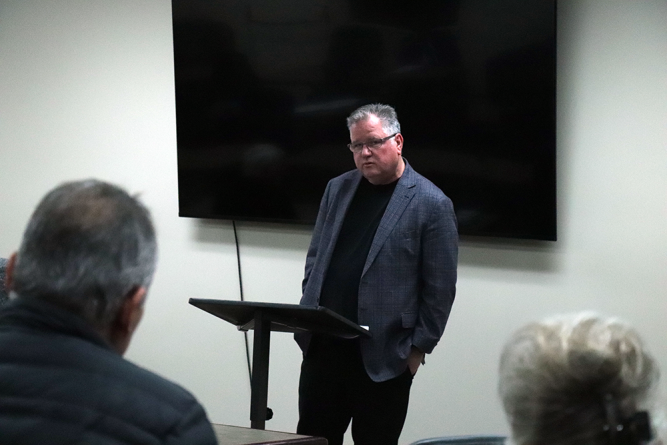
Yet on November 15, three Adventist scholars made the case not only that our theology still has something vital to say about religious liberty, but also that the current administration poses real dangers to the separation of church and state. The Religious Liberty Summit—hosted by the Church State Council—was less a political conference and more a return to basic Adventism, a reminder that our roots and prophetic identity were always meant to prepare us for precisely this moment.

Attendees fill the sanctuary for the Religious Liberty Summit on November 15 at the Paradise Adventist Church in Paradise, California. Image: Natalie Bruzon/Spectrum
Devon and Dawn Horning—local to Paradise since 2010—were the duo responsible for bringing the Religious Liberty Summit to the Paradise Church. Devon described his long-standing interest in religious liberty: “I have had this very big interest in separation of church and state and how that relates to current events,” he said, adding that studying “liberty of conscience and Roger Williams and the history of the Adventist Church” has shaped his convictions.
Devon and Dawn Horning—local to Paradise since 2010—were the duo responsible for bringing the Religious Liberty Summit to the Paradise Church. Devon described his long-standing interest in religious liberty: “I have had this very big interest in separation of church and state and how that relates to current events,” he said, adding that studying “liberty of conscience and Roger Williams and the history of the Adventist Church” has shaped his convictions.