Showing posts with label The Economist. Show all posts

Thursday, November 21, 2024

The Economist launches The World Ahead 2025–forecasting a year of uncertainty and instability with Trump upending global trade, economics and geopolitics

The Economist launches The World Ahead 2025–forecasting a year of uncertainty and instability with Trump upending global trade, economics and geopolitics

London, United Kingdom
November 19, 2024
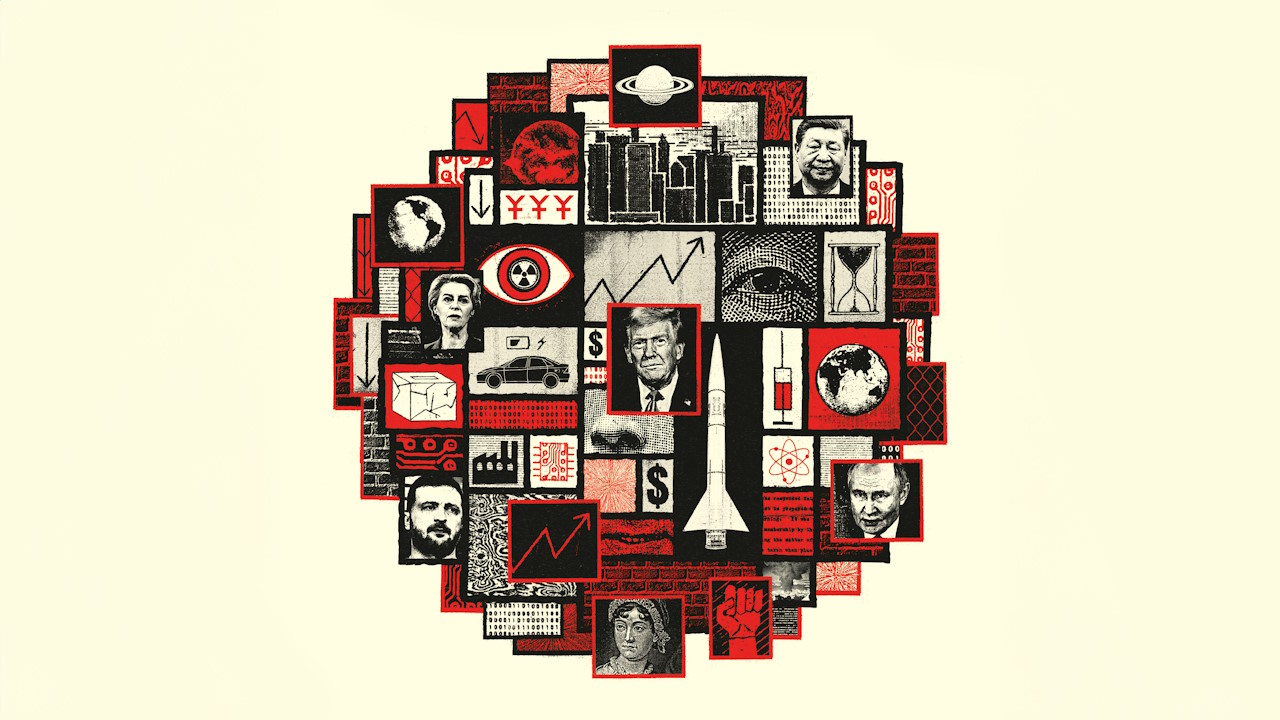


The Economist has launched The World Ahead, an annual special year-end issue from The Economist that examines important themes, trends and events that will shape the coming year. The editor’s top ten themes for 2025 and the accompanying articles are online today on http://economist.com/worldahead2025. The full edition will be available digitally from November 21st, and included in The Economist’s weekly print edition dated November 23rd. The standalone print issue will be available on global newsstands from November 29th in the UK and Asia, from December 2nd in Europe and from December 11th in the United States.

Commenting on this year’s edition of The World Ahead, its editor Tom Standage said, “Donald Trump’s decisive victory and imminent return to the White House will, more than anything else, shape the coming year, with implications in many areas of policy, not just for America, but for the world. What will this mean for global security, the clean-energy transition, international trade and governments’ efforts to cut deficits? In a year that promises an unusual degree of change and uncertainty, The World Ahead helps you see around the corner and work out what might be coming next.”

In its 39th year, The World Ahead edition discusses a broad range of topics, but its top ten themes for 2025, distilled from its pages, are as follows:

1. America’s choice. The repercussions of Mr Trump’s sweeping victory will affect everything from immigration and defence to economics and trade. His “America First” policy will have friends and foes alike questioning the solidity of America’s alliances. This could lead to geopolitical realignments, heightened tensions and even nuclear proliferation.

Friday, September 11, 2020

America’s ugly election


What could go wrong?

America’s ugly election


A disputed result in November could be dangerous
Sep 3rd 2020 edition

Sep 3rd 2020


Labor day marks the beginning of the home straight in a presidential election. This one threatens to be ugly. The president’s supporters are clashing with Black Lives Matter protesters in Portland, Oregon. Donald Trump flew to Kenosha, Wisconsin, for a photo-op in front of burned-out buildings, a week after police shot and paralysed an unarmed African-American man and one of the president’s supporters shot and killed two demonstrators, possibly in self-defence. Having adopted a strategy built around profiting from fears about unrest, the president has an interest in stoking it. Many Americans worry that November could herald not a smooth exercise of democracy but violent discord and a constitutional crisis.

Is this all hyperbole? America has had violent, contested elections in the past. In 1968 one of the candidates, Bobby Kennedy, was assassinated. In 1912 Teddy Roosevelt was shot in the chest while making a speech in Wisconsin. (He finished the speech before heading to hospital, and survived.) Historians are still arguing about who really won the election of 1876. Yet the country has always managed to gain the consent of the losers in its presidential elections—even in the midst of the civil war. That long unbroken streak suggests that doomsayers need to keep things in proportion. However, there is a real risk that things could go wrong in November.

To ensure the peaceful handover of power, democracies need the losing candidates and most of their followers to admit defeat. A clear result on polling day helps a lot: the losers may hate it, but they accept it and start preparing for the next election. When the result is unclear, a backup system is needed. Contested election results are rare in mature Western democracies, but they happen. In 2006 Silvio Berlusconi narrowly lost an election in Italy and claimed, without evidence, that there had been widespread fraud. The country’s Supreme Court ruled in favour of his opponent, and Mr Berlusconi grudgingly surrendered. In 2000 America’s presidential election was settled in the Supreme Court after contested recounts in Florida. In both cases, decrees from judges were just about enough to end the squabbling and let the country move on.

In the case of a landslide win for Mr Trump or Joe Biden, about half of America will be miserable. Many Democrats view Mr Trump as a threat to democracy itself. If he wins again millions of them will be distraught. Among Republicans, by contrast, Mr Trump still enjoys an 87% approval rating. If he loses, many will grouse that the other side cheated. But that need not stop a smooth transfer of power if the margin of victory is big enough. If Mr Trump were to lose by eight points, as polls currently suggest he will, there will be no way to challenge the result plausibly—though he may try anyway, possibly fomenting further unrest.

If the election is much closer, things could get even uglier. America is unusual in the degree of power it gives to Republican and Democratic partisans to administer elections. Decisions over who is removed from lists of eligible voters when they are updated, the design of ballot papers, where polling stations are situated, whether early voting is allowed and how many people have to witness a postal vote—things which in other mature democracies are in the hands of non-partisan commissions—are all taken by people with a d or an r by their name. If the election is close then all this will be litigated over, and ultimately end up in courts presided over by judges who have also been appointed by Republican or Democratic governors and presidents.

As if that were not worrying enough, covid-19 could add to the legal slugfest. Already more than 200 covid-related lawsuits have been filed by the campaigns (see Briefing). The evidence from party primaries suggests that though some states, such as Wisconsin, conducted a relatively orderly election despite the virus, others did not. Postal ballots were still being counted weeks after election day in New York’s primary. In November some swing states, including Michigan, will experiment with widespread voting by mail for the first time.