Showing posts with label Revolution. Show all posts

Friday, May 15, 2026

CIA Chief Spotted In Cuba As Specter Of Regime Change Looms Large


(Screenshot/CIA/X)

John Loftus Editor at Large
May 15, 20269:23 AM ET


As the specter of the U.S.-led regime change grows, the Central Intelligence Agency (CIA) released photos of agency chief John Ratcliffe meeting with Cuban officials in Havana on Thursday.

Ratcliffe and several U.S. officials—some of whose faces were blurred by the CIA in images posted to X—held talks Thursday with Cuba’s Interior Minister, the head of Cuban intelligence and Raúl Castro’s grandson, Raulito Rodríguez Castro. A CIA official told The Associated Press that the director was there “to personally deliver President Donald Trump’s message that the United States is prepared to seriously engage on economic and security issues, but only if Cuba makes fundamental changes.” 

The threat of regime change in Cuba has grown in recent weeks. President Donald Trump has repeatedly mused about taking over Cuba and suggested May 8 that a U.S. aircraft might leave the Iran War theater and position itself off the country’s coast. The administration has also intensified its economic war, blocking oil shipments since January. Amid energy blackouts, a collapsing economy and protests in the capital, Cuba’s oil and gas supplies have now run dry, according to Cuban Energy Minister Vicente de la O Levy.

Friday, February 06, 2026

The left’s path to permanent power


Minnesota shows the progressive formula in action and what happens when it is challenged

Politics
by Joe Rigney
Post Date:
February 3, 2026


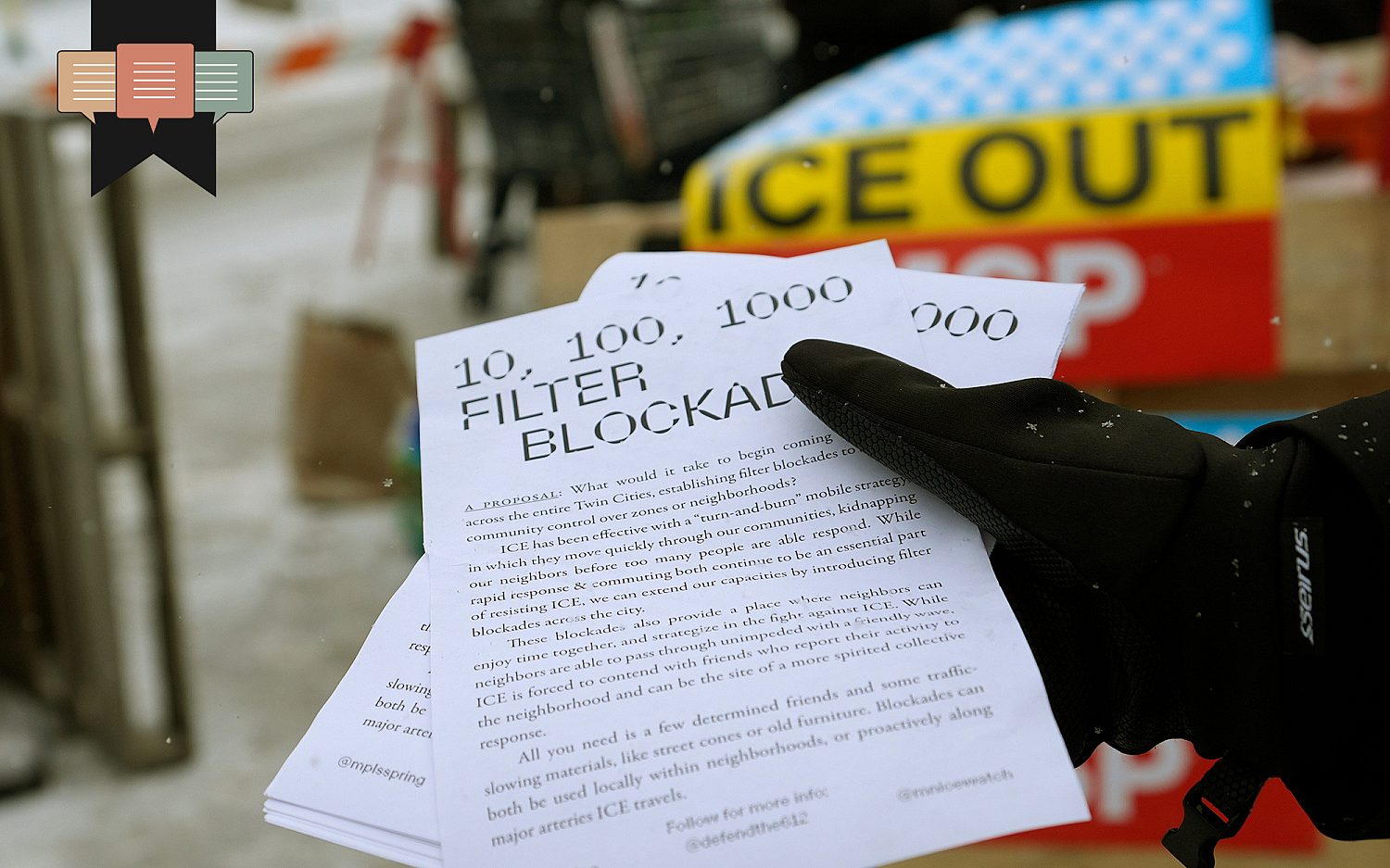
Activists hand out flyers to motorists at a blockade set up to deter ICE vehicles in Minneapolis on Sunday.Associated Press / Photo by Alex Brandon


What is going on in Minnesota? Why has the state whose unofficial slogan is “Minnesota Nice” erupted (again) into a frenzy of protests, demonstrations, and violent clashes with law enforcement? In the midst of the chaos, it’s important for Christians to keep their eye on the ball.

Begin with the left’s unconstrained vision of society. As Thomas Sowell famously argued, the left is utopian; they believe that human beings are perfectible through the idealized use of power by anointed elites, whose good intentions more than compensate for any destruction that their policies actually cause. From progressivism to socialism to communism, the left is united by this “vision of the anointed,” and they are willing to unleash revolutionary zeal in order to accomplish it. The chaos of 2020—from COVID tyranny to the George Floyd riots—was rooted in this revolutionary vision of utopian justice.

This vision is fundamentally godless and inhuman (even when baptized by the platitudes of progressive Christians). From abortion-on-demand to the celebration of sexual deviancy, from soft-on-crime policies to wealth redistribution, the left is at war with Nature and Nature’s God, treating His moral boundaries as shackles to their unbridled passions. And thankfully, most Americans recoil from it when they actually encounter it, as evidenced by the mass exodus from blue states in recent years.

In the face of resistance to progressive governance, the left has settled on a three-pronged path to permanent political power.

Sunday, November 30, 2025

Why Gen Z protesters worldwide are flying an anime pirate flag


Updated October 5, 20256:00 AM ET
Heard on Weekend Edition Sunday

By


Kate Bartlett

2-Minute Listen
Transcript


A number of human rights activists carry posters and wave the Straw Hat Pirates' Jolly Roger flag from the anime One Piece during the 873rd Kamisan Action in Jakarta, Indonesia, on August 14, 2025.Claudio Pramana/NurPhoto via Getty Images


JOHANNESBURG, South Africa — Gen Z-led protests are making waves from Africa to Asia, and while the issues spurring them are different, the symbol they're using is the same: a grinning skull and crossbones wearing a straw hat.

It was there when young people angry with the lavish lifestyles of the elite brought down Nepal's government last month. It was visible in the Indonesian and Philippine protests this year, and again when Madagascan youth marched against chronic water and electricity shortages over the past 10 days. Right now, it's being waved at protests raging over poor healthcare in Morocco.

Why are frustrated youth taking to the streets worldwide raising this particular Jolly Roger?

The flag comes from a long-running Japanese anime and manga series called One Piece, about a rag-tag band of pirates dubbed "the straw hats," who are led by a cheerful character named Monkey D. Luffy and are fighting an oppressive world government.

It's become a global pop culture phenomenon, translated into multiple languages, and is now also a live-action Netflix series.

Thursday, October 30, 2025

From "No King, No Pope" to a King and Pope united in prayer.

------------------------------------------------------------------King George III---------------------------------          -------        Pope Pius VI

 "No King, No Pope"

"No king, no pope" is a political slogan from the American Revolution, used by crowds chanting against British monarchy and the Catholic Church, specifically referencing the colonists' aversion to both a monarch and a foreign, papal authority. It became a rallying cry for American independence, symbolizing the rejection of both the British crown and Catholic influence in favor of a new, independent, and largely Protestant nation. 

Meaning and context

"No King!": Refers to the American Revolution's rejection of British rule. The phrase directly opposes the power of the monarchy, which was seen as oppressive by the colonists.

"No Popery!": Represents the anti-Catholic sentiment prevalent at the time, particularly in Protestant New England. The Catholic Church was viewed as a foreign and authoritarian power that threatened to undermine their Protestant liberties.

Combined message: The slogan, famously chanted as "No King, No Popery!", powerfully links the rejection of British monarchy with the rejection of what was perceived as the Pope's influence. This combined message served as a potent, unified call to arms for the revolutionary cause. 

Historical significance

Historical precedent: The slogan's roots can be traced back to earlier anti-authoritarian sentiments, such as the public commemoration of "Pope's Day" in colonial America, where effigies of the Pope were burned to protest both religious and political authority.

Evolution of the slogan: Over time, the anti-Catholic sentiment evolved from a protest against English nationalism to a powerful force for American identity and revolutionary action, directing its energy against the British policies and ultimately the monarchy itself.

Modern relevance: While not as frequently used today, the phrase remains a significant part of American revolutionary history, representing the foundational principles of self-governance and religious freedom that defined the new nation. 

AI Overview.

Thursday, September 08, 2016

The Honduras Tim Kaine knew


Tim Kaine at the Jesuit Technical School Loyala in El Progreso, Honduras. Credit: Diario La Prensa www.laprensa.hn.


San Pedro Sula, Honduras, Sep 6, 2016 / 01:09 pm (CNA/EWTN News).
He was only 22 years-old, and he was only there for nine months. But U.S. Senator and Democratic vice-presidential hopeful Tim Kaine credits the time he spent with a Jesuit community in Honduras as so formative and influential that it would spark the beginning of his thirty-plus-year political career.

Yet far from an idyllic situtation of youthful self-searching, Kaine encountered a deeply complex and violent political scenario - one that he would later describe as "the turning point" in his life.

Kaine, the former Governor of Virginia and first term Senator, was chosen by Hillary Clinton in July as her running mate for the Democratic Presidential ticket. In Kaine’s acceptance speech at the Democratic National Convention, he addressed the convention saying, “I taught kids how to be welders and carpenters.”


Monday, May 23, 2016

Primed to fight the government


Play Video1:45


Primed to fight the government
A fast-growing U.S. movement armed with guns and the Constitution sees a dire threat to liberty


Story by Kevin Sullivan
Photos and Video by Matt McClain
Published on May 21, 2016


REDMOND, Ore. — B.J. Soper took aim with his AR-15 semiautomatic rifle and fired a dozen shots at a human silhouette target. Soper’s wife and their 16-year-old daughter practiced drawing pistols. Then Soper helped his 4-year-old daughter, in pink sneakers and a ponytail, work on her marksmanship with a .22-caliber rifle.

Deep in the heart of a vast U.S. military training ground, surrounded by spent shotgun shells and juniper trees blasted to shreds, the Central Oregon Constitutional Guard was conducting its weekly firearms training.

“The intent is to be able to work together and defend ourselves if we need to,” said Soper, 40, a building contractor who is an emerging leader in a growing national movement rooted in distrust of the federal government, one that increasingly finds itself in armed conflicts with authorities.

Saturday, January 30, 2016

"Get Ready for a Revolution" - Leslie Pollard at Oakwood University (Update 6/21/2016)


At 86:00 Min. (or 1 hr. 26 Min.) listen to the sermon by Leslie Pollard, Ph. D. , D. Min. , M. B. A., President, CEO, of Oakwood (SdA) University:


OUC Worship Experience 1/16/2016


Oakwood University Church

Streamed live on Jan 16, 2016

OUC Worship Experience


--------
 
 
6/21/2016

Freddy Silva has shared this link of the deleted video above:


Dr Leslie Pollard--"Get Ready for a Revolution"


7nthseal

Published on Jan 25, 2016

When the foundations are being destroyed, what can the righteous do?--Psalm 11:3


Sunday, January 03, 2016

Is America on the Cusp Of Revolution? Bob Trefz


MrPioneerlight2011

Published on May 26, 2013


Sermon Titled "Cusp of Revolution" by Bob Trefz...AMERICA AND THE WORLD STAND ON THE CUSP OF A REVOLUTION THE LIKES OF WHICH HAVE NEVER BEEN SEEN BEFORE AND THE RISE OF ISLAM AND JESUITICAL COMMUNISM DURING THE SIXTH TRUMPET!

America and the world stand on the cusp of a revolution the likes of which have never been seen before...The storm is coming, relentless in its fury. (8T 315). The rise of Islam, the king over Islam is the angel of the bottomless pit. Islamic armies sent to warn the people to repent. (Rev.9:20, 21). The rise of the Three Angels Messages and Jesuitical Communism during the Sixth Trumpet. Jesuitical communism arises out of the bottomless pit(Rev. 11:7), the very domain of the angel of the bottomless pit who rules over Islam(Rev. 9:11). A global Reign of Terror is coming due to the world-wide dissemination of the teachings of the French Revolution.(Ed 228). Jesuit plans to make North America into a Jesuitical communist reduction. Teachings of French Revolution all across America. A man now aspiring to the presidency of the US who grew up soaked in the teachings of the French Revolution. Why Marxists love "change" based on the Hegelian Dialectic.
Whiteness Studies are sweeping American education, studying how to destroy everyhting about White, Anglo-Saxon, Protestant Culture, from which we recieved the Protestant Reformation and Biblical Seventh-day Adventism, and replace it with Afro-centrism, and Black Power, Black Liberation Theology-with its deadly Marxist teaching with an unknown god, a god who hates everything white. This candidate sat under this, the most radical form of Jesuit Liberation Theology from his pastor, his mentor, for 20 years. The application of Gramsci-style communism to America. The Long March. World's greatest banks warn of global financial crash. The gathering storm is on the horizon, as the distant lightning flashes and thunder mutters. In this storm, God's people are called upon to be a peculiar people utterly seperate from all demonic power around them, prepared for the Second Coming of Jesus Christ. GOd calls for a peculiar people-- The seperation is between the godly and the ungodly (Ps. 1), between worldly influences in the church and the true disciple (Jn. 15,16), between those who surrrender completely and those who would like it to enter in but never make surrender (Lk. 13), between those who say and those who do (Mt. 7:21), between those who rely on thier doing and know not the Lord and those who are known by the Lord (Mt. 7:22).

For More Information Please See our Website:
www.exposingdeceptions.org

....

Wednesday, May 20, 2015

Run from Cuba, Americans cling to claims for seized property


Michigan


US families who fled Cuba generations ago wonder if new diplomacy will pay for what they lost


In this undated photo provided by Carolyn Chester, her parents, Edmund and Enna Chester and their daughter, Patricia, arrive in Cuba on a flight from Florida. When Fidel Castro's government began confiscating the property of thousands of U.S. citizens and companies in 1959, the Chesters lost an 80-acre farm and hundreds of thousands of dollars worth of stock. (AP Photo)(AP)


By ADAM GELLER AP National Writer

Posted on March 30, 2015 at 1:22 a.m.

OMAHA, Neb. (AP) — The smell of Cuban coffee drifts from the kitchen as Carolyn Chester digs through faded photos that fill boxes spread across the dining table.

Friends linked arm-in-arm on a Cuban beach.

Men in suits and women in evening gowns at a Havana nightclub.

And in almost every frame, an American man with a salt-and-pepper mustache and a raven-haired woman — Chester’s parents — smiling at good fortune that, they could not know, would soon be snatched away.

“I always heard about Cuba ... and all this money that we lost and ‘Maybe one day,‘ but I didn’t understand it,” Chester says.

Six decades later, that day may finally be nearing for Chester and others like her. To reach it, though, diplomacy will have to settle very old scores.

After Fidel Castro seized power in 1959, Cuba confiscated property belonging to thousands of American citizens and companies. Edmund and Enna Chester lost an 80-acre farm, thousands of dollars’ worth of stock, and a Buick that, who knows, may still be plying Havana’s streets.

In 1996, Congress passed a law insisting Cuba pay for confiscated property, valued today at $7 billion, before lifting the U.S. embargo.

That went unmentioned in President Barack Obama’s December announcement that the countries would resume diplomatic ties. Given Cuba’s frail economy, experts say companies whose property was taken might settle for rights to do business there and move on.

But corporations don’t cling to memories like families can. That’s clear inside Chester’s 832-square-foot bungalow, where her mother’s gold-framed portrait watches over the yellowing property deed and worthless stock certificates — reminders that Cuba before Castro is history.

But bitterness over what came after lingers on.

Inside a little-known federal agency, 5,900 claims files tally property that once belonged to Americans in Cuba.

But really, the claims are stories of lives left behind.

Edmund Chester’s story began when he returned to Louisville, Kentucky, from the Army and found work as a newspaper reporter. He taught himself Spanish and in 1929 was hired by The Associated Press, which dispatched him to Havana.

Chester spent a decade reporting from the Caribbean and Latin America, time that seeded two crucial relationships.

The first came after covering a 1933 revolt that put a former sergeant, Fulgencio Batista, in charge of Cuba’s military. In the 1950s, when Batista was Cuba’s dictator, he trusted Chester — by then a confidante and no longer a journalist — to write his biography.

The second began when Chester covered a 1939 earthquake in Chile and spotted Enna at a hotel swimming pool.

In 1940, CBS hired Chester as chief of radio broadcasting for Latin America. Eventually, he became the network’s director of news in New York.

Chester returned to Cuba in 1952, buying a chain of radio stations on an island that was a U.S. economic outpost and a hedonistic getaway for Americans, including celebrities like Frank Sinatra.

Chester eventually sold the stations, but the family continued splitting time between Havana and Florida. He opened a public relations agency in Cuba and bought an 80-acre farm there. In 1957, the Chesters acquired $250,000 worth of Cuban Telephone Co shares.

But Edmund Chester, then Batista’s speechwriter, grew uneasy as Castro gained ground.

“I agree that we ought to make (a) complete break with Cuba at the earliest possible moment,” he wrote Enna in 1958.

He rejoined the family in Florida before Christmas. Batista fled days later, and Castro seized control.

When the Soviet Union began shipping oil to Cuba, the U.S. ordered island refineries, most American-owned, not to process its archrival’s crude.

Cuba seized the refineries. The U.S. eliminated price protection for Cuban sugar, which earned 90 percent of the island’s hard currency. By the time President John F. Kennedy imposed the embargo in 1962, Cuba had confiscated scores of properties.

Marooned, Edmund Chester wrote that his nest egg had been “whipped into a batch of Cuban scrambled eggs by the tyranny of Fidel Castro.”
__

The federal Foreign Claims Settlement Commission fielded thousands of claims for confiscated Cuban property. The largest came from corporations, led by U.S.-owned Cuban Electric Company, for power plants valued at $268 million. But most came from individuals and families.

Experts differ on what to make of the American claims, protected by international law.

“You’re now dealing in the realm of memory more than anything else,” says Robert Muse, an attorney representing companies with claims.

But Mauricio Tamargo, commission chairman until 2010 and now a Washington attorney representing claimants, said confiscations inflicted lasting damage on families.

“Many of them never recovered financially,” Tamargo says.

__


Edmund Chester, in his early 60s with three young children, put his remaining savings into chicken farms that were “a financial disaster,” son Edmund Jr. says.

Stress weighed on the elder Chester, whose mental faculties were fading. He feared Castro’s men were coming to kill him. At night, he awoke screaming.

Before dying in 1975, he invested hopes in winning compensation for property seizures that were “so sudden, so violent, and so complete.”

Enna Chester’s death in 2001 left her daughter with old home movies, dense paperwork and debts.

After moving to Omaha in 2006, Carolyn Chester got a job at Creighton University and showed co-workers her Cuba photos.

One day, a colleague mentioned that law school professors were researching claims for confiscated Cuban property. Hadn’t Castro taken the Chesters’ property, too?

In 2005 U.S. officials commissioned a study of the claims and strategies for settling them. A group at Creighton won the job.

Professors pored over old claims. Two flew to Cuba, searching for the properties. Some were moldering, others gone.

“These are people’s lives, the things that they lost,” political science professor Rick Witmer says.

But Cuba doesn’t have the money to pay claims in full, law professor Michael Kelly says.

In 2007, Creighton professors cautioned claims might net just 3 or 4 cents on the dollar.

Claimants had long been told losses would be adjusted for inflation. When an investor offered to buy Chester’s claim for a fraction of its original $489,000 value, she grew angry and began devoting hours to studying records.

In December, Chester listened as Obama spoke of rewriting policy “rooted in events that took place before most of us were born.”

To Chester, the speech signaled the desire of politicians and corporations to look beyond the claims.

But Castro didn’t merely take property, she says. He stole her parents’ financial security, her father’s health — and her inheritance.

Fifty-six years later, she says, “I’m not going to let him take from me again.”

Adam Geller can be reached at features@ap.org. Follow him on Twitter at https://twitter.com/AdGeller


.

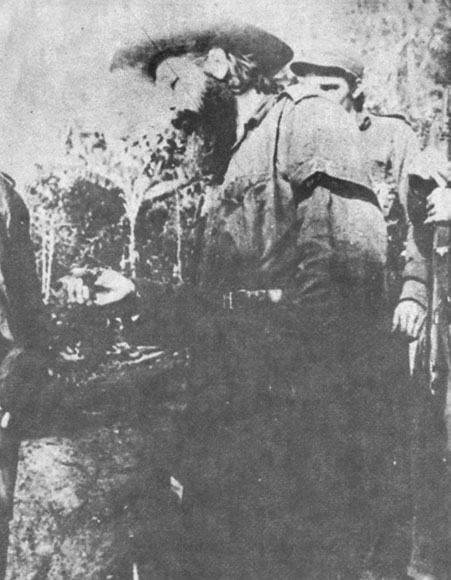
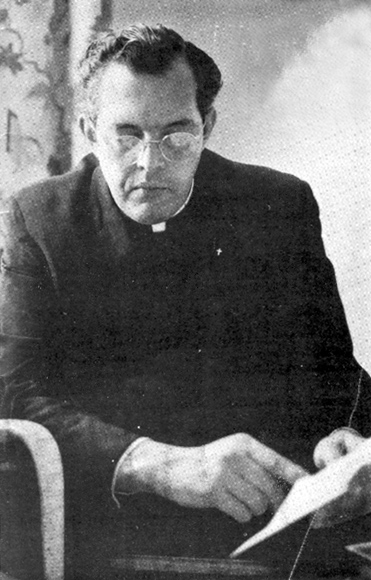
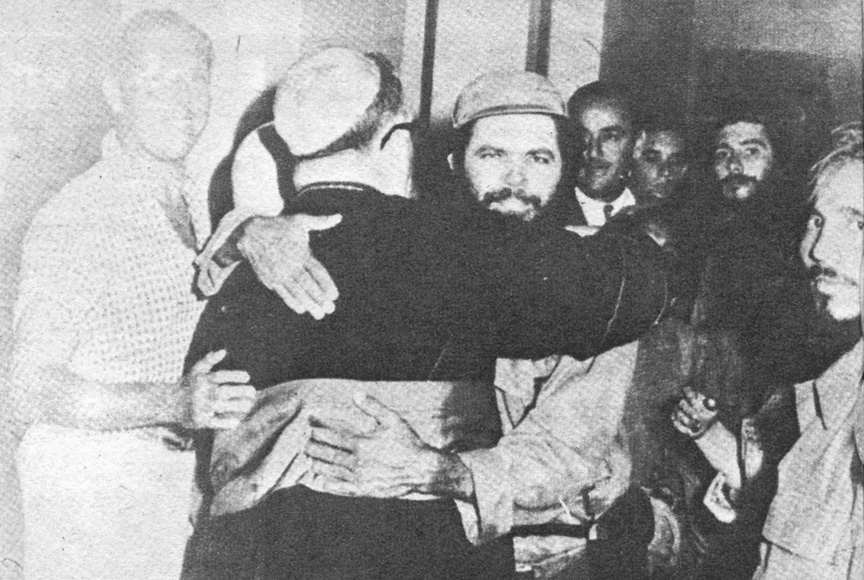
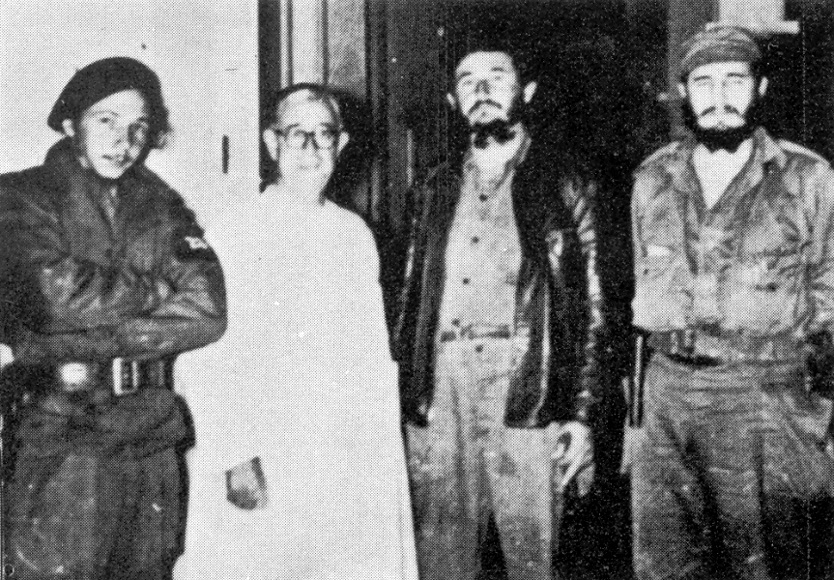
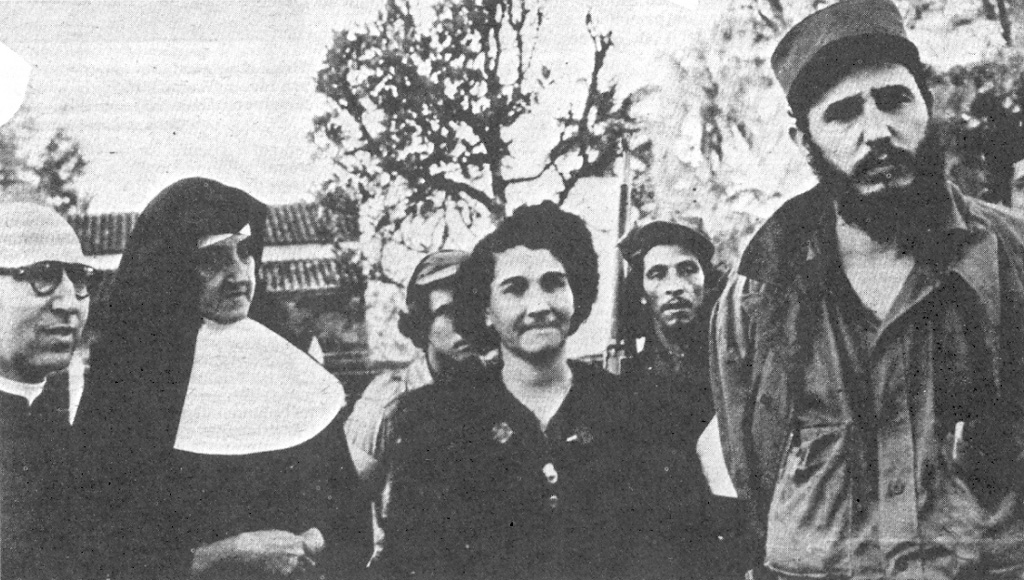
Cuban Revolution Rebel Priests in the Sierra Maestra


Father Guillermo Sardiñas in the summer of 1957 became chaplain to the rebel army with
permission of the coadjutor bishop of Havana.


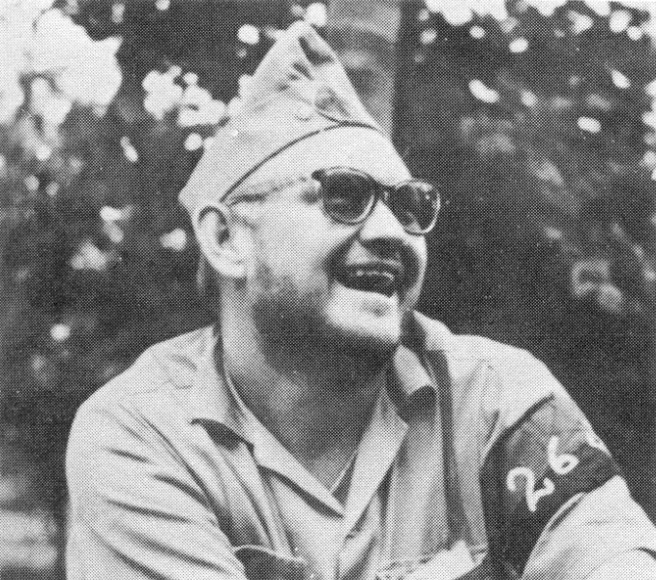
Father Angel Rivas, guerrilla chaplain, wearing 26 of July Movement armband and uniform. 


Father Rivas attends the revolutionary trials.


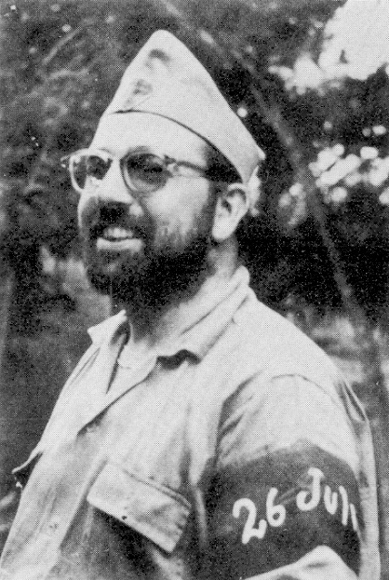
Lucas Iruretagoyena, Franciscan priest
and guerrilla chaplain. 


Father Francisco Guzmán, helped draft the unconditional surrender proclamation of January 1, 1959.


Santiago de Cuba Archbishop Enrique Pérez Serantes embraces Commandant Huber Matos.


Raul, Ramon and Fidel Castro with Father Garcia, their former Dolores School teacher, Dec. 29, 1958. 

A priest and a Sister of Charity were among the welcoming committee that received Fidel Castro in
Camaguey during his advance on Havana.


Other Roman Catholic priests who aided the rebels were:
Cipriano Cabero, chaplain of Commandant Juan Almeida's forces, Juan Ramón O'Farrill and Jorge Bez Chabebe.


U.S. Senate Hearings: Communist Threat to the United States Through the Caribbean
Testimony of Rev. Father Eduardo Aguirre (May 3, 1960)
Testimony of Rev. Father Rosario Maxilliano Pérez (May 3, 1960)
Testimony of Rev. Father Juan Ramón O'Farril (May 4, 1960)


Source
.
.

Tuesday, April 14, 2015

How Roman Catholics Conquered Massachusetts: The Inside Story


By EDGAR B. HERWICK III


Jean-Louis Lefebvre de Cheverus, first Roman Catholic Bishop of Boston.


6:11

According to the 2010 Religion Census, a study conducted every 10 years, 45 percent of Massachusetts residents consider themselves Catholic, making the Bay State one of the most heavily Catholic states in the US. This fact would surely surprise William Bradford, and the rest of the Mayflower pilgrims who first established the Commonwealth.

From parades to politics, Catholicism is such an integral part of the cultural fabric here in Massachusetts that it’s hard to believe that it hasn’t always been that way. And yet, as Boston College history professor James O’Toole explains: “In the very early years of Massachusetts, Catholics were few in number and not particularly welcome.”

Not welcomed is one way to put it. Illegal would be another. Consider Massachusetts’ so-called anti-priest laws, established in the 1640s. O’Toole explains: “If a priest came in he’d be ordered out of the colony. If he came back, he’d be put in jail for a while and thrown out of the colony again and if he came back a third time he’d be hanged.”

Still, small pockets of Catholics - from French Canada, Ireland and the Caribbean – would settle throughout Massachusetts and New England.

By the 1770s, while not exactly embraced, they weren’t completely shunned either. “The revolution,” according to O’Toole, “itself has a lot to do with this. Catholics in America generally support the revolution. The revolution is conducted with the help of an alliance with France, a Catholic country. And there’s a general move in the direction of religious toleration in that period as well.”

That tolerance would be codified as law in both the US and Massachusetts Constitutions, finally making Catholicism fully legal in the Bay State.

“The first Catholic parish forms in 1789, the same year that the Constitution is adopted, there’s enough Catholics, maybe a few hundred in the city to actually have a parish church for the first time,” says O’Toole.

For well over a century, church leaders in Rome had seen America as a great unknown - missionary territory like and India and China. But with the establishment of the new nation, the Vatican, began to take more interest.

“Probably most officials in Rome have only the vaguest idea of where this America place is but they know there’s got to be some church organization that goes into this new nation.”

Rome first created a single Diocese for the whole of America, centered in Catholic Maryland. But America was big – and on the rise. On April 8, 1808, Pope Pius VIII created four new dioceses in the new world.

“One in Boston, one in New York, one in Philadelphia and the fourth one, in what I have always though of as a wrong guess about where the population would be, Bardstown, Kentucky.”

Chosen as Boston’s first bishop was a French-born missionary priest who’d been working in the area for years named Father Jean Chevrus. His territory was the whole of New England, and Chevrus spent much of his time traveling, celebrating Mass, performing sacraments, and establishing parishes. It was on the road one night that Chevrus had a chance – and momentous encounter.

“I think he’s on foot most of the way and its snowing and a sleigh stops and picks him up and carries him into Boston and the person in the sleigh is John Adams.”

Adams, like many influential Bostonians, had his suspicions about Catholics, and had not met many priests before. “But he found Chevrus to be such a cultured gentleman that it began to change Adams’ view of Catholics among other things.”

And when Chevrus built Boston’s first cathedral as the centerpiece of the new diocese. “John Adams heads the list of contributors to it and in fact gave the largest single amount – a hundred dollars.”

In his 15 years as Boston’s first bishop, Chevrus created a community and infrastructure that prepared the region for the waves of Catholic immigrants from places like Ireland, Germany, and Italy that would transform it in the coming decades. “The Catholic population really shoots up starting in the 1840s, leading to the establishment of more parishes in Boston and the rest of New England.”

Today, Boston remains an influential center for American Catholicism - for good and for bad. America’s first and only Catholic president, JFK, is from here. But the archdiocese was also the center of clergy sex abuse scandal that the church continues to grapple with. O’Toole says that two centuries on, for Chevrus’ successor, Cardinal Sean O’Malley, the job may be very different, but that doesn’t mean it’s any easier.

“Cardinal O’Malley’s challenge is now that the church has grown into this big institution. How to maintain an institution of that size, so that it actually connect to people.”

The Catholic Archdiocese of Boston, first established as the diocese of Boston by Pope Pius VII, 207 years ago this week.


.

Tuesday, March 18, 2014

Back to Scene of The Crimea (Again)

  • 1945
The Yalta Conference, sometimes called the Crimea Conference and codenamed the Argonaut Conference, held February 4–11, 1945, was the World War II meeting of the heads of government of the United States, the United Kingdom and the Soviet Union, represented by President Franklin D. Roosevelt, Prime Minister Winston Churchill and Premier Joseph Stalin, respectively, for the purpose of discussing Europe's post-war reorganization. The conference convened in the Livadia Palace near Yalta in Crimea.

http://en.wikipedia.org/wiki/Yalta_Conference

  • 1991


  1. On 4 August, Gorbachev went on holiday to his dacha in Foros in the Crimea. He planned to return to Moscow in time for the New Union Treaty signing on 20 August.
  2. On 17 August the members of the GKChP met at a KGB guesthouse in Moscow and studied the treaty document. They believed the pact would pave the way to the Soviet Union's breakup, and decided that it was time to act. The next day, Baklanov, Boldin, Shenin, and USSR Deputy Defense Minister General Valentin Varennikov flew to the Crimea for a meeting with Gorbachev. They demanded that Gorbachev either declare a state of emergency or resign and name Yanayev as acting president to allow the members of the GKChP "to restore order" in the country.[10][14][15]

http://en.wikipedia.org/wiki/1991_Soviet_coup_d%27%C3%A9tat_attempt


  • 2014

(Photo: Alexander Zemlianichenko, AP)

Putin rebuffs West, signs treaty to annex Crimea

Doug Stanglin and Kim Hjelmgaard, USA TODAY 11:09 a.m. EDT March 18, 2014


To standing ovations and chants of "Russia, Russia," President Vladimir Putin told a joint session of parliament Tuesday that Crimea has "always been an integral part of Russia" then signed treaty paving the way for formal annexation of the Ukrainian Black Sea region.

http://www.usatoday.com/story/news/world/2014/03/18/russia-crimea-annexation/6554563/
.
.

Monday, June 03, 2013

Is Turkey experiencing its own Arab Spring?


Violent protests have raged in Istanbul for four days in a row

By Keith Wagstaff | 4:17pm EST


Demonstrators shout slogans against Prime Minister Recep Tayyip Erdogan in central Istanbul, June 2.
REUTERS/Murad Sezer


Turkey has been wracked by violent protests for four days, in what has quickly become the most significant public challenge to Prime Minister Recep Tayyip Erdogan's 10-year rule.

The scenes on the streets of Istanbul and elsewhere — featuring rock-throwing protesters pitted against riot police armed with tear gas — bear a striking resemblance to the Arab Spring riots that have toppled regimes across the Middle East.

Erdogan, for his part, has adamantly rejected comparisons between the Turkish protests and the Arab Spring movement. "We already have a spring in Turkey," said Erdogan, referring to the fact that Turkey boasts one of the most successful democracies in the Muslim world. "But there are those who want to turn this spring into winter."

Indeed, many commentators say it would be foolish to stick Turkey under the same umbrella as Egypt, Syria, Libya, and Yemen.

Sunday, January 22, 2012

Jan 21, 1793: King Louis XVI executed


One day after being convicted of conspiracy with foreign powers and sentenced to death by the French National Convention, King Louis XVI is executed by guillotine in the Place de la Revolution in Paris.

Louis ascended to the French throne in 1774 and from the start was unsuited to deal with the severe financial problems that he had inherited from his grandfather, King Louis XV. In 1789, in a last-ditch attempt to resolve his country's financial crisis, Louis assembled the States-General, a national assembly that represented the three "estates" of the French people--the nobles, the clergy, and the commons. The States-General had not been assembled since 1614, and the third estate--the commons--used the opportunity to declare itself the National Assembly, igniting the French Revolution. On July 14, 1789, violence erupted when Parisians stormed the Bastille--a state prison where they believed ammunition was stored.

Although outwardly accepting the revolution, Louis resisted the advice of constitutional monarchists who sought to reform the monarchy in order to save it; he also permitted the reactionary plotting of his unpopular queen, Marie Antoinette. In October 1789, a mob marched on Versailles and forced the royal couple to move to Tuileries; in June 1791, opposition to the royal pair had become so fierce that the two were forced to flee to Austria. During their trip, Marie and Louis were apprehended at Varennes, France, and carried back to Paris. There, Louis was forced to accept the constitution of 1791, which reduced him to a mere figurehead.

In August 1792, the royal couple was arrested by the sans-cullottes and imprisoned, and in September the monarchy was abolished by the National Convention (which had replaced the National Assembly). In November, evidence of Louis XVI's counterrevolutionary intrigues with Austria and other foreign nations was discovered, and he was put on trial for treason by the National Convention.

The next January, Louis was convicted and condemned to death by a narrow majority. On January 21, he walked steadfastly to the guillotine and was executed. Nine months later, Marie Antoinette was convicted of treason by a tribunal, and on October 16 she followed her husband to the guillotine.


.

Monday, August 22, 2011

Yemen group calls for Islamic state

Desmond Shephard | 21 August 2011


Yemeni group calls for one unified Islamic state.

CAIRO: A Yemeni Islamic group has called for the implementation of the Sharia, or Islamic law, across the Islamic world, at a recent conference.

Hizb-ut-Tahrir, an Islamist group in Yemen, called at their “One Nation, One State and One Flag” conference for the country to establish and Islamic state in order to unify all Muslims under the banner of Islam.

According to reports, a number of protesters in the country joined in the call to push for the new governance and end the government of Ali Abdallah Saleh, who has cracked down on pro-change protesters over the past 7 months.

The group announced that they hope to “uproot all current regimes separating the Muslim lands, and replace them with an Islamic government,” which they say will “put into operation the laws of Islam rather than that of man-made laws.”

The pronouncement is not likely to have much sticking ground, experts say, pointing to numerous calls over the years from similar groups calling for one unified Islamic government from Morocco to Iraq.

“What we are seeing is people simply trying to voice opinions and gain support among certain groups in these countries,” said one security expert.

BM


ShortURL: http://goo.gl/KvU1k

Source
.