Showing posts with label commom good. Show all posts

Tuesday, October 06, 2026

Age Of Delusion


OPINION

INGERSOLL: Age Of Delusion


(Photo by Mario Tama/Getty Images)


Geoffrey Ingersoll Editor at Large

October 05, 2026 11:36 AM ET


Below is State of the Day, a morning newsletter by Daily Caller Editor-at-Large Geoff Ingersoll. 

__________

Greetings, Dear Reader,

Welcome back to State of the Day, where I strip the euphemism and misdirection off that day’s news and give it to you straight, no ice, no mixer.

I should also welcome you to the …

AGE OF DELUSION

Richard Barrera entered a long recent history of left-wing politicians openly encouraging delusion when he sat for an Oct. 4 interview with Conan Nolan of NBCLA.

Recently, we’ve got Lindsay Clancy as innocent and Sydney Sweeney as guilty. We’ve got a girl who literally admitted to planning a fake rape accusation at the center of a new actual rape investigation in NY. We’ve got AI orgy polycules lobbying Dems to recognize their code has a soul and should be given special economic status.

And now we’ve got Barrera.

He’s the leading candidate for state superintendent in California, the chief executive of K-12 public education. In a clip posted by NBC, Nolan asks a simple question (emphasis mine):

Conan Nolan:

“Turning to higher education policy: there’s been an ongoing debate across California universities regarding admissions standards and standardized testing. Would you vote to bring back the SAT?”

Richard Barrera:

“Absolutely not. That, again, is an approach that’s about — if kids are struggling or not ready to do college-level work …

Friday, September 18, 2026

Vatican document affirms interreligious dialogue as 'journey of hope' for humanity


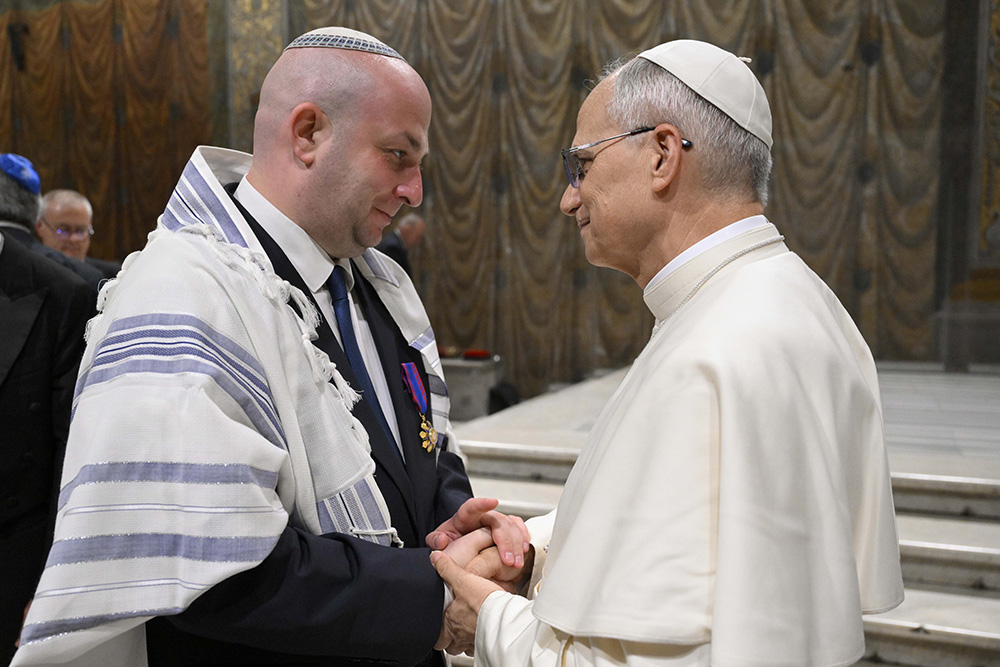
Pope Leo XIV greets Silviu Vexler, president of the Federation of Jewish Communities in Romania, during a ceremony honoring Blessed Iuliu Hossu in the Sistine Chapel at the Vatican June 2, 2025. (CNS/Vatican Media)

Gina Christian
View Author Profile


OSV News

September 17, 2026

A new Vatican document affirms the Second Vatican Council's landmark teaching on the church's relationship with the Jewish people and those of other faiths, while inviting humanity to enter upon a common "journey of hope."

That journey requires "courage" and "a genuine shift in mindset" to seek "peaceful coexistence" amid "unprecedented challenges," including conflicts, persecution, the weaponization of religion, secularization and polarization, said the document.

And rather than looking to found "one great world religion," authentic interreligious dialogue aims to build "a fraternal society capable of accepting differences," said the text.

On Sept. 16, the Vatican released "A Journey of Hope: Sixty Years of Interreligious Dialogue and Fraternity in the Light of the Conciliar Declaration Nostra Aetate."

The 8,600-word note was the result of a collaboration among the Vatican's Dicastery for the Doctrine of the Faith, the Dicastery for Promoting Christian Unity — which also oversees religious relations with Judaism — and the Dicastery for Interreligious Dialogue.

Pope Leo XIV had granted approval of the text on June 22, with official publication taking place Sept. 16.

The five-part "Journey of Hope" began by retracing the "essential stages" in the Church's interreligious dialogue since the 1965 promulgation of Nostra Aetate, including the contributions of Pope Leo XIV and his four predecessors.

The note then examined the "visible" and "silent" fruits of Nostra Aetate, as well as the "persistent resistance and misunderstandings" that surround the conciliar document.

In their note, the three dicasteries called for a renewed "pedagogy of dialogue," one that puts into practice an informed encounter between Catholic and those of other beliefs.

Thursday, September 17, 2026

Plans for the 2026 G20 Interfaith Forum Year


Click here to Learn About Who's Speaking


Plans for the 2026 G20 Interfaith Forum Year

2026 Theme:
Interfaith Engagement for Policy Impact

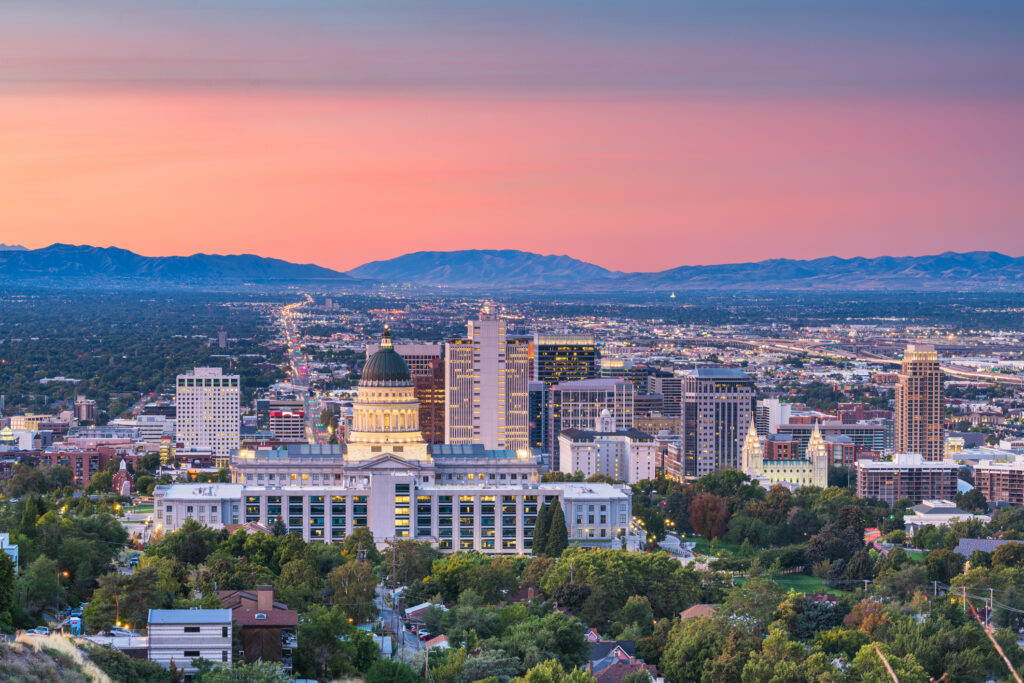
The United States hosts the 2026 G20 process, with its core feature, the Summit of leaders, scheduled at the Trump National Doral Miami resort in Miami, Florida on December 14-15, 2026. The G20 Interfaith Forum Association (“IF20”) plans two main meetings in conjunction with the G20 process this year: the first on May 26 at Georgetown University in Washington, D.C, and the annual Forum in Salt Lake City, Utah, October 15-17, 2026.

The May 26 Washington Policy Forum will focus on analytic work on priority policies addressed through the G20 process. Four review papers will highlight diverse religious contributions to G20 2026 topics and proposed action recommendations. These topics will provide the core structure for the October meeting in Utah. The topics focus on themes related to the three themes the US government has announced for the G20 2026 US presidency: (1) Economic Growth for the Common Good, (2) Energy Security for a Sustainable Future, and (3) AI and the Human Future. A fourth review (4) will focus on more general themes: Interfaith Engagement around the UN Sustainable Development Goals. The review papers and discussion at the Washington Conference will focus on ways that religious values and practices relate to and can add to the critical topic areas, aiming to highlight service of the common good. They will reflect and draw on the ongoing work of the wide range of faith and interreligious networks and alliances engaged in humanitarian, development, and peacebuilding work. Drafts of the four reports will be circulated for consultation and comment prior to the May 26 meeting, then revised as core documents for the October Forum.

The October 15-17 Annual Forum, in Salt Lake City, will focus on the themes identified during the policy review process, with some additional themes identified by Forum participants. Plenary sessions will address the policy themes developed in Washington plus other priority themes, such as the food crisis, health issues (including mental health), education, children’s issues, religion and economic progress, care for creation, etc. Concurrent sessions will facilitate in-depth discussion and analysis. The Salt Lake Forum will include invited speakers, with several sessions responding to topic proposals relevant to Forum priorities from individuals and organizations.

Engagement. The Forum will involve interactive sessions in addition to keynote presentations. The aim is to highlight pertinent experience and to identify emerging areas for constructive forward-looking action. Active civil discourse, with recognition of diverse perspectives and experience, are the driving principle. Active participation by those attending is expected. The closing plenary will highlight major themes and action recommendations, relating them to the continuing G20 agenda. Participants will bring relevant and diverse expertise, from different regions and religious communities. Expressions of interest through the IF20 Secretariat (contact above) are welcome.


Source  (@ Center of Page)

Thursday, July 30, 2026

Historic divinity school is offering the first doctoral degree in ‘AI and Moral Agency’


By YONAT SHIMRON
Updated 6:20 PM EDT, July 29, 2026


(RNS) — At the end of the Civil War, a Union soldier and Baptist minister founded a school in Raleigh, North Carolina, to provide formerly enslaved people with religious literacy.

Now that same school — Shaw University — wants to provide literacy of a new kind: AI literacy.

Starting next year, Shaw’s divinity school plans to offer a new degree track: a Doctor of Education (or Ed.D) in Artificial Intelligence and Moral Agency.

As the AI spreads and performs more and more tasks traditionally done by humans, the divinity school wants to get ahead of the curve and probe its moral implications.

“We say Shaw was created to provide leadership in building literacy,” said Mark Harden, dean of Shaw University Divinity School. “We (half)joke this is our second calling because we’re building AI literacy for vulnerable communities with an emphasis on social justice and ethics.”

In June, the divinity school secured the go-ahead from the regional accrediting body, the Southern Association of Colleges and Schools Commission on Colleges. It is now working on receiving a seal of approval with the Commission on Accrediting at the Association of Theological Schools, a network of 280 graduate schools of theology across the United States and Canada.

Shaw’s AI degree would be the first among the ATS network in either the master’s or doctoral level, said Chris Meinzer, ATS’s chief operating officer. Several divinity schools have begun offering solo classes in AI and ethics.

In December, Notre Dame’s Institute for Ethics and the Common Good received a $50 million gift from the Lilly Endowment to support the so-called DELTA network that will provide practical resources for pastors, churches and schools to navigate challenges posed by AI. DELTA stands for dignity, embodiment, love, transcendence and agency — which it believes are the core Christian values. (RNS also receives grant support from the Lilly Endowment.)

“Almost everybody we’re talking with and working with in higher education right now is just getting really serious about how issues involving artificial intelligence are really shaping a lot of the ethical questions that we want to study going forward, and a lot of the formation work that we need to do with our students,” said Meghan Sullivan, a philosopher and director of the Institute for Ethics and the Common Good at Notre Dame.

Thursday, November 21, 2019

The Immoral Attack on Capitalism (re: Marco Rubio)


By KEVIN D. WILLIAMSON

November 19, 2019 6:30 AM


Sen. Marco Rubio (Joshua Roberts/Reuters)


They want to take your property for the benefit of ‘the common good,’ which will happen to coincide with their political interests. Hard pass.

This is a time of great forgetting, and one of the things that has been forgotten is why we have a federal government and what it is there to do.

From Senator Marco Rubio and his “common-good capitalism” to Senator Elizabeth Warren and her “accountable capitalism,” politicians right and left who want politicians to have more power over private economic decisions assume a dilemma in which something called “capitalism” must be balanced against or made subordinate to something called the “common good.” This is the great forgetful stupidity of our time.

Capitalism is not a rival to the common good. Capitalism, meaning security in one’s own property and in the right to work and to trade, is the common good that governments exist to secure.

The U.S. government exists to see to the liberty of the American people. That is it. That is its only reason for being. It is an instrument and a convenience, the purpose of which is to ensure that Americans are able to enjoy their liberty and property — liberty and property being overlapping concepts.

What is contemplated by Senator Rubio and Senator Warren — along with a few batty adherents of the primitive nonidea known in Catholic circles as “integralism” and everywhere else more forthrightly as “totalitarianism” — is to invert the purpose of the U.S. government. Protecting Americans against those who would use force to curtail their liberty and take control of their property for their own ends is the duty of government; Rubio, Warren, et al. would have the government become the party that curtails Americans’ liberty and takes control of their property for its own ends. Which is to say, in the name of the “common good,” they would organize an assault on the actual common good the U.S. government was in fact constituted to protect. This account isn’t fringe libertarianism — it’s right there in the founding documents.

Being the nightwatchman is a difficult and generally thankless job, one that tends to receive attention only for its failures. But that is the job Senator Rubio and Senator Warren asked for and campaigned for. But there is a lot more political juice in being the bandit, taking control of other people’s property for your own purposes. And let’s have no more high-minded talk about the national interest from Senator Rubio, whose idea of the national interest is broad enough to encompass shilling for billionaire sugar barons, or from Senator Warren, who has never met a tax increase on rich people she didn’t like except for the one on medical-device manufacturers, who are (surprise!) clustered around Boston.

Saturday, February 10, 2018

Jesuits Embrace Moral Equivalency; Economic Inequality and Abortion Are ‘Equally Senseless’


AP/Eric Gay

by Thomas D. Williams, Ph.D.19 Jan 2018


In a new statement released to coincide with the March for Life against legalized abortion, the U.S. Jesuits have embraced the argument of moral equivalency between abortion and other social ills.

“As we Jesuits survey our culture, we cannot help but see abortion as part of the massive injustices in our society,” the text states. “A spirit of callous disregard for life shows itself in direct assaults on human life such as abortion and capital punishment. There are less direct but equally senseless ways we undermine life, through violence, racism, xenophobia, and the growing inequality of wealth and education.”


 James Martin, SJ

 @JamesMartinSJ


Being "pro life" means defending the lives of the unborn

and the sick

the poor

the homeless

the aged

the mentally challenged

the inmate

the refugee

and the person or people you hate.

Being pro life means reverencing all human life.

Because it's all from God.


The document allies the Jesuits with a movement among progressive Catholics in the U.S. to water down the singular evil of abortion by “contextualizing” it as just one injustice among many facing the nation. The former archbishop of Chicago, Cardinal Joseph Bernardin, is credited with creating the “seamless garment” moral theory, which approached all social evils as part of a unitary whole rather than addressing them individually.

A consistent ethic of life “joins the humanity of the unborn infant and the humanity of the hungry; it calls for positive legal action to prevent the killing of the unborn or the aged and positive societal action to provide shelter for the homeless and education for the illiterate,” Bernardin wrote in 1984.

Bernardin argued that his approach “will not erode our crucial public opposition to the direction of the arms race; neither will it smother our persistent and necessary public opposition to abortion,” but in point of fact, that is exactly what happened.

By introducing a series of elements that could not garner unanimous support, purveyors of this approach debilitated the Catholic pro-life effort in the United States by splintering the movement into factions. Those who had been united in their monolithic opposition to the evil of abortion found themselves divided on other issues such as capital punishment, healthcare, welfare, gun control, national defense and the minimum wage.

Moral theologians in the Catholic tradition understand that only negative moral precepts that forbid intrinsically evil acts (such as the prohibition against killing the innocent) can be formulated as “exceptionless moral norms” to which all must adhere. Whereas “help the poor” and “educate the ignorant” admit of limitless approaches and strategies (none of which is morally binding on all), “do not abort babies” is a simple injunction that demands universal acceptance.

Saturday, June 27, 2015

'Pope Francis' Teachings on Wealth' - Paul Flynn Interviews Former Roman Catholic Priest Richard Bennett


Worse than Marx - The Pope Francis’ Dogma on Economics


Adam 1984

Published on May 10, 2015

“Restore to the poor what belongs to them...It is not our own goods which we hold, but theirs.” Pope Francis's 'Joy of the Gospel.

Pope Francis published a document called, “Joy of the Gospel.” Among many other topics, he wrote about Economics. One of his statements concerning wealth declared that, “Not to share one’s wealth with the poor is to steal from them and to take away their livelihood. It is not our own goods which we hold, but theirs.” In fact, Pope Francis flagrantly refutes private property and western economic principles. Applied economic principles give stability and well-being to societies. And factually Francis’ economics is worse than Marx.


Video from ChristianVoice08
https://www.youtube.com/user/Christia...
.
.

Thursday, April 23, 2015

Why no Catholic is exempt from caring about the environment


April 22, 2015 5:25 AM


Washington D.C., Apr 22, 2015 / 04:25 am (CNA).- What does it mean to be truly pro-life? Amid debates over abortion and the death penalty, Catholic ecologists say that one issue is often overlooked in discussions involving human life and dignity – the environment.

“Environmental truths are very much linked to and related to human life issues. They’re really one in the same,” said Bill Patenaude, a special lecturer in theology at Providence College and founder of the website “Catholic Ecology.”

He explained that recent Popes have drawn a clear connection between the dignity of the human person and the surrounding environment.

“The Church has had a fundamental respect for nature since the very beginning and has brought it to the world,” Patenaude told CNA.

Discussions abound regarding environmental problems, their causes and a proper Catholic response. Pope Francis is expected to weigh in with an upcoming encyclical later this year.

In wading through the often contentious debate surrounding environmental issues, Catholic ecologists say that the Church – both as individuals and communities – must take the opportunity to steer decisions that both steward the environment and respect humanity.

The Poor Bear the Burden

Many people think of air, water and land as an infinite resource, said Jim Ennis, executive director of the National Catholic Rural Life Conference. But pollution, contamination and other environmental struggle challenge this assumption and often have the greatest adverse effect on the poor.

The subject is one that hits close to home for Ennis. In his childhood home of rural Northern California, high levels of nitrates from fertilizers contaminated the local community’s groundwater.

When such problems arise, poor communities and individuals inordinately bear the burden, he continued, noting that the most vulnerable in society often lack access to technological remedies or protective resources.

Pollutants, such as nitrates, can impede the development of young and unborn children, or cause other health problems for the elderly, infirm and those with weakened immune systems. With issues such as drought or severe pollution, which can depress crop growth and thus agriculture income, the lack of treatment and prevention options can further compound economic hardships facing a community.

Ennis believes that Catholics have a duty to help address these challenges facing the poor and the environment more generally.

“Especially as a Catholic, we have a great understanding of how God has created all things,” he said. “He has created human beings to be in relationship with Him, but he has also created the universe and the world as a gift as men and women, to be stewards of it, and we really can’t live without it as human beings.”


Credit: Alberto Restifo via Unsplash (CC0 1.0)

Human Ecology and the Holy Life

The environment can be a topic fraught with controversy. Government and non-profit groups point to record snowfalls and unprecedented high temperatures as reasons for worry. In the ocean, “dead zones” and patches of garbage grow, while reports of rising Arctic temperatures and melting sea ice continue.

Meanwhile, the World Health Organization says that changes in rain patterns contribute to the spread of mosquito-borne illnesses in some areas, while causing water scarcity that affects crops and vulnerable communities in other areas. In recent decades, questions about declining water and soil quality have become more prominent, while numerous organization say that global carbon dioxide levels are continuing to rise.

Debates on the science behind various claims is often heated. However, Patenaude explained, the key to a Catholic perspective on these issues is that environment must not be viewed in isolation, but rather as a matter of human dignity and living a holy life.

The three most recent Popes have focused heavily on the theme of “human ecology,” which finds its basis in both the physical laws of nature and the moral natural law. Both the natural and moral law are “laws that God has hardwired into human nature” that humans violate at their own peril, he explained.

The challenge of Catholic teaching is to work for the human good while caring for the creation God has made, he continued.

Pope Benedict in particular expanded on the theological roots of the connection between humanity and the environment, Patenaude noted. The pontiff emphasized the Church’s role in bringing constant truths to an often-changing world and taught that the Church is “is obliged to love in the present,” a demand that requires sacrifice.

“To be an environmentalist, we have to pick up our crosses, we have to sacrifice,” Patenaude said. “We have to have sacrificial self-restraint, so we sacrifice our desires for the sake of others.”

Pope Francis is now continuing on the groundwork his predecessor laid, the professor continued. He noted that the Pope often comments on the “culture of waste” and will focus on the environment in his upcoming encyclical.

The Pope also draws a link between environmental and human life issues in conversations on topics including food waste and the disregard for the human dignity of the unborn and elderly, Patenaude said.

Pope Francis’ teachings reject the idea that combating the culture of waste or caring for the environment should be an additional item to accomplish on top of other Catholic duties, he added.

“Lots of times we see accepting environmental responsibilities as another burden we have to add to our lives,” he said. But instead, “it’s part of our principal goal of trying to live a holy life.”

Patentaude pointed to monastic communities as an excellent example for Catholics to emulate in their daily lives. Religious “lived in accordance with the laws of nature, they grew what they needed, they worked for that with nature, and that freed up a lot of time to pray to God for themselves and for the good of the world.”

Adding additional prayers and sacrifices, such as those practiced during Lent, to one’s daily routine can not only help with the spiritual life, but also with detachment from material matters, which makes people “environmentalists without even thinking about it” he said.

The Church and Environmental Policy

Because of this strong understanding of the link between respecting human dignity and care for the natural world, Catholics have an important role to play in international discussions on the potential challenges of climate change and development, said Lucia Silecchia, a law professor at The Catholic University of America.

“It’s important to have a Catholic voice in that discussion, because a lot of what those secular environmental groups are proposing undermine the dignity of the human person,” she told CNA.

“There is a tendency to see the human person as no different than anything else, denying the notion that only the human is made in the image and likeness of God.” This shortsightedness, Silecchia said, can lead to ideas that threaten human life and dignity, such as population control.

By participating in the conversation about environmental protection, the Church can help to dispel false information and promote ideas that protect both the dignity of the human person and the environment, she stressed. Additionally, the Catholic Church has a perspective on the entirety of the world that secular voices engaged in environmentalism often lack, she said.

“One of the advantages of the Church is that it’s global and has a real sense of what’s going on around the world,” Silecchia explained.

Many international players lose track of the many issues related to environmental change – such as poverty, development, and care for humanity, which the Church routinely discusses – she said.

The Church and the writings of the Popes provide guidance for how to address these issues while still respecting humanity that can apply to the formulation of international policy, she explained. First, those addressing climate change should “take a look at whether or not ecological concerns are a symptom of other moral issues” like overconsumption, disregard for human life or exploitation.

The international community can also learn from the Church’s focus on solidarity and in promoting a sustainable model of economic development, Silecchia continued.

Developed nations can help to share technological knowledge and expertise with developing nations and can also help to support scientific and economic research to “look at what’s practical and what’s possible” to help persons in developing countries, she said.

“The Church has a very healthy respect for science and in some sense an optimism that there are some technological solutions possible if we set our minds to that,” she explained. She pointed to the example of alternative energy sources and other technologies that may help developing countries without as harsh of an impact on the environment.

Meanwhile, the U.S. Conference of Catholic Bishops is helping to promote domestic policies aimed at caring for the poor, the vulnerable and creation. Cecilia Calvo, environmental justice program coordinator for the conference, told CNA that the bishops have been involved in this discussion for decades. Most recently, they “have advocated for policies that address climate change and protect humanity,” including standards that reduce carbon pollution.

Because of the Church’s teachings, the bishops see engagement in this issue as a way to not only take better care of God’s creation, but also to care for the poor and vulnerable, she said, reinforcing that a failure to steward creation “also impacts humanity, particularly the least of these.”

“The bishops, in looking at environmental questions, have called for prudent action, action that promotes the common good for present and future generations, respects human life and dignity while giving a priority to the poor and vulnerable” when formulating their policies, Calvo said.


Credit: Jonas Nilsson Lee via Unsplash (CC0 1.0)


Cooperating with God: What Catholics can do at home

The U.S. bishops’ conference is also encouraging lay Catholics, parishes and families to engage more in helping to care for creation. They are asking for increased prayer, learning, assessment of one’s personal behaviors, action and environmental advocacy from Catholics across the country.

The goal, Calvo said, is not to separate care for the environment as a separate issue, but to support Catholics in looking “at environmental questions and challenges facing us in an integrated way.”

Also, as the publication of the upcoming encyclical on creation draws near, Catholics should “learn more about Catholic teaching on the environment and listen to Pope Francis on this issue,” Calvo advised.

“It’s a very special moment to place attention on environmental concern through the unique lens of Catholic teaching.”

Ennis also recommended steps that Catholics can take in their daily lives to work alongside nature. Most important, he said, was to cultivate a change in mindset, recognizing man’s role in stewarding the world that God created.

“Human beings are not just independent parts of creation,” Ennis stressed. “We as human beings are part of the overall creation, and we have a responsibility to tend and to keep the Earth.”

Environmental conservation, he said, should involve “a change of heart and a change of mind to understanding how our Lord works through nature.”

This is a matter of mindset, he said, likening it to the difference in approach between couples using artificial contraception versus those cooperating with their nature in Natural Family Planning.

“Just because, mechanically, you can do that, does that mean it’s right?” he asked, saying that the mindset behind both artificial contraception and a disregard for the environment results in an “alienation of men and women from nature.”

Instead, Ennis offered, “there’s a way we can cooperate with nature and be cooperators with God.”

Shifting one’s viewpoint and placing greater thought on cooperating with creation may lead to small changes – such as using fewer chemicals to treat a lawn. But these little steps are importance, Ennis said, because they break with the “very mechanistic, utilitarian view” of much of Western culture. This viewpoint instead asks, “How do I work with nature that God has created?”

Working through small, incremental changes, such as recycling or reusing materials when possible, is an effort that “starts in our homes, and then moves into our communities,” he said. These small changes are also measures parishes can put into effect that not only respect the environment, but can save money as well.

Ennis cautioned that skepticism over the political and social connotations associated with environmentalism could slow the creation of a culture of stewardship.

“This kind of transformation – it takes time,” he acknowledged.

But he encouraged Catholics not to shy from taking whatever small steps they can to cooperate with creation. “That’s the Catholic and Christian way anyway: we’re often countercultural.”

“It’s not just a trend or a fad,” Ennis said. It’s a way to “care for this earth in a way that can be responsible.”


Source
.

Monday, March 16, 2015

Catholicism and the Ideological Temptation


March 15, 2015


The Church's mission is to proclaim the truth about man and the world—a mission which comes ahead of political alliances for limited goods that are quite obviously intertwined with intrinsic evils
Stubborn differences on political and social issues usually come out of problems regarding basic understandings. It’s not always obvious what the problems are. Most often they have to do with something that goes without saying for at least some of those involved. The result of that situation is that people see their opponents as willful, perverse, or irrational—as people who simply refuse to accept what’s obviously right.

Examples include “gay marriage” and other issues relating to sex. Those who see man as self-defining and the physical world as raw material for his projects see the issues one way. We write our own ticket in sexual matters, and anyone who disapproves is a bigot, would-be oppressor, and probably psychologically disordered. Those who see man as social, the physical world as meaningful, and the family as basic to society see them quite another.

Another example is the dispute between “social justice” Catholics who emphasize government protections and benefits, and their less statist, more distributist, or more libertarian counterparts, who emphasize the role of individual, family, local, religious, and other non-governmental arrangements, and therefore limit the direct role of government.

How the dispute plays out is somewhat complicated. It should be a matter of emphasis rather than principle, since Catholicism is prudent and moderate on such matters. It rejects libertarianism, which dissolves the common good into private goods, so that the function of government is reduced to protecting individuals from physical assault and violation of property rights, and also socialism, which dissolves private goods into the public good, and wants government to administer both as part of a single comprehensive system. Both views go astray by trying to impose a single principle on everything. They ignore the complexity of man as a being that is at once individual, material, social, and spiritual, and of society as a system made up of infinitely varied forms of cooperation and competition with respect to the whole range of human concerns.

In contrast, Catholics recognize that government should look after the common good, defined as “the sum total of social conditions which allow people, either as groups or as individuals, to reach their fulfillment more fully and more easily,” but in accordance with subsidiarity, less by direct action than by establishing standards and a framework that facilitate the efforts of a variety of actors to realize private and public goods. Catholics also insist that some of those actors—such as individuals, families, and the Church—have an integrity, status, and authority that is independent of state and market and must be respected.

The complexity of the situation makes the right balance between laissez faire and government intervention hard to find. It’s especially hard today when government and other leading institutions have no interest in doing so. The balance must be determined by reference to human nature and the good life, as well as current and historical circumstances. Current public discussion, which downplays human nature and identifies the good life with a combination of choice and security to be realized technologically, has no remotely adequate understanding of such things.

The problem comes up vividly in connection with direct government responsibility for the problems of particular people. All or almost all agree the public interest requires government to come to the direct assistance of individuals in protecting them from force, theft, and fraud. So everyone or almost everyone thinks government should establish an army, police force, criminal justice system, and civil courts.

But what about other serious concerns individuals often have, such as the lack of goods considered basic? Should government protect each of us from lack of food, clothing, shelter, and medical care? If so, up to what standard? Bare survival? Cots, soup kitchens, and emergency clinics? Customary standards of comfort and decency? And what about other more intangible problems like social exclusion?

Widespread prosperity, the decline of family and other informal local connections, the penetration of commercial and bureaucratic ways of doing things into all corners of life, and an ever broader conception of human rights, and more individualistic and egalitarian understanding of social justice have led to the view that government should take care of all those things. It should not only promote the common good but act as universal guarantor of the well-being of every individual. Where that view is not held explicitly it is often simply assumed, so that every instance of individual hardship is considered an instance of government failure.

However, the same tendencies have also led to a growing understanding of government as properly neutral among ways of life. The universally-active secular liberal state says it has no official version of the good life, but simply wants to facilitate whatever versions its people adhere to individually. The result is that people expect government to be not at all involved in their lives from the standpoint of how they live, but totally involved from the standpoint of supporting their well-being.

The expectation doesn’t make sense, and something has to give. What’s given for the most part is the view that government should let us live as we choose. We’re allowed to do so in theory, but only when our choices are consistent with the efficiency, stability, and effectiveness of an increasingly comprehensive system of social management. So we have a constitutional right to virtual kiddie porn, but are subject to an ever more comprehensive system of controls designed to keep us safe, healthy, and free from oppressions and microaggressions in daily life. The result is a sort of neo-socialism with elements of crony capitalism that accepts markets and private property as necessary mechanisms but tries to integrate them as much as possible into a comprehensive system of bureaucratic control.

Neo-socialism naturally leads to a quasi-libertarian backlash. People in America used to say “it’s a free country,” but no more, and that bothers many of them. All mainstream voices agree security and choice are the goals, but where the party that dominates high-end public discussion interprets them in an ever broader sense as things to be secured for all by comprehensive government intervention, a more libertarian party would like to interpret security as government suppression of theft, violence, and foreign threats, and promotion of choice as less government involvement in social and economic life.

That situation makes life difficult for Catholics. They’d rather not be neo-socialists or quasi-libertarians, but public life has to be based on commonly shared understandings, and that makes it hard to participate fully today without becoming one or the other. A principled alternative to collectivism and individualism would require a conception of the human good as more than choice and security, and acceptance of authoritative institutions like family and Church that don’t reduce to property, markets, or the state bureaucracy. The assumptions governing public life, which have to do with maximizing individual preference satisfaction by technological means, provide no grounding for such principles.

What decides the issue in favor of neo-socialism for many Catholics is concern for the poor and excluded, together with acceptance of rational bureaucratic organization as an effective or at least readily available way to get something done. What decides others in favor of quasi-libertarianism is the reflection that administered societies become nonfunctional, and concern that a comprehensive system of social administration will inevitably suppress Catholicism, along with other good things, because it imposes an overriding view of what life should be and where ultimate authority rests.

There’s no way to deal with the issue intelligently while participating in public life in accordance with current assumptions. What Catholics need to do politically, then, in addition to protecting the Church’s ability to function and her members’ ability to live in accordance with Catholic principle, is overthrow the assumptions that make equality, economic utility, and technology the supreme standards for public discussion. Those concerns have their place, but public life becomes tyrannical and inhuman when it excludes God and an adequate understanding of human nature. We should therefore focus our public efforts on insistent proclamation of the principles that are missing.

Technocratic assumptions are deeply rooted today, so the effort to change them is not likely to yield practical results any time soon. That effort is nonetheless what the Church is called to pursue in public life today. Her mission is to proclaim the truth about man and the world, and that mission comes ahead of political alliances for limited goods that are quite obviously intertwined with intrinsic evils.


Source
.

Saturday, November 22, 2014

Migration congress calls for just policies, better conditions for migrants


2014-11-22 Vatican Radio


(Vatican Radio) The Pontifical Council for the Pastoral Care of Migrants and Itinerant People issued a message on Friday at the end of their Seventh World Congress for the Pastoral Care of Migrants, held at the Vatican, from 17 to 21 November.

The final message says congress participants “encourage all actors, including civil society and governments, to work towards more comprehensive and just immigration policies, fully implementing international conventions to guarantee job opportunities and better living conditions, to prevent exploitation and/or trafficking of migrant workers.”

Read the complete message below:

The 7th World Congress for the Pastoral Care of Migrants, organized by the Pontifical Council for the Pastoral Care of Migrants and Itinerant People, was held at the Pontifical Urbaniana University, Vatican City, from Monday, November 17th to Friday, November 21st, 2014. The proceedings focused on the phenomenon of migration and migrants, in the light of the theme: “Cooperation and Development in the Pastoral Care of Migrations”.

Gathering together nearly 300 participants, which include delegates from Bishops' Conferences, commissions and Church structures and partners from over 90 countries, the objective of the Congress was to reflect upon the current migration situation that so strongly marks modern-day society, and to seek and propose a renewed Catholic pastoral approach to the phenomenon within the Church at international, regional and local levels.

The pastoral care of the Catholic Church, expressed in specific programs and plans of action, takes into consideration the particular situation of economic migrants, who live between the realities of uprooting and that of integration. Pastoral programs concern the spiritual search of the sense of life, experiences of welcome, sharing and reconciliation, the proclamation of the Gospel, the Liturgy, the celebration of the Sacraments. At the same time, the pastoral solicitude also cares towards basic needs of migrant workers such as legal assistance in the regularization process of their status, the defense and the promotion of their dignity, decent jobs and housing. Christian communities continue to be spaces of hope and action, advocating on behalf of migrants (particularly children, unaccompanied minors, women and persons with disabilities), that raise awareness, protect and extend the necessary assistance, whatever their status.

Presentations, discussions and sharing of experiences helped to address the issue of the migrants’ family with all positive aspects that contribute to strengthen and promote fruitful human relationships, which are the basis and the core of all societies. Emphasis has been given on family separation, caused by the lack of adequate migration policies, which is especially challenging in countries with a large diaspora.

Furthermore, the feminization of migration is a new characteristic. Migrant women are no longer moving within processes of family reunification mainly, but also as bread-winners. Migration, therefore, can be an instrument of empowerment for women but also a threat when criminal nets take advantage of their vulnerability and force them into smuggling, trafficking, and even prostitution and labor exploitation.

Similarly, young migrants carry a great potential in building bridges of cooperation between societies towards development. The pastoral care of young migrants concentrates on their religious and integral formation, assisting them to be active bridges between cultures, both for the benefit of society and Christian communities.

Migration continues to be a sign of modern times, deeply marked by growing fear and lack of hospitality. In this regard, the centrality of the human person and the respect for his/her dignity are of even greater importance, preceding any religious, ethnic, social or cultural differences.

The participants of the Meeting encourage all actors, including civil society and governments, to work towards more comprehensive and just immigration policies, fully implementing international conventions to guarantee job opportunities and better living conditions, to prevent exploitation and/or trafficking of migrant workers.

The participants appeal to the responsibility of the whole international Community to contribute to the common good and to the universality of human rights, underlining the need for a positive change in attitude towards migrants.

Finally, the Pontifical Council for the Pastoral Care of Migrants and Itinerant People and the participants recommend collaborative action amongst all Church structures in the countries of origin, transit and destination to implement the considerations and conclusions of the Congress, which will be published.

(from Vatican Radio)


.

Monday, September 22, 2014

Pope Francis on Social Justice: Quotes and Resources


The work of Catholic Charities, including that of the Office for Social Justice, is deeply rooted in Catholic Social Teaching. Pope Francis' recent teachings, actions, and public statements provide a lot of food for thought particularly related to social justice and the "poor". Our office offers a variety of presentations, workshops, and materials to energize you, your social justice committee, and your parish in engaging reflection, conversation, and action for social justice.

See a sampling of some of the great Pope Francis quotes or resource materials available here on our website. If you're interested in a more in-depth educational opportunity for your parish or another group, please contact us directly.


Quotes from Pope Francis to reflect upon
  • "How I would love a Church which is poor and for the poor." -Pope Francis, quote shortly after his election as pope and later re-stated in The Joy of the Gospel, 2013, Ch.4, #198
  • "None of us can think we are exempt from concerns for the poor and for social justice." -Pope Francis, The Joy of the Gospel, 2013, Ch.4, #201
  • "Each individual Christian and every community is called to be an instrument of God for the liberation and promotion of the poor." -Pope Francis, The Joy of the Gospel, 2013, Ch.4, #187
  • "Any Church community, if it thinks it can comfortably go its own way without creative concern and effective cooperation in helping the poor to live with dignity and reaching out to everyone, will also risk breaking down," -Pope Francis, The Joy of the Gospel, 2013, Ch.4, #207
  • "People in every nation enhance the social dimension of their lives by acting as committed and responsible citizens." -Pope Francis, The Joy of the Gospel, 2013, Ch.4, #220
  • "An authentic faith always implies a deep desire to change the world." -Pope Francis, Homily on March 1, 2014 in the Church of Gesu
  • "The measure of the greatness of a society is found in the way it treats those most in need, those who have nothing apart from their poverty!" -Pope Francis, Text from 7/25/2013 in Rio, Brazil"
  • "God shows the poor 'his first mercy'. This divine preference has consequences for the faith life of all Christians... This is why I want a Church which is poor and for the poor. They have much to teach us." -Pope Francis, The Joy of the Gospel, 2013, Ch.4, #198
Office for Social Justice Resource materials on Pope Francis

Other Resources for Catholic Social Teaching

Helpful reflection materials:

.
.

Catechism of the Catholic Church - Social justice


PART THREE
LIFE IN CHRIST

SECTION ONE
MAN'S VOCATION LIFE IN THE SPIRIT

CHAPTER TWO
THE HUMAN COMMUNION

ARTICLE 3
SOCIAL JUSTICE


1928 Society ensures social justice when it provides the conditions that allow associations or individuals to obtain what is their due, according to their nature and their vocation. Social justice is linked to the common good and the exercise of authority.

I. RESPECT FOR THE HUMAN PERSON

1929 Social justice can be obtained only in respecting the transcendent dignity of man. The person represents the ultimate end of society, which is ordered to him:
What is at stake is the dignity of the human person, whose defense and promotion have been entrusted to us by the Creator, and to whom the men and women at every moment of history are strictly and responsibly in debt.35
1930 Respect for the human person entails respect for the rights that flow from his dignity as a creature. These rights are prior to society and must be recognized by it. They are the basis of the moral legitimacy of every authority: by flouting them, or refusing to recognize them in its positive legislation, a society undermines its own moral legitimacy.36 If it does not respect them, authority can rely only on force or violence to obtain obedience from its subjects. It is the Church's role to remind men of good will of these rights and to distinguish them from unwarranted or false claims.

1931 Respect for the human person proceeds by way of respect for the principle that "everyone should look upon his neighbor (without any exception) as 'another self,' above all bearing in mind his life and the means necessary for living it with dignity."37 No legislation could by itself do away with the fears, prejudices, and attitudes of pride and selfishness which obstruct the establishment of truly fraternal societies. Such behavior will cease only through the charity that finds in every man a "neighbor," a brother.

1932 The duty of making oneself a neighbor to others and actively serving them becomes even more urgent when it involves the disadvantaged, in whatever area this may be. "As you did it to one of the least of these my brethren, you did it to me."38

1933 This same duty extends to those who think or act differently from us. The teaching of Christ goes so far as to require the forgiveness of offenses. He extends the commandment of love, which is that of the New Law, to all enemies.39 Liberation in the spirit of the Gospel is incompatible with hatred of one's enemy as a person, but not with hatred of the evil that he does as an enemy.

II. EQUALITY AND DIFFERENCES AMONG MEN


1934 Created in the image of the one God and equally endowed with rational souls, all men have the same nature and the same origin. Redeemed by the sacrifice of Christ, all are called to participate in the same divine beatitude: all therefore enjoy an equal dignity.

1935 The equality of men rests essentially on their dignity as persons and the rights that flow from it:

Every form of social or cultural discrimination in fundamental personal rights on the grounds of sex, race, color, social conditions, language, or religion must be curbed and eradicated as incompatible with God's design.40

1936 On coming into the world, man is not equipped with everything he needs for developing his bodily and spiritual life. He needs others. Differences appear tied to age, physical abilities, intellectual or moral aptitudes, the benefits derived from social commerce, and the distribution of wealth.41 The "talents" are not distributed equally.42

1937 These differences belong to God's plan, who wills that each receive what he needs from others, and that those endowed with particular "talents" share the benefits with those who need them. These differences encourage and often oblige persons to practice generosity, kindness, and sharing of goods; they foster the mutual enrichment of cultures:
I distribute the virtues quite diversely; I do not give all of them to each person, but some to one, some to others. . . . I shall give principally charity to one; justice to another; humility to this one, a living faith to that one. . . . And so I have given many gifts and graces, both spiritual and temporal, with such diversity that I have not given everything to one single person, so that you may be constrained to practice charity towards one another. . . . I have willed that one should need another and that all should be my ministers in distributing the graces and gifts they have received from me.43
1938 There exist also sinful inequalities that affect millions of men and women. These are in open contradiction of the Gospel:
Their equal dignity as persons demands that we strive for fairer and more humane conditions. Excessive economic and social disparity between individuals and peoples of the one human race is a source of scandal and militates against social justice, equity, human dignity, as well as social and international peace.44
III. HUMAN SOLIDARITY

1939 The principle of solidarity, also articulated in terms of "friendship" or "social charity," is a direct demand of human and Christian brotherhood.45
An error, "today abundantly widespread, is disregard for the law of human solidarity and charity, dictated and imposed both by our common origin and by the equality in rational nature of all men, whatever nation they belong to. This law is sealed by the sacrifice of redemption offered by Jesus Christ on the altar of the Cross to his heavenly Father, on behalf of sinful humanity."46
1940 Solidarity is manifested in the first place by the distribution of goods and remuneration for work. It also presupposes the effort for a more just social order where tensions are better able to be reduced and conflicts more readily settled by negotiation.

1941 Socio-economic problems can be resolved only with the help of all the forms of solidarity: solidarity of the poor among themselves, between rich and poor, of workers among themselves, between employers and employees in a business, solidarity among nations and peoples. International solidarity is a requirement of the moral order; world peace depends in part upon this.

1942 The virtue of solidarity goes beyond material goods. In spreading the spiritual goods of the faith, the Church has promoted, and often opened new paths for, the development of temporal goods as well. And so throughout the centuries has the Lord's saying been verified: "Seek first his kingdom and his righteousness, and all these things shall be yours as well":47
For two thousand years this sentiment has lived and endured in the soul of the Church, impelling souls then and now to the heroic charity of monastic farmers, liberators of slaves, healers of the sick, and messengers of faith, civilization, and science to all generations and all peoples for the sake of creating the social conditions capable of offering to everyone possible a life worthy of man and of a Christian.48
IN BRIEF

1943 Society ensures social justice by providing the conditions that allow associations and individuals to obtain their due.

1944 Respect for the human person considers the other "another self." It presupposes respect for the fundamental rights that flow from the dignity intrinsic of the person.

1945 The equality of men concerns their dignity as persons and the rights that flow from it.

1946 The differences among persons belong to God's plan, who wills that we should need one another. These differences should encourage charity.

1947 The equal dignity of human persons requires the effort to reduce excessive social and economic inequalities. It gives urgency to the elimination of sinful inequalities.

1948 Solidarity is an eminently Christian virtue. It practices the sharing of spiritual goods even more than material ones.


35 John Paul II, SRS 47.
36 Cf. John XXIII, PT 65.
37 GS 27 § 1.
38 Mt 25:40.
39 Cf. Mt 5:43-44.
40 GS 29 § 2.
41 Cf. GS 29 § 2.
42 Cf. Mt 25:14-30; Lk 19:27.
43 St. Catherine of Siena, Dial. I,7.
44 CS 29 § 3.
45 Cf. John Paul II, SRS 38-40; CA 10.
46 Pius XII, Summi pontificatus, October 20, 1939; AAS 31 (1939) 423 ff.
47 Mt 6:33.
48 Pius XII, Discourse, June 1, 1941.


.

What Is Social Justice?


April 10, 2013
From Taparelli to John XXIII
J. J. Ziegler


(Part One of a three-part series)

Few terms have become as unmoored from their Catholic origins, and have thus lent themselves to misunderstanding in contemporary discourse, as has the term “social justice.” What does the term mean when it appears in papal documents—particularly when it appeared in the formative years of Catholic social teaching?

It is an important question, because all of the Christian faithful, according to the Code of Canon Law, are “obliged to promote social justice and, mindful of the precept of the Lord, to assist the poor from their own resources” (Code of Canon Law 222 §2; Code of Canons of the Eastern Churches 25 §2). Pastors of parishes are obliged “to foster works through which the spirit of the Gospel is promoted, even in what pertains to social justice” (Code of Canon Law 528 §1). It is also “desirable that the Catholic faithful undertake any project in which they could cooperate with other Christians, not alone but together, such as works for charity and social justice” (Code of Canons of the Eastern Churches 908).

In his Church, State, and Society: An Introduction to Catholic Social Doctrine (Catholic University of America Press, 2011), J. Brian Benestad of the University of Scranton notes that “a Jesuit philosopher by the name of Luigi Taparelli D’Azeglio was the first to use the concept of social justice in his major work, Saggio teoretico di diritto.” Father Taparelli (1793-1862) served as rector of the Roman College and helped found La CiviltÀ Cattolica, the Italian Jesuit periodical.

“For Taparelli, social justice is not a metaphor, nor the extension of virtue language to anthropomorphized collectives,” Thomas C. Behr of the University of Houston said in a paper delivered in 2003 at the annual conference of the Pontifical Academy of St. Thomas Aquinas. According to Behr, Taparelli held that social justice is distinct from both commutative justice (defined by the late Father John Hardon as “the virtue that regulates those actions which involve the rights between one individual and another individual”) and distributive justice (defined as “the virtue that regulates those actions which involve the rights that an individual may claim from society”).

Behr wrote that the definition of social justice


can be stated succinctly thus: a legal order and normative ideal within a society by which individuals and their various associations are given the maximum range of liberty in pursuit of their proper ends, with a minimum of interference from superior authorities, i.e., only to the extent necessary to orient general activity towards the common good, and governed by the principles of conflicting rights, prudence, and, ultimately, of charity. This is not the only way that Taparelli uses the term, but it is arguably the most important of his uses.

Perhaps the earliest appearance of “social justice” in a curial document was in 1894, when the Sacred Congregation of the Council, ruling on a canonical question, stated that “a new practice of social justice was born from that principle ‘the despoiled before all things ought to be restored’” (Acta Sanctae Sedis, 1894-95, p. 131). The term appeared again in the 1904 encyclical Iucunda Sane, when Pope Pius X wrote that Pope St. Gregory the Great acted as a “public defender of social justice” [publicus iustitiae socialis adsertor] during his years as a legate in Byzantium.

Pius XI: The pope of social justice

The term “social justice” came to the fore during the pontificate of Pius XI (1922-39). InStudiorum Ducem, his 1923 encyclical on St. Thomas Aquinas, Pope Pius wrote that “Thomas refutes the theories propounded by Modernists in every sphere…in sociology and law, by laying down sound principles of legal and social, commutative and distributive, justice and explaining the relations between justice and charity.”

Asked what Pope Pius meant when he spoke of St. Thomas’ “sound principles of social justice,” Dr. Anthony Andres, a faculty member at Thomas Aquinas College, said, “I think that the principles which Pius XI is referring to are specifically those which are denied by the most prominent modern political philosophers, from Hobbes and Locke to Hegel and Marx.”

“The first is that the common good of the political community is more desirable for each individual than his own private good,” Andres told CWR. “This splits the difference between two false views, one in which the common good is understood to be merely a means for the individual attaining his private good, or another in which the common good is seen as opposed to the good of the individual. St. Thomas thinks that the common good is not opposed to the good of the individual, but instead is the most fulfilling good that he can participate in.”

“The second is that the temporal common good of the political community should be ordered to a higher common good, the eternal salvation offered by God to men through Christ and his Church,” Andres added. “Modern political philosophers either subordinate religion and the Church to the political authority, or take atheism as a first principle in politics.”

Pope Pius referred repeatedly to social justice in Quadragesimo Anno, his 1931 encyclical on the reconstruction of the social order. Linking the “law of social justice” to the common good, he stated that

not every distribution among human beings of property and wealth is of a character to attain either completely or to a satisfactory degree of perfection the end which God intends. Therefore, the riches that economic-social developments constantly increase ought to be so distributed among individual persons and classes that the common advantage of all, which Leo XIII had praised, will be safeguarded; in other words, that the common good of all society will be kept inviolate.

By this law of social justice, one class is forbidden to exclude the other from sharing in the benefits. Hence the class of the wealthy violates this law no less, when, as if free from care on account of its wealth, it thinks it the right order of things for it to get everything and the worker nothing, than does the non-owning working class when, angered deeply at outraged justice and too ready to assert wrongly the one right it is conscious of, it demands for itself everything as if produced by its own hands, and attacks and seeks to abolish, therefore, all property and returns or incomes, of whatever kind they are or whatever the function they perform in human society, that have not been obtained by labor, and for no other reason save that they are of such a nature. (no. 57).

“To each, therefore, must be given his own share of goods, and the distribution of created goods, which, as every discerning person knows, is laboring today under the gravest evils due to the huge disparity between the few exceedingly rich and the unnumbered propertyless, must be effectively called back to and brought into conformity with the norms of the common good, that is, social justice,” Pope Pius continued (no. 58).

Later in the encyclical, Pope Pius applied this norm of social justice to the question of wages:

Every effort must therefore be made that fathers of families receive a wage large enough to meet ordinary family needs adequately. But if this cannot always be done under existing circumstances, social justice demands that changes be introduced as soon as possible whereby such a wage will be assured to every adult workingman. (no. 71)

It is contrary to social justice when, for the sake of personal gain and without regard for the common good, wages and salaries are excessively lowered or raised; and this same social justice demands that wages and salaries be so managed, through agreement of plans and wills, in so far as can be done, as to offer to the greatest possible number the opportunity of getting work and obtaining suitable means of livelihood. (no. 74)

Considering the larger question of the ordering of society, Pope Pius believed that while “free competition” (liberum certamen) and political power over the economy (oeconomicus potentatus) justly hold a limited place, neither is able on its own to direct society towards the common good. Both need social justice as a “directive principle”:

It is most necessary that economic life be again subjected to and governed by a true and effective directing principle. This function is one that the economic dictatorship [potentantus, perhaps better rendered “power”] which has recently displaced free competition can still less perform, since it is a headstrong power and a violent energy that, to benefit people, needs to be strongly curbed and wisely ruled. But it cannot curb and rule itself. Loftier and nobler principles—social justice and social charity—must, therefore, be sought whereby this dictatorship [potentatus] may be governed firmly and fully. Hence, the institutions themselves of peoples and, particularly those of all social life, ought to be penetrated with this justice, and it is most necessary that it be truly effective, that is, establish a juridical and social order which will, as it were, give form and shape to all economic life. Social charity, moreover, ought to be as the soul of this order. (no. 88)

A capitalist economic system, Pius explained, “is not of its own nature vicious. But it does violate right order when capital hires workers, that is, the non-owning working class, with a view to and under such terms that it directs business and even the whole economic system according to its own will and advantage, scorning the human dignity of the workers, the social character of economic activity and social justice itself, and the common good” (no. 101).

“So as to avoid the reefs of individualism and collectivism, the twofold character, that is individual and social, both of capital or ownership and of work or labor must be given due and rightful weight,” Pope Pius said as he continued his reflections on social justice. “The public institutions themselves, of peoples, moreover, ought to make all human society conform to the needs of the common good, that is, to the norm of social justice. If this is done, that most important division of social life, namely, economic activity, cannot fail likewise to return to right and sound order” (no. 110).

In his final mention of “social justice” in the encyclical, Pope Pius speaks of the “ranks of those who, zealously following the admonitions which Leo [XIII] promulgated [in his 1893 encyclical Rerum Novarum] and We have solemnly repeated, are striving to restore society according to the mind of the Church on the firmly established basis of social justice and social charity” (no. 126).

Pope Pius XI returned to the theme of social justice in two later encyclicals: Divini Redemptoris, his 1937 encyclical on atheistic Communism, and Firmissimam Constantiam, issued nine days later, on the religious situation in Mexico.

In Divini Redemptoris, Pope Pius recalled the teaching of Quadragesimo Anno: “We have shown that the means of saving the world of today from the lamentable ruin into which a moral liberalism has plunged us, are neither the class-struggle nor terror, nor yet the autocratic abuse of state power, but rather the infusion of social justice and the sentiment of Christian love into the social-economic order” (no. 32), to quote the loose but generally accurate English translation of the paragraph on the Vatican website. (Readers of Latin can find the official version of the encyclical in volume 29 of Acta Apostolicae Sedis.)

In a subsequent paragraph (no. 51), however, the English translation errs in conveying Pope Pius’ description of the essence of social justice, as Thomas Storck pointed out ina recent article in Homiletic and Pastoral Review. The Latin text literally says, “But in fact, besides the justice that they call commutative, social justice, which indeed demands its own duties, ought to be cultivated, from which duties neither artificers nor owners are able to remove themselves. And indeed it is [the essence] of social justice to demand from individuals everything that is necessary for the common good.”

“If social justice be satisfied, the result will be an intense activity in economic life as a whole, pursued in tranquility and order,” the Vatican website’s English translation continues. “But social justice cannot be said to have been satisfied as long as workingmen are denied a salary that will enable them to secure proper sustenance for themselves and for their families; as long as they are denied the opportunity of acquiring a modest fortune and forestalling the plague of universal pauperism; as long as they cannot make suitable provision through public or private insurance for old age, for periods of illness and unemployment” (no. 52).

In Firmissimam Constantiam, Pope Pius discussed the relation of social justice and the right to private property. “While saving the essence of the primary and fundamental rights, such as the right of ownership, remember that at times the common good imposes restrictions on such rights as a recourse more frequent than in the past to the applications of social justice,” he wrote to the bishops of Mexico. “You must assist [the laborer] materially and religiously. Materially, bringing about in his favor the practice not only of commutative justice but also of social justice, that is, all those provisions which aim at relieving the condition of the proletarian; and then, religiously, giving him again the religious comforts without which he will struggle in a materialism that brutalizes him and degrades him” (no. 16).

Pope Pius XI’s multifaceted reflections on social justice have led different writers and scholars of undoubted fidelity to the Church’s teaching to define the term “social justice” with slightly different nuances. Thomas Storck writes that social justice, although “concerned with the duties of the individual to the common good, concerns not individual actions, such as paying taxes, but the fostering and establishment of organizations and institutions of society which contribute toward the common good.” In Church, State, and Society, J. Brian Benestad writes that “social justice is a virtue inclining persons and groups to work for the common good of the family, the professions, voluntary associations, schools, neighborhoods, and the political community on the local, national, or international level.” In a paper presented at the 2008 assembly of the Pontifical Academy of Social Sciences, Russell Hittinger of the University of Tulsa said that “for Pius XI, social justice is that kind of order than ensues when each person is capacitated to ‘contribute to the common good according to his proper office and role (function) … Social justice is the virtue whereby all persons (not just the state) refer the ensemble of their relations to the common good.”

Popes Pius XII and John XXIII

Venerable Pius XII (1939-58) employed the term “social justice” with less frequency than did his predecessor. In his November 1939 encyclical, Sertum Laetitiae, he used the term in quoting his predecessor’s teaching on the family wage. Addressing Croatian pilgrims four days after the encyclical’s publication, Pius XII referred to the Roman Church as the “infallible interpreter of eternal truth, the powerful patron of social justice, the indefatigable support of concord among nations.”

In a 1944 allocution to Roman parish priests, Pius XII quoted again from his predecessor’s teaching on social justice and said that the Church seeks to “achieve an economic order that through its very structure creates for the working class a secure and stable condition, all according to the maxims of social justice expressed and exhibited by our predecessor.” Five years later, in his letter to the German hierarchyTestes obsequii, Pius XII wrote that social justice, “in ordering well the division and use of resources, ought to watch over and bring about a most beautiful alliance of wisdom and benevolence and uprightness.”

In a 1952 letter, Pius XII exhorted members of Marian sodalities to excel “in universal apostolic zeal directed especially to society, which ought to be renewed according to principles of charity and social justice.”

“We strive to hasten the arrival of a time when…liberty might be joined with social justice in a beautiful alliance,” Pope Pius added in Hadriatici Maris urbs, his 1956 letter on the fifth centenary of the death of St. Lawrence Giustiniani.

The term “social justice” appeared again in the writings of Blessed John XXIII (1958-63), though inexact English translations of his encyclicals have the potential to obscure his teaching. In popular English translations of two of his encyclicals, the term “social justice” appears in English where it does not appear in the Latin, and in one place the term does not appear in the English where it does appear in the Latin (Mater et Magistra, no. 73).

In his 1959 encyclical Mater et Magistra, Blessed John wrote (in a literal, if stilted, translation from the Latin) that Pope Pius XI

enjoins that, whether in public institutions or in freely established institutions, in individual states as among nations, under the auspice of social justice, that order of law ought to be established in which those who work in economic matters might be able to join fittingly their own advantages to themselves with common benefits to all. (no. 40)

Blessed John added that it is “a most grave precept of social justice” that “increases of economic condition always should be not only joined to, but at the same time applied to, increases of social condition; so indeed, from an increased abundance of riches in a republic, all orders of citizens certainly should obtain fair gains” (no. 73).

Later, in a 1960 radio address at the conclusion of a Eucharistic Congress in Bavaria, Blessed John prayed that Christians might “offer to fellow citizens examples of all virtues, in the first place social justice and charity.”

In contemporary political discourse, discussions about social justice often revolve around particular government programs. For the popes who guided the Church during the formative years of the development of Catholic social doctrine, social justice is something far richer, far more demanding: it is a virtue that, while not defined with crystalline precision, challenges all participants in society to seek the common good.  Ziegler writes from North Carolina.


About the Author
J. J. Ziegler

J. J. Ziegler writes from North Carolina.


.

Monday, July 28, 2014

A New Disorder


AUG 4, 2014, VOL. 19, NO. 44 • BY STEPHEN F. HAYES

Moments of clarity often come when you least expect them. In a speech to contributors last week in Seattle, Barack Obama made the case that his presidency has made America better. In most respects, it was precisely the kind of political pablum you’d expect from a president who seems more concerned with legacy-polishing than governing. He ticked off his accomplishments, a list that was equal parts premature celebration (deficit reduction), hyperbole (Obamacare), and borrowed glory (rising college attendance, a strong stock market, increased energy production).

Even if few in this fawning crowd were going to question him, circumstances required the president to acknowledge the growing tumult around the world. Despite all of this success, he conceded, there are some “big challenges overseas” that have some people anxious.

What are these big challenges and why are we facing them? It’s worth quoting the entire passage:

I am very proud that we have ended one war, and by the end of this year we will have ended both wars that I inherited before I came into office. (Applause.) But whether people see what’s happening in Ukraine, and Russia’s aggression towards its neighbors in the manner in which it’s financing and arming separatists; to what’s happened in Syria​—​the devastation that Assad has wrought on his own people; to the failure in Iraq for Sunni and Shia and Kurd to compromise​—​although we’re trying to see if we can put together a government that actually can function; to ongoing terrorist threats; to what’s happening in Israel and Gaza. Part of people’s concern is just the sense that around the world the old order isn’t holding and we’re not quite yet to where we need to be in terms of a new order that’s based on a different set of principles, that’s based on a sense of common humanity, that’s based on economies that work for all people.

These are remarkable words from an American president. They suggest that Obama either doesn’t appreciate the causal relationship between his policies and the current crises​—​or doesn’t care. He is proud that he has brought about the “end” of the wars in Iraq and Afghanistan, but he seems not to understand that the unrest he goes on to describe is their direct result: How those wars ended shapes how others perceive the United States and its role in the world.

In Iraq, the president was willing to sacrifice the hard-won gains of U.S. military and diplomatic personnel in the pursuit of his overriding objective​—​getting out. The United States hadn’t created a stable and peaceful Iraq when the president was sworn in on January 20, 2009. But we had largely defeated our enemies there, and even opponents of the war acknowledged the very real prospect of a relatively secure, democratic Iraq. We lost Iraq by choice.

Afghanistan might be worse. In the early days of the administration, the president and his team described the outcome of that war as crucial to U.S. national security. The goals of U.S. military and diplomatic efforts there​—​eliminating safe haven for al Qaeda in Afghanistan and Pakistan and reversing the momentum of the Taliban​—​were essential to keeping Americans safe here at home. But Obama long ago made clear that he was more interested in ending the war than in winning it. In his December 1, 2009, speech at West Point, the president announced the troop surge and the withdrawal in the same breath. Today, U.S. troops are coming home, U.S. objectives remain unfulfilled, and President Obama dismissively refers to Afghanistan as just one of the wars he “inherited.”

It’s not just the wars. With remarkable consistency, Obama has demonstrated that he is unwilling to accept the responsibilities that come with being the world’s only superpower. We said little as the Iranian regime put down a democratic revolution in 2009, for fear of accusations of “meddling.” We watched as Assad began to kill his citizens by the thousand, calling plaintively for restraint. When the Russian military rolled into Crimea in an audacious land-grab, we announced our disapproval and pushed for sanctions that we knew​—​that everyone knew​—​would have little effect beyond allowing us to say we pushed for sanctions.

In Obama’s telling, the chaos Americans see on their television screens every night​—​more than 150,000 slaughtered in Syria, a terrorist army taking over major cities in Iraq, dozens of rockets daily targeting citizens of Israel, nearly 300 innocent travelers dead after a surface-to-air missile downs a passenger plane, and continued Russian aggression​—​is just part of a natural evolution. In the old world order, the United States played a dominant role. In the new one, we will not. With a rhetorical shrug of his shoulders, Obama says that these things may be unpleasant, but better days are ahead​—​a new order based on a “different set of principles” with “economies that work for all people” and a “sense of common humanity.”

These views are a radical departure from decades of bipartisan U.S. national security and foreign policy, and they can’t be dismissed as just the careless ramblings of a president who has checked out. He’s said much the same thing before. In a speech before the United Nations General Assembly on September 23, 2009, Obama declared: “In an era when our destiny is shared, power is no longer a zero-sum game. No one nation can or should try to dominate another nation. No world order that elevates one nation or group of people over another will succeed. No balance of power among nations will hold.”

This is naïve and dangerous. There are serious consequences to the United States relinquishing power and influence. We’re living them​—​and so are people in the rest of the world.


Source
.