Showing posts with label unicef. Show all posts

Saturday, November 15, 2025

ADRA Mexico Opens New Headquarters to Expand Humanitarian Impa


The agency’s modern facility in Mexico City will enhance coordination, partnerships, and rapid response to emergencies nationwide.

November 4, 2025 | Mexico City, Mexico | Gabriela Chagolla and Inter-American Division News

Seventh-day Adventist leaders recently inaugurated the new central offices of the Adventist Development and Relief Agency (ADRA) in Mexico, aimed at expanding and strengthening humanitarian work across the country.

The inauguration brought together top church administrators from Adventist unions and institutions, donors, and ADRA partners for a brief but meaningful ceremony in Colonia Narvarte, located in the heart of Mexico City. Attendees toured the new facility, which features a reception area, two conference rooms, offices for area coordinators and accounting staff, a kitchen, a warehouse, and a multipurpose terrace.


Ruben Ponce (left), ADRA Mexico director, shares the benefits of the new workspace for the church shortly after leaders participated in the ribbon-cutting ceremony on Sep. 19, 2025 in Mexico City, Mexico. Behind him (from left): Pastors Luis Arturo King, president of the North Mexican Union; Tomás Torres, vice president of the Inter-American Division; Jorge García, president of the Central Mexican Union; and Ignacio Navarro, president of the Chiapas Mexican Union. [Photo: ADRA Mexico]

Tuesday, January 07, 2014

Crises in Africa Continue


NewsFrom CNS, Staff and other sources
Ongoing violence in South Sudan and Central African Republic


Women and children stand near their destroyed house in a village in Bossangoa, Central African Republic


United Nations peacekeepers and officials struggled to contain two ongoing crises in Africa as the New Year began. As the world’s newest nation South Sudan sank deeper into a de facto civil war, peace talks to end the sudden conflict began in Ethiopia. Meanwhile in the neighboring Central African Republic tensions continued to simmer between majority Christians and minority Muslims.

In South Sudan, at least 1,000 people have died and 200,000 people have been displaced as a result of weeks of often intense fighting between political supporters of President Salva Kiir and South Sudan’s ousted vice president Riek Machar. The violence, which flared out of a political struggle between the two leaders within the Sudan People’s Liberation Movement, has ignited ethnic tensions between the supporters of both men. President Kiir is a member of the South Sudan’s Dinka tribe and Machar is a member of the Nuer tribe. President Kiir has declared a state of emergency for the areas that have fallen under rebel control, including the central city, Bor.

Both groups have sent delegations to Ethiopia for peace talks. The leading U.N. official in South Sudan, Hilde Johnson, urged leaders to bring the situation “back from the brink.”

As the violence in South Sudan escalates and tens of thousands of civilians take refuge in U.N. compounds around the country, children are in grave danger, according to a report from UNICEF. “An estimated 81,000 civilians have fled their homes, the majority of them women and children, but we believe that with the situation changing so rapidly the actual numbers are likely to be higher,” UNICEF’s Representative in South Sudan, Iyorlumun Uhaa, said.

“We are especially worried about those in and around Bor, in Jonglei State, where the fighting has recently been heaviest. There are desperate shortages of food and clean water at the U.N. compound there and the lack of sanitation facilities poses a high risk of disease. Children, always among the most vulnerable in conflict, are spending their days without shelter in the intense heat and sun and sleeping in the open during the cold nights,” he said.

Although the intense fighting is making it difficult to reach civilians sheltering in the U.N. compound in Bor, aid is being delivered to the two U.N. compounds in Juba, where an estimated 20,000 people have taken refuge.

The United Nations was also busy attempting to restore the peace in the Central African Republic. Despite the intervention of French and African troops, the situation in the Central African Republic, remains precarious. "The Central African Republic remains on the verge of a war with religious aspects" warned Mgr. Dieudonné Nzapalainga, Archbishop of Bangui, and Omar Kobine Layama, Imam of the Central African capital, in a joint appeal.

"Nearly half the population desperately need aid, and about 40,000 people have taken refuge at Bangui airport where they are living without shelter or toilet facilities," report the two religious leaders said. They called on the United Nations to deploy a peacekeeping force "with the utmost urgency.”

Persistent violence in C.A.R. between Christian militias and the mainly Muslim Seleka rebel group that overthrew President François Bozizé in March has forced one-fifth of the population to flee their homes. According to the most recent U.N. estimates, the number of internally displaced people in Bangui alone has risen to some 513,000 people—half the capital city’s residents—since Dec. 5. U.N. sources say the security situation remains tense with serious risks of deterioration in and outside Bangui and serious consequences for humanitarian assessments and response. Armed groups continue to launch targeted attacks, including against international security forces.

UNICEF reports that in the ongoing violence that has gripped Bangui attacks against children have sunk to a vicious new low, with at least two children beheaded, and one of them mutilated. “We are witnessing unprecedented levels of violence against children. More and more children are being recruited into armed groups, and they are also being directly targeted in atrocious revenge attacks,” said Souleymane Diabate, UNICEF Representative in C.A.R.

UNICEF and partners have verified the killings of at least 16 children and injuries among 60. Diabate said that armed elements were accountable for taking specific measures to provide this crucial protection to children. These included: Clear directives by those in positions of authority within armed forces and groups to halt grave violations against children, including that children not be recruited into the fighting, nor targeted; the immediate release of children associated with armed forces and groups and their protection from reprisals; transit centers set up for the release and reintegration of children must also be protected from attacks; prohibiting attacks against health and education personnel, and the use of civilian spaces such as schools and hospitals for military purposes; allowing safe, unhindered passage of impartial humanitarian assistance.

"The situation is very chaotic and worsening all the time," said Msgr. Cyriaque Gbate Doumalo, secretary-general of the Catholic bishops' conference. "All our churches and parishes are inundated with displaced people… Whole districts of Bangui are deserted, while even those in the relative safety of Catholic centers are living in total fear," he said.

Msgr. Doumalo said that 12,000 more displaced civilians had sought refuge in Bangui's major seminary, while the bishops' conference secretariat was sheltering 600 people, half of them children. He said many children had been abandoned when their parents were killed or fled and were now without food and clothing and "at the mercy of armed groups."

Bishop Nestor-Desire Nongo Aziagbia of Bossangoa urged the deployment of more U.N. forces. "We need a bigger peacekeeping mission here; the present force is plainly unable to cope or play an effective role," the bishop said. "Without this, things are certain to get difficult. Unless the huge quantities of guns now in popular circulation are collected, people will continue killing each other."


Source
.

Friday, November 25, 2011

Good Stewards of Good Planet Earth


BY JOSEPH BON SESAY


Yankee Stadium is crowded today. Twenty-two thousand children and many parents occupy the $1.5 billion behemoth. The children are small, all half the normal size for children their age. Everyone is hungry, thirsty, and dirty. The stadium taps are not running today, and bathroom facilities, maintenance personnel, and cleaning crews are all noticeable by their absence. People go by in the streets outside the stadium, generally engrossed in life’s activities—work, groceries, manicures, mall shopping.

Meanwhile, the day comes to its end. By then the stadium’s 22,000 children are all dead. Local and national evening news seem not to know that any such thing has happened.

You feel horrible. Until you find out that things are even worse. There were 22,000 children in the stadium the day before, and the day before that. And they all, well, you know . . . It’s just that every day, according to the United Nations Children’s Fund (UNICEF), 22,000 children, under the age of 5, die because of poverty-related diseases,1 but not in Yankee Stadium. They die quietly in some of the poorest corners of Planet Earth on the laps of their helpless parents.

You know that this is not how it is supposed to be. For God’s creation of this earth and its fullness was meant to provide sufficiently for all its inhabitants. There has never been a time in history that Planet Earth did not have enough to support everyone.
Even in the midst of recent global economic challenges, 2010 world gross domestic product (GDP) was more than US$63 trillion.2 GDP is a measure of economic output within a year. And $63 trillion is enough to give each of the 6.9 billion people on earth $9,000 worth of food, shelter, health care, clean water, and everything that makes life relatively comfortable.3 Not an overwhelming amount, you may think, given that the U.S. Census Bureau’s poverty threshold for 2010 was more than $11,000.4 However, that $9,000 level of living remains beyond the dreams of billions.

So while we ask where God is in the midst of earth’s suffering, maybe we should be asking where are the good stewards who will connect humanity to the resources God has provided. For ever since Adam and Eve were created, there has been enough, and still is, for everyone to enjoy good living.How Do We Define Poverty?
The most comprehensive study about world poverty was done in 2005 by the World Bank. In 2005, according to their study, about 1.4 billion people were living in extreme poverty, and almost half of humanity was poor.5 By contrast with the U.S. Census Bureau definition of the poverty threshold, poverty, according to the World Bank, is living on less than US$2 a day, while extreme poverty is living on less than $1.25 a day ($456.25 a year).6

Added to that, the global economic crisis has had its greatest negative effect on those at greatest risk for survival. Amazingly, the World Bank estimate of how much it takes to lift someone above the international poverty line is just $2 a day. At that rate it should take just an additional $511 billion a year to wipe out extreme poverty among the millions living on $1 a day.

Sadly, that elimination of extreme poverty has not yet happened. Meanwhile global spending in military-related activities in 2010 three times outdoes what was needed to take care of extreme poverty (US$1.62 trillion).7

Seeking a Solution
The question persists: If Planet Earth has enough for everyone, why is there suffering, poverty, starvation, and homelessness? Why are there such extremes of poverty and wealth across the hemisphere? Why, we wonder, do so many people go to bed hungry, while others have more than enough?

To be fair, since biblical times, through the Middle Ages and modern times, good people with good intentions have tried to come up with social and economic structures to help defeat poverty and suffering. Adam Smith, for example, considered the father of our modern-day economic system, set out to transform humanity’s self-interest into sympathy and benevolence through social institutions.Smith made his case for a social and economic system in his two books, The Theory of Moral Sentiments, first published in 1759,8 and The Wealth of Nations, first published in 1776.9 To him, the institution for that transformation is the free market. Instead of just serving the interest of the feudal lords in the feudal system, the capitalist system allows the poor and rich to engage society through the market rather than through individuals. Here labor, capital, goods, and services are traded freely.

There is no denying the fact that the free-market system, having undergone a lot of refinement in the past 200 years, at its best has indeed generated wealth for the world and lifted many out of poverty.

At its worst, critics say, capitalism is morally bankrupt and unjust to the poor. History can testify to the fact that over the years the hunt for profit and wealth has had no bounds, even to the detriment of our planet and family structure. Sadly enough, the more materially wealthy we grow, the less connected and the more morally compromised we apparently are toward the needs of our whole society.

Often enough, growing wealth means burning social and ethical capital: we spend less time with family and community, and have less time for ourselves.

Evidently capitalism itself has not been able to balance the creation of wealth with maintaining the social and ethical capital we need to strengthen families and society, while also having enough time to care for those of our number who are in need. In fact, economically, many have been left behind. To address their plight, various governments around the world introduced the welfare system. Social welfare programs such as food stamps, unemployment benefits, social security, Medicare, etc., were introduced to help the poor and others to get by. Globally, institutions such as the United Nations, the International Monetary Fund, the World Bank, and various other nonprofit agencies around the world have also tried to help us get by. But extreme poverty is still among us, though in the midst of it all, the world has never been wealthier.

Theological Reflections
The temptation to which many succumb is to find a scapegoat, including God. But it does not seem, with our astronomical trillions of dollars in goods and services, that God has been miserly. God has surely provided abundantly for the needs of Planet Earth. We have discovered more natural resources and more ways to convert them into wealth than ever before. So that whereas it cannot be blamed on God’s short supply, earth’s social and economic distress seems more like a human creation than God’s.

Of course, not everyone is willing to accept and live with this uncomfortable reality. At the same time that many resist it, our spending habits grow more questionable than ever. For example, our annual tobacco and candy spending is more than what is needed to wipe out extreme poverty around the world. According to Bloomberg Financial LP and Euromonitor International, global annual sales for tobacco products amount to about $665 billion, and that of candy and confections is about $282 billion, for a total of $941 billion,10 far beyond the estimated $511 billion that would lift everyone at least above the poverty line.

What Planet Earth may lack are stewards to connect us to the resources God has provided. Earth needs good stewards who will reconnect and strengthen society’s social bonds that are among the ingredients needed to make us care for each other. The family, the church, and the local association need to be strengthened and reconnected. The barriers to making Planet Earth a caring place for everyone are not a lack of resources and talents, but a scarcity of good stewards to build bridges that connect everyone possible to as much of God’s resource provisions as necessary and possible. In the words of Paul, each of us should look not only “to [our] own interests but each of [us] to the interests of the others” (Phil. 2:4).

Maybe the real root cause of our problems today is less a lack of resources and more a lack of “other interest.” We have enough materials and too much self-interest. The social and economic systems we have chosen over the years have not allowed many to care for the interests of others. But Seventh-day Adventist Christians “are not to copy the world’s practices, and yet we are not to stand aloof from the people of the world.”11

In other words, good stewards care, and do not stand aloof while their fellow humans are suffering. Instead, good stewards build bridges that connect people to the resources they need. As Jesus might say, “For I was hungry and you connected Me to the source of food, I was thirsty and you connected Me to spring water, I was a stranger and you connected Me to a place to live, I needed clothes and you connected Me to affordable clothing, I was sick and you connected Me to health care, I was in prison and you connected Me to the hope of all ages!” (see Matt. 25:35, 36).

These good stewards believe that “the earth is the Lord’s, and everything in it” (Ps. 24:1). Their motivation to connect people to these resources comes not from market share, but from the smiles of those they have touched. No one needs to be a Mother Teresa or super-rich to connect another to the resources they need. You could save a child today.

Just an additional $1 would have saved some child in that stadium for one more day. Just an additional $365 may have kept one of them alive all year. But the $1 never arrived, though Planet Earth had $63 trillion last year. You and I can do something with just $1 a day; we just might save a life.

Gratitude is good and godly. Thank God and count yourself blessed if you can read this article in relative comfort, with a full stomach and a place to live. Many are not so privileged. Yet God created this earth fully sufficient to provide for everyone. I have not seen the evidence for blaming Him for the suffering that we see here on Planet Earth.

What is evident to me is that He has left me the duty of being one of His good stewards, who will connect my fellow humanity to the resources He has provided. The job needs as many people as possible. We all need to join. Next time you think of blaming Him for our problems down here, maybe you want to ask yourself first what you have done to make Planet Earth a better place. Maybe it isn’t His fault—it’s just our stewardship.

_______
1 United Nation’s Children’s Fund (UNICEF), “The State of the World’s Children” (November 2009).
2 World Bank, World Development Indicators Database, July l, 2011; see http://data.worldbank.org.
3 United Nations, Department of Economic and Social Affairs, “World Population Prospects, the 2010 Revision,” available online at http://esa.un.org/wpp/Other-Information/faq.htm.
4 U.S. Census Bureau, “Poverty Thresholds by Size of Family and Number of Children: 2010,” available online at www.census.gov/hhes/www/poverty/data/threshld/index.html.
5 World Bank, “World Bank Updates Poverty Estimates for the Developing World,” available online at http://go.worldbank.org/C9GR27WRJ0; Anup Shah, Global Issues; Social, Political, Economic, and Environmental Issues That Affect Us All, “Poverty Facts and Stats,” www.globalissues.org/article/26 /poverty-facts-and-stats, last updated Sept. 20, 2010.
6 Ibid.
7 Stockholm International Peace Research Institute (SIPRI), “Recent Trends in Military Expenditure,” accessed Sept. 22, 2011, at www.sipri.org/research/armaments/milex/resultoutput/trends/recent_trends.
8 Adam Smith, The Theory of Moral Sentiments (London: A. Millar, 1759).
9 Adam Smith, An Inquiry into the Nature and Causes of the Wealth of Nations (London: Methuen and Co., Ltd., 1776).
10 See author for further documentation on Bloomberg Financial Lp and Euromonitor International data: Joseph Sesay@US.initiative.com.
11 Ellen G. White, Testimonies to Ministers and Gospel Workers, p. 164.

_____________
Joseph Bon Sesay is assistant controller for Initiative, a multinational communications agency. This article was published November 24, 2011.

Source

Friday, January 15, 2010

Exemplary International Mobilization Aids Haitians


With the USGS confirming that the earthquake that struck Haiti on Tuesday was 7.0 in magnitude, the scale of the devastation in the Caribbean nation begins to make sense. While details were scarce on Wednesday, in the last 48 hours, numerous reports and images have begun to emerge from the re... [ read more >> ]

With the USGS confirming that the earthquake that struck Haiti on Tuesday was 7.0 in magnitude, the scale of the devastation in the Caribbean nation begins to make sense. While details were scarce on Wednesday, in the last 48 hours, numerous reports and images have begun to emerge from the region. In addition to on-scene reporting, satellite images were also made available to search&rescue teams in Haiti and abroad. Already, emergency response teams are at the location in the poor nation, and others as far as Taiwan are getting ready to move there too, or are already en route.

Venezuela, Great Britain, Taiwan, the United States, Panama, the Dominican Republic and Cuba have already sent teams in Haiti, and some of the groups have already reached the theater of operations and are conducting relief efforts. The United States have sent an aircraft carrier and a bunch of other support vessels in the region, as well as a contingent of more than 2,000 soldiers. It is still unclear if they are to secure peace, or to help with the relief efforts, but Obama said shortly after the tremor that Haiti would benefit from the fullest cooperation and support on the part of the US.

The Brazilian Army, which also intervened, set up camps of tents and started providing emergency medical assistance to the victims. The field hospitals that Cuba had in the country were overrun with injured people since the first hours after the earthquake struck.

In spite of being under international embargo, Cuba has hospitals in many countries around the world, in which it provides medical assistance for the poor. Regardless of the efforts set forth by these countries and Haitian authorities, the situation is growing desperate, on account of the tens of thousands of people that were injured or killed in the shallow tremor.


UNICEF has also begun relief efforts aimed at the children of Haiti. Of the 9.6 million inhabitants that the Caribbean nation has, more than half are below the age of 21. The UN agency has dispatched teams from its New York, Panama and Dominican Republic centers, to aid with the relief efforts, and to deliver medication to the affected people.

Some of the most basic supplies include oral rehydration salts (that prevent diarrhea), water-purification tablets, and tarpaulins / tents, for temporal housing. The Venezuelan response team has also brought in numerous medical equipments, and the Los Angeles team, which is due to arrive shortly, also carries with it impressive amounts of supplies.

Satellites have done their part as well. The GeoEye 1 Earth-observing spacecraft has captured, on Wednesday, its first images of the affected areas. The large scale of the devastation could be seen for the first time from low-Earth orbit. The new datasets help experts devise rescue plans, and also map the areas that are most likely to have many victims. This, in turn, helps them prioritize their efforts, and makes their work a lot more efficient. In addition, the new maps are compared with old ones of the same locations, and then experts identify the hardest hit areas. More supplies can then be redirected to those locations, where people need them more.

.

Tuesday, December 01, 2009

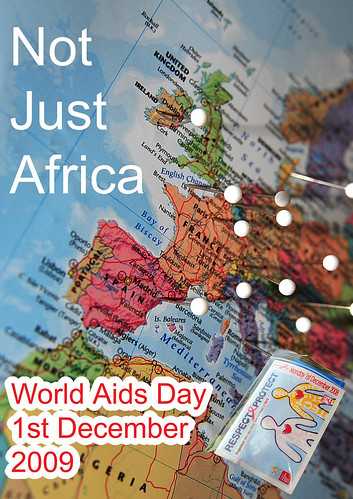
World AIDS Day marks progress, distinct challenges in Africa


Published 6:49 am on November 30, 2009

World AIDS Day marks progress, distinct challenges in Africa
By Peter Elliott
Contributing Editor


Tuesday marks World AIDS Day when a fresh look at worldwide statistics and what is being done to stem the spread of the disease are warranted.
Statistically it is decidedly a mixed bag.

United Nations figures released last week show that over the past seven years the total number of people infected with HIV/AIDS has remained relatively flat at around 33 million worldwide. The total number of infections and deaths has steadily declined, but that is offset by 2.7 million new cases in 2008. Seventy percent of those new deaths come from sub-Saharan Africa.

The U.N. report suggest that targeted local strategies need to become focused on specific problems in order to drove down the rate of new infections. It says that the largest group of Africans contracting AIDS is older heterosexual couples, illustrating a need to adjust approaches based on the demographics.

Many Christian organizations are actively involved in AIDS prevention and treatment efforts domestically and internationally.

The Episcopal Church, for example, references the U.N. Millennium Development Goals as benchmarks for addressing poverty and social justice issues. In a letter penned to mark World AIDS Day, Episcopal Church presiding bishop Katherine Jefferts Schori cautions against Americans becoming complacent about AIDS simply because it has been a public health issue for decades.

“In the United States, HIV/AIDS has lost much of its visibility in the past decade with many Americans growing complacent about the threat of the disease,” Schori wrote. “It is not always immediately obvious who in our communities is suffering from HIV/AIDS, and the stigma of diagnosis further isolates and alienates those who need our love and support. As Christians, our ministry to those living with HIV/AIDS in our communities is more essential than ever.”

As an example of such ministries, Catholic Relief Services quotes figures it supported more than 280 HIV/AIDS projects in 62 countries worth $170 million in recently completed fiscal year 2009.


Similarly, hundreds of Christian organizations are working in the hardest hit areas of the globe.
One key focus is for progress in programs for expectant mothers to help them combat the effects of passing the disease to their babies.

“We’ve seen in the United States that by testing women and providing ARV treatment during pregnancy and labor for HIV-positive mothers, it’s possible to prevent babies from being born with the virus,” said Robert Zachritz, World Vision’s director for advocacy and government relations. “Yet globally, two out of every three HIV-positive pregnant women still cannot access treatment to protect her unborn child from a life with HIV.”

HIV infections among children have fallen significantly due in part to greater investment in strategies to prevent mother-to-child transmission. However, with 2 million children under 15 currently infected with HIV, protecting children in the womb is a critical step.

Education is also a vital weapon. World Relief is using its church partnerships in sub-Saharan Africa to educate teens about the importance of abstinence as a way to present the spread of the disease. In countries such as Rwanda, Mozambique, Kenya and the Caribbean nation of Haiti, the organization is also working to encourage adults to stay in monogamous relationships. It has a goal of educating 1.8 million children in these countries to the danger of AIDS this year.

Nonetheless, worldwide the challenge for young women the challenge is great. According to UNICEF figures released earlier this year AIDS remains the largest killer of women of childbearing age.

“Although there is increasing emphasis on women and children in the global HIV/AIDS response, the disease continues to have a devastating impact on their health, livelihood and survival,” said Ann M. Veneman, UNICEF Executive Director.


Links:Wall Street Journal—The Global AIDS Epidemic: Six Key Data Points: http://blogs.wsj.com/health/2009/11/24/the-global-aids-epidemic-six-key-data-points/?utm_source=feedburner&utm_medium=feed&utm_campaign=Feed%3A+wsj%2Fhealth%2Ffeed+%28WSJ.com%3A+Health+Blog%29&utm_content=NetvibesWorld Health Organization—Towards Universal Access: Scaling up priority HIV/AIDS interventions in the health sector (September 2009): http://www.who.int/hiv/mediacentre/tuapr2009_km_en_a4.pdf


~~~~~~~

Monday, August 17, 2009

'Water for All' Concerns Raised

August 17, 2009

WASHINGTON, Aug 17 (OneWorld.net) - World leaders meeting this week are being urged to ensure that the rich/poor and urban/rural divides don't determine who has access to clean water as climate and population pressures drive the number of those living without beyond 1 billion.


Women and girls in developing countries often struggle to provide clean, safe water for their families on a daily basis. © IRIN


What's the Story?

Global leaders are gathering in Sweden this week to discuss water and sanitation issues. Hosted by the Stockholm International Water Institute, this week-long event is being held under the banner "Responding to Global Changes: Accessing Water for the Common Good" and serves as a forum to discuss challenges and solutions to water-related issues.

Improved access to water and sanitation can have a widespread positive impact, improving health, child education, and poverty, and reducing conflict -- and important gains have been made over the past 20 years. But as the world's population grows and the competition for clean water intensifies, these goals are now threatening to drift farther away.

"Every day approximately 4,500 children die before their fifth birthday due to unsafe water, sanitation, and hygiene," says the United Nations Children's Fund. "Access to safe drinking water, adequate sanitation, and improved hygiene is crucial for infants and children to get the best possible start in life." [See the full statement from UNICEF below.]

Some Progress on Water, Less on Sanitation

The United Nations declared the years 2005 to 2015 the international decade to take action on water. Although 87 percent of the global population now has access to safe drinking water -- up from 77 percent in 1990 -- a lot of work remains to bring clean water to the other 1 billion people. In urban areas, coverage is now over 95 percent. But only 58 percent of the population of sub-Saharan Africa had satisfactory access to water in 2006, notes OneWorld.net's Water and Sanitation topic guide.

There are also concerns that the progress being made will not hold. Rising prices and climate change could reverse the gains made in the last two decades and limit access to water for millions of poor families.

The number of people without access to clean water is expected to rise as water becomes more scarce due to the effects of pollution, urbanization, and climate change, warn researchers at the nonprofit Worldwatch Institute, a Washington, DC-based think tank. Higher levels of pollution from urbanization and agriculture will reduce the amount of clean water available, and the effects of climate change could alter rainfall patterns, causing severe droughts and floods.
The UN's Food and Agriculture Organization estimates that the number of people living without access to clean water will rise to 1.8 billion by 2025.

And progress on sanitation has been even slower, as this issue attracts only a little over 10 percent of funds available for all water and sanitation programs. From 1990 to 2006, access to safe sanitation increased from 54 to 62 percent, but 2.5 billion people still did not have proper facilities to use, most of them in rural areas.

One promising initiative is the WASH-in-Schools program, which has extended drinking water, sanitation facilities, and hygiene education to 1,000 schools worldwide over the past year. The effort has brought together nonprofit organizations, corporations, U.S. schools and government entities, and the United Nations to help turn schools around the world into centers for community health.

Water as a Human Right

In recent years, changing weather patterns, the global economic crisis, and a number of humanitarian emergencies have left millions without basic water and sanitation services. In the face of these difficulties, advocacy groups have been reiterating that access to water is a fundamental right, as it is a prerequisite for human health.

"The world is facing increasing crises, many of which are intensifying competing demands for water in most regions of the world," says Jan Eliasson, the chair of the Sweden-based advocacy group WaterAid. "Already, billions of the world's poorest people are affected by the water and sanitation crisis. As a global community, we must ensure that concerted action is taken."

Access to clean water is not included in the original Universal Declaration of Human Rights. In 2002, the UN Committee on Economic, Cultural and Social Rights recognized providing access to water and sanitation as a goal for signatory countries, but not a universal obligation.

Universal access to water has benefits beyond reducing the rates of disease, explains the U.S.-based ONE campaign: "When water is unavailable, tensions grow both within and among nations, and water scarcity has contributed to political unrest in Sudan and other countries. Lack of water also has educational ramifications.... Girls may often drop out of primary school because their schools lack separate toilets and easy access to safe water."

Tens of thousands of advocates have urged U.S. lawmakers to support a bill that would provide 100 million people worldwide access to clean water and sanitation by 2015. The Durbin-Corker "Water for the World" act will target developing countries to improve access and affordability.
Investment efforts should be focused on simple, affordable, and effective interventions, argues the International Federation of Red Cross and Red Crescent Societies (IFRC). For example, providing facilities and teaching children to wash their hands with soap and water can help reduce deaths from diarrhea by up to 47 percent.

"Safe water and good sanitation are essential to poverty reduction and good health," explains Nigel Ede, an IFRC staff member in Indonesia. "But when you compare international funding, remarkably little is spent on clean water and sanitation."

The other side of water scarcity is water management. Many advocacy groups fear that as water becomes more precious, it will be reserved for the world's wealthy population.

"With water availability expected to be one of the major and most severe impacts of climate change in many areas of the world, sufficient and equitable allocation of water will become more and more vital for both people and nature," warns the environmental watchdog group WWF.
- This article was compiled by Brittany Schell.


2009 World Water Week: "Responding to Global Changes: Accessing Water for the Common Good"

From: UNICEF
8/16/09

Leaders and experts gather in Stockholm to take stock of water-related issues

STOCKHOLM, 16 August 2009 - Access to water is becoming more challenging every year due to a rising water demand and unreliable availability. With almost one billion people lacking access to safe water, the annual World Water Week (16-22 August) serves as a forum for global leaders and experts to share innovative solutions on water-related issues and its impact on poverty, health, education, gender equality and the environment.

Hosted and organized by the Stockholm International Water Institute, this weeklong event aims to build capacity, promote partnerships, and review progress achieved. The theme of World Water Week 2009 is: "Responding to Global Changes: Accessing Water for the Common Good - With a Special Focus on Transboundary Waters."

UNICEF is hosting and participating in several seminars, workshops and side events including: (i) Unite for children - Water, sanitation and hygiene (WASH) in Schools, (ii) Diarrhoea: What's WASH Got to Do with it?, (iii) Safe Water Services in Post-conflict and Post-disaster Contexts (iv) Sanitation Promotion 101: What are the Various Promotional Approaches We Use?

Access to safe drinking water, adequate sanitation and improved hygiene is crucial for infants and children to get the best possible start in life.

For school-aged children water supply, sanitation and hygiene facilities in schools have a profound impact on school attendance and retention. An easily accessible water source close to the home will free up girls from the often laborious, and time consuming task of fetching water thus allowing them to take their rightful place in the classroom.

Whereas it is encouraging to note that 87 per cent of the global population or approximately 5.7 billion people worldwide have access to safe drinking water, much remains to be done, particularly as water stress grows due to increasing demand and the impacts of climate change.
Every day approximately 4,500 children die before their fifth birthday due to unsafe water, sanitation and hygiene. Simple, affordable and effective interventions such as handwashing with soap and water help reduce the incidence diarrheal morbidity - the second biggest killer of children under five - by up to 47 per cent.

In recent years the global economic turmoil along with an increase in emergencies has left millions, particularly women and children, without basic services including access to water and adequate sanitation and hygiene. Climate change will further exacerbate this situation.
In many countries, UNICEF is the only agency to work on all levels; from local communities to international agencies. This broad spectrum of access allows for customized and sustainable interventions/change. UNICEF places an increased emphasis on water access, and quality in conjunction with sanitation and hygiene programmes -- providing an accelerated response during emergencies.

Maximum child survival and development benefits are only realized when water supply, sanitation and hygiene programmes are successfully incorporated into national policy formulation.

Governments must integrate water into their development agenda recognizing that a policy of common good must appreciate the rural/urban, rich/poor divide.
The United Nations declared 2005-2015 the International Decade for Action ‘Water for Life' realizing that achieving the millennium development targets for water and sanitation have wide-ranging benefits including yielding greater socio-economic returns via improved health, a productive workforce, and educated children.

For more information please visit: worldwaterweek.org


.