Showing posts with label Feasts. Show all posts
Showing posts with label Feasts. Show all posts
Thursday, September 10, 2026


Tuesday, December 23, 2025
Thousands cheer as the sun rises on winter solstice at Stonehenge
Thousands of people have gathered at Stonehenge to celebrate the winter solstice
By
The Associated Press
December 21, 2025, 6:03 AM ET

Headlines from ABC News LiveCatch up on the developing stories making headlines.The Associated Press
LONDON -- Thousands of people cheered and danced around Stonehenge as the sun rose over the prehistoric stone circle on Sunday, the winter solstice.
The crowds, many in costume, had gathered before dawn, waiting patiently in the dark and cold field in southwest England. Some sang and beat drums, while others took time to reflect among the huge stone pillars.
Many make the pilgrimage to the stone circle every summer and winter and consider it a spiritual experience. The ancient monument, erected between 5,000 and 3,500 years ago, was built to align with the movement of the sun on the solstices — key dates in the calendar for ancient farmers.
Sunday is the shortest day of the year north of the equator, where the solstice marks the start of astronomical winter. It’s the opposite in the Southern Hemisphere, where it is the longest day of the year and summer will start.
The winter solstice is when the sun makes its shortest, lowest arc, but many celebrate it as a time of renewal because after Sunday, the sun starts climbing again and days will get a little longer every day until late June.
Sunday, November 09, 2025
Saturday, October 04, 2025
Friday, October 03, 2025
Presidential Message on the Feast of Saint Michael the Archangel
Presidential Message on the Feast of Saint Michael the Archangel
The White House
September 29, 2025
Today, I salute the millions of Christian believers in the United States and around the world observing the Feast of Saint Michael the Archangel.
According to sacred Scripture, when the Devil rebelled against God in Heaven, Saint Michael and his legion of angels cast Satan down to Earth—triumphantly reasserting God’s sovereignty over all creation. For 2,000 years, Christians have looked to Saint Michael the Archangel for protection, strength, and courage in times of conflict, distress, and doubt.
In 1886, nearly 140 years ago, Pope Leo XIII, leader of the Roman Catholic Church, fearing for the future of the western world, introduced the legendary Prayer to Saint Michael, which is still recited to this day in churches and homes all across our Nation and throughout the world:
Saint Michael the Archangel, defend us in battle. Be our defense against the wickedness and snares of the Devil. May God rebuke him, we humbly pray, and do thou, O Prince of the heavenly hosts, by the power of God, cast into hell Satan, and all the evil spirits, who prowl about the world seeking the ruin of souls. Amen.
Friday, April 18, 2025
Thursday, January 16, 2025
The Purpose of Prophecy
Introduction to Revelation
The Purpose of Prophecy
Chapter 6

The Purpose of Prophecy
Chapter 6
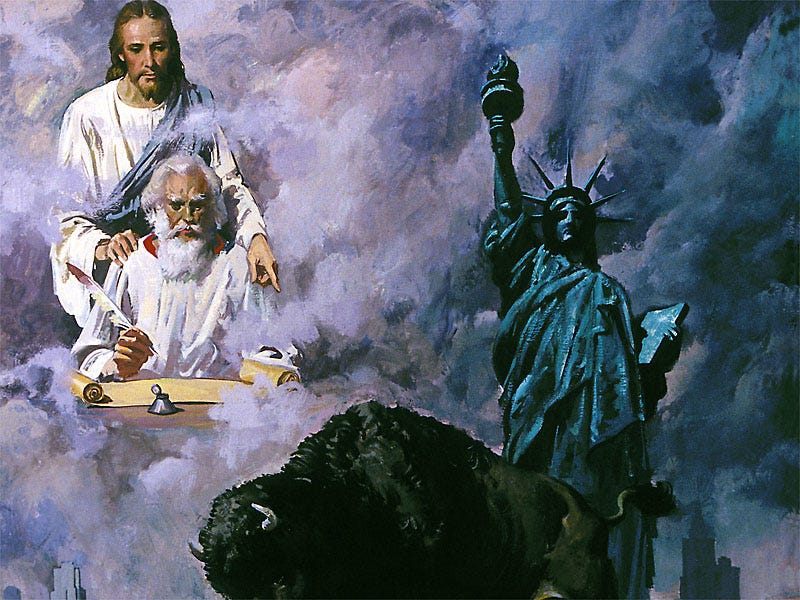
Surely the Lord God will do nothing, but he revealeth his secret unto his servants the prophets.
Amos 3:7.
Introduction
God’s Kingdom is on a journey. It began with the calling of Abraham, and it will end in heaven. It began with an earthly Jerusalem, and it end with a heavenly Jerusalem. Because God’s Kingdom is on this journey the Bible and the prophecies are focused on the progression of the Kingdom. This is why the Bible is a record of the successes and the failures of the citizens of the Kingdom – it is the spiritual state of the people that propels the Kingdom forward or backward. This is why the journey of the Kingdom is such a long and difficult one, because the record tells us that the spiritual state of the citizens is a record of failure more than success. However, there is a principle of interpretation that tells us that the journey will ultimately result in victory – this principle is ‘The Principle of Progression’ or ‘The Progressive Nature of the Kingdom of God Principle.’
The Progressive Principle
Jesus told many parables. When he began to tell His parables, He almost always used the same introduction, with these words: “The Kingdom of God is like…” In other words, His parables were about the Kingdom. The purpose of the parables was to focus on two things: the conditions for entry into the Kingdom and/or the progression of the Kingdom. The most obvious example of progression is the parable about the seed growing in secret:
And he said, So is the kingdom of God, as if a man should cast seed into the ground; And should sleep, and rise night and day, and the seed should spring and grow up, he knoweth not how. For the earth bringeth forth fruit of herself; first the blade, then the ear, after that the full corn in the ear. But when the fruit is brought forth, immediately he putteth in the sickle, because the harvest is come. Mk. 4:27-29.
In this parable Jesus is referring to God’s third attempt to achieve the goals for His Kingdom (the first one was the call of Abraham, the second was the return to Jerusalem after the Babylonian captivity). In the parable, the Sower of the seed is Jesus - the field is the world - the seeds are the children of the Kingdom (see Matt. 13:28-37). The growing seed is not physically discernable because it is spiritual growth (see 2 Cor. 3:1-3). The harvest takes place at the end of time, at the second coming of Christ (see Matt. 13:39-43; Rev. 14:12-20). Thus, the parable is telling the story of the beginning of Christ’s Kingdom, the journey of the Kingdom and the destination of the Kingdom.
Friday, April 07, 2023
Thursday, September 29, 2016
Saturday, April 16, 2016
Sabbath Days Nailed to the Cross?
SABBATH DAYS NAILED TO THE
CROSS?!

Published on Sep 17, 2015
If there were sabbath days that were done away with and nailed to the cross why do people still keep the sabbath?? Isn't Colossians 2:16 clear?! Devote a measly 30 minutes of your life to learn how to explain this text to others!
If there were sabbath days that were done away with and nailed to the cross why do people still keep the sabbath?? Isn't Colossians 2:16 clear?! Devote a measly 30 minutes of your life to learn how to explain this text to others!
.
Saturday, June 13, 2015
Feasting or Fasting?

June 10, 2015 Lee Folkman
On Oct. 22, 1844, Jesus Christ, our High Priest, entered once into the Most Holy Place of the Heavenly Sanctuary. Then began the process of cleansing of the sanctuary, of which every tenth day of every seventh month of every year was a type. The day of atonement was a day of solemnity when all in the camp of Israel were to “afflict [their] souls and do no work at all,” (King James Version, Leviticus 16:29), neither an Israelite nor a sojourner. “For on that day shall the priest make an atonement for you, to cleanse you, that ye may be clean from all your sins before the LORD” (vs. 30). It was a day when all who were not found afflicting their souls on that day would be separated, or cut off, from among God’s people. This day was also known as “the fast” (Acts 27:9) because it was a day of fasting and prayer in connection with the work of the high priest.
During the last few decades, a movement to promote the moral obligation to keep the feast days recorded in Leviticus has been making inroads among reform-minded Seventh-day Adventists. Why so much emphasis on the feasts in the great antitypical day of the fast? Is this new light that needs to be proclaimed before Jesus can return? Or is it a scheme of the enemy of souls to divert sincere followers of Jesus Christ from the true latter rain message?
HOW SHALL WE KNOW?
When studying either the Scriptures or the Spirit of Prophecy, it is important to allow plain statements to guide our understanding of more difficult passages. Regarding her own writings, Ellen White wrote:
“The testimonies themselves will be the key that will explain the messages given, as scripture is explained by scripture” (1 Selected Messages, 42).
“...the key to the testimonies is the testimonies themselves... (15 Manuscript Releases, 295).
A key is a simple instrument used to unlock a complicated mechanism. In like manner, simple statements, in context, help us to understand or unlock more difficult passages. When one utilizes complex reasoning to explain a simple passage of scripture or testimony, one is missing the key. Here are some simple passages that help us to understand the feast day question.
THE TWO-FOLD SYSTEM OF LAW
Most Adventists agree that the Bible and the Spirit of Prophecy present a two-fold system of law: the ceremonial and the moral. What makes up the ceremonial and the moral laws? Consider the following passages from Ellen White:
“There are two distinct laws brought to view. One is the law of types and shadows, which reached to the time of Christ, and ceased when type met antitype in his death. The other is the law of Jehovah, and is as abiding and changeless as his eternal throne. After the crucifixion, it was a denial of Christ for the Jews to continue to offer the burnt offerings and sacrifices which were typical of his death. It was saying to the world that they looked for a Redeemer to come, and had no faith in Him who had given his life for the sins of the world. Hence the ceremonial law ceased to be of force at the death of Christ” (Signs of the Times, July 29, 1886), emphasis mine.
“While the death of Christ, as we have seen, brought the law of types and shadows, or the ceremonial law, to an end, it did not in the least detract from the dignity of the moral law, or make it void. On the contrary, the very fact that Christ died to satisfy the claims of that law, shows the immutability of its character” (Signs of the Times, July 15, 1880).
“The moral law was never a type or a shadow...” (Review and Herald, April 22, 1902)
These passages, and others like them, clearly point out the difference between the two systems of law. A law that is a type or shadow would fall under the ceremonial law, while the moral law was never a type or shadow, but existed from eternity. One is typical; the other is eternal.
FEASTS – MORAL OR CEREMONIAL?
Because the ceremonial law came to an end by the death of Christ, while the moral continues to this day, any moral obligations we have to God are solely those that fall under the moral law. Under which law do the feast days fall?
“The Passover was to be both commemorative and typical, not only pointing back to the deliverance from Egypt, but forward to the greater deliverance which Christ was to accomplish in freeing His people from the bondage of sin. The sacrificial lamb represents ‘the Lamb of God,’ in whom is our only hope of salvation. Says the apostle, ‘Christ our Passover is sacrificed for us.’ 1 Corinthians 5:7...” (Patriarchs and Prophets, 277).
“The Feast of Tabernacles was not only commemorative but typical. It not only pointed back to the wilderness sojourn, but, as the feast of harvest, it celebrated the ingathering of the fruits of the earth, and pointed forward to the great day of final ingathering, when the Lord of the harvest shall send forth His reapers to gather the tares together in bundles for the fire, and to gather the wheat into His garner...” (Ibid, 541).
Paul said, “Christ our Passover is sacrificed for us” (1 Corinthians 5:7). The sheaf of first-fruits, which at the time of the Passover was waved before the Lord, was typical of the resurrection of Christ.
“Christ the first-fruits; afterward they that are Christ’s at his coming” (1 Corinthians 15:23). Like the wave-sheaf, which was the first ripe grain gathered before the harvest, Christ is the first-fruits of the harvest of redeemed ones when He returns.
Jesus’ birth, death and resurrection, explained in the OT types were fulfilled, not only as to the event, but also as to the time.
“In like manner, the types which relate to the second advent must be fulfilled at the time pointed out in the symbolic service. Under the Mosaic system, the cleansing of the sanctuary, or the great Day of Atonement, occurred on the tenth day of the seventh Jewish month, [Leviticus 16:29-34.] when the high priest, having made an atonement for all Israel, and thus removed their sins from the sanctuary, came forth and blessed the people. So it was believed that Christ, our great High Priest, would appear to purify the earth by the destruction of sin and sinners, and to bless his waiting people with immortality...” (The Great Controversy, 398, 399).
Just as it is clear that there are two systems of law, it is also clear that the feast days fall under the ceremonial law. The moral law, existing from creation, was never a type or shadow. The feasts, on the other hand, were commemorative of events relating to the Hebrew nation and fulfilled in Jesus Christ. Both the ceremonies and the appointed times were typical of the life, death, and high priestly ministry of Jesus. This places the feast days under that law which the death of Christ abolished. This is why the apostle Paul plainly stated,
“Let no man therefore judge you in meat, or in drink, or in respect of an holyday, or of the new moon, or of the sabbaths: which are a shadow of things to come; but the body is of Christ” (Colossians 2:16-17).
Indeed, they “are a shadow of things to come.” They taught and continue to teach us the work of Jesus Christ in the heavenly temple, that temple made without hands, which the Lord built and not man. This our pioneers, including the messenger of the Lord, clearly understood, as evidenced by the following quote from Ellen White:
“One day as Elder Corliss stepped out of a train, the guard [conductor] stopped him with the request that he explain Colossians 2:16. They stopped, and as the crowd rushed by, the explanation was given, and from Leviticus 23:37, 38 it was shown that there were sabbaths besides the Sabbath of the Lord…” (Review and Herald, January 7, 1896)
The explanation given is that these sabbaths are shadows and are not the Sabbath of the Lord. It is only recently that a movement has arisen which seeks to complicate that which the Lord had already made plain.
So, are we feasting or fasting? Do we teach the observance of the shadows that pointed forward to the reality, or do we accept the fact that the reality has come in the person of Jesus Christ? Even now He stands in this great antitypical day of fasting, performing a work that will prepare His people to stand before a holy God without an intercessor and to be translated without seeing death. Afflict your souls, dear brothers and sisters, and prepare to meet your God.
.
Saturday, April 04, 2015
Sonntag muss Kirchtag sein [Sunday must be (a) feast day]
Sonntag muss Kirchtag sein
Martin Kilian aus Washington am Samstag den 4. April 2015
Kleine Geschichte

In den 50er-Jahren war der Gottesdienst für die ganze Familie noch Pflicht. Foto: Getty
«Der amerikanische Sonntag ist eine runde Sache: Man steht auf, frühstückt im Bademantel Eier mit Speck und Bratkartoffeln («House Fries»), dazu Waffeln mit Ahornsirup und Butter mitsamt Kaffee sowie einem Mimosa-Cocktail aus Champagner und frischgepresstem Orangensaft. Eine Bloody Mary tut es natürlich auch. Danach geht der echte Amerikaner zurück ins Bett zum Workout-Sex oder zum Jagen, Fischen und Sammeln. Er ist ein passionierter Jäger und Sammler.
Wer einen ruhigeren Ablauf seines freien Tages vorzieht, platziert sich schon morgens vor den TV und sieht fern. Es gibt Shows mit Celebrity-Köchen oder Werbefernsehen und auf CNN sogar Krisen aus aller Welt. Da der Aktienmarkt ruht, sind sonntags weder Gewinne noch Verluste zu verzeichnen. Die Kreditkarten hingegen ruhen nicht, denn bereits um zehn Uhr öffnen die Einkaufszentren und laden zu hemmungslosem Shopping am Tag des Herrn ein. Für alle, die arbeiten müssen – und das sind viele Amerikaner! – , findet der Sonntag am Dienstag oder sonstwann statt.
Dieser lässige Umgang mit dem Sonntag erregt den Unmut von Leuten, die den sittlichen wie moralischen Niedergang Amerikas beklagen und allerorten Teufelswerk wie die Homoehe wittern. Dass die Amerikaner immer weniger in die Kirchen strömen, obschon auf ihren Geldscheinen ausdrücklich vermerkt wird, sie vertrauten «auf Gott», erregt zudem seit geraumer Zeit den Unmut der Gegner einer allzu saloppen Interpretation des Sonntags.

Sie will die Moral in die Gesellschaft zurückbringen: Staatssenatorin Sylvia Allen. Foto: Gage Skidmore/Flickr
Was sie wirklich denken, enthüllte kürzlich eine gewisse Sylvia Allen, von BerufRepublikanerin im Staatssenat von Arizona. Frau Sylvia repräsentiert die Kleinstadt Snowflake, was auf deutsch «Schneeflocke» bedeutet, jedoch weniger herzig ist, als man denkt. Denn Snowflake wurde 1878 von Erastus Snow und William Jordan Flake gegründet. Snow und Flake - alles klar? Synapsen okay? Die Gründerväter waren Mormonen, auch Frau Sylvia bekennt sich zu diesem Glauben.
Nun begab es sich unlängst, dass der Senat in Arizona mal wieder die Erlaubnis zumTragen verdeckter Schusswaffen in öffentlichen Gebäuden debattierte. Eine derartige Erlaubnis ist nicht ohne: Leute mit versteckten Ballermännern könnten durch die Korridore von Gerichten und Finanzämtern streifen und andere Leute massakrieren, wie dies leider dann und wann in Amerika geschieht. Frau Sylvia freilich suchte die Schuld nicht bei den Schusswaffen, sondern in den «verdorbenen Seelen» der Menschen.
Und deshalb verlangte sie eine «moralische Wiedergeburt» Amerikas sowie ein Ende der Erosion von Religion. «Wahrscheinlich», entfuhr es ihr, «sollten wir ein Gesetz debattieren, das jeden Amerikaner dazu verpflichtet, am Sonntag die Kirche seiner Wahl zu besuchen». Moment mal! Das ist extrem heavy! Vor allem, da Frau Sylvia sich wehmütig an die fünfziger Jahre erinnerte, als alle Läden am Sonntag geschlossen waren und die Leute in die Kirche gingen, statt sich sonntags mit Mimosas und Sex zu vergnügen. Oder eben jagen und sammeln zu gehen.

Beten statt gamen: Kinder vor einem Altar. Foto: Getty
Einmal davon abgesehen, dass Afroamerikaner in den fünfziger Jahren hinten im Bus sitzen und Homosexuelle um ihr Leben fürchten mussten und Frauen insgesamt weniger als ihre Haustiere zu sagen hatten und Richard Nixon Vizepräsident war: Wie bitte soll der Zwangsbesuch in der Kirche «meiner Wahl» administrativ vonstatten gehen? Was ist mit Atheisten und Agnostikern? Mit Theisten und Heiden? Zorastergläubigen? Punks? Santeria? Und wer soll den Transport Widerstrebender in die Kirchen bezahlen? Gibt es eine spezielle Polizeitruppe?
Fragen über Fragen werden laut. Es scheint, als habe Frau Sylvia ihre «moralische Wiedergeburt» eher nachlässig durchdacht. Das Konzept hat offenkundig profunde Lücken. Da gilt es nochmals nachzufassen! Frau Sylvia?

Martin Kilian, Washington
Er ist Amerikaner und Reisender durchs amerikanische Hinterland. Ihn interessiert ziemlich alles zwischen Boston und Seattle, San Diego und Miami. Er lebte unter anderem in Athens, Georgia, und Washington DC und wohnt derzeit in Charlottesville, Virginia. Gelegentlich fliegt er nach Europa und bewundert die Putzigkeit des Alten Kontinents.
---------------------------------
(I do not speak German, still I wanted to share this article; So, I tried several online translators, and this seems like the best I could find. Please forgive the bad grammar, it's a computer generated translation.)
Sunday must be (a) feast day
Sunday must be (a) feast day
Martin Kilian from Washington on Saturday the 4 April 2015
little story Church Thanksgiving
In the 1950s, the church service for the family was still required. Photo: Getty
«The American Sunday is a round thing: one stands up, in a bathrobe, breakfast eggswith Bacon and fried potatoes («House fries»), to waffles with maple syrup and butteralong with coffee and a Mimosa cocktail of champagne and fresh squeezed orange juice.» Of course, it is a Bloody Mary. Then the real Americans goes back to bed to the workout sex or hunting, fishing and gathering. He is a passionate Hunter and collector.
If you prefer a quieter end of his free day, placed already in the morning before the TVand watch TV. There are shows with celebrity chefs or commercial television and CNN even crises around the world. Since the stock market are neither gains nor losses recorded on Sunday. The credit cards, however, does not rest, because already at teno'clock the malls open and invite to uninhibited shopping on the day of the Lord. Forall those who work have to - and that many Americans! -takes place the Sunday to Tuesday or sonstwann.
This casual handling of Sunday aroused the resentment of people who complain about the moral as moral decline of America and everywhere smell Devil's work such as the gay marriage. That Americans always less in the churches flock, although on their money explicitly, stated they trusted «God», also aroused the displeasure of theopponents of a too popular interpretation of the Sunday for quite some time.
She wants to bring back the morality in the society: State Senator Sylvia all. Photo:Gage Skidmore/Flickr
What they really think, revealed a certain Sylvia Allen, of professional recently Republican in the State Senate of Arizona. Mrs Sylvia represents the town snowflake,what means, but less herzig on german «snowflake», than one might think. Snowflake was founded in 1878 by Erastus snow and William Jordan Flake? Snow and Flake - allright? Synapses okay? The founding fathers were Mormon, also wife Sylvia is committed to this belief.
Now it came recently, that the Arizona Senate again debated the permission to carry concealed weapons in public buildings. Such permission is not without: people with hidden shooting men could through the corridors of courts and tax offices and massacring people, like this unfortunately then and when happens in America. Mrs. Sylvia however sought blaming not the guns, but in the «corrupted souls».
And that's why she demanded a «moral rebirth» America's, as well as an end to the erosion of religion. «Likely», it said, «should we are debating a law that required every American to attend the Church of his choice on Sunday» Wait a minute! This is extremely heavy! Especially, since Mrs. Sylvia wistfully remembered the fifties, as all the stores on Sunday were closed and the people in the church went instead to enjoy Sunday with Mimosas and sex. Or just hunt and gather to go.
Praying instead of reading: Children before an altar. Photo: Getty
Even apart from African-Americans back had to sit in the 1950s in the bus and fear homosexuals for their lives and women had a total to say less than their pets, and Richard Nixon was Vice President: how should please the compulsory visit to the Church of «my choice» take administratively place? What about atheists and agnostics? With theists and pagans? Zorastergläubigen? Punks? Santería? And who should pay for transporting resistive in the churches? There is a special police force?
Questions about questions be loud. It seems rather carelessly, wife Sylvia have thought through their "moral rebirth". The concept has evidently profound gaps. There it is again to cover up! Mrs Sylvia?
Martin Kilian, Washington
He is American and Traveler through the American hinterland. Interested in pretty much everything between Boston and Seattle, San Diego and Miami. He lived in Athens, Georgia, and Washington DC and currently resides in Charlottesville, Virginia. Occasionally, he flies to Europe and admired the Putzigkeit (quaintness) of the old continent.
Bitte übersetze diesen Artikel für mich.
Danke.
.
Saturday, December 13, 2014
The Real Story of Christmas and Christmas Traditions (Full Documentary)

MyDogAndAll
Published on Aug 21, 2013
The Real Story of Christmas and Christmas Traditions (Full Documentary) .
2013
This documentary as well as the rest of these documentaries shown here relate to important times and figures in history, historic places and people, archaeology, science, conspiracy theories, and education.
.
.
Monday, August 04, 2014
Kentucky's Big Senate Contest Highlight Of Political Picnic

Photo (Courtesy) http://www.nytimes.com/2013/08/05/us/politics/kentucky-political-staple-barbs-and-barbecue.html
by DON GONYEA
August 04, 2014 5:06 AM ET
5 min 2 sec
Playlist
For 134 years, politicians have attended a festival in western Kentucky called Fancy Farm. This festival drew a crowd — in part, because Kentucky has a close contest for a seat in the U.S. Senate.
.
.
.
Saturday, June 01, 2013
Feast Days Confusion by Pastor Emiliano Richards

Published on Apr 15, 2013
For more studies on this Topic please visit the following links:
Light from the Ancient Sanctuary A
-Understanding its Design and Services
http://understanding-daniel-revelatio...
Light from the Ancient Sanctuary B
-Understanding the Spring Feasts of the Sanctuary
http://understanding-daniel-revelatio...
Light from the Ancient Sanctuary B
-Understanding the Fall Feasts of the Sanctuary
http://understanding-daniel-revelatio...
.
.
Wednesday, March 27, 2013
Hooded Penitents Celebrate Holy Week
SPAIN
March 26, 2013

EMILIO MORENATTI / AP
Penitents from San Gonzalo brotherhood take part in a procession in Seville, Spain on March 25, 2013.

While Holy Week is celebrated around the globe by Christians, Spain is renowned for a particularly colorful tradition: the procession of the nazareno penitents. Looking for all the world like they’re wearing the getup of the reviled Klu Klux Klan, the penitents are in fact covering their faces with hoods in order to publicly repent without being identified, in a tradition dating back to the 15th Century.
Celebrations take place throughout the country, with regional processions in Seville, Andalusia and Málaga being the most famous.
Read more: http://world.time.com/2013/03/26/hooded-penitents-celebrate-holy-week/#ixzz2OkA6TKKg
.
Friday, March 15, 2013
Beware the Ides of March! Julius Caesar and a Look at the Romans' Ides of March
From N.S. Gill's Ancient/Classical History Glossary

Ides of March assassination of Caesar, by Vincenzo Camucini .Elessar
Definition: The Ides of March was a date on the Roman calendar (Idus Martias) corresponding with our date of March 15. It was a fateful date.
Roman Events on the Ides of March
~ Anna Perenna Festival
In ancient Rome, a festival for Anna Perenna was held on the Ides of March. Ovid, a poet and contemporary of Rome's first emperor, Augustus, wrote a collection of Greek myths in Latin called the Metamorphoses. In this monumental piece of Latin literature, Ovid explains that Anna Perenna was the sister of the tragic, love-sick, suiciding Carthaginian queen Dido, familiar to Romans from the Aeneid, which was written by another Augustan Age poet,Vergil (Virgil).
"On the Ides of March the plebs celebrated the Annae festum geniale Perennae (corresponding to the chief day of the Hindu Holi) near the banks of the Tiber (Ovid, Fasti iii. 523-42, 675-96). Rome was, therefore, empty of the lower classes. Is this why the nobles chose the day for the assassination of Julius Caesar?"
"The Ides of March"
C. M. Mulvany
The Classical Review, Vol. 19, No. 6 (Jul., 1905), p. 305
~ Caesar's Assassination
A more well known occurrence on the Ides of March, in 44 B.C., Julius Caesar was assassinated, at the foot of a statue of Pompey where the Senate was meeting.* Before Caesar went to the theater of Pompey to attend the Senate meeting, he had been given advice not to go, but he didn't listen.
Source of the Expression "Beware the Ides of March"
Because of the assassination and the soothsayer's exchange with Julius Caesar about the dangers he faced in Shakespeare's Julius Caesar tragedy, the Ides of March now signifies a fateful day. Here is the relevant passage:
Caesar: Who is it in the press that calls on me? I hear a tongue shriller than all the music Cry "Caesar!" Speak, Caesar is turn'd to hear. Soothsayer: Beware the ides of March. Caesar: What man is that? Brutus: A soothsayer bids you beware the ides of March.
Julius Caesar Act 1, scene 2, 15-19
Changing Significance of the Ides of March
1. Before the historical assassination of Julius Caesar, the Ides of March was:
- A division of the calendar based on the phases of the moon.
In some months, the Ides is on the 15th, and in others, it is the 13th. It's supposed to be on the day of the full moon. [See Roman Calendar.]
- March's Ides marked the beginning of the consular year: The two annually-elected Roman consuls took office on the Ides from c. 220 B.C. to 153. From 153 B.C. the consuls began to take office on the Kalends of January (what we call New Year's Day).
2. Even immediately after the historical assassination of Julius Caesar, "the ides of March" could be understood to refer to the assassination. Cicero didn't have to say "the assassination of Caesar." He could assume he would be understood when he alluded to the assassination just by reference to "the Ides of March."
Instead of saying something like the take-down of the dictator means there is hope for the Republic, he wrote -- with complete confidence that he would be understood:
Idus Martiae consolantur.
The Ides of March are encouraging.
~ Cicero Letters to Atticus.14.4 (url = homepage.usask.ca/~jrp638/DeptTransls/CicLetters.html April 19, 44 B.C.)
*See In the Steps of Julius Caesar for why Senate met in the porticus attached to the theater of Pompey that day.
.
Saturday, December 29, 2012
The Feast of Trumpets .wmv

siberjohn1·
Uploaded on Oct 3, 2010
The late Dr Russell Standish went to Avondale College in Australia, he studied medicine garaduating as a physician in 1964. He has served on the boards of a number of Seventh-Day Adventist education institutions. He was dedicated to the scriptural and Spirit of Prophecy principles of education and the work of God.
.
Thursday, December 01, 2011
Judaizing The US Church

Photo (Courtesy) http://aronbengilad.blogspot.com/2010/04/messianic-jews-and-mysticism.html
By Harmony Grant
4-16-8
The Jewish Forward's recent "most read" article worries that evangelicals might be stealing from the Jews. But it is Christians who should really be worried.
The article describes a Passover banquet in Alabama where 1,300 Christians gathered for unleavened bread and bitter herbs and donated more than $10,000 to the Jewish Federation. A local rabbi complains, "It is a total taking over and arrogation to themselves of the entire concept of the Seder. It's totally Christological."
Evangelical Christians' support of Israel is essential to the Jewish state. The powerful Conference of Presidents of Major Jewish Organizations even publicly supports Rev. John Hagee-Israel-firster extraordinaire; they recently wrote the NY Times to defend him as Israel's "true friend". Binyamin Netanyahu-Israel's ninth prime minister, an extremist who resigned as finance minister in 2005 to protest withdrawal from Gaza-said Christian Zionists are Israel's best friends in the world! In a recent poll, a whopping 82 percent of evangelicals agreed that Christians are morally obligated to support the Jewish state. In his New Testament letters, the apostle Paul repelled attempts by Jews to impose on the early church the rites and legalisms of Old Testament law. He furiously rebuked the apostle Peter for bending to Judaizing influences; he said Peter "stood condemned." (Gal. 2:11) As evangelicals today fall even deeper into this unbiblical love affair, they are increasingly eager to participate in Jewish rites, own Jewish trinkets, and learn about Jewish culture.
Who is really damaged by this Christian appropriation? Jews are not becoming more Christian. Christians are becoming more Jewish! Jews are not donating money for Christian evangelism or even allowing it in their country)! It is Christians who finance a religion dedicated to opposing their own. And their gift of millions of dollars to Israel is flatly contrary to Scripture. Christians are instructed to give their tithes and offerings to the "household of faith," i.e., many Christian charities and relief organizations that help further the gospel message. (Gal. 6:10) Judaism and the state of Israel are emphatically not of the household of faith. Israel's "anti-missionary law" mandates a five-year prison sentence for any evangelical who gives to an Israeli a "material inducement" (Bible tract or even a cup of coffee) that might help persuade him to become a Christian!
Christianity Today should be debating the Alabama Passover, not the Jewish Forward. Christian pastors should speak up about the Talmud's anti-Christ vitriol, persecution of Christians by Israel, oppression of Christian evangelism by Jews in Israel and the US-and gravely warn against the Judaization of the American church. We should be asking, "Is this good for the church?" as the Forward and others constantly debate what is good for the Jews. But we don't. These debates never happen.
The Seattle Times published an opinion piece titled, "Passover seders are out of place in churches." Very true. But it was written by Rabbi Mark Glickman, not a Christian pastor as it should have been.
In Ohio, Catholic high school students took a field trip to a Jewish synagogue where the principal of religious education told them: "Judaism is the base of all Christian religion. It's good to know where you come from." That's interesting; I thought Christ was the base of all Christian religion. The "debt" Christians owe to Jews is increasingly taught by evangelicals wanting to stimulate support of Israel and ride the wave of Hebrewness. This movement is so intense the UK Guardian says, "From the mobilising might of CUFI and televangelists, to Jerusalem marches and the 65 million copy-selling Left Behind series, to be an American evangelical has become synonymous with fanatically pro-Israel politics." And the only concerned people getting any real air time about this areJews, the ones worried about compromising and collaborating with possibly "anti-Semitic" Christians.
It's deeply troubling that Jews, not Christians, worry about the Judaization of the church. This demonstrates the incredible deception of the evangelical community, which is so much less wary than the Jewish community even though this alliance is currently only a threat to Christians. Jews remain adamantly, consciously, and militantly opposed to Christian evangelism and theology-leery even to accept evangelicals' strong political and financial support. Meanwhile, evangelicals are so blind to the theological enmity between themselves and Talmudic Judaism that they rush headlong to support, defend, and now absorb Jewish identity and actions.
In his Seattle opinion piece, Rabbi Glickman makes a point that should shock many evangelicals. He says that "to be perfectly honest - the Seder [ritual feast held on first and second nights of eight-day passover] developed, in part, as an anti-Christian polemic - a "slam" on the then-new and growing religion called Christianity. Such religious critique is all but absent from contemporary Seders, but the anti-Christian roots of the event are unmistakable. A church Seder is thus a Christian event rooted in anti-Christianity." Basically-Christians who participate in the Seder are participating in an event directed against their own existence!
Glickman's admission is astonishing on many levels. First, it demonstrates Jews' safety and power in American society, that a rabbi could publicly admit the anti-Christianity of a yearly Jewish event. Second, it highlights a fact that Israel-first Christians refuse to face: Judaism opposes the recognition of Christ as God incarnate, Savior of mankind. For two millennia, it has been self-defined by opposing the explosion of Christian faith. Christians today can't participate in Judaism without opposing their own community and Lord. They can't support Israel without supporting Israeli persecution of Christians and Christian evangelism.
Besides that, the Judaization of the church corrupts and corrodes Christian theology. It's gotten so bad that a bunch of evangelical leaders recently took out a big NY Times ad just to remind people that Christians have to spread the faith (a major thing Jesus told us to do) and to evangelize Jews along with everyone else. This responded to a growing heresy that Jews have a separate covenant with God and don't need faith in Christ or need Christian evangelism. The Times ad expressed kindergarten Christianity-a basic element of our identity that is subverted by our growing obsession with Jewish identity.
Jews have long recognized that assimilation into Gentile culture posed a greater threat to world Jewry than physical persecution. It is long past time for Christians to recognize the threat of losing their unique identity as followers of Jesus and His earth-shaking message. St. Paul knew that the rites and observances of the Mosaic/rabbinic law would entangle the infant church, drawing Christians into their spell of legalism. He knew legalism would drive out the empowering liberating New Testament message of justification by faith alone.
How should believers respond to increasing efforts to incorporate Judaic elements in Christian theology and worship? Such "Judaizers" should be rebuked and repulsed, not embraced.
Source
.
Israel's And Judaism's Feasts: Should Christians Keep Them?

Published: January 19, 2011
There has been a recent trend, by some pro-Judaism church leaders, to implement the ceremonies and feasts of Judaism within Christianity. To begin with, they seem to intentionally forget that the offering of animal sacrifices was an integral part of all of these ceremonies and feasts. If they are right in saying that we need to be keeping these "old covenant" events, then we also need to be offering the animal sacrifices that were at the very heart of these ceremonies and feasts.
Read more
Subscribe to:
Posts (Atom)