Showing posts with label DANA. Show all posts

Sunday, April 26, 2009

The IMF: Raping The World, One Poor Nation at a Time


The IMF: Raping The World, One Poor Nation at a Time

By Dana Gabriel http://www.borderfirereport.net/dana-gabriel/the-imf-raping-the-world-one-poor-nation-at-a-time.php

The International Monetary Fund (IMF) has been described as one of the enforcers of globalization. Nations who receive IMF assistance are often forced to surrender more sovereignty and further open up their borders to international banks and multinational corporations. Much of their wealth is then sucked dry by foreign predators with its resources and population essentially becoming the collateral for such financial aid. As a result of the global economic crisis, many more nations are having to turn to the IMF for help. At the recent G-20 Summit in London, the IMF’s role was expanded and its powers enhanced. There was little mention of its failed policies and its less then stellar record of effectively promoting development and democracy around the world. While some talk of reform, the IMF continues to rape the world, one poor nation at a time.

The IMF, along with the World Bank were established as financial sister institutions with both originating out of the 1944 Bretton Woods Agreement. They are part of the United Nations system. The IMF was designed to help stabilize the post-World War II international financial system and is the framework for a central bank of issue. It provides short term financial assistance to nations that qualify, but this is at a very high price. These countries are placed in an economic straitjacket with the IMF and World Bank working in tandem, dictating large portions of public policy.

Some IMF conditions that countries have been forced to comply with can only be described as harsh and undemocratic. Often the devaluation of a nation’s currency has been a precondition for IMF assistance. In order to qualify for IMF loans, some nations have also been forced to lower tariffs, restrict governmental subsidies and spending, balance budgets, as well as sell-off state institutions to foreign interests. In some cases, the IMF has even prohibited wage increases as some countries have tried to do so, in order to compensate for a sharp rise in food prices and other commodities. Environmental and labor rights have also taken a hit as a result of IMF policies. Under the guise of helping economic distraught countries, the IMF is really bailing out foreign investors and multinational corporations. They have further fueled chaos and instability in some of the poorest regions in the world.

At the recent G-20 Summit, leaders pledged to boost the IMF’s financial resources to $750 billion. It will also assume a more central role in monitoring and regulating global markets, playing a key role in the design of a new financial system. The IMF’s power to create money has been activated and they will be able to issue up to $250 billion of new Special Drawing Rights (SDRs). Some countries are calling on SDRs to be used as a full reserve currency to challenge the dollar. In a recent article that appeared in the New American , William F. Jasper writes, “If the IMF is empowered with global monetary and financial regulatory powers, along with the ability to issue a global currency and bonds, it will no longer have to ask its member states for funding. Nor will the UN. The IMF will be able to provide the UN with the revenues it needs to become an actual world government.”

The IMF and World Bank will be holding meetings in Washington on April 25 and 26. On the agenda will be reform measures which could include changing some conditions attached to receiving emergency funds. They will also discuss how best to distribute the extra money they have been allocated. There is a sense that as part of IMF’s new role, it must also address the concerns of emerging economies who are suffering from the global recession. The IMF recently approved a $47 billion line of credit to Mexico who became the first G-20 country to apply for such assistance and may not be the last. There still exists a double standard which allows richer countries to use fiscal expansion in the face of recession while poorer nations are forced into stricter economic restraints.

The global elite envision a world without borders. They continue to push their agenda of global governance through the IMF, the World Bank, the United Nations, the WTO and trade deals such as NAFTA. It is our duty to resist the tyranny of globalization or face enslavement. In the end, national sovereignty must prevail—if we are to have any future.


.

Tuesday, April 21, 2009

Jekyll & Hyde Obama: Protectionist or Free Trader?


Jekyll & Hyde Obama: Protectionist or Free Trader?

By Dana Gabriel

http://www.borderfirereport.net/dana-gabriel/jekyll-hyde-obama-protectionist-or-free-trader.php


NAFTA partners may be confused, as to the mixed signals being sent by President Barack Obama in regards to trade. The Buy-American provision which was part of the stimulus package, alarmed Canadians, as well as many others. The Obama administration managed to outrage Mexico by ending a cross-border trucking program. Like most politicians, Obama is speaking out of both sides of his mouth. He is pandering to some of his core support while at the same time, trying to uphold the U.S. as a global leader in trade initiatives.

When the Buy-American provision was first announced, both Canadian Prime Minister Stephen Harper and Mexican President Felipe Calderon, warned of the dangers of protectionism. Although the language that passed as part of the stimulus package was softened, Canadian officials remain concerned. Canada has every right to be worried about American protectionism considering that 80% of its exports flow across the border. During his February trip, Obama reassured Canadians that he was committed to NAFTA and that the U.S. would honor all its trade obligations. He also discussed plans to place NAFTA’s labour and environmental side deals into the main body of the agreement, which in actuality would accomplish very little. This is a far cry from a man who at one time, threatened to tear up the trade accord. He has all but abandoned his promise to truly fix NAFTA and make it fairer for American workers.

The House Democrat fiscal 2009 spending bill, effectively ended the controversial Bush administration cross-border trucking program. As a result, Mexico retaliated by slapping tariffs on many U.S. imports. Allowing Mexican long-haul trucks full access into the U.S. is a provision of NAFTA. Many contend that it is because of protectionism, not safety and security concerns, that Mexican trucks have been restricted across the border. Before his scheduled trip to Mexico in mid April, Obama could propose a new trucking program that attempts to satisfy both the Mexican government, as well as critics of the former cross-border project. Considering the growing drug violence in Mexico, this might not be an appropriate time to introduce any type of cross-border initiative.

In early March, Treasury Secretary Timothy Geithner announced that the Obama administration would work with Congress to establish benchmarks, so that long-stalled free trade agreements with Colombia and South Korea could move forward. Obama opposed both trade deals during the presidential election campaign last year. At that time, he said that he wanted to see a reduction in violence against trade unionists in Colombia. He also wanted to renegotiate some provisions of the South Korean trade agreement which he felt were bad for U.S. automakers and other manufacturers. There might not be an auto industry left to protect. Obama has taken money that could have been used to stimulate the real economy and instead has given it to the bankers. This is a Wall Street takeover. Through all the bailouts and corporate looting, the only path being set forth by which the U.S. economy can recover is through more globalization.

Just ahead of the G-20 Summit, José Manuel Barroso, President of the European Commission, warned against de-globalization, protectionism and economic nationalism. He advocated reshaping globalization as a solution to the worldwide economic crisis. At the G-20 Summit in London, leaders pledged to work together to rebuild confidence and trust in the financial system and kickstart international trade. As a result, a new Financial Stability Board has been established to unite regulators. The IMF has been given more money and power in order to boost the economies of the world. Obama proclaimed that the summit represented a turning point in global economic recovery. UK Prime Minister Gordon Brown called it the start of a new global financial architecture and said that out of the economic crisis, a New World Order is emerging. The U.S. has been used as an engine for world government and their markets will now play a lesser role in the global economy, as they surrender more sovereignty to this new system.

Obama is a tool of the global elite and giving him labels only serves to provide him with cover. He is not looking out for the best interests of American workers, the poor or the middle class. He is of the bankers, by the bankers and for the bankers. Many of the same people who are responsible for past failed U.S. economic policies, have been rewarded with a spot in the Obama administration. They will finish what they started—the destruction of the U.S. economy. This amounts to economic terrorism. We stand on the dawn of a new global economic order. Will the American people be suckered and buy into this system?
.

Monday, March 23, 2009

Dusting Off The UN Law Of The Sea Treaty


The United Nations Law of the Sea Treaty (LOST) is another one of those international agreements that the U.S. has yet to ratify. President Reagan rejected the treaty, but a revised version was signed by President Clinton in 1994. As a result of intense opposition, LOST was never brought before the Senate for a full vote. Several failed attempts were also later made by the Bush administration to galvanize support for the treaty. The Democrats are now laying the groundwork to finally ratify LOST. Proponents view ratifying the treaty as an opportunity for the U.S. to further promote global security and stability. Critics maintain that under LOST, the U.S. would be forced to surrender more sovereignty to the UN.
LOST is the legal framework by which all activities on, over, and under the world’s oceans are to be governed. It would place 70% of the earth’s surface under UN control. In a past article entitled 'LOST at Sea,' Congressman Ron Paul writes, “Under the Law of the Sea Treaty, an International Seabed Authority would control the minerals and other resources of the oceans’ seabed. After taking its own cut, this UN body would transfer whatever is left to select third-world governments and non-governmental organizations.” Many argue that if the U.S. does not ratify LOST, they might lose out on the mad dash for Arctic resources. Critics contend that under the treaty, the U.S. would be forced to obtain UN permission before conducting ocean development, which would make any new activities that much more difficult and costly.

The International Seabed Authority would have the power to set production control for ocean mining, drilling and fishing. They would also regulate ocean exploration, issue permits, charge fees and settle disputes within its own court system. Under LOST, an international tribunal has been established made up of a panel of 21 UN judges who have the power to enforce treaty provisions and rulings. Ratifying LOST would further place U.S. interests at the mercy of international courts whose decisions could override domestic laws.

In the same article on LOST, Ron Paul also states that, “The Law of the Sea Treaty also would give the UN power to tax American citizens and businesses, which has been a long-time dream of the anti-sovereignty globalists.” LOST is closely integrated with other treaties, such as the Convention on Climate Change and it could be used as a backdoor for global taxation. Ratifying LOST could facilitate the ability of environmental organizations to sue the U.S., using international courts. Under the guise of protecting the environment, the UN is gaining more control over individuals and nation-states alike.

A recent incident in the South China Sea between a U.S. military intelligence ship and several Chinese vessels, has prompted accusations from both sides. The Americans insist that the Chinese were harassing the U.S. ship and were in violation of international law. In turn, China condemned U.S. actions as being illegal and in violation of LOST, as well other laws and regulations. China has ratified LOST and it appears as if their interpretation of the treaty is being used as a means to try and ban all foreign military ships from operating inside its 200 mile exclusive economic zone. The U.S. ratifying LOST would not prevent any such future incidents, but rather could serve to limit its military intelligence operations. LOST could severely compromise America’s ability to move freely on the high seas.

The United Nations cannot be trusted in protecting American interests. Under LOST, the U.S. would only have one vote, unlike the UN Security Council where it enjoys veto power. UN bureaucracy has proven to be a breeding ground for corruption. It would be unwise to hand over any control of the oceans, oil, gas and minerals to the UN. The last thing the U.S. needs to do is surrender more sovereignty.

Will The SPP Rise Again?


Will The SPP Rise Again?

By Dana Gabriel http://www.borderfirereport.net/dana-gabriel/will-the-spp-rise-again.php


By all accounts, the Security and Prosperity Partnership (SPP) appears to be dead, despite no official announcement by the governments of Canada, the U.S. or Mexico. There have been numerous calls to replace the SPP. Although the means of achieving deeper continental integration may vary, the objectives remain the same. The global elite have not abandoned their vision for a North American Union and are now counting on their new puppet, President Barack Obama, to carry on with this agenda.

The House of Commons Standing Committee on Foreign Affairs, was told in late February of this year that the controversial SPP was likely dead. CEO and president of the Canadian Council of Chief Executives (CCCE), Thomas d’Aquino, testified and answered questions before the committee. He admitted that the it was probably only a matter of time before the SPP was replaced. D’Aquino stated, “Why it will be replaced is because the energy, environment, trade, financial regulation, and agriculture, all these things that we do in the form of millions of cross-border transactions everyday are going to have to be co-ordinated." In addition, he emphasized the importance of Canada-U.S. bilateralism, but cautioned against cutting Mexico out of the equation. The Carleton University’s Canada-U.S. Project was released to the public in the new year and called for wholesale changes to the SPP.

The CCCE is made-up of 150 of Canada’s top executives who comment on public policy. It is a virtual whose who of Canadian corporate sector elites. Since its inception, the CCCE has had intimate ties to both the Liberal and Conservative parties, with many of their proposals being implemented into policy. The CCCE was a driving force behind the Canada-U.S. FTA and later NAFTA. Some of their recommendations also became part of the SPP. Their president, d’Aquino, has participated in and co-chaired many reports and policy paper initiatives pushing for deeper North American integration. So, when he says that the SPP will probably be replaced, he is not just blowing smoke.

The SPP is the brainchild of business and political elites and has essentially carried on where NAFTA left off. This is a corporate driven agenda spearheaded by working groups and unelected, unaccountable bureaucrats who are laying the foundation for a North American Union. Many in the business community have been disappointed with the SPP’s progress, feeling that their recommendations are not being implemented fast enough. The SPP might have outlived its usefulness under its current name, but it is doubtful that multinational business elites are about to abandon it entirely, unless there is something to replace it.

Ahead of the North American Leader’s Summit in New Orleans in April of 2008, it was apparent that the SPP was in trouble. Think tanks such as the Fraser Institute, were calling for expanding and speeding up continental integration, but at the same time were recommending changing the SPP’s name, in an effort to save and revitalize the process. The Hudson Institute also acknowledged that it may be necessary to redesign and relaunch the SPP. Robert A. Pastor, who is considered by many to be the architect of a proposed North American Community, later admitted that under Bush, North American integration had stalled. He stated that the new president would probably discard the SPP. This agenda has at least publicly been placed on the back burner, especially given the current economic climate, but the SPP will rise again in one form or another.

Obama has all but waffled on his promise to renegotiate NAFTA and minus a few slight cosmetic changes that might be made, the flawed trade deal will remain intact. It is possible that economic, political, as well as social instability could be used as an opportunity to further advance the creation of a North American Union. The crisis in Mexico could be used to setup a North American security perimeter. Plans for deeper continental integration are still alive and whatever direction they may take, you can be sure that big business will be intimately involved.

Dana Gabriel writes about trade, globalization, sovereignty, and other issues.

.

Tuesday, March 17, 2009

Ending NAFTA Inspired Trucking Program Could Spark Retaliation


Ending NAFTA Inspired Trucking Program Could Spark Retaliation

By Dana Gabriel
http://www.borderfirereport.net/dana-gabriel/ending-nafta-inspired-trucking-program-could-spark-retaliation.php

Allowing Mexican long-haul trucks full access inside the U.S. is a component of NAFTA. Safety and security issues have proven to be a huge stumbling block in achieving this objective of the agreement. Under the Bush administration, a cross-border trucking program was established, giving a limited number of Mexican trucks full access beyond the commercial zone restrictions. Several past attempts to shut down the program have failed, but it appears as if the House Democrat fiscal 2009 spending bill, could finally put a stop to it. Ending the program could strain relations with Mexico and spark some sort of trade retaliation. There are reports that the Obama administration may try to implement their own program in order to better respect NAFTA obligations..


The pilot trucking program began in September 2007, as a result of a successful challenge which found the U.S. in violation of NAFTA. Under the program, a limited number of Mexican carriers are permitted full access to U.S roads. It also allows for an equal number of U.S. trucks to operate in the same capacity in Mexico. Despite previous efforts to cut funding, the Bush administration was able to continue the program by using funds from other parts of the transportation budget. As part of the Fiscal Year 2009 Omnibus Appropriations Bill, all funding would be terminated, using very clear and strong language which could not be misinterpreted. The U.S. Department of Transportation has stated that they would not make any attempts to save the program.


There is speculation that canceling the cross-border trucking program could set the tables for a showdown between the Obama administration and the Mexican government. Allowing Mexican long-haul trucks full access inside the U.S. is a NAFTA commitment and the pilot program is seen as a step in fulfilling this provision of the agreement. If the U.S. fails to comply, it is possible that Mexico could retaliate by placing or raising tariffs on some U.S. goods. Mexico’s ambassador to the U.S., Arturo Sarukhan, has stated that if the program is defeated by congress, that all options would be open, including possible retaliation. He stressed that ending the program has nothing to do with safety and security, but is rather a protectionist move. He also warned that keeping Mexican trucks off U.S. roads would raise the cost of goods for consumers and producers. Ending the pilot trucking program could hurt U.S.-Mexico relations and affect NAFTA.


Since its inception, there have been concerns whether the pilot trucking program would meet all U.S. safety regulations and just how they would be enforced. Mexico lacks any effective safety standards for its drivers or trucks. There is also no accurate drug or alcohol policy in place and it is without a reliable national criminal or driving database. Unions, as well as some safety and consumer groups, oppose the cross-border trucking program, citing safety, security and environmental concerns. The Teamsters Union, along with Public Citizen and the Sierra Club, have filed a suit to stop the program, in an attempt to close the border to Mexican trucks.


Some are calling on the Obama administration to block any move to end the cross-border trucking program and instead take action to make it permanent. Proponents argue that Mexican long-haul trucks have been unfairly denied full access inside the U.S., not because of safety and security concerns, but as a result of union pressures to prevent competition. They contend that protectionist measures have hindered American trucking companies from reaping the benefits of gaining full access into Mexico. They are also warning that ending the pilot program would raise the price of consumer goods. There are accusations that the Democrat-controlled congress is further shilling to unions and that the move to end the trucking program is a means of rewarding them.


The cross-border trucking program is part of NAFTA and the corporate North American Union agenda of further erasing continental borders. If it becomes permanent and is expanded, it could lower wages and lead to more American job losses. There is also the potential that it could destroy small and medium sized independent trucking companies. Allowing Mexican trucks full access inside the U.S. is a safety issue, as well as a security threat which could increase drug and human smuggling. Republican Congressman, Ron Paul, had this to say about the pilot trucking program when it was first announced. “Rather than securing our borders, we seem to be providing more pores for illegal aliens, drug dealers, and terrorists to permeate.” In light of the growing drug cartel violence in Mexico, further securing the border should be a national security priority.

Thursday, March 12, 2009

The United Nations: Our Children’s New Parents?


The United Nations: Our Children’s New Parents?

By Dana Gabriel http://www.borderfirereport.net/dana-gabriel/the-united-nations-our-childrens-new-parents.php

Through its various agencies and treaties, the United Nations seeks to undermine individual, as well as national sovereignty. It has been almost 15 years since President Clinton signed on to the United Nations Convention on the Rights of the Child (UNCRC). The U.S. remains one of the last holdouts as the treaty lies dormant, yet to be ratified. The UNCRC grants children new civil, social, cultural and economic rights that could override parental decisions. Sen. Barbara Boxer (D-Calif.), is pushing for a vote as there is a real sense that under an Obama presidency, the UNCRC could finally be ratified.


If the UNCRC is ratified, parents could be prohibited from homeschooling and spanking their children. It undermines parental authority and gives more power to the state to further dictate how children are raised. It grants children dangerous new rights thus encouraging more rebellious behavior. The truth is that in many cases, children do not have the wisdom and maturity to make sound decisions. The treaty also gives children the mechanism by which they could dispute any parental judgment. The UNCRC transfers more parental authority to the state while granting children radical new rights.


Under the UNCRC, an 18-member committee has been established to review children’s rights and any other disputes that might arise. In many cases, we are already bound by international treaties and the UNCRC gives unaccountable UN bureaucrats the power to make decisions concerning our children’s well-being. Parents are being demoted to simple caregivers, while the state assumes the role of the prime authoritative figure. The UNCRC is an assault on parental authority and is essentially a blank check for governmental interference in family matters. It is meant to further promote child autonomy and freedom from parental guidance.


In the U.S., homeschooling numbers continue to rise as a growing number of parents look to better control their child’s moral instruction. Under the UNCRC, homeschooling could be interpreted as a violation of a child’s well being. Some states have tried to ban and outlaw homeschooling and the UNCRC could make it a UN-sponsored activity. Public school education is designed to correct any perceived errors in rearing and home training. The ideology of globalism and world government is at the very core of the educational system. The UN seeks to undermine parental authority, traditional values and biblical principles. They wish to gain more control over our children’s upbringing and education.


Under the guise of human rights, the UN agenda is to further breakup the family. At recent meetings held in Mexico City, United Nations Population Fund representative, Arie Hoekman, told participants that high divorce rates and out-of-wedlock births were not a social crisis, but instead a triumph for human rights. Traditional values and principles instilled by parents, are being manipulated and pushed aside. The breakdown of the family is bringing about a rise in new values. Children’s love and loyalty to their family and country is being systematically destroyed. Under a new global order, there is no room for nationalism or individuality and a strong family unit represents a threat to this system.


Being a parent is a huge responsibility and undertaking that should not be taken lightly. Parents are not always right and some may be unfit. The reality is that children thrive in an environment where there is love and structure which includes consequences for their behavior. The UNCRC infringes upon parental authority and represents a massive intrusion by the state into family affairs. It has the potential to radically alter parent-child relationships. The UN definitely has no business telling parents how to raise their children and neither does the government unless there is evidence of neglect or abuse. The UN is a morally bankrupt institution with a horrible record of protecting human rights around the world and the U.S ratifying the UNCRC will not change that.


.

Sunday, March 01, 2009

Farmers Call For NAFTA Reforms


Farmers Call For NAFTA Reforms

By Dana Gabriel http://www.opednews.com/articles/Farmers-Call-For-NAFTA-Ref-by-Dana-Gabriel-090226-622.html


NAFTA has produced winners, mostly multinational corporations and a long list of losers, which includes farmers. The trade agreement has been the source of much discontent and has become an easy target. NAFTA is so badly flawed, but it is only one part of our failed trade and economic strategy. It has hurt many farmers in the U.S., Canada and Mexico. Just as there are calls to reform energy, investment, labour and environmental provisions of NAFTA, many are also demanding changes to agricultural clauses found in the agreement.

At a recent trilateral conference held in Billings, Montana, there was a general consensus among livestock producers that NAFTA is not working for North American farmers, ranchers and consumers alike. The two day conference was hosted by the Western Organization of Resource Councils (WORC). The meetings addressed many challenges facing family farmers and ranchers, including the negative impact of NAFTA. Many of the promises made by proponents of the trade agreement, have not been kept and so called benefits have failed to materialize. Representatives at the conference are calling for new trade policies and market reforms, and are urging the leaders of the U.S., Canada and Mexico to renegotiate NAFTA.

Along with calling for changes to NAFTA, the conference made up of consumer groups and livestock producers from around North America, laid out other specific recommendations. In a press release, they called for the “Establishment of domestic food and agricultural policies that provide farmers with the cost of production without dumping commodities into other countries at below the cost of production.” They also called for “Setting up publicly-owned grain reserves to stabilize prices and to provide fair prices to both farmers and consumers.” Further economic integration and expanded trade under NAFTA has failed to benefit many farmers. Some have been forced to give up their livelihoods, as a result of low market prices. Conferences such as this one, illustrate the importance of working together. Now more then ever, it is essential that farmers in North America present a common front and pursue shared objectives, in order to better protect their future interests.

NAFTA has essentially pitted farmers from all three countries against each other. Some have sought to establish more control over the marketing of farm produce only to be harassed. In Canada, there are calls for governmental protections of farm marketing boards from NAFTA challenges. Under the agreement, many domestic policies to protect farmers are prohibited. NAFTA has enabled large agribusinesses to set up monopolies and in many cases, has prevented farmers from uniting and defending their own best interests. As a result of NAFTA and the WTO, a small number of multinational corporations control much of our food production in North America. NAFTA has been devastating for many farmers and nowhere is this more evident than in Mexico where over a million agricultural jobs have been lost as a result of the trade agreement.

In late January of this year, there were huge protests in Mexico City and other parts of the country, demanding that the government take steps to deal with the mounting economic crisis. Just like in the past, many farmers took to the streets protesting against NAFTA. They were demanding renegotiation of agricultural clauses found in the trade deal. Protesters were also calling on the government to rescue small farmers who have been decimated by the dumping of large amounts of U.S. and Canadian grains and other crops inside the Mexican market. If current agricultural and food policies are not changed, many more farmers will lose their livelihoods. Globalization and urbanization have further fueled social unrest and coupled with the rise in drug violence, it appears as if Mexico could be on the verge of total collapse.

NAFTA, along with the WTO, have been used to drive down labour costs and environmental standards, in an effort to further increase corporate profits. Many farmers in North America and around the world have been greatly affected. While income for farmers is on the decline, food prices continue to rise. NAFTA undermines our sovereignty and has weakened local governments ability to make decisions concerning food and agriculture. There desperately needs to be more measures put in place to better protect farmers. Our globalized food system is a complete failure and has served to benefit multinational corporations, at the expense of small independent farmers. There are little things we can all do in our everyday lives to challenge this corporate system. This includes supporting and buying from local producers as well as becoming more self-sufficient.


Saturday, February 21, 2009

Deeper North American Integration Still in the Cards


Deeper North American Integration Still in the Cards

By Dana Gabriel http://www.borderfirereport.net/dana-gabriel/deeper-north-american-integration-still-in-the-cards.html

Many Canadians view a Barack Obama presidency as an opportunity to further renew Canada-U.S. relations. This includes a more North American approach in dealing with challenges that face not only the continent, but the world as well. The Security and Prosperity and Partnership (SPP), a trilateral initiative between Canada, the U.S. and Mexico, has stalled and in some cases, Canada-U.S. bilateralism has also been hampered. Many policy papers and reports are still calling for deeper North American integration.

The policy paper entitled “From Correct to Inspired: A Blueprint for Canada-U.S. Engagement” was released to the public in January of this year. It was prepared by Carleton University’s Centre for Trade Policy and Law and outlines how the Canada-U.S. partnership can be rejuvenated. It details how Canada can help Obama further reshape America’s role in the world. At almost every turn, the report promotes stronger U.S. relations and emphasizes how Canada must present itself as a valued partner on broader global issues. The report recommends more Canada-U.S. bilateralism in areas of security, trade, energy, and the environment. It also proposes an annual bilateral summit between the two countries to foster more cooperation. It suggests that Canada’s influence and visibility with the new administration might be reduced, if its mission in Afghanistan is not extended beyond 2011.

In addition, the Carleton University Canada-U.S. Project calls for deeper integration and recommends moving beyond NAFTA through separate North American bilateral initiatives. This would still be within the trade agreements framework. On Obama’s pledge to fix NAFTA’s labour and environmental provisions, the report notes that Canada should not worry, as any such move is directed more towards Mexico. It does caution against Canada using its energy resources as a weapon and bargaining tool. The report acknowledges the failures of the SPP and calls for wholesale changes. It blames the sometimes unnecessary inclusion of Mexico from preventing more meaningful Canada-U.S. bilateralism. According to the report, Canada should pursue a NAFTA policy of trilateralism when necessary, but on certain matters, Canada-U.S. bilateralism should be a priority.

A recent trilateral effort put forward by the Arizona State University’s North American Center for Transborder Studies, also calls for deeper integration. In the policy paper entitled “North America Next: A Report to President Obama on Building Sustainable Security and Competitiveness,” it urges the new administration to further improve relations with its NAFTA partners. The goal is to build a more North American strategy and it suggests that this could be achieved through further energizing and expanding the current Trilateral Leaders Summit. The report calls for developing an effective North American trade and transportation plan, which would include an integrated multimodal transportation system. This sure sounds like the NAFTA Superhighway! According to the report, this could be partly paid for by a joint, revolving fund for infrastructure investment. The report also calls for harmonizing freight transportation standards, a special trucker visa, along with complete NAFTA truck access inside all three countries. There has been an ongoing battle to prevent Mexican long-haul trucks access to U.S. roadways beyond the current 25 mile commercial zone restriction.

In advance of Obama’s visit to Canada, a coalition of organizations was stressing the importance of Prime Minister Stephen Harper to commit to a transparent and thorough renegotiation of NAFTA. The Canadian coalition included the Council of Canadians, the Sierra Club of Canada, the Canadian Auto Workers and the Canadian Federation of Students, as well as other organizations. In the letter addressed to Harper, they call for the elimination of the energy clause in NAFTA, which requires Canada to export oil and gas to the U.S., even in time of shortages. They also recommend that the prime minister place a moratorium on the negotiation and ratification of all Canadian bilateral free trade agreements, as well as an end to the SPP. There are other concerns in regards to NAFTA as many Canadians would like to see water excluded from the agreement. This includes a ban on bulk water transfers, along with safeguards against NAFTA Chapter 11 challenges.

There are fears that under an Obama presidency that many on the left will go to sleep, now that Bush is out of office. This includes in Canada, where the left have been instrumental in exposing the SPP and fighting deeper integration into a North American Union. In most instances, North American integration is still very unpopular, but this is a very deep-rooted agenda. Even with a new president, it will likely carry on in some form or another. It is imperative that concerned citizens in Canada, the U.S. and Mexico continue to resist any move towards a North American Union.

Tuesday, February 17, 2009

Majority Oppose Chapter 11 of NAFTA


Majority Oppose Chapter 11 of NAFTA

By Dana Gabriel http://www.borderfirereport.net/dana-gabriel/majority-oppose-chapter-11-of-nafta.html

A recent binational poll commissioned by the Council of Canadians, found that the majority of Americans and Canadians oppose provisions found in Chapter 11 of NAFTA. The poll found that 70% believe that energy corporations should not be allowed to sue governments for changes to policy that protect the environment and promote the public interest. Over half of the complaints filed under Chapter 11 of the agreement, have challenged environmental policies. Past polls have indicated that the majority also reject the Security and Prosperity Partnership (SPP) and deeper integration into a North American Union. Continental integration is being achieved on many different levels and this includes through environmental commitments.

Chapter 11 of NAFTA grants foreign investors the right to sue member nations, if they feel that their profits have been restricted. Corporations have used this new power to challenge and even overturn labour, health and environmental laws. This new poll demonstrates that there is a desire for significant changes to be made to NAFTA. President Barack Obama has promised to renegotiate labour and environmental provisions under the agreement. Chapter 11 severely undermines our sovereignty. In many cases it is not being used to defend trade, but rather to challenge and override domestic laws.

When an investor files a suit under Chapter 11 of NAFTA, it does not mean that they will win. Increasingly, it is being used to intimidate and threaten governments who in many instances wish to avoid arbitration. In August of 2008, Dow Agrosciences served a notice of intent under Chapter 11. This was due to the province of Quebec’s decision to ban the sale, as well as certain uses of lawn pesticides containing the company’s active ingredient 2,4-D. Many support the ban and this includes medical and environmental officials. The province of Ontario is also working on a similar measure. Perhaps feeling that their case might be weak, Dow has not proceeded any further. They also might be waiting for several long standing cases to be settled that could set new precedents. Many feel that more stringent standards should be imposed by provincial health regulators. Chapter 11 undermines the decision making process of democratically elected governments. Through the SPP, pesticide regulations are being harmonized and as a result, Canada has lowered its standards.

North American integration is being accomplished through trinational environmental commitments. In June of 2008, the Commission for Environmental Cooperation (CEC) was established to assist in coordinating environmental policies and it is closely tied to NAFTA. It is also being used to implement elements of the North American Agreement on Environmental Cooperation. The CEC is working in conjunction with the governments of Mexico, the U.S., and Canada, setting up a continental strategy to identify environmental concerns. This could be used to further bind the three countries together, using the environment as the pretext. It is also another example of putting more power in the hands of unelected and unaccountable bureaucrats and organizations. Unfortunately, many solutions being offered to combat environmental issues are in the form of more taxes and more governmental control over our lives.

Canada does not have a national carbon cap-and-trade system in place, but some provinces have begun working on a shared market. There is a push to create a North American integrated carbon market. Recently, the European Union proposed a global system for trading carbon credits. They are urging developed nations to sign on, in an effort to curb greenhouse gas emissions. Such a global tax would definitely generate billions of dollars, but it would also be a financial burden for many. My fear is that any global solution could very well be at the expense of our freedoms and sovereignty.

NAFTA best serves corporate interests and does not represent true free trade. You know something is drastically wrong when Chapter 11 of the agreement essentially grants corporations more rights than national citizens. It might be popular to blame trade deals for all our economic woes, but they are only one part of our failed economic system. Congressman Ron Paul, who also ran as a Republican presidential candidate, explained it like this. “Free trade is not complicated, yet NAFTA and CAFTA are comprised of thousands of pages of complicated legal jargon. All free trade really needs is two words: Low tariffs. Free Trade does not require coordination with another government to benefit citizens here.” Could it really be that simple? Forget about renegotiating NAFTA. The time has come to scrap the trade accord in its entirety!

Friday, February 06, 2009

Trade Wars: The Rise of Protectionism?


Trade Wars: The Rise of Protectionism?

By Dana Gabriel

U.S. trading partners have expressed concern that any move towards protectionism could spread and spark trade wars that could further worsen the economic crisis. Around the world, many are looking to President Barack Obama for leadership and feel that he is the one who can save the current global trading system. Does this system really work? Is it worth saving? International bodies such as the WTO and free trade deals like NAFTA, have fostered a climate of corporate dominance trapping nations in a web of treaties that in some cases, trump their own laws. The U.S. is being used as an engine for world government. The global elite seek to capitalize on the economic chaos which in many ways they engineered, in order to further restructure the world.

The Buy-American provision was added to Obamaʼs stimulus package, before it passed the House of Representatives. It blocks foreign iron and steel from being used on any projects that are part of the package. A Senate version of the bill could further expand to include other goods and materials. Although it does sound good, some feel the measure could backfire and cost more American jobs than it saves. Obama insists that he does not wish to set off a trade war and that the U.S. will honor its WTO obligations. He also warned of the dangers of protectionism, in a climate where global trade is already slumping. If he doesnʼt approve the Buy-American plan, he risks angering some of his core support, but if he doesnʼt make changes, he could alienate U.S. trading partners. It is obvious that Obama is going to have to strike a balance. He is calling for the stimulus package to be passed and signed by mid-February. Canada, the U.S.ʼs largest trading partner could be greatly affected by any Buy-American move.

For the most part, Canadaʼs response has been measured and it has refrained from further escalating the situation, believing that they will probably be exempt from the provision. Under NAFTA, Canada sends 40% of its steel across the border and the Buy-American provision could cost Canadian jobs as well as deal a significant blow to its steel industry. From 2002-2003, the Bush Administration imposed trade sanctions on foreign steel in order to protect its own industries, but Canada and Mexico were exempt because of fears that such a move would violate NAFTA. Prime Minister Stephen Harper stated that the Buy-American provision not only threatens Canada, but all industrialized countries. There is a definite possibility that the situation could further escalate. The EU, Canada and other U.S. trading partners could in turn retaliate with similar measures. If some sort of resolution is not reached, there could be a rise in protectionism around the world, with the potential for international trade wars.

During the presidential campaign, Obama pledged to protect U.S. workers and industries and supported Buy-American initiatives, but at the same time cautioned against protectionist policies. He was also very critical of NAFTA during the Democratic presidential nomination race, calling the agreement a mistake and its effects devastating. He even threatened to use the opt-out clause, in order to put pressure on Canada and Mexico to agree to changes. This concerned Canadian officials, but they were reassured that NAFTA was quite safe. Later when Obama had all but wrapped up the nomination, he took a more moderate approach towards NAFTA and free trade in general. He even admitted that in regards to all the NAFTA bashing, he got caught up in all the rhetoric. Since then, he has been strangely silent on the issue, but it was recently reported by a White House spokesman that Obama is still committed to upgrading the agreement.

NAFTA essentially laid the foundation for a North American energy market. Canada is the largest U.S. supplier of crude oil and natural gas. Under NAFTA, Canada is prohibited from cutting off oil exports to the U.S., unless domestic supplies are rationed by the same amount. Canadian officials have previously hinted that oil, and a list of other conditions could be on the table, if NAFTA is reopened. Harper recently said that he doesnʼt expect Obama to push for any major reworking of the agreement. There is little doubt that Canada is in a better position of strength than when NAFTA was first negotiated. Obama is set to visit Canada on February 19 and it is expected that trade issues will be at the top of the agenda.

Even Obama supporters have to be disappointed with his cabinet appointments, which do not constitute change. His administration is full of Clinton retreads, political hacks, hawks, and those who have upheld failed economic policies. Many of his appointees are also past or present members of the Council On Foreign Relations and the Trilateral Commission. The new boss is beginning to look a lot like the old boss, except that I doubt if Obama will openly show the arrogance and disregard that Bush did. The best thing that Obama has going for him is that he isnʼt Bush, and although his words might have signaled a change in direction, his actions indicate that itʼs business as usual in the White House.


Thursday, January 29, 2009

Towards a Canada-EU Economic/Trade Agreement and Beyond


Towards a Canada-EU Economic/Trade Agreement and Beyond

By Dana Gabriel http://www.opednews.com/articles/Towards-a-Canada-EU-Econom-by-Dana-Gabriel-090128-19.html


After dodging a bullet and almost being defeated late last year, Prime Minister Stephen Harper’s Conservative government recently tabled their much anticipated budget. It included a massive $85 billion deficit over the next five years. The Liberals have proposed an amendment that would hold the government more accountable, in order to ensure that budgetary funds are being used accordingly. If expectations are not met, the Liberals have said that they are prepared to bring down the Harper minority government. It came out during the election in October of 2008, that the Conservatives were set to begin negotiations with the European Union (EU) on deeper economic integration. In spite of the current global economic uncertainty, Canadian and EU officials are busy laying the groundwork for an economic and trade agreement, and negotiations could begin in the next several months.

It is expected that an economic and trade agreement with the EU could be massive and far-reaching, dwarfing NAFTA in size and scope. It would not be limited to the exchange of goods and services and could include labour mobility, as well as harmonization of standards and regulations. On a North American front, harmonization of regulations is being achieved through the Security and Prosperity Partnership. A principal demand by the EU is that Canadian provinces open up their procurement programs to European bidders. This would allow EU companies to bid as equals on government contracts. There has been some resistance from the provinces on this issue, which could put any such agreement in jeopardy. Stockwell Day, Canadian Minister of International Trade, stated that he is confident that the provinces will commit to such demands. The EU is also looking for a bilateral securities agreement. Canada currently does not have a national securities regulator, but one is expected to be in place before any negotiations would be completed. Many believe that Canada has been too fixated with U.S. and even Mexico initiatives, and as a result, not enough attention has been spent trying to partner up with the EU.

The annual Canada-EU Summit is set for May and will be held in Prague, Czech Republic and at that time formal negotiations for an economic and trade agreement could begin. It is also expected that the recently concluded Canada-EU Air Transport Agreement will be signed at the summit. It is set to be implemented in different phases and does not immediately include further raising foreign ownership limits in the airline sector. At a later time this agreement could even allow Canadian and European carriers to fly domestic routes in each other’s markets. It is believed that this deal is meant to put further pressure on the U.S. to agree on upgrading its own open skies agreement with the EU. A Canada-EU economic and trade agreement that goes beyond NAFTA, could later include the U.S. and Mexico. This is a scenario whereby the NAFTA model could be expanded and extended across the Atlantic. The current economic turmoil has seen a rise in European protectionism, but there still appears to be a desire by some, to further push trade liberalization initiatives.

In April of 2007, the U.S.-EU reached a deal on a new Transatlantic Economic Partnership. They agreed to work towards eliminating non-tariff barriers and increasing trade and investment, thus further laying the foundation for a U.S.-EU single market. In an effort to help streamline harmonization on regulations, the Transatlantic Economic Council was also created at the same time. German Chancellor Angela Merkel, a known globalist and one-worlder, has been calling for more trade liberalization in the form of a transatlantic free trade zone. It is important to understand that economic integration was the first step in the creation of the EU. With a new American president, there is a move to further strengthen transatlantic ties.

Many believe that Barack Obama’s presidency is a turning point in not only American, but world history, one that could signal a new era of international cooperation. Jose Barroso, the President of the European Commission, envisions a more ambitious globalization agenda and a ‘New Deal’ between the U.S.-EU. This would further foster multilateralism in areas of trade, security and climate change. EU officials have also proposed a global system for trading carbon credits. They are calling on developed countries and most notably the U.S. to sign on in an effort to curb greenhouse gas emissions. Others like British Prime Minister Gordon Brown and French President Nicolas Sarkozy are calling for a new global financial order. Recently, former U.S. Secretary of State and perpetual government insider, Henry Kissinger said that under Obama, there is an opportunity for a New World Order.

The global elite are making their move and they will pose as our loving saviours and offer their solution. World leaders, pundits, hacks and minions, are busy calling for a new global financial order and a New World Order. They recognize that the people are waking up to their lies, so they are accelerating plans for world government. Globalization and free trade, as well as IMF and World Bank loans, have been used to enslave the population and destroy national sovereignty. The notion of real choice is now more of an illusion. Minus the rhetoric and petty squabbles, it’s the same policies, same agenda, and the same team. Obama could be used to pitch a New World Order to the masses. This might not be the change that many had envisioned.

Monday, January 26, 2009

Free Trade: Passing The Baton to Obama


By Dana Gabriel


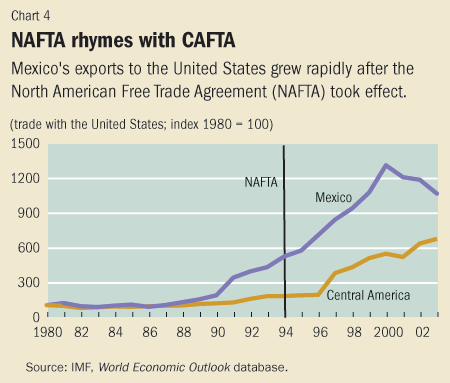
When it comes to further advancing free trade initiatives, it really makes no difference which party controls, congress or the presidency. Democratic President Bill Clinton signed the North American Free Trade Agreement (NAFTA) and Republican President George W. Bush did likewise with the Central American Free Trade Agreement (CAFTA). Any U.S. trade deal that has been negotiated and signed since NAFTA is based on that failed model. President Barack Obama voted against CAFTA when he was a senator and has come out against the U.S.-Colombia Free Trade Agreement (FTA). He has promised to renegotiate NAFTA which could be used to jump-start the Security and Prosperity Partnership (SPP) and plans for a North American Union. It could also serve to further spread the NAFTA model to the hemisphere.

Out of the ashes of the failed Free Trade Area of the Americas (FTAA) came CAFTA. It expanded NAFTA’s free trade zone to El Salvador, Honduras, Nicaragua, Guatemala, Costa Rica and the Dominican Republic. Bush signed the agreement into law on August 2, 2005, after it had passed the House of Representatives under very questionable circumstances. It was hailed as a milestone for trade initiatives in the Americas and as an opportunity to create new jobs and open new markets for American products. CAFTA, like other free trade agreements, has failed to deliver on the promise of prosperity and has served to further benefit multinational corporations. It has been a rough ride and on January 1, 2009, Costa Rica became the last member country to enter into the agreement. This was not before they had to make some changes, including privatization of certain parts of their economy. Free Trade deals such as NAFTA and CAFTA, have been used to lock member countries into a framework that further favors investor rights and protections.

Much like NAFTA, CAFTA also granted corporations and foreign investors a new set of rights and privileges whereby they can sue member nations, if they feel their profits have been restricted. In December of 2008, Pacific Rim Mining Corp. threatened to sue the government of El Salvador under CAFTA, and filed a notice of intent. The company claims that despite compliance with current laws in place, they have been denied permits to begin mining silver and gold. Pacific Rim says that they have invested some $75 million and could be seeking up to $200 million in monetary damages and potential lost profits. Some scientists, along with citizen and environmental groups, have warned that the project poses a serious threat to local water supplies. This comes in the midst of governmental debates in El Salvador, pertaining to new mining laws. If the dispute is not resolved by March 9, 2009, Pacific Rim will be able to begin arbitration hearings. CAFTA includes a dispute-resolution mechanism similar to NAFTA’s chapter 11. Trade deals have been used to smuggle through a new set of transnational corporate rights. As a result, foreign investors and corporations have been given the power to challenge and even overturn labour, health, and environmental laws.

Obama has promised to renegotiate NAFTA in order to strengthen labour and environmental provisions. There are many who want him to do the same with CAFTA. In an article he wrote entitled ‘Why I Oppose CAFTA’ he stated, “Globalization is not someone’s political agenda. It is a technological revolution that is fundamentally changing the world’s economy, producing winners and losers along the way. The question is not whether we can stop it, but how we respond to it.” Does this mean we should just accept and embrace it? Try and tell that to the millions around the world who live in poverty and are resisting globalization. Ron Paul, who ran as a Republican presidential candidate, advocated real change which sparked an organic grassroots movement. He commented, “CAFTA was driven by politics and nothing more. Multinational corporations and political globalists share the same goals, namely the centralization of political power in international bodies and the diminution of national sovereignty.” In hopes of maybe trying to resurrect a revised version of the FTAA, Bush launched the ‘Pathways to Prosperity in the Americas’ initiative in September of 2008. It is modeled after the SPP and the U.S.-EU Transatlantic Economic Council. NAFTA and the SPP are precursors to a North American Union. Combined with CAFTA and other bilateral and regional deals, it could facilitate a larger multilateral agreement. What does an Obama presidency mean for the pending U.S.-Colombia FTA?

Even before taking the oath of office, there was already pressure for Obama to use his influence to get the U.S.-Colombia FTA passed. Recently, Secretary of State Hillary Clinton announced that Obama will continue to support Plan Colombia, but she said it did require some adjustments. Plan Colombia is part of the disastrous war on drugs. It was launched by the Clinton administration and has failed to reduce the flow of illegal drugs into the U.S. and has led to more violence and corruption in Colombia. With Obama further committing to this initiative, I believe that it holds well for the U.S.-Colombia FTA. He could get assurances from the Colombian government to better uphold human rights, and curb violence being perpetrated against labour leaders. After a few concessions are made to the agreement, Obama could give it his stamp of approval. The Democrats could then claim victory for the Colombian people and labour movements around the world. This would demonstrate Obama’s willingness to honor labour and human rights standards. With the current global economic crisis, many believe that the U.S. ratifying this trade agreement, would send a positive message to the rest of the world. It is a direct result of our monetary policies, government managed free trade agreements, and globalization, that we find ourselves in such economic dire straits.

Obama does have a clear advantage of preceding one of the most unpopular presidents in American history. In many ways, Bush is meant to take the fall and have everything blamed on him. His failures will be used as a steppingstone for the new administration. The global elite have passed the baton to Obama and he will carry on with open borders, amnesty, free trade, a North American Union agenda and the push towards world governance. He will be able to accomplish things that Bush and past presidents initiated, but were unable to complete. Many have been trapped in the whole fake left-right paradigm, designed to divide and conquer and neutralize any true opposition. With Obama, the propaganda masters have done a magnificent job mass marketing and packaging him for the masses. His popularity and cult-like worship seems to even transcend party lines. Unfortunately, just like Bush, he has no intentions of upholding the constitution or protecting American sovereignty. Expectations have been set high and Obama will be able to get by on charisma and rhetoric for only so long. We need to judge our leaders not by their words or promises, but by their actions.

Saturday, January 17, 2009

Afghanistan: Canada Must Pursue a More Independent Foreign Policy


Afghanistan: Canada Must Pursue a More Independent Foreign Policy

By Dana Gabriel http://www.opednews.com/articles/Afghanistan-Canada-Must-P-by-Dana-Gabriel-090113-652.html


President Barack Obama has promised to send more troops to where the war on terrorism began as the focus seems to have now shifted from Iraq to Afghanistan. Some have went so far as to dub Afghanistan, Obama’s war. A troop surge could greatly improve security for Canadian soldiers, but it is unlikely to bring any type of lasting peace or stability to the region. There is a NATO summit planned for April which will mark its 60th anniversary, where there is expected to be increased pressure for Canada to further commit beyond 2011. Canada must look past its military combat role in Afghanistan and pursue a more sovereign independent policy, one that will best assist the Afghan people and one which better represents our own values.

Obama has been critical of President George Bush’s policy which focused more on Iraq at the expense of Afghanistan. With all his talk of change, Obama has demonstrated a willingness to further maintain the U.S. as the world’s police force and it is unlikely that his presidency will bring about any radical shift in foreign policy. He will continue and maybe even expand the war on terrorism which could lead to Canada playing a more active role, including possible participation in future American military operations. Whether it be through NORTHCOM, the Civil Assistance Plan signed by the U.S.-Canadian military or the Security and Prosperity Partnership, the further merging of our command structures continues as does the militarization of North America.

According to the Fiscal Impact of the Canadian Mission in Afghanistan, between $7.7-$10.5 billion has been spent in the last six years on costs related to the mission. The total cost could reach as high as $18.1 billion by 2011. This more than doubles what the Conservative government estimated. This is at the expense of Canadian tax payers and money that many feel should and could be better spent elsewhere, especially considering the current economic crisis. More unfortunate is the high price that Canada has paid with the loss of 107 soldiers. December of 2008 became one of the deadliest months with nine deaths. It has been reported by NATO officials that Canadians have suffered more deaths per capita then any other foreign contingent serving in Afghanistan. The number of wounded Canadian soldiers is also on the rise. Canada has about 2.500 troops positioned in southern part of the country in the Kandahar province which is considered one of the most dangerous areas in the region. Despite the best efforts of some, increasingly NATO forces along with Canadian troops are being seen as the enemy.

In spite of billions of dollars in foreign aid that has poured into Afghanistan, anti-western sentiments are growing as well as distrust of foreign troops, while support for the Hamid Karzai government is on the decline. Much of the aid has fallen into the hands of drug and warlords along with corrupt government officials. Many Afghans live in poverty and increased violence as well as the resurgence of the Taliban is being blamed on worsening economic conditions in the country and mounting civilian casualties caused by American and NATO bombings. According to the International Council on Security and Development (ICOS) the Taliban now enjoys a permanent presence in up to 70% of the country. A June 2008 poll conducted by the ICOS, formerly known as the Senlis Council, found that six out of every ten Afghans want foreign forces out of the country. There are some who believe that much like Iraq, there has been an almost deliberate ploy to keep Afghanistan unstable in order to further justify American long term military presence in the region. Canada should not be involved in nation building and wars of aggression and should most definitely not be used as an arm of the U.S. military.

It is not difficult to imagine a scenario whereby Obama, along with NATO, call upon Canada to further extend its mission in Afghanistan beyond 2011. Although it would be a hard sell, Prime Minister Stephen Harper could turn it into an issue of patriotism, a sense of duty and one which we would be turning our back on the Afghan people and the promise of democracy, if we were to leave. He has said that under no circumstances will Canada pullout before 2011. The Liberals, along with their new leader Michael Ignatieff voted for and support the current mission. In many aspects, there appears to be little difference between Ignatieff and Harper, except in rhetoric alone. Both the NDP and the Bloc Quebecois voted against extending the mission. The idea of a coalition government might be dead, but the reality is that it might have been the best opportunity to scale back our role in Afghanistan and possibly bring our troops home even sooner.

Why are Canadian troops still in Afghanistan? Is it to prop up a corrupt puppet government? Are we there to hold strategic territory for pipelines or launch pads for future military aggression? Canadian soldiers are being used as cannon fodder to maintain an already declining American empire. History recounts that another world superpower was forced to leave Afghanistan with their tail between their legs. Even with increased troop levels, American and NATO forces could be headed for the same fate. Canada desperately needs a prime minister that does not buckle under U.S. pressure and isn’t afraid to pursue an independent foreign policy. Canada must return to its more traditional role as a peacekeeping nation, one which has garnered praise from the rest of the world.

Globalization: The Long and Winding Road

Globalization: The Long and Winding Road

By Dana Gabriel

It has been widely announced that the Trans-Texas Corridor (TTC) is dead, as well as plans for a NAFTA Highway which many assured me never even existed in the first place. Unfortunately, these claims have been greatly exaggerated. In regards to the TTC/NAFTA Highway, the Security and Prosperity Partnership, and the North American Union agenda, we have won many battles, but we have not won the war. Deeper North American integration has been exposed on many different levels and has encountered fierce resistance. It is because of this that the globalists have had to somewhat retreat from their agenda. A move to re-negotiate NAFTA could be used as a way to revive and expand upon the agreement. In the midst of all this economic turmoil, more globalization is being offered as the solution to the crisis.

The announcement by the Texas Department of Transportation proclaiming the TTC dead was more of a public relations stunt. It was designed to try and silence critics and appease Texas lawmakers. Let’s be clear, the TTC is dead in name only and has been replaced with the Innovative Connectivity plan. By scaling back the project and breaking it up into smaller segments, it is less intimidating and could make it more difficult to stop in the future. If you don’t succeed try and try again. In the case of the TTC, give it a makeover, change the name and put out a press release saying that it is dead. The original concept of the TTC had a price tag of over $180 billion and called for 4.000 miles of roadways, toll roads and rail lines. Some have referred to it as the first leg of a NAFTA Superhighway that would extend from the Texas-Mexico border to the Oklahoma state line. In whatever form a NAFTA Highway transportation system takes, it would facilitate the flow of foreign goods and be the necessary infrastructure needed for a North American Union, thus further connecting the economies of Canada, the U.S., and Mexico.

Those who have exposed plans for a NAFTA Superhighway and a North American Union have been ridiculed, branded liars, fearmongers and conspiracy theorists by the corporate controlled media and the establishment. Yet, there has been a House resolution stating congressional opposition to the construction of a superhighway and entry into a North American Union. Many states have also passed similar legislation. During the CNN/You Tube Republican Presidential debates, Ron Paul was asked if he believed in the North American Union conspiracy. Paul did acknowledge that there was a move towards a NAU and a NAFTA Superhighway. He referred to it as a conspiracy of ideas, an ideological battle with some believing in national sovereignty and others globalism.

President-elect Barack Obama recently met with Mexican President Felipe Calderon where he expressed a continued commitment to upgrade NAFTA. Many believe that this proves he will carry through on promises to renegotiate the agreement. It is interesting that the word upgrade was used as opposed to renegotiate. Calderon has publicly stated on many occasions that he is against changes to NAFTA, but more recently he said that he is open to reviewing environmental and labour provisions. He could use his desire for U.S. immigration reform as a bargaining tool to agree to such modifications. At the height of the NAFTA bashing during the Democratic Presidential campaign, Canadian officials threatened to put oil back on the table if the agreement was reopened, along with a list of other concessions. With Obama set to visit Canada after his inauguration, Prime Minister Stephen Harper said that he doubts the new president will question the agreement in any fundamental way. NAFTA is so badly flawed and minus a few cosmetic changes that might be made, the reality is that it will remain intact. There are also fears that the agreement could be expanded which might lead to a renewed push for North American integration.

Many are under the illusion that somehow Obama and the Democrats are going to save the American people and even the world. It is becoming increasingly clear that just like Bush, Obama has no intentions of protecting American sovereignty. Globalization has meant sacrificing self-sufficiency, sovereignty and independence for foreign dependency which can only lead to economic enslavement. Obama, like many past presidents, is nothing more then a puppet, a front man controlled by special interest groups, foreign banks and corporate powers who are pushing globalization and world government

It is important that we remain vigilant and conscious of tactics used against us, word semantics and propaganda designed to lull us into a false sense of security. Construction of a NAFTA Highway could become a sort of make work project that employs millions, if jobless rates continue to climb and the current economic crisis worsens. Such an undertaking could be financed by foreign banks and corporations who are increasingly gobbling up much of North America’s key infrastructure and who ultimately control our economic future. A recent report released by the Pentagon warns that globalization and urbanization will further fuel social unrest in Mexico. Political, economic and social instability could be used to usher in a North American Union. We have a short window of opportunity to really turn things around and only an informed educated public will be able to defeat the New World Order.

newworldordermustbestopped@hotmail.com

Friday, December 05, 2008

What Would a Coalition Government Mean for NAFTA and the SPP?


What Would a Coalition Government Mean for NAFTA and the SPP?


By Dana Gabriel


Stephen Harper once again failed to secure a majority mandate in the last election. In the process, he has managed to bring the Liberal and New Democratic Party (NDP) together, with plans to form a coalition if the minority Conservative government is defeated on a non-confidence vote. Harper has shown an unwillingness to work with the opposition parties and assumed that he could bully his agenda through another minority parliament. He essentially backed the opposition into a corner with plans to remove some of their funding. A move to form a coalition government has been called undemocratic and nothing more than a power grab, but many would have to agree that the last thing Canada needs is another election. A Liberal-NDP coalition should be given a chance to govern. Many see this as an opportunity to have a functional parliament, which could serve to curb the apathy that many Canadians feel towards their politicians. It could also be used to further press for renegotiating NAFTA, and could finally lead to a parliamentary debate on the Security and Prosperity Partnership (SPP) of North America.


The Liberal-NDP coalition agreement would expire on June 30, 2011. There is also an 18- month written pledge of support from the Bloc Quebecois. Their leader, Gilles Duceppe, said that at this time, a coalition government will best represent Quebec interests. The Bloc would prop up the government, but would not be formally part of the coalition. Some view this as hypocritical, that Liberal Leader Stephane Dion, a staunch federalist who crafted the Clarity Act, would have to rely on the support of the separatist Bloc party. Harper has said that a coalition with the Bloc will harm Canada. The single biggest reason given by the opposition parties for forming a coalition government is that they feel Harper has not adequately addressed the economic crisis. The Liberals, NDP, and the Bloc Quebecois have agreed in principal to a $30 billion stimulus package for the auto and forestry sectors. Dion would be the interim prime minister under a coalition government and be replaced in May by the winner of the Liberal leadership race. Harper could prolong the matter to pursue other actions to save his government by asking for a parliamentary recess until late January, when the Budget is to be tabled. In buying more time, he could hope that cracks in the coalition start to form, and that Canadians reject the very notion of government assuming power without being elected. He could also ask Governor General Michaelle Jean to call an election. Dion has sent a letter to the Governor General, stating that he has the confidence of the House to form a coalition, should Harper’s minority government be defeated.


The Council of Canadians supports a progressive coalition government, and they have outlined what they feel should be some of its priorities, including renegotiating NAFTA. They have called for the removal of the Chapter 11 clause, along with water and energy provisions from NAFTA. The Council of Canadians has also called for the implementation of an independent Canadian energy strategy as well as a national water policy that bans bulk water exports. Vancouver writer, Murray Dobbin, said in a recent article that such a coalition government “would be based on a limited policy agenda.” He went on to say that, “The Liberals’ Bay Street agenda could be put on hold as the price it paid to survive and rebuild.” What could a coalition government mean for the already stalled SPP agenda?


It is interesting to note that former Liberal Prime Minister Paul Martin, and former Liberal finance minister John Manley, who have both been chosen as part of Dion’s economic team, were also instrumental in the launching of the SPP. It began under Martin, and the agenda has been carried on by the Harper Conservative government. With the release of Liberal Blueprint for the North American Leaders Summit in Montebello, Quebec in August of 2007, Dion stated that Harper was taking the SPP in a very different direction. The Liberal policy paper called for “the complete list of the SPP working groups, their contact persons, and participating membership; requiring quarterly public disclosure of their discussions; providing opportunities for public input into the SPP; and allowing Parliament to examine the SPP’s work.” It is hard to take this seriously because Dion and the Liberals, for the most part, have been silent and complacent on the SPP and plans for a North American Union. A coalition with the NDP could force the Liberals to carry through on promises to make the SPP more transparent.


As part of the agreement to form a coalition government, the NDP would have six out of 24 cabinet positions, with the Liberals holding the finance minster portfolio. There is no doubt that NDP leader, Jack Layton, would be part of the cabinet, but it is my hope that NDP MP Peter Julian also plays a crucial role in a coalition government. He is credited with getting the Standing Committee on International Trade to hold hearings on the SPP. The NDP has rejected the SPP and deeper integration into a North American Union. They have worked with legislators from the U.S. and Mexico in order to try and stop the SPP, and tabled a motion in parliament in an effort to make the working groups more accountable. They have held forums and town hall meeting on the SPP all across Canada. Julian is on record, calling for a full parliamentary debate on the SPP, and with a coalition government, this might become a reality.


Some see a coalition government as an opportunity for the Liberal party to rebuild for the future. Others fear that, with the NDP part of the government, it could take away more votes and seats at the expense of the Liberals in the next election. Could this also be a possible first step in trying to unite the left? What will be the fate of the Canada-Colombia FTA under a coalition scenario? This could very well be the final death blow for the SPP and another nail in the coffin for a North American Union. My wish is that that if a Liberal-NDP coalition government does take power, they will better represent the majority of Canadians.

newworldordermustbestopped@hotmail.com

Friday, October 10, 2008

Spreading NAFTA’s Love Across The Atlantic


By: Dana Gabriel -


3 October, 2008


Canada and the European Union (EU) are set to begin preliminary discussions on deeper economic integration a mere three days after the election. It has been reported that the proposed trade deal will far exceed NAFTA. Some see this as an opportunity to possibly update the 15 year-old accord. Stephen Harper is busy telling Canadians that only a Conservative majority government will be able to bring confidence back and stabilize the economy. That is why I find it a little strange that this has not become a pillar of the Conservatives economic platform. Harper has decided not to release the full text of the draft proposal until after the election on October 14. The reality is that such an agreement with the EU will be no different than NAFTA in the sense that it will be used to further advance corporate interests.

For the past several months, Canadian officials have been hard at work negotiating with EU representatives. They have compiled a detailed study that will be unveiled after the election. Talks could begin as early as October 17 at a summit in Montreal , with formal negotiations set to begin in 2009. Just as the case with the Security and Prosperity Partnership (SPP) labour, citizen groups and the public at large have been excluded from any discussions. Many support this trade initiative because they wish to lessen Canada’s dependency on the American economy. This agreement has a better chance of succeeding if Harper is re-elected Prime Minister. There still remains much secrecy surrounding trade talks with the EU, and up to this point, Harper appears to be reluctant to make this an election issue.

French and current rotating EU president Nicolas Sarkozy has said that he wishes economic integration with Canada to be part of his lasting legacy. Europe sees Canada’s energy resources as a possible solution to easing their dependency on Russian oil and gas. In a commentary that appeared in the Globe and Mail, Alan Alexandroff, co-author of the C.D. Howe Institute paper titled Still Amigos, writes, “If the EU and Canada can forge an accord that covers services, government procurement and skilled labour that could well set the table for reviving the original NAFTA.” He went on to say, “If the EU and Canada join hands, the U.S. and Mexico will be eager to join the party.” Some believe that such an agreement will further advance North American integration while spreading NAFTA to Europe. A Canada-EU trade deal could be used as the model for future bilateral accords and as a way to further renew U.S.-EU relation.

There are calls to further deepen the U.S.-EU partnership with a new sense of multilateralism in areas of trade, climate change, and fighting terrorism, along with others. In April of 2007, it was announced with very little fanfare that the U.S.-EU had reached a deal on a new Trans-Atlantic Economic Partnership. They agreed to set up an economic council and further boost trade and investment by harmonizing services, business takeovers, and intellectual property. They also agreed to continue working towards eliminating non-tariff barriers to trade, which could eventually lead to a U.S.-EU single market.

Economic integration was a first step in the creation of the EU, and a similar stealth approach is being used to advance a North American Union. EU Commission President Jose Manuel Barroso recently said in a speech, “We have to make room at the top table for others, because that is the only way we can consolidate and strengthen a stable, multilateral world, governed by internationally agreed rules.” He also stated, “the time has come to start thinking of an Atlantic Agenda for Globalisation.” With the further erosion of national sovereignty and continued economic, social, cultural and environmental integration, we are on an undeniable path towards world government.

With the collapse of the WTO talks, more bilateral trade agreements will be used in advancing the New World Order’s agenda. The global elite, pushing for world government, are using the current financial turmoil to acquire more wealth and power. Economic uncertainty could also be used to usher in a North American Union with its own currency. A Canada-EU trade deal is yet another incremental step towards global governance.


Friday, September 12, 2008

Protecting Canada's Fresh Water


Protecting Canada's Fresh Water


By Dana Gabriel http://intelstrike.com/? p=301


The Montreal Economic Institute is calling on the Quebec province and the rest of Canada to start exporting water for financial gain. Many are not buying into the myth that Canada has an abundant supply of fresh water that it can sell. A recent Environment Canada report stated that supplies are declining, and this lays credence to water becoming like the new oil. Under NAFTA, water is not protected, and there is little doubt that the U.S. sees Canada’s water as a solution to their own shortages. There are warnings of future provincial and even cross-border conflicts if water supplies become really low. Prime Minister Stephen Harper has refused to acknowledge water as a human right. His Conservative government has done little to protect Canadian water and continues to deny that the Security and Prosperity Partnership (SPP) of North America poses any threat to it.


The Montreal Economic Institute is recommending water exports, and it is clear that possible environmental and water shortages will not stand in the way when there are huge profits to be made. The report, titled ‘Fresh water exports for the development of Quebec’s blue gold’ was prepared by its vice president and chief economist Marcel Boyer. In the report, it is estimated that Quebec could generate as much as $6.5 billion in gross revenue a year. The report also states that, “Fresh water is a product whose relative economic value has risen substantially and will keep rising in the coming years.” Canada’s water belongs to its people, and it should not be privatized or sold to the highest bidder.


Canada does not have an effective national water policy in place as much of it is administrated by the provinces. There is increased pressure to begin exporting bulk water as well as a legitimate concern that through NAFTA and the SPP, corporate interests could supersede future domestic demand. NDP trade critic Peter Julian said, “Since fresh water was listed in NAFTA as a commercializable product, there’s no going back once bulk water exports start. No matter how our communities’ needs evolve.” There are really no provisions in place to prevent a province from exporting bulk water. If Quebec were to begin, other provinces would soon follow its lead.


Jack Layton and the NDP oppose any measure to privatize water and turn it into a commodity on the open market. They have tabled a motion that calls for a, “comprehensive water policy based on public trust.” They seek to restrict diversions, ban bulk water exports, and recognize water as a fundamental right. These proposals appeal to the NDP’s traditional core base of support and could attract others who care about the environment. The fact that Canadian Green Party Leader Elizabeth May will be participating in the leader debates should also bring water issues to the forefront.


Liberal Leader Stephane Dion has accused Harper of taking the SPP in a different direction, but it was first initiated by the Liberals. In reality, they still very much support the SPP process. To his credit, Dion has recently come out strong, demanding that the Conservatives take immediate action to protect Canada’s fresh water. Liberal MP Francis Scarpaleggia tabled a private members bill to prevent large-scale transfers of water within Canada and diversions to the United States. A Liberal government would create a water minister portfolio to work with the provinces on federal water legislation. Dion has been plagued by leadership questions, and as a result has appeared weak. If banning bulk water exports becomes a big election issue, it could help to propel his campaign.


NAFTA, the SPP, and deeper North American integration could become key election issues that might spell trouble for the Conservatives. Don’t expect any help along the way from the corporate controlled Canadian press, who for the most part have ignored, censored, and suppressed any mention of plans to create a North American Union. A party that is able take on the mantle of protecting Canadian sovereignty and its resources and excludes the usual anti-Americanism, could boost their fortunes in the upcoming Canadian elections on October 14.

Monday, August 11, 2008

NAFTA Inspired Trucking Program Rolls On


Source: http://intelstrike.com/?p=291

By: Dana Gabriel - 7 August, 2008

The cross-border trucking program, which allows 100 Mexican trucking companies to operate beyond the current 25 mile commercial zone has been extended two more years. Some American trucking companies are also participating in the program and are running loads across the Mexican border. Allowing Mexican long haul trucks full access to U.S. roadways is a component and commitment of NAFTA. This pilot program is seen as a first step in enacting this provision of the agreement. It is designed to further open the borders and facilitate the freer flow of goods and services. Through the Security and Prosperity Partnership (SPP) and the push for a North American Union, there is a move to further open the border to labor mobility. Since NAFTA’s inception, there have been safety and security concerns which have delayed Mexican trucks from gaining full access. Opponents of the program also fear that thousands of American jobs could be lost if it becomes permanent.

In advance of the announcement to extend the trucking program, the executive vice-president of Owner-Operator Independent Drivers Association (OOIDA) Todd Spencer said, “There is little doubt the administration will try to extend the program beyond its anniversary. They’ve consistently ignored Congressional directives to terminate it.” There is already a federal law in place that bans funding to the program, but because of an apparent loophole, it continues. In fact, Congress has already voted more than one time to halt the program. The decision by the Bush administration to extend the program was done despite pending legislation designed to stop it for good.

Conveniently, the announcement to further extend the trucking program was done while members of Congress, many of who oppose the plan, had left for their August break. It also came after the House Transportation and Infrastructure Committee had tabled a bill to stop it, which was supported by both Democrats and Republicans. It is expected to be voted on in September. This bill would require congressional authority to restart the program and would stop it no later then its anniversary date of September 6. The bill would also prohibit the secretary of transportation from granting Mexican trucks access beyond the 25 mile commercial zone.

Some organized labor unions, highway safety and consumer groups oppose the trucking program because of safety and security concerns. Teamsters, along with Public Citizen and the Sierra Club, have filed a suit challenging the legality of the program. Judges from the 9th Circuit Court of Appeals in San Francisco have yet to release their decision. Teamsters and the OOIDA have both praised the recent bill put forth by the House Transportation and Infrastructure Committee. The president of Teamsters, James Hoffa said, “This bill makes it as clear as day that Congress wants the border closed to dangerous trucks.”

To this date, the Bush administration, the Department of Transportation, and the Federal Motor Carrier Safety Administration have not adequately proven that Mexican drivers and trucks will meet the same standards as their American counterparts. There is little doubt that Mexican standards are not equal to those of the United States. There are concerns over drug testing, language barriers, and overall highway safety. Mexican drivers are also pushed to drive very long hours. It has also been reported that Mexican truckers could be granted access across the border in as little as 15 seconds. This would be part of the U.S. Customs and Border Protection’s Free and Secure Trade system. This trucking program is a national security issue and could lead to an increase in drug and human smuggling.

Much like NAFTA and the SPP, this cross-border trucking program will further benefit multinational corporations. It could all but destroy small and medium-sized independent trucking companies, and lead to thousands of American drivers losing their jobs. This is all part of a much bigger agenda, which includes destruction of the middle class, the construction of the NAFTA Superhighway and the creation of a North American Union.

You can contact Dana @ newworldordermustbestopped@hotmail.com