Showing posts with label Financial. Show all posts
Showing posts with label Financial. Show all posts
Friday, September 18, 2026


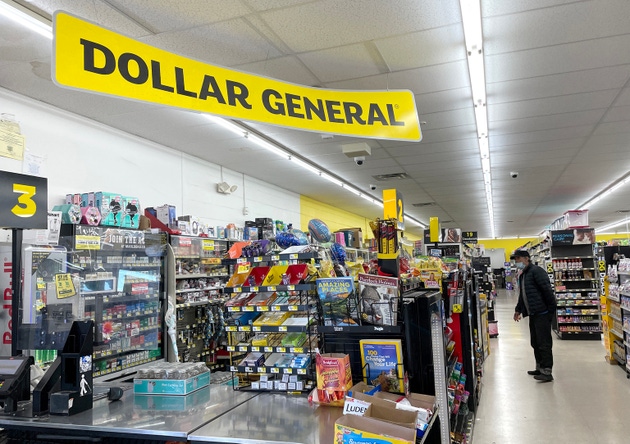
Dollar General CEO says even $100k earners shopping like bargain hunters
Sep 16, 2026, 11:37 AM ET
Justin Sullivan/Getty Images News
Dollar General (DG) CEO Todd Vasos said earlier in the week that sustained inflation and high gas prices (UGA) (XB1:COM) are squeezing shoppers across all income levels, driving even those earning over $100K to adopt budget-conscious habits and positioning the discount retailer to capture a broader demographic.
Speaking at a Goldman Sachs Global Consumer and Retail conference, Vasos highlighted that economic distress is no longer limited to the chain's core consumer base. He noted that whenever gas prices approach or surpass $4 a gallon, Dollar General’s (DG) traditional customers radically shift their behavior. To manage costs, these shoppers opt to stay closer to home, making more frequent trips but purchasing less on each visit.
As the Middle East conflict lingers and drives up global energy (USO) (BNO) (XLE) prices, the national average for a gallon of regular gas is sitting well above that threshold at around $4.36, according to recent AAA data.
The financial strain has also cascaded up the income ladder. According to Vasos, middle- and upper-middle-class consumers are now mirroring the purchasing habits of lower-income shoppers due to years of sustained inflation on basic goods. Even households earning over $100K—which Dollar General (DG) categorizes as high income—are feeling the pinch.
Vasos said that the retailer is hearing more from this demographic, noting that many say they no longer feel like high-income earners because of persistent economic headwinds.
Despite the challenging macroeconomic environment for consumers, Vasos remains optimistic about the company's outlook, believing Dollar General (DG) is in a strong position to serve this newly budget-conscious spectrum of shoppers across all demographics.
Thursday, September 17, 2026
Modi Calls for Global Governance Reform as BRICS Adopts New Delhi Declaration
09/15/2026 // Edison Reed // 1K Views

Indian Prime Minister Narendra Modi said the changing world "cannot be steered by outdated institutions" on Saturday, according to remarks delivered at the 18th BRICS summit in New Delhi. BRICS leaders adopted the New Delhi Declaration during the two-day gathering, which ran September 12-13 and was hosted at the Bharat Mandapam convention center, the report stated [1][2].
Modi called for reforms in representation, responsiveness and rule-making, and for a greater role for the Global South in international decision-making, according to his remarks [1]. The declaration backs reform of the UN and global financial institutions and condemns unilateral coercive measures that are contrary to international law, according to the document cited in coverage [2].
The summit marks 20 years since the first BRIC foreign ministers' meeting in September 2006 on the sidelines of the UN General Assembly in New York, according to RT [3]. India holds the rotating BRICS chairship this year and is hosting the leaders' summit, Russian Ambassador to India Denis Alipov said ahead of the event [4].
New Delhi Declaration Backs UN, Financial Institution Reforms
The New Delhi Declaration supports giving developing countries greater representation in global institutions and reaffirms the bloc's opposition to unilateral coercive measures that run counter to the UN Charter, according to the document cited in coverage [2]. Modi said "Reforms are essential in representation, responsiveness and rule-making," according to his remarks at the leaders' session [1]. Indian MP Sujeet Kumar told RT that BRICS seeks greater representation for developing nations and argues that the existing governance architecture no longer reflects economic and demographic realities [1].
Wednesday, September 02, 2026
Monday, August 03, 2026
Sports Gambling Is Still a Bad Bet
Where betting is legalized, lives are being destroyed.
07/31/26
John StonestreetandTimothy D Padgett
A recently released report shows a clear correlation between legalized gambling and gambling addiction. While this should surprise absolutely no one, there is further evidence that the explosion of legalized sports gambling was a bad idea.
In 2018, a Supreme Court decision cleared the way for states to legalize sports betting. Since then, according to the study shared by Epic Research, gambling disorders have risen by 61% in states that allow it but is down 29% in states that have not.
That’s a big spread, pun intended. The time frame is also significant. Only Nevada allowed sports gambling prior to 2018. Today, it is legal in 39 states and DC, though app-based gambling has made it ubiquitous. The results of this experience speak for themselves:
Of the overall population, adults aged 30 to 49 had the highest overall quarterly rate of diagnosed gambling disorder throughout the study period. . .. The largest proportional increase was among adults aged 18 to 29, whose rate more than doubled. Rates rose in both sexes and in every age group, but the male-to-female gap was substantially larger in adults under 50.
The math speaks for itself. For example, sports betting companies make enough to pay out a fortune in constant commercials while still raking in incredible profits. As of last year, gambling businesses have taken in around $300 billion, which is as much as China spends on its military each year.
The cost to consumers, however, is not only in the bet. According to a 2025 article by Charles Fain Lehman in The Atlantic, for every dollar spent on betting, household investing fell by an average of two dollars. The years since 2018 have been marked by large increases in over-drafted bank accounts and maxed-out credit cards. Legalized sports gambling has increased “the risk that a household goes bankrupt by 25 to 30 percent” and has caused debt delinquency to surge.
The financial strain, in turn, worsens social pathologies. According to research cited by Lehman, an upset loss for an NFL home team correlates to a 10% spike in male domestic abuse. Overall, states with legalized sports gambling have seen an estimated 9% increase in “intimate-partner violence.”
As it turns out, it is possible to legislate morality, or, in this case, to legislate an increase in immorality. The legalization of sports gambling, and the general betting industrial complex, is a scourge on society, as if a highly contagious illness had a multi-billion-dollar PR campaign behind it. This is a cause for both the Left and the Right to get behind. Progressives would be hard pressed to find a better example of the rich getting richer on the backs of the poor. Conservatives have a horribly perfect example of the effects of moral decay and the corruption of domestic life.
Moral decline isn’t inevitable. Too many are convinced that things always go from bad to worse, so why try to turn the tide? Fighting the new normal, especially one with so much money and political power behind it, is an uphill battle. But Christians are commanded to love our neighbors. Sometimes that means giving to a local charity. Sometimes that means pressing leaders to ban what is destroying lives.
Wednesday, June 12, 2024
Monday, February 26, 2024
Friday, January 26, 2024
Friday, March 31, 2023
Friday, March 17, 2023
Wednesday, March 15, 2023
Sunday, March 12, 2023
Saturday, February 18, 2023
Thursday, June 11, 2020
Dow plunges more than 1,800 points
Dow plunges more than 1,800 points as rising COVID-19 cases roil Wall Street
Stocks plummeted Thursday as the emergence of new coronavirus hotspots and a caution from the Federal Reserve chairman shook Wall Street after months of steady gains.
The Dow Jones Industrial Average closed with a loss of 1,861 points, plunging 6.9 percent for its worst day of losses since March. The S&P 500 index closed with a loss of 5.9 percent, and the Nasdaq composite sunk 5.3 percent on the day.
All three major U.S. stock indexes closed with their steepest single-day losses since crashing in March amid the beginning of lockdowns imposed to slow the spread of COVID-19. Thursday’s losses come after more than two months of steady recovery toward the record highs seen before the pandemic derailed the economy.
Despite the loss of more than 21 million jobs and the deaths of more than 110,000 Americans due to the coronavirus, investors had gradually upped their bets on a quick economic recovery through April and May as states began loosening business closures and travel restrictions.
The surprise addition of 2.5 million jobs in May, according to the Labor Department, also fueled hopes for a quicker than expected rebound from a recession of unprecedented scale and speed.
But Thursday’s abrupt reversal comes as states across the U.S. see spiking COVID-19 cases and diminishing hospital capacity to handle a new wave of infections.
Week-over-week case counts are rising in half of all U.S. states, and only 16 states plus the District of Columbia have seen their total case counts decline for two consecutive weeks.
North Carolina, California, Mississippi and Arkansas are all facing record levels of hospitalizations, and the virus appears to be quickly spreading in Houston, Phoenix, South Carolina and Missouri.
Some market experts also attribute Thursday’s losses to Fed Chairman Jerome Powell’s Wednesday prediction of a “long road” to recovery.
During a Wednesday press conference, Powell said that while the U.S. may see significant job growth in coming months as people return to their jobs," the country is "still going to face, probably, an extended period where it will be difficult for many people to find work."
“What we’re trying to do is create an environment in which they have the best chance either to go back to their old job or to get a new job,” he continued.
President Trump, who frequently lashes out at the Fed when markets turn south, blasted the Fed for underestimating how quickly the U.S. economy could recover and how soon a COVID-19 vaccine would be available.
“The Federal Reserve is wrong so often. I see the numbers also, and do MUCH better than they do. We will have a very good Third Quarter, a great Fourth Quarter, and one of our best ever years in 2021. We will also soon have a Vaccine & Therapeutics/Cure. That’s my opinion. WATCH!" Trump tweeted.
On The Money: Dow plunges more than 1,800 points as rising COVID-19...
Stocks plunge amid concerns over rising coronavirus cases
Trump's top economic advisor Larry Kudlow also criticized Powell, urging the Fed chief to ease up on the dour forecasts
"I do think Mr. Powell could lighten up a little when he has these press offerings. You know, a smile now and then, a little bit of optimism," Kudlow said on Fox Business Network.
"I'll talk with him and we'll have some media training at some point.
Saturday, June 15, 2019
Climate Change Could Trigger Global Financial Crisis
By Nick Cunningham - Jun 12, 2019, 5:00 PM CDT

A top U.S. financial regulator is worried that climate change could threaten global financial markets.
Rostin Behnam, a commissioner at the Commodity Futures Trading Commission (CFTC), said that the financial system was at risk from the growing frequency and severity of storms. “The impacts of climate change affect every aspect of the American economy – from production agriculture to commercial manufacturing and the financing of every step in each process,” Behnam said at the meeting of the CFTC’s market risk advisory committee on Wednesday. “As most of the world’s markets and market regulators are taking steps towards assessing and mitigating the current and potential threats of climate change, we in the U.S. must also demand action from all segments of the public and private sectors, including this agency.”
He added: “Our commodity markets and the financial markets that support them will suffer if we do not take action to mitigate the risk of contagion.”
The message is not necessarily a new one, but it is significant since it comes from the CFTC, which is not exactly a hippy enclave. Also of significance is the fact that Behnam was appointed to the CFTC by President Trump, although by law the vacancy that he filled had to be a Democrat.
Behnam will help setup a panel of experts to study the risks to the financial system from climate change.
“If climate change causes more volatile frequent and extreme weather events, you’re going to have a scenario where these large providers of financial products — mortgages, home insurance, pensions — cannot shift risk away from their portfolios,” Benham said in an NYT interview. “It’s abundantly clear that climate change poses financial risk to the stability of the financial system.” Related: OPEC’s Struggle To Avoid $40 Oil
Benham said that the world saw $160 billion in economic costs last year from natural disasters. More recently, the U.S. Midwest is facing a crisis with biblical levels of flooding that have decimated American farms – the type of disaster that is expected to become more frequent.
Financial regulators have begun to pay greater attention to the risk of climate change. A global network of roughly 40 central banks have formed the Network for Greening the Financial System (NGFS), an initiative intended to “manage risks and to mobilize capital for green and low-carbon investments.” If climate change presents threats to the global financial system, then it is imperative that central banks prepare for such dangers. “The NGFS recognises that there is a strong risk that climate-related financial risks are not fully reflected in asset valuations,” the NGFS said in an April 2019 report.
“A transition to a green and low-carbon economy is not a niche nor is it a ‘nice to have’ for the happy few. It is crucial for our own survival,” Frank Elderson, Chair of the NGFS, said in the report. “There is no alternative.”
Tuesday, February 20, 2018
Leaked docs raise question of Pope’s personal role in new Vatican financial scandal

Tue Feb 20, 2018 - 12:14 pm EST

John-Henry Westen
ROME, February 20, 2018 (LifeSiteNews) – Leaked documents obtained by LifeSiteNews connect the Pope himself to a new Vatican financial scandal and raise serious questions about his global reputation as the “pope for the poor.”
LifeSiteNews has obtained internal documents of the U.S.-based Papal Foundation, a charity with a stellar history of assisting the world’s poor, showing that last summer the Pope personally requested, and obtained in part, a $25 million grant to a corruption-plagued, Church-owned dermatological hospital in Rome accused of money laundering. Records from the financial police indicate the hospital has liabilities over one billion USD – an amount larger than the national debt of some 20 nations.
The grant has lay members of the Papal Foundation up in arms, and some tendering resignations. Responding to questions from LifeSiteNews, Papal Foundation staff sent a statement saying that it is not their practice to comment on individual requests.
Speaking of grants in general, the Papal Foundation said their mission has not changed. “The grants to help those in need around the world and of significance to the Holy Father are reviewed and approved through well-accepted philanthropic processes by the Board and its committees,” it said.
Lay membership or becoming a “steward” in the Papal Foundation involves the pledge “to give $1 million over the course of no more than ten years with a minimum donation of $100,000 per year.” Those monies are invested in order to make a perpetual fund to assist the Church.
However, the majority of the board is composed of U.S. bishops, including every U.S. Cardinal living in America. The foundation customarily gives grants of $200,000 or less to organizations in the developing world (see a grant list for 2017 here) via the Holy See.
Wednesday, June 03, 2015
Illinois governor warns of possible cash crisis, restructuring

54 minutes ago

Republican Bruce Rauner smiles after winning the midterm elections in Chicago, Illinois, November 4, …
CHICAGO (Reuters) - Illinois Governor Bruce Rauner warned of a potential cash crisis on Wednesday as he braced his cabinet members for turbulent times ahead if the state does not have a balanced budget for the upcoming fiscal year.
Related Stories
Gov. Rauner, who campaigned on transparency, now secretive Associated Press
Illinois Governor Spends Big in Fight With Legislative Democrats The Wall Street Journal
"We'll be asking each one of you to review in detail your operations, your departments, and get ready for the real possibility we are facing a cash crisis and a major, major restructuring of the government," the Republican governor said at a meeting in the state capital of Springfield.
Rauner spoke to his cabinet a day after announcing initial steps to deal with a nearly $4 billion hole in the $36.3 billion general funds budget passed by Democratic lawmakers for the fiscal year that starts July 1.
Democrats, who control the House and Senate, opted for a mix of spending cuts and yet-to-be identified new revenue. The governor insists he will not discuss new revenue until lawmakers address Illinois' structural problems through his so-called turnaround agenda, which includes term limits, changes to workers' compensation laws and a local property tax freeze.
"Let's be clear, reforms are at the core of the budget," Rauner said Wednesday.
House Speaker Michael Madigan, a Chicago Democrat, announced earlier that his chamber on Thursday will take up changes to laws governing compensation for workers' job-related injuries.
Rauner called Madigan's proposal "phony reform" based on a review of the legislation by his team. Still, he said he was cautiously optimistic compromises can be reached.
In the meantime, the governor said the state will go into serious contingency planning.
"We've got to prepare to run the government as best we can with the resources we have," he said.
Illinois' shaky finances, including a $105 billion unfunded pension liability, have left it with the lowest credit ratings among the 50 states.
Rauner said he hoped to press lawmakers to take up pension reforms in the coming weeks after the Illinois Supreme Court last month tossed out a 2013 law that cut state worker retirement benefits.
The legislature's spring session was scheduled to end on Sunday, but members were called back into what could be a lengthy overtime session with the House meeting on Thursday and the Senate on June 9.
Senate Democrats on Tuesday said they will push a package of bills to counter Rauner's agenda.
(Reporting By Karen Pierog; Editing by Tom Brown)
.
Wednesday, April 01, 2015
The Coming Financial Collapse

Published on Feb 3, 2015
http://AdventMessage.com - The Coming Financial Collapse - Despite the stock market record run and Washington assurances that the economy is getting better, some of America’s wealthiest billionaires aren’t convinced.
In fact, their recent actions suggest some sort of market crash is on its way. Do they know something we don’t? Not really. The data is out there for everyone to see. Unfortunately, Wall Street is too busy ignoring the warning signs.
The outlook for the stock market looks bleak. Warren Buffett, John Paulson, and George Soros who are some of the wealthiest investors in the United States, understand this. And the reality of the U.S. economy has led them to see there is a real good chance the U.S. markets could experience a crash this year.
A 10,000-foot financial tidal wave is coming. In the near future millions of people are expected to lose their homes.
The world's debt far exceeds all the world’s assets. Currently the world's debt stands at 1,400 trillion dollars, compared to only 53 trillion dollars of the world GNP, or Gross National Product.
In other words, globally the world bank balance is minus about 1,350 trillion dollars. It doesn't take a rocket scientist to see we're in deep trouble.
The situation is this: The U.S. has for a long time borrowed huge sums of money from the Federal Reserve System. This banking system is controlled by the Rothschild family dynasty, one of the promoters of the New World Order.
.
.
Monday, May 12, 2014
Nouriel Roubini: We’re at the very beginning of a credit bubble
May 8, 2014, 2:37 PM ET
Nouriel Roubini whipped out the “b” word on Thursday, telling Maria Bartiromo at Fox Business Network that we’re at the beginning of a credit bubble. We’re not on the brink of a major collapse, but we might be getting there, he cautioned.

BloombergNouriel Roubini
The New York University professor and chairman of Roubini Global Economics is known as something of an economic pessimist, though he’s become slightly more optimistic recently. (Still, here are six of his risks.)
The Federal Reserve will keep its key lending rate low even after it lifts off from near zero, where it has rested for the past half decade, Roubini said. That slow process of normalization will keep the spigot of borrowing flowing, helping support the economy. But it will also lead to risky lending practices. Hence, a bubble is inflating that could eventually pop.
He’s by no means the first person to make this claim: the question of financial stability is one of the key criticisms of the Fed’s accommodative policies. Roubini didn’t criticize the central bank, so much as say that the Fed is damned-if-you-do, damned-if-you don’t.
Roubini cited the return of some of the key characters associated with the period before the last financial collapse: Lots of low quality bond sales, debt without strong protections for bondholders, and a certain kind of risky security called PIK-toggle bonds. The economist says:
“All the risky things that were happening back in ’06 and ‘07 are back again to the same level, if not more. So we are in the beginning of a credit bubble, but just the beginning.”
So file this one under “not imminent.” The risks won’t build until about a year or two down the road, he said.
If it’s not happening immediately, when will it happen? Valuations are getting pretty high, prompting junk bond guru Martin Fridson to say the asset class is in a state of “extreme overvaluation.” Credit is in such high demand right now that it’s prompting big name investors like DoubleLine Capital’s Jeffrey Gundlach to declare that the asset class is too crowded.
Citi credit strategist Matt King, who is out with an extensive report this week about the current state of the credit market, has this chart to show:

King says the eventual reversal out of credit seems “problematic”, comparing it to a rubber band that will eventually snap back. Nonetheless, like Roubini, King doesn’t see the reversal happening immediately, citing money that continues to rush into the market. For now, credit investors appear to be stuck in an uneasy equilibrium.
– Ben Eisen
Source
.
Subscribe to:
Posts (Atom)