Showing posts with label world government. Show all posts

Sunday, October 18, 2026

Exposing The Globalist Agenda with Alex Newman

 Exposing The Globalist Agenda with Alex Newman

Liberty Sentinel by Alex Newman

Oct 15, 2026

Journalist and author Alex Newman delivers a detailed presentation at a VCY America rally (Waukesha Expo Center) on the push toward globalism and a one-world system. He defines globalism as the effort to dissolve sovereign nations in favor of centralized global governance, and he traces the idea through historical and contemporary figures (including John Foster Dulles, Alger Hiss, George W. Bush, Dick Cheney, and Richard Haass) as well as organizations such as the Council on Foreign Relations, Bohemian Grove, Skull and Bones, and others often linked to these efforts.

Newman argues that the claim “global problems require global solutions” is used to justify eroding national sovereignty, the family, and private property. He emphasizes that this agenda is discussed more openly than ever, particularly through the climate crisis narrative and the UN’s sustainable development goals. Drawing on his reporting for The New American, his books (including work on the Deep State), and his Behind the Deep State program, he presents this as an observable pattern rather than fringe speculation.

Sunday Legislation Moving In Darkness

Sunday Legislation Moving In Darkness

WatchMen Ministry

Sep 20, 2019

On 20 September 2019 the world is striking in an attempt to force leaders to take more drastic steps in fighting climate change.

Saturday, October 17, 2026

International Day for the Eradication of Poverty, 17 October 2026


International Day For The Eradication Of Poverty, 17 October 2026

Date: Fri, Oct 16 2026 | International Day
Location: United Nations Headquarters in New York


United for Peace and Human Rights: Safe Homes for All

16 October 2026 | United Nations Headquarters, New York

The International Day for the Eradication of Poverty is officially observed each year on 17 October. This year, the United Nations commemoration will take place on Friday, 16 October 2026, bringing together people with lived experience of poverty, Member States, civil society and other stakeholders.

Under the 2026–2028 theme “United for Peace and Human Rights,” this year’s observance highlights the close connections between poverty, human rights and peace. The theme recognizes that peace requires more than the absence of conflict. It also requires justice, social protection, meaningful participation and respect for human dignity and human rights.

The 2026 focus, “Safe Homes for All,” draws attention to adequate housing as a foundation for a life of dignity. More than 2.8 billion people worldwide face some form of housing inadequacy, with the greatest burden falling on people already experiencing poverty and exclusion.

The commemoration will amplify the voices and lived experiences of people affected by poverty and emphasize the importance of developing policies with people experiencing poverty, not simply for them. It will also highlight the Doha Political Declaration’s reaffirmation of the right to an adequate standard of living, including safe, accessible and affordable housing.


Thursday, October 15, 2026

Alex Newman Rally - "Exposing the Globalist Agenda"

 Alex Newman Rally - "Exposing the Globalist Agenda"

VCY TV

Oct 14, 2026  Crosstalk America

What is globalism? According to Alex: "In short, it's the idea that we should get rid of nations and all merge into a one-world system." On that note, this broadcast looks at people like John Foster Dulles, Alger Hiss, George W. Bush, Dick Cheney, Richard Haass, and more, as well as organizations like the Bohemian Grove, Skull and Bones, the Illuminati, and the Council on Foreign Relations. These are just some of the people and organizations that have been tied to the idea that global problems require global solutions. The problem with that philosophy is what lies just beneath the surface. It's the reality that in order to accomplish this you must establish global governance and that involves the abolishing of sovereign nations, family and private property. You'll hear that this is hardly a conspiracy theory. As Alex notes, the people pushing this today are talking about it more openly than ever and doing it through that which is central to all of this: the climate crisis and its related sustainable development goals.

European Council, 15-16 October 2026


Agenda highlights


EU leaders are meeting in Brussels for a two-day summit.

In the face of increasing geopolitical uncertainty, the leaders will focus on issues relating to the economy and on delivering answers to challenges to European competitiveness, including energy prices.

The leaders will also discuss the EU's long-term budget 2028-2034, continued support for Ukraine, hybrid attacks in Europe linked to Russia, migration, enlargement and reforms and the situation in the Middle East.

Invitation letter by President António Costa to the members of the European Council (press release, 8 October 2026)

Competitiveness and global economic challenges

On energy prices, EU leaders will provide guidance to the Commission on targeted and temporary short-term measures to alleviate the impact of high energy prices, protecting EU citizens and businesses. They will also discuss Europe's long-term strategy to reduce its dependency on fossil fuels.

The leaders will also review progress on the 'One Europe, One Market’ agenda, including its implementation in 2026 and 2027.

We need to ensure that additional progress is made, so that the ambition at leaders' level – and the expectations that have been raised – are matched by concrete outcomes.

President Costa

They will further discuss ways to reduce global macroeconomic imbalances that are affecting European industry.


Tuesday, October 13, 2026

World Food Forum 2026: FAO Director-General opens 5th Science and Innovation Forum


Event calls for accelerating science and innovation for food security impacts


Established by the Director-General in 2022, SIF is a key pillar of the World Food Forum (WFF), whose theme this year is "Innovate Today. Nourish Tomorrow."

©FAO
13/10/2026

Rome - The 5th edition of the Science and Innovation Forum (SIF) opened Tuesday at the headquarters of the Food and Agriculture Organization of the United Nations (FAO), with Director-General QU Dongyu calling for the benefits of science and innovation to reach those most in need at a time when 645 million people continue to face hunger worldwide.

Established by the Director-General in 2022, SIF is a key pillar of the World Food Forum (WFF), whose theme this year is "Innovate Today. Nourish Tomorrow." The Forum serves as a platform to advance science-based solutions and foster collaboration among policymakers, researchers, innovators and partners working to transform agrifood systems.

Held from 13 to 16 October 2026, the Forum highlights the importance of harnessing science, technology and innovation to build agrifood systems that are more efficient, inclusive, resilient and sustainable, helping to improve food security, nutrition and livelihoods.

While science and innovation are rapidly transforming how food is produced, accessed and consumed, one in four people worldwide still face food insecurity, and one in three cannot afford a healthy diet.

Groundbreaking innovations such as biotechnology, remote sensing, robotics and artificial intelligence are increasingly available. Yet their potential can only be realized if they are accessible, affordable and adopted by those who need them most.

Saturday, October 03, 2026

A Campaign to Address Global Economic Inequality

This content is not subject to review by Daily Kos staff prior to publication.

Friday, October 2, 2026 at 4:21 PM EDT


by Lawrence S Wittner
Community

Although the temper tantrums of Donald Trump and Benjamin Netanyahu dominated mass media coverage of the 81st session of the UN General Assembly, which opened in September 2026, the event also included the announcement of a far more significant matter: a campaign to address the problem of worldwide economic inequality.

On September 24, standing in for South African President Cyril Ramaphosa, Ronald Lamola, South Africa’s Minister of International Relations and Cooperation, told General Assembly delegates that “the promise of democracy and international cooperation wanes when we cannot demonstrate that they can address inequality and insecurity.” Thus, “together with Brazil, Norway, and Spain, South Africa calls on this Assembly to throw its weight behind the establishment” of an International Panel on Inequality (IPI). Based on the model of the Intergovernmental Panel on Climate Change, the IPI would research inequality within and between countries and develop policies to close the widening gap between the rich and the poor.

That gap is enormous. As Nobel Prize-winning economist Joseph Stiglitz and other specialists have recently reported, “the richest 10 percent of adults globally receives more than half (53 percent) of the world’s income, whereas the poorest half receives 8 percent.” When it comes to wealth, that “is even more concentrated, with the richest 10 percent owning around three-quarters of global wealth while the poorest half owns just 2 percent.” And “almost two-thirds of people live in countries where inequality is rising.” In turn, this economic inequality leads to “unequal access to education, health care, housing and finance,” factors shaping “the opportunities that direct people’s lives.”

The speech at the General Assembly, as well as the specialists’ report, originated with developments within the G20, an international forum of nations with advanced and emerging economies seeking to coordinate global economic policy. In 2025, when the South African government held the presidency of the G20, it commissioned a study of global inequality by independent experts and chaired by Stiglitz. Appearing last November, the study maintained that “inequality is one of the most urgent concerns in the world today,” and that “combating it is necessary and possible.” Indeed, according to the study, the inequality emergency was on a par with the climate emergency, and an IPI, once established, would gather information on the problem and propose solutions to it.

Recently, the campaign for a global response to global economic inequality has picked up momentum. By mid-September 2026, when the UN General Assembly session was underway, more than 1,500 economists and academics from more than 100 countries had signed an open letter backing the creation of an International Panel on Inequality. Among the high-profile signatories were former U.S. Treasury Secretary Janet Yellen, Nobel Prize-winning economist Daron Acemoglu, and numerous other prominent economists, including Thomas Piketty, Mariana Mazzucao, and Jayati Ghosh. In the letter, they maintained that “extreme concentrations of income and wealth translate into undemocratic concentrations of power, unravelling trust in our societies and polarizing our politics.”

Tuesday, September 22, 2026

Vatican’s UN diplomat: Hate speech violates command to love one’s neighbor


by Gina Christian - OSV News

September 18, 2026


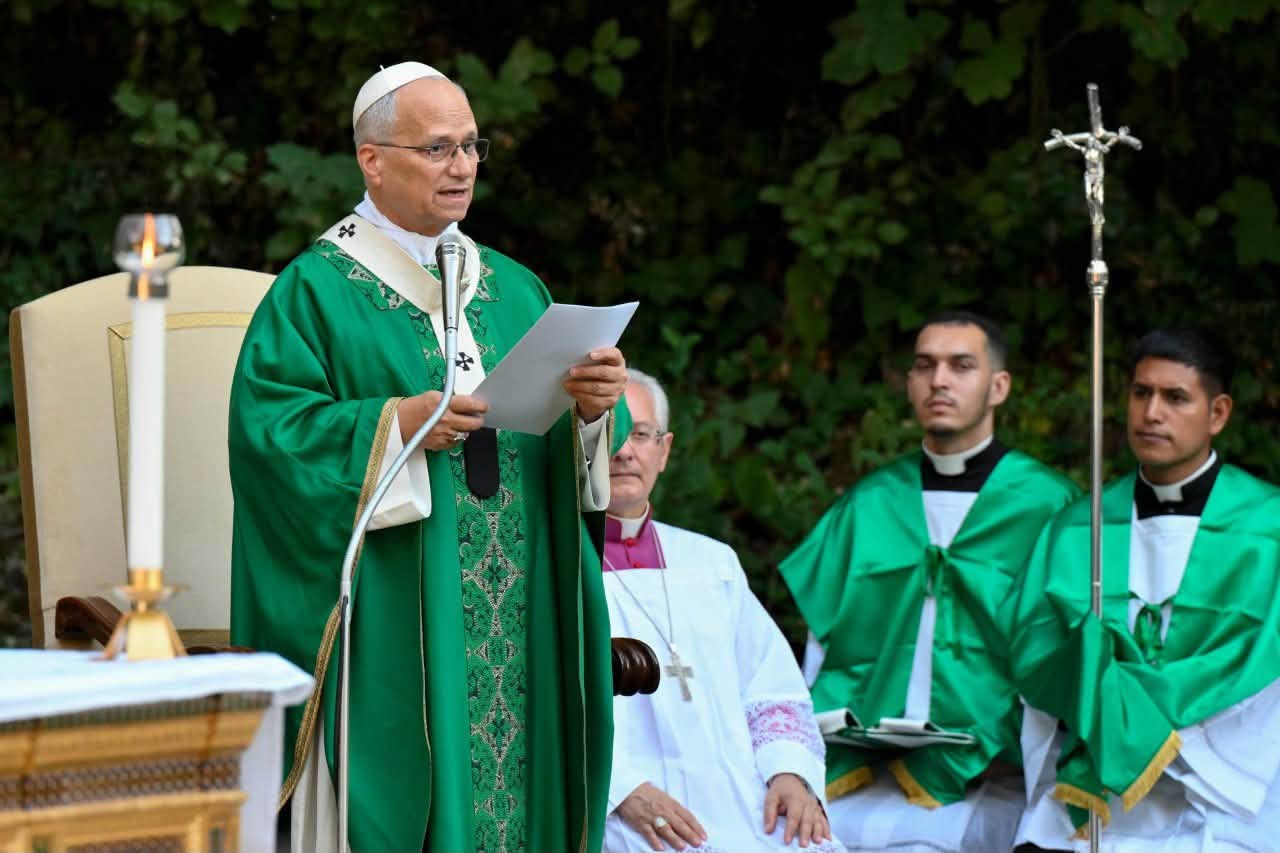
Archbishop Christophe-Zakhia el-Kassis, the Holy See's new permanent observer to the United Nations in New York, poses in an undated photo with U.N. Secretary-General António Guterres. At a conference sponsored by the U.N.'s Alliance of Civilizations Sept. 17, the archbishop said in an address, "Hate speech of any kind "contradicts the commandment to love one's neighbor, poisons public discourse, inflames division, and too often prepares the ground for violence and persecution. Credit: OSV News photo/Eskinder Debebe, courtesy United Nations


(OSV News) — Hate speech “contradicts the commandment to love one’s neighbor,” said the Vatican’s top diplomat to the United Nations.

Archbishop Christophe Z. el-Kassis, apostolic nuncio and the Holy See’s permanent observer to the U.N., shared his thoughts in a statement during the Sept. 17 “Global Conference on Promoting Interreligious and Intercultural Dialogue and Tolerance in Countering Hate Speech.”

The conference, which took place at the U.N.’s New York headquarters, was sponsored by the U.N.’s Alliance of Civilizations, created in 2005 to address social and cultural polarization.

In his address — which came one day after three Vatican dicasteries released a new note on the importance of interreligious and ecumenical dialogue — Archbishop el-Kassis said hate speech “poisons public discourse, inflames division, and too often prepares the ground for violence and persecution.”

Such damage is inflicted regardless of whether hate speech is “directed against individuals or communities on the basis of their religion, ethnicity, nationality, or any other characteristic,” he said.

While “freedom of expression is a fundamental right that must be protected,” said the archbishop, “this freedom carries corresponding responsibilities.”

“Speech that deliberately incites hatred or violence cannot claim the protection of liberty,” he said, since “it erodes the very conditions in which genuine freedom can flourish.”

A New Sin: Ecological Sin. Vatican Office Publishes Document Addressing Sins Against Creation


The document, Caring for Our Common Home: A Responsible and Fraternal Response to the Triune God, runs to more than 29,000 words and was developed by a subcommission that worked between 2022 and 2025. Its central argument is clear: the ecological crisis is ultimately inseparable from the crisis of the human person.


(ZENIT News / Rome, 09.02.2026).- The Catholic Church’s ecological teaching has taken a significant step forward with a new document that argues environmental destruction cannot be understood merely as a scientific, political or economic problem. It is also a matter of sin.

In a text published on September 2, the International Theological Commission calls for what it describes as an authentic ecological conversion and proposes a more precise expression for the moral reality involved: a “sin against creation and against the Creator.”

Environmental ethics workshops

The formulation deliberately goes beyond the more familiar expression “ecological sin.” For the commission, the problem is not simply that human beings damage forests, water, air or biodiversity. Environmental abuse also represents a failure to recognize the divine meaning of creation and humanity’s responsibility within it.

The document, Caring for Our Common Home: A Responsible and Fraternal Response to the Triune God, runs to more than 29,000 words and was developed by a subcommission that worked between 2022 and 2025. It was approved by a majority of the commission’s members in July and authorized for publication by Cardinal Víctor Manuel Fernández, prefect of the Dicastery for the Doctrine of the Faith, after being presented to Pope Leo XIV.

Its central argument is clear: the ecological crisis is ultimately inseparable from the crisis of the human person.

The commission traces the present situation to what it calls a “triple transformation” in humanity’s relationship with nature. Over the centuries, the perception of the natural world as God’s creation weakened; an increasingly exploitative form of anthropocentrism emerged; and environmental degradation eventually developed into a crisis of planetary dimensions.

But the document refuses to respond by replacing one extreme with another.

It rejects what it calls “predatory anthropocentrism,” the idea that human beings are absolute masters entitled to exploit everything around them. At the same time, it rejects radical biocentrism and forms of deep ecology that effectively dissolve humanity’s distinctive place within creation.

Thursday, September 17, 2026

Plans for the 2026 G20 Interfaith Forum Year


Click here to Learn About Who's Speaking


Plans for the 2026 G20 Interfaith Forum Year

2026 Theme:
Interfaith Engagement for Policy Impact

The United States hosts the 2026 G20 process, with its core feature, the Summit of leaders, scheduled at the Trump National Doral Miami resort in Miami, Florida on December 14-15, 2026. The G20 Interfaith Forum Association (“IF20”) plans two main meetings in conjunction with the G20 process this year: the first on May 26 at Georgetown University in Washington, D.C, and the annual Forum in Salt Lake City, Utah, October 15-17, 2026.

The May 26 Washington Policy Forum will focus on analytic work on priority policies addressed through the G20 process. Four review papers will highlight diverse religious contributions to G20 2026 topics and proposed action recommendations. These topics will provide the core structure for the October meeting in Utah. The topics focus on themes related to the three themes the US government has announced for the G20 2026 US presidency: (1) Economic Growth for the Common Good, (2) Energy Security for a Sustainable Future, and (3) AI and the Human Future. A fourth review (4) will focus on more general themes: Interfaith Engagement around the UN Sustainable Development Goals. The review papers and discussion at the Washington Conference will focus on ways that religious values and practices relate to and can add to the critical topic areas, aiming to highlight service of the common good. They will reflect and draw on the ongoing work of the wide range of faith and interreligious networks and alliances engaged in humanitarian, development, and peacebuilding work. Drafts of the four reports will be circulated for consultation and comment prior to the May 26 meeting, then revised as core documents for the October Forum.

The October 15-17 Annual Forum, in Salt Lake City, will focus on the themes identified during the policy review process, with some additional themes identified by Forum participants. Plenary sessions will address the policy themes developed in Washington plus other priority themes, such as the food crisis, health issues (including mental health), education, children’s issues, religion and economic progress, care for creation, etc. Concurrent sessions will facilitate in-depth discussion and analysis. The Salt Lake Forum will include invited speakers, with several sessions responding to topic proposals relevant to Forum priorities from individuals and organizations.

Engagement. The Forum will involve interactive sessions in addition to keynote presentations. The aim is to highlight pertinent experience and to identify emerging areas for constructive forward-looking action. Active civil discourse, with recognition of diverse perspectives and experience, are the driving principle. Active participation by those attending is expected. The closing plenary will highlight major themes and action recommendations, relating them to the continuing G20 agenda. Participants will bring relevant and diverse expertise, from different regions and religious communities. Expressions of interest through the IF20 Secretariat (contact above) are welcome.


Source  (@ Center of Page)

Monday, July 20, 2026

“The Epstein scapegoat?”


“The Epstein scapegoat?”

It has been fascinating watching the Epstein narrative unfold as well as seeing nearly all the blame for the heinous crimes of sex trafficking be placed on one individual and few of his overtly evil counterparts such as Bill Gates, the Clintons, etc.

The narrative seems to be a form of cover, designed to hide (and thereby extend) the trafficking operations that run through Masonic lodges, religious bodies (ie. Vatican), and govt. agencies, all while steering the public to associate sex trafficking with a single prominent villain

Ultimately, concealing the ancient bloodlines, papal families, and occult orders that have been behind SRA and human trafficking for centuries

But not only is Epstein a scapegoat for the hidden hand, he is also a scapegoat for the current system. His apparent exposure is fueling mass distrust toward our current power structure, thereby playing right into its controlled demolition. In order for this new system to rise, the old must be brought to ashes…