Showing posts with label research. Show all posts

Thursday, October 15, 2026

These common infections can cause cancer...


These common infections can cause cancer. Here’s what can lower your risk.

Recent research indicates that infectious diseases cause about 12 percent of new cancer cases.

October 14, 2026 at 5:00 a.m. EDT
Yesterday at 5:00 a.m. EDT


Helicobacter pylori bacteria. (Steve Gschmeissner/Science Source)


By Daniel Wu

About 12 percent of new cancer cases worldwide in 2024 were caused by infectious agents such as viruses and bacteria, according to a recent study by the International Agency for Research on Cancer.

That means a sizable share of the cancer burden around the world is preventable with tools we already have, including vaccines and other preventative measures, researchers said.

“We have very actionable targets,” said Gary Clifford, a cancer epidemiologist and one of the authors of the study that published in the Lancet Oncology. “We have very many tools against these viruses already.”

Several infectious diseases, like the human papillomavirus and Epstein-Barr viruses, have known links to cancer. Viruses and other infectious diseases can cause cancer several ways: by causing mutations in cells’ ability to reproduce, inducing chronic inflammation and weakening the immune system.

“Viruses are not designed or evolved to cause cancer,” Clifford said. “But it can be a side effect.”

What infections were most often connected with cancer?

Recent research has expanded the range of cancers associated with some infectious diseases and microorganisms, experts said. The recent study incorporated cancers associated with HIV, which has been linked to a rare eye cancer and heightens the cancer risk from other infections. The Epstein-Barr virus, once mostly linked to a rare type of head and neck cancer, has also been associated with stomach cancer.

Tuesday, October 06, 2026

I’ve seen the horrific content that some kids watch – it’s no wonder our children are in trouble


From reports of child-on-child abuse in schools to the Cornell 7 case, every day we see more examples of society’s inability to educate boys properly. Rebecca Spargo writes about what she’s learned while researching for her new novel and how the issue isn’t just teaching kids right and wrong – but also not to stay silent

Tuesday 06 October 2026 01:00 EDT


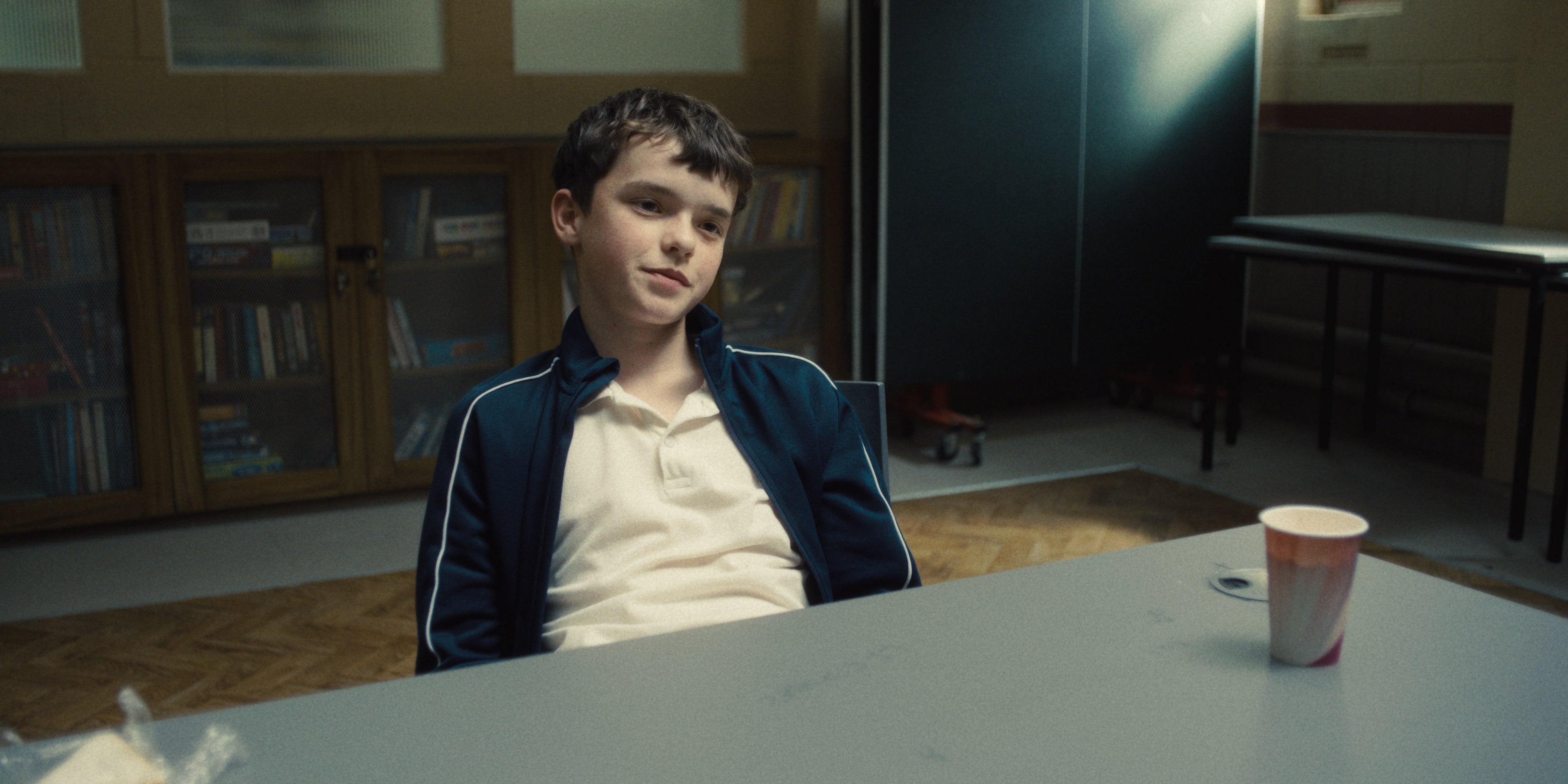
The drama ‘Adolescence’ displayed to many the dark places that teenagers go without proper guidance (Netflix)


Like most women, I was pretty horrified at the stories that emerged from the “Everyone’s Invited” campaign in 2021. The campaign invited young women to publish anonymous testimonies of peer-on-peer sexual misconduct and violence they had experienced at school. At the time, you could search all of the schools that had been mentioned and every single school I could think of, both primary and secondary schools, appeared when I searched. It was really shocking.

I would love to say that this is now a thing of the past, but it’s not.

A recent report in The Guardian revealed that thousands of cases of child-on-child sexual abuse in schools, including multiple rapes, are reported to police every year. More than a third of the rape victims were children under 13. Of those where the sex of the victim is documented, two-thirds were girls.


A report found thousands of cases of child-on-child sexual abuse in UK schools (Getty)

Every single woman I know is appalled by this. I have two daughters, but quite a few of my friends have sons. We all consider ourselves feminists, and we talked a lot at the time of the “Everyone’s Invited” campaign about how devastating it would be to have to consider whether your son was capable of behaving that way. That was the spark for my novel, entitled Such a Nice Boy: what if you are confronted with the truth of what your son has done and are forced to consider what he might be capable of?

When I was growing up, a parent’s greatest fear was that their teen might fall in with a bad crowd. Now, that “bad crowd” is their phone, and the wrong people are being actively pushed to them by algorithms, strangers, or their friends, often in the form of extreme and violent porn and misogyny.

Many parents aren’t fully aware of how common it is for boys and girls to see this sort of material and what it’s actually doing to them. There’s a very common belief that if you’ve brought your child up to be good and decent, you have somehow inoculated them against this kind of influence; that it would never be “my child” who would do something like this. But many parents just don’t really understand what their children are looking at.

How the brain uses memory to imagine what might have been


October 3, 2026

Philosopher and 2026 MacArthur “genius grant” recipient Felipe De Brigard explains how our brains use imagination to reconstruct the past

By Allison Parshall edited by Claire Cameron


PM Images/Getty Images

Neuroscience

A month ago philosopher Felipe De Brigard received a strange phone call. “Are you in a private place where you can have a private conversation?” the voice on the other end asked.

He was on a work retreat surrounded by colleagues. “Just say you need to talk about your taxes,” the caller said. De Brigard excused himself to find a private space, panicking the whole time about his taxes—but it was actually the MacArthur Foundation on the line. De Brigard had been awarded a prestigious “genius grant,” an $800,000 fellowship with no strings attached.

“I just was floored. And I had to put everything back together and walk back in like nothing happened,” says De Brigard, who is a professor at Duke University and originally from Bogotá, Colombia. He is only the second philosopher to be awarded the fellowship in the past 30 years.

De Brigard would be the first to tell you that his recollection of that day may be flawed. As a philosopher and cognitive scientist, he studies the fallibility of memory. Our brains don’t work like digital cameras recording our experiences to a mental hard drive, he explains. We store only some parts of our experience—gestures, stories, the gist. When we go to retrieve those memories, our brains need to fill in the gaps.

De Brigard’s research shows just how intertwined our brain’s memory is with imagination. We use some of the same mental machinery to reconstruct the past as we do to imagine the future—and to imagine what might have been.

Scientific American spoke with De Brigard about why false memories form, why we dwell on the roads not taken, how forgiveness influences memory and whether we should worry about artificial intelligence becoming conscious.

[An edited transcript of the conversation follows.]

Tuesday, September 29, 2026

Taxpayer-Funded Researchers Push Depopulation for “Sustainability”


Taxpayer-Funded Researchers Push Depopulation for “Sustainability”
The New American Video

Sep 28, 2026
A new taxpayer-funded “study” published in a UN-aligned journal argues that the human population must be slashed by 50 percent—to about 4 billion people by 2200—for “sustainable development.” Those who remain, the authors say, will have to accept a much lower standard of living, more restrictions on consumption, and even “resource quotas.”

On this episode of Behind The Deep State, The New American’s Alex Newman exposes the latest neo-Malthusian push for depopulation. He breaks down the paper in Sustainable Development, its ties to the UN’s Agenda 2030 Sustainable Development Goals, and the long history of this anti-human ideology—from Thomas Malthus and the Club of Rome to John Holdren and open calls at UN climate summits. Newman also notes what the study ignores: fertility rates have already collapsed below replacement in much of the world, and the real demographic crisis is coming from too few people, not too many.
Your tax dollars helped fund this. Don’t miss this must-see episode.


Thursday, September 17, 2026

Researchers Discover New Virus After Inventing a ‘Mosquito Toilet’


Researchers invented a 3D-printed device to scan mosquito excrement for viruses, the same way wastewaster is monitored for the spread of disease

By Cara Lynn Shultz

Published on September 17, 2026 11:23AM EDT


Dana Price with the ‘mosquito toilet’.
Credit : Dana Price


NEED TO KNOW
  • Researchers created a 3D-printed device to collect mosquito waste and study viruses they may carry
  • They discovered genetic evidence of new viruses, including one previously found in snowy owls in Europe
  • The goal is to develop technology that monitors mosquito waste for emerging viruses and health threats
Researchers have discovered new viruses after testing mosquito poop captured in a 3D-printed “mosquito toilet.”

After noticing how the spread of viruses like COVID-19 are monitored through wastewater, entomologist Dana Price decided to apply that same principle to mosquitoes, which transmit illnesses like West Nile, Zika and dengue.

“What we did, colloquially, was build a mosquito toilet,” Price, an associate professor at the Center for Vector Biology, Department of Entomology in the School of Environmental and Biological Sciences at Rutgers University, said in a press release from the school. Price and his fellow researchers created a 3D-printed funnel and collected waste from Culex mosquitoes in a New Brunswick, N.J., yard between Sept. 12, 2021 and Sept. 21, 2022. Their results were published in Microbiology Spectrum.

Tuesday, September 01, 2026

Inhaler Overuse Linked to Heart Risks


(Adobe Stock) j


Friday, 28 August 2026 10:17 AM EDT


For people with asthma or COPD, reaching for a rescue inhaler too often may be a warning sign — not just for their lungs, but for their heart.

It's estimated nearly 1 in 5 asthma patients and 1 in 3 COPD patients overuse these products.

Researchers analyzed real-world health data from more than 280,000 asthma and COPD patients in Belgium.

They found frequent use of short-acting reliever inhalers, also called bronchodilators, was associated with a higher risk of cardiovascular disease and death, including heart failure, heart attack and ischemic stroke.

Compared with no use, the increased risk of death ranged from 12% to 73% depending on the type of inhaler and whether patients had asthma or COPD.

Using three or more reliever inhalers a year was also associated with a higher risk of death compared with using two or fewer.

Researchers say these inhalers briefly relax airway muscles, but can also cause faster, irregular heart rates. And relying on them too heavily may be a sign that the underlying asthma or COPD isn't well controlled.

"Overuse of short-acting bronchodilators is an alarm signal which indicates uncontrolled airway inflammation and requires a medical review of treatment," said lead author Lies Lahousse from Ghent University in Belgium.

Researchers say overuse should prompt patients to have their lungs checked and healthcare providers to review patients’ treatment, inhaler technique and adherence.

The study was published in the journal ERJ Open Research.


© HealthDay


Monday, August 03, 2026

The Summer of Taking Christian Nationalism Seriously


MEGAN FOWLER

Presbyterians and Lutherans, among others, voted at annual conventions to study how to respond to the political movement.


CHRISTIANITY TODAY
JULY 30, 2026
Sollina Images / Getty


At denominational gatherings across the country this summer, one topic of conversation has been a near constant: Christian nationalism.

Denominations discuss and debate a wide range of subjects at their annual conventions, occasionally making headlines, as Southern Baptists did in June with a vote to ban women from preaching. But among Baptists, Presbyterians, and other evangelical groups, a quieter work has been underway in committees and working groups as churches grapple with how to address growing efforts to marry Christianity with the tools of government.

At its annual synod in June, the Christian Reformed Church (CRC) voted to form a Christian nationalism study committee that will present a report in 2028. The same month, the Presbyterian Church in America (PCA) heard a partial report from a Christian nationalism study committee it created last year and approved the group continuing its work for another year.

Such projects, which on their face might seem like academic exercises, have met resistance within some denominations, in part stemming from disagreements over whether Christian nationalism is a serious theological problem or a passing fad.

The Christian Reformed Church narrowly approved—by a 93–84 vote—a resolution to form its study committee. The group will define the term Christian nationalism, examine how different forms of the teaching have appeared throughout church history, and guide CRC churches on what it means for them.

The goal of the resolution is, in part, to reject “theological frameworks that conflate ecclesial identity with national identity.”

Wednesday, July 29, 2026

Fauci journals prove he funded research that created COVID-19, biologist says | Elizabeth Vargas Rep


Fauci journals prove he funded research that created COVID-19, biologist says | Elizabeth Vargas Rep

NewsNation

Jul 29, 2026  #VargasReports

Dr. Anthony Fauci is set to appear on Capitol Hill on Wednesday after being subpoenaed to testify about the origins of COVID-19. Dr. Richard Ebright, a professor of biology at Rutgers, has testified on this issue before, and tells NewsNation's Rich McHugh that the recent pages from Fauci's private journals are beyond damning.

Friday, July 10, 2026

Religion’s Longstanding Gender Gap Is Narrowing Among Gen Z. But Which Gender Is Narrowing It—and Why?


by Chantelle Lee

Reporter
Jul 9, 2026 6:00 AM ET


Photo-Illustration by Chloe Dowling for TIME (Source Images: Fabrice Lerouge—Getty Images; Weiquan Lin—Getty Images; Hiroshi Higuchi—Getty Images; Syuzanna Guseynova—Getty Images; SivStockMedia via Canva)


A gender gap has long persisted in religious identity. Historically, data has widely, and with remarkable consistency, shown women being more religious than men. But that appears to be changing when it comes to Gen Z.

Recent surveys indicate the longstanding gap is now closing among young men and women—and one even suggests that it might be beginning to open in the opposite direction.

Which gender is driving the shift, and why, is a matter of some contention, however.

Recent Gallup polling attributed the narrowing gender gap among Gen Zers primarily to a rise in religiosity—meaning the depth of religious belief—among young men. But other surveys have found no such change in young men’s religious identities, and have instead shown that the change is being caused by more young women turning away from religion—a trend that some attribute to young women’s frustration with the sexism that persists in some places of worship.

TIME spoke to pollsters, political scientists, religious leaders, and others about the data and what they make of it.

Are young men becoming more religious?

Gallup polling released in April found that in 2024-2025, 42% of men between the ages of 18 and 29 said religion was “very important” to them. That figure marks a jump of 14 percentage points from just two years before, when 28% of young men said this. It also shows a reversal of past gender dynamics: in previous years, women surpassed men in saying that religion is important to them. In 2012-2013, for instance, 51% of women between the ages of 18 and 29 said so, compared to just 41% of men in that same age group. In 2024-2025, meanwhile, just 29% of young women said religion is very important in their lives, notably lower than the 42% of young men who said the same.

“Historically, there has been a gender gap in religiosity in this country as long as we’ve had survey research,” says Frank Newport, a senior scientist at Gallup who worked on the poll. “What I think is important in our findings so far is that the gender gap among young Americans—18 to 29—has basically disappeared across several measures of religiosity. Men and women are either statistically the same or, in one measure, men are more religious, among 18 to 29 year olds.”

Wednesday, July 08, 2026

Ancestry Discovers Pope Leo XIV’s Sicilian Roots


Ancestry Discovers Pope Leo XIV’s Sicilian Roots

Kelly Barbano-Bodami - Research Manager, Ancestry ProGenealogists | Kyle J. Betit - Sr. Genealogist, Ancestry ProGenealogists | Lisa Elzey - Sr. Story Producer, Ancestry

15 May 2025

Key Takeaways
  • Pope Leo XIV’s paternal line traces to Milazzo, Sicily, where his grandfather was born Salvatore Giovanni Gaetano Riggitano.
  • An Alien Registration record revealed his grandfather’s original name, birthplace, and that he never naturalized as a U.S. citizen.
  • His Sicilian ancestors were lower-middle to middle-class, holding respected community positions like `Usciere comunale` and `trafficante` (merchant).
As the white smoke cleared and a new Pontiff emerged, questions about his family history echoed across the globe. Where did his ancestors walk? What stories shaped his lineage? Now, through meticulous research, Ancestry has uncovered compelling documents that trace the paternal line of Robert Prevost, now known to the world as Pope Leo XIV.
 
Finding the True Origins of the Pope’s Grandfather, John R. Prevost

With the announcement of the first-ever United States-born Pope, professional genealogists at Ancestry began the search that included a path of twists and turns, unexpected name changes, and, ultimately, the answers. We started with the 1950 United States Census, the most recent census record collection available and identified John R. Prevost, the grandfather of Pope Leo XIV, listed as a “Romance Language Teacher” in Chicago, Illinois, living at 5465 Ellis Ave., (remember this clue) with his wife, Suzanne L. Prevost, and his son, John C. Prevost.


1950 United States Federal Census - John R. Prevost

We were unable to locate many records in the United States before 1950 for John Prevost, outside of some city directories. A prominent clue was that John Prevost’s death certificate stated that he was a citizen of Italy – indicating that he never naturalized as a United States citizen. Through the National Archives Flexoline Database, we located an Alien Registration record, under the name John R. Prevost, born 1876 in Italy, residing in Chicago in 1940. Alien Registration began in 1940 for anyone who was a foreign national and had not naturalized as a United States citizen.

According to the Alien Registration, dated 24 September 1940, John Riggitano Prevost arrived in the United States at New York in May 1905 on the SS Perugia. Surprisingly, John gave his name on his alien registration at arrival as Salvatore Giovanni Riggitano Alioto (Giovanni is the Italian equivalent of the English name John). His birthplace was listed as Milazzo, Province of Messina, Italy, and he was born on 24 June 1876 – an exact match to the date of birth listed on John R. Prevost’s death certificate.


Alien Registration Form (AR-2) for John Riggitano Prevost; National Archives

The address on the Alien Registration—5465 Ellis Avenue, Chicago, Illinois—also matches the address on the 1950 census (did you remember this clue?) and the address on the World War II Draft Card for Pope Leo XIV’s father, Louis Marius Prevost.


United States World War II Draft Registration Card - Louis M. Prevost

Wednesday, May 13, 2026

James Arrabito: A Life Cut Short A Compelling Legacy of Faith, Research, and Controversy

Falken
Oct 29, 2025


Evangelist, Historian, and Photographer of Faith

A Compelling Legacy of Faith, Research, and Controversy

The Man Behind the Lens

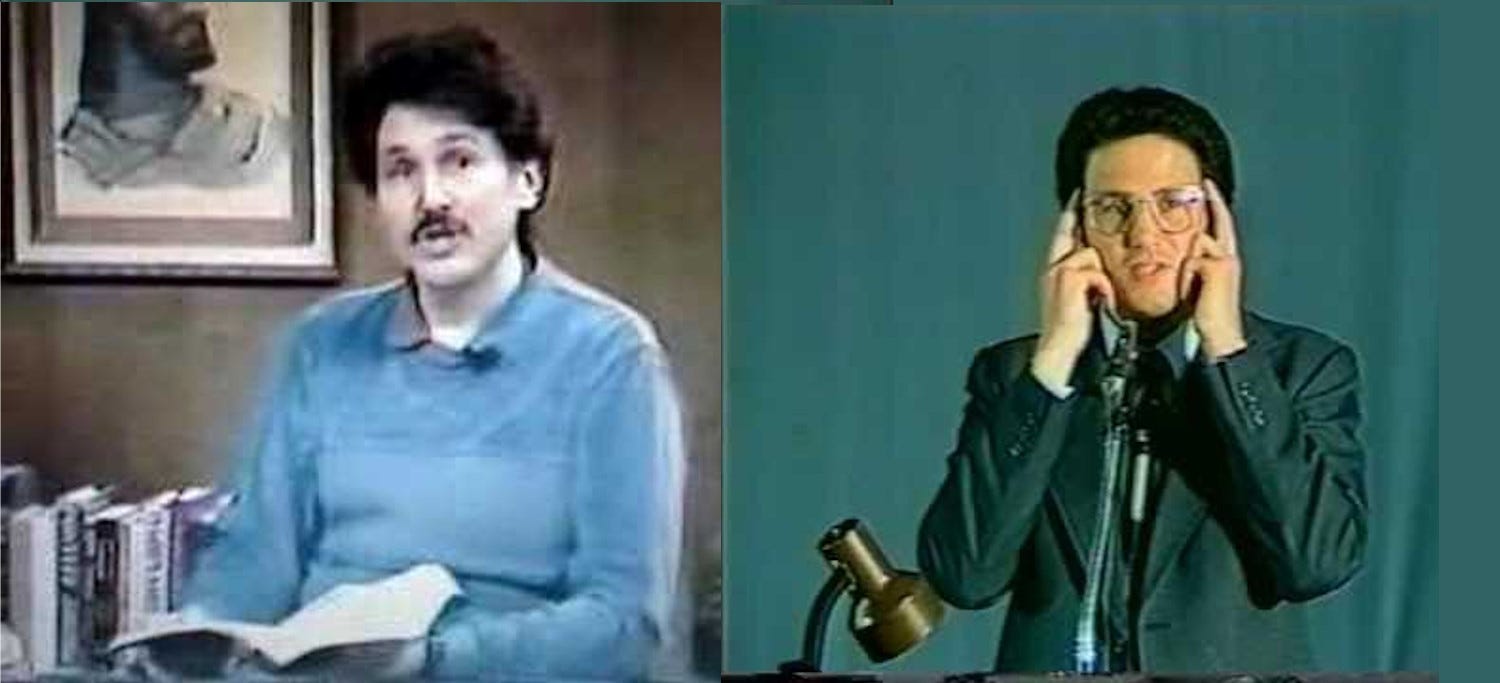
James “Jim” Arrabito (1950-1990) was a multifaceted figure whose life straddled the worlds of art, evangelism, and historical research. A Seventh-day Adventist artist, photographer, lecturer, and evangelist, Arrabito dedicated his life to documenting what he believed to be suppressed truths about church history and biblical prophecy.

Unlike many religious speakers of his era, Arrabito brought an artist’s eye and a photographer’s precision to his work. His exhibitions were not mere lectures but visual journeys through time, tracing the footsteps of Sabbath-keeping communities throughout history—what he called the “Church in the Wilderness.”

The Photographer’s Quest

Arrabito’s photographic work was nothing short of extraordinary. His most celebrated exhibition, displayed at the 1990 General Conference Session of Seventh-day Adventists in Indianapolis, featured stunning images documenting traces of Sabbath-keeping churches through the ages from around the world. These weren’t just photographs; they were visual arguments—evidence of a continuous thread of believers who maintained Saturday worship despite centuries of opposition.

His photography took him to remote mountain refuges, ancient Waldensian communities in the Alps, and historical sites across Europe and beyond. Each image told a story of faith under persecution, of communities who chose isolation over compromise. The exhibition, titled “The Israel of the Alps” among other presentations, left viewers profoundly moved by the visual testimony of forgotten believers.

Saturday, May 02, 2026

This Is the First Thing You Should Do When You Wake Up, Says a Cleveland Clinic Gastroenterologist


Kristine Gasbarre Qaderi

Thu, April 30, 2026 at 7:02 AM EDT


This Is the First Thing You Should Do When You Wake Up, Says a Cleveland Clinic Gastroenterologist 
(Tanja Ivanova/Getty Images)


Research has shown that the majority of people regard morning as the happiest time of day. It can be a space for calm, routine, and self-care before work, school, and chores start tugging at your attention.

On a similar note, an overwhelming number of Americans fuel their day with coffee—but Cleveland Clinic gastroenterology doctor, Adrienna Jirik, MD, says there’s a beverage that should precede even that uplifting caffeination: water.

We lose hydration during our sleep, Dr. Jirik explains, primarily due to a fascinating process: our system releases moisture as we breathe. She explains that in a typical eight-hour night’s sleep, “you would lose about 300 to 400 cc of water.” That’s equivalent to between approximately 10 and 14 ounces. “People have lots of [gastrointestinal] water loss,” Dr. Jirik says, referring to the subtle process as “insensible losses.”

Sweating can factor in, too, and of course the body’s release of fluid through urination. So, Dr. Jirik tells patients to drink “at least a cup of water when you wake up in the morning.”

The Cleveland Clinic adds that replenishing hydration can also stave off urinary tract infections, ignite metabolism, and improve digestion.

If you’re one of those people who just doesn’t love the taste of plain water, Dr. Jirik says seltzer water or even juice is fine—or, if you’re watching sugar intake, a splash of juice in a glass of water can make it more appealing.

Lemon water is also one way to wake up with a little flavor that also can help the liver’s natural cleansing function, while electrolyte products, such as Liquid I.V., contain minerals such as sodium and potassium that help the body actually absorb that helpful hydration.


Sunday, January 04, 2026

Some cultures are simply not compatible with American values


Opinion by Washington Examiner, Washington Examiner


Some cultures are simply not compatible with American values

First, there was fraud in the Department of Agriculture’s Federal Child Nutrition Program. Then it was fraud in Medicaid’s “nonstandard benefits” programs. Now, there is fraud in the Department of Health and Human Services’s Child Care and Development Block Grant program. The common element running through all these scandals is Minnesota’s Somali community. This is a story not just about fraud, but about how the United States has failed to think seriously about cultural compatibility in immigration policy, and how the costs of that failure are borne by taxpayers and by the rule of law.

Minnesota’s Somali population is almost entirely a post-1990 phenomenon. Refugee resettlement following Somalia’s clan wars brought more than 10,000 Somalis to the state in the 1990s, with the population tripling by 2010 and surpassing 75,000 by 2024. Nationally, more than 110,000 Somali refugees were admitted between 2000 and 2024 alone. Nearly all (99.7%) are Muslim.

This population did not scatter randomly across the country. Somali migrants disproportionately settled in states offering the most generous public benefits: expansive Medicaid eligibility, large child care subsidies, extensive language services in schools, and dense networks of refugee-focused nonprofit organizations. Minnesota became the epicenter, but similar targeting occurred elsewhere. That was not an accident; it was rational behavior in response to incentives.

What followed has been a sustained failure of assimilation, and, increasingly, an explosion of fraud.

Friday, December 19, 2025

What do Channel2 NOW and Channel3Now have in common?

On the evening of December 18, 2025 the law enforcement authorities announced the discovery of the lifeless body of the shooter that left two students dead and nine others wounded at Brown University on December 13, 2025, and who had also gunned down an MIT Professor at Brookline, Massachusetts on December 15, 2025. The gunman was identified as Cláudio Manuel Neves-Valente, a 48-year-old former graduate student of  Brown University. I was dumbfounded by the news, therefore I searched online for more information about the unusual case. 

  • I found an article by a digital news source called Channel2 NOW. https://tinyurl.com/49jb5ajc
  • The news source's moniker piqued my curiosity, so I delved deeper into the origin of Channel2 NOW, and I found a Contact Us section on its website, and further down the Contact Us page I found it also has a Facebook page.
  •  In Channel2 NOW's Facebook page it shows that it was created January 31, 2025 by Farhan Asif.


Monday, December 15, 2025

Why do some people stay in their religion and others leave? A new Pew report has some clues.


(RNS) — Americans who had a good experience as children were likely to keep their faith. Those with bad experiences left, according to a new study from Pew Research Center.


Religious pluralism means more than living around people of different faiths. (Thai Noipho/iStock via Getty Images Plus)

Bob Smietana
December 15, 2025


(RNS) — Americans who had a positive religious experience as kids are most likely to keep the same faith as adults. Those who had negative experiences are most likely to change faiths or give up on religion. And while a majority (56%) of Americans still identify with their childhood faith, a third (35%) have switched — including 20% who now say they have no religion.

Those are among the findings of a new report from Pew Research Center, based on data from Pew’s 2023-24 U.S. Religious Landscape Study and a survey of 8,937 American adults conducted between May 5 and May 11.

Researchers asked Americans what religion they’d been raised in as well as their current religion, then asked those who switched or left their childhood faith about why things changed. They also asked Americans who are religious why they remain part of that faith.

Sunday, December 07, 2025

William Miller's 14 Rules of Bible Interpretation


By The Watchman


Those who are engaged in proclaiming the third angel’s message are searching the Scriptures upon the same plan that Father Miller adopted. In the little book entitled “Views of the Prophecies and Prophetic Chronology,” FatherMiller gives the following simple but intelligent and important rules for Bible study and interpretation:– {RH,
November 25, 1884 par. 23}

“1. Every word must have its proper bearing on the subject presented in the Bible; 2. All Scripture is necessary, and may be understood by diligent application and study; 3. Nothing revealed in Scripture can or will be hid from those whoask in faith, not wavering; 4. To understand doctrine, bring all the scriptures together on the subject you wish to know, then let every word have its proper influence; and if you can form your theory without a contradiction, you cannot be in error; 5. Scripture must be its own expositor, since it is a rule of itself. If I depend on a teacher to expound to me, and he should guess at its meaning, or desire to have it so on account of his sectarian creed, or to be thought wise, then his guessing, desire, creed, or wisdom is my rule, and not the Bible.” {RH, November 25, 1884 par. 24} The above is a portion of these rules; and in our study of the Bible we shall all do well to heed the principles set forth. {RH, November 25, 1884 par. 25}

RULES OF INTERPRETATION

IN studying the Bible, I have found the following rules to be of great service to myself and now give them to the public by special request. Every rule should be well studied, in connexion with the scripture references, if the Bible student would be at all benefited by them. {1842 WiM, MWV1 20.1}

Tuesday, November 11, 2025

Jesuit Joins Georgetown To Advance Research, Support for LGBTQ+ Catholics


Date Published: October 29, 2025


As part of the John Hayden Doctoral Dissertation Fellowship, Sharma will serve as a Jesuit pastoral associate in the LGBTQ Resource Center.

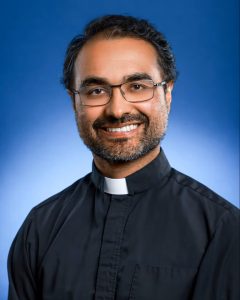
Fr. Lucas Sharma, S.J., has joined Georgetown’s Jesuit community with a unique mission.

Starting this fall, he will serve as a Jesuit pastoral associate in Georgetown’s LGBTQ Resource Center, minister to the campus community, and continue his studies on religion, gender and sexuality as part of his Ph.D. in sociology.

Sharma’s work is part of Georgetown’s inaugural John Hayden Doctoral Dissertation Fellowship, made possible through the estate of John T. Hayden, which also supported the university’s new Hayden residence hall. The fellowship allows Sharma to accompany students, support and develop programming, and conduct research on the topic of LGBTQ+ Catholics.

“It is a once-in-a-lifetime opportunity to be able to give in this particular way and continue my research,” he said. “Hopefully, my work can inform how we might make Georgetown a place of more belonging for students on the margins across identities.”

Sharma graduated from Gonzaga University and volunteered in the Jesuit Volunteer Corps in Washington, DC. He pursued a master’s degree from Loyola University Chicago and joined the Jesuits in 2012.

Sharma has since earned master’s degrees from Fordham University and the Jesuit School of Theology of Santa Clara University and has taught sociology at Seattle University. He continues to serve on the university’s board of trustees and as the Jesuit advisor to Seattle’s law school dean. He also recently published a study in the Sociology of Religion that predicts Catholic priests’ attitudes toward homosexuality based on their approval of Pope Francis.

Thursday, October 23, 2025

Catholics who see themselves as ‘evangelical’ asked to take part in new research


Rise in number of evangelical Catholics of interest given “historical association of evangelicalism” with people like Ian Paisley


Stock image of people at Mass, here at St Mary's Church in Belfast city centre


October 22, 2025 at 6:00am BST

Practising Catholics who see themselves as ‘evangelical’ are being asked to take part in a new research project following an apparent surge in numbers.

The research is being carried out by Queen’s University Belfast after a recent survey indicated a dramatic rise in Catholics who term themselves evangelical.

According to a 2023 survey conducted by the polling organisation Savanta ComRes on behalf of the Evangelical Alliance in Northern Ireland, 38% of practising Catholics would now describe themselves as evangelical.

This represents a dramatic increase from the figure of 6% which was recorded in 2004, the only time this question was asked in the Northern Ireland Life and Times Survey, run by the ARK social policy hub at Queen’s and Ulster universities.

Evangelicalism has traditionally been more associated with the Protestant tradition, and now social scientists want to talk to those Catholics who would call themselves evangelical to explore the extent of the rising trend.

Professor Gladys Ganiel, from the School of Social Sciences, Education and Social Work at Queen’s, said the 2023 survey results were highly unexpected.

Wednesday, August 06, 2025

The Apostle Peter in Rome


Jesus’ chief disciple examined
Nicola Denzey Lewis May 13, 2025 

In this blog post, Brown University Religious Studies professor Nicola Denzey Lewis answers frequently asked questions about the apostle Peter. Denzey Lewis appears in the CNN series Finding Jesus: Faith, Fact, Forgery, which aims to investigate artifacts that shed light on the world in which Jesus lived.—Ed.

What traditions connect the apostle Peter to Rome?


The Repentant St. Peter by El Greco. Photo: The Phillips Collection.

Jesus’ chief disciple, Peter (also called Simon Peter or Cephas), has been associated with Rome for nearly 2,000 years. The earliest testimony to the apostle Peter’s presence in Rome is a letter from a Christian deacon named Gaius. Writing probably toward the end of the second century C.E.—so, around 170 or 180 C.E.—Gaius tells about the wondrous things in Rome, including something called a tropaion (see below for more) where Peter established a church—in fact, the Church, the Roman Catholic church at the site where St. Peter’s Basilica is today. But there are other traditions besides Peter’s tropaion.

One early Christian text, the Apocryphal Acts of Peter, recounts many things that Peter did in the city. At one point in Acts of Peter, Peter is taunted by a flamboyant heretic, Simon Magus. Simon challenges Peter to a flying contest around the Roman Forum, but Peter’s prayers make Simon crash to the ground, proving that Simon’s powers are not as great as his own.

At the end of this text, Peter, not wishing to be martyred for his faith, flees from Roman authorities on the Via Appia leading out of the city. Rather unexpectedly, Peter meets Jesus, who is traveling in the opposite direction. He asks Jesus, “Where are you going?” Jesus tells Peter that he is going to Rome “to be crucified again.” Peter realizes, from this, that he cannot flee from his fate.

“Where are you going?” in Latin is “Quo Vadis?” and there’s a medieval church in Rome called the Church of Quo Vadis at the spot where Peter met Jesus. To prove that his vision was real, you can still see there a bit of marble pavement which the faithful say miraculously preserve Jesus’ footprints.

Is it likely that the apostle Peter went to Rome and founded the church there?

Interestingly, the Bible says nothing about Peter ever traveling to Rome.

When the gospels end, Peter is in Jerusalem. It’s the same in the Book of Acts. The apostle Paul, in his letters, also talks about meeting Peter in the eastern Mediterranean. After Jesus’ death, Paul says that Jesus’ brother, James, and Peter are the co-leaders of the “church,” or assembly, of Jesus-followers in Jerusalem.

In short, there is no early textual evidence for Peter in Rome, so for some people, it’s very hard to believe that he ever traveled there. Not only is it a very long way, according to the New Testament, Peter was a fisherman who was not very educated and who spoke only Aramaic; he was not the type of person that might travel widely across the Roman Empire to a large city where Latin and Greek were the dominant languages.

The absence of connection between Peter and Rome in the New Testament, the lack of references to him in our earliest Roman Christian literature, and what we know of Peter’s background and character all combine to make it unlikely, to my mind, that he ever went to Rome.