Showing posts with label Digital Currency. Show all posts

Sunday, September 27, 2026

Prepping for a Cashless Control Grid: How Digital Currency Becomes Digital Control


Milan Adams 
Cashless Society, Economy, Preppers 

September 26, 2026  

When Money Stops Being Money

Something fundamental is vanishing, and most people will not notice until it is already gone. Not with a declaration. Not with a law passed in the dead of night. Simply, gradually, the option to buy something without creating a permanent record will disappear. The ability to save purchasing power outside of a system that can freeze it, monitor it, or program it will become a memory that seems almost fictional to those who never experienced it.

I have watched this unfold over years of observing payment systems, reading central bank white papers that few citizens bother to examine, and noticing how my own transactions leave increasingly detailed trails. The pattern is consistent across nations: convenience precedes surveillance, and surveillance precedes control.

We are not approaching a cashless society. We are sleepwalking into it. And for anyone who values independence, privacy, or the basic human right to conduct commerce without surveillance, this represents not progress but regression toward a form of control that previous generations would have recognized immediately and resisted forcefully.

Central Bank Digital Currencies (CBDCs) are the mechanism of this transformation. The digital euro, the potential digital dollar, the digital yuan already operational in China—these are not simply modernizations of payment systems. They are structural changes to the relationship between the individual and the state, between commerce and surveillance, between freedom and permission. Once fully implemented, they would create a financial infrastructure where every transaction is visible, every purchase is logged, and every economic decision requires implicit or explicit approval from authorities.

This is not speculation. This is documented policy. The Bank for International Settlements, which coordinates central banking globally, has explicitly stated that CBDCs will enable “programmable money”—currency that can be restricted based on time, place, or purpose. The European Central Bank’s digital euro project includes provisions for offline payments only up to limited amounts, with all larger transactions requiring network connectivity and identity verification. The Federal Reserve’s FedNow system, launched in July 2023, created the technical infrastructure for instant digital payments that serves as the foundation for eventual CBDC implementation.

Sunday, October 26, 2025

Mexico To Replace Cash With Digital Payments 🇲🇽 Mexico's Plan For A Cash...


Mexico To Replace Cash With Digital Payments 🇲🇽 Mexico's Plan For A Cashless Society & Digital ID

Oct 21, 2025 MEXICO
Mexico has announced plans to start phasing out Cash and many Mexicans are upset about what this could possibly mean for the future of the country. Many Mexicans are worried about their Freedom, invasion of privacy, and many other things. There are only a few people who are welcoming this new change and the digitization of Mexico as a whole. The Majority of Mexicans are not on board with any of this and have already voiced their concerns and started taking their own measures to protect themselves from something like this. Join me as we take a bike ride through the City of Merida Yucatan and talk about this very polarizing topic.


Friday, July 25, 2025

Something Truly DISTURBING is Coming!


🔥Something Truly DISTURBING is Coming!

Stephen Gardner

Streamed on:Jul 18, 4:15 pm EDT

Stephen Gardner and Catherine Austin Fitts discuss how the DOD, military industrial complex and government are stealing from citizens and lying about money. Check out https://x.com/solari_the or https://home.solari.com/ to learn more, get educated or join their newsletter.

Catherine Austin Fitts

Catherine Austin Fitts is a respected financial expert, former investment banker, and the founder of Solari, Inc., where she offers insights into the intersection of finance, governance, and policy. With a career spanning Wall Street to Washington, she has served as Assistant Secretary of Housing and Federal Housing Commissioner under President George H.W. Bush. Known for her ability to simplify complex economic systems.

I want to talk about the deep state, central bank digital currency and the control grid governments are building and more.

But I wanted to ask if you have an opinion on why former President George W Bush is basically in hiding, doesn’t really promote the republicans party much, seems to side with Obama and much and almost nothing on Trump.

Iran bombing Jeb Bush congratulated Trump.

BREAKING: Senators Rick Scott (R-FL) and Rand Paul (R-KY) file legislation MANDATING A FULL AUDIT of the Federal Reserve System Board of Governors and all regional Fed Banks.

Right before 9/11 Donald Rumseld said the Pentagon can’t account for over $2 trillion. You say the government has quietly stolen over $21 trillion. Tell me about that and is the Pentagon and war the number one money laundrying cover?


Thursday, July 24, 2025

The insights provided by the currency in circulation regarding the economy


The spike in transactions done through UPI, credit and debit cards, and online and mobile banking in the last decade indicates that India has a safe, secure, and reliable digital payment infrastructure. 

Vasant G Hegde Soumyadip Roy 
Last Updated : July 21, 2025 

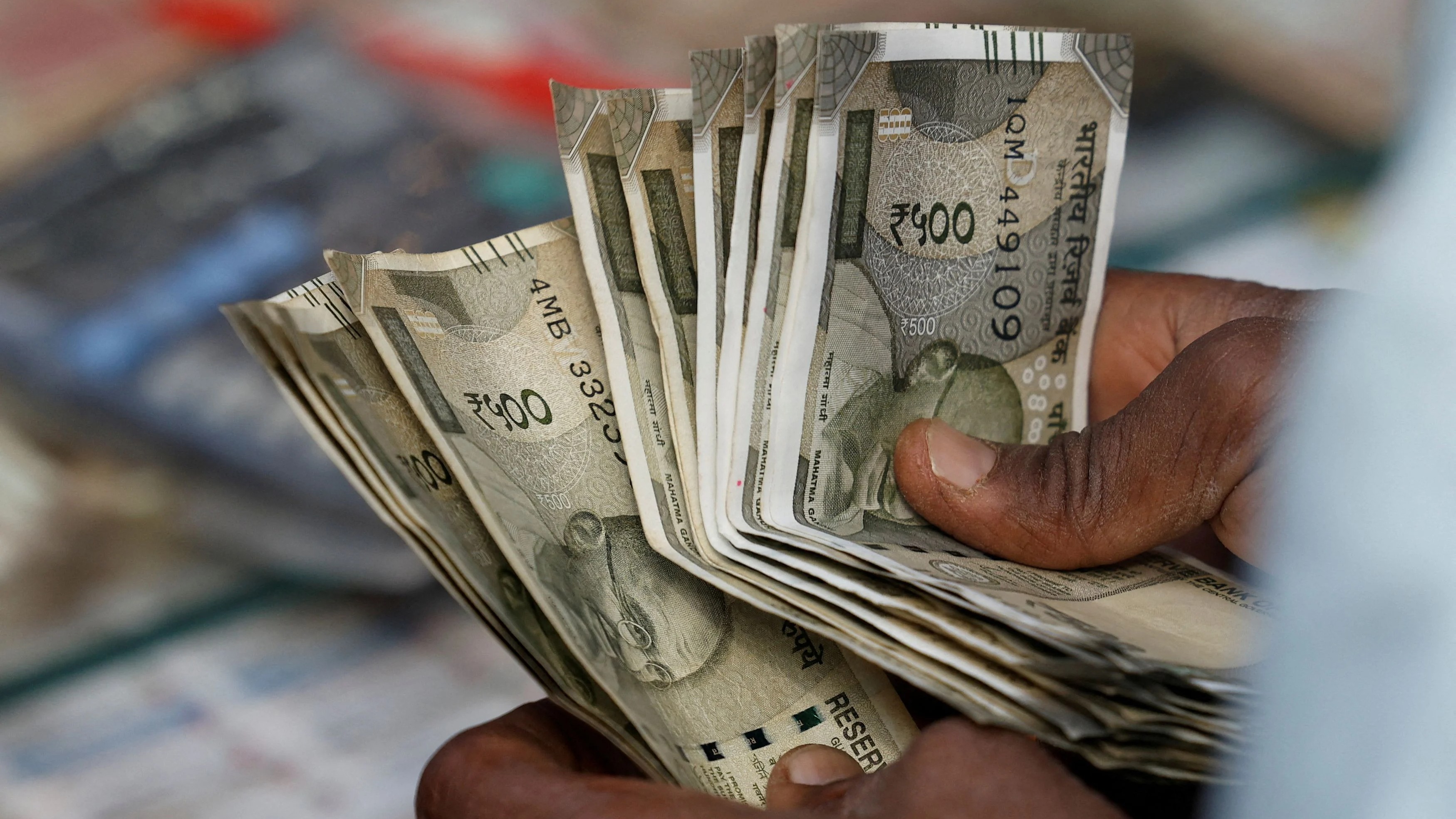
Within nine years of its launch, India’s Unified Payments Interface (UPI) has emerged as the leading digital payment platform, recently clocking 650 million transactions and surpassing Visa, which is one of the oldest and largest digital payment networks. Notably, Visa recorded a daily average of 640 million transactions in FY24. This trend might suggest—or even mislead people into thinking—that India is steadily becoming a less cash-dependent economy. However, an examination of the cash in circulation (CIC) in the economy between the demonetisation period, i.e., November 2016, and today shows that CIC has more than doubled from Rs 17 lakh-crore to Rs 37 lakh-crore. What explains these two seemingly divergent trends?


CIC is a key indicator for understanding the structure of any economy. The higher the CIC, the larger the informal sector tends to be. CIC also captures public preference for cash over digital transactions. A high level of cash usage can also frustrate the central bank’s initiatives towards financial inclusion. While the absolute amount of cash increases as the economy grows, CIC as a percentage of gross domestic product (GDP) offers valuable insights into payment habits of people and the effectiveness of monetary policy. Demographics also play a role in demand for cash: young India is more inclined towards digital transactions over cash, while cash usage typically spikes during general and state assembly elections. Households often overlook the opportunity cost of holding cash, resulting in a double whammy: loss of income and the erosion in the real value of money.

Wednesday, June 18, 2025

Chinese Central Bank head pledges to expand international CBDC use — Report


Jun 18, 2025, 14:31 GMT-4


China’s central bank chief Pan Gongsheng has pledged to expand the footprint of the digital yuan, reaffirming the country’s vision for its central bank digital currency (CBDC).

According to a Reuters report, China is creating an international operations center in Shanghai for the digital yuan, also known as e-CNY. Pan made the remarks at the Lujiazui Forum, a professional forum for high-profile local and international finance regulators and executives.

China envisions a “multipolar” currency system where multiple currencies support the global economy, Pan said. This vision contrasts with the current system, where a few currencies, like the US dollar and the euro, play large roles in the global financial system.

The US dollar, in particular, may have become less appealing to investors in 2025, partly due to the unscripted rollout of tariffs by US President Donald Trump over the past months.

Pan also weighed in on digital technologies, claiming that traditional cross-border payment systems are vulnerable to geopolitical risk.

“Traditional cross-border payment infrastructures can be easily politicized and weaponized, and used as a tool for unilateral sanctions, damaging global economic and financial order," he said.

The battle between stablecoins and CBDCs

Stablecoins, often pegged to the US dollar, have become well-known for their ability to facilitate cross-border transactions. These digital assets are considered one of crypto’s first breakthrough mainstream use cases and present a contrast to CBDCs, which are controlled by a centralized entity, such as central banks.

Despite the rising adoption of stablecoins, many countries continue to pursue CBDCs. Hong Kong, a special administrative region of China, is advancing its stablecoin pilot program. In Europe, lawmakers across member states continue to push for a digital euro, while the United Arab Emirates expects to roll out the digital dirham by the end of 2025. Israel has also released a preliminary design for a digital shekel.

According to a Feb. 11 report from the Official Monetary and Financial Institutions Forum (OMFIF), CBDC interest is cooling among central banks, with 31% delaying implementation plans. Among the central banks, common concerns include regulation and economic conditions.

China began exploring the creation of a CBDC in 2014 and has plans to expand the digital yuan as a payment tool both internationally and domestically. The country has hoped to combat the US dollar’s role as the world’s reserve currency. The two countries had been mired in a trade war since Trump rolled out the tariffs.


Sunday, June 16, 2024

CBDC work advances globally


Embracing diversity, advancing together - results of the 2023 BIS survey on central bank digital currencies and crypto

BIS Papers | No 147 |
 
14 June 2024

Ninety-four percent of surveyed central banks are exploring a central bank digital currency (CBDC). The survey suggests that central banks are proceeding at their own speed, taking diverse approaches and considering different design features. Over the course of 2023, there has been a sharp uptick in experiments and pilots with wholesale CBDCs – mainly in advanced economies (AEs), but various emerging market and developing economies (EMDE) also stepped up their wholesale CBDC work. Overall, the likelihood that central banks will issue a wholesale CBDC within the next six years now exceeds the likelihood that they will issue a retail CBDC. Central banks further enhanced their engagement with stakeholders to inform CBDC design. Many CBDC features are still undecided. Yet, interoperability and programmability are often considered for wholesale CBDCs. For retail CBDCs, more than half of central banks are considering holding limits, interoperability, offline options and zero remuneration. Differences exist between AEs and EMDEs, for example with respect to the potential use of a distributed ledger and transaction limits. On crypto, the survey indicates that, to date, stablecoins are rarely used for payments outside the crypto ecosystem. Moreover, about two out of three responding jurisdictions have or are working on a framework to regulate stablecoins and other cryptoassets.

JEL classification: E42, E58, O33

Keywords: central bank digital currencies, CBDC, digital innovation, cryptoassets, stablecoins, cross-border payments, interoperability, financial stability, regulation


Thursday, September 28, 2023

Legal fog over central bank digital currencies "unacceptable", BIS warns

By Marc Jones

September 27, 202312:56 PM EDTUpdated 17 hours ago


Agustin Carstens leaves after G-20 finance ministers and central banks governors family photo during the IMF/World Bank spring meeting in Washington, U.S., April 20, 2018. REUTERS/Yuri 

LONDON, Sept 27 (Reuters) - Developing national digital currencies are at risk due to a lack of legal powers to issue them in most of the world, the head of the global central bank umbrella body, the Bank for International Settlements, warned on Wednesday.

While countries generally have laws on banknotes, coins and credit balances, an IMF paper in 2020 showed that close to 80% of central banks are either not allowed to issue a digital currency under their existing laws, or the legal framework is unclear.

"This needs to be rectified," the BIS' general manager Agustin Carstens said in a speech. "The public rightly demands forms of money that meet their needs and expectations."

His warning comes as central banks around the world push ahead with central bank digital currency (CBDC) development in a bid to make money more high tech and keep up with the features now offered by cryptocurrencies.

Some 11 countries have already launched them and next month the European Central Bank is expected to receive the green light to start work on a digital euro.

Carstens, whose organisation is overseeing much of the global test work, said central banks have a mandate to meet public demands and have also made significant investments into CBDCs.

"It is simply unacceptable that unclear or outdated legal frameworks could hinder their deployment," added Carstens, the former governor of the Mexico's central bank. "The work to address these issues needs to begin in earnest. And it needs to proceed at pace."


Reporting by Marc Jones; Editing by Josie Kao


Tuesday, April 11, 2023

The Digital Currency Monetary Authority (DCMA) Launches an International Central Bank Digital Currency (CBDC)


NEWS PROVIDED BY
Digital Currency Monetary Authority

Apr 10, 2023, 09:27 ET


WASHINGTON, April 10, 2023 /PRNewswire/ -- Today, at the International Monetary Fund (IMF) Spring Meetings 2023, the Digital Currency Monetary Authority (DCMA) announced their official launch of an international central bank digital currency (CBDC) that strengthens the monetary sovereignty of participating central banks and complies with the recent crypto assets policy recommendations proposed by the IMF.


International Monetary Fund Spring Meetings 2023


Universal Monetary Unit (UMU), symbolized as ANSI Character, Ü, is legally a money commodity, can transact in any legal tender settlement currency, and functions like a CBDC to enforce banking regulations and to protect the financial integrity of the international banking system.

Banks can attach SWIFT Codes and bank accounts to a UMU digital currency wallet and transaction SWIFT-like cross-border payments over digital currency rails completely bypassing the correspondent banking system at best-priced wholesale FX rates and with instantaneous real-time settlement.

In an IMF interview with Tobias Adrian, Financial Counsellor at the International Monetary Fund, he states "Cross-border payments can be slow, expensive, and risky. In today's world of payments, counterparties in different jurisdictions rely on costly trusted relationships to offset the lack of a common settlement asset together with common rules and governance. But imagine if a multilateral platform existed that could improve cross-border payments—at the same time transforming foreign exchange transactions, risk sharing, and more generally, financial contracting."

According to Darrell Hubbard, the Executive Director of the DCMA, and the chief architect of UMU, "This vision expressed by the IMF is the exact solution the DCMA is delivering to central banks worldwide."

Adopting a global localization public monetary system architecture, UMU can be configured to operate according to the central banking regulations of each participating jurisdiction.

George Walker, a Partner at Practus, LLP, specializing in international law, facilitated meetings between the DMCA and the IMF, states "Although the IMF has not officially endorsed Universal Monetary Unit, in reviewing the DCMA's Whitepaper and in weekly team discussions, the IMF has yet to state any objections to UMU's FX premium rates and its monetary sovereignty approach."

According to Darrell, "UMU is not attempting to disrupt the international monetary system. If fact, it strengthens it by helping the IMF achieve its stated mandate to provide economic and financial stability to its member states. UMU is a game-changer in how cross-border payments are transacted and mitigates against seasonal and systemic local currency depreciation."

Universal Monetary Unit Model Law legislation has been drafted in collaboration with several sovereign states. In this proposed legislation, UMU should not be enacted as legal tender for negotiating domestic prices or international trade agreements. Instead, the legislation proposes UMU to be enacted as a complementary money commodity for the store of value, mitigating against potential seasonal and systemic local currency depreciation, and tendered as a payment currency at the time of settlement.

Merchants and trading partners could accept UMU for the equivalent market value for their good and services priced in any national legal tender. UMU has premium exchange rates built into its wallet and can convert any settlement currency amount to the equivalent UMU amount.

Universal Monetary Unit is cryptocurrency reimagined from the ground up to support central banking and regulated financial institutions. It features a trusted consensus protocol, Staked Proof of Trust (SPOT) Protocol, and a multi-dimensional DLT (mDLT) capable of supporting any asset or liability ledger enabling full-service digital banking and international trade payments.

The DCMA introduces Universal Monetary Unit as Crypto 2.0 because it innovates a new wave of cryptographic technologies for realizing a digital currency public monetary system with a widespread adoption framework encompassing use cases for all constituencies in a global economy.

About the Digital Currency Monetary Authority (DCMA) –

The DCMA is a world leader in the advocacy of digital currency and monetary policy innovations for governments and central banks. Membership within the DCMA consists of sovereign states, central banks, commercial and retail banks, and other financial institutions.
https://dcma.io

About Universal Monetary Unit (UMU) –
Universal Monetary Unit (UMU), also known as Unicoin, is an innovation in store of value cryptography powered by artificial intelligence (AI). It adopts a central banking monetary policy framework to ensure it has continuous purchasing demand, minimal price volatility, and annual asset pricing targets.
A copy of the UMU Whitepaper is available on its website.
https://umu.cash

Contact:
Ruth Marshall
7043035359
356933@email4pr.com

SOURCE Digital Currency Monetary Authority

Source


Thursday, November 17, 2022

NY Fed launches 12-week CBDC pilot program with major banks


Ernest Hoffman

Tuesday November 15, 2022 14:14


Kitco News

(Kitco News) - The New York Fed announced on Tuesday that they will launch a 12-week pilot project in collaboration with commercial banks for a central bank digital currency (CBDC).

The Federal Reserve Bank of New York wrote that its New York Innovation Center (NYIC) “will participate in a proof-of-concept project to explore the feasibility of an interoperable network of central bank wholesale digital money and commercial bank digital money operating on a shared multi-entity distributed ledger.”

The project is designed to test “technical feasibility, legal viability, and business applicability of distributed ledger technology” on a regulated liability network (RLN).

“The NYIC looks forward to collaborating with members of the banking community to advance research on asset tokenization and the future of financial market infrastructures in the U.S. as money and banking evolve," said NYIC Director Per von Zelowitz.

The banking community members who will participate in the New York Fed’s CBDC pilot are Citi, HSBC, TD Bank, Wells Fargo, BNY Mellon, U.S. Bank, Mastercard, PNC Bank, and Truist, according to a joint announcement released Tuesday. The technology will be provided by SETL with Digital Asset, powered by Amazon Web Services, and global financial messaging service provider Swift will also participate to support interoperability across the international financial ecosystem.

The 12-week pilot will test an RLN design that operates exclusively in U.S. dollars where banks “issue simulated digital money or ‘tokens’ – representing the deposits of their own customers – and settle through simulated central bank reserves on a shared multi-entity distributed ledger.”

The project will also test the feasibility of a “programmable digital money design” that is “potentially extensible to other digital assets,” and it will test the compatibility of the RLN with existing laws and regulations. The pilot will also include “dialogue with the broader U.S. banking community, including community and regional banks.”

This pilot project follows Friday’s announcement of the launch of Phase II of Project Cedar, a New York Fed study exploring the technical framework for a “theoretical wholesale central bank digital currency (wCBDC), which tests the feasibility of cross-border settlements between international banks using different national currencies.

The New York Fed and participating banks will publicize the results as a “contribution to the literature on digital money” once the pilot project has concluded in mid-February.