Showing posts with label hezbollah. Show all posts
Showing posts with label hezbollah. Show all posts
Sunday, April 19, 2026


Saturday, April 11, 2026
Thursday, March 26, 2026
A reporter’s view in Lebanon finds Christianity in the US-Israel-Iran conflict
Jovel Álvarez
Mar 24, 2026
Mar 24, 2026
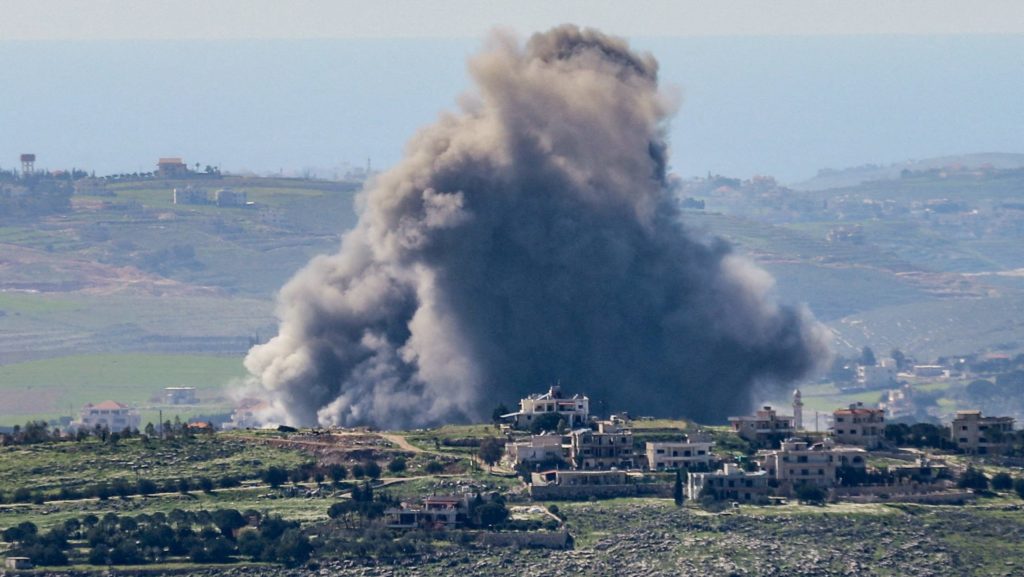
Smoke rises after Israeli strikes in Lebanon, following an escalation between Hezbollah and Israel amid the U.S.-Israeli conflict with Iran, as seen from Marjayoun, Lebanon, March 5, 2026. (OSV News/Karamallah Daher, Reuters)
Watching Abu Ali Hamiyeh use a stone to hammer the nails that will hold together the wooden planks of his new house on a corner of Beirut’s waterfront, you’d never guess that just a few months ago, Pope Leo XIV passed by that very spot.
At a special Mass nearby that day, the Holy Father called on Lebanese like Hamiyeh to be “builders of peace.”
“The path of mutual hostility and destruction in the horror of war has gone too far, with the deplorable results that are plain for all to see,” said Leo on Dec. 2, not knowing that a few weeks later, the country would be caught up in the largest war the region has seen so far this century.
“We need to change course; we need to educate our hearts for peace,” he urged.
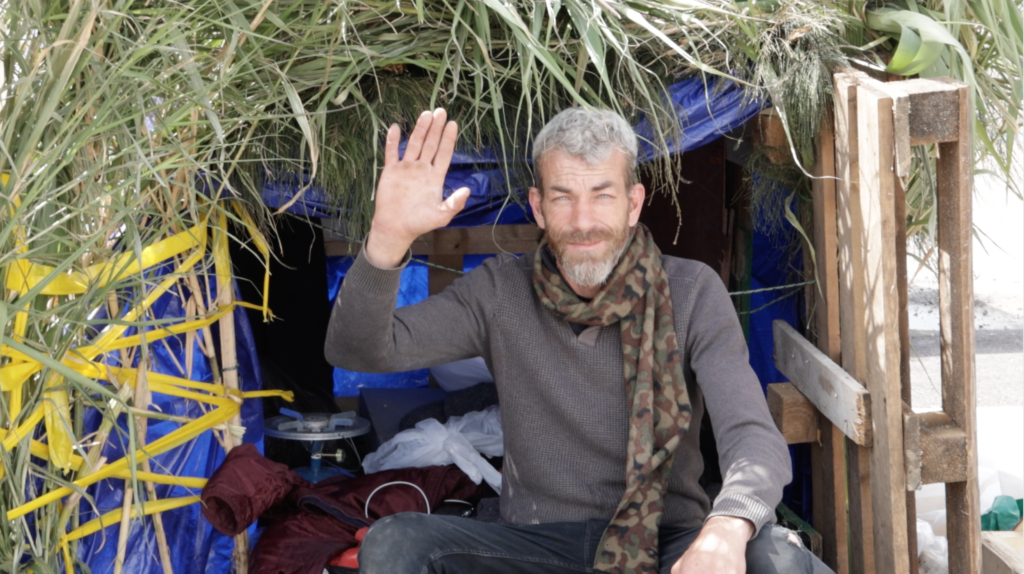
Abu Ali Hamiyeh, a Lebanese Muslim, at his makeshift shack in the new refugee camp along Beirut’s waterfront where Pope Leo XIV visited last December. (Jovel Álvarez)
Hamiyeh is one of those displaced by this conflict. A Muslim, he comes from the Bekaa Valley, a stronghold of Hezbollah, an Islamist militant group with which he sympathizes. He, like a million of his compatriots, has had to abandon his home due to evacuation orders from the Israeli army.
No one wants to speak to the press, except Hamiyeh. The day is Friday, March 20, and he speaks with me as he patches together a wooden shack covered with a blue tarp and a thatched roof. He pulls over a plastic trash can and invites me to sit down so we can talk more comfortably.
“Here with us there are Syrians, Palestinians, Jordanians, Turks, Sri Lankans, etc. … Everyone is here. We will not leave this place unless we achieve a great victory. We fought against them for 66 days; we gave martyrs!”
“The Bekaa Valley is the bastion of the resistance; we have given martyrs and blood, and our children, and we remain steadfast on this path of resistance — and we will give even more. Hezbollah is the victorious faction, according to the Quran. Without a doubt, they are victorious,” he says with great conviction.
Hamiyeh regrets not being able to offer me coffee and show me some of that legendary Arab hospitality.
Little by little, the coastline is turning into a refugee camp. No one knows when they will be able to return to their homes, or if there are any homes left to return to.
Wednesday, October 22, 2025
Monday, October 07, 2024
Saturday, August 24, 2024
Sunday, August 18, 2024
Unmasking Hezbollah - Drug trafficking and terror | DW Documentary
Who was behind the assassination of Rafic Hariri? (2/3)
Money laundering in Europe (3/3)
xxxxxxxxxxxxxxxxxxxxxxx
Monday, August 12, 2024
Tuesday, July 30, 2024
Sunday, October 08, 2023
Thursday, November 12, 2015
Suicide bombers kill 43 in Beirut, 240 wounded
Nov 13 2015 - 12:43am

Scene of the deadly blasts in Beirut
At least 43 people were killed and more than 240 wounded on Thursday in two suicide bomb blasts claimed by Islamic State in a crowded residential district in Beirut’s southern suburbs, a stronghold of the Shi’ite Muslim group Hezbollah.
The explosions were the first attacks in more than a year to target a Hezbollah stronghold inside Lebanon, and came at time when the group is stepping up its involvement in the Syrian civil war — a fight which has brought Sunni Islamist threats and invective against the Iran-backed Shi’ite group.
Hezbollah has sent hundreds of fighters to support Syrian President Bashar al-Assad’s forces in the four-year-old conflict over the border. Government forces backed by Hezbollah and Iranian troops have intensified their fight against mostly Sunni insurgents, including Islamic State, since Russia launched an air campaign in support of Assad on Sept. 30.
Syria’s civil war is increasingly playing out as a proxy battle between regional rivals, including Iran and Saudi Arabia, which supports the rebels. The two foes also back opposing political forces in Lebanon, which suffered its own civil war from 1975 to 1990, and where a political crisis has been brought about by factional and sectarian rivalries.
The blasts occurred almost simultaneously late on Thursday and struck a Shi’ite community centre and a nearby bakery in the commercial and residential area of Borj al-Barajneh, security sources said. A closely guarded Hezbollah-run hospital is also nearby.
Health Minister Wael Abu Faour said 43 people were killed and 240 people were wounded.
Islamic State said in a statement posted online by its supporters that its members blew up a bike loaded with explosives in Borj al-Barajneh and that when onlookers gathered, a suicide bomber blew himself up among them. The group said the attacks killed 40 people.
Hezbollah vowed to continue its fight against “terrorists”, warning of a “long war” against its enemies.
.
Wednesday, January 30, 2013
Israel conducts airstrike on truck convoy in Syria, regional security forces say
Published January 30, 2013
Associated Press
BEIRUT – Israel conducted an airstrike inside Syria overnight near the border with Lebanon, hitting a convoy of trucks, U.S. and regional officials said Wednesday.
The regional officials said Israel had been planning in the days leading up to the airstrike to hit a shipment of weapons bound for the Islamist militant group Hezbollah in Lebanon. They said the shipment included sophisticated, Russian-made SA-17 anti-aircraft missiles, which would be strategically "game-changing" in the hands of Hezbollah.
Hezbollah has committed to Israel's destruction and has gone to war against the Jewish state in the past.
A U.S. official said the strike hit a convoy of trucks.
All the officials spoke on condition of anonymity because they were not authorized to discuss the strike.
The Israeli military declined to comment, and Syrian officials and state media were silent on the issue.
Top Israeli officials have recently expressed worries that if desperate, the regime of President Bashar Assad could pass chemical weapons to Hezbollah or other militant groups. U.S. officials say they are tracking Syria's chemical weapons and that they still appear to be solidly under regime control.
Among Israeli security officials' chief fears is that Hezbollah could get its hands on Syrian chemical arms and SA-17 anti-aircraft missiles. If that were to happen, it would change the balance of power in the region and greatly hinder Israel's ability to conduct air sorties in Lebanon.
Israel suspects that Damascus obtained a battery of SA-17s from Russia after an alleged Israeli airstrike in 2007 that destroyed an unfinished Syrian nuclear reactor.
Earlier this week, Israel moved a battery of its new "Iron Dome" rocket defense system to the northern city of Haifa, which was battered by Hezbollah rocket fire in the 2006 Israel-Hezbollah war. The Israeli army called that move "routine."
The military in Lebanon, which shares borders with both Israel and Syria, said Wednesday that Israeli warplanes have sharply increased their activity over Lebanon in the past week, including at least 12 sorties in less than 24 hours in the country's south.
A senior Lebanese security official said there were no Israeli airstrikes inside Lebanese territory. Asked whether it could have been along the border on the Syrian side, he said that that could not be confirmed as it was out of his area of operations.
He spoke on condition of anonymity because he was not authorized to speak to the media.
A Lebanese army statement said the last of the sorties took place at 2 a.m. local time Wednesday. It said four warplanes which flew in over the southernmost coastal town of Naqoura hovered for several hours over villages in southern Lebanon before leaving Lebanese airspace.
It said similar flights by eight other warplanes were conducted Tuesday.
A Lebanese security official said the flights were part of "increased activity" in the past week but did not elaborate. He spoke on condition of anonymity because he was not authorized to brief the media.
The area of Lebanon where the flights took place borders southern Syria.
Israeli violations of Lebanese airspace are not uncommon and Lebanese authorities routinely lodge complaints at the U.N. against the flights.
Source: http://www.foxnews.com/world/2013/01/30/israel-conducts-airstrike-on-syria-regional-security-forces-say/#ixzz2JU7LaQpi
.
Saturday, September 15, 2012
Pope Benedict XVI meets Hezbollah MPs while visiting Lebanon's political leaders
Pope Benedict XVI has met members of Hezbollah's political wing as he called on the Middle East's Christians and Muslims to live in harmony.

On the second day of his visit to Lebanon he urged mankind to pardon the offences of others, after meeting an array of the country's political and religious leaders, including representatives of Hezbollah, the Shia Muslim "Party of God".
"Only forgiveness, given and received, can lay lasting foundations for reconciliation and universal peace," the Pontiff said at the Lebanese presidential palace. Hundreds of people from different religious denominations lined the road as the Holy Father travelled to the lush Beirut suburb of Baabda, home to the presidential palace, preceded by a mounted parade of Lebanese ceremonial
cavalry. Crowds waving both the Vatican and Lebanese flags cheered as he passed, and confetti swirled in the air.
Hezbollah's leader Sheikh Hassan Nasrallah has also welcomed the Pontiff's arrival in Lebanon, describing it as "historic and extraordinary" and the party has been eager to show its nvolvement. Banners declaring a "welcome to the land of resistance" and signed by the militant group were erected along the roadside as the Pontiff passed through its heartland districts in south Beirut on
Friday.
In recent decades the Iran-backed group whose military wing is considered a terrorist organisation by many, including Britain and the US, has transformed itself into Lebanon's dominant political and military force. It has strengthened its political platform by forging strong ties with many of Lebanon's Christians.
Related Articles
Pope says religious tolerance should not be lost
in 'cry for freedom' 14 Sep 2012
Pope Benedict sets off for three-day Lebanon
visit 11 Sep 2012
Vial of Pope John Paul II’s blood stolen from
Catholic priest 29 Aug 2012
Vatileaks: Pope's butler and 'accomplice' to
stand trial 13 Aug 2012
Vatileaks: Pope's butler asks to be pardoned
24 Jul 2012
Latin rebirth in schools 31 Aug 2012
Among its supporters is Michel Aoun, the former prime minister and army commander who is seen as a leader by many of the Christian Maronites in Lebanon's multi-faith society.
The Holy Father's visit comes as the region struggles to cope with the physical violence and the political, economic and humanitarian fallout of the Syrian civil war. His speeches have thus far skirted wide of taking a political position on that divisive issue.
Whilst some Christians in Lebanon support the ousting of Syrian President Bashar al Assad, those aligned with Hezbollah strongly defend his continued rule.
"Lebanon is called, now more than ever, to be an example," the Pope said, inviting his audience "to testify with courage, in season and out of season, wherever you find yourselves, that God wants peace, that God entrusts peace to us".
On Friday he called for an end to the supplying of arms to Syria. A day earlier US Treasury officials imposed sanctions on the leader of Hezbollah and two other members for allegedly aiding the Syrian government in its fight against opposition forces.
Pope Benedict has worked hard to heal the rifts caused between the Vatican and the Muslim world, exacerbated by his address in Germany in 2006 in which he quoted a line of Byzantine hostility to the Prophet Mohammad.
He has since sought to highlight similarities between the two faiths and has often included visits to mosques on subsequent trips.

The Holy Father's visit comes as the region struggles to cope with the physical violence and the political, economic and humanitarian fallout of the Syrian civil war Photo: Filippo
On the second day of his visit to Lebanon he urged mankind to pardon the offences of others, after meeting an array of the country's political and religious leaders, including representatives of Hezbollah, the Shia Muslim "Party of God".
"Only forgiveness, given and received, can lay lasting foundations for reconciliation and universal peace," the Pontiff said at the Lebanese presidential palace. Hundreds of people from different religious denominations lined the road as the Holy Father travelled to the lush Beirut suburb of Baabda, home to the presidential palace, preceded by a mounted parade of Lebanese ceremonial
cavalry. Crowds waving both the Vatican and Lebanese flags cheered as he passed, and confetti swirled in the air.
Hezbollah's leader Sheikh Hassan Nasrallah has also welcomed the Pontiff's arrival in Lebanon, describing it as "historic and extraordinary" and the party has been eager to show its nvolvement. Banners declaring a "welcome to the land of resistance" and signed by the militant group were erected along the roadside as the Pontiff passed through its heartland districts in south Beirut on
Friday.
In recent decades the Iran-backed group whose military wing is considered a terrorist organisation by many, including Britain and the US, has transformed itself into Lebanon's dominant political and military force. It has strengthened its political platform by forging strong ties with many of Lebanon's Christians.
Related Articles
Pope says religious tolerance should not be lost
in 'cry for freedom' 14 Sep 2012
Pope Benedict sets off for three-day Lebanon
visit 11 Sep 2012
Vial of Pope John Paul II’s blood stolen from
Catholic priest 29 Aug 2012
Vatileaks: Pope's butler and 'accomplice' to
stand trial 13 Aug 2012
Vatileaks: Pope's butler asks to be pardoned
24 Jul 2012
Latin rebirth in schools 31 Aug 2012
Among its supporters is Michel Aoun, the former prime minister and army commander who is seen as a leader by many of the Christian Maronites in Lebanon's multi-faith society.
The Holy Father's visit comes as the region struggles to cope with the physical violence and the political, economic and humanitarian fallout of the Syrian civil war. His speeches have thus far skirted wide of taking a political position on that divisive issue.
Whilst some Christians in Lebanon support the ousting of Syrian President Bashar al Assad, those aligned with Hezbollah strongly defend his continued rule.
"Lebanon is called, now more than ever, to be an example," the Pope said, inviting his audience "to testify with courage, in season and out of season, wherever you find yourselves, that God wants peace, that God entrusts peace to us".
On Friday he called for an end to the supplying of arms to Syria. A day earlier US Treasury officials imposed sanctions on the leader of Hezbollah and two other members for allegedly aiding the Syrian government in its fight against opposition forces.
Pope Benedict has worked hard to heal the rifts caused between the Vatican and the Muslim world, exacerbated by his address in Germany in 2006 in which he quoted a line of Byzantine hostility to the Prophet Mohammad.
He has since sought to highlight similarities between the two faiths and has often included visits to mosques on subsequent trips.
.
.
Subscribe to:
Posts (Atom)