

.
Showing posts with label Black Lives Matter. Show all posts
Showing posts with label Black Lives Matter. Show all posts
Monday, March 10, 2025
Monday, July 15, 2024
This Day In History: July 13
2013
The hashtag #BlackLivesMatter first appears, sparking a movement
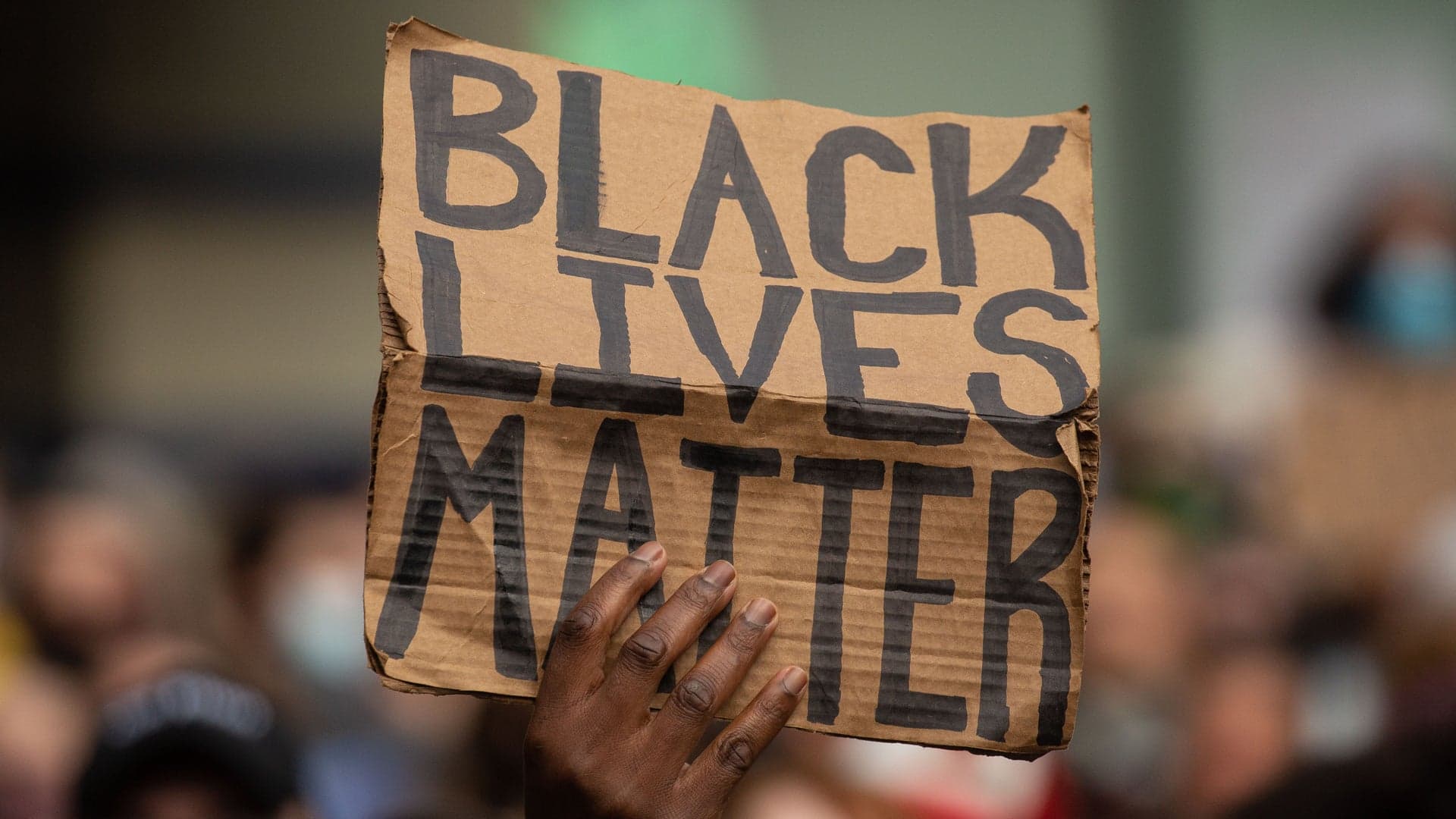
The hashtag #BlackLivesMatter first appears, sparking a movement
Photo Credit: David Ryder/Getty Images
Outraged and saddened after the acquittal of George Zimmerman, the Florida man who killed a Black teenager in 2012, Oakland, California resident Alicia Garza posts a message on Facebook on July 13, 2013. Her post contains the phrase "Black lives matter," which soon becomes a rallying cry and a movement throughout the United States and around the world.
Garza said she felt "a deep sense of grief" after Zimmerman was acquitted. She was further saddened to note that many people appeared to blame the victim, Trayvon Martin, and not the "disease" of racism. Patrice Cullors, a Los Angeles community organizer and friend of Garza, read her post and replied with the first instance of #BlackLivesMatter.
As the hashtag became popular on Facebook and Twitter, Garza, Cullors and fellow activist Opal Tometi built a network of community organizers and racial justice activists using the name Black Lives Matter. The phrase and the hashtag were then quickly adopted by grassroots activists and protests all across the country, particularly after the subsequent killings of Michael Brown, Eric Garner and a number of other African Americans at the hands of police officers or would-be vigilantes like Zimmerman.
Simple and clear in its demand for Black dignity, the phrase became one of the major symbols of the protests that erupted after Brown's killing in Ferguson, Missouri in 2014. While polling showed that a majority of Americans disapproved of the Black Lives Matter movement when it first began, in the years following, support for its central arguments grew.
After the May 2020 killing of George Floyd in Minneapolis unleashed a nationwide protest movement against police brutality and racism, support for the Black Lives Matter movement increased by a 28-point margin in two weeks—almost as much as it had in the preceding two years, according to the New York Times.
Perhaps more than any other phrase since “Black Power,” “Black Lives Matter” became a singular rallying cry for the American and global racial justice movements.
Tuesday, March 26, 2024
Friday, July 03, 2020
Sunday, August 27, 2017
Monday, July 18, 2016
Sister of slain Baton Rouge officer Montrell Jackson: ‘It’s coming to the point where no lives matter’


The Washington Post
Theresa Vargas
3 hrs ago

G.O.P. Gathers, Focused on Law and Order

GOP to kick off convention; Trump to make surprise visit

© Berrien County Sheriff's Office/AP Photo
In this undated photo released by the Berrien County Sheriff's Office, Deputy James Atterberry Jr. is shown. Authorities say 44-year-old Larry Darnell Gordon was handcuffed Monday, July 11, 2016 at Berrien County's Circuit Court when he disarmed Atterberry during a fight and shot him. The sheriff's department announced Wednesday that Atterberry was released from the hospital.A woman also was shot in the arm and hostages were briefly taken before Gordon was fatally shot by other bailiffs. Bailiffs Joseph Zangaro and Ronald Kienzle died in the incident.
Joycelyn Jackson was already sitting in church when she found herself needing God most. She hadn’t yet learned that her younger brother Montrell Jackson was among the three officers killed in Baton Rouge when her pastor asked the congregation to send prayers to her family.
“I didn’t want to break down in church, but it was just something I couldn’t hold,” said Jackson, 49. “He was a wonderful person. A wonderful person.”
Joycelyn Jackson said that she understands the anger behind the movement Black Lives Matter but that “God gives nobody the right to kill and take another person’s life.” Montrell Jackson, 32, had gotten married in the past few years and had a baby boy he adored, she said.
“It’s coming to the point where no lives matter,” she said, “whether you’re black or white or Hispanic or whatever.”
In an emotional Facebook post on July 8, Montrell Jackson wrote that he was “tired physically and emotionally.”
“I swear to God I love this city but I wonder if this city loves me,” he wrote. “In uniform I get nasty hateful looks and out of uniform some consider me a threat. … These are trying times. Please don’t let hate infect your heart. This city MUST and WILL get better.”
On a GoFundMe page set up for the fallen officer by a relative, he is described as a hero in a “time of uncertainty and imminent danger.”

© courtesy of Joycelyn Jackson Slain officer's sister: ‘It’s coming to the point where no lives matter’
“Words cannot describe the devastation that we feel right now,” reads the page. “Rest in Peace, Montrell, you will always be our Hero.”
Virginia Tech quarterback Josh Jackson identified the officer as his cousin on Twitter, using a hashtag that many adopted Sunday: #PrayForBatonRouge
“Rest in peace to my cousin Montrell Jackson who was one of the policeman that was killed.”
Joycelyn Jackson said that her brother, at 6-foot-3, towered over many, but that in her memories he will always be that little boy who was a picky eater. She said his siblings would tease him about how when he was about 9, he insisted on eating only Burger King Whoppers for dinner. Jackson said she was the one who would get him to eat other food.
Jackson said she never worried about her brother, who was “outgoing” and “kind,” being on the force, not until recent tensions in Baton Rouge after officers fatally shot Alton Sterling earlier this month outside a convenience store.
Jackson said another brother had told the pastor about their brother’s death before she made it to church for an afternoon service. Afterward, she said, the weight of it “rushed” over her.
If she could talk to the shooter, or anyone considering violence against officers, she said she’d remind them of a judgment beyond the penal system.
“If I could say anything to anyone, it is to get their lives right with God,” she said. “Hell is horrible, horrible place to be.”
Sunday, July 17, 2016
HOW OBAMA SHOCKED AND TRAUMATIZED AMERICA
GOOD VERSUS EVIL
Exclusive: Jesse Lee Peterson exposes 'shock and awe' campaign against U.S. citizens
Published: 1 hour ago

image: http://1.1.1.1/bmi/mobile.wnd.com/files/2012/02/Rev.-Jesse-Lee-Peterson_avatar.jpg
ESSE LEE PETERSON
“Be not overcome of evil, but overcome evil with good.” – Romans 12:21
Barack Obama has been successfully waging a “shock and awe” campaign against the American people for the last seven years.
In the latest tragic manifestation of this campaign, multiple officers have been shot in Baton Rouge, Louisiana, a day after Alton Sterling’s funeral.
Obama had met Wednesday with activists from the Black Lives Matter movement, as well as selected law enforcement officials and community leaders. The meeting included Black Lives Matter activists DeRay McKesson, Al Sharpton and NAACP President Cornell Brooks – some of the very people responsible for fomenting anger and hate against police across the country.
The meeting took place just days after Obama spoke at a memorial for five slain Dallas police officers who were gunned down by a Black Lives Matter supporter! Obama had the nerve to intertwine the assassination of five officers (and seven others injured) with the deaths of Alton Sterling and Philando Castile.
Obama began his remarks with a conciliatory tone, but after drawing people in, he flipped the script and began criticizing police and white America for the ”growing despair” and “unequal treatment” of blacks.
Obama has created the racial divide and escalated the war against police. He’s given credibility to the despicable Black Lives Matter. He’s reflexively blamed police in the Henry Louis Gates situation (“the Cambridge Police … acted stupidly”), the Trayvon Martin case and the Michael Brown shooting in Ferguson.
Obama has used the White House, the Justice Department, the IRS, Congress and unlawful executive orders to thwart the rule of law and implement his oppressive agenda.
Obama has shocked Americans with his blatant disregard for the truth. And his repeated false allegations of “racism” against white Americans and police is provoking fair-minded, law-abiding Americans to hate him. This is just what he and his father, the Devil, want.
Order Rev. Jesse Lee Peterson’s book, “The Antidote: Healing America from the Poison of Hate, Blame, and Victimhood.”
That’s why Obama was able to lure Ted Cruz to fly with him on Air Force One to the memorial for the slain Dallas police officers, and invited President George W. Bush, too, (who grinned, sang and swayed in a cringe-worthy manner at the event) as a “display of bipartisan unity.”
This is precisely why the Lord’s Prayer says, “… Lead us away from temptation and deliver us from evil.” – Matthew 6:9-13.
Whites thought electing a black president was going to make things better between the races, but Obama has turned that dream into a nightmare.
Shock is a temptation to hate, and hate is evil. Hate makes one subject to evil and paralyzes people in fear. This hate has rendered people helpless and ineffective in their efforts to stop Obama’s wicked agenda.
Here are a few examples of Obama most shocking deeds:
Obama and Loretta Lynch allowed Hillary Clinton to get away with the email scandal that breached national security and compromised sensitive information.
He’s allowing dangerous Syrian refugees into the U.S. He’s also deliberately creating a disaster on our Southern border by refusing to deport illegal aliens crossing into our country. He implemented the DREAM Act, which Congress didn’t pass; illegally handed out work permits to illegal aliens; and has thumbed his nose when the courts have tried to stop him.
Obama refused to label the San Bernardino terror attack as an Islamic terrorist attack. His administration labeled the Fort Hood, Texas, shooting as “workplace violence” rather than admitting there was a terrorist attack on his watch. He also released five Taliban terrorists in exchange for Army deserter Bowe Bergdahl.
The Obama administration issued a directive mandating states to allow transgender students to use whatever public bathroom they identify with, prompting Republican lawmakers in 11 states to challenge the mandate in court on the grounds that the Obama administration had “conspired to turn workplaces and educational settings across the country into laboratories for a massive social experiment, flouting the democratic process, and running roughshod over common-sense policies protecting children and basic privacy rights.”
Obama’s IRS targeted his political enemies, including Christian groups and especially tea-party groups. Yet, the Obama administration refused to cooperate with the investigation or hold anyone responsible for the unlawful behavior.
Barack Obama lied to the American people to get Obamacare passed. He promised Americans could keep their insurance plans and their doctors, and that Obamacare would save them money. We all know how that turned out.
Americans died at a diplomatic compound in Benghazi because Obama and Hillary Clinton refused to provide additional security and military assets to help Americans repel Islamic terrorists; then they claimed the attack was a response to a video few had even seen.
Salvation begins with self-examination, and my hope is that Americans on the side of good will get to know themselves, and gain a clear understanding of how evil is seducing and controlling them before it’s too late. With salvation comes the courage to speak up and stand against evil.
Despite the political season, the real battle is not political – it’s a battle of good versus evil. If Americans were to truly wake up to this reality, Barack Obama’s evil power over our nation would collapse in that instant.
Source
Monday, December 15, 2014
LTE: A Reminder About Activism
by The Heights
Letters To The Editor
Opinions
2 days ago

The last few weeks at Boston College have seen a laudable rise in political engagement and a salutary increase in the number of students actively voicing their opinions. Students’ genuine commitment to progressive social action is evident in both issues of local significance and those of national importance. As exemplified by the demonstrations following the Ferguson and Staten Island grand jury decisions, the Dec. 5 “Rights on the Heights” rally, and the recent FACES statement—to name just a few instances—it is clear that Boston College students truly care about the civic issues facing our community and country.
As our university moves toward what will hopefully be a new “culture of engagement,” it is important to pause and reflect on the virtues that characterize constructive protests and activism. While I’m certainly no authority on the subject, I have a few suggestions to offer.
The first virtue I think we ought to consider: respect for those with whom we disagree. Even in the heat of conviction and in the flame of righteous indignation, we do well to remember the words of protestor par excellence Mahatma Gandhi, who famously said, “Anger and intolerance are the enemies of correct understanding.” The moment we are most sure we are right—and most sure the other side is wrong—is the moment when respect for one another, despite our disagreements, becomes most important.
The second virtue, which follows from respect, is that of dialogue and reasoned discussion. Especially on a university campus, coercion should not replace argument, and passion should never fully replace logic. For ultimately, unbridled emotion will not create change; a new consensus will not be molded without well-reasoned arguments to back it up. Certainly, passion and emotion play vital, animating roles in any movement for progress, and I do not argue that they should be sidelined. Rather, I’m suggesting that room be left for communication between disparate viewpoints. As Rev. Martin Luther King said, “People fear each other because they don’t know each other; they don’t know each other because they have not communicated with each other.” Our nation today is polarized and divided, full of the fear and lack of communication Rev. King warned us about. Let’s make Boston College an exception to this climate—a sanctuary where we live up to his legacy of passionate, yet reasonable, dialogue.
In the past few weeks, our university has seen examples of both the constructive discussion championed by Rev. King and the negative invective he denounced. A model of the former can be found in a Dec. 12 Facebook message by UGBC President Nanci Fiore-Chettiar. “The answers are not simple,” she wrote with reference to Ferguson and Staten Island, “but we have to explore them together—whether you believe the grand juries’ decisions were right or not.” By extending an invitation for disagreement in a message that nonetheless exuded passion and conviction, Fiore-Chettiar demonstrated the virtue of constructive protest. Sadly, her leadership has not been imitated everywhere.
The Dec. 9 “die-in” in St. Mary’s hall was animated by a laudable drive for social justice, but ultimately delivered a confused and counterproductive message to the community. The first problem with the protest was the manner in which some participants of the die-in equated Eric Garner’s death with issues faced here at Boston College. As The Heights reported, “demonstrators…mentioned the die-in was meant [in part] to challenge University policies on free speech.” One student stated that part of the protest’s rationale was to criticize “censorship that is happening on campus, and the rules and the hoops that we have to jump through to actually make some sort of change on campus and actually be the activists that this University wants us to be.” This is certainly a valid perspective, one that was represented at the Dec. 5 rally and is driving ongoing UGBC advocacy. However, by conflating Boston College’s policies with the practices that led to Garner’s death, protestors injected unnecessary and uncalled-for acrimony into a students’ rights conversation that had been relatively respectful. Moreover, by implying that students face problems comparable to Garner’s, they displayed an enormous—if unintentional—lack of sensitivity and respect toward our nation’s recent tragedies. The second problem with the St. Mary’s die-in was the protest’s venue. In choosing to target Boston College’s Jesuit community and prevent them from moving into their new home, protesters attacked a group that has actually been very vocal in the movement for racial justice. To say nothing of the many prayer services they have led nationwide—including one in O’Neill plaza on Dec. 1—Jesuits have also participated in drafting a statement that calls for “a serious examination of both policing and racial injustice in the US.” Over 370 theologians at US Jesuit universities, including Boston College’s James Keenan, S.J., David Hollenbach, S.J., and Kenneth Himes, O.F.M, signed the statement. By choosing to ignore this fact, protestors falsely accused the Jesuit community of indifference to our nation’s racial injustices. Accordingly, they removed respect from the conversation and sabotaged further communication—actions that ultimately hurt the cause for which they advocate.
This letter is not intended to stymie or curb either the battle for justice or the protests it inspires here at Boston College. Rather, it is a reminder that if protests are to have their desired effect, we all have a duty to remember the virtues that characterize constructive activism.
Hagop Toghramadjian
A&S ’17
Featured Image by Arthur Bailin / Heights Photo

The Heights
The Heights is the independent student newspaper of Boston College.
The last few weeks at Boston College have seen a laudable rise in political engagement and a salutary increase in the number of students actively voicing their opinions. Students’ genuine commitment to progressive social action is evident in both issues of local significance and those of national importance. As exemplified by the demonstrations following the Ferguson and Staten Island grand jury decisions, the Dec. 5 “Rights on the Heights” rally, and the recent FACES statement—to name just a few instances—it is clear that Boston College students truly care about the civic issues facing our community and country.
As our university moves toward what will hopefully be a new “culture of engagement,” it is important to pause and reflect on the virtues that characterize constructive protests and activism. While I’m certainly no authority on the subject, I have a few suggestions to offer.
The first virtue I think we ought to consider: respect for those with whom we disagree. Even in the heat of conviction and in the flame of righteous indignation, we do well to remember the words of protestor par excellence Mahatma Gandhi, who famously said, “Anger and intolerance are the enemies of correct understanding.” The moment we are most sure we are right—and most sure the other side is wrong—is the moment when respect for one another, despite our disagreements, becomes most important.
The second virtue, which follows from respect, is that of dialogue and reasoned discussion. Especially on a university campus, coercion should not replace argument, and passion should never fully replace logic. For ultimately, unbridled emotion will not create change; a new consensus will not be molded without well-reasoned arguments to back it up. Certainly, passion and emotion play vital, animating roles in any movement for progress, and I do not argue that they should be sidelined. Rather, I’m suggesting that room be left for communication between disparate viewpoints. As Rev. Martin Luther King said, “People fear each other because they don’t know each other; they don’t know each other because they have not communicated with each other.” Our nation today is polarized and divided, full of the fear and lack of communication Rev. King warned us about. Let’s make Boston College an exception to this climate—a sanctuary where we live up to his legacy of passionate, yet reasonable, dialogue.
In the past few weeks, our university has seen examples of both the constructive discussion championed by Rev. King and the negative invective he denounced. A model of the former can be found in a Dec. 12 Facebook message by UGBC President Nanci Fiore-Chettiar. “The answers are not simple,” she wrote with reference to Ferguson and Staten Island, “but we have to explore them together—whether you believe the grand juries’ decisions were right or not.” By extending an invitation for disagreement in a message that nonetheless exuded passion and conviction, Fiore-Chettiar demonstrated the virtue of constructive protest. Sadly, her leadership has not been imitated everywhere.
The Dec. 9 “die-in” in St. Mary’s hall was animated by a laudable drive for social justice, but ultimately delivered a confused and counterproductive message to the community. The first problem with the protest was the manner in which some participants of the die-in equated Eric Garner’s death with issues faced here at Boston College. As The Heights reported, “demonstrators…mentioned the die-in was meant [in part] to challenge University policies on free speech.” One student stated that part of the protest’s rationale was to criticize “censorship that is happening on campus, and the rules and the hoops that we have to jump through to actually make some sort of change on campus and actually be the activists that this University wants us to be.” This is certainly a valid perspective, one that was represented at the Dec. 5 rally and is driving ongoing UGBC advocacy. However, by conflating Boston College’s policies with the practices that led to Garner’s death, protestors injected unnecessary and uncalled-for acrimony into a students’ rights conversation that had been relatively respectful. Moreover, by implying that students face problems comparable to Garner’s, they displayed an enormous—if unintentional—lack of sensitivity and respect toward our nation’s recent tragedies. The second problem with the St. Mary’s die-in was the protest’s venue. In choosing to target Boston College’s Jesuit community and prevent them from moving into their new home, protesters attacked a group that has actually been very vocal in the movement for racial justice. To say nothing of the many prayer services they have led nationwide—including one in O’Neill plaza on Dec. 1—Jesuits have also participated in drafting a statement that calls for “a serious examination of both policing and racial injustice in the US.” Over 370 theologians at US Jesuit universities, including Boston College’s James Keenan, S.J., David Hollenbach, S.J., and Kenneth Himes, O.F.M, signed the statement. By choosing to ignore this fact, protestors falsely accused the Jesuit community of indifference to our nation’s racial injustices. Accordingly, they removed respect from the conversation and sabotaged further communication—actions that ultimately hurt the cause for which they advocate.
This letter is not intended to stymie or curb either the battle for justice or the protests it inspires here at Boston College. Rather, it is a reminder that if protests are to have their desired effect, we all have a duty to remember the virtues that characterize constructive activism.
Hagop Toghramadjian
A&S ’17
Featured Image by Arthur Bailin / Heights Photo
The Heights
The Heights is the independent student newspaper of Boston College.
.
Sunday, December 14, 2014
Protests over police killings move into churches

MANUEL BALCE CENETA | ASSOCIATED PRESS
Judge Theodore Newman, a senior judge on the District of Columbia Court of Appeals, wears a Hands Up, Don't Shoot shirt during a church service in Washington on Sunday on Black Lives Matter Sunday.
By Rachel Zoll
ASSOCIATED PRESS • Monday December 15, 2014 7:26 AM
NEW YORK — Congregants in African-American churches across the country wore black to Sunday services and prayed over the men in attendance on Sunday in a symbolic stand against fatal police shootings of unarmed black men.
Bishop T.D. Jakes told worshippers at the Potter’s House Church in Dallas that black men should not be “tried on the sidewalk.” At Ebenezer AME Church in Fort Washington, Md., choir members sang We Shall Overcome for worshippers wearing T-shirts that read Black Lives Matter and I Can’t Breathe.
Men at the West Angeles Church of God in Christ in Los Angeles stood more than four rows deep around the altar for a special blessing and message from the pastor, Presiding Bishop Charles E. Blake.
“Police forces are charged with protecting all our citizens,” said Blake, leader of the national Church of God in Christ, the largest black Pentecostal group in the U.S. “In a very special way, they are to abide by the laws they are called to enforce. They should not bring fear to our citizens, but rather confidence.”
The churches were responding to a call from several historically African-American denominations for what they called Black Lives Matter Sunday, in response to the recent police slayings of Michael Brown in Ferguson, Mo., and Eric Garner in New York. The church actions came a day after marches and demonstrations by civil-rights and other groups across the country pressing for changes to the criminal-justice system.
“It is a time to hear God calling us to be relevant and responsive to the needs of people with us and around us,” wrote Senior Bishop Lawrence Reddick of the Christian Methodist Episcopal Church, an organizer of Sunday’s church action.
At morning services, the Rev. Lee P. Washington, pastor at Reid Temple AME Church in Glenn Dale, Md., called black clothing “serious dress for serious times.” He said those who contend that the black men who were killed by officers “deserve what they got” for disobeying police, or whose deaths were nothing more than an “unfortunate tragedy,” should think about the impact of the deaths on grieving families.
“In our minds, black lives do matter,” Washington said.
Several pastors sought blessings for law-enforcement officials and noted many do their jobs with integrity, but they said officers guilty of wrongdoing should be held accountable. Bates Memorial Baptist Church in Louisville, Ky., tweeted a photo of a pastor and congregants clutching their own necks to protest the chokehold death of Garner by New York police during his July arrest for selling loose, untaxed cigarettes.
“We have to just come together and do our part,” said Darrell Ward at services in First AME Church: Bethel, a New York congregation that participated in Black Lives Matter Sunday.
Some predominantly white churches also participated in their own congregations. The Rev. George O. Wood, head of the Assemblies of God, a major Pentecostal denomination whose U.S. churches are mostly white, asked churchgoers to take part regardless of whether they agreed with the grand juries that exonerated the officers in the Brown and Garner cases.
“Whatever your opinion of those controversial decisions, can we stand with our brothers and sisters and affirm the value of black lives generally and of their lives specifically?” Wood wrote in his request to Assemblies of God members. “If Spirit-filled Christians cannot find a way to work together to heal these divisions, what hope is there for the rest of the country?”
Muskegon-area churches to participate in 'Black Lives Matter' movement on Sunday

Protesters take Woodward heading north from Campus Martius Park in downtown Detroit after staging a "die-in" Dec. 4 in a rally over the grand jury decision to not indict the NY Police officer who killed Eric Garner. Protests over the justice for Garner grow from last week's non-indictment decision in Ferguson, which sparked large protests throughout the nation. (Tanya Moutzalias | MLive Detroit)

By Michelle D. Anderson | manders6@mlive.com
on December 13, 2014 at 7:03 AM, updated December 13, 2014 at 7:11 AM
MUSKEGON, MI – Several Muskegon-area churches affiliated with a large Protestant denomination will participate in "Black Lives Matter Sunday" on Dec. 14 in response to the recent deaths of black citizens who died under problematic circumstances.
The Church of God in Christ, also known as COGIC, called for its congregation members to participate in the event earlier this month to show the global community that the lives of African-American citizens are important, too.
The church, based in Memphis, Tenn., encourages pastors and church members to wear black and hold a day of prayer on the second Sunday of December, specifically in response to the deaths of Michael Brown and Eric Garner and the subsequent lack of indictments of the police officers who killed them.
In an official statement, COGIC Presiding Bishop Charles E. Blake, Sr., said he was saddened the Staten Island Grand Jury chose not to indict New York Police Department officer Daniel Pantaleo. The cop placed Garner in a chokehold even though the act was illegal and the father said he could not breathe.
Blake said the decision, coupled with the lack of indictment in the Ferguson, Mo., case involving Michael Brown, "takes us back years in the struggle for equal justice."
Brown was an unarmed black teenager who was shot dead in the St. Louis-area community by Darren Wilson, a white police officer. Witness accounts differ, though many believe Brown surrendered and had his hands up before his death. The decision of the Grand Jury presiding over the case has triggered rallies, "die-ins," and civil unrest across the nation.
Several congressional aides and lawmakers protested the deaths on the steps of the U.S. Capitol on Thursday and many acts of dissent continue.
Mt. Zion Church of God In Christ Pastor Duane Bennett said the Muskegon area has nine COGIC congregations. They include Mt. Zion, Holy Trinity Institutional Church Of God In Christ and Fresh Anointing Church of God In Christ.
Bennett said he is still preparing his sermon but plans to evoke the names of the slain males.
"It's an issue we all need to recognize. It's not a 'black versus white' issue, but it is an issue and we need to address that," Bennett said. "Each individual church will address the issues as they wish."
Church services at Mt. Zion, located at 188 W. Muskegon Avenue in downtown Muskegon, include an intercessory prayer at 8:30 a.m., Sunday School at 9 a.m., Alternative Sunday School at 9:15 a.m. and a morning celebration service at 10:30 a.m.
Bennett said he was also concerned about the death of Tamir Rice and said the church will remember the child on Sunday. A Cleveland police officer fatally shot the 12-year-old after confusing the child's toy gun with a real firearm.
The Cuyahoga County Medical Examiner's Office ruled Rice's death as a homicide Friday, Dec. 12.
The phrase "Black Lives Matter" continues to appear on rally protest signs and posts published on social media sites such as Twitter, Facebook, Instagram and Tumblr.
Many are using the phrase to encourage their peers to think about black women and girls who were also murdered under questionable or illegal circumstances. They include 19-year-old Renisha McBride and 7-year-old Aiyana Stanley-Jones.
Detroit Police Officer Joseph Weekley killed Aiyana during a raid in 2010. The Wayne County Prosecutor's Office said Friday, Dec. 12 that the cop will go to trial for the third time in March, unless the Wayne County Prosecutor's Office dismisses the case or reaches a plea deal with Weekley.
Authorities said he faces a misdemeanor count of negligent discharge of weapon causing death, which could mean up to two years in jail. Two previous juries failed to convict the officer and a Wayne County judge dropped the most serious charge, involuntary manslaughter, a felony.
McBride was shot by Theodore "Ted" Wafer on the porch of his Dearborn Heights home in November 2013. He was sentenced to 17 to 32 years in prison for the murder in September.
.
Subscribe to:
Posts (Atom)