Showing posts with label CATHOLIC AGENDA. Show all posts

Friday, October 23, 2026

Global Rosary for Peace 2026

Global Rosary for Peace 2026

Family Rosary

October 2026, 10:00 a.m. Eastern. Pray the Rosary live with over 414,000 people around the world.

Pope Leo XIV asked Catholics to pray the Rosary every day for peace in the world. On 22 October, the Memorial of St. John Paul II, Holy Cross Family Ministries brings ministry centers across 18 countries onto one screen to answer him at the same hour. Pray with us from wherever you are.

WHAT WE PRAY TOGETHER

This year the world prays the Luminous Mysteries, the Mysteries of Light. Five continents, five mysteries, five intentions for peace.

1. The Baptism of the Lord, for peace in the individual heart, led by Latin America

2. The Wedding at Cana, for peace in the family, led by North America and Rome

3. The Proclamation of the Kingdom, for peace in the community, led by Asia

4. The Transfiguration, for peace in the country, led by Europe and the Caribbean

5. The Institution of the Eucharist, for peace in the world, led by Africa

The Rosary opens with the Sign of the Cross and the Apostles' Creed prayed by every country together. Each mystery then carries a short reflection and an intention, followed by the Our Father, ten Hail Marys, the Glory Be and the O My Jesus, and it closes with the Hail Holy Queen. The prayers are led country by country, many of them in their own languages.

Thursday, October 15, 2026

God’s Spooks: Religion, Spying, and the Cold War


by Matthew Avery Sutton

January 15, 2026


And ye shall know the truth, and the truth shall set you free.
—John 8:32, inscribed on the wall at CIA headquarters, Langley, VA

In the early years of World War II, the U.S. State Department asked all American personnel living near enemy lines in China to return home. Baptist missionary John Birch refused to leave. God, he believed, wanted him in Asia. For years Birch had worked with local Chinese communities. He knew their language, their customs, and the layout of their land. He soon put this knowledge to work—not just for God but for Uncle Sam. In 1942 his life took a dramatic turn when a squadron of bombers led by Lieutenant Colonel James Doolittle crashed in the Chinese countryside. The American airmen had taken off from a carrier in the Pacific, dropped bombs on Tokyo, and then flown toward safety in China, where they parachuted from their planes as their fuel supplies ran out. When Birch received word of the raid and subsequent crash, he rendezvoused with the soldiers and helped them navigate through enemy lines and to freedom.

Birch’s performance impressed the Army and the Office of Strategic Services (OSS), the precursor to the Central Intelligence Agency (CIA). They saw in Birch a loyal foot soldier who knew the Chinese language and understood the geography and politics of the region. They put him to work, baptizing him in the waters of covert operations. During and immediately after the war Birch provided the OSS with intelligence on Chinese communism while still fronting as a missionary. He was eventually captured by communists and killed, becoming the first “martyr” of the Cold War. He later became the inspiration for Robert Welch’s extreme right-wing, anti-communist John Birch Society. Birch’s work for the government revealed that religious activists could make extremely valuable contributions to American intelligence services. But his death also demonstrated the potential consequences of mixing faith with work for the U.S. government.

What follows investigates the complicated relationship between the CIA and religion. Since its inception, the CIA has used missionaries and other religious activists for intelligence and espionage work; it has used religion as an effective propaganda tool, and its agents have even posed as clergy. CIA agents and religious activists managed to keep their partnerships mostly hidden until the 1970s. But in the wake of Vietnam and Watergate, numerous journalists and then Congress began scrutinizing the agency more closely. They revealed to the world that the CIA had been employing missionaries to further its agenda and that some religious activists were receiving substantial rewards for their work on the government’s behalf. In fact, the CIA and religious activists have long collaborated to achieve numerous policy goals.

In recent years, historians of religion have worked to better embed their narratives in the rich and complex historical contexts in which their subjects acted, linking issues of faith and belief to the ebbs and flows of particular environments. Historians Jon Butler, Paul Harvey, and Kevin Schultz have called for better integration of religion into more “mainstream” American history. The case of missionary-CIA collaboration answers that call by demonstrating how important it is for scholars to understand the many ways that religion functions in ostensibly nonreligious spheres. In the specific case of intelligence and espionage, religion had tangible impacts on American covert activities abroad. CIA-missionary relationships highlight underexplored intersections between religion and foreign policy; they expose in new ways the complicated nature of church-state collaboration; and they offer fresh insights into the many ways in which religion functions in nontraditional spheres.

At the same time, historians have much to learn by probing how and in what ways individuals and religious groups have benefited from their cooperation with the government. The State Department has often helped missionary groups expedite visas and gain entry into new regions of the world in return for their collaboration. Some government agencies have also provided humanitarian ministries with cash, food, and other supplies, subsidizing and supporting their work. Missionaries have received equally valuable, even if less tangible, benefits as well: many have found satisfaction in the conviction that in serving Uncle Sam, they were serving God. Despite the official disestablishment of religion, these partnerships illustrate how the state can serve as a historical actor, substantially aiding, or substantially undermining, a wide variety of missionary ventures.

Saturday, October 03, 2026

NJ teen says the Virgin Mary told him he would be OK | America Right Now

 NJ teen says the Virgin Mary told him he would be OK | America Right Now

Newsmax

 Oct 3, 2026  

After doctors discovered a large mass in his brain, Dominic Auricchio says he saw the Virgin Mary beside his bed and heard that everything would be OK. He later learned that the mass had shrunk significantly.

Now 13, Dominic Auricchio discusses the experience, his lifelong calling to the priesthood and his plans to serve his country as a Marine before becoming a priest. Dominic and his mother, Maria Auricchio, share his remarkable story of faith on “America Right Now.” 


Thursday, September 10, 2026

In direct appeal to Trump, Catholic bishops' president urges end of mass deportations of Haitians


(RNS) — The letter marks a shift toward a more direct and pointed tone in challenging President Donald Trump’s immigration policy.


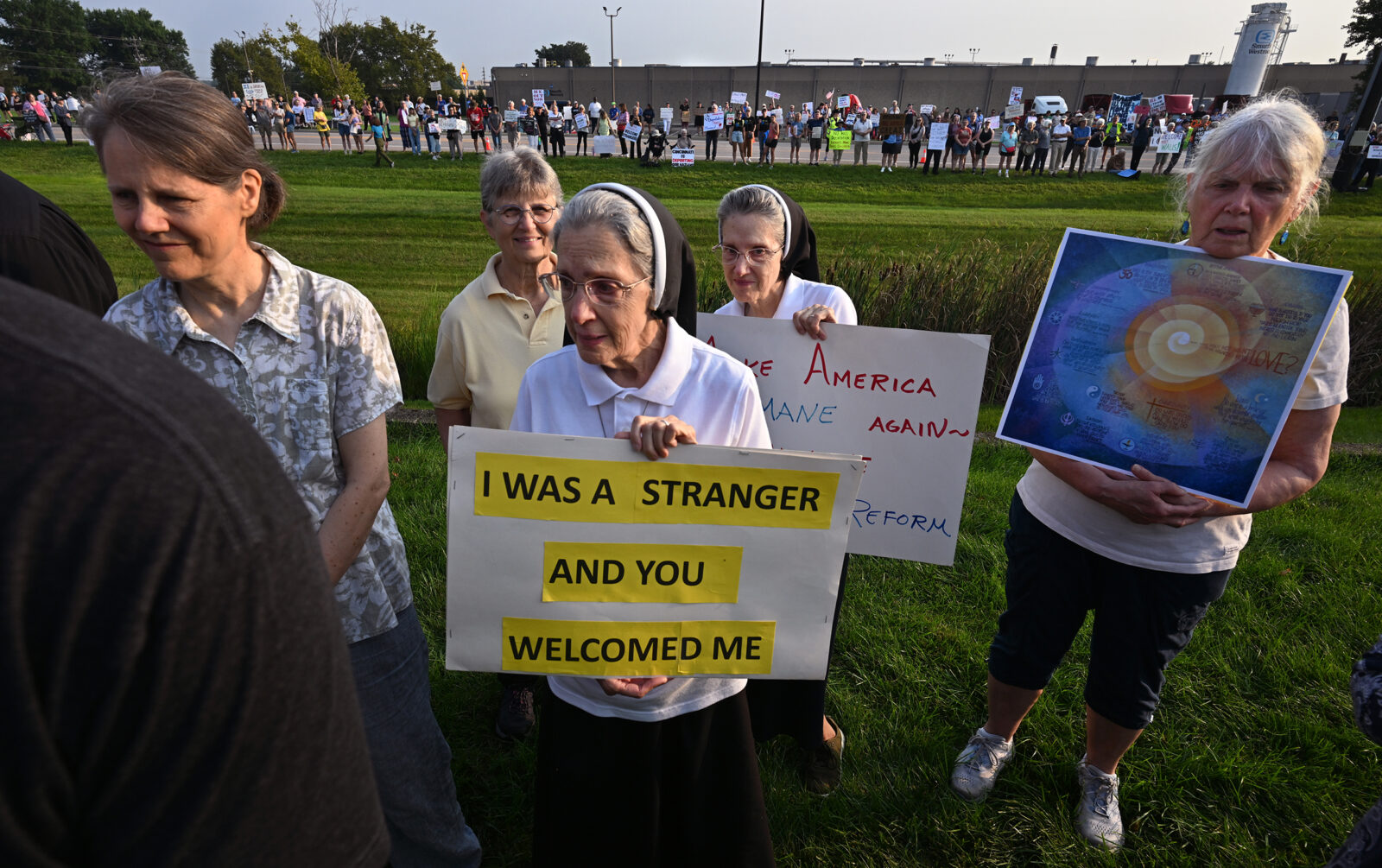
Community members hold a protest rally as immigrants enter an ICE facility at a Department of Homeland Security field office during a mandatory check in where most received ankle monitors, after thousands of Haitians lost Temporary Protected Status (TPS), in Blue Ash, Ohio on Aug. 9, 2026. (RNS photo/Carol Guzy)

Aleja Hertzler-McCain
September 9, 2026 at 5:31 p.m. ET


(RNS) — Archbishop Paul Coakley of Oklahoma City, the U.S. Catholic bishops’ conference president, sent a letter on Tuesday (Sept. 8), urging President Donald Trump to cease the deportation of “large numbers” of Haitian immigrants.

Citing the violence in Haiti, Coakley wrote: “As citizens of this great country, we have been entrusted with a tremendous moral responsibility, and this is true most of all for you as our head of state, Mr. President. To this end, I respectfully ask: What good is the immense wealth, prosperity, and influence with which we have been blessed as a nation if not used in service of our humanity?”

The letter’s language marked a notable hardening in tone from the U.S. bishops’ conference, though Coakley also wrote that he was “humbly” appealing for Trump’s assistance.

Last November, the U.S. bishops’ conference released a special pastoral message calling for an end to “indiscriminate mass deportation,” a sign of how seriously the conference is taking deportation policies that could impact nearly 1 in 5 U.S. Catholics directly or through their family. But that message did not name Trump.

In his letter this week, Coakley wrote that he was inspired by the massacre of 47 people in Haiti’s Kenscoff farming community to write. Some of the people killed had been taking refuge in a church, and some of those killed were children. Coakley called the violence “unconscionable.”

“I very much wish this recent and tragic example of human life being extinguished, virtually with impunity, was an irregularity in Haiti. Unfortunately, it is not,” Coakley wrote. He told Trump that deportations endanger “innocent human life” and “contribute to the country’s already deepening crisis.”

Saturday, August 29, 2026

US Ambassador to the Vatican meets with Trump, Vance, Rubio

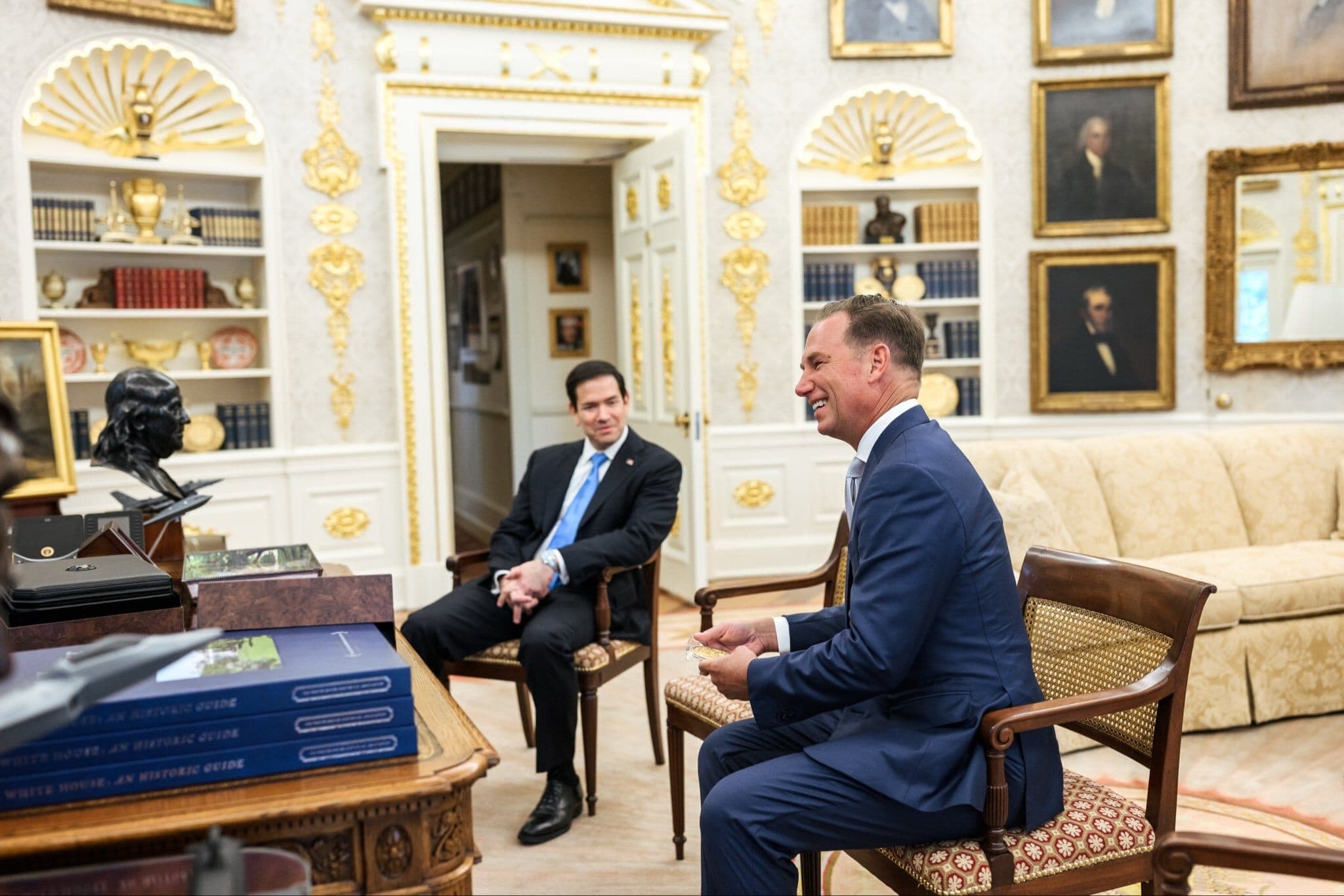
Brian Burch, co-founder of CatholicVote, is serving as the U.S. Ambassador to the Vatican, discussing with the U.S. political leaders this week ways to work with the Vatican on cultivating peace and religious freedom.


Ambassador Burch meets with President Donald Trump, Vice President JD Vance, and U.S. Secretary of State Marco Rubio (Credit: U.S. in Holy See)


August 27, 2026 

U.S. Ambassador to the Holy See Brian Burch met with President Donald Trump, Vice President JD Vance, and U.S. Secretary of State Marco Rubio this week in Washington, D.C., according to an Aug. 27 statement from the U.S. Embassy to the Holy See.

They met “to discuss how we can partner with the Holy See to promote global peace and religious freedom,” the embassy said in the statement.

Gallagher meets with Putin's advisor and strengthens his contacts with the Moscow Patriarchate


by INFOVATICANA | August 27, 2026


The representative of the Holy See discussed with Yuri Ushakov “current issues on the international agenda” and visited the Cathedral of Christ the Savior, where he prayed before the icon of Our Lady of Vladimir. This Thursday, the visit focuses on the Catholic community in Russia.


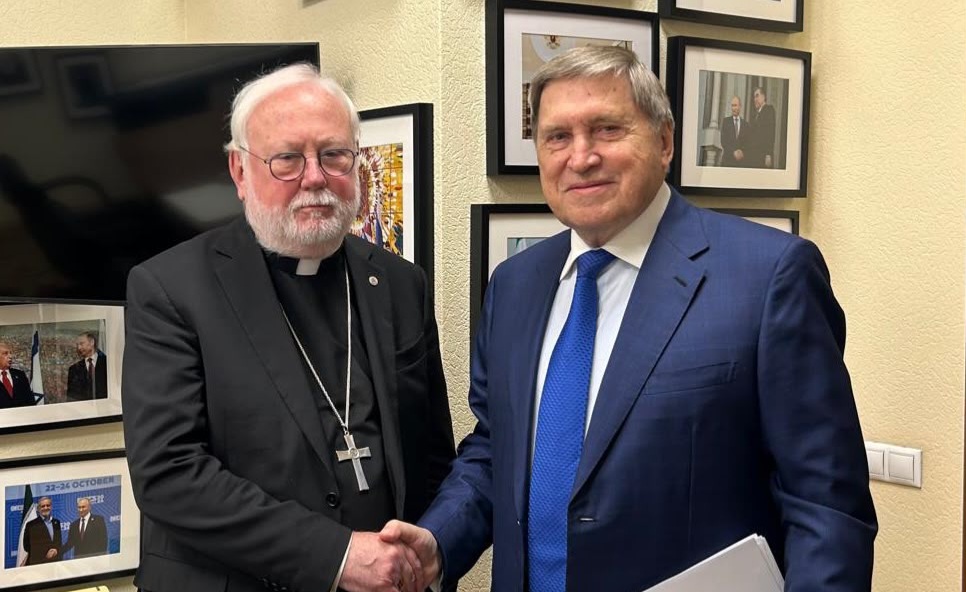
The visit of Mons. Paul Richard Gallagher to Russia has included in recent hours a meeting with Yuri Ushakov, advisor to Vladimir Putin on foreign policy, and a visit to the Cathedral of Christ the Savior in Moscow, the main church of the Russian Orthodox Church.

The Secretariat of State confirmed this Thursday Gallagher’s meeting with Ushakov, scheduled for Wednesday the 26th, and reported that both addressed “current issues on the international agenda”. No further details on the content of the conversation have been provided so far.

The meeting with one of Putin’s top advisors represents the closest contact to the Kremlin within Gallagher’s agenda during his stay in the Russian capital.

It took place after the meeting that the head of Vatican diplomacy held on Tuesday with the Russian Minister of Foreign Affairs, Sergey Lavrov.

Read also: Gallagher to Lavrov in Moscow: “This war must end”

Gallagher visits the Cathedral of Christ the Savior

The agenda also included a new approach to the Patriarchate of Moscow, following the meeting Gallagher previously held with Metropolitan Anthony of Volokolamsk, head of external relations for the Russian Orthodox Church.

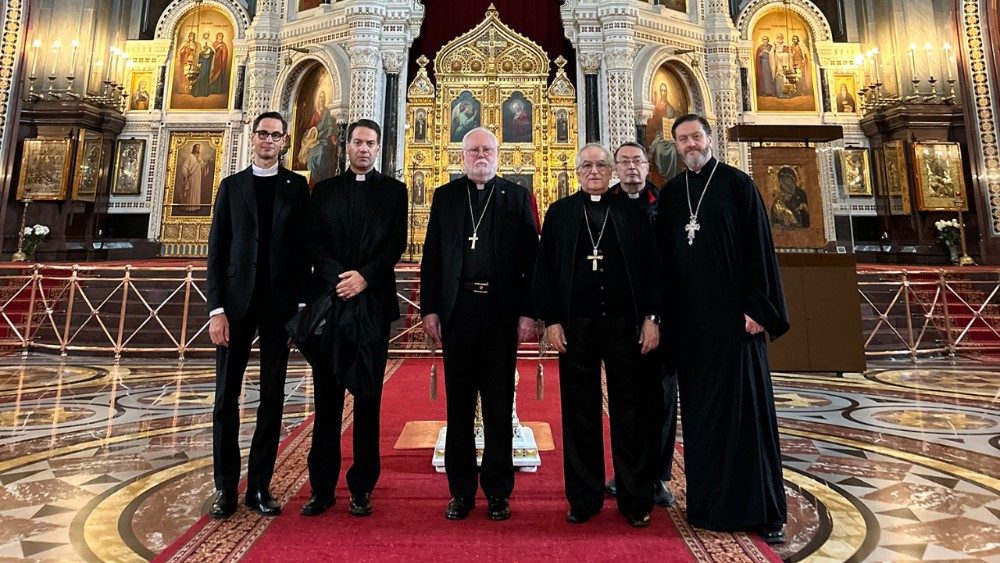
Gallagher visited the Cathedral of Christ the Savior in Moscow, seat of Patriarch Kirill, accompanied by the Apostolic Nuncio to Russia, Mons. Giovanni d’Aniello.


The representative of the Holy See was received by Archpriest Igor Yakimchuk, Vice-Chairman of the Department for External Church Relations of the Patriarchate of Moscow.

During a visit lasting more than an hour, Gallagher toured the church and stopped to pray before the icon of Our Lady of Vladimir, one of the Marian images most venerated by Russian Orthodox faithful.

The visit to the cathedral continued the contacts maintained in recent days between the Vatican delegation and the Patriarchate of Moscow.

This Thursday, the agenda focuses on the Catholic community

After the meetings with Russian authorities and contacts with the Patriarchate, Gallagher is dedicating this Thursday, August 27, the final part of his agenda in Moscow to the Catholic community.

The program includes a meeting with priests, religious brothers and sisters, and the celebration of Mass at the Cathedral of the Immaculate Conception of the Blessed Virgin Mary in Moscow.

Afterwards, the Secretary for Relations with States and International Organizations is scheduled to meet with the Catholic bishops of Russia.

Gallagher’s visit, the first he has made to Russia since 2021, will conclude this Friday, August 28 with his return to Rome.


Wednesday, August 26, 2026

Pope Leo appoints Knights of Columbus Supreme Knight Patrick Kelly to Vatican dicastery


written by Courtney Mares 3:05 PM August 25, 2026


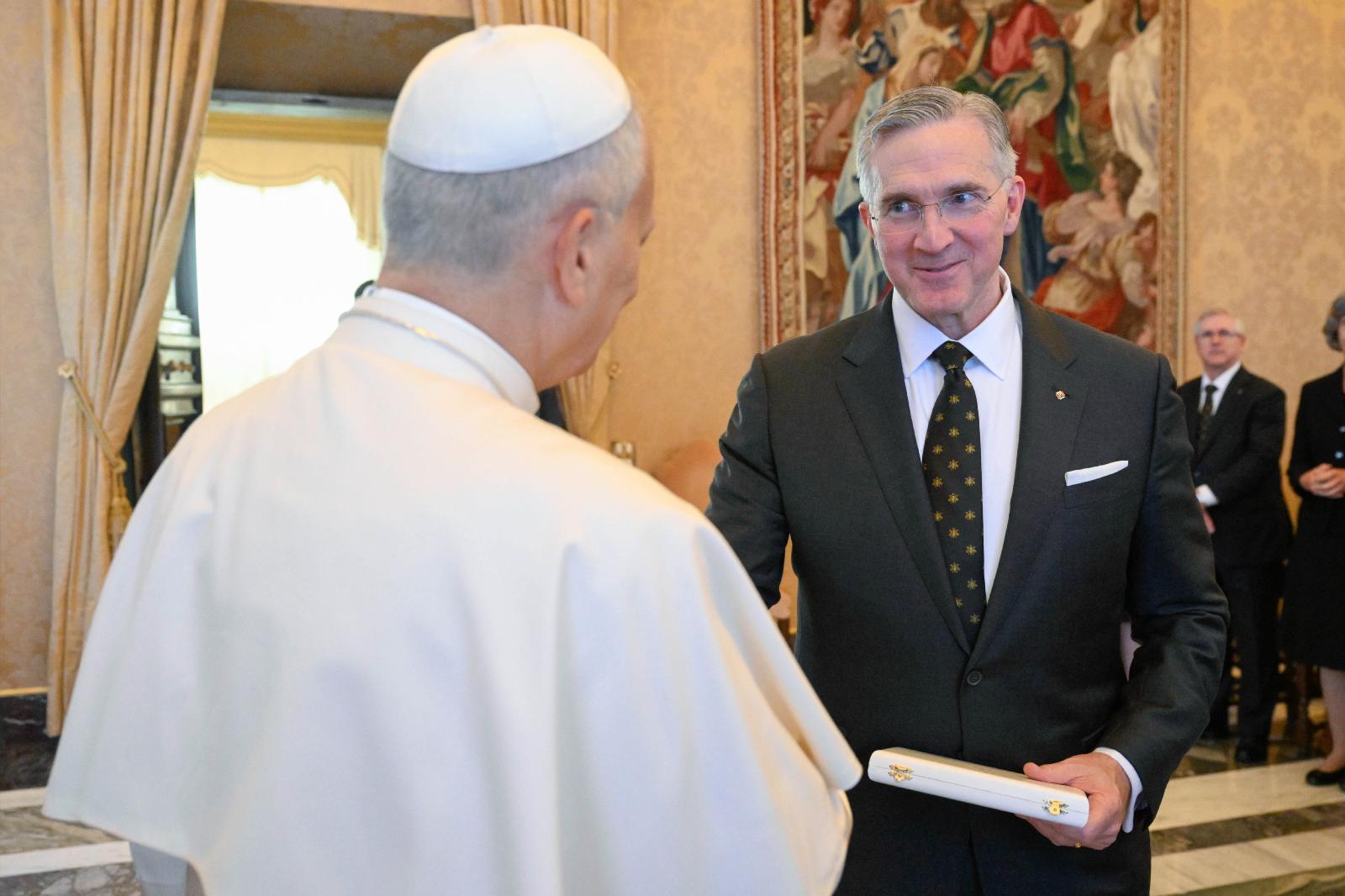
Pope Leo XIV meets with Supreme Knight Patrick E. Kelly of the Knights of Columbus Oct. 6, 2025, during an audience with a Knights delegation at the Vatican. On Aug. 25, 2026, Pope Leo appointed Kelly as a member of the Dicastery for the Laity, Family and Life. (CNS photo/Vatican Media)


(OSV News) — Pope Leo XIV on Aug. 25 appointed the Knights of Columbus’ Supreme Knight Patrick Kelly as a member of the Vatican Dicastery for the Laity, Family and Life.

Kelly has served as the supreme Knight and CEO of the world’s largest Catholic fraternal service organization since 2021. The Knights of Columbus have 2.1 million members throughout the world.

“I am deeply grateful to His Holiness Pope Leo XIV for appointing me as a member of the Dicastery for Laity, Family and Life,” Kelly said following the Vatican’s announcement.

“Since our founding by Blessed Michael McGivney in 1882, the Knights of Columbus has been dedicated to strengthening Catholic laymen in the faith, to supporting Catholic family life and to building up a culture of life,” he added. “I look forward to supporting this vital work of the Catholic Church.”

As a member of the Vatican dicastery, Kelly will contribute to the dicastery’s mission of enhancing the apostolate of the lay faithful, the pastoral care of young people and the mission of the family according to God’s plan. The dicastery is also dedicated to the promotion and protection of life and the dignity of the elderly.
 
About 2 dozen serve as members of dicastery

About two dozen people, including cardinals, married lay couples and scholars from around the world, currently serve as members of the laity dicastery. Kelly will join fellow American members Helen Alvaré, lecturer at the George Mason University School of Law, and Cardinal Robert W. McElroy of Washington. The role does not require members to move to Rome.

Pope Francis established the dicastery in 2016, combining the responsibilities of the Pontifical Council for the Laity and the Pontifical Council for the Family. Cardinal Kevin J. Farrell, the former bishop of Dallas, has served as the prefect of the dicastery since its founding.

The Dicastery for Laity, Family and Life plays a key role in organizing World Youth Day, the next which is scheduled to take place in Seoul, South Korea, Aug. 3-8, 2027. The dicastery also organizes the World Meeting of Families and the annual World Day for Grandparents and the Elderly.

Thursday, August 13, 2026

Pope Leo hat giveaway turns White Sox game into the church of baseball


CHICAGO (RNS) — After three terrible years, the White Sox are in the midst of a revival — with good young players and perhaps a little divine intervention. The team's best-known fan is Pope Leo XIV.


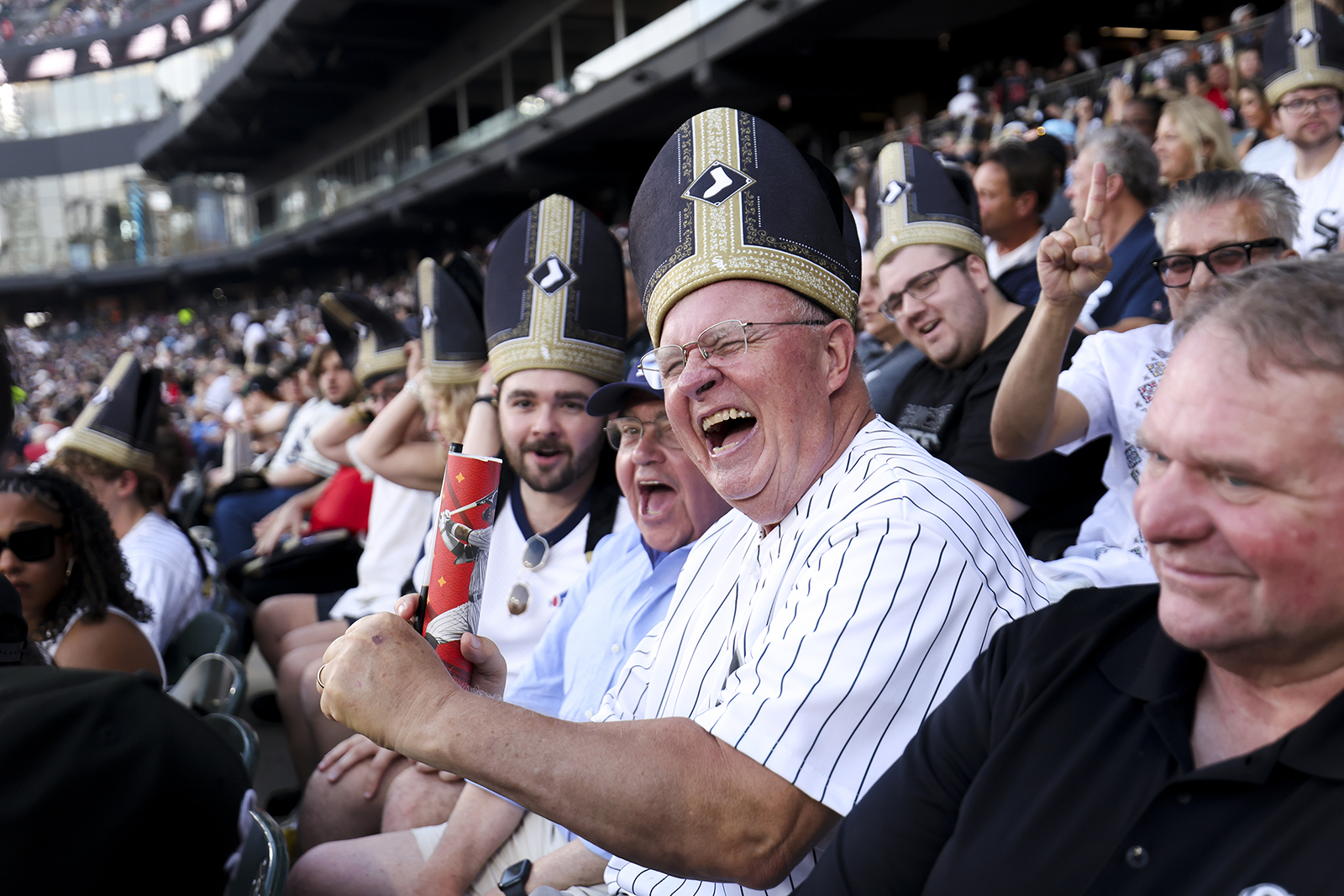
White Sox fans cheer while wearing Pope hats during "Pope Night," Tuesday, Aug. 11, 2026, in Chicago. (Photo courtesy of the Chicago White Sox)

August 12, 2026 at 1:17 p.m. ET

CHICAGO (RNS) — On a hot August night on the South Side of Chicago, Rate Field, home of the White Sox, turned into a church of baseball, filled to capacity with true believers who sang, passed the peace, cheered on a celebrity nun and, of course, wore their pope hats.

Those hats, emblazoned with the Sox logo, were given to every fan who entered the park on Tuesday (Aug. 11). It was, according to team officials, the biggest promotional giveaway in White Sox history, with more than 40,000 pope hats given away. The night was a testimony to the resurgent White Sox, who appear to be playoff-bound after three years of losing 100 games a season, as well as to the appeal of Pope Leo XIV, a longtime fan of the team and Chicago native.

“It doesn’t matter your religion or your denomination,” said Brooks Boyer, chief revenue and marketing officer for the White Sox. “Everyone respects the pope. For us, it’s obviously fun that he is a White Sox fan.”

As soon as the gate opened, the park was flooded with fans, young and old, some with jerseys with the pope’s name on the back, many already wearing their pope hats. They stood in line for hot dogs or beers, where some greeted Sister Mary Jo Sobieck of the Dominican Sisters of Springfield, Illinois, who was grabbing a hot dog before throwing out the first pitch.

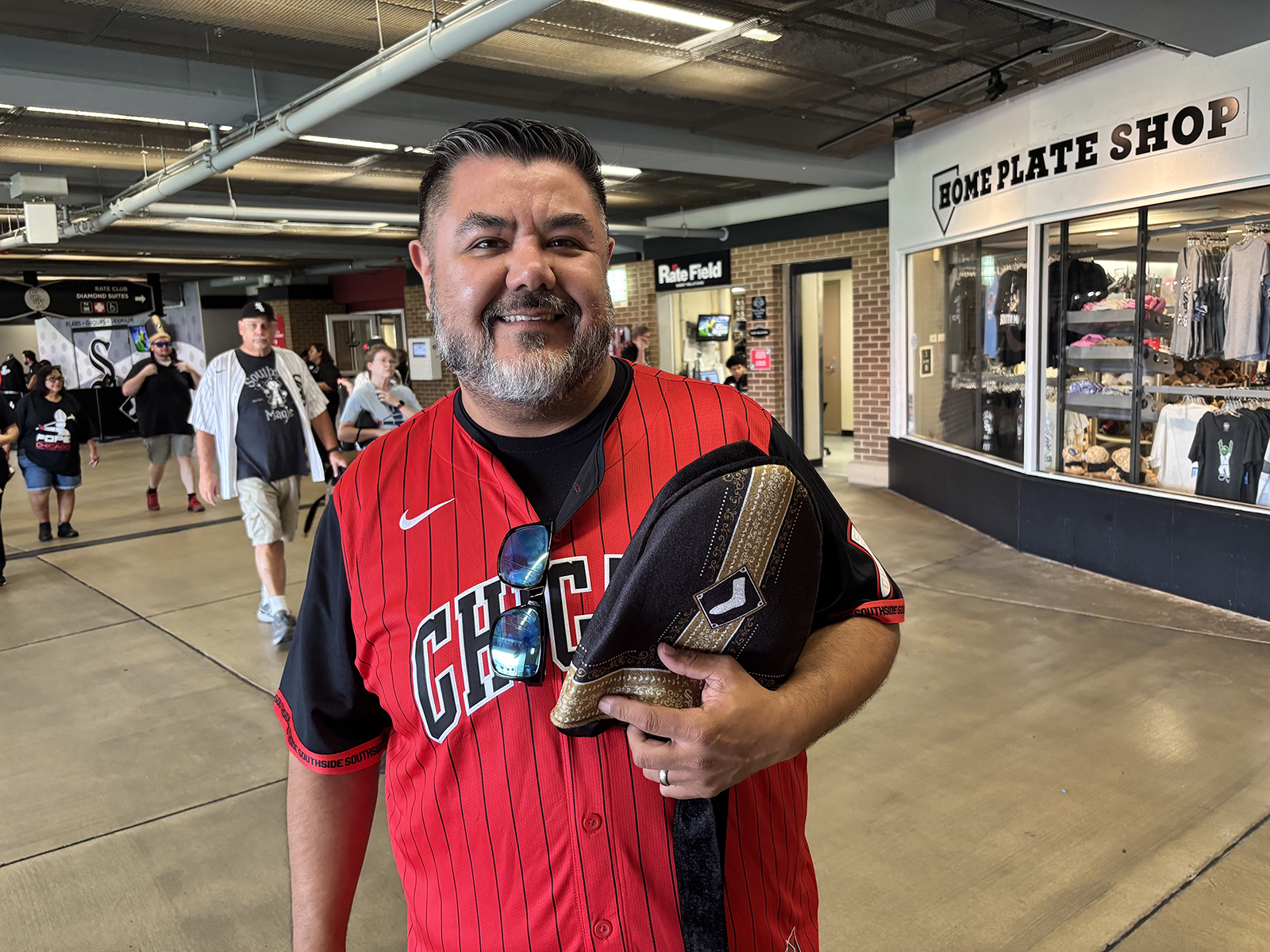
Jaime Garcia and his wife were decked out in Sox garb and their new pope hats. Garcia, who is from the Back of the Yards neighborhood on Chicago’s southwest side, grew up both Catholic and a Sox fan. He got off work early to get to the game.


Jaime Garcia attends the White Sox’s “Pope Night,” Tuesday, Aug. 11, 2026, in Chicago. (RNS photo/Bob Smietana)

“Got to get the hat,” he said. “Got to represent.”

Tuesday, August 04, 2026

Province Apostolic Plan 2022-2029


繁體 简体English

Province Apostolic Plan 2022-2029

For which one of you, when he wants to build a tower, does not first sit down and calculate the cost, to see if he has enough to complete it? (Luke 14:28)

Therefore, do not worry about tomorrow, for tomorrow will worry about itself. Each day has enough trouble of its own.” (Matthew 6:34)

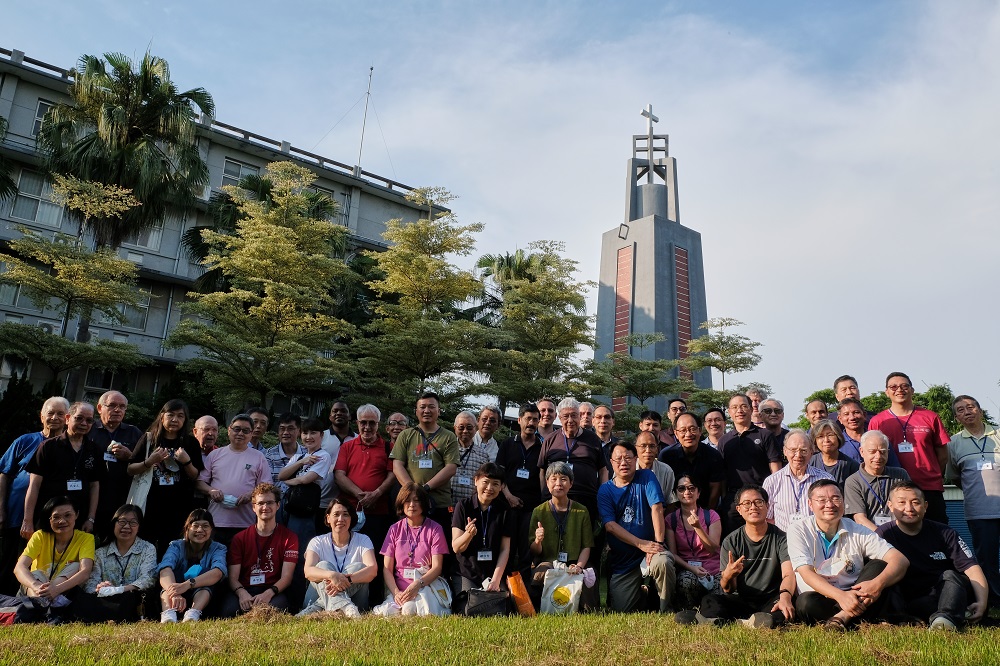
Animated by the Universal Apostolic Preferences of the Society and encouraged by understanding them as “orientations that go beyond ‘doing something’ and enable us to achieve our transformation as persons” according to Fr. General’s letter of 2019 , the Chinese Province responded by embarking on a journey of over two years to develop a Province Apostolic Plan (PAP) 2022 – 2029. This document sets out the Vision, Priorities, Goals, Actions and Follow-up Measures for a Review of the Plan which will guide the Province in the years ahead.


Under the direction of a nine-person Preparatory Team consisting of both Jesuits and lay partners (both men and women), we held three Province Assemblies over two years. We discussed the Culture of Positivity and Collaboration necessary for our conversion, conducted a Province-wide SWOT analysis as an exercise to gain a more concrete grasp of our situation.

In the interim period between the First and the Second Assemblies, the mission of the Society was revisited and the context of our Province was analyzed. The Second Assembly was then devoted to formulating the Vision of the PAP. After arriving at a consensus for the Vison, drafts of the Priorities under the Vision were also developed. Subsequent to the Assembly, the Priorities were refined and confirmed. They are presented below:

Vision Statement

Inspired by Ignatian spirituality and in creative collaboration, we, Jesuits and Companions in Mission, aspire to journey with all, especially the youth and the deprived, towards reconciliation and a future filled with hope and joy.