Showing posts with label Aviation. Show all posts

Thursday, January 30, 2025

'Scare them into quitting': Senator says Trump’s letter to aviation workers may have led to crash
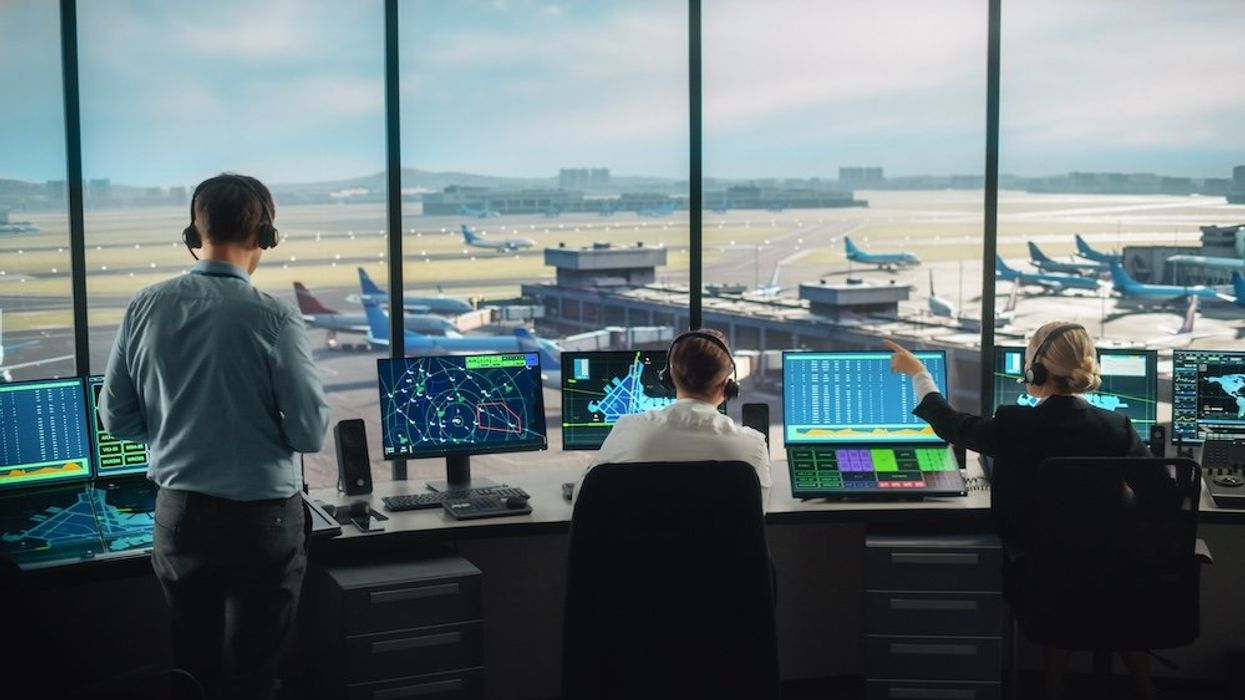

'Scare them into quitting': Senator says Trump’s letter to aviation workers may have led to crash

\\

Image: Shutterstock

January 31, 2025


Earlier this week, President Donald Trump's administration offered millions of federal workers seven months of pay in advance if they quit their jobs. Days later, a mid-air collision between a regional jet and a military helicopter killed dozens outside the Washington D.C. National Airport. One senator thinks the two events may be related.

Politico reported Thursday evening that the deadly Wednesday night crash above the Potomac River that killed 60 American Airlines passengers and four crew members along with three U.S. Army pilots in a Black Hawk helicopter has lawmakers and aviation officials demanding answers. During a Thursday press conference, officials with the National Transportation Safety Board promised to fully investigate the crash to determine what caused the fatal error, though they cautioned it could take a year or more before their investigation is complete.

The New York Times reported earlier Thursday that the air traffic controller who was on duty at the time of the crash was performing duties normally done by two controllers, and that staffing levels were "not normal" on Wednesday night. And Politico reported that airports across the country have had a critical shortage of air traffic controllers for years, mostly due to a lack of funding appropriated by Congress for hiring and training new airport control tower workers. According to the Times, many air traffic controllers work six days a week for as much as 10 hours per day.

READ MORE: 'Unfathomable panic': Federal workforce rocked by 'chaos and confusion' following OPM buyout offer

But Sen. Tammy Duckworth (D-Ill.) — an Iraq War veteran who used to pilot a Black Hawk helicopter — suggested that morale among federal employees being lower than usual due to the Trump administration's recent buyout offer letter could have also been a contributing factor. She also blasted Trump for his assertion that diversity, equity and inclusion-based hiring practices under former Presidents Barack Obama and Joe Biden were to blame.

"Obviously, you’re relying on air traffic control," Duckworth said. She noted that both Federal Aviation Administration officials and air traffic controllers were among those who received emails from the Office of Personnel Management asking them to consider leaving their jobs.

"[Letters were sent to] some air traffic controllers that are responsible for airspace in the Northeast region,” she continued, “Basically trying to scare them into quitting at a time when we have a shortage of air traffic controllers. So I don’t think the Trump administration is in a strong position right now to start blaming others.”

“This should’ve never happened, and we wanna understand what happened,” said Senate Commerce Committee member Ted Budd (R-N.C.)


The 2 aircraft that collided over Washington are both workhorses in use around the world


Two Sikorsky UH-60 “Black Hawk” helicopters approach during the annual Han Kuang military exercises that simulates an attack on an airfield at Taoyuan International Airport in Taoyuan, northern Taiwan, Wednesday, July 26, 2023. (AP Photo/ Chiang Ying-ying)


This photo provided by shows American Airlines jet, tail no. N709PS at the Lehigh Valley International Airport in Allentown, Pa., May 27, 2021. (Nicholas Toto/610 Aviation via AP)

BY CURT ANDERSON
Updated 8:30 PM EST, January 30, 2025Share


▶ Follow live updates on President Donald Trump’s return to Washington

The Army helicopter and regional American Airlines jet that collided over Washington are both workhorse aircraft that operate around the world on a daily basis.

There were 60 passengers and four crew members on the jet, a Bombardier CRJ-700, officials said. Three service members were on a training flight on the UH-60 Black Hawk helicopter. None are believed to have survived the Wednesday night collision, which caused both aircraft to plunge into the frigid Potomac River.

What to know about the aircraft:

Sikorsky UH-60 Black Hawk

There are about 5,000 Black Hawks in use around the world, according to the aviation site FlightGlobal.com. The twin-engine, four-blade helicopter is manufactured by Sikorsky, a subsidiary of defense contractor Lockheed Martin.

The aircraft involved in Wednesday’s collision was an Army version. There are other variants made for the Navy, Air Force and Coast Guard, and for specialized duty such as intelligence gathering.

The Black Hawk made its debut in 1979. The helicopters have been involved in numerous U.S. military operations, including the raid that killed al-Qaida leader Osama bin Laden in May 2011, the wars in Afghanistan and Iraq and the invasions of Panama and Grenada.

It is perhaps best known as the namesake aircraft in the 2001 war film “Black Hawk Down,” about a U.S. helicopter shot down in Mogadishu, Somalia, during the civil war there. Others have crashed over the years on training missions.

Bombardier CRJ-700


The passenger jet was manufactured by Quebec, Canada-based conglomerate Bombardier Inc. The CRJ program was sold in June 2020 to the Japanese company Mitsubishi Heavy Industries, which no longer makes them but continues to produce parts.

The twin-engine aircraft comes in several versions capable of seating between 68 and 78 passengers. It is a commonly used regional aircraft used for medium and shorter flights, with more than 900 produced since it was introduced in May 1999.

Bombardier said in 2015 that the CRJ-700 series accounted for 20% of all departure flights in North America, with about 200,000 flights per month.


The plane in Wednesday’s crash was registered as N530EA and manufactured in 2010, according to the Federal Aviation Administration. The jet was operated by an American Airlines subsidiary, PSA Airlines.


President Donald J. Trump Holds a Press Briefing on D.C. Aviation ...

Thursday, January 20, 2022

FAA says some planes will be ‘too susceptible’ to 5G interference to be safe


Bad weather led some regional flights bound for San Francisco to be diverted or canceled Thursday

A cellular tower is seen in the foreground as a United Airlines Boeing 787 Dreamliner lands at Los Angeles International Airport on Jan. 19. (Patrick T. Fallon/AFP/Getty Images)


By Ian Duncan and

Lori Aratani
Today at 1:12 p.m. EST|Updated today at 6:47 p.m. EST

The Federal Aviation Administration said Thursday it had cleared more than three-quarters of the nation’s commercial fleet to land at airports where interference from 5G signals could pose a danger in bad weather, but indicated that some planes might never secure approvals.

The agency has been reviewing devices called radar altimeters to determine whether they can still provide reliable measurements of altitude — critical information for landing in bad visibility — in areas with 5G towers. The potential for disruption became clear Thursday, when San Francisco-bound flights were diverted and others were forced to circle as poor visibility collided with the rollout of the new wireless networks.

The diverted flights involved planes that had not been cleared to land where 5G could interfere with radio altimeters. The diversions are the latest challenge in a rollout that mostly spared large airports and airlines but has raised fresh questions for smaller regional carriers.

The FAA issued a bulletin Thursday warning that diversions were possible at eight airports across the country where bad weather was forecast “due to the nationwide expansion of 5G C-Band and the potential for radio altimeter interference.”

In a subsequent statement, the agency said, “We anticipate some altimeters will be too susceptible to 5G interference. To preserve safety, aircraft with those altimeters will be prohibited from performing low-visibility landings where 5G is deployed because the altimeter could provide inaccurate information.”

The C-band refers to the spectrum used for high-speed wireless Internet, which is close to the frequencies used by altimeters, creating a risk of interference. The FAA has been analyzing airplane models to determine whether they can operate safely close to 5G towers, clearing 78 percent of the nation’s commercial fleet. Some regional Embraer jets were among those to gain approval from the FAA on Thursday, but none made by competitor Bombardier had been cleared.

It was those models of planes that faced delays and diversions Thursday.

Tim Donohue, a co-founder of Aerology, a start-up that predicts air travel disruptions, said he had counted nine planes in holding patterns near San Francisco International Airport. At least five flights operated by SkyWest Airlines bound for San Francisco had to be diverted.

United Airlines shared with customers a blunt message after it canceled a regional flight Thursday from Sacramento to San Francisco.

“Your flight is canceled due to new federal rules to prevent interference between 5G technology and your aircraft,” the message read. “We’re urging the federal government to fix these rules.”


Wireless carriers to limit 5G near airports after airlines warn of major disruptions


The 5G networks went live Wednesday with buffers around airports after a prolonged battle that pitted airlines against Verizon and AT&T — which activated the new 5G networks — and the FAA against the Federal Communications Commission. Airlines reported few disruptions, but the head of the Regional Airline Association warned that was mainly because of good weather.

The regional carriers are a critical link in the aviation system, tying smaller airports to major hubs. Many of the affected flights Thursday were operated by SkyWest Airlines, a regional carrier that serves Delta Air Lines, American Americans, United Airlines and Alaska Airlines.

One of the diverted flights went to Monterey, Calif., and three to San Jose, according to data from Flightradar24. A SkyWest flight from Boise bound for San Francisco made loops near Petaluma, Calif., only to be diverted 180 miles to land in Reno, Flightradar24 data shows.

SkyWest said in a statement that the new FAA clearances Thursday applied to at least some of its jets, including models affected earlier in the day.

“The potential for ongoing operational impact remains until full mitigations can be put into place for all commercial aircraft,” the company said. “As always, we will not compromise safety.”

Faye Malarkey Black, president and chief executive of the Regional Airline Association, said the FAA’s decision to clear additional aircraft has helped, but many carriers are still unsure of what will follow.

“When the big guys are covered, the tendency is to think that we’ve averted the worst of the crisis, but this is not solved until all parts are whole,” she said.

Despite the concerns of regional carriers, the leaders of major airlines said they expected few issues and were pleased that the aviation industry and wireless companies were working together on the concerns that remain.

Scott Kirby, chief executive of United Airlines, expressed relief Thursday that the 5G rollout agreement allowed for the technology’s deployment with only a minimal effect on flight operations.

“While I wish it had happened earlier, the good news is that we now have everyone engaged: the FAA, DOT and those at the highest levels of the equipment and aircraft manufacturers, airlines and telecoms,” Kirby said. “I am confident we’ll soon have a clear set of objective criteria that will allow full rollout of 5G without significant impact to aviation.”