Showing posts with label Johnsson. Show all posts

Saturday, January 28, 2017

Inaugural event of new Center for Understanding World Religions


By Heather Reifsnyder - January 26, 2017
Wholeness
.


.


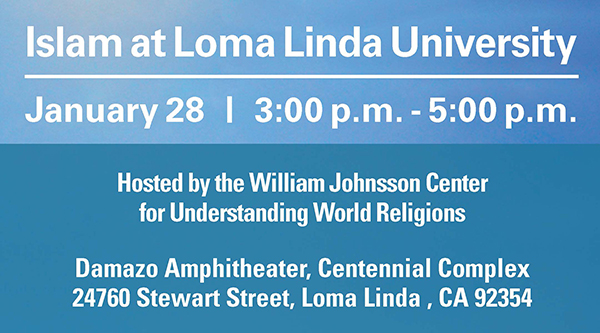
This is the center's inaugural program.
.


Religious hostility too often sits at the core of conflict and violence. Honest dialogue and mutual respect are part of the solution, and hence one reason Loma Linda University Health has created the William Johnsson Center for Understanding World Religions.
.


The new center, approved by the Board of Trustees in February 2016, will hold its inaugural event Saturday, Jan. 28; full details are below.
.


The name of the center recognizes William Johnsson, PhD, MA, and his contributions to promoting interreligious understanding in the Seventh-day Adventist Church.
.


.


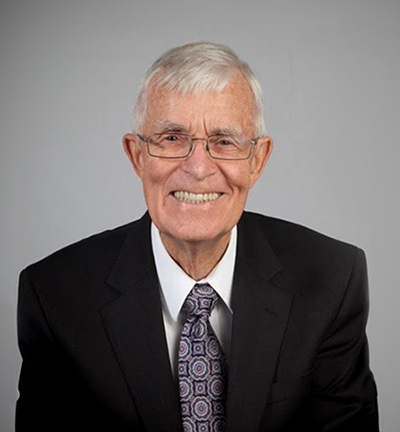
Above: Dr. William Johnsson
.


Johnsson served as assistant for interfaith relations for former General Conference President Jan Paulsen for a number of years following a prolific career in publishing and scholarship in the Adventist Church. Johnsson retired to Loma Linda in 2014, where he regularly teaches courses for LLU School of Religion and still writes books.
.


“Dr. Johnsson’s knowledge and passion for world religions have been invaluable to our campus,” says Richard Hart, MD, DrPH, president of Loma Linda University Health.
.


Jon Paulien, PhD, dean of the School of Religion, who will serve as the center’s director, seconds Johnsson’s vast contributions. “The faculty of the School of Religion consider him one of the great Adventist figures of our era. His work with the Adventist Review and then interfaith relations has truly become legendary to us.”


Purpose of the center


Dean Paulien notes that central to the definition of a university is the exchange and understanding of diverse ideas — such as different religious beliefs.
.


The surest way to people’s hearts is
through their faith.
Dr. Jon Paulien
.


“Working or studying at Loma Linda University Health is a calling, not a job,” Paulien says. “If God calls non-Christians to Loma Linda, then that is a spiritual gift to us. They can benefit us by testifying to what God has done in their lives.
.


“Furthermore, the surest way to people’s hearts is through their faith,” he continues. “We need to understand the hearts of our students and employees of other belief systems so that we can serve them appropriately.”
.


For its initial activities, the William Johnsson Center for Understanding World Religions will hold meetings twice yearly, each focusing on a different religion.
.


Paulien says, “These programs will not be purely theoretical but will also include practitioners of that faith who are employees or students of Loma Linda University Health, sharing what it means to them, with an Adventist then responding about how Adventism at its best encourages Loma Linda to offer an environment where individuals of different faiths peacefully learn and practice alongside each other.”
.


Inaugural program — Islam
.

The inaugural event will take place this Saturday, Jan. 28, with a focus on the faith of Islam.

The 3-5 p.m. program will explore the role and experience of Muslim students and faculty in the context of Loma Linda University Health’s mission and values. It will meet at the Damazo Amphitheater in the Centennial Complex, 24760 Stewart St. Free parking behind the building is plenteous.
.


President Hart will offer an introduction, while Johnsson, the center’s namesake, will discuss the scope and purpose of this new enterprise. Johnsson also gave the initial donation to launch the center.

The program’s expert presenters will almost all be students and faculty at Loma Linda University Health. A steering committee comprising Muslim faculty planned the event and selected the speakers.

Nahidh Hasaniya, MD, PhD, associate professor in the School of Medicine, will offer a recitation from the Quran, followed with a translation by Shamel Abd-Allah, MD, professor in the School of Medicine.
.


A special guest from Claremont School of Theology, Jihad Turk, MA, will offer a talk titled “Why I Am a Muslim.” Turk is president of Bayan Claremont, a seminary to educate Muslim scholars and religious leaders.
.


Two more LLU professors, Mahmoud Torabinejad, DMD, PhD, MSD, of the School of Dentistry, and Eba Hathout, MD, of the School of Medicine, will discuss “What It’s Like to Be a Muslim at LLU.”
.


Gerald Winslow, PhD, director of the LLU Center for Christian Bioethics, will then speak about Seventh-day Adventism and Islam.
.


A panel discussion will follow, including Winslow, Hathout, Turk and Torabinejad as well as student Sara Haddad Tabrizi, LLU School of Public Health, and Khwaja Arsalaan Ahmed, radiology resident at Loma Linda University Medical Center.
.


The choice of Islam as the first program’s focus reflects part of the impetus to start such a center at Loma Linda University Health.
.


Story of the center’s founding
.

The original suggestion for such a center came from Gabriela Profeta-Phillips, coordinator of Adventist-Muslim relations for the North American Division of Seventh-day Adventists.


Phillips and other General Conference representatives met with the School of Religion dean to develop a proposal to share at LLU Deans Council on Dec. 2, 2015, unknowingly at the same time a young Muslim couple unleashed a terrorist attack on San Bernardino. In the wake of that tragic event, the Deans Council reacted very favorably to the idea, with top-level administrative commitment coming soon after.
.


Paulien remembers, “A month later, we held a meeting with local Muslim leaders, engaging with them to communicate to the community that we at Loma Linda University Health want to be a center of healing, not just for our own campus but more broadly. We expressed our desire to redouble our efforts to be a partner of peace in the wider community.”


.


Source


.


Thursday, August 01, 2013

A New Ecumenical Wind

 (April 2008)

Will the Global Christian Forum unite the churches?

By William G. Johnsson

A new wind is blowing across the Christian landscape, one with the potential to transform the ecumenical movement. How should Seventh-day Adventists, with our keen interest in end-time developments, relate to it?
November 6-9, 2007, some 250 Christian leaders from more than 70 nations came together in Limuru, Kenya. The extremely diverse group, which gathered under the rubric of the Global Christian Forum (GCF), was a meeting unlike any other in modern times. For the first time Pentecostals and Evangelicals sat down with Catholics, Protestants, Orthodox, and representatives of the African Instituted Churches. Many of those present called the meeting historic; certainly it was unprecedented.

The gathering at Limuru took place on the eve of the sixtieth anniversary of the World Council of Churches (WCC). Major changes have occurred in the Christian world since 1948, when the WCC was formed in high hopes of uniting Christians:


 UNITED IN PRAYER: Vibrant worship services, as well as personal interaction, were featured prominently in the meeting of the Global Christian Forum in Limuru, Kenya.


♦ The center of gravity has moved south. No longer do Europe and the United States set the pace. Christianity is growing rapidly in Africa and Asia, but is stagnant in its old “home base.” There are now about four times more Christians in the global South than in the North (or “West”). “Southern” missionaries now outnumber their traditional Western counterparts.

Beyond the numbers, however, we should note an even more important change. “Southern” Christianity is much more conservative than that of the “mainline” churches that constitute the bulk of the WCC. It assigns greater authority to the Scriptures; it has a holistic understanding of the natural and supernatural worlds; and it gives the Holy Spirit a much more prominent role in doctrine and experience.

♦ The Evangelical movement, cutting across denominational lines, has become a global force. Evangelicals, regardless of their parent church home, are united in belief in the reliability of the Bible, in the atoning work of Christ by His death on the cross, in the need for conversion and evangelism, and in the second coming of Christ. The World Evangelical Alliance counts some 420 million Christians in its fellowship.

♦ Growing even more rapidly are the Pentecostals. In its modern manifestation the movement began as a marginalized fringe Christian phenomenon in Los Angeles in 1904. Primarily a revival movement appealing to the poor, and disdained by society, Pentecostalism has spread globally. It has no central structure or organization; rather, it centers in the congregation, emphasizing the personal experience of the Holy Spirit. Because a clear definition of what constitutes a Pentecostal is hard to come by, estimates of the strength of the worldwide movement vary widely; generally, however, observers agree that globally Pentecostals-Charismatics number more than 500 million.
♦ On the continent of Africa Christianity has exploded. Many new, indigenous churches have arisen around charismatic figures. Some of these churches, known generally as African Instituted Churches, have congregations beyond their national boundaries and even in Europe and America. Offering a religion of celebration, they use symbols, music, and dance reflective of African culture. Probably about 100 million Christians belong to the African Instituted Churches.

These major changes largely bypassed the WCC. Evangelicals have been disenchanted by the sharp turn toward social and political action that the WCC took at its world assembly in 1968 at Uppsala, Sweden. Pentecostals, initially scorned by the mainline churches, harbor hostility toward the ecumenical movement represented by the WCC. And the new African churches and the WCC generally find little in common.


Major changes have occurred in the Christian world since 1948, when the World Council of Churches was formed.

Today, 60 years after its founding, the WCC is looking for a sense of direction. Its budget and staff have been drastically reduced from 20 years ago. It has failed to attract groups representing large numbers of Christians. And, in spite of earnest efforts, its member churches have not been able to achieve the basic step of accepting one another at the Lord’s table.

Out of this background the concept of the Global Christian Forum was conceived in 1998. Hubert van Beek, who served many years with the WCC, spent the following nine years as a retired planner and organizer of the event that eventually took place last November at Limuru. Van Beck was assisted by an essentially volunteer steering committee drawn from several traditions. Mel Robeck, professor of church history at Fuller Seminary in California, and a Pentecostal, played a key role in persuading many Pentecostal leaders to attend the GCF.

The ideas of the GCF were first tested in regional meetings in various parts of the world. The steering committee concluded that the only way for Pentecostals to feel comfortable enough to participate would be to ensure that they and Evangelicals comprised at least 50 percent of all those present. This is indeed what happened at Limuru. Pentecostals formed the largest single group and played a major role in plenary sessions and discussion groups. Both of the major papers presented at the plenaries came from Pentecostal scholars.

The GCF met for four days at Limuru, 19 kilometers (11.8 miles) from Nairobi, at a resort center owned by the National Council of Churches of Kenya. The WCC and its partners put up most of the funding for the event. Many of those who came had their expenses paid by the organizers. Three Adventists attended: John Graz, Public Affairs and Religious Liberty director at the General Conference; John Kakembo, Ministerial director of the East Central Africa Division, which has its headquarters in Nairobi; and I.

The stated purpose of the GCF was to “create an open space wherein representatives from a broad range of Christian churches and interchurch organizations, which confess the triune God and Jesus Christ as perfect in His divinity and humanity, can gather to foster mutual respect, to explore and address together common challenges.” Unlike past ecumenical gatherings I have attended, at the GCF the affective (emotional) element played a significant part. Worship services, except for the one conducted by the Orthodox, were lively. Africans brought a distinctive flavor to the gathering.

For many the high point came on the first day. All attendees joined in preassigned groups of 30 and spent, person by person, about 15 minutes each relating in personal testimony their journey with Jesus Christ. The common elements of divine calling and intervention, regardless of the tradition, were powerful and moving. In these groups the denominational barriers came down; the remaining days built on the goodwill that had been established.


BROAD REPRESENTATION: Representatives to the Global Christian Forum included delegates from the Salvation Army, Assemblies of God, Orthodox Church in America, World Council of Churches, Pontifical Council for Promoting Christian Unity, and Conference of Christian Communicators.


The GCF spent its final day and a half evaluating what had transpired and trying to ascertain the form and direction it should take. Attendees expressed appreciation for the event, which they viewed as a breakthrough, and urged that structures be kept to a minimum, the GCF avoid becoming a new organization, the process continue at regional and local levels, and the committee that planned the GCF be reconstituted and enlarged to guide the process. The unfolding future will determine whether another global meeting should be arranged.

Most of those who came to Limuru left on a high note. They felt they had been a part of something special, perhaps historic. Will the GCF subsequently be seen as the turning point when the WCC and the old ecumenism faded away, and a new and unpredictable ecumenism was born? Only time will tell.

How Adventists relate to these winds of change will call for alertness and careful thought. We have never been a member of the WCC and have kept at a distance the ecumenism that organization espouses. For us, a sense of divinely ordained mission to the entire world cannot be weakened or compromised by organic linking with other Christian bodies. We do not take upon ourselves the role of judge: we simply focus on our mission and leave others to answer to the Lord for their calling.

Yes, we too desire the unity of believers for which our Lord prayed before He went to the cross. But unity on what basis? And at what price? For us, Christian unity can come only from shared beliefs based on the Bible.

Further, our understanding of history and prophecy makes us wary of Christian coalitions. Too often the result has been coercion of conscience, and Revelation 13 points to another such development just before Christ returns.

We applaud men and women of goodwill everywhere. For some 80 years the Working Policy of our church has stated: “We recognize those agencies that lift up Christ before men as a part of the divine plan for evangelization of the world, and we hold in high esteem Christian men and women in other communions who are engaged in winning souls to Christ” (p. 110). We enter into theological conversations with other churches, seeking to understand and to be understood. Where possible, we make common cause in endeavors such as religious liberty and aid to the needy, just as Ellen White in her day joined with other Christian bodies in fighting the alcohol traffic.

We gladly worship with other Christians, praying with and for them, including their ministers. And here Adventists are way out in front of the churches of the WCC: we open the Lord’s table to all who present themselves, regardless of denomination. That is the sort of ecumenism—and only that—in which we feel free to participate.
William G. Johnsson is assistant to the president for interfaith relations for the Seventh-day Adventist Church.


Source
.

Saturday, May 29, 2010

Zed dialogues with Seventh-day Adventist Church


Rajan Zed who is president of Universal Society of Hinduism who had a dialogue with some of the leaders of Seventh-day Adventist Church on May 25, says that they are planning to have further dialogue and might cooperate on common causes.
CJ: Correspondent

Fri, May 28, 2010 12:59:03 IST
HINDU STATESMAN Rajan Zed and Seventh-day Adventists are planning to work together on issues of common interest.

Zed, who is president of Universal Society of Hinduism and who had a dialogue with some of the leaders of Seventh-day Adventist Church at their world headquarters in Silver Spring (Maryland, United States of America) on May 25, says that they are planning to have further dialogue and might cooperate on common causes.
Rajan Zed met with Michael Lee Ryan, General Vice President of Seventh-day Adventist Church; Dr John Graz, secretary general of International Religious Liberty; and Dr William G Johnsson, assistant to the president for Interfaith Relations.

Numbering around 16 million with about 66,000 churches in 203 countries, Seventh-day Adventists, a Christian denomination, accept the Bible as their only creed. Norwegian-born Jan Paulsen is president. Hinduism, oldest and third largest religion of the world, has about one billion adherents and moksh (liberation) is its ultimate goal.
.


.
Note: Highlights added ///
.,

Thursday, May 13, 2010

A New Ecumenical Wind

A New Ecumenical Wind
Will the Global Christian Forum unite the churches?

By William G. Johnsson

A new wind is blowing across the Christian landscape, one with the potential to transform the ecumenical movement. How should Seventh-day Adventists, with our keen interest in end-time developments, relate to it?

November 6-9, 2007, some 250 Christian leaders from more than 70 nations came together in Limuru, Kenya. The extremely diverse group, which gathered under the rubric of the Global Christian Forum (GCF), was a meeting unlike any other in modern times. For the first time Pentecostals and Evangelicals sat down with Catholics, Protestants, Orthodox, and representatives of the African Instituted Churches. Many of those present called the meeting historic; certainly it was unprecedented.

The gathering at Limuru took place on the eve of the sixtieth anniversary of the World Council of Churches (WCC). Major changes have occurred in the Christian world since 1948, when the WCC was formed in high hopes of uniting Christians:


UNITED IN PRAYER: Vibrant worship services, as well as personal interaction, were featured prominently in the meeting of the Global Christian Forum in Limuru, Kenya.♦


The center of gravity has moved south. No longer do Europe and the United States set the pace. Christianity is growing rapidly in Africa and Asia, but is stagnant in its old “home base.” There are now about four times more Christians in the global South than in the North (or “West”). “Southern” missionaries now outnumber their traditional Western counterparts.

Beyond the numbers, however, we should note an even more important change. “Southern” Christianity is much more conservative than that of the “mainline” churches that constitute the bulk of the WCC. It assigns greater authority to the Scriptures; it has a holistic understanding of the natural and supernatural worlds; and it gives the Holy Spirit a much more prominent role in doctrine and experience.

♦ The Evangelical movement, cutting across denominational lines, has become a global force. Evangelicals, regardless of their parent church home, are united in belief in the reliability of the Bible, in the atoning work of Christ by His death on the cross, in the need for conversion and evangelism, and in the second coming of Christ. The World Evangelical Alliance counts some 420 million Christians in its fellowship.

♦ Growing even more rapidly are the Pentecostals. In its modern manifestation the movement began as a marginalized fringe Christian phenomenon in Los Angeles in 1904. Primarily a revival movement appealing to the poor, and disdained by society, Pentecostalism has spread globally. It has no central structure or organization; rather, it centers in the congregation, emphasizing the personal experience of the Holy Spirit. Because a clear definition of what constitutes a Pentecostal is hard to come by, estimates of the strength of the worldwide movement vary widely; generally, however, observers agree that globally Pentecostals-Charismatics number more than 500 million.

♦ On the continent of Africa Christianity has exploded. Many new, indigenous churches have arisen around charismatic figures. Some of these churches, known generally as African Instituted Churches, have congregations beyond their national boundaries and even in Europe and America. Offering a religion of celebration, they use symbols, music, and dance reflective of African culture. Probably about 100 million Christians belong to the African Instituted Churches.

These major changes largely bypassed the WCC. Evangelicals have been disenchanted by the sharp turn toward social and political action that the WCC took at its world assembly in 1968 at Uppsala, Sweden. Pentecostals, initially scorned by the mainline churches, harbor hostility toward the ecumenical movement represented by the WCC. And the new African churches and the WCC generally find little in common.


Major changes have occurred in the Christian world since 1948, when the World Council of Churches was formed.

Today, 60 years after its founding, the WCC is looking for a sense of direction. Its budget and staff have been drastically reduced from 20 years ago. It has failed to attract groups representing large numbers of Christians. And, in spite of earnest efforts, its member churches have not been able to achieve the basic step of accepting one another at the Lord’s table.

Out of this background the concept of the Global Christian Forum was conceived in 1998. Hubert van Beek, who served many years with the WCC, spent the following nine years as a retired planner and organizer of the event that eventually took place last November at Limuru. Van Beck was assisted by an essentially volunteer steering committee drawn from several traditions. Mel Robeck, professor of church history at Fuller Seminary in California, and a Pentecostal, played a key role in persuading many Pentecostal leaders to attend the GCF.

The ideas of the GCF were first tested in regional meetings in various parts of the world. The steering committee concluded that the only way for Pentecostals to feel comfortable enough to participate would be to ensure that they and Evangelicals comprised at least 50 percent of all those present. This is indeed what happened at Limuru. Pentecostals formed the largest single group and played a major role in plenary sessions and discussion groups. Both of the major papers presented at the plenaries came from Pentecostal scholars.

The GCF met for four days at Limuru, 19 kilometers (11.8 miles) from Nairobi, at a resort center owned by the National Council of Churches of Kenya. The WCC and its partners put up most of the funding for the event. Many of those who came had their expenses paid by the organizers. Three Adventists attended: John Graz, Public Affairs and Religious Liberty director at the General Conference; John Kakembo, Ministerial director of the East Central Africa Division, which has its headquarters in Nairobi; and I.

The stated purpose of the GCF was to “create an open space wherein representatives from a broad range of Christian churches and interchurch organizations, which confess the triune God and Jesus Christ as perfect in His divinity and humanity, can gather to foster mutual respect, to explore and address together common challenges.” Unlike past ecumenical gatherings I have attended, at the GCF the affective (emotional) element played a significant part. Worship services, except for the one conducted by the Orthodox, were lively. Africans brought a distinctive flavor to the gathering.

For many the high point came on the first day. All attendees joined in preassigned groups of 30 and spent, person by person, about 15 minutes each relating in personal testimony their journey with Jesus Christ. The common elements of divine calling and intervention, regardless of the tradition, were powerful and moving. In these groups the denominational barriers came down; the remaining days built on the goodwill that had been established.


BROAD REPRESENTATION: Representatives to the Global Christian Forum included delegates from the Salvation Army, Assemblies of God, Orthodox Church in America, World Council of Churches, Pontifical Council for Promoting Christian Unity, and Conference of Christian Communicators.


The GCF spent its final day and a half evaluating what had transpired and trying to ascertain the form and direction it should take. Attendees expressed appreciation for the event, which they viewed as a breakthrough, and urged that structures be kept to a minimum, the GCF avoid becoming a new organization, the process continue at regional and local levels, and the committee that planned the GCF be reconstituted and enlarged to guide the process. The unfolding future will determine whether another global meeting should be arranged.

Most of those who came to Limuru left on a high note. They felt they had been a part of something special, perhaps historic. Will the GCF subsequently be seen as the turning point when the WCC and the old ecumenism faded away, and a new and unpredictable ecumenism was born? Only time will tell.

How Adventists relate to these winds of change will call for alertness and careful thought. We have never been a member of the WCC and have kept at a distance the ecumenism that organization espouses. For us, a sense of divinely ordained mission to the entire world cannot be weakened or compromised by organic linking with other Christian bodies. We do not take upon ourselves the role of judge: we simply focus on our mission and leave others to answer to the Lord for their calling.

Yes, we too desire the unity of believers for which our Lord prayed before He went to the cross. But unity on what basis? And at what price? For us, Christian unity can come only from shared beliefs based on the Bible.

Further, our understanding of history and prophecy makes us wary of Christian coalitions. Too often the result has been coercion of conscience, and Revelation 13 points to another such development just before Christ returns.

We applaud men and women of goodwill everywhere. For some 80 years the Working Policy of our church has stated: “We recognize those agencies that lift up Christ before men as a part of the divine plan for evangelization of the world, and we hold in high esteem Christian men and women in other communions who are engaged in winning souls to Christ” (p. 110). We enter into theological conversations with other churches, seeking to understand and to be understood. Where possible, we make common cause in endeavors such as religious liberty and aid to the needy, just as Ellen White in her day joined with other Christian bodies in fighting the alcohol traffic.

We gladly worship with other Christians, praying with and for them, including their ministers. And here Adventists are way out in front of the churches of the WCC: we open the Lord’s table to all who present themselves, regardless of denomination. That is the sort of ecumenism—and only that—in which we feel free to participate.

William G. Johnsson is assistant to the president for interfaith relations for the Seventh-day Adventist Church.
.

Source: http://adventistworld.org/article.php?id=288
.