Showing posts with label Macron. Show all posts

Friday, October 16, 2026

School Blockades Continue Across France as Protesters Are Called to the Bastille


Image: Srpske Novine from Euronews


Pastor Hal MayerSpeaker / Director

School Blockades Continue Across France as Protesters Are Called to the Bastille

Thursday October 15th, 2026

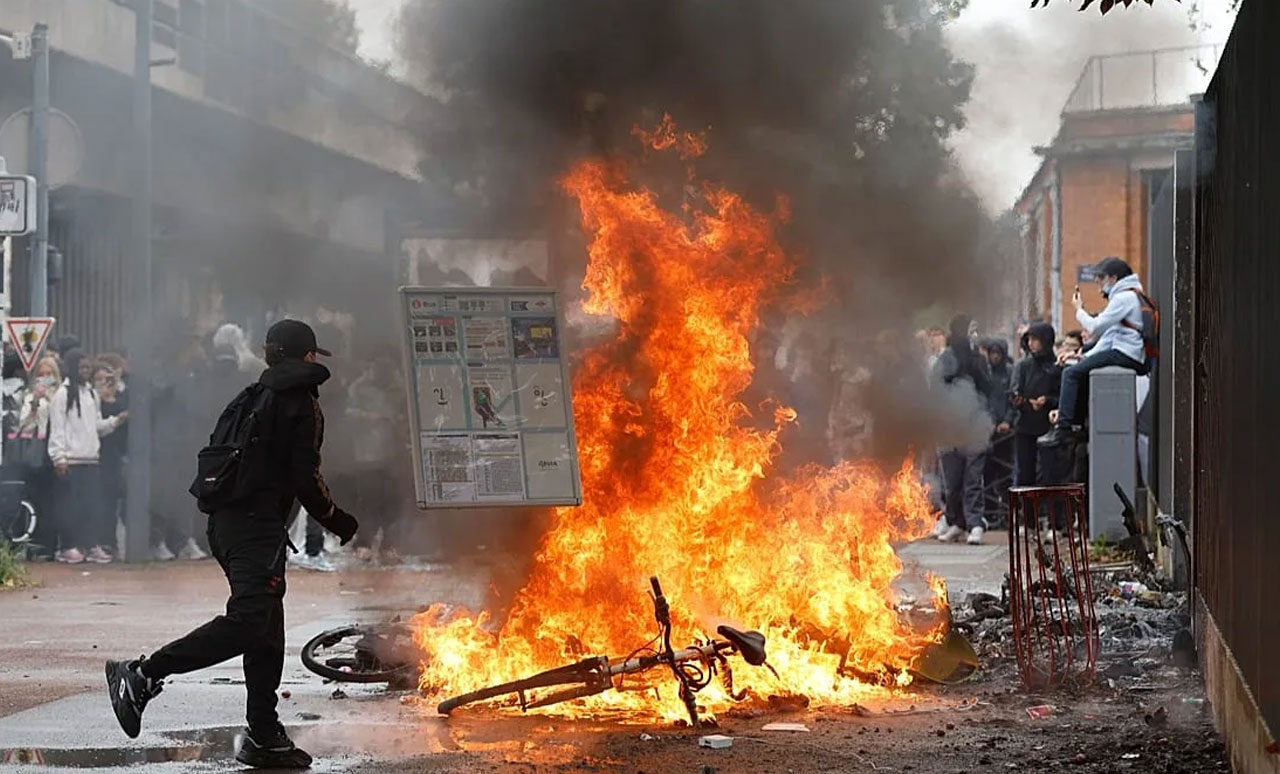
The Epoch Times, by Etienne Fauchaire: Blockades at high schools and universities continued across France on Oct. 7, a day before students and teachers were expected to return to the streets for another nationwide protest.

The Student Union called on high school and university students to resume blockades on the morning of Oct. 8 before “converging on Bastille” in Paris at 3 p.m., a call seen as a reference to the storming of the Bastille on July 14, 1789, during the French Revolution.

Several education unions, including SNES-FSU, France’s largest secondary school teachers’ union, also called for strikes and demonstrations in support of the students.

The number of disrupted high schools fell significantly on Oct. 7. Classes were fully or partially suspended at 459 schools, compared with 891 the previous day, according to the Education Ministry, which described the movement as being in sharp decline.

The Oct. 8 demonstrations will mark the fourth nationwide day of action in a protest movement led largely by far-left student organizations and initially fueled by grievances over school conditions.

Monday, September 28, 2026

LIVE: Pope Leo visits Metz, France

LIVE: Pope Leo visits Metz, France
Reuters

Pope Leo finishes his four-day visit to France with meetings and a mass in the eastern city of Metz, before returning to Rome.

Wednesday, June 17, 2026

'I'm the boss', Trump tells G7 counterparts


Evian (France) (AFP) – The G7 summit of world powers in France is being chaired by President Emmanuel Macron as host but on Wednesday his guest US President Donald Trump left no doubt over who he believed was in charge.

Issued on: 17/06/2026 - 12:27


I'm the boss, said Trump as he entered the session © Ludovic MARIN / AFP


"I'm the boss," Trump said as he strode in to the morning session of the last day of the three-day G7 summit, with the other leaders already in their seats.

Amid laughter, Macron appeared to take the comment with good humour. "How are you?" the French president asked.

"Good, thank you," replied Trump, a tycoon before becoming president who famously hosted the TV show "The Apprentice" with its catchphrase "You're fired!", as he finally took his seat.

Fresh from clinching an accord to end the war with Iran and celebrating his 80th birthday, Trump's presence has dominated the summit in the spa town of Evian on Lake Geneva.

French officials will be satisfied that the mercurial US president has stayed for the entire event and signed on to the G7 communique -- in contrast to the previous gathering in Canada, where he left early.

In an unusual gesture, Macron has invited Trump to dinner at the Palace of Versailles outside Paris after the summit winds down on Wednesday afternoon.

Macron, under pressure to show he is not fawning over Trump, has already said the evening at Versailles will not be a "gala" dinner.

© 2026 AFP


Monday, December 29, 2025

With Russia looming, Europe tries to beef up its youth military service


By Colette Davidson Special correspondent
@kolet_ink

Dec. 18, 2025, 3:54 p.m. ET|Paris


Last month, when French President Emmanuel Macron unveiled a new voluntary military program, he was met with record approval from the French public. The reaction, coming as the president’s popularity is dwindling, is evidence that goes beyond politics: France is ready to defend itself.

With the war in Ukraine looming just more than 1,200 miles away, there is a growing awareness in France that the nation must secure its borders in the event of Russian aggression.

The €2 billion program will offer 10 months of paid military training to 18- and 19-year-olds, with the goal of providing thousands of young people with domestic security skills, so that France has a deep pool of reserves in the event of an armed conflict.

Why We Wrote This

The potential military threat from Russia and the decreasing support from the United States have countries across Europe looking to conscript able-bodied citizens. But it's a big ask after decades of peace and prosperity.

Mr. Macron is not the only one eyeing defense. As Russia’s war in Ukraine heads toward its fifth year and Europe faces the largest threats to its borders since the Cold War, leaders across the continent are taking a harder look at the strength of their militaries.

But as European leaders debate the benefits of mandatory versus voluntary service, for whom and how long, they are confronting an even bigger challenge: How to show the public the value of joining the ranks.

“First and foremost, the goal of the military is to build defense personnel,” says Jean-Claude Allard, an associate security researcher at the French Institute for International and Strategic Affairs. “You can’t tell young people, ‘Join the military, it’s going to be a Club Med vacation.’”

Thursday, December 05, 2024

France in political crisis after no-confidence vote topples government

Minority coalition of PM Michel Barnier falls after three months, the shortest of any administration of France’s Fifth Republic

Guardian international staff
Wed 4 Dec 2024 14.29 EST

France has been plunged into political crisis after a no-confidence vote brought down the government, ending the beleaguered minority coalition of the rightwing prime minister Michel Barnier after only three months.

The no-confidence motion brought by an alliance of left-wing parties was supported by MPs from Marine Le Pen’s anti-immigration, far-right, National Rally. A total of 331 lawmakers — a clear majority — voted on Wednesday night to bring down the government.


Barnier will resign as prime minister on Thursday morning, having warned before the vote that France would be “plunged into the unknown”.

Macron will then address the nation in a televised address on Thursday evening, his office said after the vote.

The toppling of the government leaves the president, Emmanuel Macron, facing the worst political crisis of his two terms as president. There is uncertainty over how a 2025 budget can be decided as France faces a growing public deficit, and over whom Macron could appoint as prime minister.

Macron, whose second term as president runs until spring 2027, is not obliged to stand down himself. He has ruled out resigning, calling such a scenario “political fiction”. But part of the left and far right called for his exit.

Wednesday’s vote was the country’s first successful no-confidence vote since a defeat for Georges Pompidou’s government in 1962, when Charles de Gaulle was president. The lifespan of Barnier’s government became the shortest of any administration of France’s Fifth Republic, which began in 1958.

No new parliament elections can be called before July 2025, narrowing Macron’s options faced with a deeply divided national assembly.

Since Macron called a sudden and inconclusive snap election in June, the French parliament has been divided between three groups with no absolute majority. A left alliance took the largest number of votes but fell short of an absolute majority; Macron’s centrist grouping suffered losses but is still standing and Le Pen far-right National Rally gained seats but was held back from power by tactical voting from the left and centre.

Barnier, the EU’s former Brexit negotiator, was appointed by Macron in September after two months of political paralysis this summer.

Barnier’s key task, which proved his downfall, was to vote through a budget for 2025 in which he said he would begin to tackle France’s deficit with €60bn in tax increases and spending cuts. But after weeks of standoff over the budget, Barnier on Monday pushed through a social security financing bill, using article 49.3 of the constitution, which allows a government to force through legislation without a vote in parliament. This sparked a no-confidence motion brought by the left alliance, and another brought by the far right.

Barnier’s minority coalition had been essentially propped up by Le Pen, who, although outside government, had an unprecedentedly powerful role as Barnier attempted to placate her to avoid her party joining a no-confidence vote. Barnier had negotiated with her directly, tapering the budget to her demands.

But Le Pen pulled rank, saying Barnier’s budget was a danger to the country. She said French people had expected Barnier’s appointment to calm government institutions and provide a “vision for the country”. Instead, she said, the budget was a disaster.

Le Pen wrote on social media that, by following the “catastrophic continuity of Emmanuel Macron”, Barnier, who led a coalition dominated by the right and centre, “could only fail”. She said she was “protecting and defending” her party’s 11 million voters, who she said were deeply concerned about the cost of living. Jean-Philippe Tanguy, a National Rally MP, said: “[Having] no budget is better than the actual budget, which says a lot about how bad it is.”

If parliament does not pass a budget by 20 December, the government can propose emergency legislation that would roll over spending limits and tax provisions from 2024, pending the arrival of a new government and a new 2025 budget bill.

The savings through spending cuts, and tax rises planned by the Barnier government would be shelved.

Le Pen’s party has said households would be better off in this scenario. Barnier had fiercely contested this, saying that the government’s collapse would bring “extremely serious and turbulent conditions on financial markets”. Barnier’s ministers said more people would end up paying tax or additional tax if thresholds could not be adjusted for inflation. The labour minister, Astrid Panosyan-Bouvet, said there would be “sadness and worry” after a government collapse.

The head of the parliament’s finances commission, Éric Coquerel, a member of Jean-Luc Mélenchon’s leftwing La France Insoumise party, said the no-confidence vote was a sign of “hope” and he felt the “vast majority of French people backed it”. He said Barnier was being “alarmist” when he said that “financial and economic chaos” would be the result if the government fell. Mélenchon, who is not currently an MP, was in parliament, to witness what he called a “historic day”.

The left alliance’s no-confidence motion contained wording that attacked the far right. It noted that despite a large number of French citizens choosing to block the far right in June’s parliament snap election, Barnier had still “ceded to their most vile obsessions” – a reference to their anti-immigration stance. But Le Pen’s party said it would still vote for the no-confidence text as the key issue was to overthrow the government.

The Socialist party leader, Olivier Faure, who said there should now be a prime minister from the left, said Macron must speak to the French people. “How can he leave the French people in this uncertainty just before Christmas?” Faure told Le Monde.

We’ve just witnessed an extraordinary moment in the history of the United States. Throughout the tumultuous years of the first Trump presidency we never minimised or normalised the threat of his authoritarianism, and we treated his lies as a genuine danger to democracy, a threat that found its expression on 6 January 2021.

With Trump months away from taking office again – with dramatic implications for Ukraine and the Middle East, US democracy, reproductive rights, inequality and our collective environmental future – it’s time for us to redouble our efforts to hold the president-elect and those who surround him to account.

It’s going to be an enormous challenge. And we need your help.

Trump is a direct threat to the freedom of the press. He has, for years, stirred up hatred against reporters, calling them an “enemy of the people”. He has referred to legitimate journalism as “fake news” and joked about members of the media being shot. Project 2025, the blueprint for a second Trump presidency, includes plans to make it easier to seize journalists’ emails and phone records.

We will stand up to these threats, but it will take brave, well-funded independent journalism. It will take reporting that can’t be leaned upon by a billionaire owner terrified of retribution from the White House.


Wednesday, September 25, 2024

“Peace today is the real battle”, says French president at Sant'Egidio meeting


Sant'Egidio held its annual “Meeting for Peace” in Paris. “Peace is only possible in coexistence,” French President Emmanuel Macron told delegates.

September 24th, 2024 at 08:55 am (Europe\Rome). Updated September 24th, 2024 at 10:51 am (Europe\Rome)


France's President Emmanuel Macron (C-R) and founder of the catholic charity Sant'Egidio community Andrea Riccardi (C-L) pose for a photo at the International Meeting for Peace in Paris, France, 22 September 2024. (Photo by EPA/MAXPPP)


Thousands gathered in Paris for two days of reflection for Sant'Egidio's annual “Meeting for Peace” centered on the theme “Imagining Peace.” The idea to host the 2024 edition in Paris originated two years ago, when French President Emmanuel Macron was invited as a speaker at the meeting.

The event opened with several speeches. Andrea Riccardi, founder of the Community of Sant'Egidio, sounded the alarm: “For decades, the culture of peace was a powerful reference. But now, it has evaporated.” Sant’Egidio now tracks 59 conflicts globally. In Europe, the memory of the tragedies of the 20th century is fading, and many political leaders are confined to a narrow realism.

After listening to the Anglican Archbishop Justin Welby of Canterbury, Catholic Archbishop Laurent Ulrich of Paris, and France’s Chief Rabbi, Haïm Korsia, Emmanuel Macron spoke for 25 minutes. He mentioned current tragedies but did not offer any concrete proposals.

Saturday, June 16, 2018

Merkel Seeks Macron's Help as Asylum Crisis Threatens EU Unity


Photographer: Louisa Gouliamaki
AFP via Getty Images


 By
Brian Parkin
‎June‎ ‎16‎, ‎2018‎ ‎8‎:‎14‎ ‎AM‎ ‎EDT


European remedy needed to solve European challenge, she says

French-German meeting June 19 will seek policy options

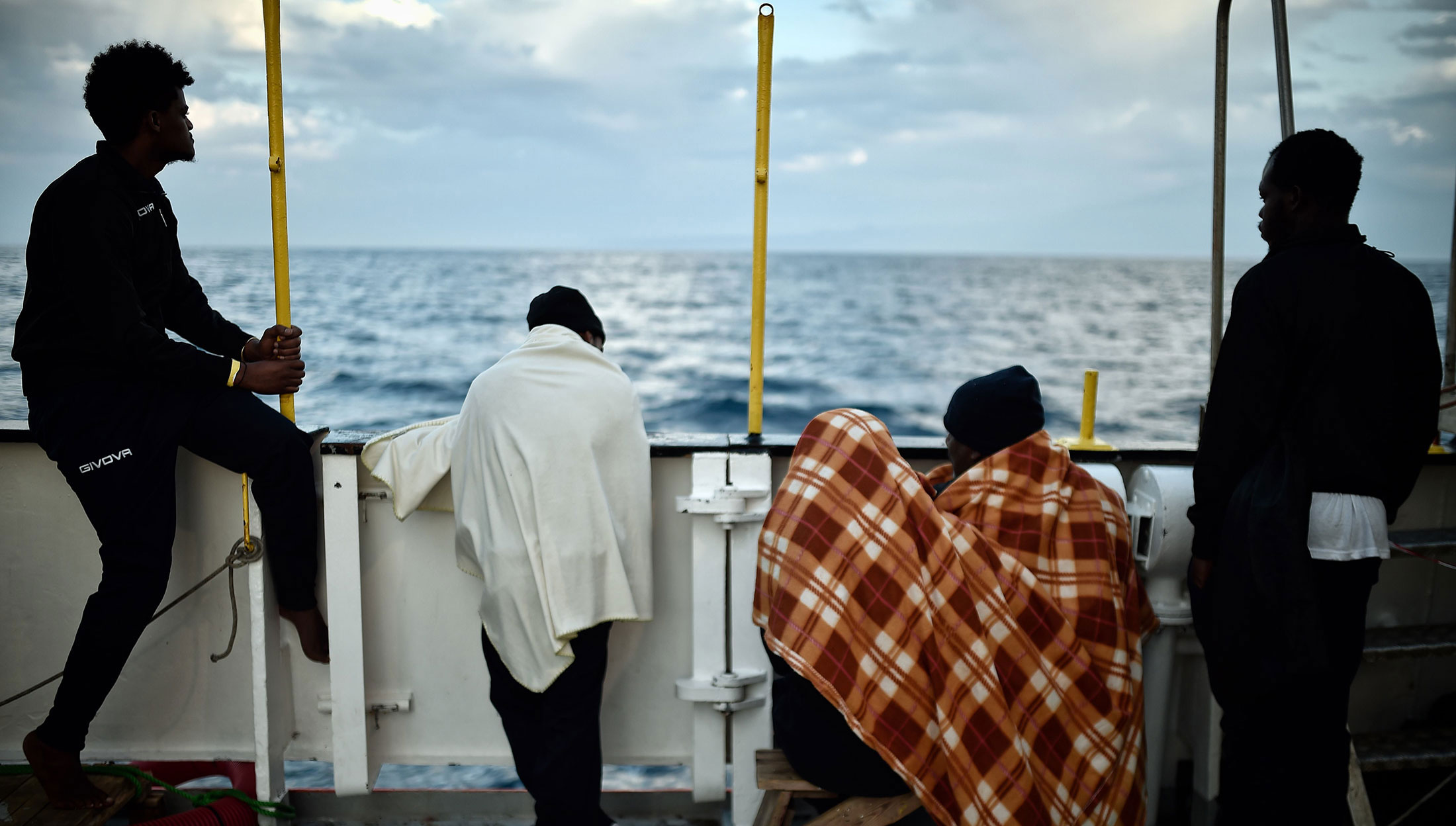
German Chancellor Angela Merkel says she will turn to France to help diffuse a domestic crisis over migration amid an increasing risk that the European Union may unravel unless its member states adopt a common policy.

At a regular meeting of their joint Cabinets on Tuesday, Germany will seek the support of French President Emmanuel Macron to find a common EU response for managing an influx of refugees, Merkel said Saturday in a weekly podcast. The stakes for the EU are high, she said.

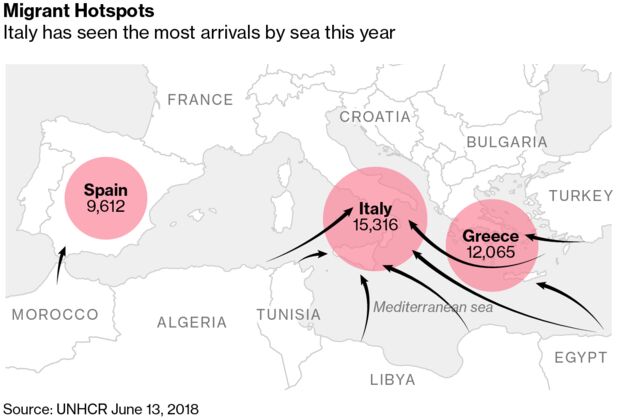
A dispute in Merkel’s coalition over migration policy has escalated into one of the biggest tests of her chancellorship, while the populist government that took over in Italy this month has blocked refugee vessels from entering Italian ports.

Getting all of the EU states on board for an overhaul of asylum practices and rules is “in my view one of the most decisive issues for European unity,” the Christian Democrat chancellor said. The inflow of migrants is “a European challenge that requires a European answer.”

Read more: Merkel Risks Crisis in Refugee Clash With Allies

As the domestic storm unfolded this week, Merkel remained insistent that the EU-28 can only solve migration challenges as a group. That’s fomented a deep rift between her CDU and its Christian Social Union allies, who claim they have national and EU authorization to start turning away refugees arriving on Germany’s borders who first claimed asylum in other EU states.

A European solution “doesn’t convince me,” said Bavaria’s Prime Minister Markus Soeder in a June 14 Bild Zeitung interview. The move would mean “the majority of asylum seekers who come to Europe make their way to Germany.”

The joint cabinet meeting with France offers Merkel a chance to air proposals for revamping regional asylum policy ahead of a European Council meeting June 28-29. Merkel has asked the CSU to be patient, a request that the Bavarians have ignored.


Saturday, April 28, 2018

In Front of Congress, Macron Reveals Himself as the Ultimate Anti-Trump


In Front of Congress, Macron Reveals Himself as the Ultimate Anti-Trump

By Jenny Hughes

- Thursday, April 26, 2018 - en Français


Photo by AP / Pablo Martinez Monsivais


They’d had dinner and attended a party together, shared many a bise, hug, and firm, if not too firm, handshake. The bromance had been going well. And yet, the break-up was inevitable. On April 25th, during a speech addressing the entire United States Congress, French president Emmanuel Macron argued against many of President Donald Trump’s policy positions.

Repeatedly, Macron’s words brought Democrats, applauding thunderously and cheering, to their feet. Republicans often stayed seated, and viewers watching on C-SPAN spotted, behind Macron, House Speaker Paul Ryan leaning to whisper something to Vice President Mike Pence. When the speech ended, Macron stepped down from the podium to the right, where Democrats waited to meet him. He shook hands, mostly with members from the liberal side of the aisle, for over 11 minutes.

Traditionally, this type of speech by a member of a foreign government before American senators and representatives includes mostly topics on which there is a consensus. The French president deviated from custom, directly addressing disagreements between him and Trump in several areas.
The environment

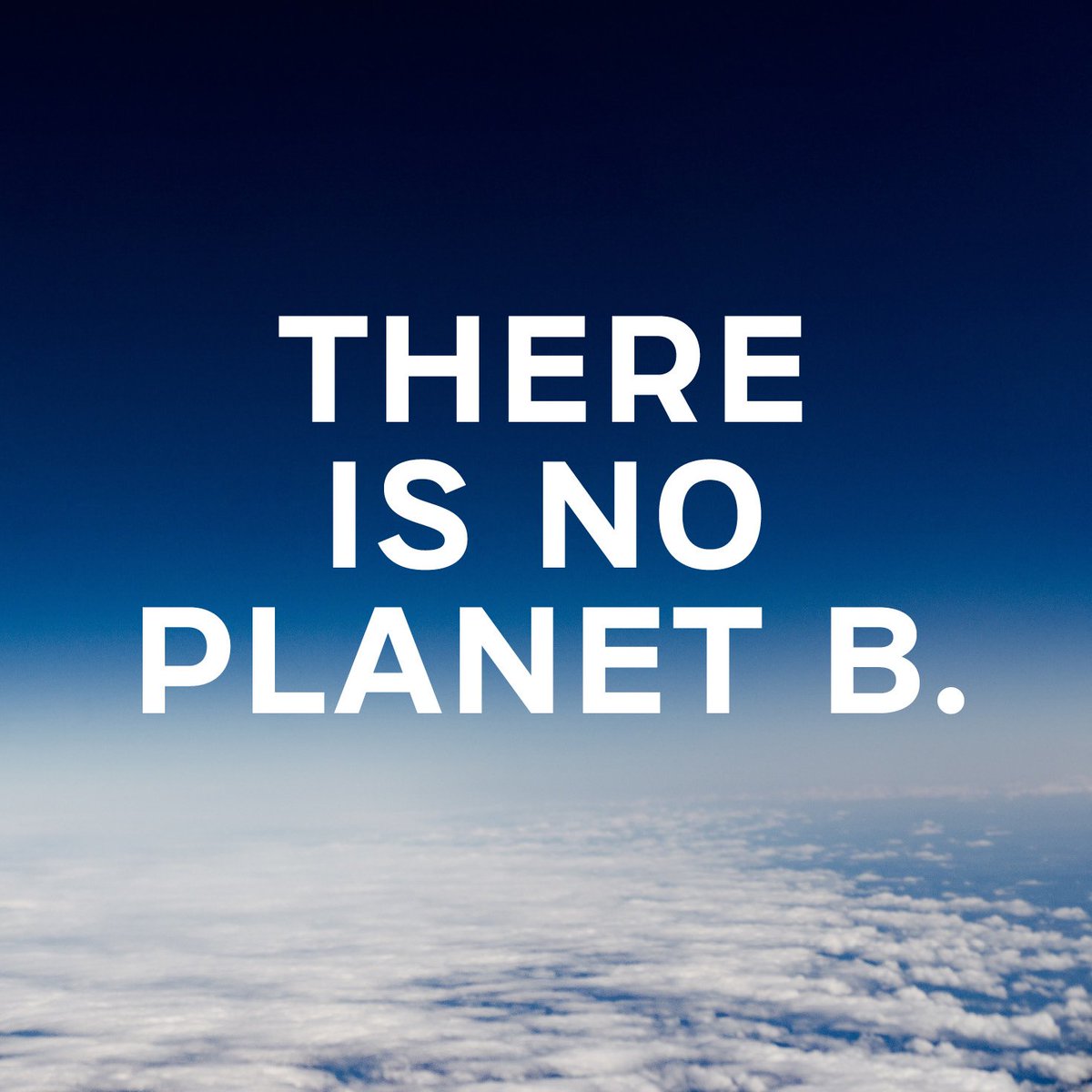
“I believe in building a better future for our children which requires offering them a planet that is still habitable in 25 years,” stated Macron, bringing legislators from both sides of the aisle to the feet to applaud. For Republicans, this was a false luring into a sense of security. From there on out, Macron was critical. “Some people think that securing current industries and their jobs is more urgent than transforming our economies to meet the global challenge of climate change.” It was a remark that stirred Democrats to applause and irked Republicans, who have been undoing regulations that protect the environment. “Let’s face it,” he said, “There is no planet B.” Democrats laughed and applauded; Ryan whispered something to Pence. “On this issue, it may happen we have disagreements, like in all families,” continued Macron. “In the long run, we will have to face the same realities.” And, the kicker — “I am sure, one day, the United States will come back and join the Paris Agreement.” Democrats went wild.


Thursday, April 26, 2018

Rebuffing Trump's nationalism, France's Emmanuel Macron calls for a 'new breed of multilateralism'


DEIRDRE SHESGREEN | USA TODAY


President Donald Trump and President Emmanuel Macron of France have toasted to continued warm relations between their countries. (April 24)
AP


WASHINGTON — Without directly rebuking President Trump, French President Emmanuel Macron on Wednesday called on American politicians to reject the president’s America first policies and construct a “new breed of multilateralism” equipped to confront urgent global threats — from climate change to terrorism.

In adroitly crafted remarks that leaned on emotional appeals and shared history to challenge the Republican-led Congress, Macron said the United States and France had a “unique taste for freedom” and were therefore obligated to join together to fight extremism, racism, inequality and environmental degradation across the globe.


French President Emmanuel Macron addresses Congress during a joint meeting on April 25, 2018 in Washington. Vice President Mike Pence, left, and House Speaker Paul D. Ryan (R-Wis.) appear behind Macron.
JARRAD HENDERSON, USA TODAY NETWORK


“Both in the United States and in Europe, we are living in a time of anger and fear because of these current global threats,” Macron told a joint session of Congress. “You can play with fears and angers for a time. But they do not construct anything. Anger only freezes and weakens us.”

Macron credited the United States with inventing multilateralism, and said: “You are the one now who has to help to preserve and reinvent it ... We can build the 21st century world order based on a new breed multilateralism, based on a more effective, accountable, and results-oriented multilateralism."