Showing posts with label Blasphemy. Show all posts

Thursday, October 01, 2026

Anti-blasphemy laws in America?


By Mark Tooley

Published September 30, 2026 4:00pm ET


America’s previous longtime consensus for universal religious freedom is fraying. Policies that targeted traditional Christian merchants who would not cater to same-sex nuptials or shuttered Catholic adoption agencies for similar reasons foreshadowed the end of the consensus.

Those challenges came from the secular left. Now some religious conservatives are disputing America’s traditional commitment to religious freedom for all.

In recent years, small numbers of often highly educated young men have embraced Catholic integralism or Protestant confessional statism, sometimes self-identifying as Christian nationalism. The former aspires to a society that, as in medieval times, makes the Catholic Church paramount, including in matters of civil law. The latter, often romanticizing John Calvin’s Geneva or Puritan New England, wants a government specifically committed to their version of Christianity.

Both groups would restrict non-Christians and punish blasphemers and heretics in civil law. Both groups think “liberalism,” with its assumption of legal equality and freedom of speech for all, has failed. Both groups have gained outsized attention thanks to our current “postliberal” political moment.

Postliberal Catholic integralists typically think American democracy, founded on Protestant and Enlightenment principles, was flawed from the start. Postliberal Protestant Christian nationalists try to claim the founders were fine with religious establishments and legal privilege for Christians.

These arguments had seemed confined to the margins of religious conservatism. But recently, Al Mohler, president of America’s second-largest seminary, has aligned with their cause. In 2024, Mohler shared a platform at the annual National Conservatism Conference with Doug Wilson, the patriarch of Protestant confessional state Christian nationalism.


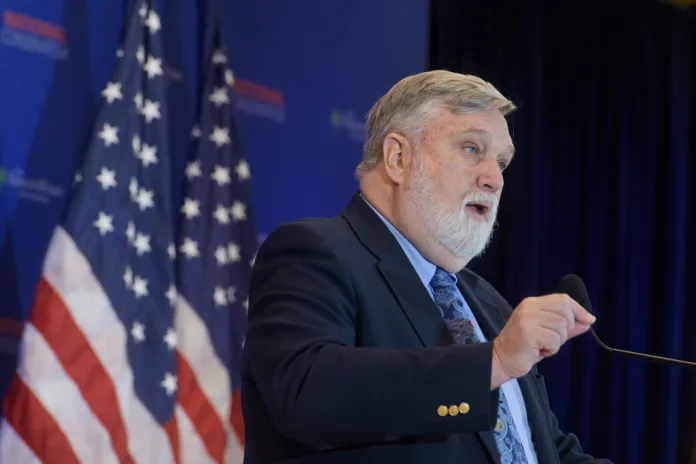
Douglas Wilson, Senior Minister of Christ Church, Moscow, Idaho, speaks at the National Conservatism Conference, Thursday, Sept. 4, 2025, in Washington. (AP Photo/Rod Lamkey, Jr.)

“I want to maximize the Christian commitments of the state,” Mohler said at the National Conservatism convo. “I call that ‘acknowledgment.’ I’m not claiming that every citizen will be a confessing Christian, but that does not mean they are not obligated to the acknowledgment of the Christian structure of this civilization.”

Sunday, September 27, 2026

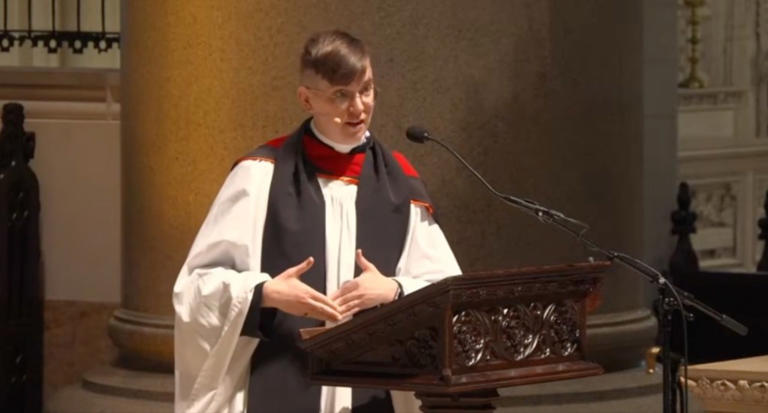
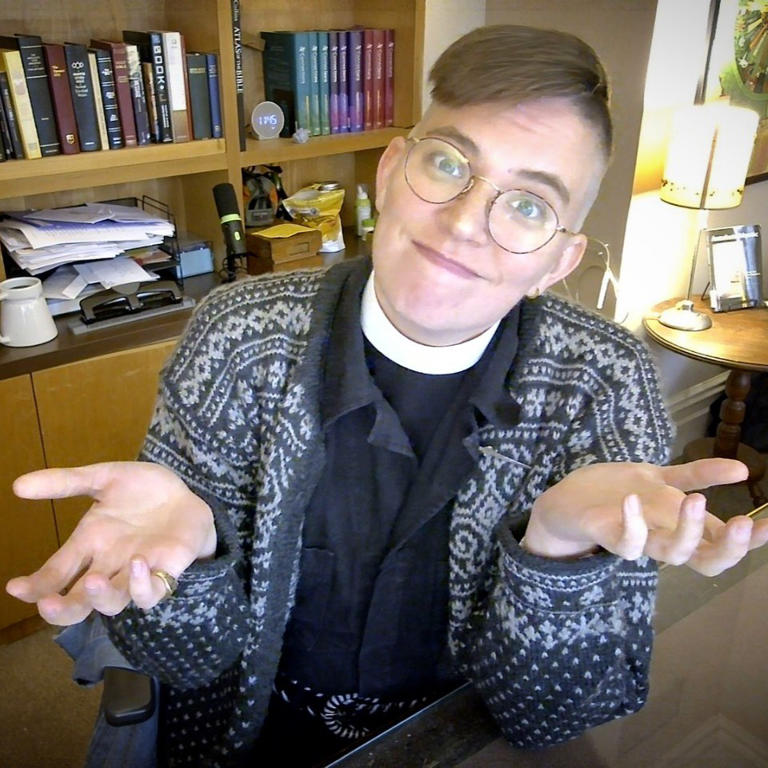
NYC Episcopal priest Flourish Klink sparks outrage for claiming Jesus is trans and God is nonbinary in outlandish sermon

Story by Nicholas McEntyre

A New York City Episcopal priest sparked outrage by claiming that Jesus Christ was transgender and that God is nonbinary — a belief once shared by seminarian and Texas Democratic Senate candidate James Talarico.

Father Flourish Klink, who is nonbinary and transgender, made the outlandish assertions during a recent sermon at Christ & St. Stephen’s Episcopal Church on the Upper West Side.

“God is nonbinary,” Klink startlingly exclaimed, according to a livestream clip shared on X Wednesday. “But I’m going to go further than that, and I’m going to say God is actually also trans.”


Father Flourish Klink, a nonbinary and transgender priest with the Episcopal Church, Diocese of New York, claimed Jesus is transgender and God is nonbinary during a recent sermon on the Upper West Side. X/The Dissenter

Klink, who prefers “they/elle/hen” pronouns, went on to describe how transgender people are given a gender by “folks based on what they see” when they are born — and used it as grounds to why “God is trans.”

“When we’re old enough, we realize that wasn’t right and we’re not, in our deepest selves, the gender that everyone thought we were. Reasonable working definition of a trans person, right?” Klink asked the congregants.

“When God, who – as we have established is nonbinary – was born in human form as our Lord Jesus Christ, Mary said, ‘Oh look, a baby boy.'”

Klink, who has a spouse and daughter, paused for a second before claiming, “God isn’t a boy, we have established this. God is beyond boy and girl.

“God was assigned a gender at birth, and later on it became clear that that gender wasn’t right.

“So if you’re gonna deny that God is trans, I think you’re going to be denying the divinity of our Lord Jesus Christ and I have some notes about that,” Klink said.

Klink continued the sermon, alleging Jesus didn’t live the traditional life of a man from the first century by not getting married and instead chose to teach and engage with women in unusual ways — instead of the “traditionally masculine way.”

The priest used details from the Bible on how Jesus looked different after his resurrection as proof he was trans.

“There was something different about Jesus,” Klink said before admitting the Bible doesn’t directly say what was different.

“The Bible doesn’t tell us why it is that Jesus’ best friends, his disciples, the people who had walked with him to the end of his life, the people who had buried him in the tomb when it was politically difficult, who were committed to him still didn’t recognize Jesus for a good long time,” Klink added.


Klink, who prefers “they/elle/hen” pronouns, described how transgender people are given a gender by “folks based on what they see” when they are born, as basis for the claim “God is trans.” Instagram/fatherflourish

Saturday, December 27, 2025

Female Reverend Insists MARY, Not JESUS Is The ‘Main Character’ Of Christmas


26th December 2025


States Mary “wasn’t forced” to carry Christ

The Church of England has sparked outrage with a video where a female reverend boldly declares that Mary, not Jesus, is the central figure in the Nativity story, with many suggesting it is an attempt to rewrite scripture through woke ideology, diminishing the divine role of Christ Himself.

The video, posted by the Church of England as part of their Advent and Christmas reflections, features Rev. Pippa White speaking in front of a painting of the Virgin Mary. She opens by teasing the question of the Christmas story’s protagonist.

“If you ask me who do I think is the main character in The Christmas Story, let’s face it, I’m probably not going to say Father Christmas. But! I’m also not gonna say Jesus because I think the main character In The Christmas Story Is Mary,” White states.


She continues, emphasising Mary’s agency: “I think sometimes we can fall into a bit of trap where we talk about Mary as if she was like this pawn in a really big game but i think its important remember that she had the chance to say no. She wasn’t forced To carry the Christ child She didn’t have to but when she was told about it she said yes. Behold the handmaiden of The Lord.”

White concludes with a call to action: “So I think its really important this Christmas time we remember To be a bit more like Mary.”

The video ties into the Church of England’s “Women of the Nativity” series, which reimagines the Christmas story through female perspectives, including biblical figures like Mary and Elizabeth, alongside fictional ones. According to the church’s website, these stories aim to “bring to life the wonder of the incarnation” by focusing on women’s voices during Advent and Christmas.

While the series draws from scripture, critics see it as part of a broader trend where progressive elements within the church prioritize social justice narratives over core Christian doctrine.

This comes amid ongoing debates about the Church of England’s direction, including its stances on gender and sexuality that have alienated traditionalists.

These comments reflect growing frustration among conservatives who view such reinterpretations as symptomatic of cultural decay, much like the battles against woke indoctrination in schools and media.


Thursday, July 17, 2025

'Jesus Wept': Chris Coons Decries GOP's Proposed Cuts To Foreign Disaste...

 
'Jesus Wept': Chris Coons Decries GOP's Proposed Cuts To Foreign Disaster Relief And Food Assistance

During remarks on the Senate floor Wednesday, Sen. Chris Coons (D-DE) spoke about proposed cuts to foreign disaster relief and food assistance

----______----
P.S.

Chris Coons
(Wikipedia)

Personal life


Annie and Chris Coons at the inauguration of Joe Biden in 2021

Coons is married to Annie Coons, née Lingenfelter.[108] They have three children, twins Mike and Jack, and daughter Maggie, and they live in Wilmington, Delaware. Coons is Presbyterian, his wife is Catholic, and they attend St. Ann Catholic Church in the city. Coons describes himself as "someone who is, privately, fairly religious," though he has never thought "that needs to be a big part of [campaigning]."[109]


Monday, March 17, 2025

WHO CAN FORGIVE SINS?


Excerpt taken from "Night Journey From Rome"

Copyright © 1982 by Chick Publications, Inc.


CHAPTER SIX

WHO CAN FORGIVE SINS?


When I walked out of St. Clare’s Catholic church on the morning of August 6, 1978, reborn in Jesus Christ, one of my abiding new realizations was that all the sins of my lifetime had been forgiven. Jesus had washed them in His blood; they had been annihilated; no guilt remained requiring me to perform acts of penance. I could now walk with God, my sins erased, no longer under the burden of having to confess to a human priest and beg his absolution. Truly Christ had released me from captivity according to His promise.

And thus I thought with relief that I would never again have to set foot in a Roman Catholic church building to seek forgiveness, justification, the Holy Spirit, Jesus in the Eucharist —whatever— through the Roman labyrinth of sacramental dispensation of grace. But I knew that someday it might be fitting or expedient, through courtesy or familial bonds of charity to enter a Catholic church building in consideration of the feelings of others. That is precisely what happened in a relatively short while.

Some six months after I was led to the Lord, a young Hispanic and Catholic Detroit police officer took his life in a violent manner. I did not know the young man personally; I knew of him and that he had problems. The deceased and I had a mutual friend, Steve, also a Detroit police officer, Puerto Rican, and Catholic. Steve and I are casual but good friends in the Department, often meeting for lunch “in Spanish” at a downtown Mexican restaurant. Steve is Catholic in name only, largely ignorant of the teachings of his church. But he knows I am a former priest, and he questions me continually about religion. And I witness Jesus Christ to him.

Sunday, December 01, 2019

What’s the difference between Sunday and the Sabbath?


How we name something shapes how we understand it.

By David A. Pitt


Names matter. St. John Paul II clearly writes in Dies Domini (On Keeping the Lord’s Day Holy) that Sabbath (the seventh day of the week) and Sunday (the first day of the week) are different. Sunday fulfills the Sabbath. Naming Sunday as “the Christian Sabbath”—or worse, “the Sabbath,” which eliminates Judeo-Christian differences—neglects the true importance of the day.

How we name something shapes how we understand it. Think of the Civil War. Naming the 1861–1865 conflict as the Civil War emphasizes nationality. Referring to it as the War Between the States, meanwhile, prioritizes states’ rights, and calling it the War of Northern Aggression conveys something very different indeed.

The Sabbath is the Jewish day of rest and remembrance, a day of freedom and peace. According to Exodus 20:9–11, human rest on the Sabbath honors God’s rest after the six days of creation. Deuteronomy 5:15 links the Sabbath to God’s liberation of Israel from Egypt.

Jewish people around the world keep the Sabbath by resting from all labor, worshipping at synagogue, and sharing a family dinner. They remember their covenant with the God who provides for and saves them, imitating God’s hospitality (Deut. 26:1–11) and behaving toward others as God has behaved toward them.

Sunday, November 04, 2018

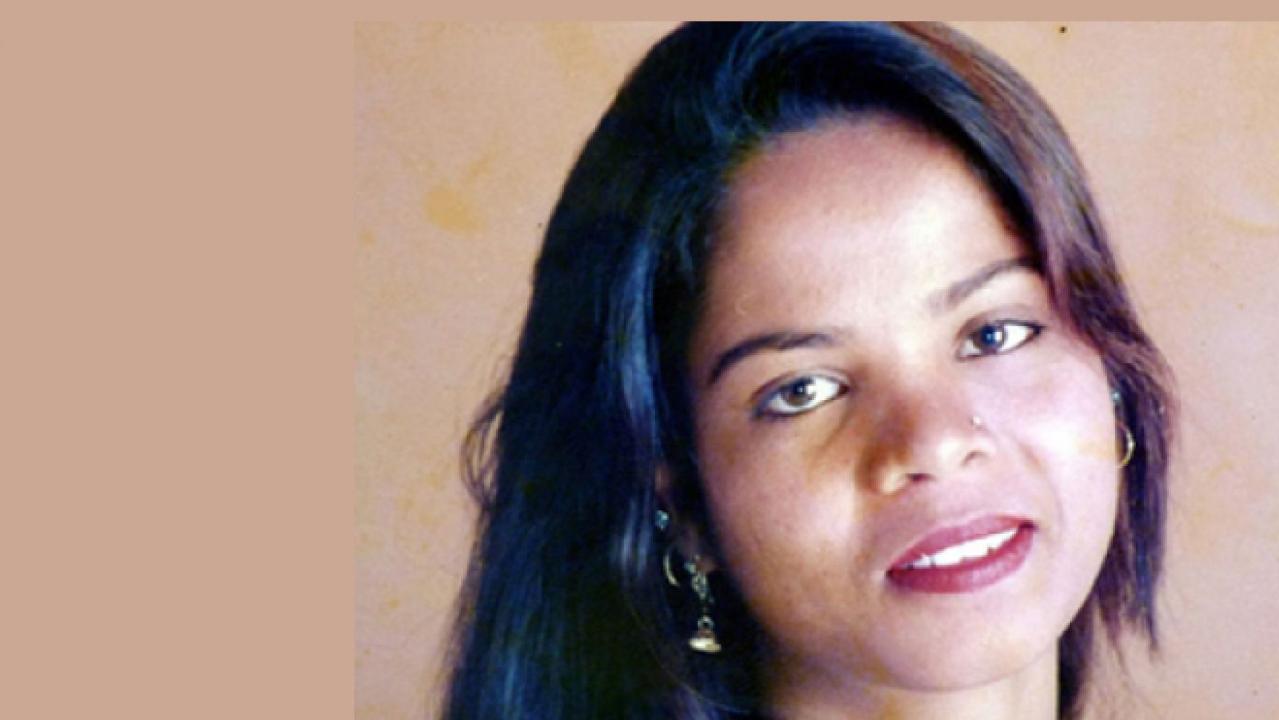
Asia Bibi, Christian woman accused of blasphemy, seeks asylum amid violent protests


Published November 04, 2018

Last Update 5 hrs ago


By Travis Fedschun | Fox News


The Christian woman in Pakistan who was on death row for nearly a decade before being acquitted by the country's top court last week is now seeking asylum elsewhere, after widespread violent protests throughout the country.

Asia Bibi was convicted in 2010 after she allegedly contaminated a water jug -- an offense viewed as blasphemy in the Muslim country.

Pakistan's top court acquitted the 47-year-old on Wednesday and ordered her release in a move that infuriated the country's hard-line Islamists, who have held nationwide protests demanding her execution.

Bibi's husband, Ashiq Masih, released a video in Punjabi on Saturday asking the U.K. to grant his family asylum amid fears for their safety, Sky News reported.


Saturday, July 22, 2017

Pope Francis, the Fox


June 2, 2017


By Richard Bennett

In Pope Francis’ encyclical, “Laudato Si’, mi’ Signore” (“Praise be to you, my Lord”): On The Common Care Of Our Home,[1] the Pope identifies himself as “the Holy Father,” and as a Christian. Nevertheless, Francis teaches the following in this encyclical,


“In the words of this beautiful canticle, Saint Francis of Assisi reminds us that our common home is like a sister with whom we share our life and a beautiful mother who opens her arms to embrace us. ‘Praise be to you, my Lord, through our Sister, Mother Earth, who sustains and governs us, and who produces various fruit with colored flowers and herbs.’”


Is Francis endorsing the idea that the earth “governs us” rather than the Lord? Nowhere in the Bible is the earth called “Mother” or “sister.” This is demonic theology rooted in the “mystery religion” of Babylon. Anthropomorphizing the earth, especially as female, has always been a mark of pagan and Satanic worship. As Alexander Hislop points out,


“It has been known all along that Popery was baptized Paganism; but God is now making it manifest, that the Paganism which Rome has baptized is, in all its essential elements, the very Paganism which prevailed in the ancient literal Babylon...”[2]


Pope Francis is first and foremost a Jesuit. As a Jesuit, he is known to be cunning as a fox. In the third paragraph of the encyclical, he clearly specifies a crisis and targets his intended audience. “Now, faced as we are with global environmental deterioration, I wish to address every person living on this planet…about our common home.”[3] It remains to be seen, then, why Pope Francis has so early in his reign come forth with a statement of gross paganism as part of his supposedly Christian world view.


Monday, August 17, 2015

Pope Francis to All Catholics: The Eucharist Is Jesus Christ


RELIGION

AUGUST 17, 2015


The Pope's Sunday Angelus address


AFP


VATICAN CITY — Pope Francis on Sunday reminded all Catholics of the Church’s teaching on the Real Presence of Jesus in the Holy Eucharist, stressing that at the Holy Mass, the sacred host is “really his Body given for us” and the chalice of what appears as wine “is really his Blood poured out for us.”

Speaking to pilgrims from his studio in the apostolic palace before praying the noonday Angelus, the Pope commented on Jesus’ bread of life discourse contained in the Gospel of St. John, chapter 6.

The Holy Father acknowledged that some in the crowd were shocked and even scandalized by the Lord’s words: “He who eats my flesh and drinks my blood has eternal life” (Jn 5:51-54).

But he said the Lord’s teaching is clear: The Eucharist is neither a symbol nor even a thing, but rather a divine Person who desires that we live in intimate communion with Him.

“The Eucharist is Jesus who gives himself entirely to us,” the Pope said. “Feeding on Him and abiding in Him through Eucharistic communion — if we do so in faith — transforms our lives into a gift to God and to our brothers and sisters.”

For a Catholic, receiving Holy Communion in a state of grace and with faith and love therefore means “entering into harmony with the heart of Christ, assimilating his choices, his thoughts, his behavior. It means entering a dynamism of love and becoming people of peace, people of forgiveness, reconciliation,” he said.

While the Pope acknowledged the astonishment of Jesus’ listeners was understandable,” nonetheless he said the Lord used “a style typical of the prophets to provoke questions in the people — and also in us — and ultimately, to provoke a decision.”

Some reports estimate that only 30% of Catholics in the West today believe in the True Presence of Jesus in the Holy Eucharist.

Yet the Catechism of the Catholic Church (paragraph 1374) clearly states the Church’s teaching: “In the most Blessed Sacrament of the Eucharist ‘the body and blood, together with the soul and divinity, of our Lord Jesus Christ and, therefore, the whole Christ is truly, really, and substantially contained.” [Council of Trent (1551): DS 1651.]

The Catechism goes on to explain: “This presence is called ‘real’ — by which is not intended to exclude the other types of presence as if they could not be ‘real’ too, but because it is presence in the fullest sense: that is to say, it is a substantial presence by which Christ, God and man, makes himself wholly and entirely present.” [Pope Paul VI, Mysterium Fidei, 39.]

Here below we publish a translation of the Pope’s Angelus address.

****

Dear brothers and sisters,

Good day. This Sunday the liturgy sets before us, from the Gospel of John, Jesus’ discourse on the Bread of life which is Jesus himself, and which is also the Sacrament of the Eucharist.

Today’s passage (John 6:51-58) presents the final part of this discourse, and makes reference to several among the people who were scandalized because Jesus said: “He who eats my flesh and drinks my blood has eternal life, and I will raise him up at the last day” (Jn 5:51-54).

The astonishment of the listeners is understandable. In fact, Jesus uses the style typical of the prophets to provoke questions in the people—and also in us—and ultimately, to provoke a decision.

First, the questions: What does it mean “to eat Jesus’ flesh and drink his blood? Is it only an image, a way of speaking, a symbol, or does it indicate something real? To respond, we need to understand what is happening in the Heart of Jesus as he is breaking the bread before for the hungry crowd.


.

Monday, January 05, 2015

Former Seventh-day Adventist pastor takes a yearlong timeout from God


“Uh, I’m not exactly sure about all this,” Ryan Bell said as he scanned the scene inside a darkened Las Vegas convention hall
.

TRIBUNE NEWS SERVICE

JAN 4, 2015


A stripper whirled her hips. A rock band pumped out a song about cannibalism. A man’s shouting hung briefly over the packed crowd: “God is dead!”

For nearly two decades, Bell had been pastor of congregations of Seventh-day Adventists, among the most conservative denominations in Christianity. How had he ended up at a gathering of atheists and skeptics in Sin City?

It had been a long time coming. For years now, it felt as if his prayers weren’t being answered. He secretly wondered whether a higher power existed at all.

So, last Dec. 31, he published a blog post that went viral.

“For the next 12 months I will live as if there is no God,” he wrote. “I will not pray, read the Bible for inspiration, refer to God as the cause of things or hope that God might intervene and change my own or someone else’s circumstances. (I trust that if there really is a God that God will not be too flummoxed by my foolish experiment and allow others to suffer as a result).”

Now it was July, just over midway in his journey. Bell had spent as much time as he could reading about science and philosophy, interviewing agnostics and atheists, working to decide what he would believe when the year was done.

He’d come to Las Vegas to attend the convention of skeptics — an ardent subculture devoted to lambasting everything from believers in Bigfoot to claims that Jesus Christ was anything more than a charismatic human being.
The band, the stripper, the boisterous crowd? All were part of a night of reverie hosted by magician and atheist Penn Jillette. But shortly after the show began, Bell left, shaking his head, feeling caught between worlds.

“Not so long ago I was pastoring a church, and here I am, surrounded by all these atheists singing for shock value about how terrible God is,” he said. “It doesn’t feel like these are my people. Then again, most of this year, it’s been hard to say who exactly my people are.”

Bell, 43, was born in Ohio but grew up mostly near Loma Linda, a Southern California suburb populated largely by Seventh-day Adventists.

In his teens, he didn’t drink, smoke or swear. Eating meat was forbidden. “I didn’t believe in evolution because my grandparents didn’t believe,” he said.

He would come to develop a guilty pleasure: listening to the Beatles, Bob Dylan and U2. But when he headed off to the church’s deeply observant Pacific Union College, in Northern California, he left behind his music and vowed to live an even stricter life.

“He was unusually conservative, even for this school,” remembered one of his English professors, Nancy Lecourt. She recalled asking her class to read 18th century philosopher Voltaire — and a young Bell refusing on the grounds that writing such as Voltaire’s defiles the soul.

It was hardly surprising when, after graduation, Bell became a pastor, assigned to a clutch of churches in the suburbs of Philadelphia. His new parishioners, though still conservative, didn’t fit the mold he’d known before. Some wore makeup and jewelry. A few smoked, cursed or spent money on Saturdays, the Adventist day of worship.

“It all hit me at once,” Bell said. “I mean, the messiness of the journeys of my congregants. I was meeting people who were living with a goodness I’d always hoped for, yet they did things that the church didn’t approve of.”

In 2005, he moved with his wife and two young daughters to California, taking over the ministry at the Adventist church in Hollywood.

“People who had been at the fringes of the church, who were not sure they wanted to go back to organized religion, he gave them space to feel they were part of this,” said Leslie Foster, a filmmaker who was part of a swell of new members flocking to the church once Bell arrived. “He created a home.”

This new version of Pastor Bell focused less on individual salvation than social justice. It wasn’t long before he was speaking out against Bank of America for what he considered predatory lending practices. Or demonstrating during the Occupy takeover of the lawns at City Hall. Or advocating for gay rights and marriage equality.

All along, his doubts grew. The more he prayed, the more prayer felt useless. The more he tried to reconcile the Bible with science, the more it seemed he was putting together a puzzle with parts that didn’t fit. The more he thought about the unceasing suffering in the world, the more he doubted God’s existence.

By early last year, pressure was mounting. Part of it was personal. After 17 years of marriage, he and his wife were headed for a divorce. Part of it was his calling. In March, after a long battle with regional Adventist officials on almost every major point of theology, he agreed to resign.

Without a church, living alone, Bell felt dazed.

Recalled Randall Frederick, a close friend and theology student at Fuller Seminary: “He’d just lost so much faith, he did not know what to believe in.”

On a rain-swept afternoon at a Pasadena restaurant, Bell and Frederick met for lunch. They joked about a popular book by an evangelical author who had vowed to live biblically for 12 months. An idea came. Maybe, to give his life focus again, Bell should take his doubts to their full conclusion, at least for a while.

The storm of attention after he turned his back on God took Bell by surprise. Within a week, he was explaining himself on CNN, NPR and the BBC.

His blog posts were jammed with hundreds of comments, then thousands. There were supportive notes. And plenty calling him a charlatan, an opportunist, a fraud who was courting hellfire while influencing others to follow along the way.

Soon Bell spun into depression, and not just because of the criticism.

He was jobless. The announcement had cost him teaching positions at Fuller Seminary and the evangelical Azusa Pacific University, because he could no longer adhere to rules stipulating that faculty members believe in Christ.

In his old life, he would have prayed. He beat back the temptation.

“I just have to weather the storm,” he said, sitting in a Los Angeles cafe. It was March. His shoulders slumped. Bags sat heavy under his eyes. “Just make it through all this.”

By April, his views on faith were starting to become clearer. “I could very easily say there is no God,” he said. “I feel that way a lot of the time.”

There was a hesitancy in his voice. Yes, great beauty and meaning could be found if one focused solely on the material world. But seeing things that way posed problems.

“It takes this beautiful world and reduces it to atoms and electrons. Where did it all come from? Are we just the sum of our parts?”

Such questions kept him up at night, reading in the small Pasadena apartment he’d rented, surrounded by his books. He’d searched for answers before, but never with this intensity, or from the starting place that there was no God.

He felt ostracized by those in organized religion. But nonbelievers were thrilled to have him at their events or speaking on their panels, and an advocate for atheists had started an online fund to help pay his bills.

“It feels like I am now a pastor to the irreligious,” he said, walking through the Las Vegas hotel at the convention. “Not that I want that role, but the way people are responding to me, it’s pretty revealing. It feels like I’ve touched some sort of cultural nerve. There’s just a lot of people questioning everything these days.”

Life started to feel good again. He’d gotten a job teaching life skills at PATH, a nonprofit helping the homeless. He’d also started dating Rebecca Pratt, a devoted Christian— open-minded and unafraid to stop him when he’d lapse into negative generalizations about religion.

The year pushed on. He became more and more comfortable in this new, questioning life.

He described himself, temporarily at least, as a “weak atheist.” Fine with not having all the answers about life’s origins, its meaning, its end.

“Either God has responsibility or he does not,” Bell said. He recalled the South Korean ferry that sank in April, killing 304 people, most of them students. “If he does, it seems like he is doing a pretty bad job. If he does not, if he just wound the thing up and walked away, I don’t see any point in worshiping a God like that.”
Bell grimaced. A moment passed. Then he smiled. He was finally free to speak such thoughts.

The journey will be over Jan. 1.

Skeptics and nonbelievers are ready to officially welcome him to the fold. Bell has heard from Christians who pray he’ll return to their side. “I am hoping he will come around, back to some form of Christianity, hopefully to Adventism,” said Lecourt, his college English teacher.

There will be an announcement on where he stands, most likely on his blog.

It’s hard to imagine him going back to the God of organized faith. It’s also hard to imagine him joining the crowd contending that God is imaginary and that belief is the source of most of the world’s ills.

“I do think I’ve now seen both sides of the coin,” he said recently. “Being with the atheists, they can have the same sort of obnoxious certainty that some Christians have, and I don’t want to be a part of that. It feels like I’m stuck in the middle. I want to be for something good, but I don’t want boundaries, and religion just feels like a very bounded thing.

“The question I am asking right now: Why do I need religion to love?”

———

©2014 Los Angeles Times

.

Thursday, October 30, 2014