Thursday, March 18, 2021

CoVid 19 “The Great Reset”


By In my mind Travag in Blogs and More on September 23, 2020


CoVid 19 “The Great Reset” I found a pdf of the book on scribd and downloaded it and made a link if you would like to read the entire book. Enjoy!


CoVid-19: The Great RESET

https://drive.google.com/file/d/1417z2T1XtyYCshWhesmpKngYaDS94iSI/view?usp=sharing

On June 13, 2019, Klaus Schwab, President of the World Economic Forum (WEF) and UN Secretary-General António Guterres signed a partnership between their two organizations. This was done without any direct media attention despite the tremendous implications this poses to humanity. By and large, this means that the power over our lives with a stroke of a pen has been transferred to the big global corporations and their owners.

The agreement includes six focus areas:

  • Funding for the UN Agenda 2030
  • Climate change
  • Health
  • Digital collaboration
  • Gender equality and women’s liberation
  • Education and skills development.

The aim of the partnership is to accelerate the UN Sustainability Agenda and the 17 global targets.

“Meeting the Sustainable Development Goals is essential for the future of humanity. The World Economic Forum is committed to supporting this effort and working with the United Nations to build a more prosperous and equitable future.”

The agreement also states that the WEF’s fourth industrial revolution is an important component in implementing the agenda. Digitization is seen as the key. A few months later, during the Meeting in Davos in January 2020, this was made very clear by the launch of the Unlocking Technology for the Global Goals report compiled by PWC.

This means that the world’s tech giants (which are part of the WEF working groups) will solve the world’s problems through the use of AI, satellites, robotics, drones and the Internet of Things, and with synthetic food on the menu.

By declaring Covid-19 as a pandemic on March 11, the World Health Organization (WHO) opened up an opportunity window for the WEF to quickly implement its new world order. Everything was very carefully prepared. As early as 2006, the WEF’s first report on global risks had discussed the measures to be taken in the event of a pandemic (some of the recommendations were tested in the context of Swine Flu in 2009). After that, the working groups continued to sew their network. In 2010, the Rockefeller Foundation published Scenarios for the Future of Technology and International Development, which described the scenario of a future shutdown almost prophetically:

“At first, the notion of a more controlled world gained wide acceptance and approval. Citizens willingly gave up some of their sovereignty – and their privacy – to more paternalistic states in exchange for greater safety and stability. Citizens were more tolerant, and even eager, for top-down direction and oversight, and national leaders had more latitude to impose orders in the ways they saw fit.”

March 11 — WHO Declares COVID-19 a Pandemic

In declaring COVID-19 a pandemic, Tedros Adhanom Ghebreyesus, director general of WHO, said at a briefing in Geneva the agency is “deeply concerned by the alarming levels of spread and severity” of the outbreak. He also expressed concern about “the alarming levels of inaction.”

https://www.ajmc.com/view/covid19-roundup2

https://www.who.int/docs/default-source/coronaviruse/situation-reports/20200327-sitrep-67-covid-19.pdf?sfvrsn=b65f68eb_4


March 13 — Trump Declares COVID-19 a National Emergency

President Donald Trump declares the novel coronavirus a national emergency, which unlocks billions of dollars in federal funding to fight the disease’s spread.

https://www.ajmc.com/view/covid19-roundup2

A year before the virus began to hit the world, the WEF released the report Outbreak Readiness and Business Impact Protecting Lives and Livelihoods across the Global Economy.

The great preparations were getting ready.

In October 2019, a dress rehearsal was performed through the Event 201 exercise (which involved stakeholders such as the WEF, Bill & Melinda Gates Foundation and Johns Hopkins University).

Monday, March 15, 2021

Terror suspects are part of border surge, says Rep. John Katko


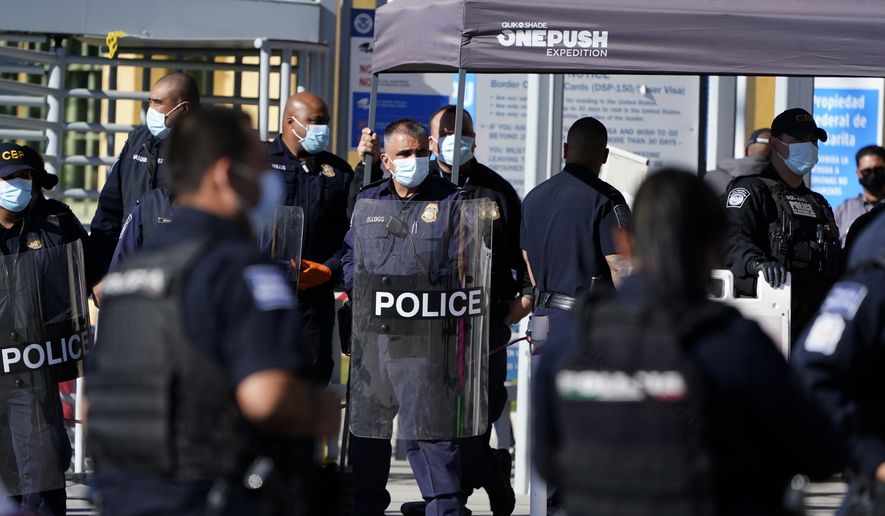
Customs and Border Protection officers stand with shields at the border crossing, Monday, March 1, 2021, seen from Tijuana, Mexico. (AP Photo/Gregory Bull) ** FILE ** more >

By Stephen Dinan and Dave Boyer - The Washington Times - Monday, March 15, 2021


People on the terrorist watchlist have been nabbed trying to cross the border as part of the new surge of migrants, Rep. John Katko, the top Republican on the House Homeland Security Committee, revealed Monday during a trip to the border.

“Individuals that they have on the watch list for terrorism are now starting to exploit the southern border,” the New York congressman said as he stood near a section of border wall in El Paso, Texas.

He was part of a delegation of House Republicans, led by Minority Leader Kevin McCarthy, that was visiting to take stock of the migrant surge and to pressure President Biden for a change in course.


TOP STORIES
Wealthy Americans, corporations about to learn Biden's definition of 'fair share' of taxes

'Dispiriting': Track star's dream dashed by transgender rules

Mr. Katko didn’t say any more about those caught who were on watchlists, but he and other Republicans ticked off a list of stunning developments.

Mr. Katko said Customs and Border Protection is shifting money around in its accounts and has taken some cash out of Border Patrol agents’ salaries and pensions. The congressman said unless Congress passes an emergency spending bill, “I don’t know how we’re even going to pay these guys.”


EU countries pause AstraZeneca’s covid-19 jab over safety fears


Vaccination vacillation

An abundance of caution could well backfire

Science & technology

Mar 15th 2021

IN EUROPE, vaccination against covid-19 is off to a worryingly slow start. Just 11 doses for every 100 people have been administered in the European Union, against 32 in America and 38 in Britain. Europeans are cross with their governments and with the European Commission, which botched the ordering of vaccines for the EU last year. Worse, another wave of infections seems to be building in several countries.

But in recent days worries about speed have been joined by concerns about safety. On March 15th France, Germany and Italy became the latest in a growing list of European countries, now more than a dozen, to announce that they were temporarily halting the use of a covid-19 vaccine made by AstraZeneca, a British-Swedish pharmaceutical firm.

The wave of suspensions was set in motion by data from a Norwegian medical regulator that reported four cases of blood clotting in adults given the vaccine. Similar—and similarly small—reports have come from Denmark, Italy and Austria.

So, is the AZ vaccine safe to use?

Almost certainly, yes. Officials have been careful to describe the suspensions as temporary measures. Ronan Glynn, Ireland's deputy chief medical officer, said there was no proof that the vaccine had caused the clots. The World Health Organisation and the European Medicines Agency (EMA) have likewise said they have no reason to believe the jab is unsafe.

The point at issue, as so often in medicine, is the disentangling of causation from correlation, especially when it comes to medicines given to millions of people. Blood clots are common. So, increasingly, are covid-19 vaccines. The EMA reckons there have been 30 “thromboembolic events” among around 5m people who have been given AstraZeneca’s vaccine. That some people with blood clots have also had a covid-19 vaccine is, by itself, no more remarkable than the fact that some of them will probably have taken vitamin supplements, or paracetamol, or breakfast. The question is whether the rates are higher than would otherwise be expected—which they do not seem to be. “The number of [blood clots] in vaccinated people is no higher than the number seen in the general population,” says the EMA.

Data from elsewhere are similarly reassuring. In the clinical trials used to assess the vaccine, 38% of those given the jab reported at least one side-effect, chiefly things like pain at the injection site, a headache or a transient fever. So did 28% of those in the group given a dummy injection. Less than 1% of either group went on to suffer any serious illness. Of those who did, more had been given the placebo jab than the real one.

Trial data are backed up by real-world experience in other countries. By February 28th Britain had administered 9.7m doses of the AstraZeneca vaccine and 11.5m doses of another vaccine, made by Pfizer, an American firm, in a partnership with BioNTech, a German one. The Medicines and Healthcare Regulatory Agency, Britain's medicines regulator, reckons that both vaccines cause between three and six reports of side-effects for every 1,000 doses delivered, almost all of which are mild. Two hundred and twenty-seven people died shortly after receiving a dose of the Pfizer-BioNTech jab; 275 after the AstraZeneca one. Once again, neither figure seems unusual, and the deaths are unlikely to be linked to the vaccines. Around half a million people die in Britain every year, and the very old and very sick were first in line for jabs.

But there may be more to the question than matters of immunology. One factor is the politics of vaccines. In January AstraZeneca warned the EU that it would not be able to supply as much vaccine as it had hoped, sparking a bitter row that became enmeshed in a broader dispute about Britain’s relationship with the EU following Brexit (AstraZeneca vaccines are made in Britain, among other places). An article in a German newspaper, based on an anonymous source, raised doubts—later proved incorrect—about the vaccine's effectiveness in people over 65. Those claims were later amplified by Emmanuel Macron, France’s president, who suggested the vaccine was “quasi-ineffective” in older people. (Mr Macron later changed his position, as France sought to accelerate its vaccination campaign).

Another problem is what experts call “vaccine hesitancy” in Europe. The controversies over the AstraZeneca vaccine may have sown doubt about it. That, in turn, may have made public-health officials especially keen to be seen to take safety concerns seriously. Experiences with other vaccines show that doubts, once instilled, can be hard to get rid of. The idea that the combined measles, mumps and rubella (MMR) vaccine causes autism was based on a single paper that reported a handful of anecdotal associations. The existence of such a link has now been comprehensively disproven. MMR conspiracy theories flourish nevertheless. Many rich countries vaccinate children against human papilloma virus (HPV), which causes cervical cancer. After anecdotal reports of side-effects in 2013, Japan suspended its HPV-vaccination programme. No amount of evidence for the safety of the HPV vaccine has managed to reinstate it. One paper estimates that the result has been the deaths of between 5,000 and 5,700 Japanese women born between 1994 and 2007.

Having scrambled to secure the AstraZeneca vaccine in January, large parts of Europe are now left with stockpiles that are not being used. Public-health officials, meanwhile, are caught in a bind. If people already harbour doubts about a vaccine, a temporary pause may be seen as a reassuring commitment to rigour and caution. Or it may simply add to those doubts, causing more people to shun the vaccine, prolonging the pandemic and killing some who would otherwise have lived. One of the “adverse effects” of covid-19, after all, is death. It occurs in just under 1% of cases.


Vatican, Pope Francis say Catholic Church can't bless same-sex marriages...


Vatican, Pope Francis say Catholic Church can't bless same-sex marriages because God 'can't bless sin'

JOHN BACON | USA TODAY | 7 hours ago


Pope Francis endorsed same-sex civil unions for the first time as pope while being interviewed for the feature-length documentary 'Francesco.'
USA TODAY


The Catholic Church and its priests cannot bless same-sex unions because God "cannot bless sin," the Vatican said Monday.

The Vatican's orthodoxy office, the Congregation for the Doctrine of the Faith, said it was responding to questions about gay unions. The two-page statement published in seven languages was approved by Pope Francis.

"The blessing of homosexual unions cannot be considered licit," the statement says, adding that "there are absolutely no grounds for considering homosexual unions to be in any way similar or even remotely analogous to God’s plan for marriage and family."

The church and priests can still bless people who are gay who live in "fidelity," the statement says. "Rather, it declares illicit any form of blessing that tends to acknowledge their unions."

Francis DeBernardo, executive director of New Ways Ministry, an LGBTQ-centered Catholic ministry, told USA TODAY the statement was disappointing but not surprising. Catholics, he said, will continue to find creative ways to bless the couples they love and support.

"What the Vatican doesn’t realize is that the Catholic faithful are not satisfied with that answer," DeBernardo said. "Catholic people recognize the holiness of the love between committed same-sex couples and recognize this love as divinely inspired and divinely supported and thus meets the standard to be blessed."

Monday's statement from the Vatican comes less than six months after revelations of Pope Francis' stunning endorsement of same-sex civil unions were made public.

“Homosexual people have the right to be in a family. They are children of God,” Francis said in a 2019 interview for the documentary "Francesco." “What we have to have is a civil union law. That way they are legally covered.”

Legally covered, but not church-sanctioned. Francis made the comment during an interview with a Mexican broadcaster, Televisa. It was cut by the Vatican but later appeared in a documentary.

Pope Francis endorsed same-sex civil unions. What does this mean for LGBTQ rights in the US?

Monday's Vatican statement says God "never ceases" to bless all people, including people who are gay.

"But he does not and cannot bless sin," the statement says. "He blesses sinful man, so that he may recognize that he is part of his plan of love and allow himself to be changed by him. ... The Church does not have, and cannot have, the power to bless unions of persons of the same sex."

Jim Bretzke, a priest, author and professor of theology at John Carroll University in Ohio, said the Vatican's latest statement on the question appears to be attempting to "thread a needle" in its acceptance of gay people but not gay unions.
"The Church explicitly says gay men and women can be blessed," he said. "But that the domestic union of a gay couple should not be liturgically blessed, est people misinterpret this blessing as a form of Catholic marriage lite."

Catholics generally are among the more accepting sects of Christianity when it comes to same-sex unions. A Pew survey found that more than half of Catholics in the United States, along with Mainline Protestants and Orthodox Christians, support same-sex marriage.

The pope has a complicated history with the LGBTQ community, specifically on same-sex marriage. As archbishop of Buenos Aires, Argentina, he endorsed civil unions for gay couples in lieu of same-sex marriages. Months into his papacy, he was quoted as saying: “If someone is gay and he searches for the Lord and has good will, who am I to judge?”

But Francis also has repeatedly condemned same-sex marriage during his time as pope – emphasizing the Catholic dictum of marriage remaining between a man and a woman in multiple statements.

"The declaration of the unlawfulness of blessings of unions between persons of the same sex is not ... intended to be a form of unjust discrimination," the statement Monday says. "But rather a reminder of the truth of the liturgical rite."

Contributing: The Associated Press


Pope Francis celebrates mass on the occasion of 500 years of Christianity in the Philippines, in St. Peter's Basilica, at the Vatican, Sunday, March 14, 2021.
TIZIANA FABI, AP
Originally Published 10 hours ago
Updated 7 hours ago


Georgetown law professor terminated after remarks about Black students


The professor's comments were caught on video that went viral on Twitter.

ByCatherine Thorbecke and
Benjamin Siu

March 12, 2021, 1:26 PM ET


Georgetown law professor fired after Zoom conversation made publicOne professor was fired for racist comments and the other was placed on administrative leave after their comments about Black students were caught on camera. Obtained by ABC News

A Georgetown Law School professor has been terminated after comments she made about a lot of her "lower" students being Black went viral and sparked a firestorm of backlash on social media.

In a recording of the video call, adjunct professor Sandra Sellers is speaking to a fellow adjunct about students' evaluations and performance.

MORE: Creighton University basketball coach suspended for 'plantation' analogy

"And you know what, I hate to say this, I end up having this angst every semester that a lot of my lower ones are Blacks. Happens almost every semester," Sellers said. "And it's like, 'Oh, come on.' You get some really good ones, but there are also usually some that are just plain at the bottom. It drives me crazy."

An adjunct law professor at the Georgetown University Law Center has been fired after being seen on a video call making comments about Black students.Obtained by ABC News


Bill Treanor, the dean of the law school, said in a statement Thursday that he was "appalled that two members of our faculty engaged in a conversation that included reprehensible statements concerning the evaluation of Black students."

Treanor said he gave both professors the opportunity to provide additional context, and then informed Sellers that he was terminating her relationship with the law school effective immediately.

"During our conversation, she told me that she had intended to resign," Treanor added. "As a result of my decision, Professor Sellers is no longer affiliated with Georgetown Law."

The dean said that the other adjunct professor on the call, David Batson, has been placed on administrative leave pending an investigation by the school's Office of Diversity, Equity and Affirmative Action. Until the completion of the investigation, Batson will not have further involvement with the course in which the incident arose, according to Treanor.

MORE: Breonna Taylor's mom seeking justice 1 year later: 'They should be held accountable'

The Georgetown University Law Center Black Law Students Association condemned the incident in a statement.

"Not only is this situation revealing of Sellers' true beliefs about Black students, it is also illustrative of the conscious and unconscious bias systemically present in law school grading at Georgetown Law and in law school classrooms nationwide," the statement added. "The difference is that Sellers was caught and her racism was broadcast for the world to see."

In a resignation letter obtained by ABC News, Sellers said she was "deeply sorry" for her "hurtful and misdirected remarks."

"While the video of this incident is an excerpt from a longer discussion about class participation patterns, not overall grades, it doesn't diminish the insensitivity I have demonstrated," she wrote. "I would never do anything to intentionally hurt my students or Georgetown Law and wish I could take back my words."

"Regardless of my intent, I have done irreparable harm and I am truly sorry for this," Sellers added. "For that reason, I am immediately and voluntarily resigning my position as an adjunct professor."

She also reflected on her nearly 20 years teaching at Georgetown, saying when her students do not excel in courses she teaches, "it reflects shortcomings on my part, not just on the part of any single student."

"My comments were the inarticulate reflection of long soul searching. I must do better to understand and address these issues," Sellers continued. "I am committed to doing this for myself and also looking for ways I can combat racism in the Georgetown community."


Chaplains and the rise of on-demand spiritual support


As traditional religious practice recedes, many New Englanders are increasingly turning to a different kind of pastor when and where they’re needed.

By Jonathan D. FitzgeraldUpdated 

March 9, 2021, 10:47 a.m.


Carlito Ortiz hugs Lisa Loughlin, a Common Cathedral chaplain, after she prayed with him in Back Bay Station.JESSICA RINALDI/GLOBE STAFF


Mourning a death. Coping with grief. Healing the heartsick and soothing the sufferers. For much of human history, people addressed loss and trauma through rituals drawn from faith traditions, performed in spaces we called sacred — churches, temples, shrines, mosques — and led by ministers and rabbis, imams and priests. But in New England, where the influence of Puritan piety has yielded to unceremonious secularism, something more malleable is emerging. To meet spiritual needs when and where they arise, we’re turning to chaplains, people trained to work outside the structure of religious institutions. As church attendance nationally also declines, “the need for chaplains will only increase,” says Shelly Rambo, an associate professor at Boston University School of Theology.

The rise of chaplains isn’t necessarily a Christian trend, or even a religious one. The term is being adopted by other faith traditions, says Preeta Banerjee, Hindu adviser in the University Chaplaincy at Tufts University. Her role exists because there is now a need for “chaplaincy for different faiths” she says, as well as for people who don’t belong to a religion, often dubbed the nones. Indeed, the new breed of chaplains is distinctly ecumenical — ministers for the “spiritual, but not religious” set.


Read more


Joe Biden signs executive order reestablishing White House faith office


Alexandra Jaffe - Associated Press

February 15, 2021


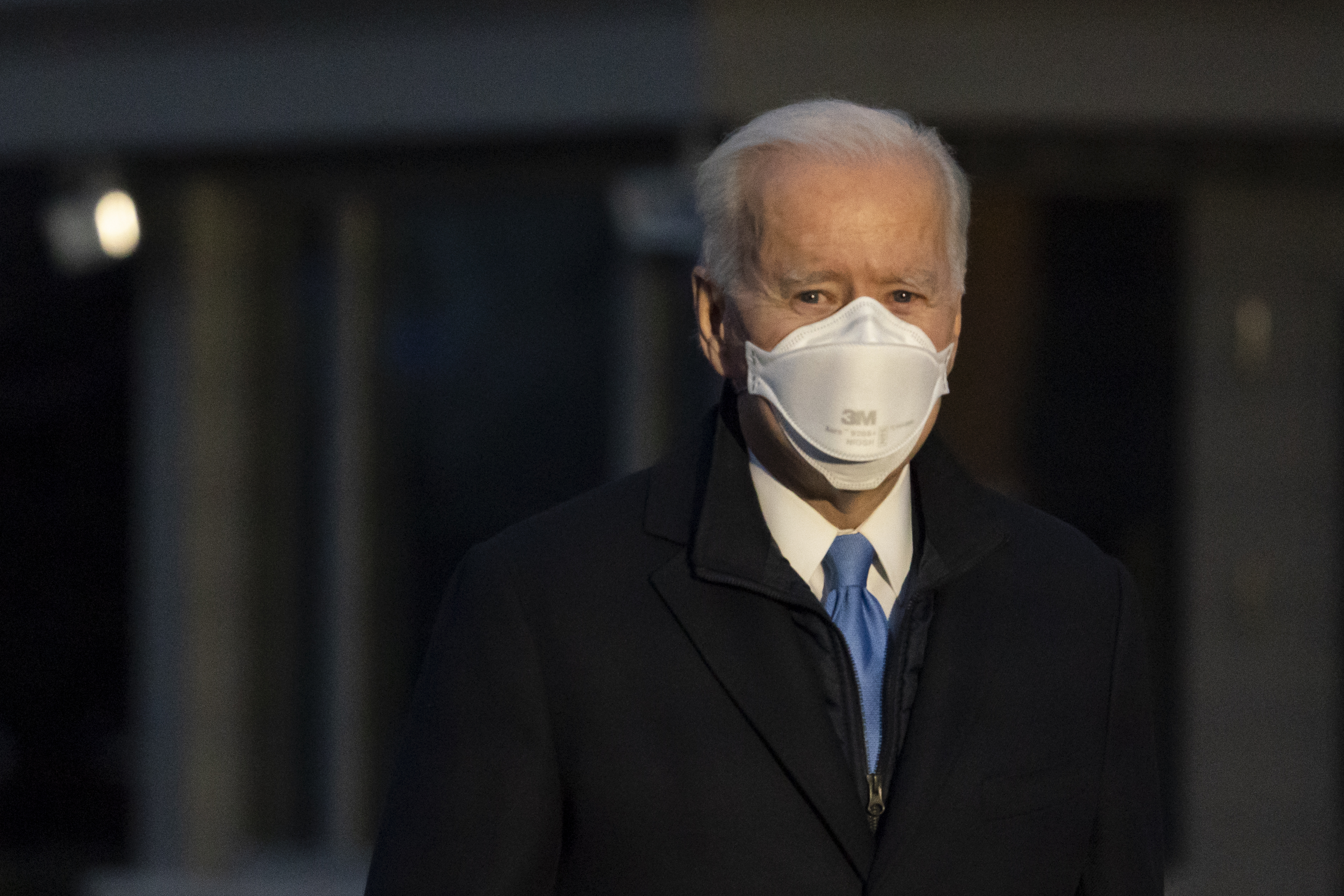
President Joe Biden pauses to speak with reporters as he walks to Marine One for departure from the South Lawn of the White House, Friday, Feb. 12, 2021, in Washington.


WASHINGTON (AP) — President Joe Biden signed an executive order Sunday relaunching a White House office aimed at fostering cooperation between the federal government and faith-based and secular community organizations.

The order reestablishes the White House Office of Faith-Based and Neighborhood Partnerships, a 20-year-old initiative first put in place by President George W. Bush. The White House said the office’s early goals under Biden will include working to “address the COVID-19 pandemic and boost economic recovery; combat systemic racism; increase opportunity and mobility for historically disadvantaged communities; and strengthen pluralism.”

The order reestablishes the White House Office of Faith-Based and Neighborhood Partnerships, a 20-year-old initiative first put in place by President George W. Bush.
Tweet this

In a statement, Biden suggested that such partnerships are particularly important at a time when the pandemic has created considerable uncertainty and suffering.

“This is not a nation that can, or will, simply stand by and watch the suffering around us. That is not who we are. That is not what faith calls us to be,” he said.

The office will be led by Melissa Rogers, who served in the same role during President Barack Obama’s second term.
Tweet this

His team will work with "leaders of different faiths and backgrounds who are the front lines of their communities in crisis and who can help us heal, unite and rebuild.”

The office will be led by Melissa Rogers, who served in the same role during President Barack Obama’s second term. Rogers will also serve on the White House Domestic Policy Council as senior director for faith and public policy. Josh Dickson, who was the Biden campaign’s national faith engagement director, will be deputy director.

RELATED STORIES


Joe Biden calls out ‘political extremism’ at National Prayer Breakfast


Biden’s own faith is in many ways central to his politics. He is a devout Roman Catholic who attends church nearly every weekend, wears rosary beads around his wrist and is known to quote Scripture. He has been viewed cautiously by the U.S. Conference of Catholic Bishops over his support for abortion rights, however, and religious conservatives view him warily for his promises to restore LGBTQ rights rolled back under President Donald Trump.

In the statement announcing the executive order, the White House promised a commitment to “our cherished guarantees of church-state separation and freedom for people of all faiths and none,” and said that the office “will not prefer one faith over another or favor religious over secular organizations” to pursue its work.


Biden's American Rescue Plan is Catholic social doctrine in action


Mar 12, 2021


House Speaker Nancy Pelosi, D-Calif., and Senate Majority Leader Chuck Schumer, D-N.Y., display the "American Rescue Plan" during the enrollment ceremony on Capitol Hill in Washington March 10, 2021, following passage of President Joe Biden's $1.9 trillion coronavirus disease relief bill. (CNS/Reuters/Erin Scott)


Democratic majorities in both houses of Congress passed the $1.9 billion American Rescue Plan, (ARP) and President Joe Biden signed it into law yesterday. The new law includes efforts to confront the pandemic and the economic consequences of the pandemic, but it also addresses child poverty and other long-standing issues of economic inequality. Biden promised to "build back better," and this law is a major step toward redeeming that promise.

The plan constitutes a decisive repudiation of trickle-down economics in favor of a bottom-up approach to economic stimulus that is far more consistent with Catholic social teaching.

"This legislation is about giving the backbone of this nation — the essential workers, the working people who built this country, the people who keep this country going — a fighting chance," the president said after the House passed the final legislation on Wednesday.

Republicans like to talk about helping the working class, but that help is always derivative. GOP policy the last 40 years has been to cut taxes on the rich and wait for the effects of their increased wealth to trickle down to the rest of us. This neo-liberal approach, with its idolization of market forces, has been denounced by every pope since Leo XIII in 1891. Pope Francis' 2013 apostolic exhortation, Evangelii Gaudium, epitomizes the church's hostility to the neo-liberal, trickle-down approach:

Some people continue to defend trickle-down theories which assume that economic growth, encouraged by a free market, will inevitably succeed in bringing about greater justice and inclusiveness in the world. This opinion, which has never been confirmed by the facts, expresses a crude and naïve trust in the goodness of those wielding economic power and in the sacralized workings of the prevailing economic system.

It is not impossible to see Biden, the kid from Scranton, using such words, but I am glad the kid from Buenos Aires beat him to it.

The differences in the tax provisions between the just-passed ARP and President Donald Trump's 2017 Tax Cuts and Jobs Act (TCJA) are stark. According to the Tax Policy Center's analysis of the new law:

Simply in terms of whose taxes are cut, the bill is in stark contrast to the 2017 Tax Cuts and Jobs Act. In 2021, low- and moderate-income households (those making $91,000 or less) would receive nearly 70 percent of the tax benefits from the [ARP]. Among families with children, those low- and middle-income households would get nearly three-quarters of the benefit. By contrast, nearly half of the TCJA's 2018 tax cuts went to households in the top 5 percent of the income distribution (who made about $308,000 that year).

They estimate that the biggest beneficiaries of Biden's proposal are those in the lowest two economic quartiles, while the benefits of the Trump tax cuts went overwhelmingly to the top quartile.

Republicans are trying to remake themselves as the party of the working class, but they are having trouble making the switch. Senators Mike Lee and Marco Rubio recently issued a joint statement regarding efforts to expand the Child Tax Credit. They note that the Child Tax Credit was included in the 2017 TCJA.

They now oppose efforts to turn the credit into an "allowance," akin to a universal basic income for children, because it would decouple the benefit from the requirement that a parent be working. "An essential part of being pro-family is being pro-work. Congress should expand the Child Tax Credit without undercutting the responsibility of parents to work to provide for their families," they state.

Where was this concern about the responsibility to work in some other provisions of the 2017 tax reform? According to testimony from Chye-Ching Huang of the Center on Budget and Policy Priorities, that law, among other regressive effects, lowered corporate tax rates by 40%, mostly helping investors and top-level executives who receive stocks as part of their compensation, and doubled the exemption for the estate tax. So, investment income and dying get lower tax rates period, but the poor need to demonstrate they work hard?


A worker in Minneapolis washes away chalked messages on US Bank Plaza March 8, 2021. (CNS/Reuters/Nicholas Pfosi)


If I were a Republican, I would be rooting for Rubio. His "common good conservatism" is ethically thin by my lights, but it is vastly superior to the cult of Trump that dominates the GOP. Rubio's pitch to the working class is not entirely rooted in resentments, to be sure. His aspirational rhetoric is something more Democrats need to learn to mimic.

Still, he refuses to recognize the degree to which he is reflexively allergic to economic policies that depart from the trickle-down policies of the past 40 years. Marco: Reagan is dead and buried. Thatcher is dead and buried. It is time to chart a new course.

That new course extends beyond economics; the pandemic has revived the need for government in ways no other event could have. As E.J. Dionne wrote this week in The Washington Post, "There is nothing magical about the renewed popularity of government action. The pandemic flattened the private sector economy and demanded a mobilization of resources only government could command. The disparate health and economic impacts of covid-19 turned inequality from an abstract question into a life-or-death proposition."

This willingness to deploy the authority of the state to address issues of justice raised by the pandemic also enjoys a prominent pedigree in Catholic social teaching. Here, St. Pope John Paul II's teaching in Centesimus Annus comes to mind and seems exactly on point as we consider the need to repair our health, education and economic infrastructures:

It is the task of the State to provide for the defence and preservation of common goods such as the natural and human environments, which cannot be safeguarded simply by market forces. Just as in the time of primitive capitalism the State had the duty of defending the basic rights of workers, so now, with the new capitalism, the State and all of society have the duty of defending those collective goods which, among others, constitute the essential framework for the legitimate pursuit of personal goals on the part of each individual.

Health, education and basic welfare are among the collective goods that the state is charged with providing when the market fails to do so. As John Paul II continued in that same paragraph:

Certainly the mechanisms of the market offer secure advantages: they help to utilize resources better; they promote the exchange of products; above all they give central place to the person's desires and preferences, which, in a contract, meet the desires and preferences of another person. Nevertheless, these mechanisms carry the risk of an "idolatry" of the market, an idolatry which ignores the existence of goods which by their nature are not and cannot be mere commodities.

I could have found countless citations from other encyclicals. The economic catastrophe occasioned by the pandemic requires government intervention, and such intervention is perfectly consistent with the teaching of the Catholic Church.

Fratelli Tutti, specifically written with the experience of the pandemic in mind, pointed toward the kinds of policies that the ARP contains, as well as the moral demand that we not revert to the unjust socio-economic structures that existed before COVID-19, but instead use this moment to rebuild a more just and humane society.

Biden and the Democrats have placed a big bet. If this stimulus package fails to stimulate the economy, if unemployment is still horrifically high next year, if children are still unable to go to schools in some cities because the poor ventilation in the school buildings make them viral incubators, if child poverty continues at its unconscionably high rate, the Democrats will pay a political price for this American Rescue Plan, and they will deserve to pay a price. And if it works, the Republicans might pay a price for having been bystanders at a time when so many of our fellow citizens are in profound pain. Whatever the political calculus, we all can hope that it works and, as Catholics, take some pride in the fact that our values and habits of ethical thought have played a role in coming to the nation's aid.


Michael Sean Winters

Michael Sean Winters covers the nexus of religion and politics for NCR.


Source


Sunday, March 14, 2021

"It's Happening NOW! You Have Been Warned" | Edward Snowden

Gov. Abbott discusses border security

Preparing for the Future of Work

'To call this COVID relief is really false advertising': Sen. John Barra...

THE JESUITS/LUCIFER'S KNIGHTS

Give us back Sunday


By Siegrid Massie
-March 11, 2021


By Siegrid Massie | LTVN Reporter/Anchor

As a Baptist university, our education is founded on biblical principles, one of which being the concept of the Sabbath on Sunday. One of the very first lessons we glean from the Bible is that God needed one day of uninterrupted rest to recover from the fatigue of creating the universe. Baylor students may not be designing creation throughout their week, but that doesn’t mean we need Sunday as a day of rest and rejuvenation any less.

Genesis 2:3 says “So God blessed the seventh day and made it holy, because on it God rested from all his work that he had done in creation.”

Online learning has been a blessing and a curse, and this has never been more evident than in the last year. Although online learning comes with the convenience of doing classes from the comfort of your couch, it also comes with unprecedented 24-hour access between professors and students. This access has come with the invasive idea that it is okay to interrupt a key time in the week with additional work.

While many of our professors remember the times when assignment deadlines were 5 p.m. during weekdays, online learning has allowed present students to work up to the all too familiar 11:59 p.m. deadline (guilty). Not only are these deadlines getting pushed later into the day, but they are also getting pushed farther into the week — into the coveted weekends.

If there’s one thing many of us have learned this year, it’s that there is a certain level of exhaustion that comes with staring at a computer screen for hours on end (the dreaded Zoom fatigue), and for most of us, weekends are a time to unplug, get outside and enjoy the activities that allow us to destress. There might be the occasional unavoidable Saturday quiz or exam, but the one day that should be an assignment, quiz, essay and exam-free day is Sunday.

More and more, professors are assigning tasks that must be completed by Sunday, 11:59 p.m., with some not even giving notice of the assignments until the day itself. This invasion into our day of rest is disrespectful of the students’ time, mental health and religious freedoms. Eroding the idea of the Sabbath has caused unprecedented stress, exhaustion and breakdown. Irrespective of an individual student’s status of faith, as a university that prides itself on providing a quality Christian education, we cannot continue to selectively choose the biblical values we honor.

Students aren’t the only ones who benefit from this concept. Faculty, staff and administration members need Sunday as a time to recharge from the previous week and mentally prepare for the upcoming days. Unless it’s an emergency, professors are equally deserving to spend their Sundays with the people they love, doing the things they love without the distracting notifications of assignments rolling into the system.

In a semester with no large breaks and very few intended university-wide holidays in sight, students, faculty, staff and administration need to treat the precious time we have on Sunday with care and not impose work on others so needlessly, especially when the deadline could have waited another 12 hours. The Sabbath is not intended as an obstacle for professors but a necessary gift from God in recognition that our energies and spirits are exhaustive. As such, stop taking away our gift, stop assigning work to be done on the Sabbath and give us back our Sunday.


Saturday, March 13, 2021

Why you might be experiencing what psychologists call 'the anniversary effect' -- and what to do about it


Analysis by Katie Hawkins-Gaar, CNN

Updated 1:07 PM ET, Sat March 13, 2021


If you're feeling extra heavy one year after Covid-19 was declared a pandemic, you might be experiencing what psychologists call "the anniversary effect."


(CNN)It's been one year since Covid-19 was declared a pandemic. That's 365 days, give or take, since we've hugged our friends, visited our relatives, gone to the movies or traveled to a faraway place without worrying about the consequences. Twelve months since we last shook a colleague's hand, heard the roar of a crowd or left the house without needing a mask. A full orbit around the sun since we've been able to fully relax.

If the weight of all of those things is taking an extra toll on you lately, you're not alone.
You might be experiencing what psychologists call "the anniversary effect." As therapist and counselor Susan Harrington explains, our bodies and brains store painful memories that can be triggered by certain dates or seasons, such as the death date of a loved one, the annual reminder of a serious diagnosis, or, perhaps, the one-year anniversary of a pandemic.

Losing our sense of control during the pandemic

I'm well familiar with the anniversary effect. I experience it each February, around the date of my husband's death. I feel it every September, as my once-happy wedding anniversary is steeped in sorrow. I face it again in November, on the day my dad died.

My response to these anniversaries changes with time. Sometimes I have trouble sleeping at night or focusing during the day. I become more irritable, more easily frustrated, more anxious. I might cry at seemingly random things. Other times, I'll feel inexplicably exhausted. Almost always, I wonder what's wrong with me. That is, until I remember the date.

Harrington reassures me that these reactions are normal and acknowledging grief anniversaries is healthy. "We tell ourselves that if 'I don't think about it, I won't feel it,' but that's not true," she said. "Because we are living it, we are experiencing it."

Harrington, who is the founder and owner of Maison Vie New Orleans, said she's witnessed how challenging the August 29 anniversary of 2005's Hurricane Katrina can be for her clients. Allowing ourselves to feel all of the emotions that come up with difficult anniversaries is the right thing to do, Harrington explained. "Grief is normal, it's natural, it's expected, it's important."

A year into the pandemic, it's time to take stock of our mental health

Perhaps like you, I'm currently feeling the dread of the Covid-19 anniversary. Whereas many grief anniversaries are something we suffer through solo, the pandemic is an event we're experiencing simultaneously. You might be in a pretty bad mood lately; chances are, your coworkers, neighbors and friends are too.
Even if you haven't lost someone to the pandemic, there's still plenty to grieve. We've missed out on important events and had to postpone meaningful celebrations. Our routines, social lives and sense of security have shifted dramatically. And witnessing the massive death toll -- some 530,000 Americans killed and counting -- affects all of us, whether we consciously realize it or not.

Harrington urges her clients to practice kindness, consideration and compassion -- with themselves and others. "Because we're so scared right now, we're locking into our beliefs," she said. "Change is scary; it brings up anxiety. But we have to remember that other people are scared, too."

Unfortunately, sitting with those feelings can be difficult. The death toll keeps climbing. Mask mandates keep changing. We have very few, if any, chances to catch our breath and take a break from work or parenting or making the same tired dinners every week. Finding the time and space to process all of the sadness we're feeling seems near impossible.

To make matters worse, Harrington said that many Americans are facing long waiting lists for therapists.

Still, there are small things you can do to help yourself get through this period. "The biggest piece is routine and structure," Harrington said. She recommends getting at least eight hours of sleep and structuring your day in a way that offers some comfort and predictability.
Harrington also encourages getting creative with human contact and physical touch -- whether that's extending your quarantine bubble to include a trusted close friend or safely giving a loved one a "hug," pressing against each other back-to-back.

"Those two things, routine and touch, are extremely important for our well-being," she said.

With an accelerated vaccine rollout and herd immunity possibly on the horizon, there seems to be a light at the end of the Covid tunnel, but we're not there yet. We'll experience plenty of emotional ups and downs as we inch closer to a sense of normalcy -- whatever that means these days. We'll have weeks when we feel like giving up and times when we feel like we're navigating everything just fine.

I know, because I've been there.
The key to get through it all is to be gentle with ourselves and others, especially now, on this not-so-happy anniversary.

Katie Hawkins-Gaar is a writer based in St. Petersburg, Florida. She sends out a weekly newsletter called "My Sweet Dumb Brain."


Source


Ben Carson warns this could 'destroy us as a nation'

GOP lawmakers share WILD ACCOUNTS of US-Mexico border

Brent & Joanna Respond to Public Backlash after Distributing NSL Books t...

Capitol security fencing starts to come down | NewsNOW from FOX

It’s Here: First Court Case Against Mandatory Vaccination: Attorney Inte...

The ‘Universal Vaccination’ Chimera...


OPINION
COMMENTARY

The ‘Universal Vaccination’ Chimera
Tools for stopping variants are limited and, like masks and distancing, vaccines are not a panacea.


By

Joseph A. LadapoUpdated Feb. 4, 2021 6:15 pm ET


ILLUSTRATION: MARTIN KOZLOWSKI


Each stage of the American Covid-19 pandemic has been marked by a singular public-health message that crowded out all other perspectives. From early calls to “crush the curve” with shutdowns and pleas to stay at home, then to claims that face masks would end the pandemic, these messaging strategies have sowed unrealistic expectations and delayed public acceptance of reality. The most recent message is “universal vaccination,” an aspiration whose unattainability may further delay the country’s return to social and economic normalcy.

How did we arrive at this point in the pandemic? The media’s campaign to stoke fear about collapsing health systems, along with their portrayal of severe illness as the inevitable consequence of infection—despite a thousandfold difference in risk between old and young—contributed to an atmosphere of distrust. Animosity toward Donald Trump —justified or not—fueled this campaign. Health officials abetted the discord by abandoning longstanding public-health tenets that emphasize harm reduction and a nonjudgmental outlook. Instead, these experts promoted mandates for the healthy and public shaming of people who strayed from guidelines.

Now the fear and distrust have made a substantial proportion of the U.S. population unreceptive to a vaccine. While vaccine receptiveness might be expected to vary based on a person’s risk of illness, a January Gallup survey showed that a stronger predictor is political preference. More than 80% of Democrats are willing to be vaccinated, but only about 45% of Republicans are.

The long vaccination lines seen on television will eventually thin as Americans most worried about contracting Covid-19 receive their shots. Many of the estimated 100 million Americans who aren’t interested in vaccination are unlikely to change their decision voluntarily.

What also isn’t serving vaccination efforts: the lack of transparent communication from public-health officials that meets people where they are and sincerely acknowledges the concerns of millions who view Covid-19 vaccines with suspicion. Concerns have been dismissed or derided as “misinformation.” It’s true that serious adverse effects appear to be uncommon, according to Centers for Disease Control and Prevention reports. But responding to these worries by insisting more loudly that the vaccines are safe isn’t an effective strategy. A wiser strategy is to address these concerns with data about what is known, and honesty and humility about areas of uncertainty—such as vaccination in pregnant women.

The expert insistence that Covid-19 vaccination is a social responsibility, that getting vaccinated is “doing your part,” is a political philosophy and not a self-evident truth. The natural instinct driving most health behavior—much like wearing a mask last spring before mandates—is self-preservation. Altruism is a virtue and makes everyone better off, but it is foolish to rely on it as a public-health strategy. Moreover, while scientists argue that widespread vaccination will prevent variants from tayking hold, lessons from the past year should make it abundantly clear that our ability to stop the spread of variants is extraordinarily limited.

The possibility of Covid-19 vaccine mandates in schools deserves special attention. There are almost no data on the potential benefits or harms of Covid-19 vaccination in children, and no crystal ball to predict disease epidemiology in a future that will likely include high vaccination rates among teachers and vulnerable family members. Yet at least one school district—Los Angeles Unified, the nation’s second largest—has announced it intends to require the vaccine for students.

Even amid assurances from scientists, many parents will remain skeptical about vaccinating their children. This is reasonable, considering that a study in the leading journal Nature estimated the Covid-19 survival rate to be approximately 99.995% in children and teens. By contrast, measles leads to hospitalization in about 1 in 5 unvaccinated persons, according to the CDC. What school officials are asking these parents to do is give up their parental intuition and give way to “expert opinion.” These battles will be tremendous, and wiser leadership would avoid them by considering other options, such as symptom monitoring or periodic testing.

A sensible and sustainable approach to vaccine policy would focus access on two populations: Americans who are at high risk of severe disease, and Americans who may be at lower risk but feel they can’t live and work safely without vaccination. This will free up resources and attention for tackling other challenges, such as attrition among people who need a second vaccine dose, and virus variants that may blunt vaccine protection. Some 90% of deaths from Covid-19 are among those over 55; the death rate would be expected to plummet if the older and vulnerable were protected effectively.

Other forces pushing mortality lower: The CDC estimates that approximately 83 million Americans contracted Covid-19 through December. Reinfection risk is low for at least six to nine months following infection. There is also growing scientific evidence for outpatient therapies such as ivermectin, colchicine, fluvoxamine and the politically charged hydroxychloroquine, as well as better hospital practices.

A sharp decline in mortality will give rational thinking a bigger stage, allowing schools to reopen and social and economic activities to resume. It will also liberate American society from the fear-fueled decision-making that has dominated the pandemic response.

Dr. Ladapo is an associate professor at UCLA’s David Geffen School of Medicine.


Source